Singardy
Ukraine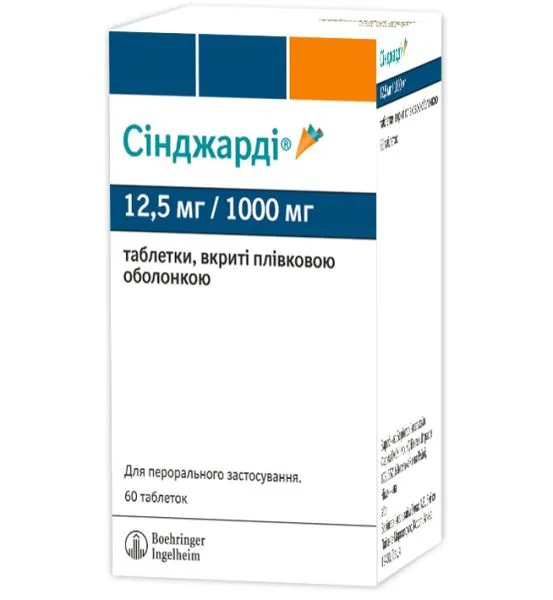
Table of Contents
INSTRUCTIONS FOR MEDICAL USE OF THE MEDICINAL PRODUCT SINGULARD® (SYNJARDY®)
Composition:
Active substances: empagliflozin, metformin hydrochloride;
One tablet contains 5 mg empagliflozin and 1000 mg metformin hydrochloride or
12.5 mg empagliflozin and 1000 mg metformin hydrochloride;
Excipients:
tablets 5 mg/1000 mg: maize starch, copovidone, colloidal anhydrous silicon dioxide, magnesium stearate, film coating Opadry® Yellow 02B220012;
Composition of film coating Opadry® Yellow 02B220012: hypromellose 2910, polyethylene glycol 400, titanium dioxide (E 171), iron oxide yellow (E 172), talc;
tablets 12.5 mg/1000 mg: maize starch, copovidone, colloidal anhydrous silicon dioxide, magnesium stearate, film coating Opadry® Purple 02B200006;
Composition of film coating Opadry® Purple 02B200006: hypromellose 2910, polyethylene glycol 400, titanium dioxide (E 171), iron oxide black (E 172), iron oxide red (E 172), talc.
Pharmaceutical form. Film-coated tablets.
Main physico-chemical properties:
tablets 5 mg/1000 mg: oval, biconvex, film-coated tablets, light brown-yellow in color, with an engraving of the "Boehringer Ingelheim" company symbol and "S5" on one side and "1000" on the other side;
tablets 12.5 mg/1000 mg: oval, biconvex, film-coated tablets, violet-brown in color, with an engraving of the "Boehringer Ingelheim" company symbol and "S12" on one side and "1000" on the other side.
Pharmacotherapeutic group.
Medicinal products used in diabetes. Combination of oral hypoglycemic agents.
ATC code A10BD20.
Pharmacological Properties
Pharmacodynamics
Mechanism of Action
The drug SINVARDY combines two antihyperglycemic agents with complementary mechanisms of action to improve glycemic control in patients with type 2 diabetes: empagliflozin, a sodium-glucose cotransporter 2 inhibitor (SGLT2 inhibitor), and metformin hydrochloride, a member of the biguanide class.
Empagliflozin
Empagliflozin is a potent (IC50 1.3 nmol), reversible, and highly selective competitive inhibitor of the sodium-glucose cotransporter 2 (SGLT2). Empagliflozin does not inhibit other glucose transporters that play a key role in glucose delivery to peripheral tissues and is 5,000 times more selective for SGLT2 than for SGLT1, the main transporter responsible for intestinal glucose absorption. SGLT2 is highly expressed in the kidneys, while its expression in other tissues is absent or very low. As the primary transporter, SGLT2 mediates the reabsorption of glucose from the glomerular filtrate back into the bloodstream. In patients with type 2 diabetes and hyperglycemia, more glucose is filtered and reabsorbed.
Empagliflozin improves glycemic control in patients with type 2 diabetes by reducing renal glucose reabsorption. The amount of glucose excreted by the kidneys via this glucuretic mechanism depends on blood glucose concentration and glomerular filtration rate (GFR). Inhibition of SGLT2 in patients with type 2 diabetes and hyperglycemia leads to increased urinary glucose excretion.
In patients with type 2 diabetes, urinary glucose excretion increased immediately after the first dose of empagliflozin and persisted throughout the 24-hour dosing interval. Increased urinary glucose excretion was maintained at the end of the 4-week treatment period, averaging approximately 78 g/day. Increased urinary glucose excretion resulted in an immediate reduction in plasma glucose levels in patients with type 2 diabetes. Additionally, empagliflozin increases sodium excretion, leading to osmotic diuresis and a reduction in intravascular volume.
Empagliflozin improves plasma glucose levels both in the fasting state and after meals. The mechanism of action of empagliflozin is independent of beta-cell function and insulin signaling pathways, thereby reducing the risk of hypoglycemia. Improvement in beta-cell function markers, including the homeostatic model assessment of β-cell function (HOMA-β), has been observed. Furthermore, urinary glucose excretion leads to caloric loss, contributing to fat loss and reduction in body weight. Glucosuria associated with empagliflozin use is accompanied by mild diuresis, which may contribute to sustained, modest reductions in blood pressure. Glucosuria, natriuresis, and osmotic diuresis observed with empagliflozin may contribute to improved cardiovascular outcomes.
Metformin
Metformin belongs to the biguanide group, which has hypoglycemic properties and reduces blood glucose levels both in the fasting state and after meals. It does not stimulate insulin secretion and therefore does not cause hypoglycemia.
The action of metformin is mediated through three mechanisms:
- Reduction in hepatic glucose production by inhibiting gluconeogenesis and glycogenolysis;
- Increased insulin sensitivity in muscle tissue, improved glucose uptake and utilization by peripheral tissues;
- Delayed intestinal glucose absorption.
Metformin promotes intracellular glycogen synthesis by affecting glycogen synthase. It enhances the functional activity of all known types of glucose transporters.
In addition to its effects on glycemia, metformin exerts beneficial effects on lipid metabolism in humans. This has been demonstrated in controlled medium- and long-term clinical trials using therapeutic doses of metformin: metformin reduces levels of total cholesterol, low-density lipoprotein cholesterol, and triglycerides.
Clinical Efficacy and Safety
Improvement in glycemic control and reduction in cardiovascular disease and mortality are essential components of type 2 diabetes management.
Treatment with empagliflozin in combination with metformin and other antidiabetic agents (pioglitazone, sulfonylureas, DPP-4 inhibitors, insulin), or without them, leads to clinically meaningful improvements in HbA1c levels, fasting plasma glucose, body weight, systolic and diastolic blood pressure. With empagliflozin 25 mg, a higher proportion of patients achieved the target HbA1c level of less than 7%, and fewer patients required additional antihyperglycemic therapy compared to empagliflozin 10 mg and placebo. The higher the baseline HbA1c level, the greater the reduction observed with the drug.
Moreover, empagliflozin as an add-on to standard therapy reduces cardiovascular mortality and cardiovascular events in patients with type 2 diabetes.
Cardiovascular Outcomes
The double-blind, placebo-controlled EMPA-REG OUTCOME trial compared the efficacy of empagliflozin at doses of 10 mg and 25 mg versus placebo as add-on to standard therapy in patients with type 2 diabetes and established cardiovascular disease.
Empagliflozin was superior to placebo in preventing cardiovascular death, non-fatal myocardial infarction, or non-fatal stroke. The effect was driven by a significant reduction in cardiovascular mortality, without significant changes in non-fatal myocardial infarction or non-fatal stroke. The reduction in cardiovascular mortality was comparable between empagliflozin 10 mg and 25 mg (see graph below) and was confirmed by improved overall survival (Table 1).
The effect of empagliflozin on the primary composite endpoint of cardiovascular death, non-fatal MI, or non-fatal stroke was largely independent of glycemic control or renal function (eGFR) and was generally consistent across eGFR categories down to eGFR 30 mL/min/1.73 m² in the EMPA-REG OUTCOME trial.
The efficacy in preventing cardiovascular mortality has not been definitively established in patients taking empagliflozin concomitantly with DPP-4 inhibitors or in non-Caucasian racial groups, due to limited representation of these populations in the EMPA-REG OUTCOME trial.
Table 1
Treatment effect on major efficacy outcomes, their components, and mortalitya
| Criteria |
Placebo |
Empagliflozin |
| N |
2333 |
4687 |
| Time to first cardiovascular death, non-fatal myocardial infarction, or non-fatal stroke, N (%) |
282 (12.1) |
490 (10.5) |
| Hazard ratio compared with placebo (95.02% confidence interval (CI))* |
0.86 (0.74; 0.99) |
|
| p-value for superiority |
0.0382 |
|
| Cardiovascular death, N (%) |
137 (5.9) |
172 (3.7) |
| Hazard ratio compared with placebo (95% CI) |
0.62 (0.49; 0.77) |
|
| p-value |
< 0.0001 |
|
| Non-fatal myocardial infarction, N (%) |
121 (5.2) |
213 (4.5) |
| Hazard ratio compared with placebo (95% CI) |
0.87 (0.70; 1.09) |
|
| p-value |
0.2189 |
|
| Non-fatal stroke, N (%) |
60 (2.6) |
150 (3.2) |
| Hazard ratio compared with placebo (95% CI) |
1.24 (0.92; 1.67) |
|
| p-value |
0.1638 |
|
| Total mortality, N (%) |
194 (8.3) |
269 (5.7) |
| Hazard ratio compared with placebo (95% CI) |
0.68 (0.57; 0.82) |
|
| p-value |
< 0.0001 |
|
| Non-cardiovascular mortality, N (%) |
57 (2.4) |
97 (2.1) |
| Hazard ratio compared with placebo (95% CI) |
0.84 (0.60; 1.16) |
a Data from treated patients (i.e., patients who received at least one dose of the investigational medicinal product).
b Combined results for empagliflozin doses of 10 mg and 25 mg.
* Because results were included in the interim analysis, a two-sided 95.02% confidence interval applies, corresponding to p < 0.0498 for significance.
Fig. 1. Time to cardiovascular death in the EMPA-REG OUTCOME study
Heart failure requiring hospitalization
In the EMPA-REG OUTCOME study, empagliflozin reduced the risk of hospitalization due to heart failure compared with placebo (empagliflozin group – 2.7%; placebo group – 4.1%; HR 0.65, 95% CI 0.50; 0.85).
Nephropathy
In the EMPA-REG OUTCOME study, time to first occurrence of nephropathy showed a HR of 0.61 (95% CI 0.53; 0.70) in the empagliflozin group (12.7%) compared with the placebo group (18.8%).
Additionally, empagliflozin increased the risk (HR 1.82; 95% CI 1.40; 2.37) of developing sustained normo- or microalbuminuria (49.7%) in patients with macroalbuminuria at baseline compared with placebo (28.8%).
Children
The clinical efficacy and safety of empagliflozin (10 mg with possible dose increase to 25 mg) and linagliptin (5 mg) once daily were evaluated in children and adolescents aged 10 to 17 years with type 2 diabetes in a placebo-controlled trial (DINAMO) over 26 weeks, with a safety monitoring period extended to 52 weeks. Background therapy, as an adjunct to diet and exercise, included metformin (51%), combination of metformin and insulin (40.1%), insulin (3.2%), or no such agents (5.7%).
Adjusted mean change in HbA1c at week 26 between empagliflozin (N = 52) and placebo (N = 53) was 0.84% and was both clinically and statistically significant (95% CI -1.50, -0.19; p = 0.0116). Furthermore, treatment with empagliflozin compared with placebo led to a clinically significant adjusted mean change in fasting plasma glucose (FPG) of -35.2 mg/dL (95% CI -58.6, -11.7) (-1.95 mmol/L (-3.25, -0.65)). These values were -0.76% (95% CI -1.45%, -0.08%) for HbA1c and -38.28 mg/dL (95% CI -60.47, -16.10) for FPG in the metformin subgroup (N = 48 empagliflozin, N = 47 placebo).
Pharmacokinetics.
Synjardy
Results from bioequivalence studies involving healthy volunteers indicate that the fixed-dose combination Synjardy (empagliflozin/metformin hydrochloride) tablets 5 mg/1000 mg and 12.5 mg/1000 mg are bioequivalent to corresponding doses of empagliflozin and metformin administered as separate tablets taken simultaneously.
Administration of empagliflozin/metformin 12.5 mg/1000 mg after food intake resulted in a 9% decrease in AUC and a 28% decrease in Cmax in the empagliflozin group compared with fasting. In the metformin group, AUC decreased by 12% and Cmax decreased by 26% compared with fasting. The observed food effect on empagliflozin and metformin is not considered clinically significant. However, since metformin is recommended to be taken with food, Synjardy should also be taken with food.
Empagliflozin
Absorption
The pharmacokinetics of empagliflozin have been extensively characterized in healthy volunteers and patients with type 2 diabetes. After oral administration, empagliflozin is rapidly absorbed, with peak plasma concentrations observed at a median tmax of 1.5 hours post-dose. Thereafter, plasma concentrations declined in a biphasic manner, with a rapid distribution phase followed by a relatively slow terminal phase. Mean steady-state AUC and Cmax in plasma were 1870 nmol/L·h and 259 nmol/L, respectively, with empagliflozin 10 mg, and 4740 nmol/L·h and 687 nmol/L, respectively, with empagliflozin 25 mg once daily. Systemic exposure to empagliflozin increased dose-proportionally. Pharmacokinetic parameters after single-dose administration were similar at steady state, indicating time-linear pharmacokinetics. No clinically relevant differences in empagliflozin pharmacokinetics were observed between healthy volunteers and patients with type 2 diabetes.
The pharmacokinetics of empagliflozin administered at 5 mg twice daily versus 10 mg once daily were compared in healthy volunteers. Total exposure (AUCSS) over 24 hours with 5 mg twice daily was similar to that with 10 mg once daily. As expected, administration of 5 mg twice daily resulted in lower Cmax and higher trough plasma concentrations (Cmin) of empagliflozin compared to 10 mg once daily.
Administration of 25 mg empagliflozin after a high-calorie, high-fat meal resulted in a modest reduction in exposure; AUC decreased by approximately 16% and Cmax by approximately 37% compared with fasting. This food effect on empagliflozin pharmacokinetics is not considered clinically significant. Empagliflozin can be administered independently of food intake. Similar results were observed with administration of Synjardy combination tablets (empagliflozin/metformin) with a high-calorie, high-fat meal.
Distribution
The apparent volume of distribution at steady state is 73.8 L based on pharmacokinetic analysis in subjects. After administration of an oral solution of [14C]-empagliflozin to healthy volunteers, erythrocyte partitioning was approximately 37%, and plasma protein binding was 86%.
Biotransformation
No major metabolites of empagliflozin were detected in human plasma. The most common metabolites were three glucuronide conjugates (2-, 3-, and 6-O-glucuronides). Systemic exposure to each metabolite was less than 10% of total drug-related material. In vitro studies indicate that the primary metabolic pathway for empagliflozin in humans is glucuronidation by uridine 5’-diphosphate-glucuronosyltransferases UGT2B7, UGT1A3, UGT1A8, and UGT1A9.
Elimination
Based on pharmacokinetic analysis in subjects, the apparent terminal half-life of empagliflozin is 12.4 hours, and the apparent oral clearance is 10.6 L/h. Between-subject variability and residual variability in oral clearance of empagliflozin were 39.1% and 35.8%, respectively. With once-daily dosing, steady-state plasma concentrations of empagliflozin are reached by the fifth dose. Based on the half-life, accumulation of approximately 22% (relative to plasma AUC) is observed at steady state. After administration of an oral solution of [14C]-empagliflozin to healthy volunteers, approximately 96% of the radioactivity associated with the drug was recovered in feces (41%) or urine (54%). The unchanged parent drug accounted for the majority of drug-related radioactivity excreted in feces. The unchanged parent drug accounted for approximately half of the drug-related radioactivity excreted in urine.
Special patient populations
Renal impairment
In patients with mild, moderate, or severe renal impairment (creatinine clearance <30 to <90 mL/min) and patients with renal failure/terminal-stage renal disease (ESRD), AUC of empagliflozin increased by approximately 18%, 20%, 66%, and 48%, respectively, compared with subjects with normal renal function. Peak plasma levels of empagliflozin were similar in patients with moderate renal impairment and renal failure/ESRD compared with subjects with normal renal function. Peak plasma levels of empagliflozin were approximately 20% higher in patients with mild and severe renal impairment compared with subjects with normal renal function. Based on pharmacokinetic analysis in subjects, apparent oral clearance of empagliflozin decreased with decreasing creatinine clearance, resulting in increased drug exposure.
Hepatic impairment
In patients with mild, moderate, and severe hepatic impairment according to Child-Pugh classification, AUC of empagliflozin increased by approximately 23%, 47%, and 75%, and Cmax increased by approximately 4%, 23%, and 48%, respectively, compared with subjects with normal hepatic function.
Body mass index
Body mass index (BMI) had no clinically significant effect on empagliflozin pharmacokinetics. AUC was 5.82%, 10.4%, and 17.3% lower in patients with BMI of 30, 35, and 45 kg/m², respectively, compared with patients with BMI of 25 kg/m².
Sex
Sex had no clinically significant effect on empagliflozin pharmacokinetics.
Race
AUC was 13.5% higher in Mongoloid race patients with BMI of 25 kg/m² compared with patients of other races with BMI of 25 kg/m².
Elderly patients
Age had no clinically significant effect on empagliflozin pharmacokinetics.
Children
In a Phase 1 pediatric study, the pharmacokinetics and pharmacodynamics of empagliflozin (5 mg, 10 mg, and 25 mg) were evaluated in children and adolescents ≥10 to <18 years with type 2 diabetes. The obtained pharmacokinetic and pharmacodynamic data were consistent with those observed in adults.
In a Phase 3 pediatric study, the pharmacokinetics and pharmacodynamics (change in HbA1c from baseline) of empagliflozin 10 mg with possible dose increase to 25 mg were evaluated in children and adolescents aged 10 to 17 years with type 2 diabetes. The observed exposure-response relationship was generally comparable between adults and children/adolescents. Following oral administration, empagliflozin exposure was within the range observed in adult patients.
Observed geometric mean trough concentrations and geometric mean concentrations at 1.5 hours post-dose at steady state were 26.6 nmol/L and 308 nmol/L for 10 mg empagliflozin once daily, and 67.0 nmol/L and 525 nmol/L for 25 mg empagliflozin once daily.
Metformin
Absorption
After oral administration of metformin, maximum concentration (Tmax) is reached within 2.5 hours. Absolute bioavailability of metformin hydrochloride in 500 mg or 850 mg tablets in healthy volunteers is approximately 50–60%. The unabsorbed fraction excreted in feces after oral administration was 20–30%. After oral administration, absorption of metformin hydrochloride is saturable and incomplete. Absorption of metformin hydrochloride is considered nonlinear. With recommended doses and dosing regimens, steady-state plasma concentrations are achieved within 24–48 hours and generally remain below 1 µg/mL. According to data from controlled clinical trials, maximum plasma concentration of metformin (Cmax) did not exceed 5 µg/mL, even with maximum doses.
Food decreases the extent and slightly delays the absorption of metformin. After administration of 850 mg metformin hydrochloride, peak plasma concentration was reduced by 40%, AUC (area under the curve) decreased by 25%, and time to peak plasma concentration was delayed by 35 minutes. The clinical significance of these reductions is unknown.
Distribution
Plasma protein binding is negligible. Metformin distributes into erythrocytes. Peak blood levels are lower than plasma peaks and are reached at approximately the same time. Erythrocytes likely represent a secondary distribution compartment. Mean volume of distribution (Vd) ranged from 63 to 276 liters.
Biotransformation
Metformin is excreted unchanged in urine. No metabolites have been identified in humans.
Elimination
Renal clearance of metformin is >400 mL/min, indicating that metformin is eliminated by glomerular filtration and tubular secretion. After oral administration, the apparent terminal elimination half-life is approximately 6.5 hours.
With declining renal function, renal clearance decreases proportionally to creatinine clearance, thereby prolonging the terminal elimination half-life, leading to increased metformin plasma levels.
Special patient populations
Children
Single-dose studies: After administration of single 500 mg doses of metformin hydrochloride, the pharmacokinetic profile in children was comparable to that observed in healthy adult subjects.
Multiple-dose studies: After repeated administration of 500 mg twice daily for 7 days, peak plasma concentration (Cmax) and systemic exposure (AUC0-t) in children were reduced by approximately 33% and 40%, respectively, compared with values in adult diabetic patients receiving repeated 500 mg twice daily for 14 days. Since dosage is individually adjusted based on glycemic control, the clinical significance of these data is considered limited.
Clinical characteristics.
Indications.
SYNJARDI is indicated in adults and children aged 10 years and older for the treatment of type 2 diabetes mellitus as an adjunct to diet and exercise:
- when the maximum tolerated dose of metformin alone is insufficient;
- when metformin in combination with other antidiabetic medicinal products does not provide adequate glycemic control;
- when patients are already receiving therapy with the combination of empagliflozin and metformin as separate tablets.
For information on study results of combination use, effects on glycemic control and cardiovascular disease, see sections "Special precautions for use", "Interaction with other medicinal products and other forms of interaction", and "Pharmacological properties".
Contraindications.
- Hypersensitivity to the active substances or to any of the excipients;
- any type of metabolic acidosis (lactic acidosis, diabetic ketoacidosis) (see section "Special precautions for use");
- diabetic precoma;
- severe renal impairment (eGFR < 30 mL/min/1.73 m²) (see sections "Special precautions for use" and "Method of administration and dosage");
- acute conditions that may alter renal function, such as dehydration, severe infection, or shock (see sections "Adverse reactions" and "Special precautions for use");
- acute or chronic conditions that may cause tissue hypoxia: cardiac or respiratory failure, recent myocardial infarction, shock (see section "Special precautions for use");
- hepatic impairment, acute alcohol intoxication, alcoholism (see sections "Method of administration and dosage" and "Interaction with other medicinal products and other forms of interaction").
Interaction with other medicinal products and other forms of interaction.
Concomitant administration of multiple doses of empagliflozin and metformin does not significantly alter the pharmacokinetics of either empagliflozin or metformin in healthy volunteers.
Drug interaction studies with SYNJARDI have not been conducted. The data provided reflect known information for each active ingredient individually.
Empagliflozin
Pharmacodynamic interactions
Diuretics
Empagliflozin may enhance the diuretic effect of thiazide and loop diuretics and increase the risk of dehydration and hypotension (see section "Special precautions for use").
Insulin and insulin secretagogues
Insulin and insulin secretagogues, such as sulfonylureas, increase the risk of hypoglycemia. Therefore, dose reduction of insulin or insulin secretagogues may be necessary when used in combination with empagliflozin to reduce the risk of hypoglycemia (see sections "Method of administration and dosage", "Adverse reactions").
Pharmacokinetic interactions
Effect of other medicinal products on empagliflozin
In vitro data indicate that the primary metabolic pathway of empagliflozin in humans is glucuronidation by uridine-5’-diphospho-glucuronosyltransferases UGT1A3, UGT1A8, UGT1A9, and UGT2B7. Empagliflozin is a substrate of human uptake transporters OAT3, OATP1B1, and OATP1B3, but not OAT1 or OCT2. Empagliflozin is a substrate of P-glycoprotein (P-gp) and breast cancer resistance protein.
Concomitant administration of empagliflozin with probenecid, an inhibitor of uridine-diphospho-glucuronosyltransferase (UGT) enzymes and OAT3, resulted in a 26% increase in the peak plasma concentration (Cmax) of empagliflozin and a 53% increase in the area under the concentration-time curve (AUC). These changes were not considered clinically significant.
The effect of UGT induction (induced by rifampicin or phenytoin) on empagliflozin has not been studied. Concomitant use with known inducers of UGT enzymes is not recommended due to the potential risk of reduced efficacy. If concomitant use with UGT enzyme inducers is necessary, monitoring of glycemic control is advisable to assess the impact on SYNJARDI.
A drug interaction study with fenofibrate, an in vitro inhibitor of OAT3 and OATP1B1/1B3 transporters, showed that after concomitant administration, the Cmax of empagliflozin increased by 15% and AUC decreased by 59%. These changes were not considered clinically significant.
Inhibition of OATP1B1/1B3 transporters with concomitant administration of rifampicin resulted in a 75% increase in Cmax and a 35% increase in AUC of empagliflozin. These changes were not considered clinically significant.
The effect of empagliflozin with concomitant administration of verapamil, a P-gp inhibitor, was similar to that of empagliflozin administered alone. This indicates that inhibition of P-gp does not have a clinically significant effect on empagliflozin.
Drug interaction studies indicate that the pharmacokinetics of empagliflozin are not affected by concomitant administration of metformin, glimepiride, pioglitazone, sitagliptin, linagliptin, warfarin, verapamil, ramipril, simvastatin, torasemide, or hydrochlorothiazide.
Effect of empagliflozin on other medicinal products
Empagliflozin may increase renal excretion of lithium and reduce serum lithium levels. Serum lithium concentrations should be monitored more frequently after initiation of empagliflozin and after dose changes. Patients should be referred to the physician prescribing lithium to monitor serum lithium concentrations.
In vitro data indicate that empagliflozin does not inhibit, inactivate, or induce CYP450 isoenzymes. Empagliflozin does not inhibit UGT1A1, UGT1A3, UGT1A8, UGT1A9, or UGT2B7. Drug interactions involving major CYP450 or UGT isoenzymes with empagliflozin and co-administered substrates of these enzymes are considered unlikely.
Empagliflozin does not inhibit P-gp at therapeutic doses. In vitro data suggest that empagliflozin is unlikely to cause interactions with active substances that are P-gp substrates. Concomitant administration of digoxin, a P-gp substrate, and empagliflozin resulted in up to a 6% increase in AUC and a 14% increase in Cmax of digoxin. These changes were not considered clinically significant.
Empagliflozin does not inhibit human uptake transporters such as OAT3, OATP1B1, and OATP1B3 in vitro at clinically relevant concentrations; therefore, drug interactions with substrates of these uptake transporters are considered unlikely.
Results of interaction studies conducted in healthy volunteers indicate that empagliflozin does not have a clinically significant effect on the pharmacokinetics of metformin, glimepiride, pioglitazone, sitagliptin, linagliptin, simvastatin, warfarin, ramipril, digoxin, diuretics, or oral contraceptives.
Metformin
Combinations not recommended for use
Alcohol
Alcohol intoxication is associated with an increased risk of lactic acidosis (especially in cases of fasting, inadequate nutrition, or hepatic impairment).
Organic cation transporters (OCT)
Metformin is a substrate of two transporters – OCT1 and OCT2.
Concomitant administration of metformin:
- with inhibitors of OCT1 (such as verapamil) may reduce the efficacy of metformin;
- with inducers of OCT1 (such as rifampicin) may enhance gastrointestinal absorption and efficacy of metformin;
- with inhibitors of OCT2 (such as cimetidine, dolutegravir, ranolazine, trimethoprim, vandetanib, isavuconazole) may reduce renal elimination of metformin and thus lead to increased plasma concentrations of metformin;
- with inhibitors of both OCT1 and OCT2 (such as crizotinib, olaparib) may alter the efficacy and renal elimination of metformin.
Plasma concentrations of metformin may increase when the above-mentioned medicinal products are taken concomitantly with metformin; therefore, caution is required, especially in patients with impaired renal function. If necessary, the dose of metformin may be adjusted, as OCT inhibitors/inducers may alter the efficacy of metformin (see sections "Special precautions for use" and "Method of administration and dosage").
Iodinated contrast agents
Administration of metformin should be discontinued prior to or during diagnostic procedures. Treatment should not be resumed earlier than 48 hours after the procedure, provided renal function has been confirmed as stable; see sections "Method of administration and dosage" and "Special safety precautions".
Combinations to be used with caution
Some medicinal products may adversely affect renal function (e.g., NSAIDs, including cyclooxygenase-2 inhibitors, ACE inhibitors, angiotensin II receptor antagonists, and diuretics, particularly loop diuretics), which may increase the risk of lactic acidosis. Renal function should be closely monitored when such medicinal products are used in combination with metformin.
Glucocorticoids (administered systemically and locally), beta-2-agonists, and diuretics have intrinsic hyperglycemic effects. Patients should be informed of this and blood glucose levels should be monitored more frequently, especially at the beginning of treatment with these medicinal products. The dose of the antihyperglycemic medicinal product may need to be adjusted during therapy with another medicinal product and upon its discontinuation.
Insulin and insulin secretagogues
Insulin and insulin secretagogues, such as sulfonylureas, increase the risk of hypoglycemia. Therefore, a reduction in the dose of insulin or insulin secretagogues may be required to reduce the risk of hypoglycemia when used concomitantly with metformin (see sections "Method of administration and dosage", "Adverse reactions").
Children
Interaction studies have been conducted only in adults.
Special precautions for use.
General
Empagliflozin should not be used in patients with type 1 diabetes (see "Ketoacidosis" in the section "Special precautions for use").
Lactic acidosis
Lactic acidosis is a very rare but serious complication associated with metabolic disturbances, most commonly occurring in cases of acute worsening of renal function, cardiorespiratory disease, or sepsis. Accumulation of metformin occurs during acute worsening of renal function and increases the risk of lactic acidosis.
In cases of dehydration (due to severe diarrhea or vomiting, fever, or reduced fluid intake), metformin should be temporarily discontinued and medical advice should be sought.
Medicinal products that may cause acute worsening of renal function (e.g., antihypertensive agents, diuretics, nonsteroidal anti-inflammatory drugs [NSAIDs]) should be used with caution in patients receiving metformin. Other risk factors for lactic acidosis include alcohol abuse, hepatic insufficiency, poorly controlled diabetes, ketosis, prolonged fasting, any conditions associated with hypoxia, and concomitant use of medicinal products that may cause lactic acidosis (see sections "Contraindications" and "Interaction with other medicinal products and other forms of interaction").
Patients and/or caregivers should be informed about the risk of lactic acidosis. Lactic acidosis is characterized by acidotic dyspnea, abdominal pain, muscle cramps, asthenia, and hypothermia progressing to coma. In case of the above-mentioned symptoms, patients should discontinue metformin and seek immediate medical attention. Diagnostic laboratory signs of lactic acidosis include decreased blood pH (< 7.35), increased plasma lactate levels (> 5 mmol/L), increased anion gap, and elevated lactate/pyruvate ratio.
Diabetic ketoacidosis
Rare cases of diabetic ketoacidosis (DKA), including life-threatening and fatal cases, have been reported during treatment with SGLT2 inhibitors (including empagliflozin). In several cases, DKA presented atypically with only moderate increases in blood glucose levels [below 14 mmol/L (250 mg/dL)]. It is unknown whether increasing the dose of empagliflozin affects the likelihood of DKA occurrence.
The risk of DKA should be considered if nonspecific symptoms such as nausea, vomiting, lack of appetite, abdominal pain, excessive thirst, breathing difficulties, confusion, unusual fatigue, or drowsiness occur. In case of these symptoms, patients should be immediately tested for ketoacidosis regardless of blood glucose levels.
Treatment with empagliflozin should be immediately discontinued in patients with suspected or diagnosed DKA.
Treatment should be interrupted in hospitalized patients undergoing major surgical procedures or with serious acute illnesses. In these patients, monitoring of ketone levels is recommended. Blood ketone measurement is preferred over urine ketone testing. Empagliflozin treatment may be resumed once ketone levels normalize and the patient's condition stabilizes.
Prior to initiating empagliflozin, the patient's history should be reviewed for factors that may indicate a predisposition to ketoacidosis.
Prolonged diabetic ketoacidosis and prolonged glucosuria have been observed during empagliflozin treatment.
After discontinuation of empagliflozin, diabetic ketoacidosis may persist longer than expected based on the plasma half-life of empagliflozin (see section "Pharmacological properties. Pharmacokinetics"). Independent factors unrelated to empagliflozin, such as insulin deficiency, may contribute to prolonged periods of diabetic ketoacidosis.
Patients at high risk of ketoacidosis include those with low beta-cell function (e.g., type 2 diabetes with low C-peptide levels, latent autoimmune diabetes in adults, or history of pancreatitis); patients with conditions leading to restricted food intake or severe dehydration; patients whose insulin dose is reduced; and patients with increased insulin requirements due to acute illness, surgery, or alcohol abuse. SGLT2 inhibitors should be used with caution in these patients.
Resuming SGLT2 inhibitor therapy in patients who experienced DKA during prior SGLT2 inhibitor treatment is not recommended unless another triggering factor for DKA has been definitively identified and corrected.
SINJARDI should not be used in patients with type 1 diabetes. Clinical trial data in patients with type 1 diabetes showed increased incidence of DKA with 10 mg and 25 mg empagliflozin as adjunct to insulin compared to placebo.
Use of iodinated contrast agents
Intravascular administration of iodinated contrast agents may cause contrast-induced nephropathy. This may lead to metformin accumulation and increase the risk of lactic acidosis. Therefore, metformin treatment should be discontinued before or during diagnostic procedures. Treatment should not be resumed earlier than 48 hours after the procedure and only after renal function has been re-evaluated and confirmed to be stable (see sections "Method of administration and dosage" and "Interaction with other medicinal products and other forms of interaction").
Renal function impairment
Due to the mechanism of action, reduced renal function leads to decreased glycemic efficacy of empagliflozin. The fixed-dose combination of empagliflozin/metformin is contraindicated in patients with eGFR < 30 mL/min/1.73 m².
Treatment should be temporarily discontinued in the presence of factors altering renal function (see section "Contraindications").
Monitoring of renal function
Renal function assessment is recommended as follows:
- before initiating empagliflozin/metformin and periodically during treatment, at least once a year (see section "Special precautions for use");
- prior to initiating any concomitant medicinal product that may negatively affect renal function.
Cardiac function
Patients with heart failure have a higher risk of developing hypoxia and renal failure. SINJARDI may be used in patients with stable chronic heart failure under monitoring of cardiac and renal function. SINJARDI is contraindicated in patients with acute or unstable heart failure due to the presence of metformin (see section "Contraindications").
Surgery
Metformin treatment should be discontinued during surgical procedures involving general, spinal, or epidural anesthesia. Treatment with the medicinal product may be resumed no earlier than 48 hours after surgery or after resumption of oral nutrition, and only after re-evaluation of renal function and confirmation of its stability.
Risk of reduced intravascular volume
As a consequence of SGLT2 inhibitors' action, osmotic diuresis accompanying pharmacological glucosuria may lead to slight reduction in blood pressure (see section "Pharmacological properties. Pharmacodynamics"). Caution should be exercised in patients for whom blood pressure reduction caused by empagliflozin may pose a risk, such as patients with a history of cardiovascular disease, patients with a history of hypotension receiving antihypertensive therapy, or patients aged 75 years and older.
In case of conditions leading to fluid loss (e.g., gastrointestinal disorders), patients receiving SINJARDI should be carefully monitored for signs of reduced intravascular volume (e.g., physical examination, blood pressure measurement, laboratory tests including hematocrit) and electrolyte supplementation should be considered. Temporary discontinuation of SINJARDI treatment should be considered until fluid volume is restored.
Elderly patients
The effect of empagliflozin on urinary glucose excretion is associated with osmotic diuresis, which may affect hydration status. Patients aged 75 years and older have an increased risk of reduced intravascular volume. Therefore, particular attention should be paid to intravascular volume when concomitantly using medicinal products that may lead to its reduction (such as diuretics, ACE inhibitors).
Urinary tract infections
Post-marketing studies have reported complications in the form of urinary tract infections, including pyelonephritis and urosepsis, in patients receiving empagliflozin treatment (see section "Adverse reactions"). Consideration should be given to temporarily discontinuing empagliflozin treatment in patients with complicated urinary tract infections.
Necrotizing fasciitis of the perineum (Fournier's gangrene)
Cases of necrotizing fasciitis of the perineum (also known as Fournier's gangrene) have been reported in women and men taking SGLT2 inhibitors, including empagliflozin. Fournier's gangrene is a rare but serious and potentially life-threatening infection requiring urgent surgical intervention and antibiotic therapy.
Patients should be advised to seek immediate medical attention if they experience symptoms such as pain, tenderness, erythema, or swelling in the genital or perineal area, accompanied by fever or malaise. It should be noted that genital or perineal infection or abscess may precede necrotizing fasciitis. In case of suspected Fournier's gangrene, SINJARDI should be discontinued and prompt treatment initiated (including antibiotics and surgical debridement of the affected area).
Lower limb amputations
An increased incidence of lower limb amputations (primarily of the toes) was observed in long-term clinical trials with another SGLT2 inhibitor. It is unknown whether this risk extends to the entire class of drugs. Regular preventive foot care is important for all patients with diabetes.
Hepatic impairment
Hepatic injury has been reported during clinical trials with empagliflozin. A causal relationship between empagliflozin use and hepatic injury has not been established.
Elevated hematocrit
Increased hematocrit has been observed during empagliflozin treatment (see section "Adverse reactions"). Patients with marked increases in hematocrit should be monitored and evaluated for underlying hematological disorders.
Chronic kidney disease
There is experience with empagliflozin use for treatment of diabetes in patients with chronic kidney disease (eGFR ≥ 30 mL/min/1.73 m²), both with and without albuminuria. Patients with albuminuria may derive greater benefit from empagliflozin treatment.
Urine laboratory tests
A positive urine glucose test is expected in patients taking SINJARDI.
Interference with 1,5-anhydroglucitol (1,5-AG) levels
Monitoring of glycemic control using 1,5-AG levels is not recommended, as 1,5-AG measurements are unreliable in patients taking SGLT2 inhibitors. Alternative methods of glycemic monitoring are recommended.
Vitamin B12
Metformin may decrease vitamin B12 levels. The risk of low vitamin B12 levels increases with higher metformin doses, longer treatment duration, and/or presence of patient risk factors known to cause vitamin B12 deficiency. In case of suspected vitamin B12 deficiency (e.g., anemia or neuropathy), serum vitamin B12 levels should be monitored. Periodic monitoring of vitamin B12 levels may be required in patients with risk factors for vitamin B12 deficiency. Metformin therapy should be continued as long as it is tolerated and not contraindicated, and appropriate corrective treatment for vitamin B12 deficiency should be administered according to current clinical guidelines.
Children
In the DINAMO study (see section "Pharmacological properties. Pharmacodynamics"), the overall safety profile in children and adolescents was similar to the known safety profile in adults, and no significant differences were observed between placebo and empagliflozin groups regarding growth or sexual maturation after 26 weeks of treatment. No impact of metformin on growth and sexual maturation was observed during a one-year controlled clinical trial; however, long-term data on growth and sexual maturation are lacking. Therefore, careful monitoring of metformin's effects on these parameters is recommended in children taking metformin, especially in prepubertal children.
Children aged 10–12 years
Only 15 patients aged 10–12 years were included in controlled clinical trials of metformin involving children and adolescents.
The DINAMO study included 157 patients, 91% of whom received metformin as background therapy, including 25 patients aged 10–12 years.
Although efficacy and safety of metformin in these children were not different from those in older children and adolescents, metformin should be prescribed with caution in children aged 10–12 years.
Use during pregnancy or breastfeeding.
Pregnancy
There are no data on the use of this medicinal product or empagliflozin in pregnant women. Some data suggest that metformin use during pregnancy is not associated with an increased risk of congenital anomalies.
If a patient plans to become pregnant or becomes pregnant, it is recommended not to use this medicinal product for treatment of diabetes. Such patients should be switched to insulin to maintain blood glucose levels as close to normal as possible to reduce the risk of fetal malformations associated with abnormal blood glucose levels.
Breastfeeding period
Metformin is excreted in breast milk. No adverse effects have been reported in newborns/infants of mothers taking the medicinal product. There are no data on whether empagliflozin is excreted in human breast milk. Risk to newborns/infants cannot be excluded.
This medicinal product should not be used during breastfeeding.
Fertility
Studies on the effect of this medicinal product or empagliflozin on fertility in humans have not been conducted.
Ability to influence reaction rate when driving or operating machinery.
SINJARDI has negligible influence on the ability to drive or operate machinery. Patients should be advised to take precautions to avoid hypoglycemia when driving or operating machinery, particularly when SINJARDI is used in combination with sulfonylureas and/or insulin.
Dosage and Administration
Dosage
Adults with normal renal function (eGFR ≥ 90 mL/min/1.73 m²)
The recommended dose is 1 tablet twice daily. The dose should be individually titrated based on the patient's current regimen, efficacy, and tolerability of the recommended daily doses of 10 mg or 25 mg of empagliflozin, without exceeding the maximum recommended daily dose of metformin.
For patients with inadequate glycemic control on metformin alone or metformin in combination with other antidiabetic medications
For patients with inadequate glycemic control on metformin alone or metformin in combination with other antidiabetic agents, the recommended initial dose of SYNJARDY is 5 mg empagliflozin twice daily (total daily dose 10 mg) taken with the patient's current dose of metformin. For patients who tolerate a total daily dose of 10 mg empagliflozin and require tighter glycemic control, the dose may be increased to 25 mg empagliflozin per day (maximum daily empagliflozin dose 25 mg).
When SYNJARDY is used in combination with a sulfonylurea and/or insulin, consideration should be given to using lower doses of the sulfonylurea and/or insulin to reduce the risk of hypoglycemia (see sections "Interaction with other medicinal products and other forms of interaction" and "Adverse reactions").
For patients switching from combination therapy with empagliflozin and metformin as separate agents
For patients switching from separate empagliflozin (total daily dose 10 mg or 25 mg) and metformin therapy to SYNJARDY, it is recommended to start with the current daily doses of empagliflozin and metformin the patient is already receiving, or to initiate with the lowest available corresponding therapeutic dose of metformin (see section "Composition" for available dosage strengths).
Missed dose
If a dose is missed, it should be taken as soon as possible. Do not take a double dose on the same day.
Special patient populations
Renal impairment
The glycemic efficacy of empagliflozin depends on the patient's renal function. For reduction of cardiovascular risk as an adjunct to standard therapy in patients with eGFR below 60 mL/min/1.73 m², empagliflozin should be administered at a dose of 10 mg once daily (see Table 2). Since the glycemic efficacy of empagliflozin decreases in patients with moderate renal impairment and is likely absent in patients with severe renal impairment, if further glycemic control is needed in these patients, consideration should be given to adding other antihyperglycemic agents.
Dosage adjustment recommendations based on eGFR or CrCl are provided in Table 2.
eGFR should be assessed before initiating treatment with metformin-containing products. Thereafter, assessment should be performed at least annually. In patients at increased risk of progressive renal impairment and in elderly patients, renal function should be evaluated more frequently, for example every 3–6 months.
If an appropriate dosage strength of SYNJARDY is not available, the individual monocomponents should be used instead of the fixed-dose combination.
For dosage recommendations in pediatric use, see the section "Children" below.
Table 2
Dosage recommendations for adult patients with impaired renal function
| eGFR, mL/min/1.73 m², or CrCL, (mL/min) |
Metformin |
Empagliflozin |
| > 60 |
Maximum daily dose – 3000 mg. Dose reduction may be considered due to reduced renal function. |
Initial dose – 10 mg. For patients tolerating the 10 mg dose and requiring additional glycemic control, the dose may be increased to 25 mg. |
| 45 – <60 |
Maximum daily dose – 2000 mg. Initial dose should not exceed half of the maximum dose. |
Initial dose – 10 mg b. Patients already taking empagliflozin should continue taking 10 mg. |
| 30 – < 45 |
Maximum daily dose – 1000 mg. Initial dose should not exceed half of the maximum dose. |
Initial dose – 10 mg b. Patients already taking empagliflozin should continue taking 10 mg b. |
| < 30 |
Metformin is contraindicated |
Empagliflozin is not recommended |
a – see sections «Special precautions», «Side effects», «Pharmacological properties. Pharmacokinetics and Pharmacodynamics».
b – Patients with type 2 diabetes and cardiovascular diseases.
Hepatic impairment
This medicinal product should not be used in patients with hepatic impairment (see sections «Contraindications», «Special precautions», «Pharmacological properties. Pharmacodynamics»).
Elderly patients
Due to the mechanism of action, reduced efficacy of empagliflozin is a consequence of impaired renal function. Since metformin is excreted by the kidneys, and elderly patients are more likely to have impaired renal function, SINVARDI should be used with caution in this patient population. To prevent metformin-induced lactic acidosis, monitoring of renal function is necessary, particularly in elderly patients (see sections «Contraindications», «Special precautions»). In patients aged 75 years and older, increased risk of reduced extracellular fluid volume should be considered (see sections «Special precautions», «Side effects»).
Administration
SINVARDI should be administered twice daily with meals to reduce gastrointestinal side effects associated with metformin use. Tablets should be swallowed whole with water. All patients must continue to follow a diet with appropriate distribution of carbohydrate intake throughout the day. Patients with excess body weight should continue to follow a low-calorie diet.
Children
Dosage should be individually adjusted based on the patient's current treatment regimen, efficacy, and tolerability.
When empagliflozin is added to treatment in patients already receiving metformin, the metforman dose should remain unchanged. The recommended initial dose of empagliflozin is 5 mg twice daily (total daily dose 10 mg). For patients who tolerate empagliflozin 5 mg twice daily but require additional glycemic control, the dose may be increased to 12.5 mg twice daily (total daily dose 25 mg).
When switching patients from separate empagliflozin and metformin tablets to SINVARDI, the same daily doses of empagliflozin and metformin already being used should be maintained, or the closest therapeutically appropriate metformin dose.
The maximum recommended daily dose of SINVARDI is 25 mg empagliflozin and 2000 mg metformin (see general information in section «Dosage and administration»).
There are no data on the use of SINVARDI in children with eGFR below 60 mL/min/1.73 m² or in children under 10 years of age.
Overdose
Symptoms
Empagliflozin
In controlled clinical trials, single doses up to 800 mg of empagliflozin (equivalent to 32-fold the highest recommended daily dose) in healthy volunteers and multiple daily doses up to 100 mg of empagliflozin (equivalent to 4-fold the highest recommended daily dose) in patients with type 2 diabetes did not result in any toxicity. Empagliflozin increased urinary glucose excretion, leading to increased urine volume. The observed increase in urine volume was not dose-dependent and was not clinically significant. There is no experience with doses exceeding 800 mg in humans.
Metformin
Hypoglycemia was not observed with metformin doses up to 85 g, although cases of lactic acidosis occurred under such circumstances. Significant metformin overdose or concomitant risk factors may lead to lactic acidosis. Lactic acidosis is a medical emergency requiring urgent hospital treatment (see sections «Interaction with other medicinal products and other forms of interaction» and «Special precautions»).
Treatment
In case of overdose, treatment should be initiated according to the patient's clinical condition. Hemodialysis is the most effective method for removing lactate and metformin. The elimination of empagliflozin by hemodialysis has not been studied.
Adverse reactions
The most common adverse reactions observed in clinical trials were hypoglycemia (when used in combination with insulin and/or sulfonylureas) and gastrointestinal symptoms (nausea, vomiting, diarrhea, abdominal pain, and loss of appetite). During clinical trials, no additional adverse reactions were identified when empagliflozin was used as add-on to metformin, compared to adverse reactions observed with each component used individually.
Adverse reactions are listed by system organ class and frequency of occurrence: very common (≥ 1/10), common (≥ 1/100 – < 1/10), uncommon (≥ 1/1,000 – < 1/100), rare (≥ 1/10,000 – < 1/1,000), very rare (< 1/10,000), and not known (frequency cannot be estimated from the available data).
Table 3
Adverse reactions observed during placebo-controlled studies and post-marketing use
| Organ systems |
Very common |
Common |
Uncommon |
Rare |
Very rare |
| Infections and infestations |
Vulvovaginal candidiasis, vulvovaginitis, balanitis and other genital infections1,2, urinary tract infections (including pyelonephritis and urosepsis)1,2 |
Necrotizing fasciitis of the perineum (Fournier’s gangrene)a |
|||
| Metabolism and digestive system |
Hypoglycemia (when used concomitantly with sulfonylurea or insulin)1 |
Thirst2, decreased/deficiency of vitamin B123,a |
Diabetic ketoacidosisa |
Lactic acidosis3 |
|
| Nervous system disorders |
Disturbance of taste3 |
||||
| Vascular system disorders |
Reduction in extracellular fluid volume1,2,d |
||||
| Gastrointestinal disorders |
Gastrointestinal symptoms3,4 |
Constipation |
|||
| Hepatobiliary disorders |
Abnormal liver function tests3, hepatitis3 |
||||
| Skin and subcutaneous tissue disorders |
Pruritus (generalized)2,3, rash |
Urticaria, angioneurotic edema |
Erythema3 |
||
| Renal and urinary disorders |
Increased urination1,2 |
Dysuria2 |
Tubulointerstitial nephritis |
||
| Investigations |
Elevated serum lipid levels2,b |
Elevated blood creatinine levels/decreased glomerular filtration rate, increased hematocrit2,c |
1 See below.
2 Adverse reactions identified during empagliflozin monotherapy.
3 Adverse reactions identified during metformin monotherapy.
4 Gastrointestinal symptoms, namely nausea, vomiting, diarrhoea, abdominal pain, and loss of appetite – most commonly occur at the beginning of treatment and usually resolve spontaneously.
a See section "Special precautions for use".
b Mean percentage increase from baseline for empagliflozin 10 mg and 25 mg compared to placebo; respectively for total cholesterol – 5.0% and 5.2% compared to 3.7%; HDL-cholesterol – 4.6% and 2.7% compared to 0.5%; LDL-cholesterol – 9.1% and 8.7% compared to 7.8%; triglycerides – 5.4% and 10.8% compared to 12.1%.
c Mean changes in haematocrit from baseline for empagliflozin 10 mg and 25 mg compared to placebo were 3.6% and 4.0% respectively compared to 0%. During clinical studies, haematocrit values returned to baseline after a 30-day observation period following treatment discontinuation.
d Combined data from empagliflozin trials involving patients with heart failure (where half of the patients had type 2 diabetes) showed a higher incidence of decreased intravascular volume ("very common": 11.4% for empagliflozin compared to 9.7% for placebo).
Description of selected adverse reactions
Hypoglycaemia
During relevant studies, the incidence of hypoglycaemia depended on background therapy and was similar with empagliflozin and placebo when added to metformin, when added to linagliptin and metformin, and when empagliflozin and metformin combination was used in treatment-naïve patients compared to patients previously receiving empagliflozin and metformin as separate components and as add-on to standard therapy. Increased incidence was observed when empagliflozin was added to metformin and sulphonylurea (empagliflozin 10 mg: 16.1%, empagliflozin 25 mg: 11.5%, placebo: 8.4%) or when added to metformin and insulin (empagliflozin 10 mg: 31.3%, empagliflozin 25 mg: 36.2%, placebo: 34.7%).
Severe hypoglycaemia (hypoglycaemia requiring treatment)
The overall incidence of severe hypoglycaemia in patients was low (<1%) and similar with empagliflozin and placebo when added to metformin, and when empagliflozin and metformin combination was used in treatment-naïve patients compared to patients previously receiving empagliflozin and metformin as separate components and as add-on to standard therapy. Severe hypoglycaemia occurred in 0.5%, 0%, and 0.5% of patients receiving empagliflozin 10 mg, empagliflozin 25 mg, and placebo, respectively, when added to metformin and insulin. Severe hypoglycaemia was not reported with combination with metformin and sulphonylurea, or as add-on to linagliptin and metformin.
Urinary tract infections
The overall incidence of urinary tract infections was higher in the group of patients receiving metformin with empagliflozin 10 mg (8.8%) compared to patients receiving empagliflozin 25 mg (6.6%) or placebo (7.8%). As in the placebo group, urinary tract infections were more frequently observed with empagliflozin in patients with a history of chronic or recurrent urinary tract infections. The intensity (mild, moderate, severe) of urinary tract infections was similar in patients receiving placebo. Urinary tract infections occurred more frequently in women receiving empagliflozin 10 mg compared to placebo, but not with empagliflozin 25 mg. The incidence of urinary tract infections was lower in men.
Vaginal candidiasis, vulvovaginitis, balanitis and other genital infections
Vaginal candidiasis, vulvovaginitis, balanitis and other genital infections were reported more frequently in the group of patients receiving metformin with empagliflozin 10 mg (4.0%) and 25 mg (3.9%) compared to patients in the placebo group (1.3%) and occurred more frequently in women receiving empagliflozin compared to placebo. The difference in incidence was less pronounced in men. Genital infections were mild or moderate in severity. No severe infections were reported.
Cases of phimosis/acquired phimosis, sometimes associated with genital infections, were reported, and in some cases circumcision was required.
Increased urination
Due to the mechanism of action, increased urination (including pollakiuria, polyuria, and nocturia) was observed more frequently in patients receiving metformin with empagliflozin 10 mg (3.0%) and 25 mg (2.9%) compared to patients in the placebo group (1.4%) as add-on to metformin. Frequent urination was predominantly mild or moderate. The incidence of reported cases of nocturia was comparable between the placebo and empagliflozin groups (<1%).
Decreased intravascular volume
The overall incidence of decreased intravascular volume (including predefined terms: blood pressure decreased (outpatient), systolic blood pressure decreased, dehydration, hypotension, hypovolaemia, orthostatic hypotension, and syncope) in patients receiving metformin with empagliflozin was low: 0.6% in the empagliflozin 10 mg group, 0.3% in the empagliflozin 25 mg group, and 0.1% in the placebo group. The effect of empagliflozin on glucose excretion in urine is associated with osmotic diuresis, which may affect hydration status in patients aged 75 years and older. Dehydration was reported in one patient aged 75 years or older receiving empagliflozin 25 mg as add-on to metformin.
Increased blood creatinine/ decreased glomerular filtration rate
The overall incidence of increased blood creatinine and decreased glomerular filtration rate was similar with empagliflozin and placebo as add-on to metformin (increased blood creatinine: empagliflozin 10 mg: 0.5%, empagliflozin 25 mg: 0.1%, placebo: 0.4%; decreased glomerular filtration rate: empagliflozin 10 mg: 0.1%, empagliflozin 25 mg: 0%, placebo: 0.2%).
Generally, in patients receiving empagliflozin as add-on to metformin, initial increases in creatinine and decreases in glomerular filtration rate during long-term treatment were transient or reversible after discontinuation of therapy.
In the EMPA-REG OUTCOME trial, an initial decrease in eGFR (mean value: 3 mL/min/1.73 m²) was observed in patients receiving empagliflozin. However, eGFR remained stable during continued treatment. The mean eGFR returned to baseline values after treatment discontinuation, suggesting that haemodynamic factors may play a role in these changes in kidney function.
Paediatric population
The DINAMO study included 157 children aged 10 years and older with type 2 diabetes, of whom 52 received empagliflozin, 52 received linagliptin, and 53 received placebo (see section "Pharmacological properties. Pharmacodynamics"). During the placebo-controlled phase, the most common adverse reaction was hypoglycaemia (empagliflozin 10 mg and 25 mg combined: 23.1%, placebo: 9.4%). None of these events were serious or required medical intervention.
The overall safety profile in children was similar to that in adults with type 2 diabetes.
Reporting suspected adverse reactions
Reporting suspected adverse reactions after medicinal product authorization is important. It allows continued monitoring of the benefit-risk balance of the medicinal product. Healthcare professionals and patients or their legal representatives should report all suspected adverse reactions and lack of efficacy via the Automated Pharmacovigilance Information System at: https://aisf.dec.gov.ua.
Shelf life. 3 years.
Storage conditions.
Store in the original packaging at a temperature not exceeding 25 °C. Keep out of the reach and sight of children.
Packaging.
10 film-coated tablets in a blister, 6 blisters in a cardboard box.
Prescription status. Prescription only.
Manufacturer.
Boehringer Ingelheim Pharma GmbH & Co.KG, Germany.
Boehringer Ingelheim Hellas Single Member S.A., Greece.
PATHEON FRANCE, France.
Manufacturer's address and site of manufacturing activities.
Binger Strasse 173, 55216 Ingelheim am Rhein, Germany.
5th km Paiania-Markopoulo, Koropi Attiki, 19441, Greece.
40 boulevard de Champaret, BOURGOIN JALLIEU, 38300, France.