Hippi fauces
Ukraine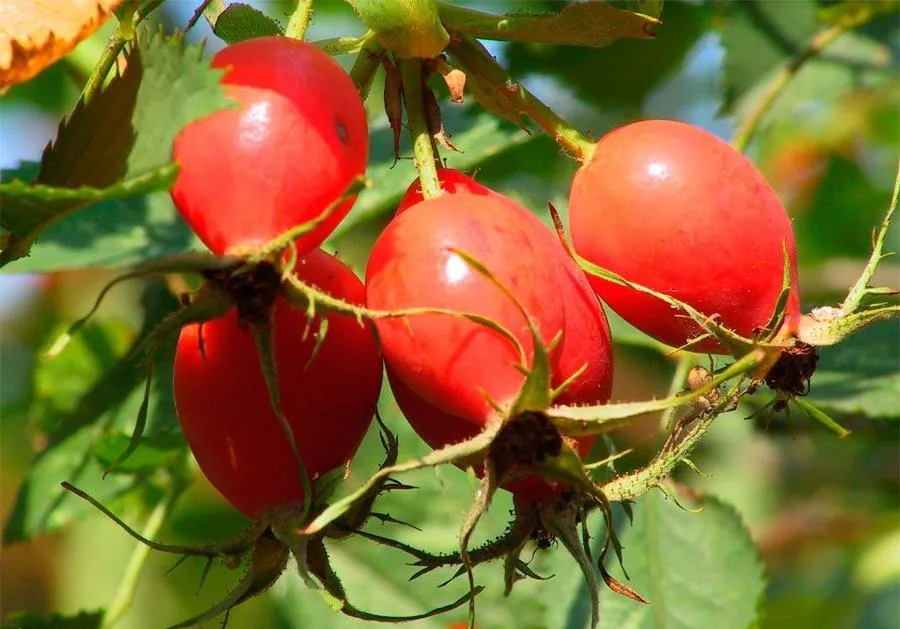
Table of Contents
INSTRUCTION FOR MEDICAL USE OF THE MEDICINAL PRODUCT ROSE HIP FRUITS (FRUCTUS ROSAE)
Composition:
Active substance: rose hip fruits (Fructus Rosae);
1 pack contains rose hip fruits (Fructus Rosae) – 100 g or 130 g; 1 filter bag contains rose hip fruits (Fructus Rosae) – 3 g.
Pharmaceutical form. Fruits.
Main physico-chemical properties:
crude material: whole, cleaned from sepals and fruit stalks, false fruits of various shapes: from spherical, egg-shaped or oval to strongly elongated spindle-shaped;
fruit color ranges from orange-red to reddish-brown; achenes are light yellow, sometimes brownish. Odor is absent. Taste is sour-sweet, slightly astringent;
coarse powder: a mixture of heterogeneous fragments of fruit pericarps, individual hairs or clumped hairs, whole achenes and their fragments. Color of fruit fragments ranges from orange-red to reddish-brown; achenes are light yellow, sometimes brownish. Odor is absent. Taste is sour-sweet, slightly astringent.
Pharmacotherapeutic group. Agents affecting metabolism and digestive system.
ATC code A16A X.
Pharmacological properties.
Pharmacodynamics.
Biologically active substances of the fruits exert anti-sclerotic and anti-inflammatory effects: they activate enzyme systems and redox processes in the body, help eliminate vitamin C deficiency, normalize carbohydrate metabolism, enhance hormone synthesis and tissue regeneration, increase the body's resistance to adverse environmental factors, promote bile secretion, increase diuresis, and reduce capillary fragility and permeability.
Pharmacokinetics.
Not studied.
Clinical characteristics.
Indications.
A general tonic agent in acute and chronic infections, dystrophy, and physical exertion; hemorrhagic diatheses; bleeding of various etiologies; anticoagulant overdose; acute and chronic liver diseases (chronic hepatitis, cholecystitis, cholangitis); kidney and bladder disorders (nephritis, nephropathies in pregnant women) – as part of complex therapy.
Contraindications.
Hypersensitivity to biologically active components of the drug. Thrombophlebitis and predisposition to it, circulatory insufficiency, endocarditis, decompensated diabetes mellitus, severe kidney diseases, cholelithiasis.
Special precautions.
After using the decoction, it is recommended to rinse the oral cavity with warm water or a weak soda solution to prevent damage to tooth enamel.
Interaction with other medicinal products and other forms of interaction.
Unknown.
Special precautions for use.
Use during pregnancy or breastfeeding.
Use after consulting a physician, who should assess the benefit/risk ratio for the fetus/child.
Ability to affect reaction speed when driving or operating machinery.
Does not affect.
Dosage and Administration.
Place 1 tablespoon of fruit in an enameled container, pour 200 ml of hot boiled water, cover with a lid, and steep in a boiling water bath for 15 minutes. Cool at room temperature for 45–60 minutes, strain, and squeeze the residue into the strained decoction. Adjust the decoction volume to 200 ml with boiled water. Take warm, twice daily after meals: for adults and children aged 14 years and older – ½ cup; for children aged 10–14 years – ⅓ cup; aged 7–10 years – 2 tablespoons; aged 3–7 years – 1 tablespoon; aged 1–3 years – 1 dessert spoon. Shake the decoction before use.
Place 3 filter bags into a glass or enameled container, pour 200 ml of boiling water, cover and steep for 20–30 minutes. Take warm, twice daily after meals: for adults and children aged 14 years and older – ½ cup; for children aged 10–14 years – ⅓ cup; aged 7–10 years – 2 tablespoons; aged 3–7 years – 1 tablespoon; aged 1–3 years – 1 dessert spoon.
The duration of treatment is determined individually by a physician.
Children.
The drug may be used in children aged 1 year and older.
Overdose.
No cases reported.
Side effects.
Allergic reactions are possible (including hyperemia, rash, itching, skin swelling).
Shelf life. 2 years.
Do not use after the expiry date stated on the packaging.
Storage conditions.
Store in the original packaging, in a place inaccessible to children, at a temperature not exceeding 25 °C; prepared decoction – in a cool place, for no more than 2 days.
Packaging.
100 g or 130 g in packets, placed into a carton box; 3 g in filter bags, 20 filter bags per carton box.
Supply category. Over-the-counter.
Manufacturer. JSC Pharmaceutical Factory "Viola".
Manufacturer's location and address of business activity.
69050, Ukraine, Zaporizhzhia, Skladska Street, 4.
Marketing Authorization Holder. JSC Pharmaceutical Factory "Viola".
Address of the Marketing Authorization Holder.
69063, Ukraine, Zaporizhzhia, Amosov Akademika Street, 75.