Sandimmune neoral®
Ukraine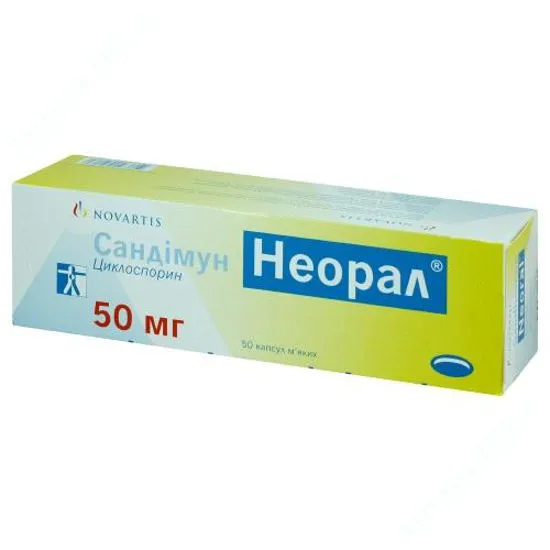
Table of Contents
INSTRUCTIONS FOR MEDICAL USE OF THE MEDICINAL PRODUCT SАNDIMMUN NEORAL® (SANDIMMUN NEORAL®)
Composition:
Active substance: ciclosporin;
1 capsule contains 10, 25, 50, or 100 mg of cyclosporin microemulsion;
Excipients: polyoxyl 40 hydrogenated castor oil; mono- and di-triglycerides of corn oil; anhydrous ethanol; propylene glycol; α-tocopherol;
capsule shell: gelatin, propylene glycol, glycerol (85%), residual solvents, titanium dioxide (E 171), iron oxide black (E 172) – only for 25 mg and 100 mg capsules;
printing ink, red, food: carminic acid (E 120), aluminum chloride hexahydrate, sodium hydroxide, propylene glycol, hypromellose, isopropyl alcohol, purified water.
Pharmaceutical form. Soft capsules.
Main physicochemical properties:
10 mg capsules – oval, soft, gelatin capsules of yellow-white color with red print NVR 10;
25 mg capsules – oval, soft, gelatin capsules of grey-blue color with red print NVR 25 mg;
50 mg capsules – elongated, soft, gelatin capsules of yellow-white color with red print NVR 50 mg;
100 mg capsules – elongated, soft, gelatin capsules of grey-blue color with red print NVR 100 mg.
Contents of the capsules:
clear liquid, ranging in color from yellow to pale yellow or from brownish-yellow to pale brownish-yellow.
The liquid contains oily components of natural origin which may solidify at low temperatures. Gel-like formations may be observed at temperatures below 20 °C and disappear at temperatures above 30 °C. Slight flakes or a light precipitate may still be observed. This does not affect the quality of the capsules.
Pharmacotherapeutic group. Antineoplastic and immunomodulating agents. Immunosuppressants. Calcineurin inhibitors. Cyclosporin.
ATC code L04AD01.
Pharmacological Properties
Pharmacodynamics
Cyclosporine (also known as cyclosporine A) is a cyclic polypeptide composed of 11 amino acids. It is a potent immunosuppressive agent that prolongs the survival of allogeneic transplants of skin, heart, kidneys, pancreas, bone marrow, small intestine, and lungs in animals.
Studies demonstrate that cyclosporine suppresses cell-mediated immune responses, including immunity against allografts, delayed-type skin hypersensitivity, experimental allergic encephalomyelitis, adjuvant-induced arthritis, graft-versus-host reaction (GVHR), and T-lymphocyte-dependent antibody production. Cyclosporine arrests lymphocytes in the resting state at phase G0 or early G1 phase of the cell cycle, inhibits antigen-dependent release of lymphokines by activated T-lymphocytes, and suppresses lymphokine production and release at the cellular level, including interleukin-2 (T-cell growth factor, TCGF). All available evidence indicates a specific and reversible effect of cyclosporine on lymphocytes. It does not impair hematopoiesis and does not affect phagocyte function, unlike cytostatic agents. Thus, patients receiving cyclosporine after transplantation are less susceptible to infectious diseases compared to those receiving other immunosuppressive drugs.
Successful allogeneic transplantation of solid organs and bone marrow has been performed in humans using cyclosporine for prevention and treatment of graft rejection and graft-versus-host disease. Cyclosporine has been used in both hepatitis C virus (HCV)-positive and HCV-negative liver transplant recipients. Positive therapeutic effects of cyclosporine have also been observed in the treatment of several conditions with established or suspected autoimmune etiology.
Sandimmun Neoral® is a microemulsion preconcentrate; the true microemulsion formed immediately upon contact of the solution with water (in beverages or gastric juice) reduces variability in pharmacokinetic parameters and ensures a linear relationship between dose and cyclosporine exposure.
Pharmacokinetics
Absorption
After oral administration of Sandimmun Neoral®, peak blood concentrations of cyclosporine are achieved within 1–2 hours. The absolute oral bioavailability of cyclosporine when administered as Sandimmun Neoral® ranges from 20% to 50%. When Sandimmun Neoral® is taken with a high-fat meal, AUC and Cmax values decrease by approximately 13% and 33%, respectively. A linear relationship between administered dose and cyclosporine exposure (AUC) is maintained within the therapeutic dose range. Inter- and intra-subject variability in AUC and Cmax values is approximately 10–20%. Administration of Sandimmun Neoral® results in an approximately 59% increase in Cmax and a 29% increase in bioavailability compared to Sandimmun. Available data indicate that after switching from Sandimmun soft gelatin capsules to Sandimmun Neoral® at a 1:1 dose ratio, trough concentrations in whole blood are comparable and remain within the target therapeutic range. Sandimmun Neoral® provides a more pronounced linear relationship between dose and cyclosporine exposure (AUC). Compared to Sandimmun, this medicinal product provides a more stable absorption profile, less influenced by concomitant food intake and circadian rhythm.
Distribution
Cyclosporine is distributed predominantly in the extravascular space, with a mean apparent volume of distribution of 3.5 L/kg. In blood, 33–47% of the drug is located in plasma, 4–9% in lymphocytes, 5–12% in granulocytes, and 41–58% in erythrocytes. In plasma, approximately 90% of cyclosporine is protein-bound, primarily to lipoproteins.
Biotransformation
Cyclosporine undergoes extensive biotransformation, forming approximately 15 metabolites. Biotransformation occurs primarily in the liver via cytochrome P450 3A4 (CYP3A4), with the main metabolic pathways being mono- and dihydroxylation and N-demethylation at various sites of the molecule. All identified metabolites retain the complete peptide structure of the parent compound; some exhibit weak immunosuppressive activity (up to one-tenth the activity of the unchanged drug).
Elimination
The drug is excreted predominantly via bile, with only 6% of the orally administered dose eliminated in urine, of which 0.1% is excreted unchanged in urine.
There is high variability in reported terminal half-life values of cyclosporine, depending on the analytical method and target population. The terminal half-life ranges from 6.3 hours in healthy volunteers to 20.4 hours in patients with severe liver disease. In kidney transplant patients, the half-life was approximately 11 hours, with values ranging from 4 to 25 hours.
Special Patient Populations
Patients with Renal Impairment
In a study involving patients with end-stage renal failure, systemic clearance of the drug was approximately two-thirds of the average systemic clearance observed in patients with normal renal function. Less than 1% of the administered dose is removed by dialysis.
Patients with Hepatic Impairment
In patients with impaired liver function, cyclosporine exposure may increase two- to threefold. In a study involving patients with severe liver disease and biopsy-confirmed cirrhosis, the terminal half-life was 20.4 hours (ranging from 10.8 to 48 hours), compared to 7.4–11 hours in healthy volunteers.
Children
Pharmacokinetic data for Sandimmun Neoral® in pediatric patients are very limited. In 15 kidney transplant patients aged 3–16 years, whole blood cyclosporine clearance after intravenous administration of Sandimmun was 10.6 ± 3.7 mL/min/kg (assay method: RIA Cyclo-trac). In a study of 7 kidney transplant patients aged 2–16 years, cyclosporine clearance ranged from 9.8 to 15.5 mL/min/kg. In 9 liver transplant patients aged 0.65–6 years, clearance was 9.3 ± 5.4 mL/min/kg (assay method: HPLC). Differences in bioavailability between Sandimmun Neoral® and Sandimmun in children are similar to those observed in adults.
Clinical characteristics.
Indications.
Indications in transplantation
Organ transplantation:
- prevention of rejection of solid organ transplants;
- treatment of transplant rejection in patients previously treated with other immunosuppressive agents.
Bone marrow transplantation:
- prevention of rejection of allogeneic bone marrow and stem cell transplants;
- prevention and treatment of graft-versus-host disease.
Non-transplant indications
Endogenous uveitis:
- active intermediate or posterior uveitis threatening loss of vision, of non-infectious etiology, in cases where alternative treatment has proven ineffective or unacceptable due to adverse reactions;
- uveitis in Behçet’s disease with recurrent inflammatory episodes involving the retina without neurological symptoms.
Nephrotic syndrome:
- steroid-dependent or steroid-resistant nephrotic syndrome due to minimal change disease in primary glomerulonephritis, focal segmental glomerulosclerosis, or membranous glomerulonephritis.
Induction or maintenance of remission:
- maintenance of remission induced by corticosteroids, allowing their discontinuation.
Rheumatoid arthritis:
- treatment of severe active forms of rheumatoid arthritis.
Psoriasis:
- severe forms of psoriasis when standard treatment has proven ineffective or unacceptable.
Atopic dermatitis:
- treatment of severe forms of atopic dermatitis requiring systemic therapy.
Contraindications.
Hypersensitivity to cyclosporine or to any of the excipients of the medicinal product. Concomitant use with medicinal products containing Hypericum perforatum (St. John’s wort) due to the risk of reduced cyclosporine blood concentration and, consequently, reduced therapeutic effect.
Concomitant use with medicinal products that are substrates of the multidrug efflux transporter P-glycoprotein (Pgp) or organic anion transporting polypeptides (OATPs), whose increased plasma concentrations are associated with the development of serious adverse reactions and/or life-threatening adverse reactions, such as bosentan, dabigatran etexilate, and aliskiren.
Other possible contraindications:
- Renal insufficiency, except in patients with nephrotic syndrome and moderately elevated baseline creatinine concentrations up to 200 µmol/L in adults and 140 µmol/L in children. In nephrotic syndrome, cautious treatment with doses not exceeding 2.5 mg/kg/day may be permitted only if cyclosporine therapy contributes to normalization of creatinine levels elevated due to the disease.
- Poorly controlled hypertension.
- Poorly controlled infection.
History of known or diagnosed malignancies of any type, except premalignant conditions or skin malignancies after treatment.
Interaction with other medicinal products and other types of interactions.
Food interactions
An increase in cyclosporine bioavailability has been observed when grapefruit or grapefruit juice is consumed concomitantly.
Drug interactions
The following medicinal products have well-documented interactions considered clinically significant.
It is known that several drugs increase or decrease cyclosporine concentration in plasma or whole blood by inhibiting or inducing enzymes, particularly CYP3A4, involved in cyclosporine metabolism. Also, cyclosporine is an inhibitor of CYP3A4, the multidrug efflux transporter P-glycoprotein, and organic anion transporting proteins. This may increase plasma concentrations of concomitantly administered medicinal products that are substrates of CYP3A4 and/or these transporters.
Medicinal products that decrease or increase cyclosporine bioavailability
Frequent monitoring of cyclosporine blood levels should be performed in transplant recipients, especially at the beginning and end of treatment with another medicinal product, and the dosage of Sandimmun Neoral® should be adjusted as necessary.
In patients treated for non-transplant indications, the relationship between blood concentration and clinical effects is less well studied. When medicinal products that increase cyclosporine concentration are used concomitantly, frequent assessment of renal function and careful monitoring of cyclosporine-related adverse effects may be more appropriate than measuring blood levels.
Medicinal products that decrease cyclosporine concentrations
All CYP3A4 and/or P-glycoprotein inducers are expected to reduce cyclosporine concentration.
Examples of medicinal products that decrease cyclosporine concentration: barbiturates, carbamazepine, oxcarbazepine, phenytoin, nafcillin, intravenous sulfadimidine, rifampicin, octreotide, orlistat, probucol, intravenous trimethoprim, products containing Hypericum perforatum (St. John’s wort), ticlopidine, sulfinpyrazone, terbinafine, bosentan.
Rifampicin is an inducer of cyclosporine metabolism in the intestine and liver. Therefore, when used concomitantly, cyclosporine dosage may need to be increased by 3–5 times.
Octreotide reduces oral absorption of cyclosporine, potentially requiring a 50% increase in cyclosporine dose or switching to an intravenous formulation.
Medicinal products that increase cyclosporine concentrations
All CYP3A4 and/or P-glycoprotein inhibitors may increase cyclosporine concentration. Examples of such medicinal products: chloroquine, nicardipine, metoclopramide, oral contraceptives, methylprednisolone (high doses), allopurinol, cholic acid and its derivatives, protease inhibitors, imatinib, colchicine, nefazodone.
Macrolide antibiotics: erythromycin may increase cyclosporine exposure by 4–7 times, sometimes leading to nephrotoxicity. Clarithromycin has been reported to double cyclosporine exposure. Azithromycin increases cyclosporine concentration by approximately 20%.
Azole antifungals: ketoconazole, fluconazole, itraconazole, and voriconazole can increase cyclosporine exposure by more than double.
Verapamil increases cyclosporine blood concentration by 2–3 times.
Concomitant administration with telaprevir resulted in an approximately 4.64-fold increase in normalized exposure (AUC) of cyclosporine.
Amiodarone significantly increases cyclosporine plasma concentration along with increased serum creatinine. This interaction may persist for a prolonged period after amiodarone discontinuation due to its very long elimination half-life (approximately 50 days).
Danazol has been reported to increase cyclosporine blood concentration by approximately 50%.
Diltiazem (at a dose of 90 mg/day) may increase plasma cyclosporine concentration by 50%.
Imatinib may enhance cyclosporine exposure and increase its Cmax by approximately 20%.
Combinations with increased risk of nephrotoxicity
Caution is required when cyclosporine is used concomitantly with other agents exhibiting synergistic nephrotoxic effects, such as aminoglycosides (including gentamicin and tobramycin), amphotericin B, ciprofloxacin, vancomycin, trimethoprim (+ sulfamethoxazole), fibric acid derivatives (e.g., bezafibrate, fenofibrate), nonsteroidal anti-inflammatory drugs (including diclofenac, indomethacin, naproxen, and sulindac), melphalan, histamine H2-receptor antagonists (e.g., cimetidine, ranitidine), methotrexate, tacrolimus.
Recommendations
If concomitant use of medicinal products known to interact with Sandimmun Neoral® cannot be avoided, the following general recommendations should be followed:
When used concomitantly with medicinal products that may exhibit synergistic nephrotoxic effects, careful monitoring of renal function is required. In case of significant renal impairment, the dose of the concomitantly administered medicinal product should be reduced or alternative therapy considered.
In transplant recipients, isolated cases of significant but reversible renal dysfunction (with corresponding increase in serum creatinine) have been observed after concomitant use of fibrates (e.g., bezafibrate, fenofibrate). Therefore, renal function should be closely monitored in such patients. If significant renal dysfunction occurs, concomitant use should be discontinued.
Concomitant use of tacrolimus should be avoided due to increased risk of nephrotoxicity and pharmacokinetic interactions involving CYP3A4 and/or P-gp.
Effect of cyclosporine on other medicinal products
Cyclosporine may reduce the clearance of digoxin, colchicine, prednisolone, HMG-CoA reductase inhibitors (statins), etoposide, aliskiren, bosentan, and dabigatran.
Severe digitalis intoxication has been observed within several days after initiation of cyclosporine therapy in some patients receiving digoxin. Cyclosporine has been reported to potentiate colchicine's toxic effects, such as myopathy and neuropathy, particularly in patients with renal dysfunction.
Cases of myotoxicity, including muscle pain and weakness, myositis, and rhabdomyolysis, have been described in medical publications and post-marketing studies in patients taking cyclosporine concomitantly with lovastatin, simvastatin, atorvastatin, pravastatin, and also fluvastatin (rarely). When these statins are used concomitantly with cyclosporine, their dosage should be reduced according to the instructions provided in the prescribing information. Statin therapy may be temporarily discontinued in patients with symptoms of myopathy or in those with risk factors for severe renal impairment, including secondary renal failure due to rhabdomyolysis.
Concomitant administration of nifedipine with cyclosporine may lead to an increased frequency of gingival hyperplasia compared to cyclosporine alone.
After co-administration of cyclosporine and lercanidipine, the AUC of the latter increased threefold, and the AUC of cyclosporine increased by 21%. Therefore, concomitant use of cyclosporine with lercanidipine should be avoided. Administration of cyclosporine 3 hours after lercanidipine did not alter the AUC of the latter, but the AUC of cyclosporine increased by 27%. Therefore, this combination should be used cautiously with at least a 3-hour interval between administrations.
An antihypertensive agent without pharmacokinetic interactions with cyclosporine should be preferred.
After concomitant administration of cyclosporine and aliskiren, Cmax of aliskiren, a P-gp substrate, increased approximately 2.5-fold and AUC increased approximately 5-fold. However, the pharmacokinetic profile of cyclosporine was not significantly altered.
Concomitant use of dabigatran etexilate is also not recommended due to cyclosporine’s inhibitory activity on P-gp. Dabigatran has a narrow therapeutic index, and increased plasma concentration is associated with an increased risk of bleeding.
It has been established that concomitant use of diclofenac and cyclosporine leads to a significant increase in diclofenac bioavailability, potentially resulting in reversible renal impairment. This increase is most likely due to reduced high first-pass effect of diclofenac. Concomitant use of cyclosporine with NSAIDs having low first-pass effect (such as acetylsalicylic acid) is generally not associated with increased bioavailability.
Increased serum creatinine has been observed in studies during concomitant use of everolimus or sirolimus and full doses of cyclosporine in microemulsion form. This effect is often reversible upon reduction of cyclosporine doses. Everolimus and sirolimus have only minimal effects on cyclosporine pharmacokinetics. Concomitant use of cyclosporine significantly increases blood concentrations of everolimus and sirolimus.
Cyclosporine should be prescribed with caution together with potassium-sparing agents (e.g., potassium-sparing diuretics, ACE inhibitors, angiotensin II receptor antagonists) or potassium-containing products, as this may lead to a significant increase in serum potassium levels.
Cyclosporine may also increase plasma levels of repaglinide, thereby increasing the risk of hypoglycemia.
Concomitant administration of bosentan with cyclosporine in healthy volunteers reduced cyclosporine exposure by 35%, while bosentan exposure increased approximately twofold. Therefore, concomitant use of cyclosporine with bosentan is not recommended.
Repeated dosing of ambrisentan and cyclosporine in healthy volunteers led to approximately a twofold increase in ambrisentan exposure, while cyclosporine exposure was only slightly increased (approximately 10%).
In oncology patients, concomitant use of intravenous anthracycline antibiotics (e.g., doxorubicin, mitoxantrone, daunorubicin) and very high doses of cyclosporine resulted in a significant increase in anthracycline antibiotic exposure.
Digoxin, colchicine, HMG-CoA reductase inhibitors. If any of these medicinal products are prescribed concomitantly with Sandimmun Neoral®, careful clinical monitoring is required to enable early detection of toxic effects and subsequent dose reduction or discontinuation of the drug.
Drug interactions occur more frequently in elderly patients.
During cyclosporine therapy, vaccine efficacy may be reduced. Use of live attenuated vaccines should be avoided.
Children
Drug interaction studies have been conducted exclusively in adult patients.
Special precautions for use.
Sandimmune Neoral® should be prescribed only by physicians experienced in immunosuppressive therapy who can provide the necessary additional monitoring (regular comprehensive physical examinations, blood pressure monitoring, laboratory tests). Patients who have undergone transplantation and are receiving Sandimmune Neoral® must be managed only in medical facilities equipped with appropriate laboratory and medical equipment. The physician responsible for maintenance therapy should be provided with all necessary information for proper patient care.
Absorption of calcineurin inhibitors may be impaired in patients with cystic fibrosis.
Like other immunosuppressants, cyclosporine increases the risk of developing lymphomas and other malignancies, including skin tumors. Regular monitoring of patients receiving long-term Sandimmune Neoral® therapy is required to ensure early diagnosis. Treatment should be discontinued if a premalignant condition or tumor is diagnosed. Evidence suggests that the increased risk is related to the degree and duration of immunosuppression, rather than to the use of specific agents.
Therefore, treatment regimens involving multiple immunosuppressants (including cyclosporine) should be used with caution, as they may lead to lymphoproliferative disorders and solid organ tumors, sometimes with fatal outcomes.
Due to the potential risk of skin malignancies, patients receiving Sandimmune Neoral®, particularly those treated for psoriasis or atopic dermatitis, should be advised to avoid excessive sun exposure without adequate protection and should not undergo UVB irradiation or PUVA photochemotherapy concurrently.
Infections
As with other immunosuppressants, the use of cyclosporine may lead to various bacterial, fungal, parasitic, and viral infections, often involving opportunistic pathogens. Reactivation of latent polyomavirus infection has been observed in patients receiving cyclosporine, potentially leading to polyomavirus-associated nephropathy (PVAN), including BK virus nephropathy (BKVN), or progressive multifocal leukoencephalopathy associated with JC virus (PML). These complications are often secondary to high levels of immunosuppression and should be considered in the differential diagnosis of immunosuppressed patients with worsening renal function or neurological symptoms. Serious and/or fatal outcomes have been reported. Effective prophylactic and therapeutic strategies should be employed, especially in patients requiring repeated or prolonged immunosuppressive therapy. Total immunosuppression should be reduced in patients with PVAN or PML, although reduced immunosuppression may also jeopardize the transplant.
Nephrotoxicity
During the first few weeks of treatment with Sandimmune Neoral®, elevated serum creatinine and urea levels are common and potentially serious complications. These functional changes are dose-dependent and usually reversible, with values returning to normal upon dose reduction. In some patients, prolonged use of the drug may lead to structural kidney changes (e.g., interstitial fibrosis), which should be differentiated from signs of chronic rejection in kidney transplant recipients. Frequent monitoring of renal function according to local guidelines and specific indications for drug use is therefore essential.
Hepatotoxicity
Sandimmune Neoral® may also cause dose-dependent, reversible increases in serum bilirubin levels, and sometimes in liver enzymes. There have been case reports and spontaneous reports of hepatotoxicity and liver injury, including cholestasis, jaundice, hepatitis, and liver failure, in patients receiving cyclosporine. Most reports involved patients with significant comorbidities, underlying pathological conditions, and other concurrent factors, including infectious complications and concomitant medications with hepatotoxic potential. In some cases, primarily in transplant patients, fatal outcomes have been reported.
Regular monitoring of appropriate liver function parameters is required, and dose reduction should be considered if abnormalities are detected.
Elderly patients (aged 65 years and older)
Renal function should be monitored particularly carefully in elderly patients.
Monitoring of cyclosporine levels
When Sandimmune Neoral® is administered to transplant patients, regular monitoring of blood cyclosporine concentrations is an important safety measure. Cyclosporine blood levels should preferably be measured using specific monoclonal antibodies (to determine unchanged drug concentration). However, high-performance liquid chromatography (HPLC) may also be used (also for determining unchanged drug concentration). When quantitatively measuring plasma or serum levels, a standardized separation method (time and temperature) must be applied.
In liver transplant recipients, initial blood level monitoring should be performed either using only specific monoclonal antibodies or by parallel measurements using both specific and non-specific monoclonal antibodies to ensure adequate immunosuppression.
It should also be remembered that cyclosporine blood, plasma, or serum levels are only one of many factors influencing the patient's clinical status. Therefore, results should be interpreted only in the context of other clinical and biochemical parameters.
Monitoring of blood pressure
Blood pressure should be monitored regularly during treatment with Sandimmune Neoral®. If arterial hypertension is detected, appropriate antihypertensive treatment should be initiated. Antihypertensive drugs that do not affect cyclosporine pharmacokinetics, such as isradipine, should be preferred.
Increased blood lipid levels
There have been isolated reports of mild, reversible increases in blood lipids associated with Sandimmune Neoral® treatment. Lipid levels should be measured before and one month after initiation of treatment. If elevated lipid levels are detected, dietary fat intake should be reduced and, if necessary, the dose should be decreased.
Hyperkalemia
The risk of hyperkalemia increases with cyclosporine use, especially in patients with renal dysfunction. Cyclosporine should be used with caution in combination with potassium-sparing agents (e.g., potassium-sparing diuretics, angiotensin-converting enzyme inhibitors, angiotensin II receptor antagonists) or potassium-containing medications, or in patients on a potassium-rich diet. In such cases, potassium levels should be monitored.
Hypomagnesemia
Cyclosporine increases magnesium excretion, which may lead to symptomatic hypomagnesemia, particularly in the peri-transplant period. Serum magnesium levels should be monitored during the peri-transplant period, especially if neurological symptoms are present. If necessary, magnesium supplementation should be administered.
Hyperuricemia
Caution is required when treating patients with hyperuricemia.
Live attenuated vaccines
Vaccination during cyclosporine therapy may be less effective, and the use of live attenuated vaccines should be avoided.
Interactions
Cyclosporine should be used with caution when co-administered with drugs that significantly increase or decrease cyclosporine plasma concentrations via inhibition or induction of CYP3A4 and/or P-glycoprotein (see section "Interaction with other medicinal products and other types of interactions").
Monitoring for nephrotoxicity is required when cyclosporine is administered with active substances that increase cyclosporine concentration or exhibit synergism in nephrotoxic effects (see section "Interaction with other medicinal products and other types of interactions").
Concomitant use of cyclosporine and tacrolimus should be avoided (see section "Interaction with other medicinal products and other types of interactions").
Cyclosporine is an inhibitor of CYP3A4, the multidrug efflux transporter P-glycoprotein, and organic anion transporting polypeptides (OATPs) and may increase plasma concentrations of concomitantly administered drugs that are substrates of these enzymes and/or transporters, such as dabigatran, aliskiren, and bosentan. Caution should be exercised or co-administration avoided when using cyclosporine with such drugs (see section "Interaction with other medicinal products and other types of interactions"). Cyclosporine enhances exposure to HMG-CoA reductase inhibitors (statins). When co-administered with cyclosporine, statin doses should be reduced; co-administration with certain statins should be avoided according to recommendations specified in the product information for these drugs. Statin therapy should be temporarily or permanently discontinued in patients with signs and symptoms of myopathy or risk factors for severe renal injury, including renal failure due to rhabdomyolysis (see section "Interaction with other medicinal products and other types of interactions").
Patients with psoriasis should avoid concomitant use of beta-blockers or diuretics.
Special excipients
Sandimmune Neoral® contains hydrogenated castor oil "Polyoxyl 40", which may cause gastrointestinal disturbances and diarrhea.
Oral formulations of Sandimmune Neoral® contain approximately 12% (v/v) ethanol. A 500 mg dose of Sandimmune Neoral® contains 500 mg of ethanol, equivalent to approximately 15 ml of beer or 5 ml of wine. This may be harmful to alcohol-dependent patients and requires consideration in the treatment of pregnant women and breastfeeding women, patients with liver disease or epilepsy, and in pediatric use.
Additional precautions for non-transplant indications
Cyclosporine should not be administered to patients with impaired renal function (except patients with nephrotic syndrome with acceptable degree of renal insufficiency), uncontrolled arterial hypertension, uncontrolled infections, or any type of malignancy.
Prior to initiating treatment, baseline renal function should be reliably assessed by at least two measurements of estimated glomerular filtration rate (eGFR). Frequent assessment of renal function during therapy is necessary for appropriate dose adjustment.
Additional precautions for endogenous uveitis
Neurological manifestations associated with Behçet’s syndrome have been reported in connection with cyclosporine. Sandimmune Neoral® should be used with caution in patients with Behçet’s syndrome who have neurological manifestations. Careful monitoring of neurological status in such patients is required.
Additional precautions for nephrotic syndrome
Patients with baseline renal impairment should initially receive a dose of 2.5 mg/kg/day and be monitored very closely.
In some patients, it may be difficult to distinguish Sandimmune Neoral®-induced renal dysfunction from renal changes caused by the nephrotic syndrome itself. This explains why, in rare cases, Sandimmune Neoral®-associated structural kidney changes may occur without elevated serum creatinine levels. Renal biopsy should be considered in patients with steroid-dependent minimal change nephropathy who have received Sandimmune Neoral® therapy for more than 1 year.
Occasional reports have described the development of malignancies (including Hodgkin’s lymphoma) in patients with nephrotic syndrome who received immunosuppressants (including cyclosporine).
Additional precautions for rheumatoid arthritis
After 6 months of therapy, renal function should be assessed every 4–8 weeks depending on disease stability, concomitant medication, and comorbidities. More frequent monitoring is required if the dose of Sandimmune Neoral® is increased or if concomitant nonsteroidal anti-inflammatory drugs are initiated or their doses increased.
Discontinuation of the drug may also be necessary if arterial hypertension induced by Sandimmune Neoral® therapy cannot be controlled with appropriate antihypertensive treatment.
As with long-term use of other immunosuppressive drugs, an increased risk of lymphoproliferative disorders should be considered. Particular caution is required when using Sandimmune Neoral® in combination with methotrexate due to synergistic nephrotoxic effects.
Additional precautions for psoriasis
Discontinuation of Sandimmune Neoral® therapy is recommended if arterial hypertension induced by Sandimmune Neoral® cannot be controlled with appropriate treatment.
Treatment of elderly patients should be initiated only in cases of disabling forms of psoriasis and with particularly careful monitoring of renal function.
Malignant tumors (including skin) have been reported in patients with psoriasis who received cyclosporine as standard immunosuppressive therapy. Atypical skin lesions suspicious for malignancy or premalignant changes should undergo biopsy before initiating Sandimmune Neoral® therapy. Patients with malignant or premalignant skin changes should receive Sandimmune Neoral® only after appropriate treatment of skin lesions and if no other successful treatment options are available.
Lymphoproliferative disorders have occurred in some patients with psoriasis receiving Sandimmune Neoral®. These resolved after rapid discontinuation of the drug.
Patients receiving Sandimmune Neoral® should not undergo UVB irradiation or PUVA photochemotherapy concurrently.
Additional precautions for atopic dermatitis
Discontinuation of Sandimmune Neoral® therapy is recommended if arterial hypertension induced by Sandimmune Neoral® cannot be controlled with appropriate treatment.
Treatment of elderly patients should be initiated only in cases of disabling forms of atopic dermatitis and with particularly careful monitoring of renal function.
Benign lymphadenopathy is often associated with exacerbations of atopic dermatitis and resolves spontaneously or with overall improvement of the disease.
Lymphadenopathy observed during cyclosporine therapy requires regular monitoring.
If lymphadenopathy persists despite reduced disease activity, a biopsy should be performed as a precautionary measure to rule out lymphoma.
Before initiating Sandimmune Neoral® therapy, patients should have recovered from active herpes simplex virus infection. However, such infection does not necessarily require discontinuation of the drug if it occurs during treatment (except in severe cases).
Skin infections caused by Staphylococcus aureus do not constitute an absolute contraindication to Sandimmune Neoral® therapy but require treatment with appropriate antibacterial agents. Oral erythromycin, known to increase cyclosporine blood concentration, should be avoided; if no alternative is available, careful monitoring of cyclosporine blood levels, renal function, and cyclosporine side effects is recommended.
Patients receiving Sandimmune Neoral® should be advised to avoid excessive sun exposure without adequate protection and should not undergo UVB irradiation or PUVA photochemotherapy concurrently.
Use in pediatrics for non-transplant indications
Except for the treatment of nephrotic syndrome, adequate experience with Sandimmune Neoral® is lacking; its use in children under 16 years of age for non-transplant indications other than nephrotic syndrome cannot be recommended.
Do not use after the expiry date stated on the packaging.
Use during pregnancy or breastfeeding.
Animal studies have demonstrated reproductive toxicity in rats and rabbits.
Experience with Sandimmune Neoral® use in pregnant women is limited. Pregnant women receiving immunosuppressants after transplantation, including cyclosporine, or treatment regimens containing cyclosporine, have an increased risk of preterm delivery (< 37 weeks).
A limited number of children up to 7 years of age exposed to cyclosporine in utero have been followed. These children had normal renal function and blood pressure.
However, no adequately controlled studies in pregnant women have been conducted. Sandimmune Neoral® should not be used during pregnancy except when the expected benefit to the mother outweighs the potential risk to the fetus. The presence of ethanol in Sandimmune Neoral® formulations should also be considered during pregnancy.
Cyclosporine passes into breast milk. The presence of ethanol in Sandimmune Neoral® formulations should be considered for breastfeeding women. Women taking Sandimmune Neoral® should not breastfeed due to the potential for serious adverse reactions in breastfed newborns/infants. A decision should be made whether to discontinue breastfeeding or to discontinue/abstain from the drug, taking into account the importance of the drug for the mother.
Data on the effect of Sandimmune Neoral® on human fertility are limited.
Ability to affect reaction speed when driving vehicles or operating machinery.
There are no data on the effect of Sandimmune Neoral® on the ability to drive vehicles or operate machinery.
Dosage and Administration
The dosage ranges provided for oral administration should be considered only as recommended. The daily dose of Sandimmun Neoral® should always be divided into two doses with equal time intervals between administrations. It is recommended to administer Sandimmun Neoral® according to a strict schedule considering time of day and dietary regimen. If the prescribed dosing regimen cannot be achieved with capsules, particularly in patients with low body weight, use of the oral solution is recommended.
Sandimmun Neoral® may be prescribed only by a physician experienced in immunosuppressive therapy and/or organ transplantation.
Transplantation Indications
Regular monitoring of cyclosporine blood levels using a radioimmunoassay with monoclonal antibodies is required. The results obtained serve as the basis for determining the dose necessary to achieve target concentrations.
Organ Transplantation
The initial dose is 10–15 mg/kg body weight, divided into two doses and administered up to 12 hours before transplantation. After surgery, the same dose is continued daily for 1–2 weeks, after which the dose is gradually reduced under cyclosporine blood concentration monitoring according to local immunosuppressive therapy protocols until a maintenance dose of 2–6 mg/kg/day (in two doses) is reached.
Sandimmun Neoral® may be used in combination with other immunosuppressants/corticosteroids, as well as part of combined triple or quadruple therapy. Lower initial doses (e.g., an oral dose of 3–6 mg/kg/day divided into two doses) may be used at the beginning of treatment.
Bone Marrow Transplantation / Prevention and Treatment of Graft-versus-Host Disease (GvHD)
The recommended initial dose should be administered one day before transplantation.
Sandimmun, concentrate for solution for infusion, is generally preferred at the beginning of therapy. The recommended intravenous dose is 3–5 mg/kg/day. Intravenous infusion at this dose should continue during the early post-transplantation period for up to 2 weeks, after which transition to oral maintenance therapy with Sandimmun Neoral® at a daily dose of approximately 12.5 mg/kg divided into two doses is recommended.
Maintenance therapy should be continued for 3–6 months (preferably 6 months). The dose should be gradually reduced to zero within one year after transplantation. If Sandimmun Neoral® is used from the beginning of therapy, the recommended dose is 12.5–15 mg/kg/day in two divided doses, starting the day before transplantation.
In patients with gastrointestinal disorders that reduce absorption, higher doses of capsules or intravenous infusion concentrate (Sandimmun) may be required.
In some patients, graft-versus-host disease (GvHD) may occur after discontinuation of Sandimmun Neoral®, which usually resolves upon resumption of therapy. In such cases, an initial oral loading dose of 10–12.5 mg/kg should be administered, followed by oral maintenance therapy at the dose effective during prior treatment. For treatment of chronic, mild forms of this condition, Sandimmun Neoral® should be used at low doses.
Non-Transplantation Indications
When using Sandimmun Neoral® for any approved non-transplantation indications, the following general rules should be observed.
Prior to initiating therapy, an objective baseline assessment of renal function should be established based on at least two measurements. Estimated glomerular filtration rate (eGFR), calculated using the MDRD formula, may be used to assess renal function in adults. An appropriate formula should be used to estimate eGFR in children. Since Sandimmun Neoral® may impair renal function, frequent monitoring is necessary. If eGFR decreases by more than 25% compared to baseline in more than one measurement, the dose of Sandimmun Neoral® should be reduced by 25–50%. If the decrease in eGFR compared to baseline exceeds 35%, further dose reduction of Sandimmun Neoral® should be considered. These recommendations apply even if the measured values remain within normal laboratory reference ranges. If dose reduction does not result in recovery of eGFR within one month, therapy with Sandimmun Neoral® should be discontinued.
Continuous monitoring of blood pressure is required.
Prior to initiating therapy, bilirubin concentration and other liver function parameters should be determined. Careful monitoring of these parameters is recommended during treatment.
Serum lipid, potassium, magnesium, and uric acid concentrations should be measured before starting therapy and periodically during treatment.
Periodic monitoring of cyclosporine blood concentration may be appropriate when used for non-transplantation indications, for example, when Sandimmun Neoral® is co-administered with drugs that may affect cyclosporine pharmacokinetics, or in cases of unusual clinical response (e.g., inadequate efficacy or increased drug sensitivity manifested as impaired renal function).
The standard route of administration is oral. When using the concentrate for infusion solution, careful calculations are required to determine the appropriate intravenous dose equivalent to the oral dose. Consultation with a physician experienced in cyclosporine use is recommended.
The total daily dose should not exceed 5 mg/kg, except in patients with sight-threatening endogenous uveitis and children with nephrotic syndrome.
For maintenance therapy, the lowest effective and tolerable dose should be individually determined.
Treatment with Sandimmun Neoral® should be discontinued in patients who do not achieve an adequate response within a defined time period (for detailed information, see below) or when the effective dose does not comply with established safety recommendations.
Endogenous Uveitis
The recommended initial dose to promote remission is 5 mg/kg/day orally in two divided doses until remission of active uveitis inflammation and improvement in visual acuity are achieved. In refractory cases, the dose may be increased temporarily up to 7 mg/kg/day.
When adequate control cannot be achieved with Sandimmun Neoral® monotherapy, combination with systemic corticosteroids (e.g., prednisone 0.2–0.6 mg/kg or equivalent) may be considered to induce initial remission or prevent ocular inflammation flare-ups. After 3 months of treatment, the corticosteroid dose may be reduced to the lowest effective dose.
Sandimmun Neoral® should be discontinued if no improvement is observed after three months of treatment.
During maintenance therapy, the dose should be gradually reduced to the lowest effective level, which should not exceed 5 mg/kg/day during remission.
An infectious cause of uveitis should be ruled out before initiating immunosuppressive therapy.
The daily dose should be reduced by 25–50% if plasma creatinine concentration exceeds the baseline value by more than 30% in more than one measurement, even if this concentration remains within the normal range.
Nephrotic Syndrome
The recommended daily dose to promote remission is 5 mg/kg for adults and 6 mg/kg for children, divided into two doses, provided renal function is normal except for proteinuria. For patients with impaired renal function, the initial dose should not exceed 2.5 mg/kg/day.
When monotherapy with Sandimmun Neoral® is inadequate, particularly in steroid-resistant patients, combination with low-dose oral corticosteroids may be beneficial.
Time to improvement ranges from 3 to 6 months, depending on the type of glomerulopathy. If no improvement is observed within this period, Sandimmun Neoral® therapy should be discontinued.
Doses should be individually adjusted based on efficacy (proteinuria) and safety, not exceeding 5 mg/kg/day for adults and 6 mg/kg/day for children.
For maintenance therapy, doses should be gradually and individually reduced to the lowest effective level.
Rheumatoid Arthritis
During the first 6 weeks of treatment, the recommended dose is 3 mg/kg/day orally in two divided doses. If the response is inadequate, the daily dose may be gradually increased, as tolerated, but should not exceed 5 mg/kg/day. Treatment with Sandimmun Neoral® may be continued for up to 12 weeks to achieve maximum efficacy.
For maintenance therapy, the dose should be individually titrated to the lowest effective dose based on tolerability.
Sandimmun Neoral® may be prescribed in combination with low-dose corticosteroids and/or nonsteroidal anti-inflammatory drugs (NSAIDs).
Sandimmun Neoral® may also be used in combination with weekly low-dose methotrexate if monotherapy with the latter is ineffective. In such cases, Sandimmun Neoral® is initiated at 2.5 mg/kg/day in two divided doses, with possible dose escalation within tolerability limits.
Psoriasis
Treatment with Sandimmun Neoral® should be initiated by a physician experienced in the diagnosis and treatment of psoriasis. Due to the variable nature of this disease, treatment should be individualized. The recommended initial dose for induction of remission is 2.5 mg/kg/day, divided into two doses. If no improvement is observed after 1 month of treatment, the dose may be gradually increased up to a maximum of 5 mg/kg/day. Treatment should be discontinued if an adequate response is not achieved within one month of daily administration at 5 mg/kg/day or if the effective dose is inconsistent with established safety recommendations.
For patients requiring particularly rapid improvement, an initial dose of 5 mg/kg/day may be justified. Discontinuation of Sandimmun Neoral® after achieving a satisfactory response, with subsequent re-initiation at the previously effective dose upon relapse, may be considered. Some patients may require continuous maintenance therapy.
For maintenance therapy, the dose should be individually adjusted to the lowest effective level and should not exceed 5 mg/kg/day.
Treatment with Sandimmun Neoral® should be gradually discontinued if remission persists for more than 6 months. However, the risk of relapse after discontinuation is very high.
Atopic Dermatitis
Treatment with Sandimmun Neoral® should be initiated by a physician experienced in the diagnosis and treatment of atopic dermatitis. Due to the variable nature of this disease, treatment should be individually tailored. For adults and adolescents aged 16 years and older, the recommended dose is 2.5–5 mg/kg/day, divided into two doses.
If the response to treatment at the initial dose of 2.5 mg/kg/day is inadequate after 2 weeks, the daily dose may be rapidly increased to the maximum of 5 mg/kg/day. In very severe cases, an initial dose of 5 mg/kg/day may achieve rapid and adequate disease control.
Treatment should be discontinued if patients with atopic dermatitis do not show sufficient improvement after one month of Sandimmun Neoral® administration at 5 mg/kg/day.
Current data on long-term use of Sandimmun Neoral® for atopic dermatitis are limited; therefore, the recommended duration of individual treatment cycles is no more than 8 weeks.
Switching from Sandimmun to Sandimmun Neoral®
Available data confirm that switching from Sandimmun to Sandimmun Neoral® at a 1:1 ratio results in comparable minimum cyclosporine concentrations in whole blood. However, many patients may experience higher maximum (peak) concentrations (Cmax) and increased drug exposure (AUC). In a small percentage of patients, these changes may be more pronounced and clinically significant. Additionally, absorption of cyclosporine from Sandimmun Neoral® shows less variability, and the correlation between trough cyclosporine concentrations and drug exposure (expressed as AUC) is stronger than with Sandimmun.
Because switching from Sandimmun to Sandimmun Neoral® may increase cyclosporine exposure, the following guidelines should be followed.
In post-transplant patients, Sandimmun Neoral® therapy should be initiated at the same daily dose previously used for Sandimmun. Initial monitoring of trough cyclosporine blood concentrations should be performed 4–7 days after switching to Sandimmun Neoral®. Additionally, clinical safety parameters such as renal function and blood pressure should be monitored during the first 2 months after the switch. If trough cyclosporine blood concentrations fall outside the therapeutic range and/or clinical safety parameters worsen, appropriate dose adjustments should be made.
When treating non-transplantation indications, Sandimmun Neoral® should be prescribed at the same daily dose as Sandimmun. Renal function and blood pressure should be monitored 2, 4, and 8 weeks after the switch. If more than one blood pressure measurement significantly exceeds pre-switch levels or if eGFR decreases by more than 25% compared to pre-Sandimmun therapy values, the dose should be reduced. Trough cyclosporine blood concentration monitoring should also be performed in case of unexpected toxic effects or cyclosporine inefficacy.
Switching Between Oral Cyclosporine Formulations
Switching between different oral cyclosporine formulations should be performed cautiously and under specialist supervision. Introduction of a new formulation should be accompanied by cyclosporine blood level monitoring in transplant patients.
Administration
Soft gelatin capsules should be swallowed whole, without chewing. If a cyclosporine dose less than 10 mg is required, the appropriate dosage strength or pharmaceutical form should be used.
Special Populations
Patients with Renal Impairment
All Indications
Cyclosporine is minimally excreted by the kidneys, and its pharmacokinetics are not significantly affected by renal impairment. However, due to its nephrotoxic potential, careful monitoring of renal function is recommended.
Non-Transplantation Indications
Cyclosporine should not be prescribed to patients with impaired renal function, except for those being treated for nephrotic syndrome. In patients with nephrotic syndrome and impaired renal function, the initial dose should not exceed 2.5 mg/kg/day.
Patients with Hepatic Impairment
Cyclosporine is extensively metabolized in the liver. In patients with hepatic impairment, cyclosporine exposure may increase approximately two- to threefold. In cases of severe hepatic impairment, dose reduction may be necessary to maintain blood drug concentrations within the recommended target range. In such cases, cyclosporine blood concentration monitoring is recommended until stable levels are achieved.
Patients with severe hepatic impairment require regular monitoring of plasma creatinine levels and, if possible, cyclosporine levels, with dose adjustments as needed.
Elderly Patients
Experience with Sandimmun Neoral® in elderly patients is limited.
In clinical trials of cyclosporine for rheumatoid arthritis, patients aged 65 years and older showed a higher incidence of systolic hypertension and increases in serum creatinine exceeding baseline values by 50% or more after 3–4 months of therapy.
Overall, dose selection for elderly patients should be cautious, considering the higher prevalence of decreased hepatic, renal, or cardiac function, concomitant diseases, or concomitant drug therapies that may increase susceptibility to infections. Therapy should generally be initiated at the lower end of the dosing range.
Children
Clinical studies have included children as young as 1 year of age. In several studies, pediatric patients required and tolerated higher doses of cyclosporine per unit of body weight than adults.
Except for the treatment of nephrotic syndrome, adequate experience with Sandimmun Neoral® is lacking; its use in children under 16 years of age for non-transplantation indications other than nephrotic syndrome cannot be recommended.
Overdose
The LD50 of cyclosporine following oral administration is 2,329 mg/kg in mice, 1,480 mg/kg in rats, and >1,000 mg/kg in rabbits. The LD50 following intravenous administration is 148 mg/kg in mice, 104 mg/kg in rats, and 46 mg/kg in rabbits.
Symptoms
Data on acute cyclosporine overdose are limited. Oral intake of doses up to 10 g (approximately 150 mg/kg) has resulted in relatively minor clinical consequences such as vomiting, drowsiness, headache, tachycardia, and in some patients, relatively significant reversible renal function impairment. However, accidental parenteral overdose in premature infants has led to severe intoxication.
Treatment
In all cases of overdose, symptomatic treatment and general supportive measures should be implemented. Inducing vomiting and gastric lavage may be beneficial within the first hours after overdose. Cyclosporine is practically not removed by hemodialysis and is insufficiently removed by charcoal hemoperfusion.
Adverse Reactions.
Summary of safety profile
The main adverse reactions observed during clinical trials and associated with cyclosporine use include renal dysfunction, tremor, hirsutism, arterial hypertension, diarrhea, anorexia, nausea, and vomiting.
Many adverse reactions associated with cyclosporine are dose-dependent and reversible upon dose reduction. The spectrum of adverse reactions is generally similar across different indications, although differences in frequency and severity exist. In transplant recipients, adverse effects occur more frequently and are usually more pronounced due to the need for higher initial doses and longer duration of maintenance therapy compared to patients with other indications.
Infections and infestations
Patients receiving immunosuppressive therapy, including cyclosporine, or treatment regimens containing cyclosporine, are at increased risk of developing viral, bacterial, fungal, and parasitic infections. Both localized and systemic infections may occur, as well as exacerbation of pre-existing infections. Reactivation of polyomavirus infections may lead to polyomavirus-associated nephropathy (PVAN) or progressive multifocal leukoencephalopathy (PML) associated with JC virus. Serious and/or fatal cases have been reported.
Benign, malignant and unspecified neoplasms (including cysts and polyps)
Patients receiving immunosuppressive agents, including cyclosporine, or treatment regimens containing cyclosporine, are at increased risk of developing lymphomas or lymphoproliferative disorders and other malignancies, particularly of the skin. The incidence of malignancies increases with the intensity and duration of therapy. Some malignancies may be fatal.
Summary of adverse reactions observed in clinical trials
Adverse reactions identified during clinical trials are grouped by system organ class according to MedDRA. Within each category, reactions are listed in descending order of severity. Adverse effects are listed according to frequency of occurrence (starting with the most frequent): very common (≥ 1/10); common (≥ 1/100 to < 1/10); uncommon (≥ 1/1,000 to < 1/100); rare (≥ 1/10,000 to < 1/1,000); very rare (< 1/10,000), including isolated reports.
Blood and lymphatic system disorders:
Common: leucopenia;
Uncommon: anemia, thrombocytopenia;
Rare*: thrombotic microangiopathy (including thrombotic thrombocytopenic purpura, microangiopathic hemolytic anemia, hemolytic uremic syndrome).
Metabolism and nutrition disorders:
Very common: hyperlipidemia;
Common: anorexia, hyperuricemia, hyperkalemia, hypomagnesemia;
Rare: hyperglycemia.
Nervous system disorders:
Very common: tremor (10–20%), headache including migraine (up to 15%);
Common: paraesthesia;
Uncommon: signs of encephalopathy, including reversible posterior encephalopathy syndrome, such as seizures, confusion, disorientation, psychomotor retardation, excitement, insomnia, visual disturbances, cortical blindness, coma, paresis, cerebellar ataxia;
Rare: motor polyneuropathy;
Very rare: optic disc edema, including papilledema, with possible visual loss due to benign intracranial hypertension.
Cardiac disorders:
Very common: arterial hypertension (15–40%);
Common: flushing.
Gastrointestinal disorders:
Very common: nausea, vomiting, abdominal discomfort, abdominal pain, diarrhea, gingival hyperplasia;
Common: peptic ulcer;
Rare: pancreatitis.
Hepatobiliary disorders:
Common: hepatic function abnormalities;
Not known*: hepatotoxicity and liver injury, including cholestasis; jaundice, hepatitis, hepatic failure, sometimes fatal.
Skin and subcutaneous tissue disorders:
Very common: hirsutism;
Common: rash, acne;
Uncommon: allergic rash.
Musculoskeletal and connective tissue disorders:
Common: muscle spasms, myalgia;
Rare: muscle weakness, myopathy, limb pain.
Renal and urinary disorders:
Very common: renal function impairment.
Reproductive system and breast disorders:
Rare: menstrual disorders, gynecomastia.
General disorders and administration site conditions:
Common: fatigue, edema, pyrexia;
Uncommon: weight increase.
*Adverse reactions identified from post-marketing experience, frequency unknown due to lack of precise population size.
Other adverse reactions reported from post-marketing surveillance
Spontaneous and solicited reports of hepatotoxicity and liver injury, including cholestasis, jaundice, hepatitis, and hepatic failure, have been received in patients taking cyclosporine. Most reports involved patients with significant comorbidities, underlying pathological conditions, and other risk factors, including infectious complications and concomitant use of hepatotoxic drugs. Fatal outcomes have been reported, particularly in transplant patients.
Acute and chronic nephrotoxicity
Patients receiving calcineurin inhibitors, including cyclosporine, or treatment regimens containing cyclosporine, are at increased risk of acute or chronic nephrotoxicity. Such reports have been received during clinical trials and post-marketing use of Sandimmun Neoral®. Electrolyte imbalances such as hyperkalemia, hypomagnesemia, and hypouricemia have been reported. In some cases, chronic morphological changes such as arteriolar hyalinosis, tubular atrophy, and interstitial fibrosis have been observed.
Children
Clinical trials included children aged 1 year and older. The safety profile observed with standard doses of cyclosporine was similar to that in adults.
Shelf life.
2 years.
Storage conditions.
Store at a temperature not exceeding 25°C. Keep out of the reach of children.
Packaging.
10 mg capsules – 10 capsules in a blister; 6 blisters in a cardboard box.
25 mg, 50 mg, 100 mg capsules – 5 capsules in a blister; 10 blisters in a cardboard box.
Prescription status.
Prescription only.
Manufacturer.
- Novartis Pharma Stein AG / Novartis Pharma Stein AG (primary and secondary packaging, quality control, batch release).
- Novartis Pharma GmbH (responsible for batch release).
- Lek Pharmaceuticals d.d., Production Unit Lendava / Lek Pharmaceuticals d.d., PE Proizvodnja Lendava (primary and secondary packaging, batch release).
Manufacturer's location and address of business premises.
- Schaffhauserstrasse, 4332 Stein, Switzerland.
- Roonstrasse 25 and Obere Turnstrasse 8 - 10, Nuernberg, Bayern, 90429, Germany.
- Trimlini 2d, Lendava/lendva, 9220, Slovenia.