Rivastigmine ic
Ukraine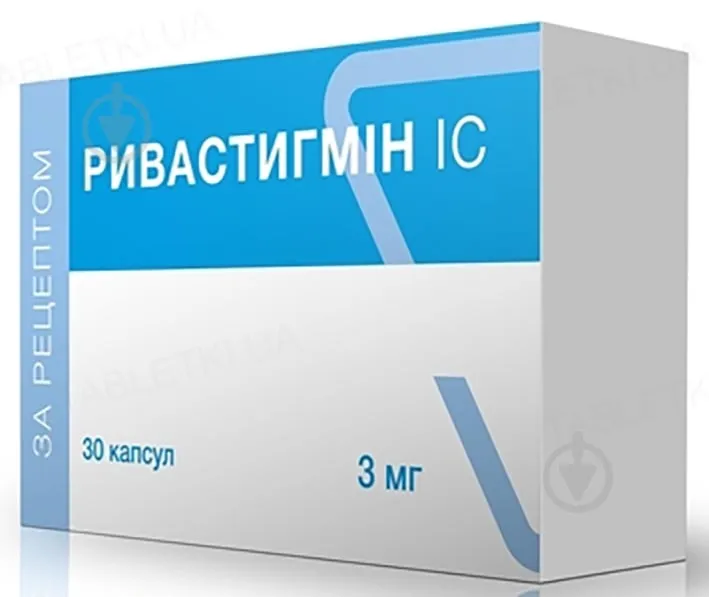
Table of Contents
INSTRUCTIONS FOR MEDICAL USE OF THE MEDICINAL PRODUCT RIVASTIGMINE IS
Composition:
Active substance: rivastigmine;
1 capsule contains rivastigmine hydrogen tartrate 2.4 mg (equivalent to 1.5 mg of rivastigmine), rivastigmine hydrogen tartrate 4.8 mg (equivalent to 3 mg of rivastigmine), rivastigmine hydrogen tartrate 7.2 mg (equivalent to 4.5 mg of rivastigmine), or rivastigmine hydrogen tartrate 9.6 mg (equivalent to 6 mg of rivastigmine);
Excipients: hypromellose (hydroxypropylmethylcellulose), colloidal anhydrous silicon dioxide, microcrystalline cellulose, magnesium stearate, gelatin, titanium dioxide (E 171).
Dosage form. Capsules.
Main physicochemical properties: opaque hard gelatin capsules, body – white, cap – white; the contents of the capsules – powder from white to almost white.
Pharmacotherapeutic group.
Psychoanaleptics. Drugs used in dementia. Cholinesterase inhibitors. Rivastigmine. ATC code N06DA03.
Pharmacological Properties
Pharmacodynamics
Rivastigmine is a carbamate-type inhibitor of acetyl- and butyrylcholinesterase, which is believed to enhance cholinergic neurotransmission by slowing the degradation of acetylcholine released from functionally intact cholinergic neurons. Thus, rivastigmine exerts a beneficial effect on the cognitive deficit caused by impaired cholinergic neurotransmission in dementia associated with Alzheimer's disease or Parkinson's disease.
Rivastigmine interacts with target enzymes forming a covalent complex that temporarily inactivates these enzymes. In healthy young men, oral administration of rivastigmine at a dose of 3 mg resulted in approximately 40% reduction in acetylcholinesterase activity in cerebrospinal fluid within the first 1.5 hours. After reaching maximum inhibitory effect, enzyme activity returned to baseline levels within approximately 9 hours. In patients with Alzheimer's disease, rivastigmine-induced inhibition of acetylcholinesterase activity in cerebrospinal fluid is dose-dependent over the studied dose range (up to the highest dose of 6 mg twice daily). Inhibition of butyrylcholinesterase activity in cerebrospinal fluid in patients with Alzheimer's disease receiving rivastigmine was similar to that of acetylcholinesterase.
Pharmacokinetics
Absorption
Rivastigmine is rapidly and completely absorbed. Maximum plasma concentration (Cmax) is reached in approximately 1 hour. Due to rivastigmine's interaction with the target enzyme, increasing the dose of the drug results in a 1.5-fold increase in bioavailability exceeding the expected increase (for this dose escalation). Absolute bioavailability of rivastigmine after administration at a dose of 3 mg is about 36 ± 13%. When rivastigmine is taken with food, its absorption is slowed (time to reach maximum concentration (tmax) increases by 90 minutes), Cmax is reduced, and the area under the concentration–time curve (AUC) increases by approximately 30%.
Distribution
Rivastigmine protein binding is about 40%. It readily crosses the blood-brain barrier. The apparent volume of distribution is 1.8–2.7 L/kg.
Metabolism
Rivastigmine is rapidly and extensively metabolized (plasma half-life (T1/2) is approximately 1 hour), primarily via hydrolysis mediated by cholinesterase, forming a decarbamylated metabolite. In vitro, this metabolite weakly inhibits acetylcholinesterase (< 10%).
Data from in vitro studies suggest no expected pharmacokinetic interactions with drugs metabolized by the following cytochrome P450 (CYP) isoenzymes: CYP1A2, CYP2D6, CYP3A4/5, CYP2E1, CYP2C9, CYP2C8, CYP2C19, or CYP2B6. Animal studies indicate that major cytochrome P450 isoenzymes play only a minimal role in rivastigmine metabolism. Total plasma clearance of rivastigmine after intravenous administration at a dose of 0.2 mg was approximately 130 L/h, decreasing to 70 L/h after intravenous administration at a dose of 2.7 mg.
Elimination
Unchanged rivastigmine has not been detected in urine; the main route of elimination is renal excretion of metabolites. After administration of l4C-rivastigmine, renal elimination was rapid and nearly complete (> 90%) within 24 hours. Less than 1% of the administered dose is excreted in feces. No accumulation of rivastigmine or its decarbamylated metabolite has been observed in patients with Alzheimer's disease.
Population pharmacokinetic analysis showed that nicotine increases rivastigmine clearance by 23% in patients with Alzheimer's disease after oral administration of rivastigmine up to 12 mg/day.
Special patient groups
Elderly patients
Although rivastigmine bioavailability is higher in elderly individuals compared to young healthy volunteers, studies in patients with Alzheimer's disease aged 50 to 92 years did not reveal any age-related changes in bioavailability.
Patients with hepatic impairment
In patients with mild to moderate hepatic impairment, rivastigmine Cmax was approximately 60% higher and AUC more than twice higher than in healthy volunteers.
Patients with renal impairment
In patients with moderate renal impairment, rivastigmine Cmax and AUC were more than twice higher than in healthy volunteers; however, no changes in Cmax and AUC of rivastigmine were observed in patients with severe renal impairment.
Clinical characteristics.
Indications.
Symptomatic treatment of mild to moderate dementia associated with Alzheimer's disease.
Symptomatic treatment of mild to moderate dementia in patients with idiopathic Parkinson's disease.
Contraindications.
Hypersensitivity to rivastigmine, other carbamate derivatives, or to any other component of the medicinal product.
History of contact allergic dermatitis associated with the use of rivastigmine in the form of a transdermal patch.
Breastfeeding period. Pediatric use (under 18 years of age).
Interaction with other medicinal products and other forms of interaction.
As a cholinesterase inhibitor, rivastigmine may enhance the effects of succinylcholine-type muscle relaxants during anesthesia. Careful selection of anesthetic agents is recommended. If necessary, dose adjustment or temporary discontinuation of treatment should be considered.
Due to the pharmacodynamic effects of rivastigmine and possible additive effects, rivastigmine should not be used concomitantly with other cholinomimetic agents. Rivastigmine may reduce the therapeutic effect of anticholinergic medicinal products (e.g., oxybutynin, tolterodine).
Additive effects leading to bradycardia (with risk of syncope) have been reported with concomitant use of rivastigmine and various β-blockers (including atenolol). Although the use with cardioselective β-blockers is associated with the highest risk of such effects, these adverse effects have also been observed in patients taking other β-blocker agents. Therefore, caution is advised when using rivastigmine in combination with β-blockers, as well as with other medicinal products that may cause bradycardia (e.g., class III antiarrhythmics, calcium channel antagonists, digoxin, pilocarpine).
Since bradycardia is a risk factor for the development of torsades de pointes ventricular tachycardia, caution should be exercised and, if necessary, patient monitoring (electrocardiography) should be performed when using rivastigmine in combination with medicinal products that may cause torsades de pointes ventricular tachycardia, such as antipsychotics [e.g., certain phenothiazines (chlorpromazine, levomepromazine), benzamides (sulpiride, sultopride, amisulpride, tiapride, veralipride), pimozide, haloperidol, droperidol]; citalopram; cisapride, difemanil; erythromycin (when administered intravenously), moxifloxacin; halofantrine, pentamidine; mizolastine, and methadone.
No pharmacokinetic interaction between rivastigmine and digoxin, warfarin, diazepam, or fluoxetine was observed in studies involving healthy volunteers. Rivastigmine does not affect warfarin-induced prolongation of prothrombin time. No adverse effects on the cardiac conduction system were observed during concomitant use of digoxin and rivastigmine.
Since the metabolism of rivastigmine via major cytochrome P450 (CYP) isoenzymes is minimal, pharmacokinetic interactions between rivastigmine and other medicinal products metabolized via CYP are unlikely. However, rivastigmine may inhibit the metabolism of medicinal products that are biotransformed by butyrylcholinesterase.
Special precautions for use.
The frequency and severity of adverse reactions generally increase with rising doses of rivastigmine. If treatment with the medicinal product has been interrupted for more than 3 days, therapy should be resumed at a dose of 1.5 mg twice daily to reduce the risk of adverse reactions (e.g., vomiting) (see section "Dosage and administration").
Dose titration. Adverse reactions (e.g., development of arterial hypertension and hallucinations in patients with Alzheimer's dementia, and worsening of extrapyramidal symptoms, particularly tremor, in patients with Parkinson's dementia) have been observed shortly after increasing the dose of rivastigmine. If adverse reactions do not improve upon dose reduction, treatment with rivastigmine should be discontinued.
During the post-marketing period, rare cases of allergic dermatitis (disseminated) have been reported in some patients receiving rivastigmine regardless of the route of administration (oral or transdermal). In such cases, treatment with rivastigmine should be discontinued (see section "Contraindications"). Patients and caregivers should be informed about the possibility of developing such skin reactions during rivastigmine therapy.
Gastrointestinal adverse reactions such as nausea, vomiting, and diarrhea are dose-dependent and may occur particularly at the beginning of treatment and/or during dose escalation (see section "Adverse reactions"). These adverse reactions occur more frequently in women. Patients who develop symptoms of dehydration due to prolonged vomiting or diarrhea should be treated with intravenous fluid replacement and dose reduction or discontinuation of rivastigmine therapy. Dehydration may lead to serious consequences.
In cases of severe vomiting associated with rivastigmine treatment, appropriate dose adjustment should be performed (see section "Dosage and administration"). Some cases of severe vomiting have been associated with esophageal rupture (see section "Adverse reactions"). Such cases were observed particularly after dose escalation or administration of high doses of rivastigmine.
Rivastigmine may increase gastric acid secretion. Caution should be exercised when prescribing rivastigmine to patients with active peptic ulcer disease (gastric or duodenal ulcer) or those predisposed to such conditions.
Weight loss may occur in patients with Alzheimer's disease. Since weight loss may be observed during treatment with cholinesterase inhibitors, including rivastigmine, patient body weight should be monitored during therapy.
Rivastigmine may cause bradycardia, which is a risk factor for the development of torsade de pointes ventricular tachycardia, particularly in patients with risk factors. Caution should be exercised when administering rivastigmine to patients at high risk of torsade de pointes, including those with decompensated heart failure, recent myocardial infarction, bradyarrhythmia, predisposition to hypokalemia or hypomagnesemia, or those concomitantly taking medicinal products that prolong the QT interval and/or cause torsade de pointes (see sections "Interaction with other medicinal products and other forms of interaction" and "Adverse reactions").
Caution should be exercised when administering rivastigmine to patients with sick sinus syndrome or conduction disorders (sinoatrial block, atrioventricular block) (see section "Adverse reactions").
Cholinesterase inhibitors should be used with caution in patients with a history of asthma or obstructive lung disease.
Cholinomimetics may induce or exacerbate urinary tract obstruction and seizures. Caution is required when treating patients predisposed to these conditions.
The use of rivastigmine in patients with severe dementia due to Alzheimer's disease or Parkinson's disease, as well as in patients with other types of dementia or other memory disorders (e.g., age-related cognitive decline), has not been studied; therefore, rivastigmine is not recommended for use in these patient groups.
Like other cholinomimetics, rivastigmine may exacerbate or induce extrapyramidal symptoms. In patients with Parkinson's dementia, worsening of motor symptoms (including bradykinesia, dyskinesia, gait disturbances, tremor) and increased tremor frequency have been observed (see section "Adverse reactions"). In some cases, therapy with rivastigmine had to be discontinued due to these effects (specifically, the rate of treatment discontinuation due to tremor was 1.7% in the rivastigmine group and 0% in the placebo group). The clinical status of patients should be regularly assessed to detect these adverse events.
Special patient groups
In patients with clinically significant renal or hepatic impairment, dose-dependent adverse reactions may occur more frequently (see sections "Pharmacological properties" and "Dosage and administration"). Dose titration of rivastigmine should be carefully performed, taking into account individual treatment tolerability in these patients. The use of rivastigmine in patients with severe hepatic impairment has not been studied. However, the medicinal product Rivastigmine IS may be used in this population provided careful patient monitoring is conducted.
Patients with body weight less than 50 kg are more susceptible to adverse reactions and therefore have a higher likelihood of treatment discontinuation with rivastigmine.
Use during pregnancy or breastfeeding.
Pregnancy
Animal studies have shown that rivastigmine and/or its metabolites cross the placental barrier. The potential risk in humans is unknown. There are no clinical data on the use of rivastigmine in pregnant women. In peri- and postnatal developmental studies in rats, prolonged gestation periods were observed in animals. Rivastigmine should not be used during pregnancy unless there is a clear medical necessity.
Breastfeeding
Available data from animal studies indicate that rivastigmine passes into the milk of lactating animals. Data on the passage of rivastigmine into human breast milk are lacking. Therefore, women receiving rivastigmine should not breastfeed.
Fertility
Animal studies in rats did not show any adverse effects on fertility or reproductive function. The effect of rivastigmine on human fertility is unknown.
Ability to affect reaction speed when driving or operating machinery.
Alzheimer's disease may lead to progressive impairment in the ability to drive and operate machinery. In addition, rivastigmine may cause dizziness and somnolence, particularly at the beginning of treatment or during dose escalation. Therefore, rivastigmine has a slight to moderate influence on the ability to drive or operate machinery. The ability of patients with dementia receiving rivastigmine to drive or operate complex machinery should be regularly assessed by a physician.
Dosage and Administration
Treatment should be initiated and managed under the supervision of a physician experienced in the diagnosis and treatment of dementia associated with Alzheimer's disease or Parkinson's disease. The condition should be diagnosed according to current guidelines. Rivastigmine therapy should only be initiated when a caregiver is available who can supervise and ensure the patient's regular intake of the medication.
Administration method
The medication should be taken orally twice daily, in the morning and evening, with meals. Capsules should be swallowed whole and not chewed.
Recommended dosage regimen
Initial dose and dose titration
The initial dose is 1.5 mg twice daily.
If the initial dose is well tolerated after at least 2 weeks of treatment, the dose may be increased to 3 mg twice daily. Further dose increases to 4.5 mg twice daily and subsequently to 6 mg twice daily are possible if the previous dose was well tolerated, with a minimum interval of 2 weeks between each dose increase.
In patients with dementia associated with Parkinson's disease who experience adverse reactions (e.g., nausea, vomiting, abdominal pain, or loss of appetite), weight loss, or worsening of extrapyramidal symptoms (e.g., tremor), it may be considered to omit one or more doses of rivastigmine. If adverse reactions persist, the daily dose should be temporarily reduced to the previously tolerated dose or treatment should be discontinued.
Maintenance dose and discontinuation of treatment
The recommended effective dose ranges from 3 mg to 6 mg twice daily. To achieve maximum therapeutic benefit, patients should receive the highest dose that is well tolerated. The recommended maximum dose is 6 mg twice daily.
Maintenance therapy may be continued as long as it provides benefit to the patient. Therefore, the benefit of rivastigmine treatment should be regularly assessed, particularly in patients receiving doses below 3 mg twice daily. If no reduction in the severity of dementia symptoms is observed after 3 months of maintenance therapy with rivastigmine, treatment should be discontinued. Discontinuation should also be considered if the previously achieved therapeutic effect is no longer maintained.
Individual response to rivastigmine cannot be predicted. However, better treatment outcomes have been observed in patients with Parkinson’s disease and moderate dementia. Improved outcomes have also been observed in Parkinson’s disease patients who had visual hallucinations.
Placebo-controlled studies evaluating the efficacy of rivastigmine beyond 6 months have not been conducted.
Resumption of therapy after interruption
If the medication has been interrupted for more than 3 days, treatment should be resumed at a dose of 1.5 mg twice daily. Subsequent dose increases should follow the titration schedule described above.
Special patient groups
Patients with renal/hepatic impairment
Dose adjustment of rivastigmine is not required in patients with mild or moderate renal or hepatic impairment. However, due to increased rivastigmine exposure in these patients, careful dose titration based on individual tolerability is recommended, as dose-dependent adverse reactions may occur more frequently in patients with clinically significant renal or hepatic dysfunction. The use of rivastigmine in patients with severe hepatic impairment has not been studied; however, the medicinal product Rivastigmine IS may be used in this population provided that careful patient monitoring is performed (see sections "Pharmacological properties" and "Special precautions for use").
Children
The medication should not be used in children (under 18 years of age) due to lack of data on the use of rivastigmine in this age group.
Overdose
Symptoms
Accidental overdose of rivastigmine was mostly asymptomatic; nearly all patients resumed treatment within 24 hours after the overdose.
In cases of moderate poisoning, cholinergic toxicity with muscarinic symptoms has been reported, such as miosis, lacrimation, flushing, hyperhidrosis, bronchospasm, and increased bronchial secretion, bradycardia, hypotension, involuntary urination and/or defecation, hypersalivation, and gastrointestinal disturbances (including abdominal pain, nausea, vomiting, and diarrhea).
In more severe cases, nicotinic effects may develop, such as muscle weakness, fasciculations, seizures, respiratory arrest, and potentially fatal outcomes.
Additionally, during the post-marketing period, cases of dizziness, tremor, headache, somnolence, confusion, hallucinations, hypertension, and malaise have been reported.
Treatment
Since the plasma half-life of rivastigmine is approximately 1 hour and the duration of acetylcholinesterase inhibition is about 9 hours, in cases of asymptomatic overdose, the next dose of rivastigmine should not be administered for 24 hours. If overdose is associated with pronounced nausea and vomiting, antiemetic agents should be considered. For other adverse reactions, appropriate symptomatic treatment should be administered as needed.
In cases of significant overdose, atropine may be administered. The recommended initial dose of atropine sulfate is 0.03 mg/kg intravenously, with subsequent doses adjusted according to clinical response. The use of scopolamine as an antidote is not recommended.
Adverse Reactions
The most commonly occurring adverse reactions are gastrointestinal disorders, including nausea (38%) and vomiting (23%), particularly during the dose titration period. Clinical trial data indicate that gastrointestinal adverse reactions and weight loss were observed more frequently in women than in men.
The adverse reactions listed below are classified by system organ class and frequency. Frequency categories are defined as follows: very common (≥ 1/10), common (≥ 1/100 to < 1/10), uncommon (≥ 1/1,000 to < 1/100), rare (≥ 1/10,000 to < 1/1,000), very rare (< 1/10,000), and frequency not known (cannot be estimated from available data).
Adverse reactions observed in patients with Alzheimer's disease dementia treated with rivastigmine
Nervous system disorders: very common – dizziness; common – headache, somnolence, tremor; uncommon – syncope; rare – convulsions; very rare – extrapyramidal disorders (including worsening of concomitant Parkinson’s disease); frequency not known – pleurothotonus (Pisa syndrome).
Psychiatric disorders: common – nightmares, agitation, confusion, anxiety; uncommon – insomnia, depression; very rare – hallucinations; frequency not known – aggression, restlessness.
Gastrointestinal disorders: very common – nausea, vomiting, diarrhea; common – abdominal pain, dyspepsia; rare – gastric and duodenal ulcers; very rare – gastrointestinal hemorrhage, pancreatitis; frequency not known – some cases of severe vomiting have been associated with esophageal rupture (see section "Special precautions for use").
Hepatobiliary disorders: uncommon – increased liver function test parameters; frequency not known – hepatitis.
Nutrition and metabolism disorders: very common – anorexia; common – decreased appetite; frequency not known – dehydration.
Cardiac disorders: rare – angina pectoris; very rare – arrhythmias (including bradycardia, atrioventricular block, atrial fibrillation, tachycardia), hypertension; frequency not known – sick sinus syndrome.
Skin and subcutaneous tissue disorders: common – hyperhidrosis; rare – rash; frequency not known – pruritus, allergic dermatitis (disseminated).
Infections and infestations: very rare – urinary tract infections.
General disorders: common – fatigue, asthenia, malaise; uncommon – accidental fall.
Investigations: common – weight decreased.
Adverse reactions observed in patients with Parkinson’s disease dementia treated with rivastigmine
Nervous system disorders: very common – tremor; common – dizziness, somnolence, headache, worsening of Parkinson’s disease, bradykinesia, dyskinesia, hypokinesia, cogwheel rigidity; uncommon – dystonia; frequency not known – pleurothotonus (Pisa syndrome).
Psychiatric disorders: common – insomnia, anxiety, restlessness, visual hallucinations, depression; frequency not known – aggression.
Gastrointestinal disorders: very common – nausea, vomiting; common – diarrhea, abdominal pain, dyspepsia, hypersalivation.
Hepatobiliary disorders: frequency not known – hepatitis.
Nutrition and metabolism disorders: common – decreased appetite, dehydration.
Cardiac disorders: common – bradycardia, hypertension; uncommon – atrial fibrillation, atrioventricular block, hypotension; frequency not known – sick sinus syndrome.
Skin and subcutaneous tissue disorders: common – hyperhidrosis; frequency not known – allergic dermatitis (disseminated).
General disorders: very common – accidental fall; common – fatigue, asthenia, gait disturbance, parkinsonian gait.
In a 24-week clinical study involving 541 patients with Parkinson’s disease dementia receiving rivastigmine, the following adverse reactions possibly indicating worsening of Parkinson’s disease were observed (compared to placebo): tremor – 10.2% (3.9% in placebo group), accidental fall – 5.8% (6.1% in placebo group), worsening of Parkinson’s disease symptoms – 3.3% (1.1% in placebo group), bradykinesia – 2.5% (1.7% in placebo group), parkinsonism – 2.2% (0.6% in placebo group), hypersalivation – 1.4% (0% in placebo group), dyskinesia – 1.4% (0.6% in placebo group), gait disturbance – 1.4% (0% in placebo group), dystonia – 0.8% (0.6% in placebo group), balance disorder – 0.8% (1.1% in placebo group), musculoskeletal stiffness – 0.8% (0% in placebo group), hypokinesia – 0.3% (0% in placebo group), movement disorder – 0.3% (0% in placebo group), muscle rigidity – 0.3% (0% in placebo group), tremor – 0.3% (0% in placebo group), coordination disorder – 0.3% (0% in placebo group).
Reporting of suspected adverse reactions
Healthcare professionals are requested to report any suspected adverse reactions through the national reporting system to enable ongoing monitoring of the benefit-risk balance of the medicinal product.
Shelf life
3 years (for 1.5 mg and 3 mg strengths).
2 years (for 4.5 mg and 6 mg strengths).
Storage conditions
Store in the original packaging at a temperature not exceeding 25 °C.
Keep out of reach and sight of children.
Packaging
10 capsules in a blister; 3 blisters in a carton.
Prescription status
Prescription only.
Manufacturer
"INTERSIM" Limited Liability Company.
Manufacturer's address and place of business
40-A, 21st km, Starokyivska Road, Odesa, Ukraine, 65025.