Relenza
Ukraine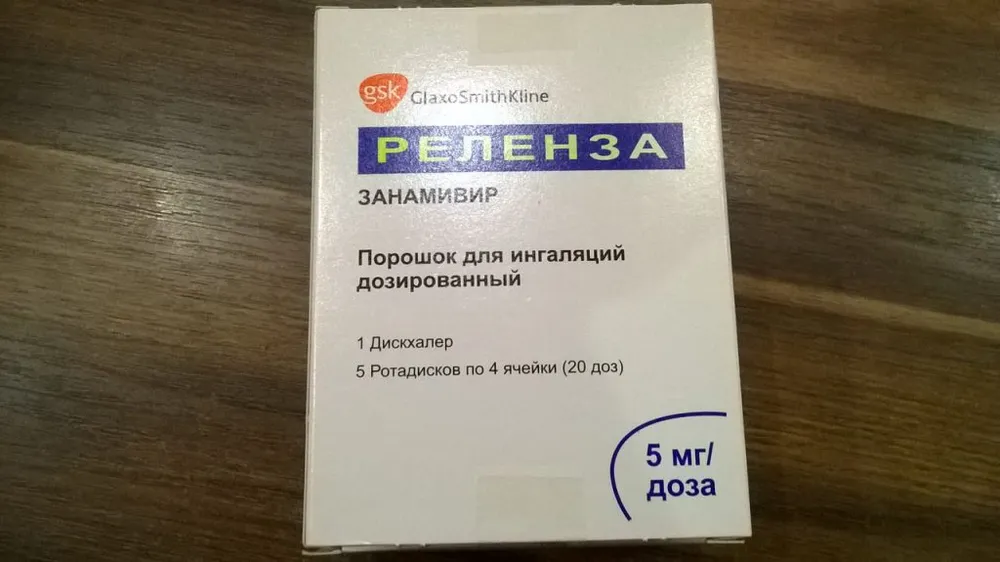
Table of Contents
- I N S T R U C T I O N for medical use of the medicinal product RELENZA (RELENZA)
- Composition:
- Pharmacological Properties
- Clinical characteristics.
- Special precautions for use.
- Method of administration and dosage.
- Adverse Reactions
- Composition:
- Pharmacological Properties
- Clinical characteristics.
- Special precautions for use.
- Method of administration and dosage.
- Adverse Reactions
I N S T R U C T I O N for medical use of the medicinal product RELENZA (RELENZA)
Composition:
Active substance: zanamivir;
1 dose of the medicinal product contains zanamivir 5 mg;
Excipient: lactose monohydrate (containing milk protein).
Pharmaceutical form. Powder for inhalation, metered.
Main physicochemical properties: white or almost white powder.
Pharmacotherapeutic group. Antiviral agents for systemic use.
ATC code J05AH01.
Pharmacological Properties
Pharmacodynamics
Zanamivir is a potent and highly selective inhibitor of neuraminidase, an enzyme located on the surface of the influenza virus. Viral neuraminidase facilitates the release of newly formed viral particles from infected cells and may aid the virus in penetrating through mucus to epithelial cell membranes, thereby promoting infection of other cells. Inhibition of this enzyme, both in vitro and in vivo, disrupts replication of influenza A and B viruses, acting against all known subtypes of neuraminidase of influenza A virus.
The activity of zanamivir is extracellular. It reduces the spread of influenza A and B viruses by inhibiting the release of influenza virions from respiratory epithelial cells. Replication of influenza viruses is confined to the surface of the respiratory epithelium. The efficacy of local administration of zanamivir at this site has been confirmed by clinical studies. Research data have shown that treatment of acute influenza with zanamivir reduces viral shedding from the respiratory tract compared to placebo, without any risk of developing reduced viral sensitivity to zanamivir.
Pharmacokinetics
Absorption.
Pharmacokinetic studies in healthy volunteers have shown that the total oral bioavailability of the drug is low (on average, 2%). Similar studies with inhaled zanamivir via the oral route have shown that approximately 10–20% of the dose is systemically absorbed, with peak serum concentrations observed within 1–2 hours. Poor absorption of the drug results in low systemic concentrations; thus, zanamivir following oral inhalation does not cause significant systemic effects. No changes in pharmacokinetics occur after repeated oral inhalations.
Distribution.
Plasma protein binding is very low (< 10%). The volume of distribution of zanamivir in adults is approximately 16 L, which corresponds roughly to the volume of extracellular fluid. After oral inhalation, zanamivir deposits widely in the respiratory tract at high concentrations, thereby reaching the site of influenza virus infection. High concentrations of zanamivir in the respiratory tract lead to rapid onset of viral neuraminidase inhibition. The two main deposition sites are the oropharynx and lungs (on average, 77.6% and 13.2%, respectively).
Metabolism.
Zanamivir is excreted unchanged by the kidneys and does not undergo metabolism.
Elimination.
Zanamivir is completely eliminated unchanged from systemic circulation via the urine. Its clearance after intravenous administration is close to the glomerular filtration rate as determined by creatinine clearance. In adults with normal renal function, the elimination half-life is 2–3 hours. In patients with severe renal impairment (creatinine clearance < 30 mL/min), the plasma half-life of zanamivir is approximately 12–20 hours. Zanamivir has not been studied in patients with end-stage renal disease.
Patients with Renal Impairment.
With the therapeutic daily dose of 20 mg, bioavailability is low (10–20%), so zanamivir does not produce significant systemic effects. Given the wide therapeutic range of zanamivir, increased exposure in patients with severe renal impairment is not considered a concern, and dose reduction is not required.
Patients with Hepatic Impairment.
Zanamivir is not metabolized; therefore, dose reduction is not necessary in patients with hepatic impairment.
Elderly Patients.
No age-related changes in pharmacokinetics are expected to have clinical consequences, and no dosage adjustments are recommended.
Children.
Pharmacokinetic evaluation of zanamivir was conducted in an open-label study involving 24 children aged 3 months to 12 years, using a nebulizer (10 mg) and dry powder (10 mg) for inhalation. Systemic exposure in children was similar to that observed with 10 mg of inhaled powder in adults.
Clinical characteristics.
Indications.
Treatment and prophylaxis of influenza types A and B in adults and children aged 5 years and older.
Contraindications.
Hypersensitivity to any component of the drug.
Interaction with other medicinal products and other forms of interaction.
Zanamivir does not bind to proteins, is not metabolized, and is not transformed by the liver. Clinically significant interactions with other drugs are unlikely.
Special precautions for use.
Due to the limited number of patients with severe bronchial asthma or other chronic respiratory diseases who have been treated with Relenza, it has not been possible to demonstrate the efficacy and safety of the drug in these patient groups. Before administering the medicinal product to patients with severe bronchial asthma, a careful benefit-risk assessment must be performed; the drug should not be prescribed without close medical supervision and the availability of appropriate equipment that may be necessary for the treatment of broncho-obstruction. The efficacy of the drug in patients over 65 years of age has also not been established.
Influenza infection may be associated with increased airway hyperreactivity. There have been isolated reports of bronchospasm and/or deterioration in lung function following the use of Relenza in patients being treated for influenza. Some of these patients had no history of respiratory disease. In such cases, treatment with zanamivir should be discontinued and medical advice sought. Patients with respiratory diseases should have fast-acting bronchodilators available when using Relenza (see section "Instructions for use and dosage").
If zanamivir is considered appropriate for the treatment of patients with asthma or chronic obstructive pulmonary disease (COPD), patients should be warned about the potential risk of bronchospasm during treatment with Relenza and the necessity of always having a fast-acting bronchodilator available (see section "Instructions for use and dosage"). Patients receiving maintenance therapy with inhaled bronchodilators are advised to use the bronchodilator prior to inhaling Relenza (see section "Instructions for use and dosage").
The inhalation powder contained in Relenza must not be added to solutions used for nebulization or mechanical ventilation. Cases have been reported where hospitalized influenza patients were administered the inhalation powder from Relenza via nebulization or mechanical ventilation, sometimes resulting in fatal outcomes. Lactose contained in the product caused blockage of the device, disrupting the function of inhalation apparatus. Relenza should only be administered using the Diskhaler device provided with the product (see section "Instructions for use and dosage").
This medicinal product contains lactose. Patients with rare hereditary problems of galactose intolerance, Lapp lactase deficiency, or glucose-galactose malabsorption should not take this medicine.
Relenza does not replace influenza vaccination, and its use should not affect the assessment of the need for annual vaccination in individual patients. Protection against influenza lasts only during the period of Relenza administration. Relenza is used for the treatment and prevention of influenza only when reliable epidemiological data indicate circulation of the influenza virus in the population.
Relenza is effective only against illnesses caused by influenza viruses. There is no evidence of efficacy of Relenza against illnesses caused by other types of viruses.
The drug should be used only when reliable epidemiological data confirm circulation of the influenza virus in the population.
Influenza infection may be accompanied by various neurological and behavioral symptoms. Post-marketing pharmacovigilance data have reported cases (mainly from Japan and during treatment of children) of seizures, delirium, hallucinations, and behavioral disturbances in influenza patients treated with neuraminidase inhibitors, including zanamivir. These symptoms occurred predominantly at the onset of illness, appeared suddenly, and resolved quickly. The role of zanamivir in the development of these symptoms has not been established. In case of occurrence of neuropsychiatric symptoms, the risk and benefit of continuing treatment should be individually evaluated for each patient.
Use during pregnancy or breastfeeding.
Pregnancy
The safety of Relenza during pregnancy has not been established.
Reproductive studies in rats and rabbits showed that zanamivir crosses the placental barrier. Studies in rats revealed no teratogenicity, impairment of fertility, or clinically significant peri- or postnatal developmental disturbances in offspring related to zanamivir. However, there is no information on placental transfer of zanamivir in humans.
Relenza should not be used during pregnancy, particularly during the first trimester, except when the potential benefit to the patient outweighs any possible risk to the fetus.
Breastfeeding
In rats, zanamivir has been shown to be excreted in breast milk. However, there is no information on excretion of zanamivir in human breast milk.
Because experience with use is limited, zanamivir should be used during breastfeeding only if the expected benefit to the mother outweighs any possible risk to the infant.
Ability to affect reaction speed when driving or operating machinery.
No data are available. However, when assessing the ability to drive or operate machinery, the patient's clinical condition and the possibility of developing neuropsychiatric symptoms should be taken into account.
Method of administration and dosage.
Relenza is intended for oral inhalation only using the Diskhaler device provided. Patients who need to use other inhaled medications simultaneously, such as short-acting bronchodilators, should be instructed to use these medications before Relenza.
Influenza treatment.
The recommended dose of Relenza is 2 inhalations (2 × 5 mg) twice daily; the daily inhaled dose is 20 mg. The duration of treatment is 5 days.
For maximum therapeutic effect, treatment should be initiated as soon as possible (ideally within two days) after symptom onset.
Prophylaxis.
The recommended dose of Relenza is 2 inhalations (2 × 5 mg) once daily for 10 days (daily inhaled dose – 10 mg). The treatment period may be extended up to 1 month if the risk period exceeds 10 days.
Children.
Dose adjustment is not required (see section "Pharmacokinetics").
Renal and hepatic impairment.
Dose adjustment is not required (see section "Pharmacokinetics").
Elderly patients.
Dose adjustment is not required (see section "Pharmacokinetics").
Instructions for patients on the use of the Diskhaler.
The Diskhaler is a device used together with the Rotadisk for drug inhalation.
The powdered drug is inhaled into the lungs through the mouth. For this purpose, the Rotadisk containing the drug in individual blisters is inserted into the Diskhaler device; the blisters are opened during inhaler use. The Relenza Rotadisk may remain in the Diskhaler continuously, but each blister should be pierced immediately before inhalation. Failure to follow this instruction will impair the proper functioning of the Diskhaler.
Components of the Diskhaler and their functions
| Needle Cap Cartridge holder |
| Rotadisk |
| Mouthpiece Knob Side clips |
| Blue cap |
The Diskhaler consists of:
- an outer casing with a hinged lid and a puncturing needle. Opening the lid causes the needle to puncture the blisters of the Rotadisk, making the medication ready for inhalation;
- a blue-colored cap that protects the mouthpiece when not in use.
Rotadisks. One Rotadisk contains 4 blisters, each containing an accurate dose of the medication in the form of a dry powder. The Rotadisk is inserted into the dark beige wheel. Warning: do not puncture the blisters of the Rotadisk before it is inserted into the Diskhaler.
The wheel is part of a white sliding tray with side clips and a mouthpiece.
How to insert a Rotadisk into the Diskhaler:
- Remove the blue cap from the mouthpiece and pull the white tray forward fully.
- Press the side clips on the white tray under the wheel and carefully remove the tray from the Diskhaler casing.
- Place a new Rotadisk into the wheel, holding it as shown in the picture, with blisters facing downwards, and carefully reinsert the tray into the Diskhaler casing.
- If a dose does not need to be taken immediately after loading the medication, cover the mouthpiece with the blue cap and set aside the Diskhaler until needed.
- Replace the used Rotadisk once the medication from all four blisters has been used.
Preparing the Diskhaler for use:
A) Remove the blue cap and ensure the mouthpiece is clean both inside and outside.
Check that a new Rotadisk is positioned under the needle.
B) If the blister under the needle is already punctured, pull the white tray fully out of the casing and then reinsert it. This will cause the wheel to rotate automatically, positioning a new blister under the needle. Repeat if necessary until a new, intact blister appears under the needle.
C) Open the lid fully and vertically to puncture the blister.
Both sides of the blister must be punctured. Some resistance will be felt when puncturing the top and especially the bottom surfaces of the blister. Warning: do not attempt to lift the lid until the tray is either fully inserted into or fully removed from the Diskhaler casing.
D) After puncturing the blister, hold the Diskhaler horizontally until inhalation is performed.
Close the lid.
The Diskhaler is now ready for inhalation.
Inhalation technique:
E) Breathe out as deeply as possible. Holding the Diskhaler at mouth level, place the mouthpiece between your teeth and lips without biting it. Do not block the air vents located on the sides of the mouthpiece. Breathe in slowly and as deeply as possible through your mouth. Hold your breath for several seconds, then remove the Diskhaler from your mouth. Continue holding your breath as long as possible.
Preparation for the next inhalation:
To take the next dose, repeat steps B)–E).
After use, always wipe the mouthpiece with a clean, soft cloth and cover it with the blue cap. It is important to keep the Diskhaler clean.
After using all four blisters of the Rotadisk, replace it with a new one as described in steps 1–5.
Children.
The medication is not recommended for children under 5 years of age.
Overdose.
Accidental overdose is unlikely due to the physical limitations of the formulation, route of administration, and poor oral bioavailability (2–3%) of zanamivir. Doses of investigational (lactose-free) aqueous zanamivir solution up to 64 mg per day (approximately 3 times higher than the maximum recommended daily dose), administered via oral inhalation (nebulizer), did not cause adverse effects. In addition, systemic administration by intravenous infusion of up to 1200 mg per day for 5 days also showed no adverse effects.
Adverse Reactions
Data from clinical trials
Relenza is well tolerated when administered by oral inhalation. In clinical studies, including studies involving patients at increased risk (elderly patients and patients with certain chronic diseases), adverse effects with Relenza were similar to those with placebo.
Post-marketing data
Rare cases of acute bronchospasm and/or serious decline in respiratory function have been reported after administration of Relenza in patients with a history of respiratory diseases (asthma, COPD). Very rare cases have also been reported in patients without prior history of respiratory disorders (see section "Special precautions").
Adverse events associated with the use of zanamivir are listed below and classified by organ system and frequency of occurrence. Frequency is defined as: very common (≥ 1/10), common (≥ 1/100 to < 1/10), uncommon (≥ 1/1,000 to < 1/100), rare (≥ 1/10,000 to < 1/1,000), very rare (< 1/10,000).
Immune system disorders
Very rare: allergic-type reactions, including anaphylactic and anaphylactoid reactions, oropharyngeal swelling, facial swelling.
Nervous system disorders
Very rare: shortly after inhalation of Relenza in patients with flu symptoms, cases of vasovagal reactions such as fever and dehydration have been reported.
Respiratory system disorders
Very rare: bronchospasm, dyspnea, sensation of throat tightness.
Skin and subcutaneous tissue disorders
Very rare: rash, urticaria, severe skin reactions including erythema multiforme, Stevens-Johnson syndrome, toxic epidermal necrolysis.
Psychiatric disorders: seizures, psychiatric disorders such as depressed level of consciousness, abnormal behavior, hallucinations, delirium. These symptoms have been reported in influenza patients treated with Relenza, primarily in children and adolescents. Seizures and psychiatric symptoms have also been reported in influenza patients not treated with Relenza.
Shelf life: 7 years.
Storage conditions
Store at temperatures not exceeding 30 °C. Keep out of the reach of children.
Packaging
Round-shaped foil blister (rotadisks) with four evenly spaced blisters, each containing 5 mg of zanamivir, and a powder inhalation device (Diskhaler). 5 rotadisks in a plastic tray and one Diskhaler in a cardboard box.
Prescription status
Prescription only.
Manufacturer
GlaxoSmithKline Australia Pty Ltd, (Australia)
GlaxoSmithKline Australia Pty Ltd, (Australia)
Manufacturer's address and place of business
GlaxoSmithKline Australia Pty Ltd, 1061 Mountain Highway, Boronia, Victoria 3155, Australia
GlaxoSmithKline Australia Pty Ltd, 1061 Mountain Highway, Boronia, Victoria 3155, Australia
I N S T R U C T I O N
for medical use of the medicinal product
RELENZA
(RELENZA)
Composition:
Active substance: zanamivir;
1 dose of the medicinal product contains zanamivir 5 mg;
Excipient: lactose monohydrate (containing milk protein).
Pharmaceutical form. Powder for inhalation, metered.
Main physico-chemical properties: white or almost white powder.
Pharmacotherapeutic group. Antiviral agents for systemic use.
ATC code J05AH01.
Pharmacological Properties
Pharmacodynamics
Zanamivir is a potent and highly selective inhibitor of neuraminidase, an enzyme on the surface of the influenza virus. Viral neuraminidase facilitates the release of newly formed viral particles from infected cells and may aid viral penetration through mucus to epithelial cell membranes, promoting infection of other cells. Inhibition of this enzyme, both in vitro and in vivo, disrupts replication of influenza A and B viruses, acting against all known subtypes of influenza A virus neuraminidase.
The activity of zanamivir is extracellular. It reduces the spread of influenza A and B viruses by inhibiting the release of influenza virions from respiratory epithelial cells. Replication of influenza viruses is confined to the surface of the respiratory epithelium. The efficacy of local administration of zanamivir directly at this site has been confirmed by clinical studies. Research data have shown that treatment of acute influenza with zanamivir reduces viral shedding from the respiratory tract compared to placebo, without any risk of developing reduced viral sensitivity to zanamivir.
Pharmacokinetics
Absorption.
Pharmacokinetic studies in healthy volunteers have shown that the total oral bioavailability of the drug is low (on average, 2%). Similar studies with inhaled zanamivir have demonstrated that approximately 10–20% of the dose is systemically absorbed, with peak serum concentrations observed within 1–2 hours. Poor absorption of the drug results in low systemic concentrations; thus, zanamivir administered by oral inhalation does not cause significant systemic effects. No changes in pharmacokinetics occur after repeated oral inhalations.
Distribution.
Plasma protein binding is very low (< 10%). The volume of distribution of zanamivir in adults is approximately 16 L, which roughly corresponds to the volume of extracellular fluid. After oral inhalation, zanamivir deposits widely in the respiratory tract at high concentrations, thereby reaching the site of influenza virus infection. The two main sites of deposition are the oropharynx and lungs (averaging 77.6% and 13.2%, respectively).
Metabolism.
Zanamivir is excreted unchanged by the kidneys and does not undergo metabolism.
Elimination.
Zanamivir is completely eliminated unchanged from systemic circulation via the urine. Its clearance after intravenous administration is close to the glomerular filtration rate as determined by creatinine clearance. In adults with normal renal function, the elimination half-life is 2–3 hours. In patients with severe renal impairment (creatinine clearance < 30 mL/min), the plasma half-life of zanamivir is approximately 12–20 hours. Zanamivir has not been studied in patients with end-stage renal disease.
Patients with renal impairment.
With the therapeutic daily dose of 20 mg, bioavailability is low (10–20%), so zanamivir does not exert significant systemic effects. Given the wide therapeutic range of zanamivir, increased exposure in patients with severe renal impairment is not considered a concern, and dose reduction is not required.
Patients with hepatic impairment.
Zanamivir is not metabolized; therefore, dose reduction is not necessary in patients with hepatic impairment.
Elderly patients.
No age-related changes in pharmacokinetics are expected to have clinical consequences, and no dosage adjustments are recommended.
Children.
Pharmacokinetic evaluation of zanamivir was conducted in an open-label study involving 24 children aged 3 months to 12 years, using a nebulizer (10 mg) and dry powder for inhalation (10 mg). Systemic exposure in children was similar to that observed with 10 mg of inhaled powder in adults.
Clinical characteristics.
Indications.
Treatment and prophylaxis of influenza types A and B in adults and children aged 5 years and older.
Contraindications.
Hypersensitivity to any ingredient of the drug.
Interaction with other medicinal products and other forms of interaction.
Zanamivir does not bind to proteins, is not metabolized, and is not transformed by the liver. Clinically significant interactions with other drugs are unlikely.
Special precautions for use.
Due to the limited number of patients with severe bronchial asthma or other chronic respiratory diseases who have been treated with Relenza, it has not been possible to demonstrate the efficacy and safety of the drug in these patient groups. Before prescribing Relenza to patients with severe bronchial asthma, a careful benefit-risk assessment must be performed. The drug should not be administered without close medical supervision and the availability of appropriate equipment that may be necessary for the treatment of bronchial obstruction. The efficacy of the drug in patients over 65 years of age has also not been established.
Influenza infection may be associated with increased airway hyperreactivity. There have been isolated reports of bronchospasm and/or worsening of pulmonary function following the administration of Relenza to patients being treated for influenza. Some of these patients had no history of respiratory tract disease. In such cases, treatment with zanamivir should be discontinued and medical advice should be sought. Patients with respiratory tract diseases should have fast-acting bronchodilators available when using Relenza (see section "Instructions for use and dosage").
If zanamivir is considered appropriate for treatment of patients with asthma or chronic obstructive pulmonary disease (COPD), patients should be warned about the potential risk of bronchospasm during Relenza use and the need to always have a fast-acting bronchodilator available (see section "Instructions for use and dosage"). Patients receiving maintenance therapy with inhaled bronchodilators are recommended to use a bronchodilator prior to inhalation of Relenza (see section "Instructions for use and dosage").
The inhalation powder contained in Relenza must not be added to solutions used for nebulization or mechanical ventilation. Cases have been reported where hospitalized influenza patients received the inhalation powder from Relenza via nebulization or mechanical ventilation, sometimes resulting in fatal outcomes. The lactose contained in the product caused blockage of the equipment, disrupting the function of inhalation devices. Relenza should only be administered using the Diskhaler device provided with the product (see section "Instructions for use and dosage").
This medicinal product contains lactose. Patients with rare hereditary problems of galactose intolerance, Lapp lactase deficiency, or glucose-galactose malabsorption should not take this medicine.
Relenza does not replace influenza vaccination, and its use should not affect the assessment of the need for annual vaccination in individual patients. Protection against influenza lasts only during the period of Relenza administration. Relenza is used for the treatment and prevention of influenza only when reliable epidemiological data indicate circulation of the influenza virus in the population.
Relenza is effective only against illnesses caused by influenza viruses. There is no evidence of efficacy of Relenza against diseases caused by other types of viruses.
The drug should be used only when reliable epidemiological data confirm circulation of the influenza virus in the population.
Influenza illness may be accompanied by various neurological and behavioral symptoms. Post-marketing pharmacovigilance data have reported cases (mainly from Japan and in children being treated) of seizures, delirium, hallucinations, and behavioral disturbances in influenza patients treated with neuraminidase inhibitors, including zanamivir. These symptoms occurred predominantly at the onset of illness, appeared suddenly, and resolved quickly. The role of zanamivir in the development of these symptoms has not been established. If neuropsychiatric symptoms occur, the risk and benefit of continuing treatment should be individually assessed for each patient.
Use during pregnancy or breastfeeding.
Pregnancy
The safety of using Relenza during pregnancy has not been established.
Reproductive studies in rats and rabbits showed that zanamivir crosses the placental barrier. Studies in rats revealed no teratogenicity, impairment of fertility, or clinically significant peri- or postnatal developmental disturbances related to zanamivir. However, there is no information on placental transfer of zanamivir in humans.
Relenza should not be used during pregnancy, especially during the first trimester, except when the potential benefit to the mother outweighs any possible risk to the fetus.
Breastfeeding
In rats, zanamivir has been shown to be excreted in breast milk. However, there is no information on the excretion of zanamivir in human breast milk.
Because experience with use is limited, zanamivir should be administered during breastfeeding only if the probable benefit to the mother outweighs any possible risk to the infant.
Ability to affect reaction speed when driving or operating machinery.
No data are available. However, when assessing the ability to drive or operate machinery, the patient's clinical condition and the possibility of developing neuropsychiatric symptoms should be taken into account.
Method of administration and dosage.
Relenza is intended for oral inhalation only using the Diskhaler device provided. Patients who need to use other inhaled medications simultaneously, such as short-acting bronchodilators, should be instructed to use these medications before Relenza.
Influenza treatment.
The recommended dose of Relenza is 2 inhalations (2 × 5 mg) twice daily, for a total daily inhaled dose of 20 mg. The treatment duration is 5 days.
For maximum therapeutic effect, treatment should be initiated as soon as possible (ideally within two days) after the onset of symptoms.
Prophylaxis.
The recommended dose of Relenza is 2 inhalations (2 × 5 mg) once daily for 10 days (daily inhaled dose – 10 mg). The duration of use may be extended up to 1 month if the risk period exceeds 10 days.
Children.
Dose adjustment is not required (see section "Pharmacokinetics").
Renal and hepatic impairment.
Dose adjustment is not required (see section "Pharmacokinetics").
Elderly patients.
Dose adjustment is not required (see section "Pharmacokinetics").
Patient instructions for using the Diskhaler.
The Diskhaler is a device used together with a Rotadisk to inhale the medication.
The powdered medication is inhaled into the lungs through the mouth. To do this, a Rotadisk containing the medication in individual blisters is inserted into the Diskhaler; the blisters are opened when the inhaler is used. The Relenza Rotadisk may remain in the Diskhaler continuously, but each blister should be pierced immediately before inhalation. Failure to follow this instruction may impair the proper functioning of the Diskhaler.
Components of the Diskhaler and their functions
| Needle Cap Body |
| Rotadisk |
| Mouthpiece Spacers Side clips |
| Blue cap |
The Diskhaler consists of:
- an outer casing with a hinged cover and a puncturing needle. Opening the cover causes the needle to puncture the blisters of the Rotadisk, making the medication ready for inhalation;
- a blue cap that protects the mouthpiece when not in use.
Rotadisks. One Rotadisk contains 4 blisters, each containing an exact dose of the medication in the form of a dry powder. The Rotadisk is inserted into the dark beige wheel. Warning: do not puncture the blisters of the Rotadisk before inserting it into the Diskhaler.
The wheel is an integral part of the white sliding tray with side clips and a mouthpiece.
How to insert a Rotadisk into the Diskhaler:
- Remove the blue cap from the mouthpiece and pull the white tray forward until it stops.
- Press the side clips on the white tray under the wheel and carefully remove the tray from the Diskhaler casing.
- Place a new Rotadisk into the wheel, holding it as shown in the picture, with the blisters facing downwards, and carefully reinsert the tray back into the Diskhaler casing.
- If a dose does not need to be taken immediately after loading the medication, cover the mouthpiece with the blue cap and set aside the Diskhaler until needed.
- Replace the used Rotadisk once the medication from all four blisters has been used.
Preparing the Diskhaler for use:
A) Remove the blue cap and ensure the mouthpiece is clean both inside and outside.
Check that a new Rotadisk is present under the needle.
B) If the blister under the needle is already punctured, pull the white tray fully out of the casing and then reinsert it. This will cause the wheel to rotate automatically, positioning a new blister under the needle. Repeat if necessary until a new, intact blister appears under the needle.
C) Open the cover fully vertically to puncture the blister.
Both surfaces of the blister must be punctured. Some resistance will be felt when puncturing the upper surface and especially the lower surface of the blister. Warning: do not attempt to lift the cover until the tray is either fully inserted into or fully withdrawn from the Diskhaler casing.
D) After puncturing the blister, hold the Diskhaler horizontally until inhalation is performed.
Close the cover.
The Diskhaler is now ready for inhalation.
Inhalation technique:
E) Breathe out as deeply as possible. Holding the Diskhaler at mouth level, place the mouthpiece between your teeth and lips without biting it. Do not block the air vents located on the sides of the mouthpiece. Inhale slowly and as deeply as possible through your mouth. Hold your breath for several seconds, then remove the Diskhaler from your mouth. Continue holding your breath as long as possible.
Preparation for the next inhalation:
To take the next dose, repeat steps B)–E).
After use, always wipe the mouthpiece with a clean, soft cloth and cover it with the blue cap. It is important to keep the Diskhaler clean.
After using all four blisters of the Rotadisk, replace it with a new one as described in steps 1–5.
Children.
The medication is not used in children under 5 years of age.
Overdose.
Accidental overdose is unlikely due to the physical limitations of the dosage form, route of administration, and the poor oral bioavailability (2–3%) of zanamivir. Doses of investigational (lactose-free) aqueous zanamivir solution up to 64 mg per day (approximately 3 times higher than the maximum recommended daily dose), administered via oral inhalation (nebulizer), did not cause adverse effects. Additionally, systemic administration by intravenous infusion of up to 1200 mg per day for 5 days also showed no adverse effects.
Adverse Reactions
Data from clinical trials
Relenza is well tolerated when administered by oral inhalation. In clinical studies, including those involving patients at increased risk (elderly patients and patients with certain chronic diseases), adverse events with Relenza were similar to those with placebo.
Post-marketing data
Rare cases of acute bronchospasm and/or severe decline in respiratory function have been reported after administration of Relenza in patients with a history of respiratory diseases (asthma, COPD). Very rare cases have also been reported in patients without prior history of respiratory disorders (see section "Special precautions for use").
Adverse effects associated with the use of zanamivir are listed below, classified by organ system and frequency of occurrence. Frequency categories are defined as follows: very common (≥ 1/10), common (≥ 1/100 to < 1/10), uncommon (≥ 1/1,000 to < 1/100), rare (≥ 1/10,000 to < 1/1,000), very rare (< 1/10,000).
Immune system disorders
Very rare: allergic reactions, including anaphylactic and anaphylactoid reactions, oropharyngeal swelling, facial edema.
Nervous system disorders
Very rare: vasovagal reactions such as fever and dehydration have been reported shortly after inhalation of Relenza in patients with influenza symptoms.
Respiratory system disorders
Very rare: bronchospasm, dyspnea, throat tightness.
Skin and subcutaneous tissue disorders
Very rare: rash, urticaria, severe skin reactions including erythema multiforme, Stevens-Johnson syndrome, toxic epidermal necrolysis.
Psychiatric disorders: seizures, psychiatric disorders such as depressed level of consciousness, abnormal behavior, hallucinations, delirium. These symptoms have been reported in influenza patients treated with Relenza, primarily in children and adolescents. Seizures and psychiatric symptoms have also been reported in influenza patients not treated with Relenza.
Shelf life: 7 years.
Storage conditions
Store at a temperature not exceeding 30 °C. Keep out of the reach of children.
Packaging
Round foil blister (rotadisks) with four evenly spaced compartments, each containing 5 mg of zanamivir, and a powder inhalation device (Diskhaler). 5 rotadisks in a plastic tray and one Diskhaler in a cardboard box.
Prescription status
Prescription only.
Manufacturer
Glaxo Wellcome Production (France)
Manufacturer's address
Glaxo Wellcome Production, Zone Industrielle №2, 23, rue Lavoisier, 27000 Evreux, France / Glaxo Wellcome Production, Zone Industrielle №2, 23, rue Lavoisier, 27000 Evreux, France.