Peritol®
Ukraine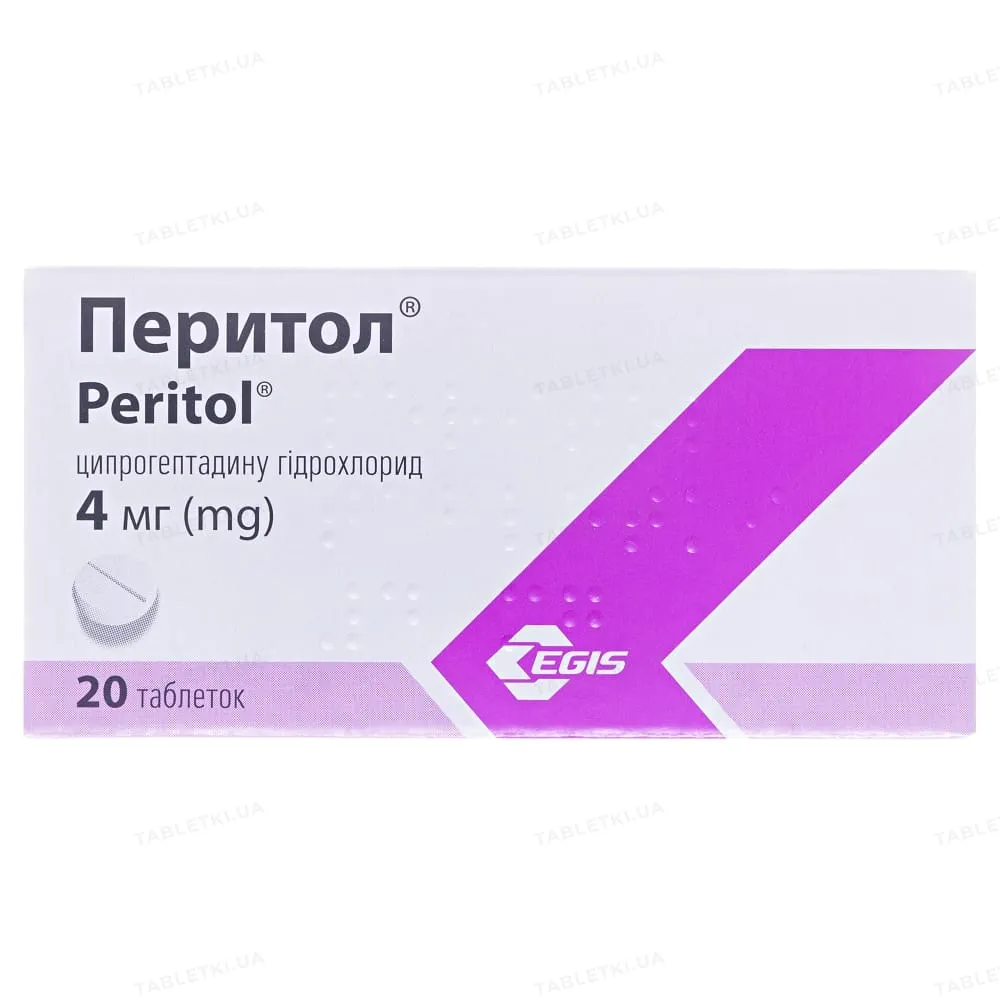
Table of Contents
INSTRUCTIONS FOR MEDICAL USE OF THE MEDICINAL PRODUCT PERITOL® (PERITOL®)
Composition:
Active substance: cyproheptadine;
One tablet contains 4.3 mg of cyproheptadine hydrochloride sesquihydrate, equivalent to 4 mg of cyproheptadine hydrochloride;
Excipients: lactose monohydrate, potato starch, talc, gelatin, magnesium stearate.
Pharmaceutical form. Tablets.
Main physicochemical characteristics: white or greyish-white, flat, round tablets with beveled edges, marked with a groove on one side and an arc-shaped engraving "PERITOL" on the other side, odorless or nearly odorless.
Pharmacotherapeutic group. Antihistamines for systemic use. Cyproheptadine. ATC Code R06AX02.
Pharmacological properties.
Pharmacodynamics.
Cyproheptadine hydrochloride is an antihistamine and antisero-tonic agent with anticholinergic and sedative effects. Cyproheptadine binds to serotonin and H1-histamine receptors, thereby completely inhibiting the binding of serotonin and histamine.
Pharmacokinetics.
After oral administration, cyproheptadine is rapidly and almost completely absorbed from the gastrointestinal tract. Maximum plasma concentration is reached within 4–8 hours after drug administration. The duration of action is 8 hours, although plasma levels of cyproheptadine are still detectable 24 hours after a single 4 mg dose. The therapeutic effect of cyproheptadine does not correlate with its plasma concentration. Cyproheptadine is extensively metabolized in the liver. The main metabolite is the glucuronide conjugate of the quaternary ammonium compound of cyproheptadine. This metabolite and others are pharmacologically inactive. After a single 4 mg dose of cyproheptadine, 2–20% of the administered dose is excreted in feces, primarily as metabolites. Approximately 40% of the administered dose is excreted in urine. About 50% of the drug excreted by the kidneys is eliminated as metabolites within 3 days. After repeated administration of daily doses of 12–20 mg, only metabolites of cyproheptadine can be detected in urine. The elimination half-life is 16 hours.
Special patient groups
In patients with renal impairment, excretion of cyproheptadine is somewhat reduced; therefore, lower doses should be administered to such patients.
Reduced doses are also required in patients with liver disease, as metabolism of the active substance proceeds more slowly in these patients.
Clinical characteristics.
Indications.
- Allergic diseases, namely: acute and chronic urticaria, angioneurotic edema, drug exanthema, eczema, eczematous dermatitis, contact dermatitis, neurodermatitis, allergic rhinitis, vasomotor rhinitis, serum sickness, and insect bites.
- Carcinoid syndrome (symptomatic treatment).
- Vascular headache (treatment of migraine and histaminic cephalgia).
- To improve appetite and general condition in debilitated patients and patients with loss of appetite due to various causes (nervous anorexia, idiopathic anorexia, post-infectious conditions, chronic diseases, convalescence period, exhaustion).
Contraindications.
- Hypersensitivity to the active substance, to other phenothiazines, or to any other component of the medicinal product;
- bronchial asthma attacks;
- glaucoma;
- presence of gastrointestinal motility disorders (stenosing peptic ulcer, pyloric stenosis);
- conditions associated with urinary retention (symptomatic benign prostatic hyperplasia, bladder neck contracture);
- concomitant use of monoamine oxidase inhibitors (MAOIs) (moclobemide, selegiline);
- contraindicated in elderly patients (over 65 years of age) and debilitated patients;
- contraindicated in newborns or premature infants;
- pediatric age: not recommended for children under 2 years of age.
- pregnancy and breastfeeding.
Interaction with other medicinal products and other forms of interaction.
Peritol***®*** should be used with caution in combination with analgesics and sedatives, as their effects may be potentiated.
Caffeine reduces the central nervous system (CNS) depressant effect of cyproheptadine; additive effects may occur when cyproheptadine is used concomitantly with ethanol and other CNS depressants (sedatives, hypnotics, anxiolytics).
Concomitant use of cyproheptadine with other CNS depressant hypnotics requires continuous monitoring of the patient and discontinuation of the drug if necessary.
Combined use of cyproheptadine with fluoxetine and other serotonin reuptake inhibitors may reduce the effectiveness of antidepressants.
Concomitant use of cyproheptadine with MAO inhibitors (moclobemide, selegiline) is contraindicated. MAO inhibitors, as well as tricyclic antidepressants, may potentiate and prolong the anticholinergic effects of Peritol***®*** (dry mouth, mydriasis, accommodation disturbances, constipation, urinary retention), and enhance CNS depressant effects.
Peritol may cause false-positive results in urine screening tests for tricyclic antidepressants. Physicians should be informed about Peritol intake prior to conducting such tests.
Ethanol may enhance the sedative effect of this medicinal product on the central nervous system (drowsiness, lethargy, dizziness). Therefore, consumption of alcoholic beverages during treatment with Peritol***®*** tablets is prohibited.
Special precautions for use
Since sedative effects of the drug occur more frequently at the beginning of treatment, it is recommended to take the first dose in the evening after the last meal.
Antihistamines should not be used for the treatment of upper respiratory tract diseases, including asthma symptoms.
Administration of antihistamine medicinal products may reduce mental alertness; however, children are more sensitive to adverse effects and, in isolated cases, may respond to treatment with increased excitation. Therefore, Peritol***®*** should be used with particular caution in children aged 2 years and older. For children aged 2 to 6 years, the medicinal product should be administered in another pharmaceutical form – syrup (see section "Method of administration and dosage").
Cyproheptadine also exhibits anticholinergic effects; therefore, it should be used with caution in the following conditions:
- History of bronchial asthma;
- Increased intraocular pressure;
- Hyperthyroidism;
- Cardiovascular diseases;
- Arterial hypertension.
Alcohol may enhance the sedative effect of this medicinal product on the central nervous system; therefore, consumption of alcoholic beverages during treatment with Peritol***®*** tablets is contraindicated (see section "Interaction with other medicinal products and other forms of interaction").
Prolonged treatment with antihistamine agents may lead to disorders of the hematopoietic system (leukopenia, agranulocytosis, thrombocytopenia, hemolytic anemia). If symptoms such as petechiae, pharyngitis, lesions of the buccal mucosa (mouth ulcers), pallor, jaundice, unexplained bruising, or unusually severe bleeding occur, a blood test should be performed. If hematopoietic disorders are detected, treatment must be discontinued.
Each Peritol***®*** tablet contains 128 mg of lactose. This medicinal product should not be prescribed to patients with hereditary galactose intolerance, Lapp lactase deficiency, or glucose-galactose malabsorption.
Cyproheptadine should be avoided in patients with glaucoma, cardiovascular diseases, hyperthyroidism, or conditions associated with urinary retention. The frequency and severity of anticholinergic effects caused by cyproheptadine, as well as the circumstances under which they occur, should be monitored, and vigilance maintained regarding any changes in the benefit-risk profile.
In patients with liver disease, reduced doses of the drug should be prescribed, as metabolism of the active substance proceeds more slowly in such patients.
Patients with renal insufficiency should be given lower doses of the drug, since the majority of the active substance is excreted by the kidneys.
Use during pregnancy or breastfeeding
The drug should not be used during pregnancy or breastfeeding due to insufficient experience with its use.
Ability to influence reaction speed when driving or operating machinery
At the beginning of treatment (duration individually determined) driving vehicles and operating complex machinery are prohibited, as dizziness or somnolence may occur during this period.
Later, this issue should be resolved individually by the physician depending on the patient's condition.
Method of Administration and Dosage
The dosage of the medicinal product should be determined individually. The effect of a single dose usually lasts from 4 to 6 hours. To ensure continuous efficacy, the daily dose should be divided into three doses per day, or the drug should be administered as frequently as necessary to maintain continuous therapeutic effect. Since sedative effects occur more frequently at the beginning of treatment, it is recommended to take the first dose in the evening after the last meal.
Adults
The usual initial daily dose is 12 mg (1 tablet three times a day).
Chronic urticaria: 6 mg per day (½ tablet three times a day) until symptoms of the disease disappear.
Acute migraine: 4 mg (1 tablet) as a single dose. If pain persists, an additional 4 mg (1 tablet) may be taken after 30 minutes; however, the total dose of Peritol***®*** administered within 4–6 hours should not exceed 8 mg (2 tablets).
For maintenance therapy, 12 mg of the drug (1 tablet three times a day) is usually sufficient.
The maximum daily dose for adults is 32 mg (2 tablets four times a day).
Special patient groups: elderly individuals (over 65 years of age) and debilitated patients should not take Peritol***®***, as they are more sensitive to possible adverse effects of antihistamines (dizziness, drowsiness, hypotension) (see section "Special Warnings and Precautions for Use").
Patients with hepatic disorders or renal insufficiency should be prescribed lower doses of the drug.
Children
For children aged 2 to 6 years, the drug should be administered in syrup form.
For children aged 7–14 years, the daily dose is 8–12 mg (1 tablet 2–3 times a day). If necessary, an additional dose may be taken at night. However, the total daily dose should not exceed 16 mg.
Children
Peritol***®*** is not recommended for children under 2 years of age, as its safety and efficacy have not been established in this age group. Children from 2 years of age should be administered the drug with particular caution, as drug-induced excitation may occur (see section "Method of Administration and Dosage").
For children aged 2 to 6 years, the drug should be administered in another pharmaceutical form—syrup.
Overdose.
Accidental or intentional overdose of antihistamines may cause sedative effects, drowsiness, coma, excitation, and convulsions, which may lead to fatal outcomes, especially in children. Overdose of Peritol***®*** causes anticholinergic (atropine-like) effects (dry mouth, dilated unresponsive pupils, facial flushing) and gastrointestinal disturbances.
In case of overdose, vomiting should be induced, gastric lavage performed, and activated charcoal administered. Saline laxatives, which promote rapid evacuation of intestinal contents, may also be effective. Medicinal products acting on central mechanisms of blood pressure regulation should not be used; however, vasoconstrictors may be employed to counteract arterial hypotension.
Adverse reactions.
The following adverse reactions may occur during the use of Peritol*®*.
Cardiovascular system: arterial hypotension, tachycardia, palpitations, extrasystoles.
Blood and lymphatic system: hemolytic anemia, leukopenia, agranulocytosis, thrombocytopenia.
Central nervous system: lethargy, drowsiness, which disappears after the first 3–4 days of treatment; sedative effect, dizziness, tinnitus, confusion; impaired coordination, ataxia, accommodation disorders (mydriasis), diplopia, hallucinations; agitation, tremor, prickling pain and numbness in extremities, irritability, insomnia, paresthesia, neuritis (symptoms including increased pain sensitivity, paralysis, and paresthesia), seizures, headache, weakness, aggressive behavior, euphoria, hysteria; chills, loss of consciousness.
Immune system: allergic reactions: erythema, purpura, urticaria, Quincke's edema, anaphylactic shock.
Skin and subcutaneous tissue: erythema, purpura, urticaria, rarely Quincke's edema, hyperhidrosis, roseola, skin rashes or photosensitivity.
Respiratory system: formation of thick bronchial secretions, dyspnea, nasal mucus retention, epistaxis.
Gastrointestinal tract: dryness in nose and throat; nausea, vomiting, epigastric discomfort, diarrhea, constipation, cholestasis, hepatitis, jaundice.
Urinary and genital system: frequent urge to urinate, difficulty in urination, urinary retention.
Reproductive system and mammary glands: early menstruation.
Metabolism and nutrition disorders: anorexia, increased appetite.
Other: weight gain; labyrinthitis, vertigo; hepatic failure; excessive sweating; chest tightness.
Shelf life. 5 years.
Storage conditions. Store at a temperature not exceeding 25 °C. Keep out of reach of children.
Packaging. 10 tablets in a blister; 2 blisters per cardboard box.
Prescription status. Prescription only.
Manufacturer. ZAO Pharmaceutical Plant EGIS, Hungary / EGIS Pharmaceuticals PLC, Hungary.
Address.
9900, Kormend, Matyas kiraly ut. 65, Hungary / 9900, Kormend, Matyas kiraly ut. 65, Hungary.