Peryeta
Ukraine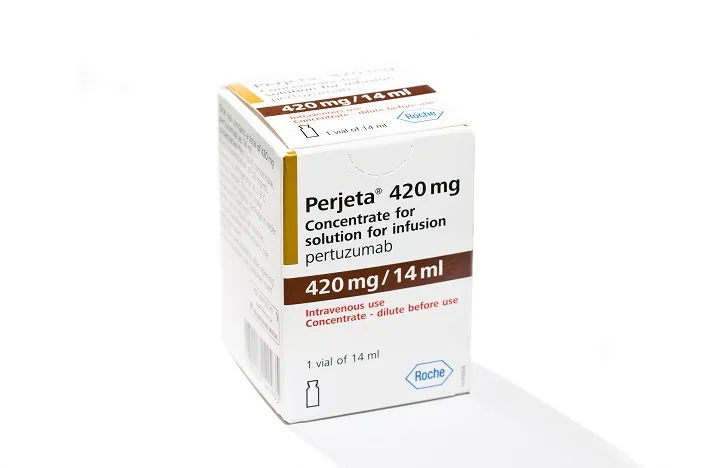
Table of Contents
INSTRUCTIONS FOR MEDICAL USE OF THE MEDICINAL PRODUCT PERJETA® (PERJETA®)
Composition:
Active substance: pertuzumab;
1 vial (14 ml concentrate for solution for infusion) contains 420 mg (30 mg/ml) of pertuzumab;
Excipients: L-histidine, glacial acetic acid, sucrose, polysorbate 20, sterile water for injection.
Pharmaceutical form. Concentrate for solution for infusion.
Main physicochemical properties: the preparation is a clear or slightly opalescent, colorless or pale yellow liquid.
Pharmacotherapeutic group.
Antineoplastic agents. Monoclonal antibodies and antibody-drug conjugates. HER2 (human epidermal growth factor receptor 2) inhibitors.
ATC code: L01FD02.
Pharmacological Properties.
Pharmacodynamics.
Pertuzumab is a recombinant humanized monoclonal IgG1 antibody produced by recombinant DNA technology in Chinese hamster ovary cells.
The medicinal product Perjeta**®** selectively binds to the extracellular domain (subdomain II) of the HER2 protein (human epidermal growth factor receptor type 2), which is responsible for HER2 dimerization. Binding of pertuzumab to subdomain II inhibits ligand-dependent heterodimerization of HER2 with other HER family receptors, including EGFR (epidermal growth factor receptor), HER3 (human epidermal growth factor receptor type 3), and HER4 (human epidermal growth factor receptor type 4). As a result, Perjeta**®** suppresses ligand-initiated intracellular signaling through two major pathways: the mitogen-activated protein kinase (MAPK) pathway and the phosphoinositide-3-kinase (PI3K) pathway. Inhibition of these signaling pathways may lead to cell cycle arrest and apoptosis. In addition, Perjeta**®** promotes antibody-dependent cell-mediated cytotoxicity.
The medicinal product Perjeta**®**, as a single agent, inhibits the proliferation of human tumor cells. A significant enhancement of antitumor activity of pertuzumab has been demonstrated in xenograft models with HER2 overexpression when used in combination with trastuzumab.
Pharmacokinetics.
A population pharmacokinetic analysis was performed based on data from various clinical trials (Phases I, II, and III) involving 481 patients with different types of advanced malignancies who received Perjeta**®** as monotherapy or as part of combination therapy at doses ranging from 2 to 25 mg/kg administered every 3 weeks via 30–60-minute intravenous infusions.
Absorption
Perjeta**®** is administered via intravenous infusion.
Distribution
In all clinical studies, the volume of distribution in the central compartment (Vc) and in the peripheral compartment (Vp) for a typical patient was 3.11 L and 2.46 L, respectively.
Metabolism
The metabolism of pertuzumab has not been directly studied. Like other monoclonal antibodies, pertuzumab is primarily subject to catabolism.
Elimination
The mean clearance of pertuzumab was 0.235 L/day, and the mean elimination half-life was 18 days.
Linearity/Non-linearity
Pertuzumab exhibits linear pharmacokinetics within the recommended dose range.
Elderly patients
Based on the results of population pharmacokinetic analysis, no clinically significant differences in pharmacokinetic parameters of Perjeta**®** were observed between patients aged < 65 years (n = 306) and those aged ≥ 65 years (n = 175).
Patients with renal impairment
Specific pharmacokinetic studies of Perjeta**®** in patients with renal impairment have not been conducted. According to the results of population pharmacokinetic analysis, exposure to pertuzumab in patients with mild renal impairment (creatinine clearance 60–90 mL/min, n = 200) and moderate renal impairment (creatinine clearance 30–60 mL/min, n = 71) was similar to that in patients with normal renal function (creatinine clearance > 90 mL/min, n = 200). No correlation was observed between creatinine clearance and pertuzumab exposure over a creatinine clearance range of 27 to 244 mL/min.
Other patient subgroups
Population pharmacokinetic analysis results indicate no differences in pharmacokinetic parameters based on age, sex, or ethnicity (Japanese vs. non-Japanese). Baseline albumin level and lean body weight are the most significant covariates affecting clearance. Clearance decreases in patients with higher baseline albumin concentrations and increases in patients with higher lean body weight. However, sensitivity analyses using the recommended dose and regimen of Perjeta**®** showed that even at extreme values of these two covariates, there was no clinically significant impact on achieving the target steady-state concentration identified in preclinical tumor xenograft models. Therefore, dose adjustment of Perjeta**®** based on these covariates is not required.
Pharmacokinetic results for pertuzumab from the NEOSPHERE and APHINITY studies were comparable to the predicted data from the previous population pharmacokinetic model. No differences in pertuzumab pharmacokinetics were observed between patients with early breast cancer and those with metastatic breast cancer.
Clinical characteristics.
Indications.
Early breast cancer
Perjeta**®** is indicated for use in combination with trastuzumab and chemotherapy for:
- neoadjuvant treatment of adult patients with HER2-positive locally advanced, inflammatory, or early-stage breast cancer with high risk of recurrence;
- adjuvant treatment of adult patients with HER2-positive early breast cancer with high risk of recurrence.
Metastatic breast cancer
Perjeta**®** is indicated for use in combination with trastuzumab and docetaxel in adult patients with HER2-positive metastatic or locally recurrent unresectable breast cancer who have not received prior anti-HER2 therapy or chemotherapy for metastatic disease.
Contraindications.
Hypersensitivity to pertuzumab or to any of the excipients (see section "Composition").
Interaction with other medicinal products and other forms of interaction.
No pharmacokinetic interaction between pertuzumab and trastuzumab or between pertuzumab and docetaxel was observed in 37 participants of a substudy conducted within the randomized pivotal CLEOPATRA trial in patients with metastatic breast cancer. Additionally, population pharmacokinetic analysis showed no evidence of interaction between pertuzumab and trastuzumab or between pertuzumab and docetaxel. This lack of interaction was confirmed by pharmacokinetic data from the NEOSPHERE and APHINITY trials.
The effect of pertuzumab on the pharmacokinetics of cytotoxic agents was evaluated in five trials with concomitant administration of docetaxel, paclitaxel, gemcitabine, capecitabine, carboplatin, and erlotinib. There are no data indicating pharmacokinetic interaction between Perjeta**®** and any of these agents. The pharmacokinetics of Perjeta**®** in these trials were comparable to those observed in monotherapy trials.
Special precautions for use.
Traceability
To improve traceability of biological medicinal products, the trade name and batch number of the administered product should be clearly documented.
Left ventricular dysfunction (including congestive heart failure)
Decreased left ventricular ejection fraction has been observed during treatment with HER2-blocking agents, including the medicinal product Perjeta**®. The incidence of symptomatic left ventricular systolic dysfunction (congestive heart failure) was higher in patients receiving Perjeta®** in combination with trastuzumab and chemotherapy compared to patients receiving trastuzumab and chemotherapy alone. The risk of decreased left ventricular ejection fraction may be higher in patients who have received prior anthracycline therapy or prior radiotherapy to the chest area. Most cases of symptomatic heart failure were observed in the adjuvant setting in patients who received anthracycline-based chemotherapy (see section "Undesirable effects").
Perjeta® has not been studied in patients with a left ventricular ejection fraction < 50% prior to treatment; history of congestive heart failure; decreased left ventricular ejection fraction to < 50% during prior adjuvant trastuzumab therapy; or conditions that may impair left ventricular function (uncontrolled arterial hypertension, recent myocardial infarction, serious arrhythmias requiring treatment, or prior anthracycline therapy with a cumulative dose of doxorubicin or equivalent > 360 mg/m²).
Left ventricular ejection fraction should be assessed prior to initiation of Perjeta® and at regular intervals during treatment with Perjeta® (i.e., once during neoadjuvant treatment and every 12 weeks during adjuvant or metastatic treatment) to ensure that the left ventricular ejection fraction remains within normal limits. If left ventricular ejection fraction has decreased, as specified in the section "Posology and method of administration", and does not improve or further declines at the next assessment, discontinuation of Perjeta® and trastuzumab should be considered, except when benefit for the individual patient outweighs the risk.
The risk of cardiac complications should be carefully evaluated and balanced against medical necessity for each patient prior to administration of Perjeta® with anthracycline-containing agents. Given the pharmacological action of HER2-targeted agents and anthracyclines, the risk of cardiotoxicity may be higher with concomitant administration of Perjeta® and anthracyclines compared to their sequential use.
Sequential administration of Perjeta® (in combination with trastuzumab and a taxane) has been studied in relation to anthracycline-based regimens such as epirubicin or doxorubicin in the APHINITY and BERENICE trials. However, data on the safety of concomitant use of Perjeta® and anthracyclines are limited. In the TRYPHAENA trial, Perjeta® was administered concomitantly with epirubicin as part of the FEC regimen (5-fluorouracil, epirubicin, cyclophosphamide) (see section "Undesirable effects"). Only chemotherapy-naïve patients were treated, and they received a low cumulative dose of epirubicin (up to 300 mg/m²). In this trial, cardiologic safety was similar to that observed in patients who received a similar regimen but with sequential administration of Perjeta® (after FEC chemotherapy).
Infusion reactions
Administration of Perjeta**®** has been associated with infusion reactions, including cases with fatal outcome (see section "Undesirable effects"). Close monitoring of patients is recommended during and for 60 minutes after the first infusion, and during and for 30–60 minutes after subsequent infusions of Perjeta®. In case of a severe infusion reaction, the infusion rate should be slowed or the infusion stopped, and appropriate medical treatment should be initiated. Patients should be evaluated and closely monitored until symptoms have completely resolved. For patients experiencing severe infusion reactions, permanent discontinuation of the drug should be considered. Clinical evaluation should take into account the severity of the prior reaction and response to treatment of this adverse reaction (see section "Posology and method of administration").
Hypersensitivity reactions/anaphylaxis
Patients should be closely monitored for hypersensitivity reactions. Severe hypersensitivity, including anaphylaxis and fatal cases, has been observed with Perjeta**®** (see section "Undesirable effects"). Therefore, medications for immediate treatment of such reactions, as well as resuscitation and intensive care equipment, should be readily available. Perjeta**®** should be permanently discontinued in case of grade 4 hypersensitivity reactions according to NCI-CTCAE (National Cancer Institute Common Terminology Criteria for Adverse Events), (anaphylaxis), bronchospasm, or acute respiratory distress syndrome (see section "Posology and method of administration").
Febrile neutropenia
Patients receiving Perjeta**®, trastuzumab, and docetaxel have an increased risk of febrile neutropenia compared to patients receiving placebo, trastuzumab, and docetaxel, particularly during the first three treatment cycles (see section "Undesirable effects"). In the CLEOPATRA trial in patients with metastatic breast cancer, the nadir neutrophil count was similar in patients receiving Perjeta®** and those receiving placebo. The higher incidence of febrile neutropenia in patients receiving Perjeta**®** was associated with a higher incidence of mucositis and diarrhea in these patients. Symptomatic treatment of mucositis and diarrhea should be considered. No cases of febrile neutropenia were reported after discontinuation of docetaxel.
Diarrhea
Perjeta**®** may cause severe diarrhea. Diarrhea most commonly occurs during concomitant therapy with taxanes. The risk of diarrhea is higher in elderly patients (≥ 65 years) compared to younger patients (< 65 years). Diarrhea should be managed according to standard practices and guidelines. Early administration of loperamide, fluid and electrolyte replacement should be considered, particularly in elderly patients and in cases of severe or prolonged diarrhea. If no improvement occurs, interruption of pertuzumab therapy should be considered. Pertuzumab treatment may be resumed once diarrhea is controlled.
Immunogenicity
Patients in the CLEOPATRA pivotal trial were tested multiple times at various time points for the presence of antibodies to Perjeta**®. Anti-drug antibodies to Perjeta®** were detected in 3.3% (13/389 patients) of patients receiving Perjeta**®** and in 6.7% (25/372 patients) of patients receiving placebo. In the BERENICE trial, anti-drug antibodies to Perjeta® were detected in 4.1% (16/392) of patients receiving Perjeta**®**. None of these patients experienced anaphylactic reactions/hypersensitivity reactions clearly associated with anti-drug antibodies.
Use during pregnancy or breastfeeding.
Contraception
Women of childbearing potential should use effective contraception during treatment with Perjeta® and for 6 months after the last dose of this medicinal product.
Pregnancy
Currently, there are limited data on the use of Perjeta**®** in pregnant women. Reproductive toxicity has been observed in animal studies. Perjeta**®** is not recommended for use in pregnant women or in women of childbearing potential who are not using contraception.
Breastfeeding
Since human IgG is secreted into breast milk and the potential for absorption and harm to the infant is unknown, a decision should be made whether to discontinue breastfeeding or to discontinue treatment, taking into account the benefit of breastfeeding for the infant and the benefit of treatment with Perjeta**®** for the woman (see section "Pharmacokinetics").
Fertility
Specific fertility studies to evaluate the effect of pertuzumab in animals have not been conducted. Based on data from repeat-dose toxicity studies in cynomolgus monkeys, definitive conclusions regarding adverse effects on the male reproductive system cannot be drawn. No adverse effects were observed in sexually mature females administered pertuzumab.
Ability to influence the speed of reactions when driving vehicles or operating machinery.
Due to reported adverse reactions, Perjeta® has a minor influence on the ability to drive vehicles or operate machinery. Dizziness may occur during treatment with Perjeta® (see section "Undesirable effects"). Patients who experience infusion reactions should not drive vehicles or operate machinery until symptoms have resolved.
Method of Administration and Dosage
Treatment with Perjeta® should be initiated under the supervision of a physician experienced in the management of cancer patients. Perjeta® must be administered only by a physician prepared to manage anaphylactic reactions and in departments equipped with full resuscitation facilities.
Prior to initiating treatment with Perjeta®, testing for tumor HER2 expression must be performed. The criterion is a score of 3+ by immunohistochemical analysis (IHC) and/or a gene amplification ratio of ≥ 2.0 by in situ hybridization (ISH). Validated testing methods should be used.
To ensure accuracy and reproducibility of test results, testing should be performed in a specialized laboratory using validated methods. For detailed instructions on conducting the test and interpreting results, refer to the information regarding validated HER2 testing methodologies.
Dosage
The recommended initial loading dose of Perjeta® is 840 mg administered as a 60-minute intravenous infusion. Subsequently, a maintenance dose of 420 mg should be administered every 3 weeks as a 30–60 minute infusion. After each infusion, a recommended observation period of 30–60 minutes should follow. The next trastuzumab or chemotherapy infusion should only be administered after completion of this observation period (see section "Special Warnings and Precautions").
Perjeta® and trastuzumab should be administered sequentially and must not be mixed in the same infusion bag. Perjeta® and trastuzumab may be administered in any order. When used in combination with Perjeta®, the following trastuzumab dosing schedule every 3 weeks is recommended:
- Initial loading dose of trastuzumab: 8 mg/kg body weight as an intravenous infusion, followed by maintenance doses of 6 mg/kg body weight every 3 weeks;
- Or fixed-dose trastuzumab (600 mg) independent of body weight as a subcutaneous injection every 3 weeks.
In patients receiving taxanes, Perjeta® and trastuzumab should be administered prior to the taxane.
When docetaxel is used in combination with Perjeta®, the recommended initial dose of docetaxel is 75 mg/m², with subsequent dose escalation to 100 mg/m² depending on the chosen regimen and tolerability of the initial dose. Alternatively, the recommended initial dose of docetaxel is 100 mg/m² every 3 weeks, also depending on the selected regimen. If a carboplatin-based regimen is used, the recommended dose of docetaxel remains 75 mg/m² continuously (without dose escalation). When Perjeta® is used in the adjuvant setting, the recommended dose of paclitaxel is 80 mg/m² once weekly for 12-week cycles.
In patients receiving anthracycline-based therapy, Perjeta® and trastuzumab should be administered only after completion of the full anthracycline course (see section "Special Warnings and Precautions").
Metastatic Breast Cancer
Perjeta® should be used in combination with trastuzumab and docetaxel. Treatment with Perjeta® and trastuzumab may continue until disease progression or until the occurrence of unmanageable toxicity, even if docetaxel has been discontinued.
Early Breast Cancer
In the neoadjuvant setting, Perjeta® should be administered for 3–6 cycles in combination with trastuzumab and chemotherapy as part of a complete treatment regimen for early breast cancer.
In the adjuvant setting, Perjeta® should be administered in combination with trastuzumab for a total duration of one year (up to 18 cycles or until disease recurrence or the development of unmanageable toxicity, whichever occurs first), as part of a complete treatment regimen for early breast cancer, regardless of the timing of surgery. Treatment should include standard anthracycline- and/or taxane-based chemotherapy. Treatment with Perjeta® and trastuzumab should begin on day 1 of the first taxane-based cycle and should continue even after discontinuation of chemotherapy.
Delayed or Missed Doses
Recommendations for delayed or missed doses are provided in Table 1 below.
Table 1 Recommendations for Delayed or Missed Doses
| Time between two consecutive infusions |
Perjeta® |
trastuzumab |
|
| Intravenous |
Subcutaneous |
||
| < 6 weeks |
Perjeta 420 mg should be administered as soon as possible. The next scheduled dose should not be waited for. After this, continue administration according to the planned schedule. |
Trastuzumab 6 mg/kg intravenous should be administered as soon as possible. The next scheduled dose should not be waited for. After this, continue administration according to the planned regimen. |
The fixed dose of trastuzumab 600 mg for subcutaneous administration should be administered as soon as possible. The next scheduled dose should not be waited for. |
| ≥ 6 weeks |
The loading dose of Perjeta 840 mg should be re-administered as a 60-minute infusion, followed by maintenance doses of 420 mg intravenously every 3 weeks. |
The loading dose of trastuzumab 8 mg/kg intravenous should be re-administered over approximately 90 minutes, followed by maintenance doses of 6 mg/kg intravenously every 3 weeks. |
|
Dosage adjustment
Dose reduction of Perjeta**®** or trastuzumab is not recommended. For detailed information on trastuzumab, see the trastuzumab summary of product characteristics.
Treatment may be continued during periods of reversible myelosuppression induced by chemotherapy; however, patients should be closely monitored for the development of complications such as neutropenia during this time. For dosage adjustment of docetaxel and other chemotherapy agents, refer to the summary of product characteristics of the respective medicinal product.
Perjeta**®** should be discontinued if trastuzumab treatment is discontinued.
Left ventricular dysfunction
Administration of Perjeta**®** and trastuzumab should be suspended for at least 3 weeks upon the occurrence of any symptoms suggestive of congestive heart failure. Perjeta**®** should be permanently discontinued if symptomatic heart failure is confirmed (see section "Special warnings and precautions for use").
Patients with metastatic breast cancer
The left ventricular ejection fraction (LVEF) prior to treatment should be ≥ 50%. Administration of Perjeta**®** and trastuzumab should be suspended for at least 3 weeks in the following cases:
- LVEF decreases to < 40%;
- LVE0F values of 40–45% with a decline in LVEF of > 10% compared to pre-treatment values.
Treatment with Perjeta**®** and trastuzumab may be resumed when LVEF values recover to > 45%, or to 40–45% with a decline of < 10% compared to pre-treatment values.
Patients with early breast cancer
The left ventricular ejection fraction (LVEF) prior to treatment should be ≥ 55% (≥ 50% after completion of anthracycline-based chemotherapy, if applicable).
Administration of Perjeta**®** and trastuzumab should be suspended for at least 3 weeks in the following case:
- LVEF decreases to < 50% with a decline in LVEF of ≥ 10% compared to pre-treatment values.
Treatment with Perjeta**®** and trastuzumab may be resumed when LVEF values recover to ≥ 50% or with a decline of < 10% compared to pre-treatment values.
Elderly patients
No overall differences in effectiveness of Perjeta**®** were observed between patients aged ≥ 65 and < 65 years. Dose adjustment in elderly patients (≥ 65 years) is not required. Data in patients over 75 years of age are limited. See section "Adverse reactions" for safety assessment of Perjeta**®** in elderly patients.
Patients with renal impairment
Dose adjustment of Perjeta**®** is not required in patients with mild or moderate renal impairment. No recommendations can be made for patients with severe renal impairment due to limited pharmacokinetic data (see section "Pharmacokinetics").
Patients with hepatic impairment
The safety and efficacy of Perjeta**®** in patients with hepatic impairment have not been studied. Therefore, no specific dosage recommendations can be given.
Infusion reactions
Infusion rate should be reduced or infusion temporarily stopped in case of infusion reaction (see section "Adverse reactions"). Infusion may be resumed once symptoms have subsided. Symptomatic management may include oxygen, beta-agonists, antihistamines, rapid intravenous fluid infusion, and antipyretics.
Hypersensitivity/anaphylactic reactions
Infusion should be immediately discontinued in case of Grade 4 reaction according to NCI-CTCAE (anaphylaxis), bronchospasm, or acute respiratory distress syndrome (see section "Special warnings and precautions for use").
Method of administration
Perjeta**®** must be administered by intravenous infusion. Intravenous bolus or push injection is not permitted.
The recommended duration of the first infusion is 60 minutes. If the first infusion is well tolerated, subsequent infusions may be administered over 30–60 minutes (see section "Special warnings and precautions for use").
Preparation and storage of the infusion solution
The medicinal product does not contain any antimicrobial preservatives. Therefore, aseptic techniques must be used to maintain sterility of the prepared infusion solution. The solution for infusion should be prepared by a healthcare professional.
The Perjeta**®** vial is intended for single use only.
The vial must not be shaken. Withdraw 14 mL of concentrate for infusion solution from the vial using a sterile needle and syringe, and transfer it into an infusion bag (polyvinyl chloride or non-polyvinyl chloride polyolefin, including polyethylene) containing 250 mL of 0.9% (9 mg/mL) sodium chloride solution for infusion. After dilution, the concentration of pertuzumab in 1 mL of the final solution is approximately 3.02 mg (840 mg/278 mL) for the initial dose when two vials are used, and approximately 1.59 mg (420 mg/264 mL) for the maintenance dose when one vial is used. The infusion bag should then be gently inverted to mix the solution, avoiding foaming.
Prior to administration, the solution should be inspected visually for particulate matter and discoloration. The product must not be used if discoloration or particulate matter is observed. The infusion solution should be administered immediately after preparation.
Any unused medicinal product or waste material should be disposed of in accordance with local requirements.
Perjeta**®** is compatible with polyvinyl chloride (PVC) or non-PVC polyolefin (including polyethylene) infusion bags.
The diluted solution of Perjeta**®** is physically and chemically stable for 24 hours at a temperature not exceeding 30°C. From a microbiological standpoint, the product should be used immediately. If not used immediately, storage conditions and duration of the prepared solution are the responsibility of the user; the diluted solution may be stored for up to 24 hours at 2–8°C, provided that dilution was performed under controlled and validated aseptic conditions.
Children
The safety and efficacy of Perjeta**®** in children (under 18 years of age) have not been established.
Overdose
The maximum tolerated dose of Perjeta**®** has not been established. Single doses exceeding 25 mg/kg (1727 mg) have not been studied in clinical trials.
In case of overdose, patients should be closely monitored for symptoms of adverse reactions, and appropriate symptomatic treatment should be administered.
Adverse Reactions
The safety of Perjeta**®** was evaluated in more than 6000 patients with various malignant neoplasms in Phase I, II, and III clinical trials, most of whom received Perjeta**®** in combination with other antineoplastic agents. This included the pivotal studies CLEOPATRA (n = 808), NEOSPHERE (n = 417), TRYPHAENA (n = 225), and APHINITY (n = 4804) (pooled data are presented below). The safety profile of Perjeta**®** was generally similar across all studies, although the frequency and most common adverse reactions varied depending on whether Perjeta**®** was administered as monotherapy or in combination with antineoplastic agents.
The adverse reactions listed below were observed in treatment groups receiving Perjeta**®** in these pivotal clinical trials, as well as during the post-marketing period:
- CLEOPATRA, in which Perjeta**®** was administered in combination with docetaxel and trastuzumab to patients with metastatic breast cancer (n = 453);
- NEOSPHERE (n = 309) and TRYPHAENA (n = 218), in which Perjeta**®** was administered in the neoadjuvant setting in combination with trastuzumab and chemotherapy to patients with locally advanced, inflammatory, or early-stage breast cancer;
- APHINITY, in which Perjeta**®** was administered in the adjuvant setting in combination with trastuzumab and anthracycline-based or non-anthracycline-based taxane-containing chemotherapy regimens to patients with early-stage breast cancer (n = 2364).
Because Perjeta**®** was administered with trastuzumab and chemotherapy in these studies, it is difficult to establish a causal relationship between a specific adverse reaction and a specific medicinal product.
Adverse reactions are described by MedDRA system organ classes and frequency categories: very common (≥ 1/10), common (≥ 1/100 and < 1/10), uncommon (≥ 1/1000 and < 1/100), rare (≥ 1/10,000 and < 1/1000), very rare (< 1/10,000), and frequency not known (cannot be estimated from available data).
Within each category, adverse reactions are listed in order of decreasing severity.
The most common adverse reactions (≥ 30%) based on pooled data analysis were diarrhea, alopecia, nausea, fatigue, neutropenia, and vomiting. The most common NCI-CTCAE Grade 3–4 adverse reactions (≥ 10%) were neutropenia and febrile neutropenia.
Infections and infestations: very common: nasopharyngitis; common: paronychia, upper respiratory tract infection.
Blood and lymphatic system disorders: very common: febrile neutropenia*, neutropenia, leukopenia, anemia.
Immune system disorders: very common: infusion reaction°°; common: hypersensitivity°, drug hypersensitivity°; uncommon: anaphylactic reaction°; rare: cytokine release syndrome°°.
Metabolism and nutrition disorders: very common: decreased appetite; rare: tumor lysis syndrome††.
Psychiatric disorders: very common: insomnia.
Nervous system disorders: very common: peripheral neuropathy, headache, taste disturbance, peripheral sensory neuropathy, dizziness, paresthesia.
Eye disorders: common: lacrimation increased.
Cardiac disorders: common: left ventricular dysfunction**, congestive heart failure**.
Vascular disorders: very common: hot flushes.
Respiratory, thoracic and mediastinal disorders: very common: cough, hemoptysis, dyspnea; uncommon: interstitial lung disease, pleural effusion.
Gastrointestinal disorders: very common: diarrhea, vomiting, stomatitis, nausea, constipation, dyspepsia, abdominal pain.
Skin and subcutaneous tissue disorders: very common: alopecia, rash, nail disorder, pruritus, dry skin.
Musculoskeletal and connective tissue disorders: very common: myalgia, arthralgia, limb pain.
General disorders and administration site conditions: very common: mucosal inflammation, peripheral edema, pyrexia, fatigue, asthenia; common: chills, pain, edema.
The data presented are pooled from the overall treatment period in the CLEOPATRA study (data cutoff date: February 11, 2014; mean number of Perjeta**®** cycles was 24), the neoadjuvant treatment period in the NEOSPHERE study (mean number of Perjeta**®** cycles was 4 in all treatment groups), the TRYPHAENA study (mean number of Perjeta**®** cycles was 3–6 in treatment groups), and the treatment period in the APHINITY study (mean number of Perjeta**®** cycles was 18).
* Fatal adverse reactions were reported.
** Data from the overall treatment period in 4 studies. The frequency of left ventricular dysfunction and congestive heart failure reported in individual studies reflects the preferred MedDRA term.
° Hypersensitivity/anaphylactic reaction represents a group of terms in this context.
°° Infusion reactions include a range of different terms over time; see "Information on selected adverse reactions".
†† Observed in the post-marketing period.
Information on selected adverse reactions
Left ventricular dysfunction
In the pivotal CLEOPATRA study in patients with metastatic breast cancer, the incidence of left ventricular dysfunction was higher in the placebo group than in the Perjeta**®** treatment group (8.6% vs. 6.6%, respectively). The incidence of symptomatic left ventricular dysfunction was also lower in the Perjeta**®** treatment group (1.8% in the placebo group vs. 1.5% in the Perjeta**®** treatment group) (see section "Special precautions for use").
In the neoadjuvant NEOSPHERE study, in which patients received 4 cycles of Perjeta**®, the incidence of left ventricular dysfunction (during the overall treatment period) was higher in the Perjeta®, trastuzumab, and docetaxel treatment group (7.5%) compared to the trastuzumab and docetaxel group (1.9%). One case of symptomatic left ventricular dysfunction was recorded in the Perjeta®** and trastuzumab treatment group.
In the neoadjuvant TRYPHAENA study, the incidence of left ventricular dysfunction (during the overall treatment period) was 8.3% in the Perjeta**®** plus trastuzumab and FEC group (followed by Perjeta**®** plus trastuzumab and docetaxel); 9.3% in the Perjeta**®** plus trastuzumab and docetaxel group after FEC; and 6.6% in the Perjeta**®** in combination with TCH (docetaxel, carboplatin, and trastuzumab). The incidence of symptomatic left ventricular dysfunction (congestive heart failure) was 1.3% in the Perjeta**®** plus trastuzumab and docetaxel group after FEC (excluding one patient who experienced symptomatic left ventricular dysfunction during FEC treatment before receiving Perjeta**®** plus trastuzumab and docetaxel) and also 1.3% in the Perjeta**®** and TCH group. Symptomatic left ventricular dysfunction was not observed in patients in the Perjeta**®** plus trastuzumab and FEC group followed by Perjeta**®** plus trastuzumab and docetaxel.
In the neoadjuvant BERENICE study, the incidence of symptomatic left ventricular dysfunction (NYHA Class III/IV, congestive heart failure according to NCI-CTCAE version 4) was 1.5% in the group receiving high-dose doxorubicin and cyclophosphamide (AC) followed by Perjeta**®** plus trastuzumab and paclitaxel, and 0% in the group receiving FEC followed by Perjeta**®** in combination with trastuzumab and docetaxel. The incidence of asymptomatic left ventricular dysfunction (reduction in ejection fraction according to NCI-CTCAE version 4) was 7% in the high-dose AC group followed by Perjeta**®** plus trastuzumab and paclitaxel, and 3.5% in the FEC group followed by Perjeta**®** plus trastuzumab and docetaxel.
In the APHINITY study, the incidence of symptomatic heart failure (NYHA Class III or IV) with a decrease in left ventricular ejection fraction of at least 10% from baseline to < 50% was < 1% (0.8% in patients receiving Perjeta**®** vs. 0.4% in placebo patients). Among patients who developed symptomatic heart failure, 62.5% of those receiving Perjeta**®** and 66.7% of those receiving placebo recovered (defined as left ventricular ejection fraction > 50% on two consecutive measurements) at the data cutoff. Most events were reported in patients who received anthracycline treatment. Asymptomatic or mild symptomatic (NYHA Class II) decrease in left ventricular ejection fraction of at least 10% from baseline to < 50% was reported in 2.7% of patients receiving Perjeta**®** and 2.9% of placebo patients, with recovery observed in 84.4% of Perjeta**®** patients and 87% of placebo patients at data cutoff.
Infusion reactions
An infusion reaction in the pivotal studies was defined as any event described as hypersensitivity, anaphylactic reaction, acute infusion reaction, or cytokine release syndrome occurring during or on the day of infusion. In the CLEOPATRA study, the initial dose of Perjeta**®** was administered one day before trastuzumab and docetaxel to identify reactions associated with Perjeta**®. On the first day of Perjeta®** infusion alone, the overall incidence of infusion reactions was 9.8% in the placebo group and 13.2% in the Perjeta**®** group, with most reactions being mild or moderate in severity. The most common infusion reactions (reported at ≥ 1%) in the Perjeta**®** treatment group were pyrexia, chills, fatigue, headache, asthenia, hypersensitivity, and vomiting.
During the second cycle (when all drugs were administered on the same day), the most common infusion reactions (reported at ≥ 1%) in the Perjeta**®** treatment group were fatigue, taste disturbance, hypersensitivity, myalgia, and vomiting (see section "Special precautions for use").
In the neoadjuvant and adjuvant studies, Perjeta**®** was administered on the same day as other study drugs in all cycles. Infusion reactions occurred in 18.6–25% of patients on the first day of Perjeta**®** administration (in combination with trastuzumab and chemotherapy). The type and severity of reactions were comparable to those in CLEOPATRA cycles when Perjeta**®** was administered on the same day as trastuzumab and docetaxel, with most reactions being mild or moderate in severity.
Hypersensitivity/anaphylaxis reactions
In the pivotal CLEOPATRA study in patients with metastatic breast cancer, the overall incidence of investigator-reported hypersensitivity/anaphylaxis events during the entire treatment period was 9.3% in the placebo group and 11.3% in the Perjeta**®** group, of which 2.5% and 2.0% were Grade 3–4 according to NCI-CTCAE, respectively. Overall, 2 patients in the placebo group and 4 patients in the Perjeta**®** group experienced reactions described by the investigator as anaphylaxis (see section "Special precautions for use").
Most hypersensitivity reactions were mild or moderate in severity and resolved with treatment. Based on modifications made to the study treatment, most reactions were considered secondary to docetaxel infusions.
In the neoadjuvant and adjuvant studies, hypersensitivity/anaphylaxis rates were comparable to those in CLEOPATRA. In the NEOSPHERE study, anaphylaxis occurred in two patients in the Perjeta**®** and docetaxel treatment group. In the TRYPHAENA and APHINITY studies, the overall incidence of hypersensitivity/anaphylaxis was highest in the Perjeta**®** and TCH group (13.2% and 7.6%, respectively), of which 2.6% and 1.3% of events were Grade 3–4 according to NCI-CTCAE.
Febrile neutropenia
In the pivotal CLEOPATRA study, most patients in both treatment groups experienced at least one episode of leukopenia (63% in the Perjeta**®** group and 58.3% in the placebo group), most of which manifested as neutropenia (see section "Special precautions for use"). Febrile neutropenia occurred in 13.7% of patients in the Perjeta**®** group and 7.6% in the placebo group. In both treatment groups, the number of patients with febrile neutropenia was highest during the first treatment cycle and then steadily decreased. A higher incidence of febrile neutropenia was observed in patients from Asian countries in both treatment groups compared to patients of other races and geographic regions. Among patients from Asian countries, the incidence of febrile neutropenia was higher in the Perjeta**®** group (25.8%) compared to the placebo group (11.3%).
In the NEOSPHERE study, febrile neutropenia was observed in 8.4% of patients receiving neoadjuvant Perjeta**®, trastuzumab, and docetaxel compared to 7.5% of patients receiving trastuzumab and docetaxel. In the TRYPHAENA study, febrile neutropenia developed in 17.1% of patients receiving neoadjuvant Perjeta®** + TCH and 9.3% of patients receiving neoadjuvant Perjeta**®, trastuzumab, and docetaxel after FEC. In the TRYPHAENA study, the incidence of febrile neutropenia was higher in patients who received six cycles of Perjeta®** compared to those who received three cycles of Perjeta**®, regardless of chemotherapy regimen. As in the CLEOPATRA study, higher rates of neutropenia and febrile neutropenia were observed in Asian patients compared to other patients in both neoadjuvant studies. In the NEOSPHERE study, febrile neutropenia developed in 8.3% of Asian patients receiving neoadjuvant Perjeta®**, trastuzumab, and docetaxel compared to 4% of those receiving neoadjuvant trastuzumab and docetaxel.
In the APHINITY study, febrile neutropenia was observed in 12.1% of patients receiving Perjeta**®** and 11.1% of placebo patients. As in the CLEOPATRA, TRYPHAENA, and NEOSPHERE studies, a higher incidence of febrile neutropenia was observed in Asian patients receiving Perjeta**®** compared to patients of other races in the APHINITY study (15.9% in Perjeta**®** patients vs. 9.9% in placebo patients).
Diarrhea
In the pivotal CLEOPATRA study in metastatic breast cancer, diarrhea occurred in 68.4% of patients in the Perjeta**®** group and 48.7% in the placebo group (see section "Special precautions for use"). Most cases were mild or moderate in severity and occurred during the first few treatment cycles. The incidence of Grade 3–4 diarrhea according to NCI-CTCAE was 9.3% in the Perjeta**®** group and 5.1% in the placebo group. The median duration of the longest episode was 18 days in the Perjeta**®** group and 8 days in the placebo group. Diarrhea was well managed with proactive use of antidiarrheal medications.
In the NEOSPHERE study, diarrhea occurred in 45.8% of patients receiving neoadjuvant Perjeta**®, trastuzumab, and docetaxel compared to 33.6% of patients receiving trastuzumab and docetaxel. In the TRYPHAENA study, diarrhea occurred in 72.3% of patients receiving neoadjuvant Perjeta®** + TCH and 61.4% of patients receiving neoadjuvant Perjeta**®**, trastuzumab, and docetaxel after FEC. In both studies, most cases were mild or moderate in severity.
In the APHINITY study, a higher incidence of diarrhea was reported in the Perjeta**®** group (71.2%) compared to the placebo group (45.2%). Diarrhea ≥ Grade 3 was reported in 9.8% of the Perjeta**®** group compared to 3.7% of the placebo group. Most reported reactions were Grade 1 or 2. The highest incidence of diarrhea (all grades) was reported during the targeted therapy + taxane chemotherapy period (61.4% in the Perjeta**®** group vs. 33.8% in the placebo group). The incidence of diarrhea was considerably lower after chemotherapy discontinuation: 18.1% in the Perjeta**®** group vs. 9.2% in the placebo group during the post-targeted therapy and post-chemotherapy period.
Rash
In the pivotal CLEOPATRA study in patients with metastatic breast cancer, rash occurred in 51.7% of patients in the Perjeta**®** group compared to 38.9% in the placebo group. Most cases were Grade 1 or 2 and occurred during the first two treatment cycles, responding well to standard treatment, including topical or oral acne therapy.
In the NEOSPHERE study, rash was observed in 40.2% of patients receiving neoadjuvant Perjeta**®, trastuzumab, and docetaxel compared to 29% of patients receiving trastuzumab and docetaxel. In the TRYPHAENA study, rash was observed in 36.8% of patients receiving neoadjuvant Perjeta®** + TCH and 20% of patients receiving neoadjuvant Perjeta**®, trastuzumab, and docetaxel after FEC. Rash incidence was higher in patients who received six cycles of Perjeta®** compared to those who received three cycles, regardless of chemotherapy regimen.
In the APHINITY study, rash was observed in 25.8% of patients in the Perjeta**®** group compared to 20.3% in the placebo group. Most cases were Grade 1 or 2.
Laboratory abnormalities
In the pivotal CLEOPATRA study in patients with metastatic breast cancer, the incidence of Grade 3–4 neutrophil count decrease according to NCI-CTCAE (version 3) was approximately similar in both treatment groups (86.3% in the Perjeta**®** group and 86.6% in the placebo group, including 60.7% and 64.8% with Grade 4 neutropenia, respectively).
In the NEOSPHERE study, the incidence of Grade 3–4 neutropenia according to NCI-CTCAE (version 3) was 74.5% in patients receiving neoadjuvant Perjeta**®, trastuzumab, and docetaxel compared to 84.5% in patients receiving trastuzumab and docetaxel, including 50.9% and 60.2% with Grade 4 neutropenia, respectively. In the TRYPHAENA study, the incidence of Grade 3–4 neutropenia according to NCI-CTCAE (version 3) was 85.3% in patients receiving neoadjuvant Perjeta®** + TCH and 77% in patients receiving neoadjuvant Perjeta**®**, trastuzumab, and docetaxel after FEC, including 66.7% and 59.5% with Grade 4 neutropenia, respectively.
In the APHINITY study, the incidence of Grade 3–4 neutropenia according to NCI-CTCAE (version 4) was 40.6% in patients receiving Perjeta**®**, trastuzumab, and chemotherapy compared to 39.1% in patients receiving placebo, trastuzumab, and chemotherapy, including 28.3% and 26.5% with Grade 4 neutropenia, respectively.
Elderly patients
Adverse events of all grades with an incidence at least 5% higher in patients aged ≥ 65 years compared to those < 65 years: decreased appetite, anemia, weight loss, asthenia, dysgeusia, peripheral neuropathy, hypomagnesemia, and diarrhea. Data in patients > 75 years are limited.
Reporting of adverse reactions after marketing authorization is of considerable importance. It allows continued monitoring of the benefit-risk balance of the medicinal product. Healthcare professionals, pharmacists, patients, or their legal representatives should report all suspected adverse reactions and lack of efficacy via the Automated Pharmacovigilance Information System at: https://aisf.dec.gov.ua.
Shelf life.
2 years.
Storage conditions.
Store at 2 to 8°C in the original packaging to protect from light. Keep out of reach of children. Do not freeze.
Incompatibilities.
5% glucose solution should not be used for dilution of Perjeta**®** as dilution in this solution leads to chemical and physical instability of the medicinal product.
Perjeta**®** must not be mixed or diluted with other medicinal products except as specified in the section "Dosage and administration".
Packaging.
14 mL concentrate for solution for infusion in a vial (30 mg/mL). 1 vial in a cardboard box.
Prescription status.
By prescription only.
Manufacturer.
F. Hoffmann-La Roche Ltd
Manufacturer's address and location of operations.
Wurmisweg, 4303 Kaiseraugst, Switzerland