Parsabiv
Ukraine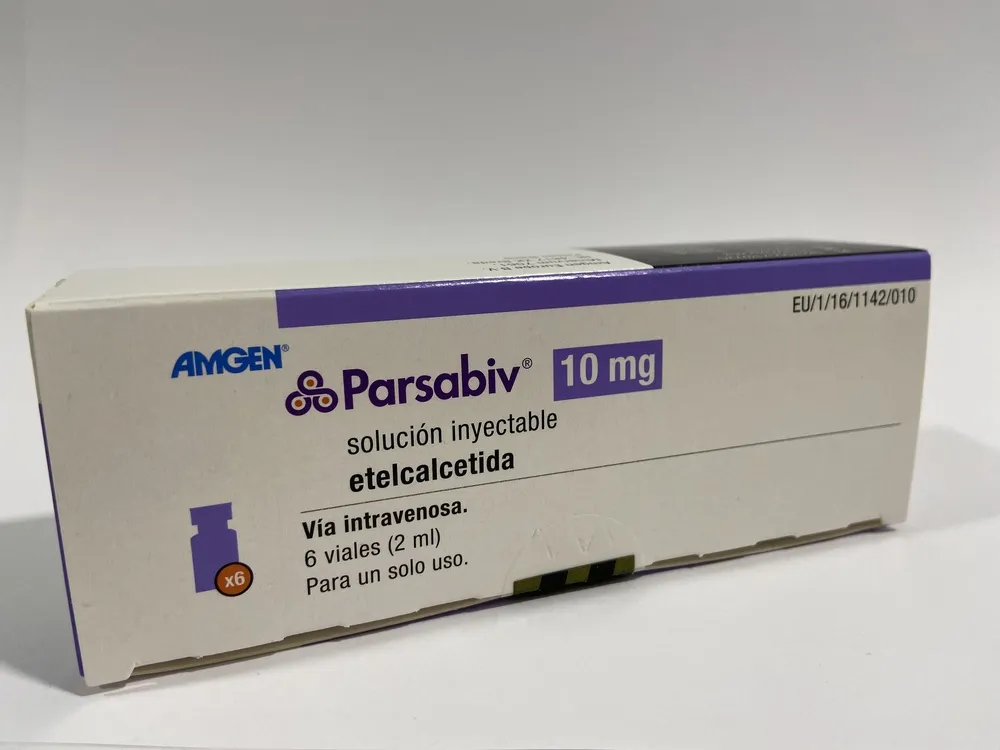
Table of Contents
INSTRUCTIONS FOR MEDICAL USE OF THE MEDICINAL PRODUCT PARSABIV® (PARSABIV®)
Composition:
Active substance: etelcalcetide;
Parsabiv, 2.5 mg, solution for injection
1 vial contains 2.5 mg of etelcalcetide (as hydrochloride) in 0.5 ml of solution.
1 ml contains 5 mg of etelcalcetide.
Parsabiv, 5 mg, solution for injection
1 vial contains 5 mg of etelcalcetide (as hydrochloride) in 1 ml of solution.
1 ml contains 5 mg of etelcalcetide.
Parsabiv, 10 mg, solution for injection
1 vial contains 10 mg of etelcalcetide (as hydrochloride) in 2 ml of solution.
1 ml contains 5 mg of etelcalcetide.
Excipients: sodium chloride, succinic acid, water for injections, hydrochloric acid (for pH adjustment), sodium hydroxide (for pH adjustment).
Pharmaceutical form.
Solution for injection.
Main physicochemical properties: clear, colorless solution.
Pharmacotherapeutic group.
Systemic hormonal preparations, excluding sex hormones and insulin. Calcium homeostasis regulators. Antiparathyroid agents. Other antiparathyroid agents. Etelcalcetide.
ATC code H05B X04.
Pharmacological properties.
Pharmacodynamics.
Mechanism of action
Calcium-sensing receptors located on the surface of chief cells of the parathyroid gland are the main regulators of parathyroid hormone (PTH) secretion. Etelcalcetide is a synthetic peptide that exerts a calcimimetic effect, reducing PTH levels by binding to and activating calcium-sensing receptors. Reduction in PTH levels is accompanied by decreased serum levels of calcium and phosphate.
Pharmacodynamic properties
After a single intravenous (i.v.) bolus administration of 5 mg etelcalcetide, a rapid decrease in PTH concentration occurs within 30 minutes. The lowest levels are maintained for one hour, after which values return to baseline. The extent and duration of PTH reduction increase with higher doses. In patients undergoing hemodialysis, the reduction in PTH concentration correlates with plasma concentrations of etelcalcetide. With i.v. bolus administration of etelcalcetide three times per week, reduction in PTH concentration was sustained over 6 months of therapy.
Clinical efficacy and safety
Placebo-controlled studies
The drug was evaluated in patients with secondary hyperparathyroidism (HPT) due to chronic kidney disease (CKD) undergoing hemodialysis three times per week (n = 1023) in two 6-month, multicenter, randomized, double-blind, placebo-controlled studies. Patients received Parsabiv or placebo at an initial dose of 5 mg three times per week at the end of hemodialysis. The dose was increased every 4 weeks up to week 17 to a maximum dose of 15 mg three times per week to achieve a target PTH level ≤ 300 pg/mL. The median weekly dose of Parsabiv during the efficacy assessment period (EAP) was 20.4 mg (6.8 mg per dose). Patients with lower baseline PTH concentrations generally required lower doses (median weekly doses of 15.0 mg, 21.4 mg, and 27.1 mg, respectively, for patients with screening PTH levels < 600 pg/mL, from 600 to ≤ 1000 pg/mL, and > 1000 pg/mL). Calcium concentration in the dialysate was maintained at ≥ 2.25 mEq/L in patients.
In each study, the primary endpoint was the proportion of patients achieving a reduction in PTH concentration of more than 30% from baseline during the efficacy assessment period (EAP, defined as weeks 20 to 27 inclusive). Secondary endpoints included the proportion of patients with a mean PTH level ≤ 300 pg/mL during the EAP, and the percentage change from baseline during the EAP in PTH concentration, albumin-corrected serum calcium, phosphate, and calcium-phosphate product (Ca × P).
Demographic and baseline characteristics were similar between groups in both studies. The mean age of patients in the two studies was 58.2 years (range 21 to 93 years). Mean (standard error [SE]) baseline PTH concentrations in the two studies were 846.9 (21.8) pg/mL and 835.9 (21.0) pg/mL in the Parsabiv and placebo groups, respectively, with approximately 21% of patients having baseline PTH levels > 1000 pg/mL. The mean duration of hemodialysis prior to study enrollment was 5.4 years; 68% of patients were receiving vitamin D sterols at study entry, and 83% were receiving phosphate binders.
In both studies, Parsabiv demonstrated reduction in PTH concentration along with reductions in calcium, phosphate, and Ca × P levels. Results for all primary and secondary endpoints were statistically significant and consistent across both studies, as shown in Table 1.
Table 1. Effect of Parsabiv on PTH, albumin-corrected serum calcium, phosphate, and Ca × P levels in 6-month placebo-controlled studies
| Parameter |
Study 1 |
Study 2 |
||
| Paricalcitol |
Placebo |
Paricalcitol |
Placebo |
|
| iPTH |
||||
| Patients with > 30% reduction in iPTH levels during EAP, n (%) |
188 (74.0)a |
21 (8.3) |
192 (75.3)a |
25 (9.6) |
| Patients with iPTH levels ≤ 300 pg/mL during EAP, n (%) |
126 (49.6)a |
13 (5.1) |
136 (53.3)a |
12 (4.6) |
| Mean percentage change during EAP, % (SE) |
-55.11 (1.94)a |
13.00 (2.81) |
-57.39 (1.91)a |
13.72 (2.50) |
| Albumin-corrected calcium |
||||
| Mean percentage change during EAP, % (SE) |
-7.29 (0.53)a |
1.18 (0.29) |
-6.69 (0.55)a |
0.58 (0.29) |
| Phosphate |
||||
| Mean percentage change during EAP, % (SE) |
-7.71 (2.16)b |
-1.31 (1.42) |
-9.63 (1.61)a |
-1.60 (1.42) |
| Ca × P |
||||
| Mean percentage change during EAP, % (SE) |
-14.34 (2.06)a |
-0.19 (1.44) |
-15.84 (1.57)a |
-1.06 (1.42) |
a p < 0.001 compared to placebo
b p = 0.003 compared to placebo
Parsabiv reduced PTH concentration regardless of its baseline level, duration of dialysis, and use of vitamin D sterol formulations. Patients with lower PTH levels at screening more rapidly achieved PTH concentrations ≤ 300 pg/mL during the EAP.
At the end of the study (week 27), Parsabiv treatment was associated with reductions in bone turnover markers (bone-specific alkaline phosphatase and type 1 collagen C-telopeptide) and fibroblast growth factor 23 (exploratory endpoints) compared to placebo.
Active-controlled study
In a 6-month double-blind active-controlled study, the efficacy and safety of Parsabiv were compared with cinacalcet in 683 patients with secondary HPT due to CKD on hemodialysis. The dosing regimen for Parsabiv was similar to that used in placebo-controlled studies (starting dose 5 mg, dose increases of 2.5–5 mg every 4 weeks up to a maximum dose of 15 mg three times weekly). The starting dose of cinacalcet was 30 mg daily. The dose was increased by 30 mg or 60 mg every 4 weeks up to a maximum dose of 180 mg daily according to the cinacalcet product label. The median weekly dose of Parsabiv during the EAP was 15.0 mg (5.0 mg per dose), and for cinacalcet it was 360.0 mg (51.4 mg per dose). The primary endpoint was non-inferiority in terms of the proportion of patients achieving a mean PTH reduction of > 30% from baseline during the efficacy assessment period (weeks 20 to 27). Key secondary endpoints included the proportion of patients achieving a mean PTH reduction of > 50% and > 30% from baseline during the efficacy assessment period, and the mean number of days with episodes of vomiting or nausea per week during the first 8 weeks of the study for further efficacy evaluation. Mean (SE) baseline PTH concentrations were 1092.12 (33.8) pg/mL and 1138.71 (38.2) pg/mL in the Parsabiv and cinacalcet groups, respectively. Demographic and other baseline characteristics were similar to those in the placebo-controlled studies.
Parsabiv demonstrated non-inferior efficacy compared to cinacalcet for the primary endpoint and showed superior efficacy compared to cinacalcet for secondary endpoints: the proportion of patients achieving a mean PTH reduction of > 30% during the EAP (68.2% in the Parsabiv group vs. 57.7% in the cinacalcet group; p = 0.004); and the proportion of patients achieving a mean PTH reduction of > 50% during the EAP (52.4% in the Parsabiv group vs. 40.2% in the cinacalcet group; p = 0.001). There was no statistically significant difference between the two groups for the secondary endpoint assessing the mean number of days with episodes of vomiting or nausea per week during the first 8 weeks.
Study on patient switching between treatments
Results from a study evaluating changes in serum albumin-corrected calcium levels when switching patients from cinacalcet to Parsabiv showed that treatment with Parsabiv at an initial dose of 5 mg can be safely initiated 7 days after discontinuation of cinacalcet if serum albumin-corrected calcium concentration is ≥ 8.3 mg/dL (2.08 mmol/L).
Open-label extension study
A 52-week non-comparative extension study of the placebo-controlled studies and the patient-switching study described above was conducted to evaluate the long-term safety and efficacy of Parsabiv in 891 patients with secondary HPT due to CKD on hemodialysis. All patients received Parsabiv at an initial dose of 5 mg three times weekly. The dose of Parsabiv could be increased at weeks 5, 9, 17, 25, 33, 41, and 49 up to a maximum dose of 15 mg to achieve target PTH levels ≤ 300 pg/mL while maintaining serum calcium (Ca) concentrations.
At the end of 52 weeks of Parsabiv treatment, no new safety findings were observed, and the treatment effect was maintained, as evidenced by a reduction in pre-dialysis PTH levels by > 30% from baseline in two-thirds of patients. Additionally, Parsabiv therapy reduced pre-dialysis PTH levels to ≤ 300 pg/mL in more than 50% of patients and reduced mean levels of PTH, corrected calcium (cCa), cCa × P, and phosphate compared to baseline.
Children
The European Medicines Agency has deferred the obligation to submit the results of studies with Parsabiv in one or more subsets of the pediatric population for the treatment of hyperparathyroidism (see information on use in children in section "Dosage and administration").
Pharmacokinetics.
Distribution
In a population pharmacokinetic model, the steady-state volume of distribution was approximately 796 L. Etelcalcetide is predominantly bound to serum albumin via reversible covalent binding. Non-covalent plasma protein binding of etelcalcetide is low, with a free fraction ratio of 0.53. The blood-to-plasma concentration ratio of [14C]-etelcalcetide is approximately 0.6.
Biotransformation
Etelcalcetide is not metabolized by CYP450 isoenzymes. In blood, etelcalcetide undergoes biotransformation via reversible disulfide exchange with endogenous thiols, primarily forming conjugates with serum albumin. Exposure to biotransformation products in plasma was approximately 5 times higher than that of etelcalcetide, and the concentration-time profile of biotransformation products was similar to that of etelcalcetide. The major biotransformation product (albumin-bound) showed minimal activity in vitro.
Elimination
Following intravenous administration three times weekly at the end of a hemodialysis session, the effective half-life ranged from 3 to 5 days. Etelcalcetide is rapidly eliminated in patients with normal renal function, whereas in patients with chronic kidney disease requiring hemodialysis, hemodialysis is the primary route of elimination. Effective removal of etelcalcetide occurred with a hemodialysis clearance rate of 7.66 L/h. After administration of a single radiolabeled dose of etelcalcetide to patients with chronic kidney disease and secondary HPT undergoing hemodialysis, approximately 60% of [14C]-etelcalcetide was recovered in dialysate, and a total of 7% was excreted in urine and feces over a 175-day collection period. Inter-individual variability in systemic clearance is approximately 70%.
Linearity/Non-linearity
In patients with chronic kidney disease and secondary HPT undergoing hemodialysis, the pharmacokinetics of etelcalcetide were linear and did not change over time, following both single (5–60 mg) and repeated (2.5–20 mg) intravenous doses. With intravenous administration three times weekly at the end of a 3–4 hour hemodialysis procedure, plasma concentrations of etelcalcetide reached near steady-state in patients with chronic kidney disease within 4 weeks of starting treatment, with observed accumulation increasing by 2–3 fold.
Renal impairment
Special pharmacokinetic studies of etelcalcetide in patients with mild to severe renal impairment have not been conducted. Pharmacokinetics of etelcalcetide have been described in patients with chronic kidney disease on hemodialysis. Etelcalcetide is intended for use in patients with chronic kidney disease on hemodialysis.
Hepatic impairment
Special studies of etelcalcetide in patients with hepatic impairment have not been conducted.
Body weight, sex, age, race
Studies conducted have not identified any influence of body weight, sex, age, or race on the pharmacokinetics of etelcalcetide in adult patients.
Clinical characteristics.
Indications.
Parsabiv is indicated for the treatment of secondary hyperparathyroidism (HPT) in adult patients with chronic kidney disease (CKD) who are on hemodialysis.
Contraindications.
Hypersensitivity to the active substance or to any of the excipients listed in the section "Composition".
Treatment with Parsabiv should not be initiated in patients with serum albumin-corrected calcium concentration below the lower limit of normal (see sections "Dosage and administration" and "Special warnings and precautions for use").
Interaction with other medicinal products and other forms of interaction.
No drug interaction studies have been conducted. There are no data on pharmacokinetic drug interactions of etelcalcetide.
In vitro, etelcalcetide did not inhibit or induce the activity of cytochrome P450 enzymes and was not a substrate in their metabolism. In vitro, etelcalcetide was not a substrate of efflux transporter proteins or uptake transporter proteins and did not inhibit common transporter proteins.
Concomitant use of other medicinal products that reduce serum calcium concentration (e.g., cinacalcet or denosumab) with etelcalcetide may increase the risk of developing hypocalcemia (see section "Special warnings and precautions for use"). Cinacalcet should not be administered to patients receiving etelcalcetide (see section "Special warnings and precautions for use").
Special precautions for use.
Hypocalcemia
Treatment with etelcalcetide should not be initiated if serum albumin-corrected calcium concentration is below the lower limit of normal (see section "Contraindications").
Clinical manifestations of hypocalcemia may include paresthesia, myalgia, muscle spasms, and seizures.
Since etelcalcetide reduces serum calcium levels, patients should be advised to contact their physician if symptoms of hypocalcemia occur, and monitoring for hypocalcemia should be performed (see section "Dosage and administration"). Serum calcium concentration should be monitored before starting therapy, within one week after initiation of therapy or dose adjustment of etelcalcetide, and every 4 weeks during treatment. In case of clinically significant decrease in serum albumin-corrected calcium concentration, appropriate measures to increase serum calcium levels should be taken (see section "Dosage and administration").
Ventricular arrhythmia and QT interval prolongation due to hypocalcemia
Decreased serum calcium concentration may lead to QT interval prolongation, which in turn may be associated with the development of ventricular arrhythmias (see section "Adverse reactions"). In patients with congenital long QT syndrome, history of QT prolongation, family history of QT prolongation or sudden cardiac death, or other conditions that increase susceptibility to QT prolongation and ventricular arrhythmias, careful monitoring of serum calcium concentration is required during etelcalcetide treatment.
Seizures
Seizures have been reported in patients receiving etelcalcetide treatment (see section "Adverse reactions"). The seizure threshold may be lowered with significant reduction in serum calcium concentration. Careful monitoring of serum calcium concentration is required in patients with a history of seizure disorders during etelcalcetide treatment.
Decompensation of chronic heart failure
Myocardial dysfunction, hypotension, and chronic heart failure (CHF) may be associated with significant reduction in serum calcium concentration. In patients with a history of CHF that may be associated with decreased serum calcium concentration, careful monitoring of serum calcium concentration is required during etelcalcetide treatment (see section "Dosage and administration").
Concomitant use with other medicinal products
Etelcalcetide should be used with caution in patients receiving other medicinal products that reduce serum calcium concentration. Careful monitoring of serum calcium levels is required (see section "Interaction with other medicinal products and other forms of interaction").
Cinacalcet should not be prescribed to patients receiving etelcalcetide. Concomitant use may lead to the development of severe hypocalcemia.
Adynamic bone disease
Prolonged suppression of PTH concentration below 100 pg/mL may lead to the development of adynamic bone disease. If PTH concentration decreases below the recommended target range, doses of vitamin D sterols and/or etelcalcetide should be reduced or therapy discontinued. After discontinuation, treatment may be resumed at lower doses to maintain PTH concentration within the target range (see section "Dosage and administration").
Immunogenicity
In clinical studies, drug-binding antibodies were detected in 7.1% of patients with secondary hyperparathyroidism receiving etelcalcetide for up to 6 months; of these, 80.3% had antibodies detected at baseline. No changes in pharmacokinetic profile, clinical response, or safety profile attributable to the presence of pre-existing or treatment-emergent anti-etelcalcetide antibodies have been observed.
Sodium content
This medicinal product contains less than 1 mmol (23 mg) of sodium per vial, i.e., essentially sodium-free.
Use during pregnancy or breastfeeding.
Pregnancy
There are insufficient data on the use of etelcalcetide during pregnancy. Animal studies do not indicate direct or indirect harmful effects on reproductive function. As a precautionary measure, it is advisable to avoid using Parsabiv during pregnancy.
Breastfeeding
It is unknown whether etelcalcetide passes into human breast milk. Animal studies in rats have shown that etelcalcetide is excreted in milk.
A risk to newborns/infants who are breastfed cannot be excluded. A decision should be made whether to discontinue Parsabiv or to stop breastfeeding, taking into account the potential risk of adverse effects on the infant and the likely benefit of continuing therapy for the mother.
Fertility
There are no data on the effect of etelcalcetide on human fertility. Animal studies do not indicate direct or indirect harmful effects on fertility.
Ability to affect reaction speed when driving vehicles or operating machinery.
Parsabiv has no effect or has a negligible effect on the ability to drive vehicles or operate machinery. However, certain potential manifestations of hypocalcemia may affect reaction speed when driving vehicles or operating machinery (see sections "Special precautions for use" and "Adverse reactions").
Method of Administration and Dosage
Parsabiv is administered via the venous catheter of the dialysis system at the rinse-back stage at the end of a hemodialysis procedure, or intravenously after catheter flushing. When administering during rinse-back, at least 150 mL of rinse volume should be infused after injection. If the rinse-back is complete and Parsabiv has not been administered, the drug may be given intravenously, followed by administration of at least 10 mL of 9 mg/mL (0.9%) sodium chloride injection solution used for flushing.
Parsabiv must not be diluted.
Prior to administration, parenteral preparations should be visually inspected for the presence of particulate matter and discoloration.
Dosing
The recommended initial dose of etelcalcetide in adults is 5 mg as an intravenous bolus injection 3 times per week. Serum albumin-corrected calcium concentration should be at or above the lower limit of normal before administration of the first dose of Parsabiv, dose increase, or reinitiation of Parsabiv after temporary discontinuation of treatment (see also information on dose adjustment based on serum calcium levels). Parsabiv should not be administered more frequently than 3 times per week.
Dose Titration
The dose should be individually titrated within the range of 2.5 mg to 15 mg. To achieve the target parathyroid hormone (PTH) concentration, the dose of Parsabiv may be increased up to the maximum dose of 15 mg 3 times weekly in increments of 2.5 mg or 5 mg, but no more frequently than every 4 weeks.
Dose Adjustment Based on PTH Levels
PTH levels should be measured 4 weeks after initiation of therapy or dose adjustment of Parsabiv, and approximately every 1–3 months during maintenance therapy. Dose adjustments may be required at any time during treatment, including during the maintenance phase.
If PTH levels fall below 100 pg/mL (10.6 pmol/L), the dose should be reduced or treatment temporarily discontinued. If PTH levels do not return to >100 pg/mL after dose reduction, treatment should be discontinued. In patients after temporary discontinuation of therapy, Parsabiv may be reinitiated at a lower dose when PTH levels return to >150 pg/mL (15.9 pmol/L) and predialysis serum albumin-corrected calcium (kCa) reaches ≥8.3 mg/dL (2.08 mmol/L). If the patient's last dose was 2.5 mg, Parsabiv therapy may be restarted at a dose of 2.5 mg if PTH levels are >300 pg/mL (31.8 pmol/L) and the most recent predialysis kCa values are ≥8.3 mg/dL (2.08 mmol/L).
Additional recommendations for managing low calcium levels are provided in the table below.
Parsabiv may be used as part of a therapeutic regimen that includes phosphate binders and/or vitamin D sterols (see section "Pharmacodynamics").
Dose Adjustment Based on Serum Calcium Levels
Serum calcium concentration should be measured within 1 week after initiation of Parsabiv or after any dose change. After establishing a maintenance dose, serum albumin-corrected calcium levels should be monitored approximately every 4 weeks. In clinical studies, total serum calcium was measured using Roche modular analyzers. The lower limit of the normal range for serum albumin-corrected calcium was 8.3 mg/dL (2.08 mmol/L). Other laboratory assays may have different threshold values for the lower limit of the normal range.
Table 2. Recommendations in case of clinically significant reduction in serum albumin-corrected calcium concentration below the lower limit of normal range and/or occurrence of symptoms of hypocalcemia
| Serum albumin-corrected calcium concentration or clinical symptoms of hypocalcemia*: |
Recommendations |
| < 8.3 mg/dL (2.08 mmol/L) and ≥ 7.5 mg/dL (1.88 mmol/L) |
|
| < 7.5 mg/dL (1.88 mmol/L) or hypocalcemia symptoms |
|
* Total serum calcium was measured using Roche modular analyzers. For albumin levels < 4 g/dL, corrected Ca (mg/dL) = total Ca (mg/dL) + (4 – albumin [g/dL])*0.8.
Transition from cinacalcet to etelcalcetide
Etelcalcetide therapy should not be initiated earlier than 7 days after the last dose of cinacalcet and when the albumin-corrected calcium concentration is at or above the lower limit of the normal range (see section “Pharmacodynamics”).
Missed doses
If a scheduled hemodialysis session is missed, the missed dose should not be administered. Parsabiv should be administered during the next hemodialysis session at the same dose. If administration of Parsabiv has been missed for more than 2 consecutive weeks, therapy should be resumed at a dose of 5 mg (or 2.5 mg if this was the last administered dose), and the dose should be titrated to achieve the target PTH concentration.
Special patient populations
Geriatric patients (≥ 65 years of age)
Dosing recommendations for geriatric patients are the same as for adult patients.
Special precautions for handling and disposal
The medicinal product is intended for single use only.
Any unused medicinal product or waste material should be disposed of in accordance with local requirements.
Children
The safety and efficacy of etelcalcetide in children (under 18 years of age) have not been established. Data are lacking.
Overdose
Overdose with etelcalcetide may lead to hypocalcemia, with or without clinical manifestations, and may require treatment. To enable timely appropriate interventions (see section “Dosage and administration”), serum calcium concentrations should be monitored and patients observed for symptoms of hypocalcemia (see section “Special warnings and precautions for use”) in case of overdose. Although Parsabiv is removed by dialysis, hemodialysis has not been studied as a treatment for overdose. Single doses up to 60 mg and multiple doses up to 22.5 mg three times weekly at the end of dialysis have been safely administered to hemodialysis patients in clinical studies.
Adverse reactions.
Short overview of safety profile
The most commonly reported adverse reactions during treatment with the medicinal product Parsabiv are decreased blood calcium concentration (64%), vomiting (13%), muscle spasms (12%), diarrhea (11%), and nausea (11%). In most patients, these events were of mild or moderate severity and transient in nature. Treatment discontinuation due to adverse reactions occurred primarily in association with decreased blood calcium concentration, nausea, and vomiting.
Summary table of adverse reactions
The adverse reactions listed below are categorized by frequency using the following convention: very common (≥ 1/10); common (≥ 1/100 and < 1/10); uncommon (≥ 1/1000 and < 1/100); rare (≥ 1/10000 and < 1/1000); very rare (< 1/10000); frequency not known (cannot be estimated from available data).
Table 3. Frequency of adverse reactions observed in controlled clinical studies
| System organ classes by MedDRA classification |
Frequency category |
Adverse reactions |
| Immune system disorders |
Frequency unknown |
Hypersensitivity reactions (including anaphylaxis) |
| Metabolism and nutrition disorders |
Very common |
Decreased blood calcium level1, 4 |
| Common |
Hypocalcemia1, 5 Hyperkalemia2 Hypophosphatemia |
|
| Nervous system disorders |
Common |
Headache Paresthesia3 |
| Uncommon |
Convulsions6 |
|
| Cardiac disorders |
Common |
Decompensation of chronic heart failure1 QT interval prolongation1 |
| Vascular disorders |
Common |
Arterial hypotension |
| Gastrointestinal disorders |
Very common |
Nausea Vomiting Diarrhea |
| Musculoskeletal and connective tissue disorders |
Very common |
Muscle spasms |
| Common |
Myalgia |
1 See section "Description of selected adverse reactions".
2 The term "hyperkalaemia" includes preferred terms such as hyperkalaemia and increased blood potassium concentration.
3 The term "paraesthesia" includes preferred terms such as paraesthesia and hypaesthesia.
4 Asymptomatic decrease in calcium level below 7.5 mg/dL (1.88 mmol/L) or clinically significant asymptomatic decrease in serum calcium level within the range of 7.5 to < 8.3 mg/dL (1.88 to < 2.08 mmol/L) (requiring medical intervention).
5 Symptomatic decrease in serum calcium level < 8.3 mg/dL (2.08 mmol/L).
6 See section "Special precautions for use".
Description of selected adverse reactions
Hypocalcaemia
The majority of events reported as asymptomatic decrease in blood calcium concentration and hypocalcaemia with clinical manifestations were of mild or moderate severity. In pooled data from placebo-controlled studies, the proportion of patients in the Parsabiv treatment group was higher compared to the placebo group in whom serum albumin-corrected calcium concentration was at least once recorded below 7.0 mg/dL (1.75 mmol/L) (7.6% in the Parsabiv group; 3.1% in the placebo group), below 7.5 mg/dL (1.88 mmol/L) (27.1% in the Parsabiv group; 5.5% in the placebo group), and below 8.3 mg/dL (2.08 mmol/L) (78.6% in the Parsabiv group; 19.4% in the placebo group). In these studies, 1% of patients in the Parsabiv group and 0% in the placebo group discontinued treatment due to the adverse event "low serum calcium concentration". For additional information on potential manifestations of hypocalcaemia and monitoring of serum calcium levels, see sections "Special precautions for use" and "Dosage and administration", respectively.
QTc interval prolongation associated with hypocalcaemia
In pooled data from placebo-controlled studies, the proportion of patients with maximum QTcF interval prolongation > 60 ms from baseline was higher in the Parsabiv group compared to the placebo group (1.2% in the Parsabiv group; 0% in the placebo group). The proportion of patients in whom the maximum QTcF value > 500 ms was recorded after baseline and before dialysis was 4.8% in the Parsabiv group and 1.9% in the placebo group.
Decompensation of chronic heart failure
In pooled data from placebo-controlled studies, the proportion of patients experiencing decompensation of chronic heart failure leading to hospitalization was 2.2% in the Parsabiv group and 1.2% in the placebo group.
Reporting suspected adverse reactions
Reporting of adverse reactions after marketing authorization is important. It allows continuous monitoring of the benefit-risk balance of the medicinal product. Healthcare professionals, patients, and their legal representatives are encouraged to report all suspected adverse reactions and lack of efficacy via the Automated Pharmacovigilance Information System at: https://aisf.dec.gov.ua.
Shelf life.
4 years.
After removal from the refrigerator:
- Parsabiv is stable for up to 7 days when stored in the original carton. No special temperature requirements for storage.
- If not stored in the original carton, Parsabiv is stable for a maximum of 4 hours provided it is kept protected from direct sunlight.
Storage conditions.
Store in a refrigerator (at 2–8 °C).
Store in the original carton to protect from light.
Keep out of the reach of children.
Incompatibilities.
The medicinal product must not be mixed with other medicinal products.
Packaging.
Parsabiv, 2.5 mg, solution for injection
Single-use vial (Type I glass) with a stopper (elastomeric, fluoropolymer laminated), aluminium cap and a breakable protective cap.
0.5 mL (2.5 mg) of solution in a vial, 6 vials per carton.
Parsabiv, 5 mg, solution for injection
Single-use vial (Type I glass) with a stopper (elastomeric, fluoropolymer laminated), aluminium cap and a breakable protective cap.
1 mL (5 mg) of solution in a vial, 6 vials per carton.
Parsabiv, 10 mg, solution for injection
Single-use vial (Type I glass) with a stopper (elastomeric, fluoropolymer laminated), aluminium cap and a breakable protective cap.
2 mL (10 mg) of solution in a vial, 6 vials per carton.
Prescription status.
Prescription only.
Manufacturer.
Amgen Europe B.V.
Manufacturer's address and location of operations.
Minervum 7061, 4817 ZK, Breda, The Netherlands.