Monsetin
Ukraine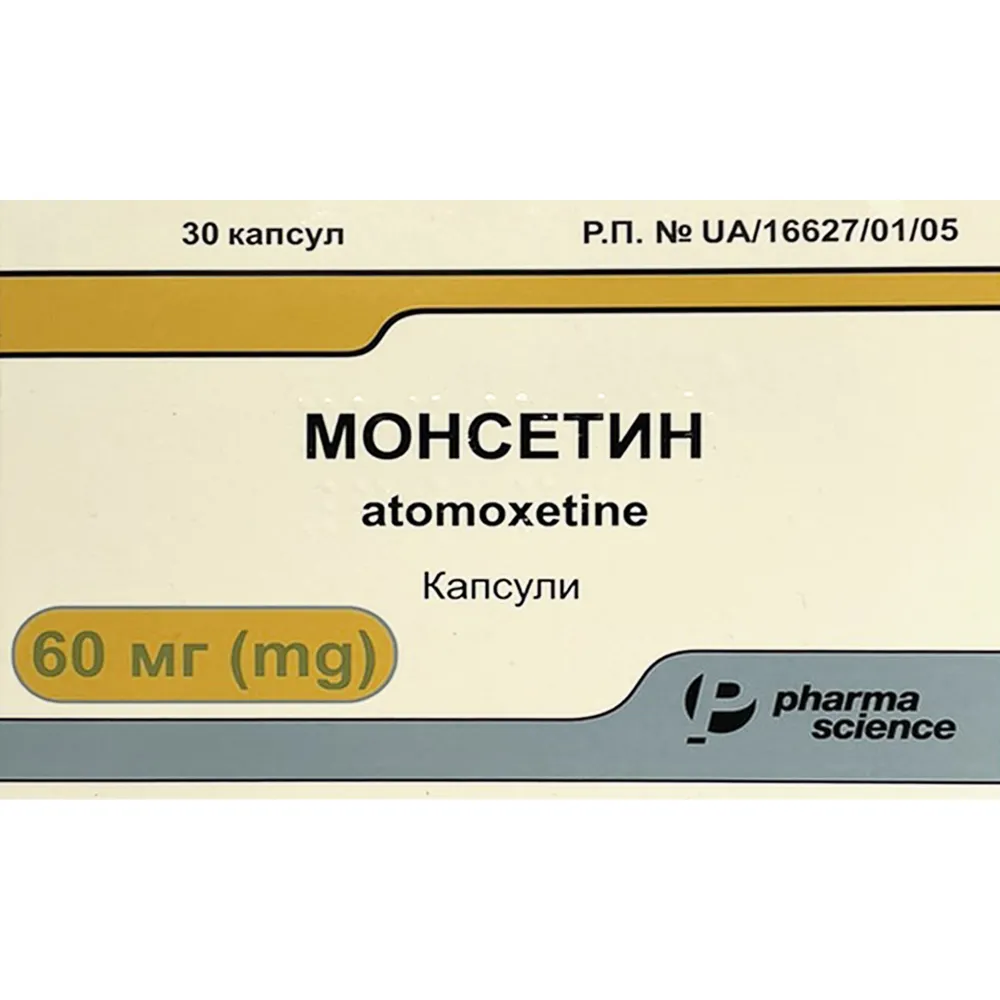
Table of Contents
INSTRUCTION FOR MEDICAL USE OF THE MEDICINAL PRODUCT MONSETIN (MONSETIN)
Composition:
Active substance: atomoxetine;
1 capsule contains atomoxetine in the form of atomoxetine hydrochloride 10 mg, 18 mg, 25 mg, 40 mg, or 60 mg;
Excipients: pregelatinized starch, capsule;
Capsule shell composition:
10 mg: gelatin, titanium dioxide (E 171);
18 mg: gelatin, titanium dioxide (E 171), iron oxide yellow (E 172);
25 mg, 40 mg, 60 mg: gelatin, titanium dioxide (E 171), FD&C Blue No. 2 (E 132), iron oxide yellow (E 172).
Pharmaceutical form. Capsules.
Main physicochemical properties:
10 mg capsules – white, opaque, hard gelatin coni-snap capsules with black inscriptions "R" on the cap and "ATX" above "10 mg" on the body; the capsules are filled with white or almost white powder;
18 mg capsules – opaque, hard gelatin coni-snap capsules with black inscriptions "R" on the golden cap and "ATX" above "18 mg" on the white body; the capsules are filled with white or almost white powder;
25 mg capsules – opaque, hard gelatin coni-snap capsules with black inscriptions "R" on the blue cap and "ATX" above "25 mg" on the white body; the capsules are filled with white or almost white powder;
40 mg capsules – blue, opaque, hard gelatin coni-snap capsules with black inscriptions "R" on the cap and "ATX" above "40 mg" on the body; the capsules are filled with white or almost white powder;
60 mg capsules – opaque, hard gelatin coni-snap capsules with black inscriptions "R" on the blue cap and "ATX" above "60 mg" on the golden body; the capsules are filled with white or almost white powder.
Pharmacotherapeutic group. Psychostimulants and nootropic agents. Central-acting sympathomimetics. Atomoxetine. ATC code N06BA09.
Pharmacological Properties.
Pharmacodynamics.
Atomoxetine is a highly selective and potent inhibitor of the presynaptic norepinephrine transporter, with its primary mechanism of action likely involving indirect effects on serotonin and dopamine transporters. Atomoxetine has minimal affinity for other noradrenergic receptors, neurotransmitter transporters, or receptors. Atomoxetine has two major oxidative metabolites—4-hydroxyatomoxetine and N-desmethylatomoxetine. 4-Hydroxyatomoxetine has the same potency as atomoxetine in inhibiting the norepinephrine transporter, but, unlike atomoxetine, this metabolite also exhibits some inhibitory activity toward the serotonin transporter. However, any effect on this transporter is generally minimal because most of the 4-hydroxyatomoxetine undergoes further metabolism and circulates in plasma at much lower concentrations (1% of atomoxetine concentration in patients who are rapid metabolizers, and 0.1% of atomoxetine concentration in patients who are slow metabolizers). N-desmethylatomoxetine has significantly lower pharmacological activity compared to atomoxetine. It circulates in plasma at lower concentrations in rapid metabolizers and at concentrations comparable to those of the parent drug in slow metabolizers at steady state.
Atomoxetine is not a psychostimulant and is not an amphetamine derivative. In a randomized, double-blind, placebo-controlled study assessing abuse potential in adults comparing the effects of atomoxetine and placebo, atomoxetine was not associated with a response pattern indicating stimulant or euphoriant properties.
Clinical Efficacy and Safety
Use in Children
Atomoxetine has been studied in clinical trials involving children and adolescents with attention deficit hyperactivity disorder (ADHD). Statistically significant superiority of atomoxetine over placebo has been demonstrated in reducing symptoms and signs of ADHD, as well as in maintaining response.
After one year of treatment with atomoxetine, patients were less likely to experience relapse or partial return of symptoms compared to patients who discontinued active treatment and switched to placebo. Children and adolescents undergoing long-term treatment require periodic assessment of the continued efficacy of therapy.
Atomoxetine was effective both when administered once daily and when the dose was divided into two administrations—morning and afternoon/early evening.
Active comparator studies
It is known that in a study designed to confirm non-inferiority of atomoxetine compared to standard extended-release methylphenidate, the comparator was associated with a higher response rate than atomoxetine.
Use in Adults
The use of atomoxetine has been studied in trials involving adult patients meeting DSM-IV diagnostic criteria for ADHD. Statistically significant superiority of atomoxetine over placebo in reducing symptoms and signs of ADHD has been demonstrated. In analyses of clinically meaningful response, statistically significantly higher response rates were consistently observed compared to patients receiving placebo.
It is known that in studies involving patients with ADHD and comorbid alcoholism or social anxiety disorder, improvement in ADHD symptoms was observed. In a study involving patients with alcohol abuse, no difference in alcohol consumption was observed between the atomoxetine and placebo groups. In a study involving patients with social anxiety disorder, treatment with atomoxetine did not worsen the course of the disorder.
It is known that a study demonstrated the efficacy of atomoxetine in maintaining treatment response.
QT/QTc interval effect studies
In a study assessing the effect on the QT/QTc interval involving healthy volunteers who were CYP2D6 poor metabolizers, single daily doses of atomoxetine up to 60 mg demonstrated that at the highest expected concentration, the effect of atomoxetine on the QTc interval was not statistically significantly different from that in the placebo group. A slight increase in QTc interval with increasing atomoxetine concentration was observed.
Pharmacokinetics.
Pharmacokinetic parameters of atomoxetine in children are similar to those in adults. Pharmacokinetics of atomoxetine have not been evaluated in children under 6 years of age.
Absorption. Atomoxetine is rapidly and almost completely absorbed after oral administration, reaching mean peak plasma concentration (Cmax) approximately 1–2 hours after dose intake. Absolute bioavailability of atomoxetine after oral administration ranges from 63% to 94%, depending on inter-individual variability in moderate presystemic metabolism. Atomoxetine can be administered independently of food intake.
Distribution. Atomoxetine is widely distributed and highly bound (98%) to plasma proteins, primarily to albumin.
Biotransformation. Atomoxetine undergoes biotransformation primarily via the cytochrome P450 2D6 (CYP2D6) enzyme pathway. Patients who are poor metabolizers of cytochrome P450 2D6 (CYP2D6) represent approximately 7% of individuals of Caucasian ethnicity and have higher plasma concentrations of atomoxetine compared to those with normal enzyme activity (extensive metabolizers). In poor metabolizers, the area under the plasma concentration-time curve (AUC) of atomoxetine is approximately 10 times greater, and steady-state Cmax (Css,max) is approximately 5 times greater than in extensive metabolizers. The primary oxidative metabolite is 4-hydroxyatomoxetine, which is rapidly glucuronidated.
4-Hydroxyatomoxetine has activity equivalent to atomoxetine but circulates in plasma at significantly lower concentrations. Although 4-hydroxyatomoxetine is formed predominantly by CYP2D6, in individuals with deficient CYP2D6 activity, it may be formed by several other cytochrome P450 enzymes, albeit at a lower rate. Atomoxetine does not inhibit or induce CYP2D6 at therapeutic doses.
Elimination. The mean elimination half-life of atomoxetine after oral administration is 3.6 hours in extensive metabolizers and 21 hours in poor metabolizers. Atomoxetine is primarily eliminated as 4-hydroxyatomoxetine-O-glucuronide, mainly in urine.
Linearity/Non-linearity of Pharmacokinetics. The pharmacokinetics of atomoxetine are linear within the studied dose range in both extensive and poor metabolizers.
Special Patient Populations
Hepatic impairment leads to reduced clearance of atomoxetine, increased exposure (AUC increases by 2-fold with moderate impairment and by 4-fold with severe impairment), and prolonged elimination half-life of the parent drug compared to healthy volunteers with the same CYP2D6 extensive metabolizer genotype. In patients with moderate or severe hepatic impairment (Child-Pugh class B and C), initial and target doses require adjustment.
Mean plasma concentrations of atomoxetine in patients with end-stage renal disease (ESRD) were generally higher than in healthy volunteers, with increases in Cmax (7% difference) and AUC0–∞ (approximately 65% difference). After correction for body weight, differences between the two groups are minimized. Pharmacokinetics of atomoxetine and its metabolites in patients with ESRD indicate that dose adjustment is not required.
Clinical characteristics.
Indications.
Treatment of attention deficit hyperactivity disorder (ADHD) in children aged 6 years and older and adults, as part of a comprehensive treatment program.
Treatment should be initiated by a specialist experienced in the management of ADHD, such as a pediatrician, child/adolescent psychiatrist, or psychiatrist. Diagnosis must be established according to current DSM (Diagnostic and Statistical Manual of Mental Disorders) criteria or guidelines from the ICD (International Classification of Diseases).
In adults, the presence of ADHD symptoms that originated in childhood must be confirmed. It is advisable to involve an impartial third party in the decision-making process; treatment with atomoxetine should not be initiated if childhood ADHD symptoms are not confirmed. Diagnosis cannot be based solely on the presence of one or several ADHD symptoms. Based on clinical assessment, patients must exhibit ADHD symptoms of at least moderate severity, confirmed by functional impairment of at least moderate degree in at least two domains (e.g., social, academic, and/or occupational functioning), affecting various aspects of a person's life.
Additional information on safety of use of this medicinal product
A comprehensive treatment program typically includes psychological, educational, and social measures, aimed at stabilizing patients with a behavioral syndrome characterized by symptoms that may include chronic inattention, pathological distractibility, emotional lability, impulsivity, mild to severe hyperactivity, minor neurological signs, and EEG abnormalities. In some cases, learning disability may also be present.
Pharmacological treatment is not indicated for all patients with this syndrome; therefore, the decision to use the medicinal product should be based on a careful evaluation of symptom severity and degree of impairment, taking into account the patient’s age and duration of symptoms.
Contraindications.
Hypersensitivity to atomoxetine or to any of the excipients of the medicinal product.
Atomoxetine must not be used in combination with monoamine oxidase inhibitors (MAO inhibitors).
Atomoxetine must not be administered within at least 2 weeks after discontinuation of therapy with MAO inhibitors. MAO inhibitors must not be initiated earlier than 2 weeks after stopping atomoxetine.
Atomoxetine must not be used in patients with narrow-angle glaucoma, as clinical studies have shown that the action of atomoxetine is associated with an increased incidence of mydriasis.
Atomoxetine must not be used in patients with severe cardiovascular diseases or cerebrovascular disorders. Severe cardiovascular diseases may include severe arterial hypertension, heart failure, arterial occlusive disease, angina pectoris, hemodynamically significant congenital heart defects, cardiomyopathy, myocardial infarction, life-threatening arrhythmias, and channelopathies (disorders caused by dysfunction of ion channels). Severe cerebrovascular disorders may include cerebral aneurysm or stroke.
Atomoxetine must not be used in patients with pheochromocytoma, including in medical history.
Interaction with other medicinal products and other forms of interaction.
Effect of other medicinal products on atomoxetine
MAO inhibitors. Atomoxetine must not be used with MAO inhibitors.
CYP2D6 inhibitors (serotonin reuptake inhibitors (e.g., fluoxetine, paroxetine), quinidine, terbinafine). In patients receiving the above-mentioned medicinal products, the exposure to atomoxetine is approximately 6–8 times higher, and Css,max is approximately 3–4 times higher, since atomoxetine is primarily metabolized via CYP2D6. For patients taking CYP2D6 inhibitor medicinal products, a slower titration and final lower dose of atomoxetine are recommended. If initiation or discontinuation of a CYP2D6 inhibitor occurs after titration to the appropriate dose of atomoxetine, the clinical response and tolerability of the drug in each patient should be re-evaluated to determine the need for dose adjustment.
Caution is recommended when combining atomoxetine with potent inhibitors of cytochrome P450 enzymes other than CYP2D6 in patients who are poor CYP2D6 metabolizers, as the risk of clinically significant increase in atomoxetine exposure in vivo has not been studied.
Salbutamol and other β2-agonists. Atomoxetine should be prescribed with caution in patients receiving high-dose salbutamol (or other β2-agonists) in aerosol form or by systemic administration, as the cardiovascular effects of salbutamol may be potentiated.
Clinical studies have yielded conflicting data regarding their interaction. Systemic administration of salbutamol (600 mcg intravenously over 2 hours) in combination with atomoxetine (60 mg twice daily for 5 days) caused increases in heart rate and blood pressure. This effect was most commonly observed after prior concomitant administration of salbutamol and atomoxetine, but parameters returned to baseline by the end of the eighth hour after administration. In contrast, in another study involving healthy Mongoloid volunteers who are active metabolizers of atomoxetine, the effect on blood pressure and heart rate of a standard inhaled dose of salbutamol (200 mcg) was not enhanced during short-term concomitant use of atomoxetine (80 mg once daily). Similarly, heart rate after multiple inhalations of salbutamol (800 mcg) did not differ, regardless of the presence or absence of atomoxetine.
Heart rate (HR) and blood pressure should be monitored, and if necessary, doses of atomoxetine or salbutamol (or other β2-agonists) should be adjusted in case of significant increases in HR and blood pressure when these medicinal products are used concomitantly.
There is a potential risk of QT interval prolongation when atomoxetine is used concomitantly with other medicinal products that prolong the QT interval (such as neuroleptics, class IA and III antiarrhythmics, moxifloxacin, erythromycin, methadone, mefloquine, tricyclic antidepressants, lithium, or cisapride), medicinal products causing electrolyte imbalance (such as thiazide diuretics), and medicinal products that inhibit CYP2D6.
The use of atomoxetine is associated with a potential risk of seizures. Atomoxetine should be used with caution in combination with medicinal products that lower the seizure threshold (such as tricyclic antidepressants or serotonin reuptake inhibitors, neuroleptics, phenothiazines or butyrophenones, mefloquine, chloroquine, bupropion, or tramadol). In addition, concomitant benzodiazepine therapy should be discontinued cautiously due to the potential risk of seizures associated with withdrawal syndrome.
Antihypertensive medicinal products. Atomoxetine should be used with caution with antihypertensive medicinal products. Due to its potential effect on blood pressure, atomoxetine may reduce the effectiveness of antihypertensive medicinal products or medicinal products used to treat arterial hypertension. Blood pressure should be monitored in patients, and if significant changes occur, doses of atomoxetine or antihypertensive medicinal products should be adjusted.
Vasopressor medicinal products and medicinal products that increase blood pressure. Due to the potential effect on blood pressure, atomoxetine should be used with caution concomitantly with vasopressor medicinal products and medicinal products that may increase blood pressure (e.g., salbutamol). Blood pressure should be monitored in patients, and if significant changes in blood pressure occur, doses of atomoxetine or vasopressor medicinal products and medicinal products that may increase blood pressure should be adjusted.
MEDICINAL PRODUCTS AFFECTING NORADRENALINE. Caution is required when co-administering medicinal products affecting noradrenaline with atomoxetine due to the potential for additive or enhanced pharmacological effects. Examples of such medicinal products include antidepressants such as imipramine, venlafaxine, and mirtazapine, or decongestants such as pseudoephedrine or phenylephrine.
MEDICINAL PRODUCTS AFFECTING GASTRIC pH. Medicinal products that increase gastric pH (magnesium hydroxide/aluminum hydroxide, omeprazole) did not affect the bioavailability of atomoxetine.
MEDICINAL PRODUCTS WITH HIGH PLASMA PROTEIN BINDING. In vitro drug displacement studies were conducted for atomoxetine and other medicinal products with high plasma protein binding at therapeutic concentrations. Warfarin, acetylsalicylic acid, phenytoin, or diazepam did not affect the binding of atomoxetine to human albumin. Similarly, atomoxetine did not affect the binding of these medicinal products to human albumin.
CYTOCHROME P450 ENZYMES. Atomoxetine did not cause clinically significant inhibition or induction of cytochrome P450 enzymes, including CYP1A2, CYP3A, CYP2D6, and CYP2C9.
Special precautions for use.
Suicidal behavior
Suicidal behavior (suicide attempts and suicidal thoughts) has been observed in patients during treatment with atomoxetine. In double-blind clinical trials, suicidal behavior was infrequent but occurred more often in children treated with atomoxetine compared to patients receiving placebo, in whom no cases were observed. In double-blind clinical trials involving adults, the frequency of suicidal behavior was similar in patients receiving placebo and those treated with atomoxetine. Patients receiving treatment for ADHD should be monitored for the emergence or worsening of suicidal behavior.
Sudden death and pre-existing cardiac disorders
Cases of sudden death have been reported in patients with structural heart abnormalities receiving atomoxetine at usual doses. Although some serious structural abnormalities individually may increase the risk of sudden death, atomoxetine should be used with caution in patients with known structural cardiac abnormalities and only after consultation with a cardiologist.
Cardiovascular disorders
Atomoxetine may affect heart rate (HR) and blood pressure (BP). In most patients taking atomoxetine, a mild increase in HR (on average <10 bpm) and/or an increase in BP (on average <5 mm Hg) is observed.
However, pooled data from controlled and uncontrolled clinical ADHD trials indicate that approximately 8–12% of children and adolescents and 6–10% of adults experience more pronounced changes in HR (20 bpm or higher) and BP (15–20 mm Hg or higher). Analysis of data from these clinical trials showed that such changes in HR and BP persisted or progressed in approximately 15–26% of children and adolescents and 27–32% of adults during continued atomoxetine treatment. Long-term sustained increases in BP may affect clinical outcomes such as myocardial hypertrophy. Available data suggest that patients requiring atomoxetine treatment should undergo a thorough medical history and physical examination before initiating therapy to assess for heart disease. If heart disease is suspected or documented in the patient’s history following the initial evaluation, additional assessment by a cardiologist is required.
Regular monitoring of HR and BP is recommended, with results recorded before treatment initiation, during treatment, after each dose adjustment, and at least once every 6 months thereafter to detect any potentially clinically significant increases in these parameters. For children, the use of blood pressure percentile charts is recommended. For adults, current guidelines for the management of arterial hypertension should be followed.
Atomoxetine should not be prescribed to patients with severe cardiovascular disease or cerebrovascular disorders. Atomoxetine should be used with caution in patients whose underlying condition may worsen due to increased BP and HR, such as patients with hypertension, tachycardia, cardiovascular disease, or cerebrovascular disorders.
Patients who develop symptoms suggestive of heart disease during atomoxetine treatment, such as rapid heartbeat, chest pain on exertion, unexplained syncope, dyspnea, or others, should seek immediate evaluation by a cardiologist.
Atomoxetine should be used with caution in patients with congenital or acquired long QT syndrome or a family history of prolonged QT interval.
Due to reports of orthostatic hypotension, atomoxetine should be used cautiously in any condition where the patient may be predisposed to arterial hypotension or in conditions associated with sudden increases in BP or HR.
Cerebrovascular disorders
Neurological signs and symptoms should be monitored in patients with additional risk factors for cerebrovascular disorders (history of cardiovascular disease, concomitant therapy with agents that increase blood pressure) at each visit following initiation of atomoxetine treatment.
Hepatic disorders
Very rare cases of liver injury have been reported, manifesting as elevated liver enzymes, bilirubin, and development of jaundice. Very rare cases of severe liver injury, including acute liver failure, have also been observed. Atomoxetine treatment must be discontinued in patients who develop jaundice or have laboratory-confirmed liver injury and should not be restarted.
Psychotic symptoms and mania
Psychotic symptoms and mania (e.g., hallucinations, delusions, mania, and agitation) may occur during treatment with usual doses in patients with no prior history of such symptoms. If such symptoms occur, a possible causal relationship with atomoxetine should be considered and discontinuation of therapy should be evaluated. Exacerbation of pre-existing psychotic disorders and mania associated with atomoxetine treatment cannot be excluded.
Aggressive behavior, hostility, emotional lability
Hostility (primarily aggression, opposition, and anger) was more frequently observed in children receiving atomoxetine compared to those receiving placebo in clinical trials. Emotional lability was also more frequently observed in children receiving atomoxetine compared to those receiving placebo. Patients should be monitored for the emergence or worsening of suicidal behavior, hostility, and emotional lability.
Possible allergic reactions
Allergic reactions, including anaphylactic reactions, pruritus, angioedema, and urticaria, have been infrequently reported in patients receiving atomoxetine.
Seizures
Atomoxetine is associated with a potential risk of seizures. Atomoxetine should be used with caution in patients with a history of seizures. Discontinuation of atomoxetine is advisable in any patient who develops a seizure or an increased frequency of seizures when no other cause is identified.
Growth and development
Growth and development in children and adolescents should be monitored during treatment with atomoxetine. Patients requiring long-term therapy should be closely observed; dose reduction or discontinuation of therapy may be considered for patients who fail to grow or gain weight appropriately.
Clinical data do not indicate a harmful effect of atomoxetine on cognitive function or sexual maturation, although long-term study data are limited. Therefore, careful monitoring is required for patients requiring long-term therapy.
Emergence or worsening of comorbid depression, anxiety, or tics
In controlled trials involving children with ADHD and comorbid chronic motor tics or Tourette’s syndrome, patients receiving atomoxetine did not experience worsening of tics compared to those receiving placebo. In controlled trials involving adults with ADHD and comorbid major depressive disorder, patients receiving atomoxetine did not experience worsening of depression compared to those receiving placebo. In two placebo-controlled trials (one involving children and adolescents, the other involving adult patients) with patients with ADHD and comorbid anxiety disorder, patients receiving atomoxetine did not experience worsening of anxiety compared to those receiving placebo.
In post-marketing reports, anxiety and depression or depressed mood have been rarely reported, and very rarely, cases of tics have been reported in patients receiving atomoxetine. Patients with ADHD should be monitored for the emergence or worsening of symptoms of anxiety, depressed mood, depression, or tics.
Patients receiving treatment for ADHD should be monitored for the emergence or worsening of symptoms of anxiety, mood deterioration, depression, or tics.
Use in children under 6 years of age
Atomoxetine should not be used in patients under 6 years of age, as the efficacy and safety of the drug in this age group have not been established.
Other therapeutic uses
Atomoxetine is not indicated for the treatment of major depression and/or anxiety, as clinical trials in adults with these conditions have not demonstrated any drug effect compared to placebo.
Use during pregnancy or breastfeeding.
Pregnancy. Animal studies generally do not indicate a direct harmful effect on pregnancy, embryonic development, labor, or postnatal development. Clinical data on the effect of atomoxetine during pregnancy are limited. Such data are insufficient to confirm or rule out an association between atomoxetine use and adverse outcomes during pregnancy and/or lactation. Atomoxetine should not be used during pregnancy unless the expected benefit justifies the potential risk to the fetus.
Breastfeeding period. Atomoxetine and/or its metabolites have been shown to pass into milk in rats. It is unknown whether atomoxetine is excreted in human breast milk. Due to insufficient data, the use of atomoxetine during breastfeeding should be avoided.
Ability to affect reaction speed when driving or operating machinery.
Data on the effect of atomoxetine on reaction speed when driving or operating machinery are limited. Atomoxetine has a minor influence on the ability to drive and operate machinery. In both pediatric and adult patients, atomoxetine use has been associated with increased fatigue, somnolence, and dizziness compared to placebo. Patients should be cautious when driving or operating machinery until they are certain that atomoxetine does not affect their attention or performance.
Method of Administration and Dosage
The medication is intended for oral use.
The drug can be administered once daily in the morning, regardless of food intake. For patients in whom administration of atomoxetine once daily does not provide satisfactory clinical effect (tolerability [nausea or somnolence] or efficacy), administration of the drug twice daily—once in the morning and once in the afternoon or early evening—is recommended, with an equal distribution of the total daily dose.
Children
Dosing for children with body weight up to 70 kg. Treatment should be initiated with a total daily dose of approximately 0.5 mg/kg body weight. This dose should be maintained for at least 7 days before increasing the dose, depending on clinical response and tolerability. The recommended maintenance dose is approximately 1.2 mg/kg/day (depending on patient weight and available atomoxetine strengths). No additional benefit has been observed with doses exceeding 1.2 mg/kg/day. The safety of single doses above 1.8 mg/kg/day and total daily doses above 1.8 mg/kg has not been systematically evaluated. In some cases, continuation of treatment into adulthood may be appropriate.
Dosing for children with body weight over 70 kg. Treatment should be initiated at a daily dose of 40 mg. This dose should be maintained for at least 7 days before dose escalation, depending on clinical response and tolerability. The recommended maintenance daily dose is 80 mg. No additional benefit has been observed with doses above 80 mg. The maximum recommended daily dose is 100 mg. The safety of single doses above 120 mg and daily doses above 150 mg has not been systematically evaluated.
Dosage for adults. Treatment should be initiated at a daily dose of 40 mg. This dose should be maintained for at least 7 days before dose escalation, depending on clinical response and tolerability. The recommended maintenance daily dose ranges from 80 mg to 100 mg. The maximum recommended daily dose is 100 mg. The safety of single doses above 120 mg and daily doses above 150 mg has not been systematically evaluated.
Additional information on the safety of using this medication
Patient assessment prior to treatment. Prior to prescribing the medication, a thorough medical history should be obtained and an initial cardiovascular evaluation performed, including monitoring of blood pressure (BP) and heart rate (HR) (see sections "Interaction with other medicinal products and other types of interactions" and "Special precautions for use").
Ongoing monitoring. Patients should undergo regular cardiovascular monitoring, including BP and pulse, with results recorded after each dose adjustment and thereafter at least once every six months. For children, the use of percentile-based methods for BP assessment is recommended. For adults, current guidelines for the management of arterial hypertension should be followed (see section "Special precautions for use").
Discontinuation of treatment
In clinical studies, no pronounced withdrawal symptoms were reported. In cases of significant adverse effects, atomoxetine may be discontinued immediately or gradually tapered.
Treatment with atomoxetine should not be indefinite. A reassessment of the need for continued treatment beyond one year should be performed, especially if the patient has achieved stable and satisfactory response.
Additional information on the safety of using this medication
Comprehensive treatment programs typically include psychological, educational, and social interventions aimed at stabilizing patients with behavioral disorders characterized by symptoms such as chronic, prolonged inattention, distractibility, emotional lability, impulsivity, mild to marked hyperactivity, minor neurological signs, and abnormalities on electroencephalogram. Learning disability is not necessarily present.
Pharmacological treatment is not indicated for all patients with this disorder; therefore, the decision to use the medication should be based on a careful assessment of symptom severity and pathology, taking into account the patient's age and persistence of symptoms.
Special patient groups
Patients with hepatic impairment. For patients with moderate hepatic impairment (Child-Pugh class B), initial and maintenance doses should be reduced to 50% of the usual dose. For patients with severe hepatic impairment (Child-Pugh class C), initial and maintenance doses should be reduced to 25% of the usual dose (see section "Pharmacological properties").
Patients with renal impairment. Patients with end-stage renal disease have shown higher systemic exposure to atomoxetine than healthy volunteers (approximately 65% increase), but no difference was observed when exposure was corrected for dose per unit of body weight. Therefore, atomoxetine may be administered to patients with ADHD and end-stage renal disease or milder degrees of renal impairment using the standard dosing regimen. Atomoxetine may exacerbate arterial hypertension in patients with end-stage renal disease (see section "Pharmacological properties").
Approximately 7% of individuals of Caucasian descent have a genotype corresponding to a non-functional CYP2D6 enzyme (so-called poor CYP2D6 metabolizers). Patients with this genotype experience several-fold higher exposure to atomoxetine compared to those with functional enzyme. Thus, poor metabolizers are at increased risk of adverse events (see sections "Pharmacological properties" and "Adverse reactions"). For patients with a genotype corresponding to poor metabolizers, a lower initial dose and slower dose titration are recommended.
Elderly patients. The use of atomoxetine in patients aged 65 years and older has not been systematically evaluated.
Children under 6 years of age. The safety and efficacy of atomoxetine in children under 6 years of age have not been established; therefore, the medication should not be used for the treatment of children in this age group (see section "Special precautions for use").
Method of administration
For oral use. Monsetin may be administered regardless of food intake.
Atomoxetine capsules should be swallowed whole and must not be opened. Atomoxetine is an eye irritant. If capsule contents come into contact with the eye mucosa, the affected eye should be immediately rinsed with water and medical advice sought. Hands and potentially contaminated surfaces should be washed with water.
Overdose.
Symptoms. Post-marketing reports have described non-fatal acute and chronic overdoses with atomoxetine alone. The most commonly reported symptoms associated with acute and chronic overdose include gastrointestinal disturbances, somnolence, dizziness, tremor, and behavioral changes. Hyperactivity and anxiety have also been reported. Signs and symptoms consistent with mild to moderate sympathetic nervous system activation (e.g., tachycardia, elevated blood pressure, mydriasis, dry mouth) have been observed, and reports of pruritus and rash have been received. Most cases were mild to moderate. In some cases of atomoxetine-related overdose, epileptiform seizures were reported, and very rarely, QT interval prolongation. Fatalities have been reported following acute overdose involving concomitant ingestion of atomoxetine and at least one other medicinal product.
Clinical experience with atomoxetine overdose is limited.
Treatment. Ensure adequate ventilation. Activated charcoal may be administered within 1 hour of overdose to reduce absorption. Continuous cardiac monitoring and monitoring of vital signs are recommended, along with appropriate symptomatic and supportive measures. Patients should be observed for at least 6 hours. Atomoxetine is highly protein-bound in plasma; therefore, dialysis is unlikely to be effective in treating overdose.
Adverse reactions.
Children and adolescents. In placebo-controlled studies involving children, the most commonly reported adverse reactions were headache, abdominal pain1, and decreased appetite, which were frequently associated with atomoxetine use and occurred in approximately 19%, 18%, and 16% of patients, respectively. However, these reactions rarely led to the need to discontinue the medication (discontinuation rates were 0.1% for headache, 0.2% for abdominal pain, and 0.0% for decreased appetite). Episodes of abdominal pain and reduced appetite were usually transient in nature.
During the early stages of treatment, a delay in the average rate of weight gain and growth was observed in patients receiving atomoxetine, related to decreased appetite. Over time, with long-term therapy, after an initial reduction in weight or height gain, a slight increase toward normal average values was observed during prolonged treatment.
Nausea, vomiting, and somnolence2 occurred in approximately 10% and 11% of patients, respectively, mostly during the first month of treatment. However, these episodes were generally mild to moderate in severity, transient, and did not lead to treatment discontinuation in most cases (discontinuation rates ≤ 0.5%).
During placebo-controlled studies involving both children and adults, increased heart rate and elevations in systolic and diastolic blood pressure (BP) were observed in patients taking atomoxetine (see section "Special precautions").
Due to its effect on noradrenergic tone, orthostatic hypotension (0.2%) and syncope (0.8%) have been observed in patients taking atomoxetine. Atomoxetine should be used with caution in patients with a predisposition to conditions that may lead to orthostatic hypotension.
Table 1 of adverse reactions was compiled based on reports of adverse reactions and laboratory findings from clinical trials, as well as spontaneous post-marketing reports from children.
Tabulated list of adverse reactions
Frequency categories: very common (≥ 1/10), common (≥ 1/100 to < 1/10), uncommon (≥ 1/1000 to < 1/100), rare (≥ 1/10,000 to < 1/1000), very rare (< 1/10,000).
Table 1
| System Organ Classes |
Very common |
Common |
Uncommon |
Rare |
| Metabolism and nutrition disorders |
Decreased appetite |
Anorexia (loss of appetite) |
||
| Psychiatric disorders |
Irritability, mood swings, insomnia3, agitation*, anxiety, depression and depressed mood*, tic* |
Suicidality-related events, aggression, hostility, emotional lability*, psychosis (including hallucinations)* |
||
| Nervous system disorders |
Headache, somnolence2 |
Dizziness |
Syncope, tremor, migraine, paraesthesia*, hypoesthesia*, epileptic seizures** |
|
| Eye disorders |
Mydriasis |
Blurred vision |
||
| Cardiac disorders |
Tachycardia, sinus tachycardia, QT interval prolongation** |
|||
| Respiratory, thoracic and mediastinal disorders |
Dyspnoea (see section "Special warnings and precautions for use") |
|||
| Vascular disorders |
Raynaud's disease |
|||
| Gastrointestinal disorders |
Abdominal pain1, vomiting, nausea |
Constipation, dyspepsia |
||
| Hepatobiliary disorders |
Elevated blood bilirubin levels* |
Abnormal/elevated liver function tests, jaundice, hepatitis, hepatic injury, acute liver failure* |
||
| Skin and subcutaneous tissue disorders |
Dermatitis, pruritus, rash |
Hyperhidrosis, allergic reactions |
||
| Renal and urinary disorders |
Urinary hesitation, urinary retention |
|||
| Reproductive system and breast disorders |
Priapism, genital pain in male patients |
|||
| General disorders and administration site conditions |
Malaise, lethargy, chest pain (see section "Special warnings and precautions for use") |
Asthenia |
||
| Investigations |
Increased blood pressure4, increased heart rate4 |
Weight decreased |
1Also includes upper abdominal pain, stomach discomfort, abdominal discomfort, and epigastric discomfort.
2Also includes sedation.
3Includes difficulty falling asleep, nocturnal sleep disturbances, and awakening (early morning awakening).
4Heart rate and blood pressure measurement results are presented according to vital sign parameters.
*See section "Special precautions for use".
**See sections "Interaction with other medicinal products and other forms of interaction" and "Special precautions for use".
Slow CYP2D6 metabolizers (PM). The adverse events listed below occurred in at least 2% of patients who were slow metabolizers (PM) of CYP2D6 and were statistically significantly more frequent in PM patients compared to patients who were extensive metabolizers (EM) of CYP2D6: decreased appetite (24.1% PM, 17% EM); insomnia complex (including insomnia, moderate insomnia, early morning insomnia, 14.9% PM, 9.7% EM); depression complex (including depression, major depressive disorder, depressive symptoms, depressed mood, and dysphoria, 6.5% PM, 4.1% EM); weight decrease (7.3% PM, 4.4% EM); constipation (6.8% PM, 4.3% EM); tremor (4.5% PM, 0.9% EM); sedation (3.9% PM, 2.1% EM); excoriation (3.9% PM, 1.7% EM); enuresis (3% PM, 1.2% EM); conjunctivitis (2.5% PM, 1.2% EM); loss of consciousness (2.5% PM, 0.7% EM); early morning awakening (2.3% PM, 0.8% EM); mydriasis (2% PM, 0.6% EM). The following event did not meet the predefined criteria but was reported: generalized anxiety disorder (0.8% PM, 0.1% EM). Additionally, in studies lasting up to 10 weeks, weight loss was more pronounced in PM patients (mean 0.6 kg in EM and 1.1 kg in PM).
Adults
Summary of safety profile
In clinical trials in adults with ADHD, the most frequent treatment-emergent adverse reactions with atomoxetine occurred in the following system organ classes: gastrointestinal, nervous system, and psychiatric disorders. The most commonly reported (≥ 5%) adverse events were decreased appetite (14.9%), insomnia (11.3%), headache (16.3%), dry mouth (18.4%), and nausea (26.7%). Most of these adverse reactions were mild to moderate in severity. The most frequently reported severe adverse reactions were nausea, insomnia, fatigue, and headache. Complaints of urinary retention or difficult urination in adults should be considered potentially related to atomoxetine use.
Table 2 of adverse reactions was compiled based on reports of adverse reactions and laboratory findings from clinical trials, as well as spontaneous post-marketing reports from adults.
Tabulated list of adverse reactions
Frequency estimation: very common (≥ 1/10), common (≥ 1/100 to < 1/10), uncommon (≥ 1/1,000 to < 1/100), rare (≥ 1/10,000 to < 1/1,000), very rare (< 1/10,000).
Table 2
| System organ classes |
Very common |
Common |
Uncommon |
Rare |
| Metabolism and nutrition disorders |
Decreased appetite |
|||
| Psychiatric disorders |
Insomnia2 |
Excitation*, decreased libido, sleep disorders, depression and depressed mood*, anxiety |
Suicidal-related events*, aggression, hostility and emotional lability*, restlessness, tic* |
Psychoses (including hallucinations)* |
| Nervous system disorders |
Headache |
Dizziness, taste disturbance, paraesthesia, somnolence (including sedative effect), tremor |
Syncope, migraine, hypoesthesia* |
Epileptic seizures** |
| Eye disorders |
Blurred vision |
|||
| Respiratory, thoracic and mediastinal disorders |
Dyspnoea (see section "Special precautions and warnings") |
|||
| Cardiac disorders |
Palpitations, tachycardia |
QT interval prolongation** |
||
| Vascular disorders |
Hyperaemia, flushing |
Cold extremities |
Raynaud's disease |
|
| Gastrointestinal disorders |
Dry mouth, nausea |
Abdominal pain1, constipation, dyspepsia, flatulence, vomiting |
||
| Hepatobiliary disorders |
Abnormal/increased liver function tests, jaundice, hepatitis, liver injury, acute liver failure, increased blood bilirubin* |
|||
| Skin and subcutaneous tissue disorders |
Dermatitis, hyperhidrosis, rash |
Allergic reactions4, pruritus, urticaria |
||
| Musculoskeletal and connective tissue disorders |
Motor tic |
|||
| Renal and urinary disorders |
Dysuria, pollakiuria, difficult urination, urinary retention |
Urinary urgency |
||
| Reproductive system and breast disorders |
Dysmenorrhoea, ejaculation disorder, erectile dysfunction, prostatitis, genital pain in males |
Inability to ejaculate, irregular menstrual cycle, orgasm disorders |
Priapism |
|
| General disorders and administration site conditions |
Asthenia, fatigue, lethargy, chills, irritability, thirst sensation |
Feeling of cold, chest pain (see section "Special precautions and warnings") |
||
| Investigations |
Increased blood pressure3, increased heart rate3 |
Decreased body weight |
1Also includes upper abdominal pain, stomach discomfort, abdominal discomfort, and epigastric discomfort.
2Includes difficulty falling asleep, nocturnal sleep disturbance, and awakening (early morning awakening).
3Heart rate and blood pressure results are presented according to vital sign parameters.
4Including anaphylactic reactions and angioedema.
*See section "Special precautions for use"
**See sections "Interaction with other medicinal products and other forms of interaction" and "Special precautions for use".
Poor metabolizers (PM) of CYP2D6. The following adverse events occurred in at least 2% of patients who were poor metabolizers (PM) of CYP2D6 and were statistically significantly more frequent in PM patients compared to patients who were extensive metabolizers (EM) of CYP2D6: blurred vision (3.9% PM, 1.3% EM); dry mouth (34.5% PM, 17.4% EM); constipation (11.3% PM, 6.7% EM); chills (4.9% PM, 1.9% EM); decreased appetite (23.2% PM, 14.7% EM); tremor (5.4% PM, 1.2% EM); insomnia (19.2% PM, 11.3% EM); sleep disorders (6.9% PM, 3.4% EM); sleep disturbances (5.4% PM, 2.7% EM); early morning awakening (3% PM, 0.9% EM); urinary retention (5.9% PM, 1.2% EM); erectile dysfunction (20.9% PM, 8.9% EM); ejaculation disorder (6.1% PM, 2.2% EM); hyperhidrosis (14.8% PM, 6.8% EM); cold extremities (3% PM, 0.5% EM).
Reporting of adverse reactions after marketing authorization is of great importance. It allows ongoing monitoring of the benefit-risk balance of the medicinal product. Healthcare and pharmaceutical professionals, as well as patients or their legal representatives, should report all suspected adverse reactions and lack of efficacy through the Automated Pharmacovigilance Information System at the following link: https://aisf.dec.gov.ua.
Shelf life. 2 years.
Storage conditions.
Store at temperatures from 15 °C to 30 °C.
Keep out of reach of children.
Packaging. 15 capsules in a blister, 2 blisters per carton.
Prescription status. Prescription only.
Manufacturer.
Pharmascience Inc./Pharmascience Inc.
Manufacturer's address and site of operations.
6111 Royalmount Avenue, Suite 100, Montreal, Quebec H4P 2T4, Canada/ 6111 Royalmount Avenue, Suite 100, Montreal, Quebec H4P 2T4, Canada.