Minirin melt
Ukraine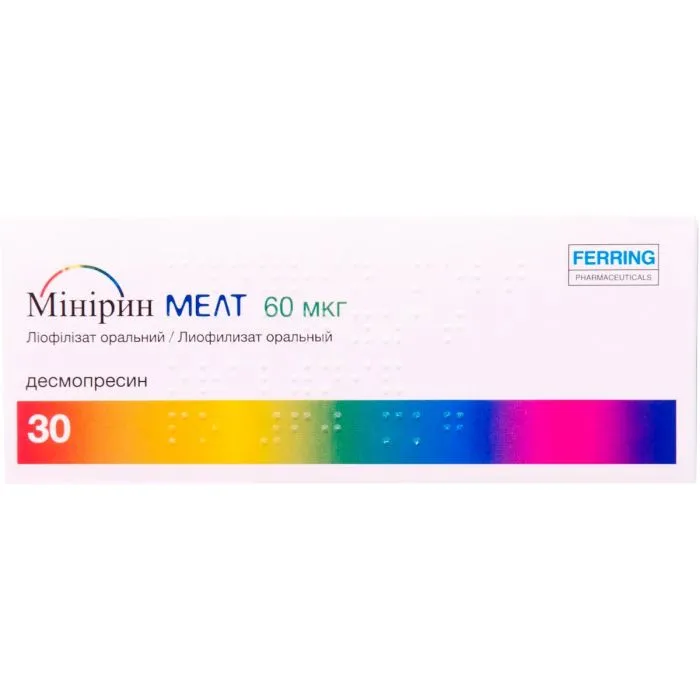
Table of Contents
INSTRUCTIONS FOR MEDICAL USE OF THE MEDICINAL PRODUCT MINIRIN MELT (MINIRIN MELT)
Composition:
Active substance: desmopressin;
1 oral lyophilisate contains 68 mcg, 136 mcg, or 272 mcg of desmopressin acetate, equivalent to 60 mcg, 120 mcg, or 240 mcg of desmopressin base;
Excipients: gelatin, mannitol, citric acid anhydrous.
Pharmaceutical form. Oral lyophilisate.
Main physicochemical properties: oral lyophilisate of round shape, white in color, with a drop-shaped marking on one side for 60 mcg; with a two-drop marking – for 120 mcg; with a three-drop marking – for 240 mcg.
Pharmacotherapeutic group. Hormones for systemic use, excluding sex hormones and insulin. Hypothalamic and pituitary hormones and their analogues. Posterior pituitary hormones. Vasopressin and its analogues. Desmopressin. ATC code H01BA02.
Pharmacological properties.
Pharmacodynamics.
The medicinal product contains desmopressin, a synthetic analogue of natural human L-arginine vasopressin. Desmopressin differs in molecular structure – the amine group of 1-cysteine is removed, and L-arginine is replaced by its stereoisomer D-arginine.
These structural modifications result in a significant reduction of vasopressor activity and a prolonged antidiuretic effect.
The EC50 (half-maximal effective concentration) of desmopressin causing the antidiuretic effect is 1.6 pg/mL. After oral administration, the antidiuretic effect is observed within 6–14 hours or longer, with considerable inter- and intra-individual variability.
Pharmacokinetics.
Desmopressin bioavailability demonstrates moderate to high inter- and intra-individual variability. Concomitant food intake reduces both the amount and extent of desmopressin absorption by 40%.
The mean systemic bioavailability of desmopressin following sublingual administration, for example, Minirin 200, 400, or 800 mcg, is 0.25%, with a 95% confidence interval ranging from 0.21% to 0.31%.
Maximum concentrations were 14, 30, and 65 pg/mL after administration of 200, 400, and 800 mcg, respectively.
The maximum time in blood ranged from 0.5 to 2 hours after dose administration.
The mean geometric value of elimination half-life is 2.8 hours (CV (coefficient of variation) = 24%).
The volume of distribution of desmopressin after intravenous administration is 33 L (0.41 L/kg). Table comparing Minirin tablets and Minirin oral lyophilisate:
| MINIRIN (MINIRIN) tablets |
MINIRIN (MINIRIN) tablets |
MINIRIN (MINIRIN) oral lyophilisate |
MINIRIN (MINIRIN) oral lyophilisate |
| Desamino-8-D-arginine vasopressin acetate |
Desmopressin free base |
Desmopressin free base |
Desamino-8-D-arginine vasopressin acetate |
| 0.1 mg |
89 µg |
60 µg |
approximately 67 µg* |
| 0.2 mg |
178 µg |
120 µg |
approximately 135 µg* |
| 0.4 mg |
356 µg |
240 µg |
approximately 270 µg* |
*) calculated for comparison purposes.
Desmopressin does not penetrate the blood-brain barrier.
In vitro analysis using a human placental cotyledon model demonstrated the absence of transplacental transport of desmopressin when the drug was applied at therapeutic concentrations according to recommended doses.
In vitro studies with human liver microsomes showed no significant metabolism of desmopressin, suggesting a low likelihood of hepatic metabolism of the drug in vivo.
Within 24 hours after intravenous administration, 45% of desmopressin is excreted in urine.
Clinical characteristics.
Indications.
Central diabetes insipidus;
primary nocturnal enuresis in patients (aged 5 years and older) after exclusion of organic disorders of the urinary tract:
- use within the general principles of therapy, for example, when other non-pharmacological treatments are ineffective or when pharmacotherapy is indicated;
- treatment of conditions caused by nocturnal deficiency of ADH (antidiuretic hormone);
symptomatic treatment of nocturia (at least two episodes of urination at night) in adults in combination with nocturnal polyuria.
Contraindications.
- Hypersensitivity to desmopressin or to any of the excipients;
- congenital or psychogenic polydipsia (with urine output exceeding 40 mL/kg/day), polydipsia in patients with alcoholism;
- diagnosed or suspected heart failure;
- conditions requiring treatment with diuretics;
- diagnosed hyponatremia;
- moderate and severe renal impairment (creatinine clearance below 50 mL/min);
- syndrome of inappropriate antidiuretic hormone secretion (SIADH);
- age 65 years and older when desmopressin is used for the treatment of nocturia.
Interaction with other medicinal products and other forms of interactions.
Concomitant use of drugs that may cause the syndrome of inappropriate antidiuretic hormone secretion, such as tricyclic antidepressants, selective serotonin reuptake inhibitors, chlorpromazine and carbamazepine, indomethacin, as well as certain antidiabetic sulfonylurea agents, particularly chlorpropamide, may enhance the antidiuretic effect of desmopressin and increase the risk of water retention/hyponatremia.
Nonsteroidal anti-inflammatory drugs (NSAIDs) may cause water retention/hyponatremia.
Combination with loperamide may increase plasma desmopressin levels by threefold and increase the risk of water retention/hyponatremia. Although such studies have not been conducted, it is possible that other medicinal products that reduce tone and motility of gastrointestinal smooth muscle may have a similar effect.
Interaction of desmopressin with substances affecting hepatic metabolism is unlikely, since in vitro studies using human microsomes have not shown any significant evidence of hepatic metabolism of desmopressin. In vivo studies on potential drug-drug interactions have not yet been conducted.
A standard diet containing 27% fat significantly reduces the extent and duration of desmopressin absorption after oral administration. However, no significant effect on pharmacodynamic parameters (urine output or osmolality) has been observed. Concomitant food intake when administering low doses of desmopressin may reduce the intensity and duration of the antidiuretic effect.
When used concomitantly with oxytocin, increased antidiuretic effect and reduced uterine perfusion should be taken into account.
Clofibrate, indomethacin, and carbamazepine may enhance the antidiuretic effect of desmopressin, whereas glyburide (glibenclamide) may reduce it.
Special precautions for use.
During treatment of primary nocturnal enuresis and nocturia, fluid intake should be reduced at least 1 hour before administration and for at least 8 hours after administration of the drug (until the next morning).
Treatment without restricting fluid intake may lead to fluid retention and/or hyponatremia, with or without accompanying symptoms and signs (headache, nausea/vomiting, weight gain, and in severe cases, cerebral edema, sometimes associated with mental confusion or even loss of consciousness). All patients and caregivers must be thoroughly instructed about the necessity of adhering to fluid intake restrictions.
Desmopressin should be used with caution in patients with moderate renal impairment.
Before initiating treatment, severe bladder dysfunction and obstruction of the bladder outlet must be excluded.
Elderly patients and patients with serum sodium levels at the lower limit of normal are at increased risk of hyponatremia. Treatment with the drug should be discontinued during acute intercurrent illness characterized by water and/or electrolyte imbalance (systemic infections, fever, gastroenteritis). The drug should be used with caution in patients at risk of increased intracranial pressure.
Fluid retention can be monitored by measuring the patient's body weight, plasma sodium concentration, or osmolality.
Weight gain may be associated with drug overdose or, more commonly, with hyperhydration.
Preventive measures to avoid hyponatremia, including strict adherence to fluid intake restrictions and more frequent monitoring of serum sodium levels, should be applied in the following cases:
- concomitant use of medicinal products that may cause the syndrome of inappropriate antidiuretic hormone secretion (SIADH), such as tricyclic antidepressants, selective serotonin reuptake inhibitors, chlorpromazine, and carbamazepine;
- concomitant treatment with nonsteroidal anti-inflammatory drugs (NSAIDs).
Use during pregnancy or breastfeeding.
Pregnancy
Desmopressin should be prescribed with caution during pregnancy. Monitoring of blood pressure is recommended.
Limited data are available on the use of desmopressin during pregnancy (53 pregnant women with diabetes insipidus and 54 pregnant women with von Willebrand disease).
Animal studies have not shown any direct or indirect harmful effects of the drug related to reproductive toxicity.
Minirin should be prescribed to pregnant women only after careful assessment of the benefits and risks of treatment.
Fertility
Animal studies in rats have not shown any impairment of reproductive function in males or females. There are no data on the effect of desmopressin on fertility in humans.
Breastfeeding
Only a small amount of desmopressin passes into human breast milk. When therapeutic doses of desmopressin are used, no effects on newborns/infants are expected.
Ability to affect reaction speed when driving or operating machinery.
The drug has no effect or has a negligible effect on the ability to drive a vehicle or operate machinery; this should be taken into account by drivers and professionals whose work requires heightened attention.
Method of Administration and Dosage
The medication is intended for sublingual administration.
Minirin Melt should be placed under the tongue, where it dissolves without the need for water. The medication should be taken some time after eating, as food intake may reduce the antidiuretic effect and its duration when low doses of desmopressin are used. If the desired clinical effect is not achieved within 4 weeks despite adequate dose adjustment, treatment should be discontinued.
If symptoms of fluid retention and/or hyponatremia occur (e.g. headache, nausea/vomiting, weight gain, and in severe cases, seizures), treatment should be suspended until all symptoms have completely resolved. When resuming treatment, fluid intake must be strictly limited.
Diabetes insipidus
The dose should be individually adjusted. The usual daily dose ranges from 120 to 720 mcg. The recommended initial dose for children and adults is 60 mcg three times daily, administered sublingually. The dose may subsequently be adjusted based on the response to treatment. For most patients, the optimal maintenance dose is 60–120 mcg three times daily.
If symptoms of fluid retention/hyponatremia occur, treatment should be stopped and appropriate dose adjustments made.
Primary nocturnal enuresis
The recommended initial dose is 120 mcg at bedtime, administered sublingually. If no response is observed, the dose may be increased to 240 mcg. Fluid intake must be restricted. The treatment course lasts 3 months. If continued treatment is necessary, a break of at least 1 week without medication is required.
Nocturia due to nocturnal polyuria
In patients with nocturia, diagnostic evaluation of nocturnal polyuria should include data on urine volume and frequency over two days prior to initiating therapy. Nocturnal polyuria is defined as nocturnal urine output exceeding bladder capacity or exceeding ⅓ of the 24-hour diuresis. The recommended initial dose is 60 mcg at bedtime, administered sublingually. If no response is observed after 1 week, the dose may be increased to 120 mcg, and subsequently to 240 mcg, increasing the dose no more than once per week. Fluid intake during nighttime must be restricted.
Patient body weight should be monitored during the first few days of treatment and after any dose increase.
If no satisfactory clinical response is observed after 1 week of treatment with appropriate dose adjustment, continued use of the medication is not recommended.
Elderly patients
Initiating therapy in elderly patients is not recommended. If a decision is made to start desmopressin therapy in such patients, serum sodium levels should be measured before starting treatment, 3 days after initiation or dose increase, and at any time as directed by the physician.
Children
The medication may be used in children aged 5 years and older for the treatment of primary nocturnal enuresis.
Overdose
Overdose of the medication leads to prolonged duration of action with an increased risk of fluid retention/hyponatremia.
Symptoms of overdose may occur under the following conditions:
- ingestion of a very high dose;
- excessive fluid intake shortly before, during, or after desmopressin administration.
Symptoms of overdose include weight gain (due to water retention), headache, nausea, and in severe cases, water intoxication with seizures, which may be accompanied by mental confusion or even loss of consciousness.
Overdose may particularly occur in infants due to inappropriate dose selection.
Treatment of hyponatremia is individualized. General recommendations include discontinuation of desmopressin, restriction of fluid intake, and symptomatic treatment as needed.
In cases of overdose, depending on the severity of the patient's condition, the dose should be reduced and the interval between doses increased. If cerebral edema is suspected, the patient should be immediately hospitalized in an intensive care unit. Seizures require intensive therapeutic interventions. There is no specific antidote for desmopressin. If diuresis is required, a saluretic such as furosemide may be administered under close monitoring of serum electrolyte levels.
Adverse Reactions
The most serious adverse reactions associated with desmopressin use are hyponatremia, which may cause headache, abdominal pain, nausea, vomiting, weight gain, dizziness, confusion, malaise, memory impairment, vertigo, fainting, and in severe cases, seizures, cerebral edema (sometimes accompanied by mental status changes or even loss of consciousness), and coma. This is particularly relevant for infants under 1 year of age and elderly individuals depending on their overall health status.
In most adults receiving treatment for nocturia and who developed hyponatremia, decreased serum sodium levels were observed after three days of drug administration. In adults, the risk of hyponatremia increases with higher doses of desmopressin and is more pronounced in women.
In adults, the most common adverse reaction during treatment was headache (12%). Other common adverse reactions included hyponatremia (6%), dizziness (3%), arterial hypertension (2%), and gastrointestinal disorders (nausea (4%), vomiting (1%), abdominal pain (3%), diarrhea (2%), and constipation (1%)). Less common were effects on sleep/consciousness level, namely insomnia (0.96%), somnolence (0.4%), or asthenia (0.06%). Anaphylactic reactions were not observed in clinical trials, although spontaneous reports exist.
In children, the most common adverse reaction during treatment was headache (1%). Less common were psychiatric disorders (tendency to affective episodes (0.1%), aggression (0.1%), anxiety (0.05%), mood swings (0.05%), nightmares (0.05%)), which decreased after discontinuation of treatment, and gastrointestinal disorders (abdominal pain (0.65%), nausea (0.35%), vomiting (0.2%), diarrhea (0.15%)). Anaphylactic reactions were not observed in clinical trials, although spontaneous reports exist.
Adults
Data are based on the frequency of adverse reactions occurring in clinical trials of oral desmopressin in adult patients treated for nocturia (N=1557), combined with post-marketing experience in adults for all indications (including central diabetes insipidus). The frequency of reactions reported only during the post-marketing period is indicated as "Frequency not known."
Adverse reactions are categorized by frequency as follows: very common (>10%), common (1–10%), uncommon (0.1–1%), rare (0.1–0.01%), frequency not known.
Immune system disorders: frequency not known – anaphylactic reactions;
Metabolism and nutrition disorders: common – hyponatremia*; frequency not known – dehydration**, hypernatremia**;
Psychiatric disorders: uncommon – insomnia; rare – confusion*;
Nervous system disorders: very common – headache*; common – dizziness*; uncommon – somnolence, paraesthesia; frequency not known – seizures*, asthenia**, coma*;
Eye disorders: uncommon – visual disturbances;
Ear and labyrinth disorders: uncommon – vertigo*;
Cardiac disorders: uncommon – palpitations;
Vascular disorders: common – arterial hypertension; uncommon – orthostatic hypotension;
Respiratory system disorders: uncommon – dyspnea;
Gastrointestinal disorders: common – nausea*, abdominal pain*, diarrhea, constipation, vomiting*; uncommon – dyspepsia, (TVR1) flatulence, abdominal distension;
Skin and subcutaneous tissue disorders: uncommon – sweating, pruritus, rash, urticaria; rare – allergic dermatitis;
Musculoskeletal and connective tissue disorders: uncommon – muscle cramps, myalgia;
Renal and urinary disorders: common – (TVR1) bladder symptoms and urethral symptoms;
General disorders: common – (TVR1) edema, fatigue; uncommon – discomfort*, chest pain, influenza-like illness;
Investigations: uncommon – weight gain*, increased liver enzymes, hypokalemia.
*Hyponatremia may cause headache, abdominal pain, nausea, vomiting, weight gain, dizziness, confusion, malaise, memory impairment, vertigo, fainting, and in severe cases, seizures and coma.
** Only in central diabetes insipidus.
1 Term for high level.
Children
Data are based on the frequency of adverse reactions occurring in clinical trials of oral desmopressin in children treated for primary nocturnal enuresis (N=1923). The frequency of reactions reported only during the post-marketing period is indicated as "Frequency not known."
Adverse reactions are categorized by frequency as follows: very common (>10%), common (1–10%), uncommon (0.1–1%), rare (0.1–0.01%), frequency not known.
Immune system disorders: frequency not known – anaphylactic reactions;
Metabolism and nutrition disorders: frequency not known – hyponatremia*;
Psychiatric disorders: uncommon – mood lability**, aggression***; rare – (TVR1) anxiety symptoms, nightmares*, mood changes****; frequency not known – abnormal behavior, emotional disturbances, depression, hallucinations, insomnia;
Nervous system disorders: common – headache*; rare – somnolence; frequency not known – attention disorders, psychomotor hyperactivity, seizures*;
Vascular disorders: rare – arterial hypertension;
Respiratory system disorders: frequency not known – epistaxis;
Gastrointestinal disorders: uncommon – abdominal pain*, nausea*, vomiting*, diarrhea;
Skin and subcutaneous tissue disorders: frequency not known – allergic dermatitis, rash, sweating, urticaria;
Renal and urinary disorders: uncommon – (TVR1) bladder symptoms and urethral symptoms;
General disorders: uncommon – peripheral edema, fatigue; rare – increased excitability.
*Hyponatremia may cause headache, abdominal pain, nausea, vomiting, weight gain, dizziness, confusion, malaise, memory impairment, vertigo, fainting, and in severe cases, seizures and coma.
** Observed with equal frequency in children of different age groups (<18 years) during the post-marketing period.
*** Observed exclusively in children (<18 years) during the post-marketing period.
**** Observed predominantly in children (<12 years) during the post-marketing period.
1 Term for high level.
Shelf life. 4 years.
Storage conditions. Store at a temperature not exceeding 25 °C in a dry place in the original packaging. Keep out of reach of children.
Packaging. 10 lyophilisates per blister; 1, 3, or 10 blisters per cardboard box.
Prescription status. Prescription only.
Manufacturer.
Catalent U.K. Swindon Zydis Limited, United Kingdom / Catalent U.K. Swindon Zydis Limited, UK.
Ferring International Center SA, Switzerland / Ferring International Center SA, Switzerland.
Ferring GmbH, Germany / Ferring GmbH, Germany.
Manufacturer's location and address of place of business.
Frankland Road, Blagrove Swindon Wiltshire SN5 8RU, United Kingdom / Frankland Road, Blagrove Swindon Wiltshire SN5 8RU, UK.
Chemin de la Vergognausaz 50, 1162, St-Prex, Switzerland / Chemin de la Vergognausaz 50, 1162, St-Prex, Switzerland.
Wittland 11, 24109 Kiel, Germany / Wittland 11, 24109 Kiel, Germany.
INSTRUCTION
for medical use of the medicinal product
MINIRIN MELT
(MINIRIN MELT)
Composition:
Active substance: desmopressin;
1 oral lyophilisate contains desmopressin acetate 68 mcg or 136 mcg or 272 mcg, equivalent to desmopressin base 60 mcg or 120 mcg or 240 mcg;
Excipients: gelatin, mannitol, anhydrous citric acid.
Pharmaceutical form. Oral lyophilisate.
Main physicochemical properties: oral lyophilisate, round-shaped, white, with a droplet mark on one side for 60 mcg; with a two-droplet mark for 120 mcg; with a three-droplet mark for 240 mcg.
Pharmacotherapeutic group. Hormones for systemic use, excluding sex hormones and insulin. Hypothalamic and pituitary hormones and analogs. Posterior pituitary hormones. Vasopressin and analogs. Desmopressin. ATC code H01BA02.
Pharmacological properties.
Pharmacodynamics.
The product contains desmopressin, a synthetic analogue of natural human L-arginine vasopressin. Desmopressin differs in molecular structure: the amino group of 1-cysteine is removed, and L-arginine is replaced by its stereoisomer D-arginine.
These structural changes result in a significant reduction of vasopressor activity and a prolonged antidiuretic effect.
The EC50 (half-maximal effective concentration) of desmopressin causing an antidiuretic effect is 1.6 pg/mL. After oral administration, the antidiuretic effect is observed within 6–14 hours or more, with considerable inter- and intra-individual variability.
Pharmacokinetics.
The bioavailability of desmopressin shows moderate to high inter- and intra-individual variability. Concomitant food intake reduces the extent and rate of desmopressin absorption by 40%.
The mean systemic bioavailability of desmopressin after sublingual administration, e.g., Minirin tablets at doses of 200, 400, or 800 mcg, is 0.25%, with a 95% confidence interval of 0.21% to 0.31%.
Maximum plasma concentrations were 14, 30, and 65 pg/mL after administration of 200, 400, and 800 mcg, respectively.
The maximum time in blood ranged from 0.5 to 2 hours after dose administration.
The mean geometric elimination half-life is 2.8 hours (CV (coefficient of variation) = 24%).
The volume of distribution of desmopressin after intravenous administration is 33 L (0.41 L/kg).
Table comparing Minirin tablets and Minirin oral lyophilisate:
| Minirin (MINIRIN) tablets |
Minirin (MINIRIN) tablets |
Minirin (MINIRIN) oral lyophilisate |
Minirin (MINIRIN) oral lyophilisate |
| Desmopressin acetate |
Desmopressin free base |
Desmopressin free base |
Desmopressin acetate |
| 0.1 mg |
89 µg |
60 µg |
approximately 67 µg* |
| 0.2 mg |
178 µg |
120 µg |
approximately 135 µg* |
| 0.4 mg |
356 µg |
240 µg |
approximately 270 µg* |
*) Calculated for comparative purposes.
Desmopressin does not cross the blood-brain barrier.
In vitro studies using a human placental cotyledon model showed no transplacental transport of desmopressin when therapeutic concentrations of the drug were applied according to recommended doses.
In vitro studies with human liver microsomes demonstrated no significant metabolism of desmopressin, suggesting a low likelihood of hepatic metabolism in vivo.
After intravenous administration, 45% of desmopressin is excreted in urine within 24 hours.
Clinical characteristics.
Indications.
Central diabetes insipidus;
primary nocturnal enuresis in patients (from 5 years of age) after exclusion of organic disorders of the urinary tract:
- use within general therapeutic principles, e.g., when other non-pharmacological treatments are ineffective or when pharmacotherapy is indicated;
- treatment of a condition caused by nocturnal deficiency of ADH (antidiuretic hormone);
symptomatic treatment of nocturia (at least two nocturnal voidings) in adults associated with nocturnal polyuria.
Contraindications.
- Hypersensitivity to desmopressin or any other component of the medicinal product;
- congenital or psychogenic polydipsia (with urine output exceeding 40 mL/kg/day), polydipsia in patients with alcoholism;
- diagnosed or suspected cardiac failure;
- conditions requiring treatment with diuretics;
- diagnosed hyponatremia;
- moderate to severe renal impairment (creatinine clearance below 50 mL/min);
- syndrome of inappropriate antidiuretic hormone secretion (SIADH);
- patients aged 65 years and older when desmopressin is used for the treatment of nocturia.
Interaction with other medicinal products and other forms of interaction.
Concomitant use of drugs that may induce the syndrome of inappropriate antidiuretic hormone secretion (SIADH), such as tricyclic antidepressants, selective serotonin reuptake inhibitors, chlorpromazine, carbamazepine, indomethacin, and certain antidiabetic sulfonylureas—particularly chlorpropamide—may enhance the antidiuretic effect of desmopressin and increase the risk of fluid retention and hyponatremia.
Nonsteroidal anti-inflammatory drugs (NSAIDs) may cause fluid retention and hyponatremia.
Concomitant use with loperamide may increase plasma desmopressin levels by threefold, increasing the risk of fluid retention and hyponatremia. Although such studies have not been conducted, other medicinal products that reduce intestinal smooth muscle tone and motility may have a similar effect.
Interaction between desmopressin and substances affecting hepatic metabolism is unlikely, as in vitro studies with human liver microsomes have shown no significant metabolism of desmopressin in the liver. In vivo studies on potential drug interactions have not yet been conducted.
A standard diet containing 27% fat significantly reduces the extent and duration of desmopressin absorption after oral administration. However, no significant effect on pharmacodynamic parameters (urine output or osmolality) has been observed.
Concomitant food intake with low-dose desmopressin may reduce the intensity and duration of the antidiuretic effect.
When used concomitantly with oxytocin, increased antidiuretic effect and reduced uterine perfusion should be considered.
Clofibrate, indomethacin, and carbamazepine may enhance the antidiuretic effect of desmopressin, whereas glyburide may reduce it.
Special precautions.
During treatment of primary nocturnal enuresis and nocturia, fluid intake should be reduced at least 1 hour before and for at least 8 hours after administration (until the next morning).
Treatment without fluid restriction may lead to fluid retention and/or hyponatremia, with or without associated symptoms and signs (headache, nausea/vomiting, weight gain, and in severe cases, cerebral edema, which may occasionally be accompanied by confusion or even loss of consciousness). All patients and caregivers must be thoroughly instructed on the necessity of adhering to fluid intake restrictions.
Desmopressin should be used with caution in patients with moderate renal impairment.
Severe bladder dysfunction and outlet obstruction must be excluded before initiating treatment.
Elderly patients and patients with serum sodium levels at the lower limit of normal are at increased risk of hyponatremia. Treatment should be discontinued during acute intercurrent illness associated with water and/or electrolyte imbalance (systemic infections, fever, gastroenteritis). The drug should be used with caution in patients at risk of increased intracranial pressure.
Fluid retention can be monitored by measuring patient body weight, plasma sodium concentration, or plasma osmolality.
Weight gain may be due to drug overdose or more commonly to overhydration.
Precautions to prevent hyponatremia—including strict adherence to fluid intake restrictions and more frequent monitoring of serum sodium—should be applied in the following cases:
- concomitant use of medicinal products that may cause SIADH, such as tricyclic antidepressants, selective serotonin reuptake inhibitors, chlorpromazine, and carbamazepine;
- concomitant treatment with nonsteroidal anti-inflammatory drugs.
Use during pregnancy or breastfeeding.
Pregnancy
Use with caution during pregnancy. Monitoring of blood pressure is recommended.
Limited data are available on the use of desmopressin during pregnancy (53 pregnant women with diabetes insipidus and 54 pregnant women with von Willebrand disease).
Animal studies have not shown any direct or indirect harmful effects of desmopressin on reproductive toxicity.
Minirin should be prescribed to pregnant women only after careful assessment of the benefits and risks of treatment.
Fertility
No impairment of reproductive function in male or female rats was observed in animal studies. There are no data on the effect of desmopressin on fertility in humans.
Breastfeeding
Only a small amount of desmopressin passes into human breast milk. When used at therapeutic doses, no effect on newborns/infants is expected.
Effect on ability to drive and use machines.
The medicinal product has no effect or a negligible effect on the ability to drive and operate machinery. This should be considered by drivers and professionals whose work requires high alertness.
Dosage and administration.
The medicinal product is intended for sublingual administration.
Minirin Melt should be placed under the tongue, where it dissolves without water. The product should be taken some time after food intake, as food may reduce the antidiuretic effect and its duration when low doses of desmopressin are used. If the desired clinical effect is not achieved within 4 weeks with adequate dose titration, treatment should be discontinued.
If symptoms of fluid retention and/or hyponatremia (headache, nausea/vomiting, weight gain, and in severe cases, seizures) occur, treatment should be suspended until symptoms resolve completely. Fluid intake should be strictly limited when treatment is resumed.
Diabetes insipidus
Dosage should be individualized. The usual daily dose ranges from 120 to 720 mcg. The recommended initial dose for children and adults is 60 mcg three times daily, sublingually. The dose may be adjusted according to treatment response. For most patients, the optimal maintenance dose is 60–120 mcg three times daily.
If symptoms of fluid retention/hyponatremia occur, treatment should be discontinued and dose adjustment performed accordingly.
Primary nocturnal enuresis
The recommended initial dose is 120 mcg at bedtime, administered sublingually. If no response is observed, the dose may be increased to 240 mcg. Fluid intake should be restricted. The treatment course is 3 months. If continued treatment is necessary, a break of at least 1 week without the drug should be implemented.
Nocturia with nocturnal polyuria
In patients with nocturia, data on urine volume and frequency over two days prior to treatment initiation are required for diagnosis of nocturnal polyuria. Nocturnal polyuria is defined as nocturnal urine output exceeding bladder capacity or more than 1/3 of 24-hour diuresis. The recommended initial dose is 60 mcg at bedtime, administered sublingually. If no effect is observed within the first week, the dose may be increased to 120 mcg and subsequently to 240 mcg, with dose increases no more frequent than once per week. Fluid intake should be restricted during nighttime.
Patient body weight should be monitored for several days at the beginning of treatment and after any dose increase.
If no satisfactory clinical response is observed after 1 week of treatment with appropriate dose titration, continued use of the drug is not recommended.
Elderly patients.
Initiation of therapy is not recommended in elderly patients. If a decision is made to start desmopressin therapy, serum sodium levels should be determined before treatment initiation and 3 days after starting treatment or dose increase, and at any time at the physician’s discretion.
Children. For use in children aged 5 years and older for the treatment of primary nocturnal enuresis.
Overdose.
Overdose leads to prolonged duration of action with increased risk of fluid retention/hyponatremia.
Symptoms of overdose may occur under the following conditions:
- ingestion of a very high dose;
- excessive fluid intake simultaneously or shortly after desmopressin administration.
Symptoms of overdose: weight gain (due to water retention), headache, nausea, and in severe cases, water intoxication with seizures, which may occasionally be accompanied by confusion or even loss of consciousness.
Overdose may particularly occur in infants due to inappropriate dose selection.
Treatment of hyponatremia is individualized. General recommendations include discontinuation of desmopressin, restriction of fluid intake, and symptomatic treatment if necessary.
In cases of overdose, depending on severity, the dose should be reduced and the interval between doses increased. If cerebral edema is suspected, the patient should be immediately hospitalized in an intensive care unit. Seizures require intensive treatment measures. There is no specific antidote for desmopressin. If diuresis is required, a saluretic such as furosemide may be administered under control of serum electrolyte levels.
Adverse reactions.
The most serious adverse reactions associated with desmopressin use are hyponatremia, which may cause headache, abdominal pain, nausea, vomiting, weight gain, dizziness, confusion, malaise, memory impairment, vertigo, fainting, and in severe cases, seizures, cerebral edema (sometimes with confusion or even loss of consciousness), and coma. This particularly applies to infants under 1 year of age and elderly patients, depending on their general health status.
In most adults treated for nocturia who developed hyponatremia, decreased serum sodium levels were observed after three days of treatment. In adults, the risk of hyponatremia increases with higher desmopressin doses and is more pronounced in women.
In adults, the most common adverse reaction during treatment was headache (12%). Other common adverse reactions included hyponatremia (6%), dizziness (3%), arterial hypertension (2%), and gastrointestinal disorders (nausea (4%), vomiting (1%), abdominal pain (3%), diarrhea (2%), and constipation (1%)). Less common were sleep/consciousness disturbances, namely insomnia (0.96%), somnolence (0.4%), or asthenia (0.06%). Anaphylactic reactions were not observed in clinical trials, but spontaneous reports exist.
In children, the most common adverse reaction during treatment was headache (1%). Psychiatric disorders were rarely reported (affective lability (0.1%), aggression (0.1%), anxiety (0.05%), mood swings (0.05%), nightmares (0.05%)), which resolved after treatment discontinuation, and gastrointestinal disorders (abdominal pain (0.65%), nausea (0.35%), vomiting (0.2%), diarrhea (0.15%)). Anaphylactic reactions were not observed in clinical trials, but spontaneous reports exist.
Adults
Data are based on the frequency of adverse reactions observed in clinical trials of oral desmopressin in adult patients treated for nocturia (N=1557), combined with post-marketing experience in adults for all indications (including central diabetes insipidus). The frequency of reactions reported only during the post-marketing period is listed as "Frequency unknown."
Adverse reactions are categorized by frequency as follows: very common (>10%), common (1–10%), uncommon (0.1–1%), rare (0.01–0.1%), frequency unknown.
Immune system disorders: frequency unknown – anaphylactic reactions;
Metabolism and nutrition disorders: common – hyponatremia*; frequency unknown – dehydration**, hypernatremia**;
Psychiatric disorders: uncommon – insomnia; rare – confusion*;
Nervous system disorders: very common – headache*; common – dizziness*; uncommon – somnolence, paraesthesia; frequency unknown – seizures*, asthenia**, coma*;
Eye disorders: uncommon – visual disturbances;
Ear and labyrinth disorders: uncommon – vertigo*;
Cardiac disorders: uncommon – palpitations;
Vascular disorders: common – arterial hypertension; uncommon – orthostatic hypotension;
Respiratory system disorders: uncommon – dyspnea;
Gastrointestinal disorders: common – nausea*, abdominal pain*, diarrhea, constipation, vomiting*; uncommon – dyspepsia, (HLT1) flatulence, abdominal distension;
Skin and subcutaneous tissue disorders: uncommon – sweating, pruritus, rash, urticaria; rare – allergic dermatitis;
Musculoskeletal and connective tissue disorders: uncommon – muscle cramps, myalgia;
Renal and urinary disorders: common – (HLT1) bladder symptoms and urethral symptoms;
General disorders and administration site conditions: common – (HLT1) edema, fatigue; uncommon – discomfort*, chest pain, influenza-like illness;
Investigations: uncommon – weight gain*, increased liver enzymes, hypokalemia.
*Hyponatremia may cause headache, abdominal pain, nausea, vomiting, weight gain, dizziness, confusion, malaise, memory impairment, vertigo, fainting, and in severe cases, seizures and coma.
** Only in diabetes insipidus.
1 High-level term.
Children
Data are based on the frequency of adverse reactions observed in clinical trials of oral desmopressin in children treated for primary nocturnal enuresis (N=1923). The frequency of reactions reported only during the post-marketing period is listed as "Frequency unknown."
Adverse reactions are categorized by frequency as follows: very common (>10%), common (1–10%), uncommon (0.1–1%), rare (0.01–0.1%), frequency unknown.
Immune system disorders: frequency unknown – anaphylactic reactions;
Metabolism and nutrition disorders: frequency unknown – hyponatremia*;
Psychiatric disorders: uncommon – mood lability**, aggression***; rare – (HLT1) anxiety symptoms, nightmares*, mood swings****; frequency unknown – abnormal behavior, emotional disorders, depression, hallucinations, insomnia;
Nervous system disorders: common – headache*; rare – somnolence; frequency unknown – attention disturbance, psychomotor hyperactivity, seizures*;
Vascular disorders: rare – arterial hypertension;
Respiratory system disorders: frequency unknown – epistaxis;
Gastrointestinal disorders: uncommon – abdominal pain*, nausea*, vomiting*, diarrhea;
Skin and subcutaneous tissue disorders: frequency unknown – allergic dermatitis, rash, sweating, urticaria;
Renal and urinary disorders: uncommon – (HLT1) bladder symptoms and urethral symptoms;
General disorders and administration site conditions: uncommon – peripheral edema, fatigue; rare – increased excitability.
*Hyponatremia may cause headache, abdominal pain, nausea, vomiting, weight gain, dizziness, confusion, malaise, memory impairment, vertigo, fainting, and in severe cases, seizures and coma.
** Observed with equal frequency in different age groups of children (<18 years) during post-marketing surveillance.
*** Observed exclusively in children (<18 years) during post-marketing surveillance.
**** Observed predominantly in children (<12 years) during post-marketing surveillance.
1 High-level term.
Shelf life. 4 years.
Storage conditions. Store at temperatures not exceeding 25°C in a dry place in the original packaging. Keep out of reach of children.
Packaging. 10 lyophilisates per blister; 1, 3, or 10 blisters per cardboard box.
Prescription status. Prescription only.
Manufacturer.
Catalent U.K. Swindon Zydis Limited, United Kingdom / Catalent U.K. Swindon Zydis Limited, UK.
Ferring International Center SA, Switzerland / Ferring International Center SA, Switzerland.
Ferring GmbH, Germany / Ferring GmbH, Germany.
Location and address of manufacturer.
Frankland Road, Blagrove, Swindon, Wiltshire SN5 8RU, United Kingdom / Frankland Road, Blagrove Swindon Wiltshire SN5 8RU, UK.
Chemin de la Vergognausaz 50, 1162 St-Prex, Switzerland / Chemin de la Vergognausaz 50, 1162, St-Prex, Switzerland.
Wittland 11, 24109 Kiel, Germany / Wittland 11, 24109 Kiel, Germany.