Metformin sandos®
Ukraine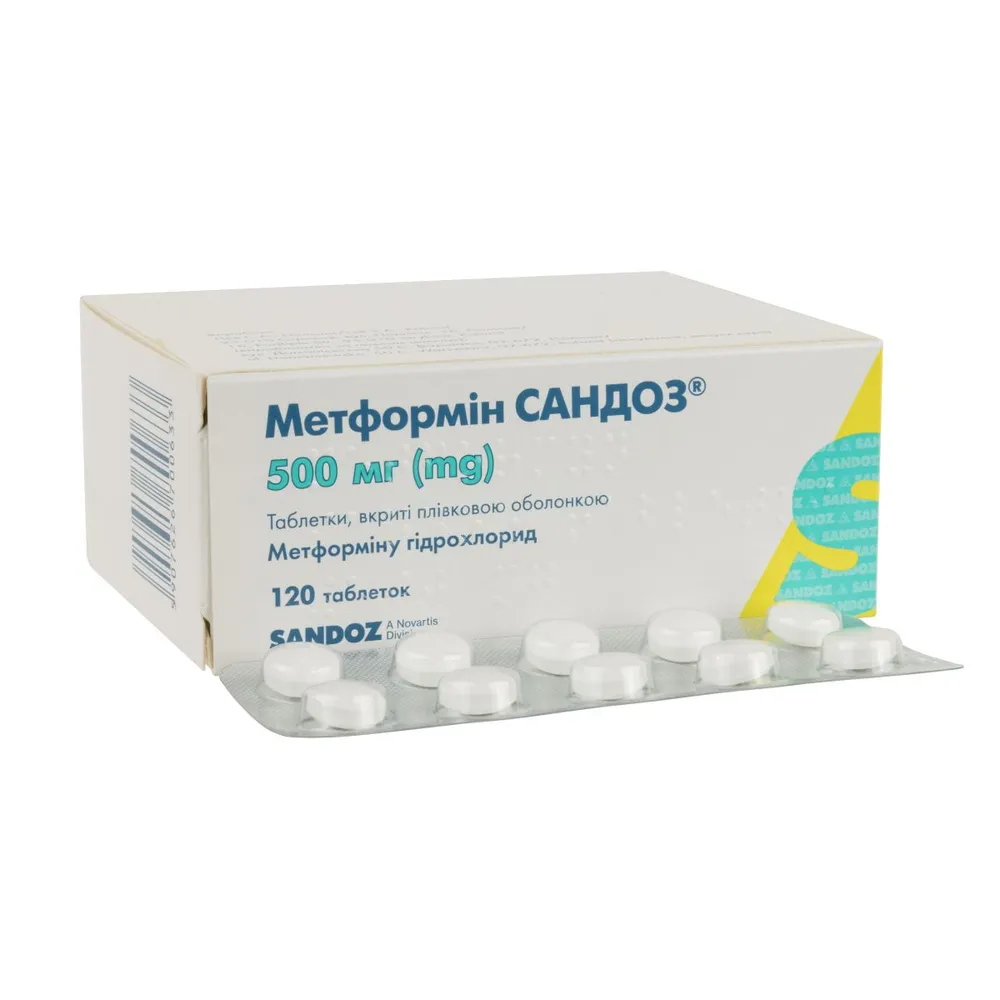
Table of Contents
INSTRUCTIONS FOR MEDICAL USE OF THE MEDICINAL PRODUCT METFORMIN SANDOZ® (METFORMINSANDOZ®)
Composition:
Active substance: metformin hydrochloride;
1 tablet contains 500 mg of metformin hydrochloride, equivalent to 390 mg of metformin;
or 1 tablet contains 850 mg of metformin hydrochloride, equivalent to 662.9 mg of metformin;
or 1 tablet contains 1000 mg of metformin hydrochloride, equivalent to 780 mg of metformin;
Excipients: povidone, magnesium stearate;
Film coating: hypromellose, titanium dioxide (E 171), macrogol 4000.
Pharmaceutical form. Film-coated tablets.
Main physicochemical properties:
500 mg tablets: white, round, biconvex, film-coated tablets, with "M 500" embossed on one side and smooth on the other;
850 mg tablets: white, oval, film-coated tablets, with "M 850" embossed on one side and a breakline on the other;
1000 mg tablets: white, oval, film-coated tablets, with a breakline and "M 1G" embossed on one side and smooth on the other.
The breakline on 850 mg and 1000 mg tablets is intended only to facilitate splitting for ease of swallowing, and not for dividing into equal doses.
Pharmaco-therapeutic group.
Agents affecting the digestive system and metabolism. Antidiabetic agents. Oral hypoglycemic agents, excluding insulin. Biguanides. ATC code A10BA02.
Pharmacological properties.
Pharmacodynamics.
Mechanism of action.
Metformin is a biguanide with an antihyperglycaemic effect. It reduces glucose levels in blood plasma both in the fasting state and after food intake. It does not stimulate insulin secretion and does not cause hypoglycaemia mediated by this mechanism.
Metformin acts via three pathways:
- reduces glucose production in the liver by inhibiting gluconeogenesis and glycogenolysis;
- improves insulin sensitivity in muscles, leading to enhanced peripheral glucose uptake and utilization;
- delays intestinal glucose absorption.
Metformin stimulates intracellular glycogen synthesis by affecting glycogen synthase. It increases the transport capacity of all known types of glucose membrane transporters.
Independent of its effect on glycaemia, metformin has a beneficial effect on lipid metabolism. This effect has been demonstrated during therapeutic-dose administration in controlled medium- or long-term clinical trials: metformin reduces levels of total cholesterol, low-density lipoprotein cholesterol, and triglycerides.
During clinical trials, patients' body weight remained stable or moderately decreased when metformin was administered.
Pharmacokinetics.
Absorption.
After oral administration of metformin, the time to reach maximum concentration (Tmax) is approximately 2.5 hours. The absolute bioavailability of metformin in 500 mg or 800 mg tablet form is approximately 50–60% in healthy volunteers. After oral administration, the fraction not absorbed and excreted in faeces amounts to 20–30%.
Following oral administration, metformin absorption is saturable and incomplete.
Metformin absorption is considered to be nonlinear. When metformin is administered at recommended doses and dosing regimens, steady-state plasma concentrations are achieved within 24–48 hours and remain below 1 µg/mL. In controlled clinical trials, maximum plasma metformin concentrations did not exceed 5 µg/mL, even with maximum doses.
Concomitant food intake reduces and slightly delays metformin absorption.
After oral administration of an 850 mg dose, a 40% reduction in maximum plasma concentration (Cmax), a 25% decrease in the area under the plasma concentration-time curve (AUC), and a 35-minute increase in Tmax were observed. The clinical significance of these changes is unknown.
Distribution.
Plasma protein binding is negligible. Metformin penetrates into erythrocytes. Maximum blood concentration is lower than maximum plasma concentration, while time to peak is approximately the same. Erythrocytes likely serve as a secondary distribution compartment for metformin. The mean volume of distribution (Vd) ranges from 63 to 276 L.
Metabolism.
Metformin is excreted unchanged in urine. No metabolites have been identified in humans.
Elimination.
Renal clearance of metformin is > 400 mL/min, indicating that metformin is eliminated by glomerular filtration and tubular secretion. After oral administration, the elimination half-life is approximately 6.5 hours. In renal impairment, renal clearance decreases proportionally to creatinine clearance, thus prolonging the elimination half-life and resulting in increased metformin plasma levels.
Special patient groups.
Renal impairment.
Limited data are available in patients with moderate renal impairment; therefore, it is not possible to precisely assess systemic metformin exposure in this patient group compared to those with normal renal function. Dose adjustment is therefore required based on clinical efficacy and tolerability (see section "Dosage and administration").
Paediatric population.
In a study of single-dose administration of 500 mg metformin hydrochloride, the pharmacokinetic profile in paediatric patients was similar to that in healthy adult volunteers.
Data on multiple-dose administration are limited to one study.
After repeated administration of 500 mg metformin twice daily for 7 days in paediatric patients, Cmax and systemic exposure (AUC0–t) were reduced by approximately 33% and 40%, respectively, compared to adult patients with diabetes receiving repeated 500 mg doses twice daily for 14 days.
Since the dose is individually titrated based on glycaemic control, the above information has limited clinical significance.
Clinical characteristics.
Indications.
Type 2 diabetes mellitus when dietary therapy and physical exercise have failed, particularly in patients with excess body weight;
- as monotherapy or combination therapy together with other oral hypoglycemic agents, or in combination with insulin for treatment of adults;
- as monotherapy or combination therapy with insulin for treatment of children aged 10 years and older and adolescents.
For reducing complications of diabetes in adult patients with type 2 diabetes mellitus and excess body weight, as a first-line agent after failure of dietary therapy.
Contraindications.
- Hypersensitivity to metformin or to any other component of the medicinal product;
- any type of acute metabolic acidosis (e.g., lactic acidosis, diabetic ketoacidosis);
- diabetic precoma;
- severe renal impairment (glomerular filtration rate (GFR) < 30 mL/min);
- acute conditions associated with risk of developing renal dysfunction, such as:
dehydration, severe infections, shock;
- diseases that may lead to tissue hypoxia (especially acute conditions or acute exacerbation of chronic disease): decompensated heart failure, respiratory failure, recent myocardial infarction, shock;
- hepatic impairment, acute alcohol intoxication, alcoholism.
Interaction with other medicinal products and other forms of interaction.
Combinations not recommended.
Alcohol. Acute alcohol intoxication is associated with an increased risk of lactic acidosis, particularly in cases of fasting, low-calorie diet, or hepatic impairment. Alcohol consumption and use of medicinal products containing alcohol should be avoided during treatment with metformin.
Iodinated contrast media. Administration of metformin should be discontinued before or during radiological procedures involving iodinated contrast agents and should not be restarted earlier than 48 hours after the procedure, and only after re-evaluation and confirmation of stable renal function (see sections "Dosage and administration" and "Special precautions").
Combinations requiring caution.
Certain medicinal products, such as nonsteroidal anti-inflammatory drugs (NSAIDs), including selective cyclooxygenase-2 (COX-2) inhibitors, angiotensin-converting enzyme (ACE) inhibitors, angiotensin II receptor antagonists, and diuretics, especially loop diuretics, may adversely affect renal function, thereby increasing the risk of lactic acidosis. Careful monitoring of renal function is required when initiating treatment with these medicinal products or when using them in combination with metformin.
Medicinal products with hyperglycemic effects (systemic and local glucocorticoids, sympathomimetics). Blood glucose levels should be monitored more frequently, especially at the beginning of treatment. Dose adjustment of metformin may be necessary during and after discontinuation of such concomitant therapy.
Organic cation transporters (OCT). Metformin is a substrate of both OCT1 and OCT2 transporters. Concomitant use of metformin with:
- OCT1 inhibitors (e.g., verapamil) may reduce metformin efficacy;
- OCT1 inducers (e.g., rifampicin) may increase gastrointestinal absorption and efficacy of metformin;
- OCT2 inhibitors (e.g., cimetidine, dolutegravir, ranolazine, trimethoprim, vandetanib, isavuconazole) may reduce renal elimination of metformin, leading to increased plasma metformin concentrations;
- dual inhibitors of OCT1 and OCT2 (e.g., crizotinib, olaparib) may affect both efficacy and renal elimination of metformin.
Therefore, particular caution is recommended when co-administering these agents with metformin, especially in patients with impaired renal function, as plasma metformin concentrations may increase. Dose adjustment of metformin should be considered if necessary, since OCT inhibitors/inducers may influence metformin efficacy.
Special precautions for use.
Lactic acidosis is a very rare but serious metabolic complication, most commonly occurring in acute renal failure, cardiopulmonary disease, or sepsis. Acute worsening of renal function leads to metformin accumulation, increasing the risk of lactic acidosis.
In case of dehydration (severe diarrhoea or vomiting, fever, or reduced fluid intake), temporary discontinuation of metformin is recommended and medical advice should be sought.
Patients receiving metformin should begin treatment with caution when starting medications that may acutely worsen renal function (e.g., antihypertensive agents, diuretics, and NSAIDs). Other risk factors for lactic acidosis include excessive alcohol consumption, hepatic insufficiency, poorly controlled diabetes, ketosis, prolonged fasting, and any conditions associated with hypoxia, as well as concomitant use of medicinal products that may lead to lactic acidosis (see sections "Contraindications" and "Interaction with other medicinal products and other forms of interaction").
Patients and/or caregivers should be informed about the risk of developing lactic acidosis. Characteristic symptoms of lactic acidosis include acidotic dyspnoea, abdominal pain, muscle cramps, asthenia, and hypothermia; coma may subsequently develop. If any symptom suggestive of lactic acidosis occurs, the patient must discontinue metformin and seek immediate medical attention.
Diagnostic laboratory findings include decreased blood pH (< 7.35), increased plasma lactate concentration (> 5 mmol/L), increased anion gap, and elevated lactate/pyruvate ratio.
Renal function. eGFR should be assessed before starting treatment and regularly thereafter (see section "Posology and method of administration"). Metformin is contraindicated in patients with eGFR < 30 mL/min and should be temporarily discontinued in the presence of conditions affecting renal function (see section "Contraindications").
Cardiac function. Patients with heart failure have an increased risk of hypoxia and renal impairment. Metformin may be used in patients with stable chronic heart failure under regular monitoring of cardiac and renal function. Metformin is contraindicated in patients with acute or unstable heart failure (see section "Contraindications").
Iodinated contrast agents. Intravascular administration of iodinated contrast media may cause contrast-induced nephropathy, leading to metformin accumulation and increased risk of lactic acidosis. Metformin should be discontinued before or during the procedure and should not be restarted earlier than 48 hours after the procedure, and only after re-evaluation and confirmation of stable renal function (see sections "Posology and method of administration" and "Interaction with other medicinal products and other forms of interaction").
Surgery. Metformin should be discontinued during surgical procedures performed under general, spinal, or epidural anaesthesia and should not be restarted earlier than 48 hours after surgery or restoration of oral intake, and only after re-evaluation and confirmation of stable renal function.
Children. Prior to initiating metformin therapy, a diagnosis of type 2 diabetes mellitus must be confirmed. Results from one-year controlled clinical studies showed no effect of metformin on growth and pubertal development in children. However, there are no data on the long-term effects of metformin on growth and pubertal development; therefore, careful monitoring of these parameters is recommended in children receiving metformin, especially during puberty.
Children aged 10 to 12 years. Clinical data indicate that efficacy and safety of metformin in this patient group are comparable to those in older children and adolescents. However, metformin should be prescribed with particular caution in children aged 10 to 12 years.
Other precautions. Patients should adhere to a diet with balanced carbohydrate intake throughout the day. Overweight patients should continue a calorie-restricted diet. Regular monitoring of carbohydrate metabolism parameters is necessary.
Metformin monotherapy does not cause hypoglycaemia; however, caution is required when metformin is used concomitantly with insulin or other oral hypoglycaemic agents (e.g., sulfonylureas or meglitinides).
Use during pregnancy or breastfeeding.
Pregnancy. Uncontrolled diabetes during pregnancy (gestational or pre-existing) increases the risk of congenital malformations and perinatal mortality. Limited data on metformin use in pregnant women do not indicate an increased risk of congenital malformations. Preclinical studies have not shown any adverse effects on pregnancy, embryonal or fetal development, delivery, or postnatal development. When planning pregnancy or once pregnancy is confirmed, insulin rather than metformin is recommended for the management of diabetes to maintain blood glucose levels as close to normal as possible, thereby minimizing the risk of fetal malformations.
Breastfeeding. Metformin is excreted in breast milk, but no adverse reactions have been observed in breastfed newborns/infants. Due to insufficient data on the safety of metformin use, breastfeeding is not recommended during metformin therapy. The decision to discontinue breastfeeding should be made considering the benefits of breastfeeding and the potential risk of adverse effects for the infant.
Fertility. Metformin did not affect fertility in animal studies at doses of 600 mg/kg/day, which is nearly three times the maximum recommended human daily dose based on body surface area.
Ability to affect reaction rate when driving or operating machinery.
The medicinal product does not affect the ability to drive or operate machinery, as metformin monotherapy does not cause hypoglycaemia.
Metformin should be used with caution in combination with other hypoglycaemic agents (sulfonylurea derivatives, insulin, repaglinide, meglitinides) due to the risk of hypoglycaemia.
Dosage and Administration
Adult patients with normal renal function (eGFR ≥ 90 mL/min).
Monotherapy or combination therapy with other oral antihyperglycemic agents.
Adults. The usual starting dose is 500 mg or 850 mg 2–3 times daily, taken during or after meals.
After 10–15 days of treatment, the dose should be adjusted based on serum glucose measurements.
Gradual dose escalation helps reduce gastrointestinal side effects.
When high doses are required (2000–3000 mg daily), each 2 tablets of Metformin Sandoz® 500 mg may be replaced by 1 tablet of Metformin Sandoz® 1000 mg.
The maximum recommended daily dose is 3000 mg, divided into 3 doses.
When switching from another antidiabetic agent to metformin, the other antidiabetic agent should be discontinued.
Combination therapy with insulin.
To achieve better blood glucose control, metformin and insulin can be used together. The usual starting dose is 500 mg or 850 mg of metformin 2–3 times daily, while the insulin dose should be adjusted based on serum glucose measurements.
In elderly patients, renal function may be reduced; therefore, the metformin dose should be adjusted based on assessment of renal function, which should be performed regularly (see section "Special Warnings and Precautions for Use").
Renal impairment. eGFR should be assessed before initiating treatment with metformin-containing medicinal products and at least annually thereafter. Patients at increased risk of progressive renal impairment, including elderly patients, should have their renal function monitored more frequently, e.g., every 3–6 months.
| eGFR (mL/min) |
Total maximum daily dose (should be divided into 2–3 daily doses) |
Additional information |
| 60–89 |
3000 mg |
In case of reduced renal function, dose reduction should be considered. |
| 45–59 |
2000 mg |
Before initiating metformin, consider factors that may increase the risk of lactic acidosis (see section "Special precautions"). The initial dose should not exceed half of the maximum dose. |
| 30–44 |
1000 mg |
|
| < 30 |
- |
Metformin is contraindicated. |
Children.
Monotherapy or combination therapy with insulin.
Metformin Sandoz® may be used in children aged 10 years and older and in adolescents. The usual initial dose is 500 mg or 850 mg once daily, taken during or after a meal. After 10–15 days, the dose should be adjusted based on serum glucose measurements.
Gradual dose escalation helps reduce gastrointestinal side effects.
The maximum recommended dose is 2000 mg per day, divided into 2–3 doses.
Children.
The drug can be used for treatment of children aged 10 years and older.
Overdose.
When the drug was administered at a dose of 85 g, hypoglycemia was not observed. However, in this case, lactic acidosis developed. A significant overdose of metformin or concomitant risk factors may lead to the development of lactic acidosis. If lactic acidosis occurs, the drug must be discontinued immediately and the patient should be urgently hospitalized. Hemodialysis is the most effective measure for removing lactate and metformin from the body.
Adverse Reactions
The most common adverse reactions at the beginning of treatment are nausea, vomiting, diarrhea, abdominal pain, and loss of appetite. These symptoms usually resolve spontaneously in most cases. To prevent the occurrence of these adverse reactions, a gradual dose escalation is recommended, along with administration of the daily dose in 2–3 divided doses.
Adverse reactions are classified by frequency of occurrence into the following categories: very common (≥ 1/10), common (≥ 1/100, < 1/10), uncommon (≥ 1/1000, < 1/100), rare (≥ 1/10,000, < 1/1000), and very rare (< 1/10,000).
Metabolic disorders:
Rare – lactic acidosis (see section "Special Warnings and Precautions for Use"). Prolonged use of the drug may reduce vitamin B12 absorption, resulting in decreased serum vitamin B12 levels. This potential cause of vitamin B12 deficiency should be considered if a patient presents with megaloblastic anemia.
Nervous system disorders:
Common – taste disturbances.
Gastrointestinal disorders:
Very common – nausea, vomiting, diarrhea, flatulence, loss of appetite, abdominal pain. These adverse reactions most frequently occur at the beginning of treatment and usually resolve spontaneously. To prevent gastrointestinal adverse reactions, a gradual increase in dose is recommended, and the drug should be administered 2–3 times daily with meals or immediately after eating.
Hepatobiliary disorders:
Rare – liver function test abnormalities or hepatitis, which fully resolve upon discontinuation of metformin.
Skin and subcutaneous tissue disorders:
Rare – skin allergic reactions, including rash, erythema, pruritus, urticaria.
Pediatric population
In published and post-marketing data and controlled clinical trials involving a limited pediatric population aged 10–16 years who received metformin for 1 year, reported adverse reactions in children were similar in nature and severity to those observed in adults.
Reporting of Adverse Reactions
Reporting suspected adverse reactions after drug authorization is of great importance. It allows continuous monitoring of the benefit-risk balance of the medicinal product. Healthcare professionals and pharmacists, as well as patients or their legal representatives, are encouraged to report all suspected adverse reactions and lack of efficacy of the medicinal product via the automated pharmacovigilance information system at the following link: https://aisf.dec.gov.ua.
Shelf life. 3 years.
Storage conditions.
No special storage conditions required.
Keep out of reach of children.
Packaging.
Tablets 500 mg: 10 tablets per blister; 3 (10 × 3) or 12 (10 × 12) blisters in a cardboard box.
Tablets 850 mg: 10 tablets per blister; 3 (10 × 3) or 12 (10 × 12) blisters in a cardboard box;
12 tablets per blister; 10 (12 × 10) blisters in a cardboard box.
Tablets 1000 mg: 10 tablets per blister; 3 (10 × 3), 6 (10 × 6), 9 (10 × 9), 12 (10 × 12), or 18 (10 × 18) blisters in a cardboard box;
12 tablets per blister; 5 (12 × 5) or 10 (12 × 10) blisters in a cardboard box;
20 tablets per blister; 6 (20 × 6) blisters in a cardboard box.
Prescription status. Prescription only.
Manufacturer.
Lek S. A., Poland.
Manufacturer's address and location of its operations.
16, Podlipie Str., 95-010 Strykow, Poland (full-cycle manufacturing);
ul. Domaniewska 50 C, 02-672 Warszawa, Poland (packaging, batch release).