Maxigra drive
Ukraine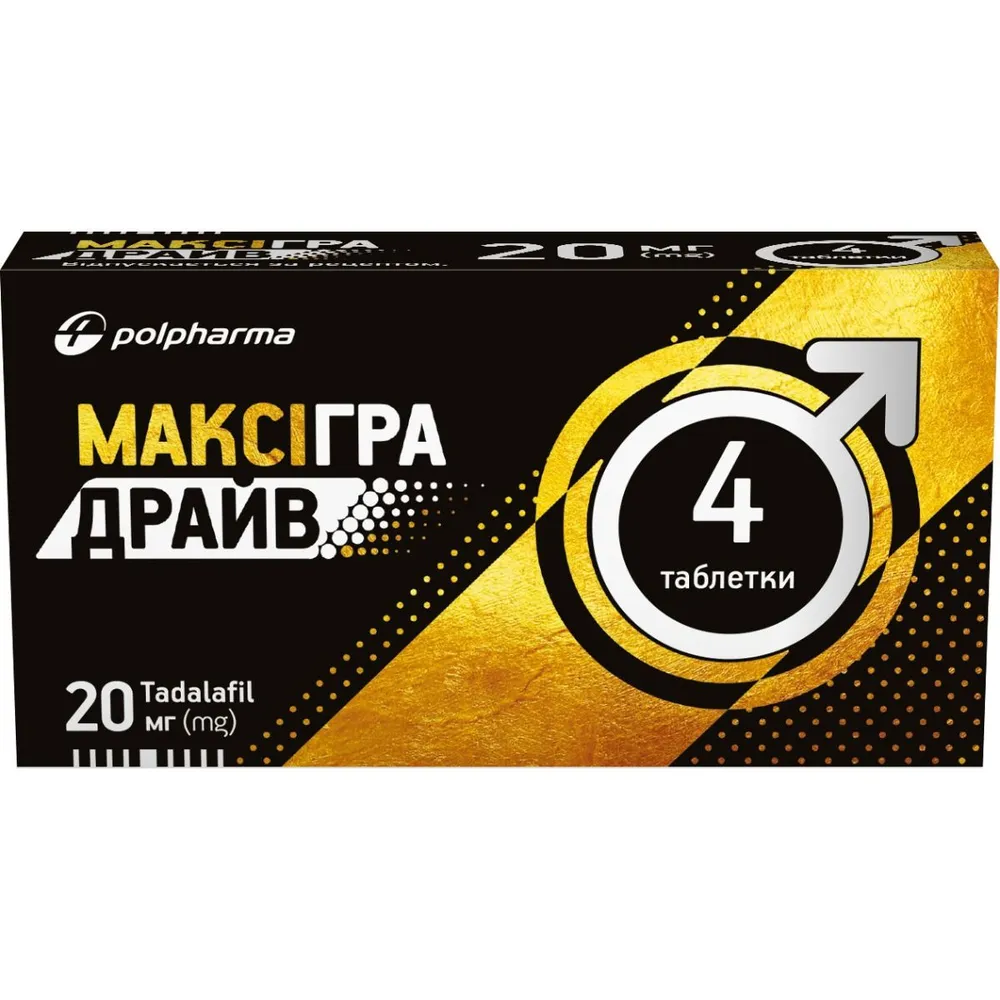
Table of Contents
INSTRUCTION FOR MEDICAL USE OF THE MEDICINAL PRODUCT MAXIGRADRIVE
Composition:
Active substance: tadalafil;
One film-coated tablet contains 2.5 mg, 5 mg, 10 mg, or 20 mg of tadalafil;
Excipients:
Tablet core: lactose monohydrate, microcrystalline cellulose, povidone K 30, poloxamer, sodium lauryl sulfate, sodium croscarmellose, colloidal anhydrous silicon dioxide, magnesium stearate;
Coating for 2.5 mg tablets: polyvinyl alcohol, titanium dioxide (E 171), macrogol, talc;
Coating for 5 mg, 10 mg, and 20 mg tablets: polyvinyl alcohol, titanium dioxide (E 171), macrogol, talc, yellow iron oxide (E 172), red iron oxide (E 172).
Pharmaceutical form. Film-coated tablets.
Main physicochemical characteristics:
2.5 mg: film-coated tablets, white or almost white, round, biconvex, 4.9–5.3 mm in diameter;
5 mg: film-coated tablets, light brown, oblong, biconvex, 7.9–8.3 mm in length, 3.9–4.3 mm in width;
10 mg: film-coated tablets, light orange, oblong, biconvex, with a break line on one side, 10.9–11.4 mm in length, 5.4–5.9 mm in width;
20 mg: film-coated tablets, light pink, oblong, biconvex, with a groove on one side, 14.9–15.4 mm in length, 7.1–7.6 mm in width. The tablet core is white or almost white when split.
Pharmacotherapeutic group. Agents for the treatment of erectile dysfunction. ATC code G04BE08.
Pharmacological Properties
Pharmacodynamics
Mechanism of action
Tadalafil is a selective, reversible inhibitor of cyclic guanosine monophosphate (cGMP)-specific phosphodiesterase type 5 (PDE5). When sexual stimulation causes local release of nitric oxide, inhibition of PDE5 by tadalafil results in increased levels of cGMP in the corpus cavernosum. This leads to relaxation of smooth muscles and increased blood flow into penile tissue, resulting in erection. Tadalafil has no effect on erectile function in the absence of sexual stimulation.
The inhibitory effect on cGMP concentration in the corpus cavernosum is also observed in smooth muscles of the prostate, bladder, and their blood vessels supplying these organs. The resulting vasodilation increases blood perfusion and may contribute to the reduction of symptoms of benign prostatic hyperplasia. These vascular effects may be complemented by inhibition of afferent nerve activity in the bladder and relaxation of smooth muscles in the prostate and bladder.
Pharmacodynamic effects
In vitro studies have shown that tadalafil is a selective inhibitor of PDE5. PDE5 is an enzyme found in the smooth muscles of the corpus cavernosum, vascular and visceral smooth muscles, skeletal muscles, platelets, kidneys, lungs, and cerebellum. The effect of tadalafil on PDE5 is stronger than on other phosphodiesterases. The activity of tadalafil against PDE5 is 10,000 times greater than its effect on PDE1, PDE2, PDE4, and PDE7, which are present in the heart, brain, blood vessels, liver, leukocytes, skeletal muscles, and other organs. Tadalafil is 10,000 times more potent against PDE5 than against PDE3, an enzyme present in the heart and blood vessels. This selectivity for PDE5 over PDE3 is important because PDE3 plays a role in myocardial contraction. Additionally, tadalafil is approximately 700 times more potent against PDE5 than against PDE6, an enzyme present in the retina and responsible for phototransduction. Tadalafil is also 10,000 times more potent against PDE5 than against PDE7, PDE8, PDE9, and PDE10.
Clinical efficacy and safety
In healthy volunteers, tadalafil showed no significant difference compared to placebo in systolic and diastolic blood pressure in the supine position (mean maximum decrease 1.6/0.8 mm Hg, respectively), systolic and diastolic blood pressure in the standing position (mean maximum decrease 0.2/4.6 mm Hg, respectively), or significant changes in heart rate.
A study evaluating the effect of tadalafil on vision using the Farnsworth-Munsell 100 Hue color vision test demonstrated that tadalafil does not impair color discrimination (blue-green). Clinical trial data confirm the low affinity of tadalafil for PDE6 compared to PDE5. In all clinical trials, changes in color vision were rarely reported (< 0.1%).
Three clinical trials were conducted in men to evaluate the potential effect of tadalafil on spermatogenesis at doses of 10 mg (one 6-month trial) and 20 mg (one 6-month and one 9-month trial), administered once daily. In two of the three trials, a clinically insignificant decrease in sperm count and concentration associated with tadalafil use was observed. These effects were not associated with changes in other parameters such as sperm motility, morphology, or serum follicle-stimulating hormone levels.
Erectile dysfunction
Three clinical trials involving 1054 patients were conducted to determine the onset of tadalafil's effect, demonstrating statistically significant improvement in erectile function, efficacy lasting up to 36 hours, and an effect as early as 16 minutes after dosing compared to placebo (on-demand tadalafil use).
Tadalafil in doses ranging from 2 to 100 mg was evaluated in 16 clinical trials involving 3250 patients, including those with erectile dysfunction of varying severity (mild, moderate, severe), different etiologies, age groups (21 to 86 years), and ethnic backgrounds. Most patients had experienced erectile dysfunction for at least one year. In primary efficacy trials, the improvement rate was 81% in the tadalafil group compared to 35% in the placebo group. Furthermore, improvement was reported in patients with erectile dysfunction of varying severity during tadalafil use (success rates were 86%, 83%, and 72% in patients with mild, moderate, and severe erectile dysfunction, respectively, compared to 45%, 42%, and 19% in the placebo group). In primary efficacy trials, the success rate was 75% in the tadalafil group compared to 32% in the placebo group.
In a 12-week trial involving 186 patients (142 received tadalafil, 44 received placebo) with erectile dysfunction secondary to spinal cord injury, tadalafil demonstrated significant improvement in erectile function. The average success rate with tadalafil 10 mg or 20 mg (dose titration, on-demand use) was 48% compared to 17% in the placebo group.
Tadalafil at doses of 2.5 mg, 5 mg, and 10 mg once daily was evaluated in three clinical trials involving 853 patients of various ages (21 to 82 years) and ethnic groups with erectile dysfunction of varying severity (mild, moderate, severe) and etiology. In two primary efficacy trials in the overall population, the average success rate was 57% and 67% with tadalafil 5 mg and 50% with tadalafil 2.5 mg, compared to 31% and 37% in the placebo group. In trials involving patients with erectile dysfunction secondary to diabetes, the average success rate was 41% and 46% with tadalafil 5 mg and 2.5 mg, respectively, compared to 28% in the placebo group. Most patients in these trials had previously used PDE5 inhibitors on an as-needed basis. In a subsequent trial, 217 patients who had not previously used PDE5 inhibitors received tadalafil 5 mg once daily or placebo. The average success rate was 68% in the tadalafil group compared to 52% in the placebo group.
Benign prostatic hyperplasia
Tadalafil was studied in four 12-week clinical trials involving 1500 patients with symptoms of benign prostatic hyperplasia. In these trials, tadalafil 5 mg demonstrated improvement in patient status on the International Prostate Symptom Score (IPSS) compared to placebo (IPSS improvement scores with tadalafil 5 mg were –4.8, –5.6, –6.1, and –6.3, compared to –2.2, –3.6, –3.8, and –4.2 with placebo). Improvement on the total IPSS was observed as early as the first week of treatment. In one of the trials, which included tamsulosin 0.4 mg as an active comparator, IPSS improvement scores with tadalafil 5 mg, tamsulosin, and placebo were –6.3, –5.7, and –4.2, respectively.
In one of these trials, both improvement in erectile function and reduction of benign prostatic hyperplasia symptoms were evaluated in patients with both conditions. Improvement in erectile function on the International Index of Erectile Function and on IPSS was 6.5 and –6.1, respectively, with tadalafil 5 mg, compared to 1.8 and –3.8 in the placebo group. The average percentage of successful intercourse attempts per patient was 71.9% in the tadalafil 5 mg group and 48.3% in the placebo group.
Maintenance of tadalafil's effect was evaluated in an additional open-label study, which demonstrated that improvement on the total IPSS observed over 12 weeks was maintained for up to 1 year after treatment with tadalafil 5 mg.
Children
One study was conducted in children with Duchenne muscular dystrophy (DMD), in which no confirmed evidence of efficacy was demonstrated. This was a randomized, double-blind, placebo-controlled trial with three parallel groups involving 331 boys aged 7 to 14 years with DMD who were also receiving corticosteroid therapy. The study included a 48-week double-blind period during which patients were assigned to receive daily tadalafil 0.3 mg/kg, tadalafil 0.6 mg/kg, or placebo. Tadalafil did not demonstrate efficacy on the primary endpoint of slowing the decline in walking speed, measured by change in distance in the 6-minute walk test (6MWT). The least squares mean change in 6MWT distance at week 48 was 51.0 m in the placebo group compared to 64.7 m in the tadalafil 0.3 mg/kg group (p = 0.307) and 59.1 m in the tadalafil 0.6 mg/kg group (p = 0.538). Confirmed efficacy was also not demonstrated during repeated analyses of the study results. Overall safety results from this study were generally consistent with the known safety profile of tadalafil and adverse events expected in the pediatric DMD population receiving corticosteroid therapy.
Pharmacokinetics
Absorption. Tadalafil is well absorbed after oral administration. The mean maximum plasma concentration (Cmax) is reached on average within 2 hours after dosing. The absolute oral bioavailability of tadalafil has not been determined.
The rate and extent of tadalafil absorption are not affected by food intake; therefore, tadalafil can be taken with or without food. The time of dosing (morning or evening) had no clinically significant effect on the rate and extent of absorption.
Distribution. The mean volume of distribution is approximately 63 L, indicating that tadalafil is distributed in tissues. At therapeutic concentrations, 94% of tadalafil in plasma is protein-bound. Protein binding is not affected by renal impairment.
Less than 0.0005% of the administered dose was detected in the semen of healthy volunteers.
Metabolism. Tadalafil is primarily metabolized by cytochrome P450 isoenzyme 3A4 (CYP3A4). The main circulating metabolite is methylcatechol glucuronide. This metabolite has 13,000 times less activity against PDE5 than tadalafil. Therefore, the metabolite is not expected to have clinical activity at observed concentrations.
Elimination. The mean oral clearance of tadalafil is 2.5 L/h, and the mean elimination half-life is 17.5 hours in healthy volunteers. Tadalafil is excreted primarily as inactive metabolites, mainly in feces (approximately 61% of the dose) and to a lesser extent in urine (approximately 36% of the dose).
Linearity/non-linearity of pharmacokinetics. Tadalafil pharmacokinetics in healthy volunteers are linearly proportional to time and dose. Over the dose range of 2.5 to 20 mg, exposure (AUC) increases proportionally with dose. Steady-state plasma concentrations are achieved within 5 days with once-daily dosing.
The pharmacokinetics of the drug are similar in patients with erectile dysfunction and those without.
Special populations
Elderly. Healthy elderly volunteers (aged 65 years and older) had lower oral clearance of tadalafil, resulting in a 25% higher AUC compared to healthy volunteers aged 19–45 years. This age-related effect is not clinically significant and does not require dose adjustment.
Patients with renal impairment. In clinical pharmacology studies using single doses of tadalafil (5–20 mg), tadalafil AUC was nearly doubled in patients with mild (creatinine clearance 51–80 mL/min) or moderate (creatinine clearance 31–50 mL/min) renal impairment, as well as in patients with end-stage renal disease on dialysis. In patients undergoing hemodialysis, Cmax was 41% higher than in healthy volunteers. The effect of hemodialysis on tadalafil elimination is negligible.
Patients with hepatic impairment. Tadalafil AUC in patients with mild to moderate hepatic impairment (Child-Pugh classes A and B) is comparable to exposure in healthy volunteers receiving a 10 mg dose. Safety data for tadalafil administration in patients with severe hepatic impairment (Child-Pugh class C) are limited. There are no data on the use of tadalafil once daily in patients with hepatic impairment. Physicians should carefully evaluate the individual benefit/risk ratio when prescribing tadalafil once daily.
Patients with diabetes mellitus. Tadalafil AUC in diabetic patients was approximately 19% lower than in healthy volunteers. This difference in exposure does not require dose adjustment.
Clinical Characteristics
Indications
For 2.5 mg dosage. Treatment of erectile dysfunction in adult men. The drug is effective in the presence of sexual stimulation.
For 5 mg dosage. Treatment of symptoms of benign prostatic hyperplasia in adult men. Treatment of erectile dysfunction in adult men. The drug is effective for treatment of erectile dysfunction in the presence of sexual stimulation.
For 10 mg dosage. Treatment of erectile dysfunction in adult men. The drug is effective for treatment of erectile dysfunction in the presence of sexual stimulation.
For 20 mg dosage. Treatment of erectile dysfunction in adult men. The drug is effective for treatment of erectile dysfunction in the presence of sexual stimulation.
Tadalafil is not indicated for use in women.
Contraindications
Hypersensitivity to tadalafil or to any other component of the drug.
In clinical studies, tadalafil was shown to potentiate the hypotensive effect of nitrates. This is considered to be a consequence of the combined effects of nitrates and tadalafil on the nitric oxide / cGMP pathway. Therefore, tadalafil is contraindicated in patients receiving organic nitrates in any dosage form (see section "Interaction with other medicinal products and other forms of interaction").
Tadalafil should not be used in men with cardiovascular disorders for whom sexual activity is inadvisable. Physicians should consider the potential cardiovascular risk associated with sexual activity in patients with a history of cardiovascular disease.
The following groups of patients with cardiovascular disorders were not included in clinical trials; therefore, tadalafil is contraindicated in these groups:
- patients who have had a myocardial infarction within the last 90 days;
- patients with unstable angina or angina occurring during sexual intercourse;
- patients with heart failure classified as NYHA class 2 or higher within the last 6 months;
- patients with uncontrolled arrhythmia, hypotension (˂ 90/50 mm Hg), or uncontrolled hypertension;
- patients who have had a stroke within the last 6 months.
Tadalafil is contraindicated in patients who have experienced loss of vision in one eye due to non-arteritic anterior ischemic optic neuropathy (NAION), regardless of whether it was associated with previous exposure to PDE5 inhibitors (see section "Special precautions for use").
Concomitant use of PDE5 inhibitors, including tadalafil, with guanylate cyclase stimulators such as riociguat is contraindicated, as this may potentially lead to symptomatic hypotension (see section "Interaction with other medicinal products and other forms of interaction").
Interaction with other medicinal products and other forms of interaction
Interaction studies were conducted with 10 mg and 20 mg dosages; results are provided below. For interaction studies using only tadalafil 10 mg, clinically significant interactions with higher doses cannot be excluded.
Effect of other medicinal products on tadalafil
Cytochrome CYP450 inhibitors
Tadalafil is metabolized primarily by CYP3A4. The selective CYP3A4 inhibitor ketoconazole (200 mg daily) increases the AUC of tadalafil (10 mg) by 2-fold and Cmax by 15% compared to tadalafil alone. Ketoconazole (400 mg daily) increases the AUC of tadalafil (20 mg) by 4-fold and Cmax by 22%. Ritonavir, a protease inhibitor that inhibits CYP3A4, CYP2C9, CYP2C19, and CYP2D6, increases the AUC of tadalafil (20 mg) by 2-fold without affecting Cmax. Although specific interactions have not been studied, other protease inhibitors such as saquinavir and other CYP3A4 inhibitors such as erythromycin, clarithromycin, itraconazole, and grapefruit juice should be used with caution, as they are expected to increase plasma concentrations of tadalafil when used concomitantly (see section "Special precautions for use"). This may lead to an increased frequency of adverse reactions (see section "Adverse reactions").
Transporters
The effect of transporters, such as P-glycoprotein, on tadalafil distribution is unknown. Therefore, there is a potential for drug interactions mediated by transporter inhibition.
Cytochrome CYP450 inducers
The CYP3A4 inducer rifampicin reduces the AUC of tadalafil by 88% compared to tadalafil alone (10 mg). This reduction in concentration may lead to reduced efficacy of tadalafil; the extent of efficacy reduction is unknown. Concomitant use of other CYP3A4 inducers such as phenobarbital, phenytoin, and carbamazepine may also reduce plasma concentrations of tadalafil.
Effect of tadalafil on other medicinal products
Nitrates. In clinical studies, tadalafil (5 mg, 10 mg, 20 mg) was shown to potentiate the hypotensive effects of nitrates. Therefore, the use of tadalafil in patients receiving organic nitrates in any form is contraindicated (see section "Contraindications"). In a clinical study involving 150 patients who received tadalafil 20 mg daily for 7 days and sublingual nitroglycerin 0.4 mg (at varying time intervals), this interaction lasted more than 24 hours and was not observed after 48 hours following the last dose of tadalafil. Therefore, if nitrates are medically necessary for a patient receiving tadalafil at any dose (2.5–20 mg), at least 48 hours must elapse after the last dose of tadalafil before administering nitrates. In such cases, nitrate administration should be performed under strict medical supervision with appropriate hemodynamic monitoring.
Antihypertensive agents (including calcium channel blockers)
Significant potentiation of the hypotensive effect of the α-adrenergic blocker doxazosin (4–8 mg daily) was observed when co-administered with tadalafil (5 mg once daily or a single 20 mg dose). This effect lasts up to 12 hours and may manifest as individual symptoms, including dizziness. This combination is not recommended for use (see section "Special precautions for use").
In interaction studies involving a limited number of healthy volunteers, the above effects were not reported with concomitant use of alfuzosin or tamsulosin. Tadalafil should be prescribed with caution to patients receiving treatment with any α-adrenergic blockers, particularly elderly patients. Treatment should be initiated at the lowest dose, with gradual dose escalation.
Clinical pharmacodynamic studies evaluated the potential of tadalafil to potentiate the hypotensive effects of antihypertensive agents. Major classes of drugs were studied: calcium channel blockers (amlodipine), angiotensin-converting enzyme inhibitors (enalapril), β-adrenergic blockers (metoprolol), thiazide diuretics (bendroflumethiazide), and angiotensin II receptor blockers (various types and doses, alone or in combination with thiazide diuretics, calcium channel blockers, β-adrenergic blockers, and/or α-adrenergic blockers). Tadalafil (10 mg dose, except for interaction studies with angiotensin II receptor blockers and amlodipine, where 20 mg dose was studied) did not show significant interaction with the above-mentioned drug classes. In another clinical pharmacology study, concomitant use of tadalafil (20 mg) with multiple antihypertensive agents (up to four) was investigated. In patients taking multiple antihypertensive agents, blood pressure changes depended on the level of blood pressure control. Thus, in patients with well-controlled hypertension, blood pressure reduction was minimal and comparable to that in healthy volunteers. In patients with uncontrolled hypertension, blood pressure reduction was greater, although in most patients this reduction did not lead to hypotensive symptoms. In patients receiving concomitant antihypertensive therapy, tadalafil 20 mg may cause blood pressure reduction, which (except when combined with α-adrenergic blockers) is generally minimal and clinically insignificant. Analysis of phase 3 clinical trial data did not reveal differences in adverse reactions between patients receiving tadalafil with concomitant antihypertensive therapy and those receiving tadalafil alone. Nevertheless, appropriate advice regarding potential blood pressure reduction should be provided to patients receiving antihypertensive drugs and tadalafil.
Riociguat
Preclinical studies revealed an additive hypotensive effect when PDE5 inhibitors were used concomitantly with riociguat. Clinical studies demonstrated that riociguat potentiates the hypotensive effect of PDE5 inhibitors. There was no evidence of beneficial clinical effect of this combination in the studied population. Concomitant use of riociguat with PDE5 inhibitors, including tadalafil, is contraindicated (see section "Contraindications").
5-α-reductase inhibitors
In a clinical study comparing concomitant use of tadalafil 5 mg and finasteride 5 mg versus placebo and finasteride 5 mg for relief of symptoms of benign prostatic hyperplasia, no new adverse reactions were observed. However, since drug interaction studies to evaluate effects of tadalafil and 5-α-reductase inhibitors have not been conducted, tadalafil should be prescribed with caution to patients receiving treatment with 5-α-reductase inhibitors.
CYP1A2 substrates (e.g., theophylline)
In a clinical pharmacology study, no pharmacokinetic interaction was observed between tadalafil (10 mg) and theophylline (a non-selective phosphodiesterase inhibitor). The only pharmacodynamic effect was a slight increase in heart rate. The possibility of this effect should be considered when tadalafil and theophylline are used concomitantly, despite its minimal and clinically insignificant nature.
Ethinylestradiol and terbutaline
Tadalafil increased the bioavailability of oral formulations containing ethinylestradiol. Such an increase in bioavailability may be expected with concomitant use of terbutaline (oral), although the clinical consequences of this combination are unknown.
Alcohol
Alcohol (maximum average concentration 0.08%) did not affect the concomitant use of tadalafil (10 or 20 mg). No changes in tadalafil concentration were observed over the next 3 hours after simultaneous intake of alcohol and tadalafil. Alcohol was administered to achieve maximum alcohol absorption (fasting after overnight fasting and no food intake for 2 hours after alcohol consumption). Administration of tadalafil (20 mg) did not result in statistically significant reduction in mean blood pressure when combined with alcohol (0.7 g/kg or approximately 180 ml of 40% alcohol (vodka) in an 80 kg man), although postural dizziness and orthostatic hypotension were observed in some patients. Administration of tadalafil with lower doses of alcohol (0.6 g/kg) did not cause arterial hypotension, and dizziness occurred at the same frequency as with alcohol alone. The effect of alcohol on cognitive function was not enhanced by concomitant tadalafil use (10 mg).
MEDICINAL PRODUCTS METABOLIZED BY CYTOCHROME P450
Tadalafil is not expected to cause clinically significant inhibition or induction of the clearance of medicinal products metabolized by CYP450 isoenzymes. Clinical studies have demonstrated that tadalafil does not inhibit or induce CYP450 isoenzymes, including CYP3A4, CYP1A2, CYP2D6, CYP2E1, CYP2C9, and CYP2C19.
CYP2C9 substrates (e.g., R-warfarin)
Tadalafil (10 mg and 20 mg) had no clinically significant effect on the AUC of S-warfarin or R-warfarin (CYP2C9 substrates), nor did it affect warfarin-induced prothrombin time.
Acetylsalicylic acid
Tadalafil (10 mg and 20 mg) did not potentiate the increase in bleeding time caused by acetylsalicylic acid.
Antidiabetic medicinal products
Specific interaction studies between tadalafil and antidiabetic medicinal products have not been conducted.
Special precautions for use
Before initiating treatment with Maxigra Drive
Before administering the medication, the physician should obtain a medical history and perform a physical examination of the patient, identify potential underlying causes of erectile dysfunction and benign prostatic hyperplasia, and prescribe an appropriate treatment regimen.
Prior to initiating any treatment for erectile dysfunction, physicians must consider the cardiovascular status of their patients, as there is a certain degree of cardiovascular risk associated with sexual activity. Tadalafil exerts a vasodilatory effect, which may lead to a slight and transient reduction in blood pressure (see section "Pharmacological properties") and may potentiate the hypotensive effect of nitrates (see section "Contraindications").
Before initiating tadalafil therapy for symptoms of benign prostatic hyperplasia, the patient should be examined to exclude possible prostate carcinoma and to carefully assess cardiovascular status (see section "Contraindications").
Evaluation of erectile dysfunction should include identification of potential underlying causes and their appropriate management following adequate medical assessment. The efficacy of tadalafil in patients who have undergone pelvic surgery or radical prostatectomy without nerve-sparing is unknown.
Cardiovascular system
During the post-marketing period and/or clinical trials, serious cardiovascular events have been reported, including myocardial infarction, sudden cardiac death, unstable angina, ventricular arrhythmia, cerebrovascular accident, transient ischemic attack, chest pain, palpitations, and tachycardia. Most patients who experienced such adverse reactions had pre-existing cardiovascular risk factors. However, it is currently not possible to definitively determine whether the aforementioned events are related to cardiovascular risk factors, the use of tadalafil, patient sexual activity, or a combination of these or other factors.
In patients receiving concomitant antihypertensive therapy, tadalafil may potentiate the reduction in blood pressure. If daily tadalafil therapy is initiated, the clinical need for adjusting the dose of antihypertensive medication should be considered.
Tadalafil should be prescribed with caution in patients taking α1-blockers, as in some individuals, concomitant use of these drugs may lead to symptomatic hypotension (see section "Interaction with other medicinal products and other forms of interaction"). The combined use of tadalafil and doxazosin is not recommended.
Eyes
Cases of visual disturbances, including central serous chorioretinopathy (CSCR) and non-arteritic anterior ischemic optic neuropathy (NAION), have been reported during the use of tadalafil and other PDE5 inhibitors. In most cases, symptoms of CSCR resolved spontaneously after discontinuation of tadalafil. Analysis of observational study data has shown an increased risk of acute NAION in men with erectile dysfunction following the use of tadalafil or other PDE5 inhibitors. Since this risk may be elevated in all patients using tadalafil, physicians should inform patients of the necessity to immediately discontinue tadalafil and seek medical help in case of sudden vision loss, visual acuity impairment, and/or visual distortion (see section "Contraindications").
Worsening or sudden hearing loss
Cases of sudden hearing loss following tadalafil administration have been reported. Regardless of the presence of other risk factors (such as age, diabetes, hypertension, or history of hearing loss), patients should be advised to discontinue tadalafil and seek immediate medical attention in case of sudden hearing deterioration or hearing loss.
Renal and hepatic impairment
Daily use of Maxigra Drive is not recommended in patients with severe renal impairment due to increased tadalafil exposure, limited clinical experience, and poor dialysis clearance.
Clinical data on the use of tadalafil for daily administration in patients with severe hepatic impairment (Child-Pugh class C) are limited.
Daily use of the medication for the treatment of erectile dysfunction and/or benign prostatic hyperplasia has not been evaluated in patients with hepatic insufficiency. Before prescribing tadalafil, the physician should carefully assess the individual benefit-risk ratio of therapy.
Priapism and anatomical penile deformity
If a patient experiences an erection lasting 4 hours or longer, he should seek immediate medical help. If priapism is not treated promptly, it may result in penile tissue damage and permanent loss of potency.
Tadalafil should be used with caution in patients with anatomical penile deformity (such as angulation, cavernous fibrosis, or Peyronie's disease) or in patients with conditions that may predispose to priapism (such as sickle cell anemia, multiple myeloma, or leukemia).
Concomitant use with CYP3A4 inhibitors
Tadalafil should be prescribed with caution in patients taking CYP3A4 inhibitors (ritonavir, saquinavir, ketoconazole, itraconazole, erythromycin), as co-administration with tadalafil results in increased tadalafil AUC (see section "Interaction with other medicinal products and other forms of interaction").
Concomitant use with other erectile dysfunction medications
The safety and efficacy of tadalafil in combination with other PDE5 inhibitors or other erectile dysfunction medications have not been studied; therefore, patients should be informed not to take tadalafil in such combinations.
Lactose
The medication contains lactose monohydrate. Maxigra Drive should not be prescribed to patients with rare hereditary forms of galactose intolerance, glucose-galactose malabsorption syndrome, or Lapp lactase deficiency.
Sodium
One tablet of this medication contains less than 1 mmol of sodium (23 mg), i.e., essentially "sodium-free."
Use during pregnancy or breastfeeding
Maxigra Drive is not indicated for use in women.
Pregnancy. Data from studies on the use of tadalafil in pregnant women are limited. Animal studies have not shown any direct or indirect harmful effects on pregnancy, embryonic or fetal development, parturition, or postnatal development. As a precautionary measure, it is advisable to avoid the use of tadalafil during pregnancy.
Breastfeeding. Available pharmacodynamic/toxicological data in animals indicate excretion of tadalafil into milk. Risk to the breastfed infant cannot be excluded. Maxigra Drive should not be used during breastfeeding.
Fertility. Effects suggesting impaired fertility were observed in dogs. Two clinical studies have shown that such an effect is not expected in humans, although decreased sperm concentration has been observed in some men (see section "Pharmacological properties"). Clinical studies have indicated that fertility impairment is not expected in humans, although decreased sperm concentration has been observed in some men.
Ability to affect reaction speed when driving or operating machinery
The effect of tadalafil on the ability to drive vehicles or operate machinery is negligible. Although the frequency of dizziness reports in clinical trials with placebo and tadalafil was similar, patients should be aware of how Maxigra Drive affects them before driving or operating machinery.
Method of Administration and Dosage
For oral use. The tablets should be taken with the recommended content of the active substance.
Erectile dysfunction in adult men
The recommended dose is 10 mg taken prior to anticipated sexual activity, regardless of food intake. For patients in whom 10 mg of tadalafil does not produce an adequate effect, a dose of 20 mg may be used.
The medication can be taken 30 minutes prior to sexual activity.
The maximum recommended frequency of administration is once daily.
Tadalafil 10 mg and 20 mg is intended for use prior to anticipated sexual activity and is not recommended for daily use.
If frequent use of tadalafil (at least twice weekly) is anticipated, a daily regimen with a lower dose of tadalafil may be more appropriate, based on patient preference and physician decision. For such patients, the recommended dose is 5 mg once daily, taken approximately at the same time each day. The dose may be reduced to 2.5 mg once daily based on individual tolerance. The need for long-term daily treatment should be periodically re-evaluated.
Benign prostatic hyperplasia in adult men
The recommended dose for daily use is 5 mg once daily, taken approximately at the same time each day, regardless of food intake. For the treatment of adult men with erectile dysfunction and symptoms of benign prostatic hyperplasia, the recommended dose for daily use is 5 mg once daily, taken approximately at the same time each day. For patients who do not tolerate tadalafil 5 mg daily in the treatment of benign prostatic hyperplasia, alternative therapy should be considered, as the efficacy of tadalafil 2.5 mg daily for the treatment of benign prostatic hyperplasia has not been evaluated.
Special patient populations
Elderly men. Dose adjustment is not required.
Men with renal impairment. Dose adjustment is not required in patients with mild or moderate renal impairment. For patients with severe renal impairment, the maximum recommended dose is 10 mg (on-demand tadalafil use). Daily administration of tadalafil 2.5 mg or 5 mg is not recommended for the treatment of patients with severe renal impairment and benign prostatic hyperplasia or erectile dysfunction (see sections "Pharmacological properties" and "Special precautions for use").
Men with hepatic impairment
For the treatment of erectile dysfunction, the recommended dose of tadalafil is 10 mg taken prior to anticipated sexual activity, regardless of food intake (on-demand tadalafil use). Clinical data on the safety of tadalafil in patients with severe hepatic impairment (Child–Pugh class C) are limited; in such cases, the physician should carefully assess the individual benefit/risk ratio. There are no data on the use of tadalafil at doses higher than 10 mg in patients with hepatic impairment. Daily use of tadalafil, both for the treatment of benign prostatic hyperplasia and erectile dysfunction, has not been studied in patients with hepatic impairment; therefore, the physician should carefully evaluate the individual benefit/risk ratio of such therapy (see sections "Pharmacological properties" and "Special precautions for use").
Men with diabetes. Dose adjustment is not required.
Special precautions for disposal
Unused medication or waste material should be disposed of in accordance with current regulatory requirements.
Children
There are no data on the use of tadalafil in children for the treatment of erectile dysfunction.
Overdose
Symptoms. In healthy volunteers, single doses of tadalafil up to 500 mg and multiple daily doses up to 100 mg were associated with adverse effects similar to those observed with lower doses of the drug.
Treatment. In case of overdose, standard symptomatic treatment should be applied as needed. Hemodialysis has minimal effect on the elimination of tadalafil.
Adverse Reactions
Summary of the medicinal product's safety profile
The most commonly reported adverse effects during treatment of erectile dysfunction or benign prostatic hyperplasia were headache, dyspepsia, back pain, and myalgia, with frequency increasing with higher doses of tadalafil. Adverse reactions were generally transient and mild to moderate in severity. Most cases of headache with daily tadalafil administration occurred within the first 10–30 days after initiation of treatment.
Tabulated data on adverse reactions
The table below includes data on adverse reactions from spontaneous reports and placebo-controlled clinical trials (in total, 8022 patients receiving tadalafil and 4422 patients receiving placebo), involving on-demand and daily use of tadalafil for the treatment of erectile dysfunction, and daily use for the treatment of benign prostatic hyperplasia.
Very common (≥ 1/10), common (≥ 1/100 and < 1/10), uncommon (≥ 1/1000 and < 1/100), rare (≥ 1/10000 and < 1/1000), very rare (< 1/10000), frequency not known (frequency cannot be estimated from available data).
| Very common (≥ 1/10) |
Common (≥ 1/100 to <1/10) |
Uncommon (≥ 1/1,000 to <1/100) |
Rare (≥ 1/10,000 to <1/1,000) |
Frequency not known (frequency cannot be estimated from the available data) |
| Immune system disorders |
||||
| Hypersensitivity reactions |
Angioedema2 |
|||
| Nervous system disorders |
||||
| Headache |
Dizziness |
Cerebrovascular events1 (including haemorrhagic events), loss of consciousness, transient ischaemic attack1, migraine2, seizures2, transient global amnesia |
||
| Eye disorders |
||||
| Blurred vision, eye pain |
Visual field defects, eyelid oedema, conjunctival hyperaemia, non-arteritic anterior ischaemic optic neuropathy (NAION)2, retinal vein occlusion2 |
Central serous chorioretinopathy (CSCR) |
||
| Ear and labyrinth disorders |
||||
| Tinnitus |
Sudden hearing loss |
|||
| Cardiac disorders1 |
||||
| Tachycardia, palpitations |
Myocardial infarction, unstable angina2, ventricular arrhythmia2 |
|||
| Vascular disorders |
||||
| Flushing |
Arterial hypotension3, arterial hypertension |
|||
| Respiratory, thoracic and mediastinal disorders |
||||
| Nasal congestion |
Dyspnoea, epistaxis |
|||
| Gastrointestinal disorders |
||||
| Dyspepsia |
Abdominal pain, vomiting, nausea, gastro-oesophageal reflux |
|||
| Skin and subcutaneous tissue disorders |
||||
| Rash |
Urticaria, Stevens-Johnson syndrome2, exfoliative dermatitis2, hyperhidrosis (excessive sweating) |
|||
| Musculoskeletal and connective tissue disorders |
||||
| Back pain, myalgia, limb pain |
||||
| Renal and urinary disorders |
||||
| Haematuria |
||||
| Reproductive system and breast disorders |
||||
| Prolonged erection |
Priapism, penile haemorrhage, haemospermia |
|||
| General disorders and administration site conditions |
||||
| Chest pain1, peripheral oedema, fatigue |
Facial oedema2, sudden cardiac death1,2 |
|||
1Most of the patients who experienced such adverse reactions had cardiovascular risk factors in their medical history (see section "Dosage and Administration").
2Adverse reactions from post-marketing surveillance not observed during placebo-controlled clinical trials.
3More frequently reported when tadalafil was used concomitantly with antihypertensive agents.
Isolated adverse reactions. A slightly higher frequency of ECG abnormalities, primarily sinus bradycardia, was reported in patients receiving tadalafil once daily compared to patients receiving placebo. Most of these ECG abnormalities were not associated with clinical adverse reactions.
Special patient groups. Clinical trial data on the use of tadalafil in patients over 65 years of age, both for the treatment of erectile dysfunction and for the treatment of benign prostatic hyperplasia, are limited. In clinical trials of tadalafil on-demand (20 mg dose) for the treatment of erectile dysfunction, diarrhea occurred more frequently in patients over 65 years of age. In clinical trials of tadalafil 5 mg once daily for the treatment of benign prostatic hyperplasia, dizziness and diarrhea were more frequently observed in patients over 75 years of age.
Reporting suspected adverse reactions
Reporting of suspected adverse reactions after drug registration is of great importance. It allows continuous monitoring of the benefit-risk balance of the medicinal product. Healthcare professionals, pharmacists, as well as patients or their legal representatives should report all suspected adverse reactions and lack of efficacy through the Automated Information System for Pharmacovigilance at the following link: https://aisf.dec.gov.ua.
Shelf life
3 years.
Storage conditions
Store in the original packaging at a temperature not exceeding 25 °C. Keep out of the reach of children.
Packaging
For 2.5 mg and 5 mg dosage: 14 tablets in a blister; 2 blisters in a cardboard box.
For 10 mg dosage: 1 or 2 tablets in a blister; 1 blister in a cardboard box.
For 20 mg dosage: 1 or 2 tablets in a blister; 1 blister in a cardboard box;
4 tablets in a blister; 1, 2, or 3 blisters in a cardboard box.
Prescription status. Prescription only.
Manufacturer
Pharmaceutical Works “POLPHARMA” S.A.
Pharmaceutical Works “POLPHARMA” S.A.
Manufacturer's address and location of manufacturing site
Production Department in Nowa Deba, 2 Metalowca Str., 39-460 Nowa Deba, Poland /
Production Department in Nowa Deba, 2 Metalowca Str., 39-460 Nowa Deba, Poland.