Losartan-teva
Ukraine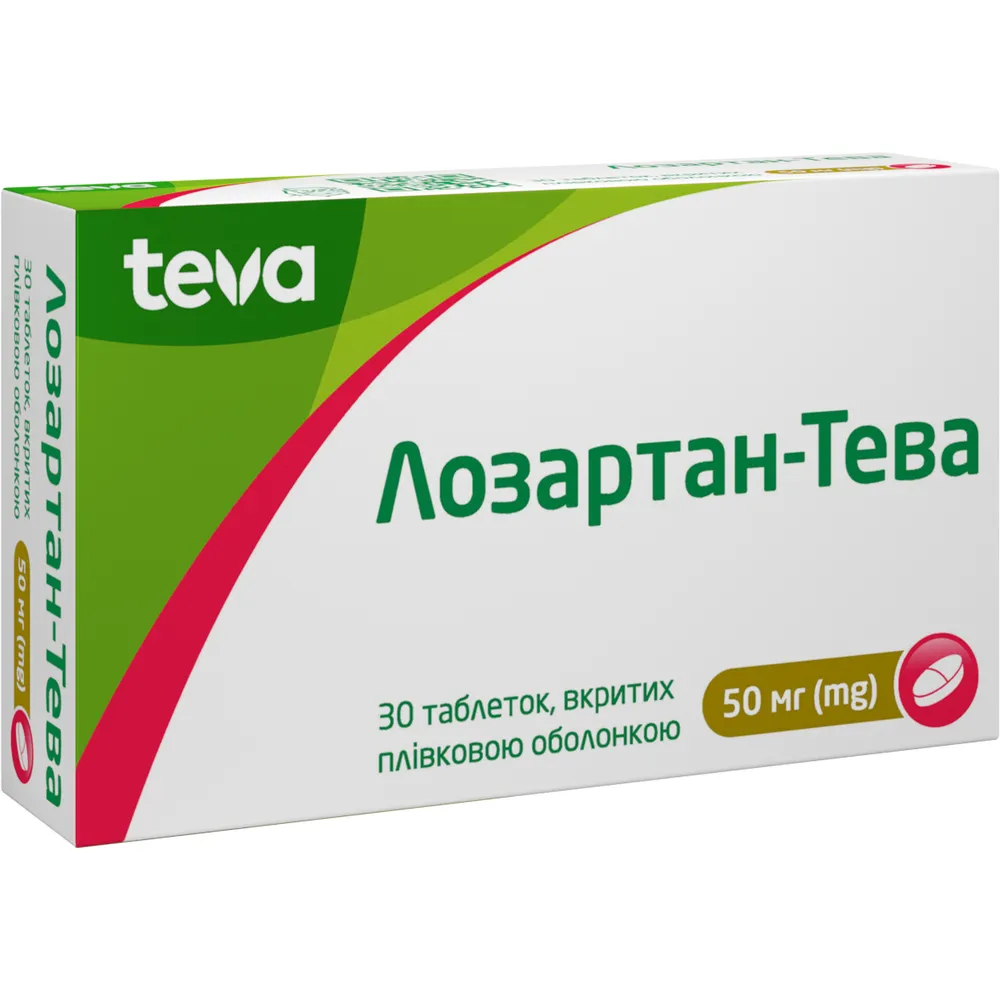
Table of Contents
INSTRUCTION FOR MEDICAL USE OF THE MEDICINAL PRODUCT LOSARTAN-TEVA (Losartan-Teva)
Composition:
Active substance: losartan potassium;
1 tablet contains 12.5 mg, or 25 mg, or 50 mg, or 100 mg of losartan potassium;
Excipients: lactose monohydrate, microcrystalline cellulose, pregelatinized starch (corn), magnesium stearate, polyvinyl alcohol partially hydrolyzed, titanium dioxide (E 171), macrogol 3350, talc.
Pharmaceutical form. Film-coated tablets.
Main physicochemical properties:
12.5 mg tablets: white, round, slightly biconvex film-coated tablets, with "L" imprinted on one side and smooth on the other;
25 mg tablets: white, oval, slightly biconvex film-coated tablets, with "2", a score line, and "5" imprinted on one side and a score line on the other;
50 mg tablets: white, oval, slightly biconvex film-coated tablets, with "50" imprinted on one side and a score line on the other;
100 mg tablets: white, oval, slightly biconvex film-coated tablets, with "100" imprinted on one side and a score line on the other.
Pharmacotherapeutic group. Angiotensin II receptor antagonists, plain. ATC code: C09CA01.
Pharmacological Properties
Pharmacodynamics
Losartan is a synthetic oral angiotensin II receptor antagonist (type AT1). Angiotensin II is a potent vasoconstrictor and the primary active hormone of the renin-angiotensin system, playing a key role in the pathophysiology of arterial hypertension. Angiotensin II binds to the AT1 receptor, which is present in many tissues (e.g., vascular smooth muscle, adrenal glands, kidneys, and heart), mediating several important biological effects, including vasoconstriction and aldosterone release. Angiotensin II also promotes proliferation of smooth muscle cells.
Losartan selectively binds to the AT1 receptor. Both in vitro and in vivo, losartan and its pharmacologically active carboxylic acid metabolite (E-3174) block all significant physiological effects of angiotensin II, regardless of the source or synthetic pathway of angiotensin II.
Losartan does not bind to or block other hormone receptors or ion channels important for cardiovascular regulation. Losartan does not inhibit angiotensin-converting enzyme (ACE) (kininase II), the enzyme responsible for bradykinin degradation. Therefore, bradykinin-mediated adverse reactions are not potentiated.
During treatment with losartan, the removal of the negative feedback effect of angiotensin II on renin secretion increases plasma renin activity (PRA). This increase in PRA leads to elevated plasma angiotensin II levels. Despite this rise, antihypertensive activity and suppression of plasma aldosterone concentration are maintained, indicating effective blockade of angiotensin II receptors. After discontinuation of losartan therapy, plasma renin activity and plasma angiotensin II levels return to baseline values within 3 days.
Both losartan and its main metabolite have higher affinity for AT1 receptors than for AT2 receptors. The active metabolite is 10 to 40 times more potent than losartan.
Clinical studies have shown that in patients with a history of cardiovascular or cerebrovascular disease or type 2 diabetes with evidence of target organ damage, combination therapy with ACE inhibitors and angiotensin II receptor antagonists provided no significant additional benefit on renal and/or cardiovascular outcomes or mortality compared to monotherapy. However, combination therapy was associated with an increased risk of hyperkalemia, acute kidney injury, and/or hypotension. Therefore, concomitant use of ACE inhibitors and angiotensin II receptor blockers is not recommended in patients with diabetic nephropathy.
In a study evaluating the combination of aliskiren with ACE inhibitors or angiotensin II receptor blockers in patients with type 2 diabetes and chronic kidney disease or cardiovascular disease, a high risk of adverse outcomes was observed, leading to early termination of the study. Stroke and cardiovascular mortality occurred more frequently in the aliskiren group compared to placebo. Additionally, adverse events and serious adverse reactions such as hyperkalemia, hypotension, and renal dysfunction were more common in patients receiving aliskiren than in the placebo group.
Pharmacokinetics
Absorption
After oral administration, losartan is well absorbed and undergoes first-pass metabolism, forming an active carboxylic acid metabolite and inactive metabolites. The systemic bioavailability of losartan tablets is approximately 33%. Mean peak concentrations of losartan and its active metabolite are reached at approximately 1 hour and 3–4 hours, respectively.
Distribution
Over 99% of losartan and its active metabolite are protein-bound in plasma, primarily to albumin. The volume of distribution of losartan is 34 liters.
Biotransformation
Approximately 14% of losartan is converted to its active metabolite after intravenous or oral administration. Following intravenous or oral administration of radiolabeled 14C-losartan potassium, circulating plasma radioactivity is primarily associated with losartan and its metabolite. Minimal conversion of losartan to its active metabolite occurs in approximately 1% of cases. In addition to the active metabolite, inactive metabolites are also formed.
Elimination
Plasma clearance of losartan and its active metabolite is 600 mL/min and 50 mL/min, respectively. Renal clearance of losartan and its active metabolite is approximately 74 mL/min and 26 mL/min, respectively. After oral administration, approximately 4% of the dose is excreted unchanged in urine and about 6% is excreted in urine as the active metabolite. The pharmacokinetic properties of losartan and its active metabolite are linear following oral doses of losartan potassium up to 200 mg.
After oral administration, plasma concentrations of losartan and its active metabolite decline polyexponentially, with terminal elimination half-lives of approximately 2 hours and 6–9 hours, respectively. At a dose of 100 mg once daily, neither losartan nor its active metabolite accumulates significantly in plasma.
Losartan and its metabolites are eliminated via both biliary and renal routes. After oral administration/intravenous infusion of 14C-labeled losartan, approximately 35%/43% of the radiolabeled dose was recovered in urine and 58%/50% in feces.
Special Patient Populations
Elderly patients. Plasma concentrations of losartan and its active metabolite in elderly patients with arterial hypertension do not differ significantly from those in younger hypertensive patients.
Gender. Plasma concentrations of losartan are approximately twice as high in women with arterial hypertension compared to men, whereas plasma concentrations of the active metabolite do not differ significantly between men and women.
Hepatic and renal impairment. Following oral administration, plasma concentrations of losartan and its active metabolite in patients with mild to moderate alcoholic cirrhosis of the liver are approximately 5 times and 1.7 times higher, respectively, than in young male volunteers.
Plasma concentrations of losartan in patients with creatinine clearance above 10 mL/min do not differ from those in individuals with normal renal function. The area under the concentration-time curve (AUC) of losartan in patients undergoing hemodialysis is approximately twice as high as in patients with normal renal function.
Plasma concentrations of the active metabolite are not altered in patients with renal impairment or in those undergoing hemodialysis.
Losartan and its active metabolite cannot be removed by hemodialysis.
Pharmacokinetics in Children
The pharmacokinetics of losartan were studied in 50 children with arterial hypertension aged 1 month to 16 years after once-daily oral administration at doses ranging from 0.54 mg/kg to 0.77 mg/kg (average doses).
Results showed that the active metabolite of losartan is formed in patients across all age groups. Pharmacokinetic parameters of losartan after oral administration in neonates, preschool, and school-aged children were similar.
Metabolite pharmacokinetic parameters showed greater variability depending on age group. These differences were statistically significant in preschool children and adolescents. Exposure was relatively high in neonates and young children.
Clinical characteristics.
Indications.
- Treatment of essential arterial hypertension in adults, as well as in children aged 6 years and older.
- Treatment of kidney disease in adult patients with arterial hypertension and type 2 diabetes mellitus with proteinuria ≥0.5 g per day – as part of combined antihypertensive therapy.
- Treatment of chronic heart failure in adults when the use of angiotensin-converting enzyme (ACE) inhibitors is considered impossible due to intolerance, particularly cough, or is contraindicated. Patients with heart failure whose condition has stabilized on ACE inhibitor therapy should not be switched to treatment with losartan. The patient's left ventricular ejection fraction should be ≤40%, the condition should be clinically stable, and the patient should be adhering to established treatment regimens for chronic heart failure.
- Reduction of the risk of stroke in adult patients with arterial hypertension and left ventricular hypertrophy confirmed by ECG.
Contraindications.
Hypersensitivity to the active substance or to any of the excipients of the medicinal product.
Pregnancy or planned pregnancy (see section "Use in pregnancy or breast-feeding").
Severe hepatic impairment.
Concomitant use of losartan with medicinal products containing aliskiren is contraindicated in patients with diabetes mellitus or renal impairment (glomerular filtration rate (GFR) <60 mL/min/1.73 m²).
Breast-feeding.
Children under 6 years of age.
Interaction with other medicinal products and other forms of interaction.
Other antihypertensive agents may enhance the hypotensive effect of losartan. Agents that may cause arterial hypotension include tricyclic antidepressants, antipsychotic agents, baclofen, and amifostine. Concomitant use of these agents with antihypertensive drugs increases the risk of arterial hypotension. Losartan is metabolized primarily via the cytochrome P450 (CYP) 2C9 system to form an active carboxylic acid metabolite. Fluconazole (a CYP2C9 inhibitor) has been reported to reduce exposure to the active metabolite by approximately 50%. Concomitant administration of losartan and rifampicin (an enzyme inducer) has been shown to reduce plasma concentrations of the active metabolite by 40%. The clinical significance of this effect is unknown. There is no difference in exposure when losartan is used concomitantly with fluvastatin (a weak CYP2C9 inhibitor).
As with other agents that block angiotensin II or its effects, concomitant use of agents that retain potassium in the body (e.g., potassium-sparing diuretics such as spironolactone, triamterene, amiloride) or that may increase potassium levels (such as heparin, trimethoprim-containing agents), potassium-containing supplements, or potassium-containing salt substitutes may lead to increased serum potassium levels. Concomitant use of such medicinal products is not recommended.
Reversible increases in serum lithium concentrations and the occurrence of lithium toxicity have been reported with concomitant use of lithium and ACE inhibitors. Such effects have also been reported very rarely with angiotensin II receptor antagonists. Concomitant treatment with lithium and losartan should be undertaken with caution. If use of this combination is considered necessary, monitoring of serum lithium levels during combination therapy is recommended.
When angiotensin II receptor antagonists are used concomitantly with non-steroidal anti-inflammatory drugs (NSAIDs) (e.g., selective cyclooxygenase-2 (COX-2) inhibitors, acetylsalicylic acid at anti-inflammatory doses, non-selective NSAIDs), the antihypertensive effect may be attenuated. Concomitant use of angiotensin II antagonists or diuretics with NSAIDs increases the risk of worsening renal function, including acute renal failure, and hyperkalemia, particularly in patients with pre-existing renal impairment. Such combinations should be used with caution, especially in elderly patients. Adequate hydration should be ensured, and monitoring of renal function after initiation of concomitant therapy, as well as periodically during treatment, may be advisable.
Clinical trial data have shown that dual blockade of the renin-angiotensin-aldosterone system (RAAS) by combined use of ACE inhibitors, angiotensin II receptor blockers, or aliskiren is associated with a higher frequency of adverse reactions such as hypotension, hyperkalemia, and impaired renal function (including acute renal failure), compared to use of a single agent acting on the RAAS.
Grapefruit juice contains components that inhibit CYP450 enzymes and may reduce the concentration of the active metabolite of losartan, potentially diminishing its therapeutic effect. Consumption of grapefruit juice should be avoided during losartan tablet intake.
Special precautions for use.
Hypersensitivity
Angioedema. Patients with a history of angioedema (facial, lip, throat, and/or tongue swelling) should be closely monitored.
Intestinal angioedema. Cases of intestinal angioedema have been reported in patients receiving treatment with angiotensin II receptor antagonists, including losartan (see section "Adverse reactions"). Patients presented with abdominal pain, nausea, vomiting, and diarrhea. Symptoms resolved after discontinuation of angiotensin II receptor antagonists. If intestinal angioedema is diagnosed, this medicinal product should be discontinued and appropriate monitoring initiated until complete symptom resolution.
Arterial hypotension and fluid-electrolyte imbalance
Symptomatic arterial hypotension, particularly after administration of the first dose or dose escalation, may occur in patients with reduced intravascular volume or sodium depletion caused by potent diuretics, dietary salt restriction, diarrhea, or vomiting. Such conditions should be corrected prior to initiating losartan therapy or require a lower starting dose. These recommendations also apply to children aged 6 years and older.
Electrolyte imbalance
Electrolyte imbalance is frequently observed in patients with renal dysfunction (with or without diabetes mellitus) and should be taken into account. In patients with type 2 diabetes mellitus and nephropathy, the incidence of hyperkalemia was higher with losartan treatment compared to placebo. Therefore, plasma potassium concentration and creatinine clearance should be monitored frequently, especially in patients with heart failure and creatinine clearance of 30–50 mL/min.
Concomitant use of losartan with potassium-sparing diuretics, potassium supplements, potassium-containing salt substitutes, or other medicinal products that may increase serum potassium levels (e.g., trimethoprim-containing medicines) is not recommended.
Hepatic impairment
Since pharmacokinetic data indicate a substantial increase in plasma losartan concentrations in patients with liver cirrhosis, dose reduction should be considered in patients with a history of hepatic impairment. There is no experience with therapeutic use of losartan in patients with severe hepatic impairment; therefore, losartan should not be administered to such patients.
Losartan is not recommended for use in children with hepatic impairment.
Renal impairment
Changes in renal function, including renal failure, have been reported and associated with inhibition of the renin-angiotensin-aldosterone system (RAAS), particularly in patients whose renal function depends on RAAS activity (e.g., patients with severe heart failure or pre-existing renal impairment). Medicinal products affecting the RAAS may increase blood urea and serum creatinine levels in patients with bilateral renal artery stenosis or stenosis of the artery to a solitary kidney. These changes in renal function may be reversible upon discontinuation of therapy. Losartan should be used with caution in patients with bilateral renal artery stenosis or stenosis of the artery to a solitary kidney.
Use in children with renal impairment
Losartan is not recommended for use in children with eGFR <30 mL/min/1.73 m² due to lack of relevant data.
Renal function should be monitored regularly during losartan therapy, as deterioration may occur. This is particularly important when losartan is used in the presence of other conditions (e.g., fever, dehydration) that may affect renal function.
Concomitant use of losartan and ACE inhibitors worsens renal function; therefore, this combination is not recommended.
Kidney transplantation
There are no data on the safety of administering the medicinal product to patients who have recently undergone kidney transplantation.
Primary hyperaldosteronism
Patients with primary hyperaldosteronism usually do not respond to antihypertensive agents acting via inhibition of the renin-angiotensin system. Therefore, losartan is not recommended for this patient group.
Coronary artery disease and cerebrovascular disease
As with other antihypertensive agents, excessive reduction in blood pressure in patients with ischemic coronary artery disease or cerebrovascular disease may lead to myocardial infarction or stroke.
Heart failure
As with other agents affecting the RAAS, in patients with heart failure with or without renal impairment, there is a risk of developing severe arterial hypotension and renal dysfunction (often acute).
There is insufficient therapeutic experience with losartan in patients with heart failure and concomitant severe renal impairment, patients with severe heart failure (NYHA class IV), and patients with heart failure and symptomatic, life-threatening cardiac arrhythmias. Therefore, losartan should be used with caution in such patients. Concomitant use of losartan with β-blockers should be done cautiously.
Aortic and mitral valve stenosis, obstructive hypertrophic cardiomyopathy
As with other vasodilators, losartan should be prescribed with particular caution in patients with aortic or mitral valve stenosis and obstructive hypertrophic cardiomyopathy.
Dual blockade of the RAAS
Evidence indicates that concomitant use of ACE inhibitors, angiotensin II receptor blockers, or aliskiren increases the risk of hypotension, hyperkalemia, and renal impairment (including acute renal failure). Therefore, dual blockade of the RAAS by combining ACE inhibitors, angiotensin II receptor blockers, or aliskiren is not recommended.
In exceptional cases where dual blockade is considered absolutely necessary, it should be performed only under specialist supervision with close monitoring of renal function, fluid-electrolyte balance, and blood pressure. ACE inhibitors and angiotensin II receptor blockers should not be co-administered to patients with diabetic nephropathy.
Pregnancy
Losartan should not be used in pregnant women or women planning to become pregnant. Unless losartan therapy is considered essential, patients planning pregnancy should be switched to alternative antihypertensive therapy with an established safety profile during pregnancy. If pregnancy is diagnosed, losartan treatment should be discontinued immediately and, if necessary, alternative therapy initiated (see sections "Contraindications" and "Use during pregnancy or breastfeeding").
Other precautions
Losartan and other angiotensin antagonists are less effective in reducing blood pressure in black patients compared to other patients, possibly due to lower renin activity in black patients with arterial hypertension.
Losartan-Teva contains lactose. Patients with rare hereditary problems of galactose intolerance, total lactase deficiency, or glucose-galactose malabsorption should not take this medicinal product.
Use during pregnancy or breastfeeding.
Pregnancy
Contraindicated in pregnant women and women planning to become pregnant.
Women planning pregnancy should be switched to alternative antihypertensive agents with an established safety profile during pregnancy. Upon confirmation of pregnancy, losartan treatment should be discontinued immediately and, if needed, alternative therapy initiated.
It has been established that use of angiotensin II receptor antagonists during the second and third trimesters of pregnancy induces fetotoxicity (impaired renal function, oligohydramnios, delayed skull ossification) and neonatal toxicity (renal failure, arterial hypotension, hyperkalemia) in humans.
If losartan was used from the second trimester of pregnancy onward, ultrasound monitoring of fetal renal function and skull ossification is recommended.
Infants whose mothers took losartan during pregnancy should be closely observed for signs of arterial hypotension.
Breastfeeding
Losartan should not be used during breastfeeding. During lactation, alternative medicinal products with a better-established safety profile for use during breastfeeding should be prescribed.
Ability to influence the ability to drive and use machines.
No studies on the effect of the medicinal product on the ability to drive and use machines have been conducted. However, the possibility of adverse reactions such as dizziness and somnolence, especially at the beginning of treatment and during dose escalation, should be considered.
Dosage and Administration
Losartan tablets should be taken with a glass of water. The drug can be administered regardless of food intake.
Arterial Hypertension
The usual initial and maintenance dose for most patients is 50 mg once daily. The maximum antihypertensive effect is achieved within 3–6 weeks after the start of treatment. For some patients, increasing the dose to 100 mg once daily (in the morning) may be beneficial.
Losartan may be used in combination with other antihypertensive agents, particularly diuretics (e.g., hydrochlorothiazide).
Patients with arterial hypertension and type 2 diabetes mellitus with proteinuria ≥0.5 g/day
The recommended initial dose is 50 mg once daily. The dose may be increased to 100 mg once daily depending on blood pressure levels after 1 month of treatment. Losartan may be used concomitantly with other antihypertensive agents (e.g., diuretics, calcium channel blockers, α- or β-blockers, centrally acting agents), as well as with insulin and other antidiabetic agents (e.g., sulfonylureas, glitazones, and alpha-glucosidase inhibitors).
Heart Failure
For patients with chronic heart failure, the recommended initial dose of losartan is 12.5 mg once daily. The dose is usually titrated at weekly intervals (12.5 mg/day, 25 mg/day, 50 mg/day, up to a maximum of 150 mg once daily) depending on individual tolerability.
Reduction of stroke risk in patients with arterial hypertension and left ventricular hypertrophy confirmed by ECG
The recommended initial dose is 50 mg of losartan once daily. Depending on blood pressure response, low-dose hydrochlorothiazide may be added and/or the losartan dose increased to 100 mg once daily.
Special Patient Groups
Use in patients with reduced circulating blood volume (CBV)
Patients with reduced CBV (e.g., due to high-dose diuretic therapy) should start treatment with 25 mg of losartan once daily.
Use in patients with renal impairment and patients undergoing hemodialysis
No initial dose adjustment is required when administering losartan to patients with renal impairment or those undergoing hemodialysis.
Use in patients with hepatic impairment
A lower starting dose should be considered for patients with a history of hepatic impairment. There is no experience with losartan in patients with severe hepatic impairment; therefore, losartan is contraindicated in such patients.
Use in children (aged 6 to 18 years)
For children who can swallow tablets and whose body weight is above 20 kg and below 50 kg, the recommended dose is 25 mg once daily. In exceptional cases, the dose may be increased to a maximum of 50 mg once daily. Dose adjustments should be based on blood pressure response.
For patients with body weight above 50 kg, the recommended dose is 50 mg once daily. In exceptional cases, the dose may be increased to a maximum of 100 mg once daily. Doses exceeding 1.4 mg/kg or 100 mg daily have not been studied in children.
Losartan is not recommended for children under 6 years of age due to insufficient data on its use in this patient group.
The drug is not recommended for children with eGFR <30 mL/min/1.73 m² due to lack of relevant data.
Losartan is also not recommended for children with hepatic impairment.
Use in elderly patients
Dose adjustment is generally not required in elderly patients. However, an initial dose of 25 mg may be considered for patients over 75 years of age.
Children.
Losartan is not recommended for children under 6 years of age due to limited data in this patient group.
Overdose.
Symptoms. Data on losartan overdose are limited. Depending on the degree of intoxication, symptoms such as arterial hypotension, tachycardia, or bradycardia (possibly due to parasympathetic [vagal] stimulation) may occur.
Treatment. Management depends on the time elapsed since drug ingestion, and the nature and severity of symptoms. In case of symptomatic hypotension, supportive therapy should be initiated. The primary goal is stabilization of cardiovascular function. After oral overdose, activated charcoal should be administered in an appropriate dose. Vital signs should be monitored and corrected as needed. Neither losartan nor its active metabolite is significantly removed by hemodialysis.
Adverse Reactions
The most common adverse event observed during losartan administration was dizziness.
Adverse reactions are categorized by frequency as follows: very common (≥1/10); common (≥1/100, <1/10); uncommon (≥1/1000, <1/100); rare (≥1/10,000, <1/1000); very rare (<1/10,000); frequency not known (cannot be estimated from available data).
Table 1.
Frequency of adverse reactions identified in placebo-controlled clinical trials and during post-marketing use of losartan
| Adverse reaction |
Frequency of adverse reactions in various indications |
Other |
||||
| Arterial hypertension |
Patients with arterial hypertension and left ventricular hypertrophy |
Chronic heart failure |
Arterial hypertension and type 2 diabetes with renal disease |
Post-marketing experience |
||
| Blood and lymphatic system disorders |
||||||
| anemia |
common |
frequency unknown |
||||
| thrombocytopenia |
frequency unknown |
|||||
| Immune system disorders |
||||||
| hypersensitivity reactions, anaphylactic reactions, angioedema* and vasculitis** |
uncommon |
|||||
| Psychiatric disorders |
||||||
| depression |
frequency unknown |
|||||
| Nervous system disorders |
||||||
| dizziness |
common |
common |
common |
common |
||
| sleepiness |
uncommon |
|||||
| headache |
uncommon |
uncommon |
||||
| sleep disturbance |
uncommon |
|||||
| paraesthesia |
rare |
|||||
| migraine |
frequency unknown |
|||||
| dysgeusia |
frequency unknown |
|||||
| Ear and labyrinth disorders |
||||||
| vertigo |
common |
common |
||||
| tinnitus |
frequency unknown |
|||||
| Cardiac disorders |
||||||
| palpitations |
uncommon |
|||||
| angina pectoris |
uncommon |
|||||
| syncope |
rare |
|||||
| atrial fibrillation |
rare |
|||||
| acute cerebrovascular accident |
rare |
|||||
| Vascular disorders |
||||||
| (orthostatic) hypotension (including dose-dependent orthostatic effects)II |
uncommon |
common |
common |
|||
| Respiratory, thoracic and mediastinal disorders |
||||||
| dyspnea |
uncommon |
|||||
| cough |
uncommon |
frequency unknown |
||||
| Gastrointestinal disorders |
||||||
| abdominal pain |
uncommon |
|||||
| constipation |
uncommon |
|||||
| diarrhea |
uncommon |
frequency unknown |
||||
| nausea |
uncommon |
|||||
| vomiting |
uncommon |
|||||
| intestinal angioedema |
rare |
|||||
| Hepatobiliary disorders |
||||||
| pancreatitis |
frequency unknown |
|||||
| hepatitis |
rare |
|||||
| liver function disorders |
frequency unknown |
|||||
| Skin and subcutaneous tissue disorders |
||||||
| urticaria |
uncommon |
frequency unknown |
||||
| pruritus |
uncommon |
frequency unknown |
||||
| rash |
uncommon |
uncommon |
frequency unknown |
|||
| photosensitivity |
frequency unknown |
|||||
| Musculoskeletal and connective tissue disorders |
||||||
| myalgia |
frequency unknown |
|||||
| arthralgia |
frequency unknown |
|||||
| rhabdomyolysis |
frequency unknown |
|||||
| Renal and urinary disorders |
||||||
| renal function abnormalities |
common |
|||||
| renal failure |
common |
|||||
| Reproductive system disorders |
||||||
| erectile dysfunction/impotence |
frequency unknown |
|||||
| General disorders |
||||||
| asthenia |
uncommon |
common |
uncommon |
common |
||
| fatigue |
uncommon |
common |
uncommon |
common |
||
| edema |
uncommon |
|||||
| malaise |
frequency unknown |
|||||
| Investigations |
||||||
| hyperkalemia |
common |
uncommon† |
common‡ |
|||
| elevation of alanine aminotransferase (ALT)§ |
rare |
|||||
| increased blood urea, serum creatinine and serum potassium levels |
common |
|||||
| hyponatremia |
frequency unknown |
|||||
| hypoglycemia |
common |
|||||
*Including angioedema of the larynx, glottis, face, lips, pharynx, and/or tongue (which may cause airway obstruction); in some of these patients, there have been reports of a history of angioneurotic edema associated with the use of other medicinal products, including ACE inhibitors.
**Including Henoch–Schönlein purpura.
ІІ Particularly in patients with reduced blood volume, such as those with severe heart failure or those receiving high doses of diuretics.
†This adverse reaction was more frequent among patients receiving 150 mg of losartan than among those receiving 50 mg.
‡In a clinical study involving patients with type 2 diabetes and nephropathy, hyperkalemia (> 5.5 mmol/L) was observed in 9.9% of patients receiving losartan tablets and in 3.4% of patients receiving placebo.
§Usually resolves after discontinuation of treatment.
Additional adverse reactions occurred more frequently in patients treated with losartan than in those receiving placebo (frequency not known): back pain, urinary tract infections, and influenza-like symptoms.
Renal and urinary disorders. As a result of RAAS inhibition, changes in renal function, including renal failure, have been observed in patients at increased risk. These changes may be reversible and resolve after discontinuation of therapy.
Children. The adverse reaction profile in children and adolescents is similar to that in adults. Data on the use of the drug in children are limited.
Shelf life. 3 years.
Storage conditions. Store at temperatures not exceeding 25 °C. Keep out of reach of children.
Packaging. 10 tablets per blister; 3 blisters per cardboard box (tablets of 12.5 mg, 25 mg, 50 mg, or 100 mg) or 9 blisters per cardboard box (tablets of 50 mg or 100 mg).
Prescription category. Prescription only.
Manufacturers. JSC Pharmaceutical Plant Teva.
Teva Pharma S.L.U.
Manufacturers' addresses and locations of their operations.
Site 1; H-4042 Debrecen, Pallagi Street 13, Hungary.
Poligono Industrial Malpica c/C No. 4, 50016, Zaragoza, Spain.