Lanza
Ukraine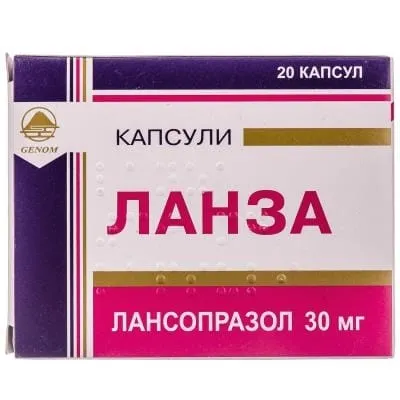
Table of Contents
INSTRUCTIONS FOR MEDICAL USE OF THE MEDICINAL PRODUCT LANZA (LANZA)
Composition:
Active substance: lansoprazole;
1 capsule contains lansoprazole 30 mg;
Excipients: sugar pellets, sucrose, mannitol (E 421), sodium dihydrogen phosphate dihydrate, light magnesium carbonate, polysorbate 80, calcium carmellose, povidone;
Capsule shell: hypromellose, hypromellose phthalate, titanium dioxide (E 171), cetyl alcohol.
Pharmaceutical form. Capsules.
Main physicochemical properties: white or almost white capsules containing white to almost white granules.
Pharmacotherapeutic group. Drugs for the treatment of peptic ulcer and gastroesophageal reflux disease. Proton pump inhibitors.
ATC code A02BC03.
Pharmacological properties.
Pharmacodynamics
Lansoprazole is a proton pump inhibitor of the gastric mucosa. Lansoprazole inhibits the final stage of gastric acid secretion by slowing the activity of H+/K+-ATPase in the parietal cells of the gastric mucosa. The inhibition is dose-dependent and reversible, and affects both basal and stimulated gastric acid secretion. Lansoprazole accumulates in parietal cells and is converted into its active form in their acidic environment, thereby reacting with the sulfhydryl group of H+/K+-ATPase, resulting in inhibition of the enzyme's activity.
Effect on gastric acid secretion
Lansoprazole is a specific inhibitor of the proton pump in parietal cells. A single oral dose of lansoprazole 30 mg inhibits pentagastrin-stimulated gastric acid secretion by approximately 80%. Repeated administration of the drug over 7 days results in inhibition of gastric acid secretion by 90%. Lansoprazole also appropriately affects basal gastric acid secretion. A single oral dose of 30 mg reduces basal secretion by approximately 70%, leading to symptom relief in patients after the first dose. After 8 days of repeated administration, basal secretion is reduced by approximately 85%. Rapid symptom relief occurs after taking one capsule (30 mg) once daily; in most patients with duodenal ulcer, relief occurs within 2 weeks, and in patients with gastric ulcer and esophageal reflux – within 4 weeks. Due to reduced gastric acidity, lansoprazole creates an environment in which certain antibiotics are effective against Helicobacter pylori.
Pharmacokinetics
Lansoprazole is a racemate of two active enantiomers, which are biologically transformed into the active form in the acidic environment of gastric parietal cells. Since lansoprazole is rapidly inactivated by gastric juice, it should be administered orally in an enteric-coated dosage form to ensure systemic absorption.
Absorption and distribution
Lansoprazole exhibits high bioavailability (80–90%) after a single dose. Maximum plasma concentration is reached within 1.5–2 hours. Food intake slows the absorption of lansoprazole and reduces bioavailability by approximately 50%. Plasma protein binding of the drug is 97%.
Studies have shown that administration of the contents of opened capsules, as well as administration of intact capsules, resulted in the same AUC as when dissolving the capsule contents in a small amount of orange, apple, or tomato juice mixed with a spoonful of apple or pear juice, or when mixed with a spoonful of yogurt, pudding, or cottage cheese. Similar AUC was observed when the capsule contents were dissolved in apple juice and administered via a nasogastric tube.
Biotransformation and elimination
The majority of lansoprazole is rapidly metabolized in the liver, and metabolites are excreted via the kidneys and bile. Lansoprazole metabolism occurs primarily via the enzymes CYP2C19 and CYP3A4. The plasma half-life of lansoprazole is 1–2 hours after single and multiple doses in healthy volunteers. Data on accumulation of the substance after multiple doses in healthy volunteers are lacking. In plasma, sulfone, sulfide, and 5-hydroxy derivatives of lansoprazole have been identified. These metabolites exhibit minimal or no antisecretory activity.
Results from studies with 14C-labeled lansoprazole indicate that approximately one-third of the radioactive dose is excreted in urine and two-thirds in feces.
Pharmacokinetics in elderly patients
Lansoprazole clearance is reduced in elderly patients, and the elimination half-life is prolonged by approximately 50–100%. Maximum plasma concentration in elderly patients is not increased.
Pharmacokinetics in children
Pharmacokinetic studies in children aged 1–17 years showed a similar effect compared to adults when administering doses of 15 mg to children with body weight below 30 kg and 30 mg to children with body weight above 30 kg. Doses of 17 mg/m² body surface area or 1 mg/kg body weight were also studied to evaluate the effect of lansoprazole in children aged 2–3 months to 1 year compared to adults.
A greater effect of lansoprazole was observed in infants under 2–3 months of age compared to adults when single doses of 1 mg/kg and 0.5 mg/kg body weight were administered.
Pharmacokinetics in patients with hepatic impairment
The effect of lansoprazole is doubled in patients with mild hepatic impairment and significantly increased in patients with moderate and severe hepatic impairment.
Poor metabolizers of CYP2C19
CYP2C19 is subject to genetic polymorphism, and 2–6% of the population with the poor metabolizer genotype are homozygous for the mutant CYP2C19 allele and therefore lack functional CYP2C19 enzyme. The effect of lansoprazole is several times higher in patients with the poor metabolizer genotype compared to patients with the extensive metabolizer genotype.
Clinical characteristics.
Indications.
− Benign peptic ulcer of the stomach and duodenum, including that associated with the use of nonsteroidal anti-inflammatory drugs (NSAIDs);
− gastroesophageal reflux disease;
− Zollinger–Ellison syndrome;
− for eradication of Helicobacter pylori (in combination with antibiotics).
Contraindications.
− Hypersensitivity to lansoprazole or to any other component of the medicinal product;
− concomitant use with atazanavir;
− malignant neoplasms of the gastrointestinal tract.
Interaction with other medicinal products and other forms of interactions.
Effect of lansoprazole on the action of other medicinal products
Medicinal products with pH-dependent absorption
Lansoprazole may affect the absorption of other medicinal products whose absorption depends on gastric pH.
HIV protease inhibitors
Concomitant use of lansoprazole and HIV protease inhibitors whose absorption depends on gastric juice pH, such as atazanavir, is contraindicated, and nelfinavir is not recommended due to a significant reduction in their bioavailability (see section "Special precautions for use").
Studies in healthy volunteers have shown that concomitant administration of lansoprazole (60 mg daily) and atazanavir (400 mg) significantly reduced atazanavir exposure (approximately 90% for AUC and Cmax).
Ketoconazole and itraconazole
Absorption of ketoconazole and itraconazole increases in the presence of gastric acid. Concomitant use with lansoprazole may lead to subtherapeutic concentrations of ketoconazole and itraconazole. Therefore, such combination should be avoided.
Digoxin
Concomitant use of lansoprazole and digoxin may increase digoxin plasma levels. Therefore, digoxin plasma levels should be closely monitored, and digoxin dosage adjusted as necessary at the beginning and end of lansoprazole treatment.
Methotrexate
Concomitant use with high-dose methotrexate may increase and prolong serum levels of methotrexate and/or its metabolites, which may lead to methotrexate toxicity.
Warfarin
Concomitant administration of lansoprazole 60 mg and warfarin did not affect the pharmacokinetics of warfarin or the international normalized ratio (INR). However, there have been reports of increased INR and prothrombin time with concomitant use of proton pump inhibitors and warfarin. Increased INR and prothrombin time may lead to pathological bleeding and even fatal outcomes. Careful monitoring of INR and prothrombin time is required when lansoprazole is used concomitantly with warfarin.
Medicinal products metabolized by CYP450 enzymes
Lansoprazole may increase plasma concentrations of drugs metabolized by CYP3A4. Caution is required when prescribing lansoprazole in combination with medicinal products dependent on CYP3A4 metabolism and having a narrow "therapeutic window."
Theophylline
A slight decrease in plasma theophylline concentration has been observed with concomitant use of lansoprazole and theophylline, which may lead to reduced expected clinical effect. Patients should be monitored when lansoprazole and theophylline are used concomitantly.
Tacrolimus
Concomitant use of lansoprazole and tacrolimus [a substrate of CYP3A and P-glycoprotein (P-gp)] may increase tacrolimus exposure by up to 81%. Therefore, plasma levels of tacrolimus should be monitored at the start and after discontinuation of combination therapy with lansoprazole.
Medicinal products transported by P-glycoprotein
In vitro studies indicate that lansoprazole inhibits P-glycoprotein (P-gp) transport proteins. The clinical significance of this phenomenon is unknown.
Effect of other medicinal products on the action of lansoprazole
Medicinal products that inhibit CYP2C19
Fluvoxamine
Concomitant use of lansoprazole with the CYP2C19 inhibitor fluvoxamine results in a significant increase (4-fold) in lansoprazole plasma concentration—dose reduction should be considered.
Inducers of CYP2C19 and CYP3A4
Enzyme inducers affecting CYP2C19 and CYP3A4, such as rifampicin and St. John's wort (Hypericum perforatum), may significantly reduce lansoprazole plasma concentrations.
Others
Sucralfate and antacid medicinal products may reduce lansoprazole bioavailability; therefore, lansoprazole should be taken at least 1 hour after administration of these agents.
No clinically significant interaction between lansoprazole and nonsteroidal anti-inflammatory drugs has been identified, although such interactions have not been studied.
Special precautions for use
Before prescribing the medicinal product, malignancies of the stomach and oesophagus should be excluded, as the drug may mask symptoms and thereby delay the establishment of an accurate diagnosis. Therefore, endoscopic monitoring with biopsy should be performed before initiating and after completing treatment with lansoprazole.
Acute tubulointerstitial nephritis has been observed in patients receiving lansoprazole. Acute tubulointerstitial nephritis may develop at any time during lansoprazole treatment (see section "Adverse reactions").
Acute tubulointerstitial nephritis may progress to renal failure.
If acute tubulointerstitial nephritis is suspected, lansoprazole should be discontinued immediately and appropriate treatment initiated without delay.
Lansoprazole, like other proton pump inhibitors, may increase the number of microorganisms in the gastrointestinal tract. This increases the risk of gastrointestinal infections caused by opportunistic pathogens such as Salmonella, Campylobacter, and Clostridium difficile, particularly in hospitalized patients.
Concomitant use of lansoprazole and HIV protease inhibitors is not recommended. Since the concentrations of atazanavir and nelfinavir depend on gastric acidity, their bioavailability may be significantly reduced (see section "Interaction with other medicinal products and other forms of interaction"). If concomitant use of lansoprazole with HIV protease inhibitors is necessary, careful monitoring of the patient is recommended.
Severe hypomagnesaemia has been reported in patients treated with proton pump inhibitors such as lansoprazole for at least 3 months, in most cases after a year of treatment. Severe manifestations of hypomagnesaemia such as fatigue, muscle spasms, confusion, convulsions, dizziness, and ventricular arrhythmias may occur, and symptoms may appear suddenly. In most patients, symptoms of hypomagnesaemia resolved after magnesium replacement therapy and/or discontinuation of the proton pump inhibitor.
For patients who will receive long-term therapy or who are taking proton pump inhibitors concomitantly with digoxin or other medicinal products that may cause hypomagnesaemia (e.g., diuretics), serum magnesium levels should be measured before starting proton pump inhibitor therapy and periodically during treatment.
Serum chromogranin A (CgA) levels may increase during lansoprazole therapy, which may interfere with tests for neuroendocrine tumours. To avoid this interference, lansoprazole therapy should be discontinued at least 5 days before measuring CgA levels. Temporary discontinuation of proton pump inhibitor therapy for at least 14 days before retesting is required if initial CgA and gastrin levels are elevated.
Daily use of any medicinal product that suppresses gastric acid secretion over a prolonged period (e.g., several years) may lead to malabsorption of cyanocobalamin (vitamin B12), hypo- or achlorhydria. This should be considered when treating patients with Zollinger-Ellison syndrome and other hypersecretory conditions requiring long-term therapy, underweight patients, or those with risk factors for reduced vitamin B12 absorption (e.g., elderly patients), particularly if therapy is long-term or clinical symptoms associated with cyanocobalamin deficiency are present.
Lansoprazole should be prescribed with caution in patients with moderate to severe hepatic impairment.
Lansoprazole reduces gastric acidity, thereby increasing the risk of gastrointestinal infections caused by opportunistic pathogens such as Salmonella and Campylobacter. In treating patients with gastric and duodenal ulcers, Helicobacter pylori infection should be considered as a possible etiological factor. If lansoprazole is used in combination with antibiotics for Helicobacter pylori eradication therapy, the instructions for medical use of these medicinal products should be followed.
Due to limited safety data on the use of lansoprazole as maintenance therapy for longer than 1 year, the risk-benefit ratio should be regularly reassessed in this patient group.
In rare cases, colitis may occur during lansoprazole treatment. Therefore, therapy should be discontinued immediately if patients develop acute or persistent diarrhoea.
Except in patients who have undergone Helicobacter pylori eradication, lansoprazole therapy should be discontinued immediately in cases of severe persistent diarrhoea, as there is a risk of developing microscopic colitis with submucosal collagen layer thickening or inflammatory cell infiltration of the colonic submucosa. In most cases, symptoms of microscopic colitis resolve after discontinuation of the drug.
Treatment and prevention of peptic ulcer should be limited to patients who require long-term NSAID therapy or who are at risk, for example due to gastrointestinal bleeding, perforation, or history of ulcers, advanced age, concomitant use of medicinal products that increase the risk of upper gastrointestinal disorders (corticosteroids or anticoagulants), presence of severe comorbidities, or long-term use of maximum recommended NSAID doses.
Proton pump inhibitors, particularly those used at high doses and for prolonged periods (more than 1 year), are associated with a slightly increased risk of fractures of the hip, wrist, or spine, especially in elderly patients or those with other risk factors. Experimental study results indicate that proton pump inhibitors may increase the overall fracture risk by 10–40%. Some of these cases may be attributable to other risk factors. Patients at risk of osteoporosis should be monitored according to current clinical guidelines and should consume adequate amounts of calcium and vitamin D.
The use of proton pump inhibitors has been associated with very rare cases of subacute cutaneous lupus erythematosus. If skin lesions develop, particularly in sun-exposed areas, and are accompanied by arthralgia, patients should seek immediate medical advice, and discontinuation of the drug should be considered. Development of subacute cutaneous lupus erythematosus during previous proton pump inhibitor therapy increases the risk of recurrence with other proton pump inhibitors.
Excipients
The medicinal product contains sucrose. It should not be used in patients with rare hereditary fructose intolerance, glucose-galactose malabsorption syndrome, or sucrase-isomaltase deficiency.
Use during pregnancy or breastfeeding
Pregnancy
Studies on the use of lansoprazole in pregnant women have not been conducted. Animal studies investigating effects on reproductive function revealed no adverse effects on embryonic/fetal development following oral administration of lansoprazole.
Lansoprazole is contraindicated during pregnancy.
Breastfeeding
There are no data on the excretion of lansoprazole in human breast milk. Animal studies have shown that lansoprazole is present in animal milk. The decision to continue or discontinue breastfeeding or to continue or discontinue lansoprazole therapy should be made considering the benefits of breastfeeding for the child and the benefits of lansoprazole therapy for the woman.
Fertility
There are no data on the effect of lansoprazole on human fertility. In animal studies, lansoprazole did not impair fertility.
Ability to affect reaction speed when driving or operating machinery
When driving or operating machinery, the possibility of adverse reactions affecting the nervous system and vision, such as dizziness, vertigo, visual disturbances, and somnolence, should be taken into account. In such conditions, reaction ability may be reduced.
Method of Administration and Dosage
For oral use in adults. The usual dose is 30 mg once daily, taken 30–40 minutes before a meal. Capsules should be swallowed whole with 150–200 ml of water, without chewing. If this is not possible, the capsule may be opened, and its contents dispersed in a small amount of apple juice (approximately 1 tablespoon), then immediately swallowed without chewing. The same procedure should be followed if the drug is administered via a nasogastric tube.
Dosage and duration of treatment are determined individually by a physician, depending on the clinical situation and the nature of the disease course.
The maximum daily dose of the drug is 60 mg; for patients with impaired liver function – 30 mg. For patients with Zollinger–Ellison syndrome, doses may be increased.
If two daily doses are required, the patient should take one dose before breakfast and the other before dinner.
If the patient misses a dose, it should be taken as soon as possible. However, if it is close to the time for the next dose, the patient should not take the missed dose.
Peptic Duodenal Ulcer
The dose for treatment of active ulcer is 30 mg once daily for 2–4 weeks. The dose for treatment of ulcers caused by NSAID use is 30 mg once daily. Treatment lasts 4–8 weeks.
Benign Gastric Ulcer
The dose for treatment of active ulcer is 30 mg once daily for 8 weeks. The dose for treatment of ulcers caused by NSAID use is 30 mg once daily for 4–8 weeks.
Gastroesophageal Reflux Disease (GERD)
For moderate to severe forms, the recommended dose is 30 mg once daily for 4 weeks. If erosive esophagitis is not healed within 4 weeks, the treatment duration may be doubled. The dose for long-term prevention of recurrent erosive esophagitis is 30 mg once daily. The safety and efficacy of maintenance therapy with lansoprazole have been established for up to 12 months of treatment.
Helicobacter pylori Eradication
The dose is 30 mg of the drug twice daily (before breakfast and before dinner). The patient must take the drug in combination with antibiotics according to approved regimens for 1–2 weeks.
Zollinger–Ellison Syndrome
The drug dosage should be individually adjusted so that basal acid secretion does not exceed 10 mmol/h. The recommended initial dose is 60 mg once daily before breakfast. If the patient requires doses exceeding 120 mg daily, the first half of the daily dose should be taken before breakfast and the second half before dinner. Treatment continues until clinical indications resolve.
Impaired Liver and Kidney Function
Patients with mild to moderate liver or kidney dysfunction do not require dose adjustment.
Patients with severe liver impairment should receive the lowest effective dose, but not exceeding 30 mg daily.
Elderly Patients
No dose adjustment is necessary when using the drug in elderly patients.
Children
Lansoprazole is not intended for use in children.
Overdose
Symptoms of lansoprazole overdose in humans are unknown (although acute toxicity is expected to be low). However, during studies with oral doses up to 180 mg daily or intravenous doses up to 90 mg, no adverse reactions were observed.
In case of overdose, an increase in the severity of adverse reactions may occur (see section "Adverse Reactions").
In the event of overdose, patient monitoring is required. Hemodialysis is ineffective. Activated charcoal should be administered to reduce drug absorption. In case of excessive intake, symptomatic and supportive treatment should be administered.
Adverse reactions.
Adverse reactions are listed by organ systems and categorized by frequency of occurrence:
common (≥1/100, <1/10); uncommon (≥1/1000, <1/100); rare (≥1/10000, <1/1000); very rare (<1/10000); unknown (cannot be estimated from the available data).
| Body systems |
Frequency of occurrence |
Adverse reactions |
| Blood and lymphatic system disorders |
Uncommon |
Thrombocytopenia, eosinophilia, leukopenia |
| Rare |
Anemia |
|
| Very rare |
Agranulocytosis, pancytopenia |
|
| Immune system disorders |
Very rare |
Anaphylactic shock |
| Metabolism and nutrition disorders |
Not known |
Hypomagnesemia (see section "Special precautions"), hypocalcemia, hypokalemia |
| Psychiatric disorders |
Uncommon |
Depression |
| Rare |
Insomnia, hallucinations, confusion |
|
| Not known |
Visual hallucinations |
|
| Nervous system disorders |
Common |
Headache, dizziness |
| Rare |
Increased excitability, vertigo, paresthesia, somnolence, tremor |
|
| Eye disorders |
Rare |
Visual disturbances |
| Gastrointestinal disorders |
Common |
Vomiting, diarrhea, abdominal pain, constipation, flatulence, dry mouth/thirst, fundic gland polyps (benign) |
| Rare |
Glossitis, candidiasis of the mucous membranes of the gastrointestinal tract, pancreatitis, taste alterations |
|
| Very rare |
Colitis, stomatitis |
|
| Hepatobiliary disorders |
Common |
Elevated liver enzymes |
| Rare |
Hepatitis, jaundice |
|
| Skin and subcutaneous tissue disorders |
Common |
Urticaria, pruritus, rash |
| Rare |
Petechiae, purpura, alopecia, erythema multiforme, photosensitivity |
|
| Very rare |
Stevens-Johnson syndrome, toxic epidermal necrolysis |
|
| Not known |
Subacute cutaneous lupus erythematosus (see section "Special precautions") |
|
| Musculoskeletal and connective tissue disorders |
Uncommon |
Arthralgia, myalgia, fractures of the femur, wrist or spine (see section "Special precautions") |
| Renal and urinary disorders |
Rare |
Tubulointerstitial nephritis (with possible progression to renal failure) |
| Reproductive system and breast disorders |
Rare |
Gynecomastia |
| General disorders and administration site conditions |
Common |
Increased fatigue |
| Uncommon |
Angioneurotic edema |
|
| Rare |
Fever, hyperhidrosis, angioneurotic edema, anorexia, impotence |
|
| Laboratory investigations |
Very rare |
Elevated cholesterol and triglyceride levels, hyponatremia |
Reporting of suspected adverse reactions.
Reporting of suspected adverse reactions after marketing authorization of a medicinal product is of great importance. It enables continuous monitoring of the benefit-risk balance of the medicinal product. Healthcare professionals should report any suspected adverse reactions through the national reporting system.
Shelf life. 2 years.
Storage conditions.
Store in the original packaging at a temperature not exceeding 25 °C, in a place inaccessible to children.
Packaging.
10 capsules per blister; 2 blisters per cardboard box.
Prescription status.
Prescription only.
Manufacturer.
Genome Biotech Pvt. Ltd.
Manufacturer's address and location of operations.
Plot No. D-121, 122, 123, MIDC Malegaon, Tal. Sinnar, Nashik 422103, Maharashtra State, India.