Confundus® trio
Ukraine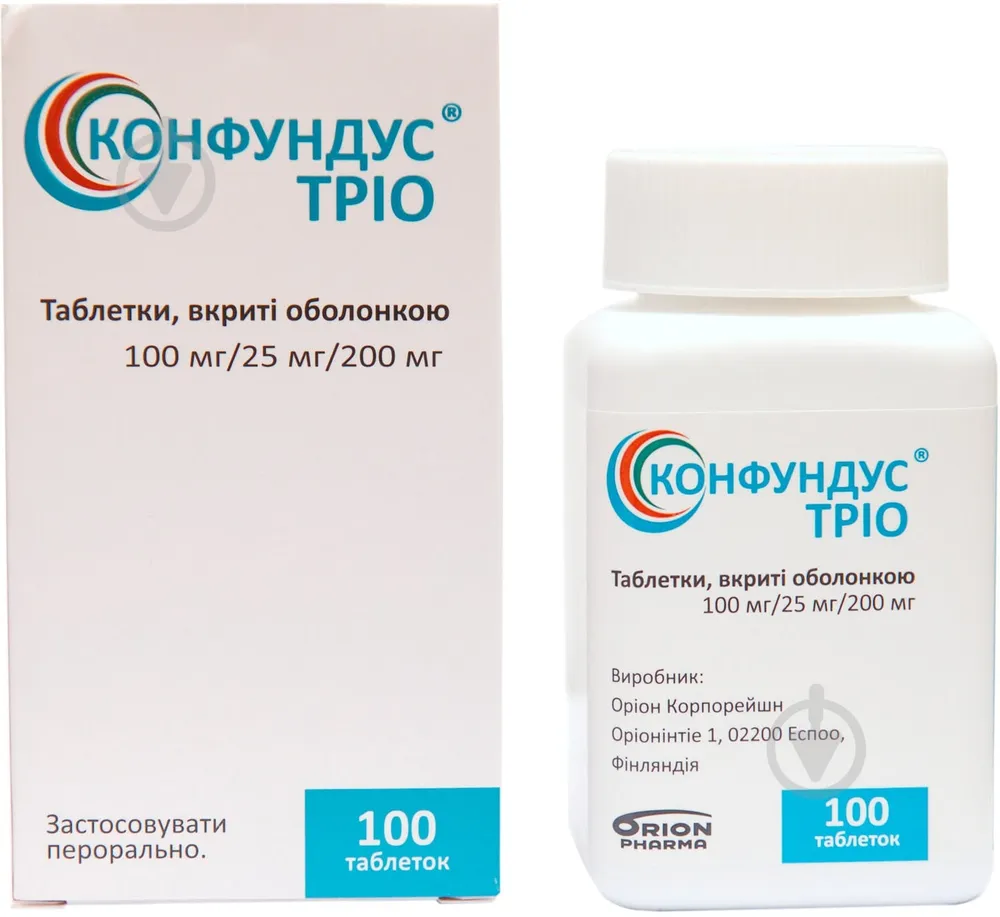
Table of Contents
INSTRUCTIONS FOR MEDICAL USE OF THE MEDICINAL PRODUCT CONFOUNDUS® TRIO (CONFUNDUS® TRIO)
Composition:
Active substances: levodopa, carbidopa, entacapone;
One coated tablet contains 50 mg of levodopa, 12.5 mg of carbidopa, 200 mg of entacapone,
or 100 mg of levodopa, 25 mg of carbidopa, 200 mg of entacapone,
or 150 mg of levodopa, 37.5 mg of carbidopa, 200 mg of entacapone,
or 200 mg of levodopa, 50 mg of carbidopa, 200 mg of entacapone;
Excipients: maize starch, mannite (E 421), sodium croscarmellose, povidone, magnesium stearate, hypromellose, sucrose, titanium dioxide (E 171), yellow iron oxide (E 172), red iron oxide (E 172), polysorbate 80, glycerol 85%.
Pharmaceutical form. Coated tablets.
Main physicochemical properties:
Coated tablets 50/12.5/200 mg: brown-red, greyish-red in color, round, biconvex, with the mark LCE 50 on one side;
Coated tablets 100/25/200 mg: brown-red, greyish-red in color, oval, with the mark LCE 100 on one side;
Coated tablets 150/37.5/200 mg: brown-red, greyish-red in color, elongated elliptical shape, with the mark LCE 150 on one side;
Coated tablets 200/50/200 mg: dark brown-red in color, oval, with the mark LCE 200 on one side.
Pharmacotherapeutic group. Medicinal products for the treatment of disorders of the nervous system. Antiparkinson drugs. Dopaminergic agents. L-DOPA and its derivatives. Levodopa, decarboxylase inhibitor and COMT inhibitor. ATC code N04BA03.
Pharmacological Properties
Pharmacodynamics
According to current understanding, symptoms of Parkinson's disease are associated with decreased dopamine levels in the striatum. Dopamine does not cross the blood-brain barrier. Levodopa, a dopamine precursor, crosses the blood-brain barrier and alleviates disease symptoms. If levodopa is administered without inhibitors of metabolic enzymes, it is predominantly metabolized peripherally, and only a small portion of the administered dose reaches the central nervous system.
Carbidopa and benserazide, inhibitors of DOPA decarboxylase (DDC), reduce peripheral metabolism of levodopa to dopamine, thus allowing a greater amount of levodopa to reach the brain. When decarboxylation of levodopa is inhibited by DDC inhibitors, a lower dose of levodopa can be used, reducing the incidence of adverse reactions such as nausea.
When DDC is inhibited by a DDC inhibitor, catechol-O-methyltransferase (COMT) becomes the primary peripheral metabolic pathway, accelerating the conversion of levodopa to 3-O-methyldopa (3-OMD), which is a potentially detrimental metabolite of levodopa. Entacapone is a reversible, specific inhibitor of COMT, acting primarily peripherally, and has been developed for co-administration with levodopa. Entacapone slows the clearance of levodopa from the bloodstream, resulting in increased area under the concentration-time curve (AUC) in the pharmacokinetic profile of levodopa. Consequently, the clinical response to each dose of levodopa is enhanced and prolonged.
The drug's efficacy is supported by results from clinical studies based on a double-blind methodology.
Pharmacokinetics
General characteristics of active ingredients
Absorption/distribution. Significant inter- and intra-individual differences exist in the absorption of levodopa, carbidopa, and entacapone. Levodopa and entacapone are rapidly absorbed and eliminated. Carbidopa is absorbed and eliminated somewhat more slowly than levodopa. Bioavailability of levodopa is 15−33% when administered alone, apart from the other two active components; carbidopa bioavailability is 40−70%, and entacapone bioavailability is 35% after an oral 200 mg dose. Food rich in neutral amino acids may delay and reduce levodopa absorption. Food does not significantly affect entacapone absorption. The volume of distribution of levodopa (0.36−1.6 L/kg) and entacapone (0.27 L/kg) is low; data on the volume of distribution of carbidopa are not available.
Levodopa is only slightly bound to plasma proteins, approximately 10−30%, while carbidopa is bound to about 36%. In contrast, entacapone is extensively bound to plasma proteins (approximately 98%), primarily to serum albumin. At therapeutic concentrations, entacapone does not displace other highly protein-bound drugs (e.g., warfarin, salicylic acid, phenylbutazone, or diazepam), nor is it significantly displaced by any of these agents at therapeutic or higher concentrations.
Metabolism and elimination: Levodopa is extensively metabolized, forming various metabolites. The most important pathways are decarboxylation by DOPA decarboxylase (DDC) and O-methylation by catechol-O-methyltransferase (COMT).
Carbidopa is metabolized into two main metabolites, which are excreted in urine as glucuronides and unchanged compounds. Unchanged carbidopa accounts for 30% of total urinary excretion.
Entacapone is almost completely metabolized prior to excretion, with 10−20% eliminated via urine and 80−90% via bile/feces. The primary metabolic pathway is glucuronidation of entacapone; its active metabolite, the cis-isomer, accounts for approximately 5% of total entacapone in plasma.
Total clearance of levodopa ranges from 0.55 to 1.38 L/kg/h, and entacapone clearance is approximately 0.70 L/kg/h. Elimination half-life (t1/2el) of levodopa is 0.6−1.3 hours, carbidopa 2−3 hours, and entacapone 0.4−0.7 hours for each ingredient separately.
Due to the short elimination half-life, no significant accumulation of levodopa or entacapone occurs with repeated dosing.
In vitro studies using human liver microsomal preparations indicate that entacapone inhibits cytochrome P450 2C9 (IC50 ~4 µM). Entacapone has minimal or no inhibitory effect on other cytochrome P450 isoenzymes (CYP1A2, CYP2A6, CYP2D6, CYP2E1, CYP3A, and CYP2C19).
Pharmacokinetics in special patient populations
Elderly patients: When levodopa is administered without carbidopa and entacapone, its absorption in elderly patients is more pronounced and elimination slower compared to younger subjects. However, when carbidopa is combined with levodopa, levodopa absorption is similar in younger and elderly subjects, although AUC in elderly subjects is 1.5 times higher due to reduced DDC inhibitor activity and lower clearance influenced by age. The pharmacokinetics of entacapone are not age-dependent.
There is no significant difference in AUC of levodopa, carbidopa, or entacapone between younger patients (45−60 years) and elderly subjects (60−75 years).
Sex: Levodopa bioavailability is significantly higher in women than in men, due to differences in body weight. Sex does not affect the bioavailability of carbidopa or entacapone.
Hepatic impairment: Metabolism of entacapone is slower in patients with mild to moderate hepatic impairment (Child-Pugh class A and B), leading to increased plasma concentrations of entacapone during absorption and elimination phases. Specific pharmacokinetic studies of carbidopa and levodopa in patients with hepatic insufficiency have not been reported, but caution is advised when administering Confundus® Trio to patients with biliary obstruction or severe liver disease.
Renal impairment: Renal dysfunction does not affect the pharmacokinetics of entacapone. Specific pharmacokinetic studies of levodopa and carbidopa in patients with renal impairment have not been reported. However, longer dosing intervals of Confundus® Trio may be required for patients undergoing dialysis.
Clinical characteristics.
Indications.
Parkinson's disease. Motor fluctuations (wearing-off) caused by suboptimal dosing during treatment with levodopa/dopa-decarboxylase inhibitors.
Contraindications.
Hypersensitivity to levodopa, carbidopa, entacapone, or to any other component of the medicinal product.
Severe hepatic impairment.
Narrow-angle glaucoma.
Pheochromocytoma.
Concomitant use of Confundus® Trio with non-selective monoamine oxidase inhibitors (MAO-A and MAO-B) (e.g., phenelzine, tranylcypromine).
Concomitant use of selective MAO-A and MAO-B inhibitors with Confundus® Trio.
History of neuroleptic malignant syndrome (NMS) and/or non-traumatic rhabdomyolysis.
Undiagnosed skin lesions or history of melanoma.
Severe heart failure. Severe cardiac arrhythmia.
Severe psychoses.
Interaction with other medicinal products and other forms of interaction.
Other antiparkinsonian medicinal products
There is no information on interactions between other antiparkinsonian agents and Confundus® Trio. High doses of entacapone may affect the absorption of carbidopa. However, no interaction with carbidopa has been observed at the recommended dosage (200 mg entacapone up to 10 times daily). No interactions between entacapone and selegiline have been observed in patients with Parkinson’s disease receiving levodopa/dopa-decarboxylase inhibitor therapy. When using Confundus® Trio, the daily dose of selegiline should not exceed 10 mg.
Caution is required when administering Confundus® Trio concomitantly with the following medicinal products.
Antihypertensive agents: symptomatic orthostatic hypotension may occur when levodopa is used concomitantly with antihypertensive agents, and dosage adjustment of the antihypertensive agent may be necessary.
Antidepressants: rarely, concomitant use of tricyclic antidepressants with levodopa/carbidopa has been associated with adverse reactions such as hypertension and dyskinesia. No interactions have been observed between entacapone and imipramine or between entacapone and moclobemide. Pharmacodynamic interactions have not been observed during treatment with combinations of levodopa, carbidopa, and entacapone together with tricyclic antidepressants, noradrenaline reuptake inhibitors such as desipramine, maprotiline, and venlafaxine, or medicinal products metabolized by COMT (e.g., catechol-structured compounds, paroxetine); however, caution should be exercised when these are used concomitantly with Confundus® Trio.
Other medicinal products: dopamine receptor antagonists (some antipsychotics and antiemetics), phenytoin, and papaverine may reduce the therapeutic effect of levodopa; therefore, it is important to monitor patients receiving these agents concomitantly with Confundus® Trio to ensure that the therapeutic effect is not diminished.
Confundus® Trio may potentially affect the metabolism of medicinal products dependent on the cytochrome P450 2C9 isoenzyme, for example, S-warfarin. Therefore, when Confundus® Trio is used concomitantly with warfarin, monitoring of blood coagulation time is recommended.
Concomitant use of anesthetics may provoke arrhythmias.
Concomitant use of Confundus® Trio with pyridoxine hydrochloride-containing agents is possible.
Combination therapy with selegiline may lead to severe orthostatic hypotension.
Anticholinergic agents may act synergistically with levodopa in reducing tremor, and this property is often used to enhance therapeutic effect; however, they may exacerbate uncontrolled movements. In high doses, they may also reduce the positive effect of levodopa by delaying its absorption, thereby increasing gastrointestinal metabolism of the drug.
Sympathomimetic agents may potentiate cardiovascular adverse effects of levodopa.
Other forms of interaction: since levodopa may compete with certain amino acids, impaired absorption of Confundus® Trio may occur in patients on a high-protein diet.
In the gastrointestinal tract, levodopa and entacapone may form chelate complexes with iron. The interval between administration of Confundus® Trio and iron-containing products should be at least 2–3 hours.
In vitro: entacapone binds to human albumin at site II, the same site to which several other medicinal products bind, including diazepam and ibuprofen. According to in vitro studies, significant displacement is not expected at therapeutic concentrations. No signs of such interactions have been observed.
Special precautions for use.
Confundus® Trio is not recommended for the treatment of drug-induced extrapyramidal reactions or for the treatment of Huntington's chorea.
Therapy with this medicinal product should be administered with caution in patients with ischemic heart disease, severe cardiovascular or respiratory disorders, bronchial asthma, kidney or endocrine gland diseases, peptic ulcer disease, or a history of seizures.
Patients with myocardial infarction and impaired atrial node function, or those with a history of ventricular arrhythmias, require cardiac monitoring, especially at the beginning of therapy or when increasing the dose.
In all patients receiving Confundus® Trio, monitoring for the development of psychiatric changes, depression with suicidal tendencies, and other forms of antisocial behavior is necessary. Patients with a history of psychosis or current psychotic symptoms should be treated with caution.
Precautionary measures are required when co-administering antipsychotic agents with dopamine receptor-blocking properties. Particular attention should be paid to D2-receptor antagonists, and patients should be observed for possible loss of anti-Parkinsonian effect or worsening of Parkinsonian symptoms.
If psychotic symptoms worsen, the drug should be discontinued.
Confundus® Trio should be used cautiously in patients with chronic open-angle glaucoma. Intraocular pressure must be well controlled, and patients should be monitored for changes in intraocular pressure.
Confundus® Trio may cause orthostatic hypotension. Therefore, Confundus® Trio should be prescribed with caution in patients taking other medicinal products that may cause orthostatic hypotension.
Confundus® Trio should be administered with caution in patients with Cushing's syndrome or those with a history of orthostatic hypotension.
Entacapone, together with levodopa, may cause somnolence and episodes of sudden sleep in patients with Parkinson's disease. Therefore, caution is advised when driving or operating machinery requiring rapid reaction times.
In clinical studies, undesirable dopaminergic effects such as dyskinesia occurred more frequently in patients receiving entacapone and dopamine agonists (e.g., bromocriptine), selegiline, or amantadine, compared to patients receiving entacapone with placebo. Dose adjustments of other anti-Parkinsonian agents may be necessary when initiating Confundus® Trio in patients not previously receiving entacapone.
In patients previously treated with levodopa alone, dyskinesia may occur because carbidopa allows more levodopa to reach the brain, thereby increasing dopamine formation. The emergence of dyskinesia requires dose reduction.
Rarely, secondary rhabdomyolysis may occur in severe dyskinesia or in neuroleptic malignant syndrome (NMS). Therefore, careful monitoring is required during abrupt discontinuation or dose reduction of levodopa, especially in patients taking neuroleptics. NMS, including rhabdomyolysis and hyperthermia, is characterized by motor symptoms (rigidity, myoclonus, tremor), changes in mental status (e.g., agitation, confusion, coma), hyperthermia, autonomic dysfunction (tachycardia, unstable blood pressure), and elevated serum creatine phosphokinase levels. In some cases, only some of these symptoms may be present. Early diagnosis is crucial for appropriate treatment of NMS. A syndrome resembling neuroleptic malignant syndrome, including muscle rigidity, elevated body temperature, mental changes, and increased serum creatine phosphokinase levels, has been reported after abrupt discontinuation of anti-Parkinsonian agents.
Rhabdomyolysis, secondary to severe dyskinesia or NMS, has occasionally been observed in patients with Parkinson's disease. Therefore, close monitoring is required during any abrupt dose reduction or discontinuation of levodopa, particularly in patients also taking neuroleptics.
Patients with Parkinson's disease have been reported to have an increased risk of melanoma. It is unclear whether this risk is related to Parkinson's disease itself or to other factors, such as treatment with Parkinson's disease medications. Therefore, regular skin monitoring for possible melanoma and periodic skin examinations by a qualified specialist are recommended.
If switching from Confundus® Trio to levodopa and a dopa decarboxylase (DDC) inhibitor is necessary, the transition should be gradual, and an increase in levodopa dose may be required.
During general anesthesia, treatment with Confundus® Trio may be continued until the patient is allowed to take fluids and medications orally. If treatment must be temporarily interrupted, Confundus® Trio may be resumed at the same daily dose immediately after the patient can resume oral intake.
During treatment with Confundus® Trio, periodic evaluation of liver function, hematopoietic, cardiovascular, and urinary systems is recommended.
Patients with a history of diarrhea should be monitored for body weight to prevent excessive weight loss. Prolonged or persistent diarrhea occurring during entacapone treatment may be a sign of colitis. In such cases, the drug should be discontinued and appropriate medical therapy initiated.
Pathological gambling, increased libido, and hypersexuality may occur during therapy with dopamine agonists or other dopaminergic agents, such as Confundus® Trio.
Patients and their caregivers should be informed about possible behavioral changes indicating impulse control disorders, including impulsive shopping, binge eating, and impulsive eating. In such cases, the dose should be reduced or the drug discontinued.
Dopamine dysregulation syndrome is an addictive disorder leading to excessive medication use in some patients receiving carbidopa/levodopa. Before initiating treatment, patients and caregivers should be warned about the potential risk of dopamine dysregulation syndrome (see section "Adverse reactions").
Patients with anorexia, asthenia, or rapid weight loss require medical evaluation and liver function monitoring.
Levodopa/carbidopa may cause false-positive results in urine ketone screening tests. This reaction persists even when urine samples are boiled. Glucose oxidase-based methods may yield false-negative results for glucosuria.
Confundus® Trio contains sucrose; therefore, the medicinal product is not recommended for patients with rare hereditary fructose intolerance, glucose-galactose malabsorption, or sucrase-isomaltase deficiency.
Decreased hemoglobin and hematocrit, increased serum glucose levels, increased white blood cell count, increased bacteria and blood in urine, and positive tests for erythrocyte antibodies may occur. However, hemolytic anemia is rarely observed.
Laboratory investigations: transient changes may include increased blood urea, creatinine, alanine aminotransferase, aspartate aminotransferase, lactate dehydrogenase, bilirubin, alkaline phosphatase, and protein-bound iodine.
The excipient mannitol in Confundus® Trio may have a laxative effect.
The product contains glycerin, which may cause headache, gastric mucosal irritation, and diarrhea.
This medicinal product contains sodium carboxymethylcellulose as an excipient. Caution is advised in patients on a sodium-controlled diet.
Use during pregnancy or breastfeeding.
Levodopa and its combinations with carbidopa have caused internal organ and skeletal malformations in animal studies.
The product is contraindicated during pregnancy and breastfeeding. All women of childbearing potential receiving this medicinal product should use effective contraception.
There is insufficient information on the safety and efficacy of the product in pregnant women; therefore, the product should not be used during pregnancy.
The product may be prescribed during pregnancy only if the expected benefit to the mother outweighs the potential risk to the fetus. Levodopa is excreted in breast milk. Suppression of lactation ability is likely during levodopa therapy. Data on the excretion of carbidopa and entacapone in breast milk are lacking. There is no safety information regarding levodopa, carbidopa, and entacapone for the infant; therefore, women should not breastfeed while taking Confundus® Trio.
Preclinical studies with entacapone, carbidopa, or levodopa did not reveal any adverse effects on fertility. However, studies on the effects of the combination of these agents on reproductive function in animals have not been conducted.
Ability to influence reaction speed when driving or operating machinery.
Administration of entacapone with levodopa and carbidopa may cause dizziness and symptomatic orthostatic hypotension. The drug has been associated with somnolence and sudden episodes of sleep; therefore, caution is required when driving or operating machinery.
Method of Administration and Dosage.
The tablets should be taken orally, regardless of food intake.
Each tablet contains one therapeutic dose; therefore, the whole tablet must be taken.
The optimal daily dose of Confundus® Trio for each patient should be carefully selected. The daily dose of this medicinal product should be optimized by using one of the following strengths: 50/12.5/200 mg, 100/25/200 mg, 150/37.5/200 mg, or 200/50/200 mg of levodopa/carbidopa/entacapone.
Patients should be advised to take only one tablet of Confundus® Trio at the selected strength. Nausea and vomiting may occur in patients receiving less than 70–100 mg of carbidopa daily. Since experience with total daily carbidopa doses exceeding 200 mg is limited, and the maximum recommended daily dose of entacapone is 2000 mg, the maximum daily dose of Confundus® Trio is 10 tablets for the 50/12.5/200 mg, 100/25/200 mg, 150/37.5/200 mg strengths, and 7 tablets for the 200/50/200 mg strength.
Confundus® Trio is generally used in patients currently receiving equivalent doses of levodopa or standard-release dopa-decarboxylase inhibitors (DDC inhibitors) and entacapone.
Switching regimen for patients currently taking levodopa/DDC inhibitor (carbidopa or benserazide) and entacapone tablets to Confundus® Trio.
a. Patients currently taking entacapone and standard-release levodopa/carbidopa at doses equivalent to those in Confundus® Trio tablets may be directly switched to the corresponding strength of this medicinal product. For example, a patient taking one 50/12.5 mg tablet of levodopa/carbidopa and one 200 mg entacapone tablet four times daily may switch to one 50/12.5/200 mg tablet of Confundus® Trio four times daily instead of their usual levodopa/carbidopa and entacapone doses.
b. When initiating treatment in patients currently taking entacapone and levodopa/carbidopa doses not equivalent to those in Confundus® Trio 50/12.5/200 mg (or 100/25/200 mg, or 150/37.5/200 mg, or 200/50/200 mg), the dose of the medicinal product should be carefully adjusted to achieve optimal clinical response. Initially, the dose of Confundus® Trio should be adjusted to best match the total daily levodopa dose currently being taken.
c. When initiating treatment in patients currently taking entacapone and standard-release levodopa/benserazide, levodopa/benserazide should be discontinued the evening before, and treatment with Confundus® Trio should be started the next morning. Treatment should begin with a dose of Confundus® Trio containing the same or slightly higher (5–10%) amount of levodopa.
Switching regimen to Confundus® Trio in patients not currently treated with entacapone.
Confundus® Trio therapy at appropriate doses may be considered in some patients with Parkinson's disease and motor fluctuations related to end-of-dose wearing-off, whose condition is not adequately controlled with current treatment using standard-release levodopa/DDC inhibitors. However, direct switching from a levodopa/DDC inhibitor to Confundus® Trio is not recommended in patients with dyskinesia or those receiving levodopa doses exceeding 800 mg daily. Such patients should be initiated on entacapone therapy separately, with levodopa dose adjustments as needed, prior to switching to Confundus® Trio.
Entacapone enhances the effect of levodopa. Patients with dyskinesia may require a 10–30% reduction in levodopa dose at the start of Confundus® Trio therapy. The daily levodopa dose may be reduced by extending the intervals between doses and/or reducing the levodopa dose, depending on the patient's clinical condition.
Dose adjustment during treatment.
If a higher levodopa dose is required, consider increasing the dosing frequency and/or switching to an alternative strength of Confundus® Trio within the recommended dosing guidelines.
If a lower levodopa dose is required, the total daily dose of Confundus® Trio should be reduced by decreasing the frequency of administration (increasing the interval between doses) or by switching to a lower strength of Confundus® Trio.
If other levodopa-containing medications are taken concomitantly with Confundus® Trio tablets, recommendations regarding maximum dosing should be followed.
Discontinuation of Confundus® Trio therapy.
If treatment with Confundus® Trio (levodopa/carbidopa/entacapone) needs to be discontinued and the patient switched to levodopa/DDC inhibitor therapy without entacapone, the doses of other anti-Parkinson medications, especially levodopa, should be increased to adequately control Parkinsonian symptoms.
Use in pediatric patients.
The safety and efficacy of Confundus® Trio in patients under 18 years of age have not been established. Therefore, the use of this medicinal product in children is not recommended.
Use in elderly patients.
Elderly patients do not require special dose adjustment of Confundus® Trio.
Use in patients with hepatic impairment.
Confundus® Trio should be administered with caution in patients with mild to moderate hepatic impairment. Dose reduction may be necessary.
Use in patients with renal impairment.
Renal impairment does not affect the pharmacokinetics of entacapone. Confundus® Trio therapy should be administered with caution in patients with severe renal impairment or those on dialysis.
Children.
The use of this medicinal product is not indicated in this patient population.
Overdose.
Symptoms: Early signs include muscle twitching, blepharospasm, arterial hypertension, increased heart rate, decreased appetite, confusion, anxious agitation, insomnia, and restlessness.
There have been reports of daily doses of levodopa and entacapone reaching 10,000 mg and 40,000 mg, respectively. Acute symptoms in such cases include agitation, psychosis, coma, bradycardia, ventricular tachyarrhythmia, Cheyne-Stokes respiration, skin, tongue, and conjunctiva discoloration, and chromaturia.
Treatment of acute overdose with Confundus® Trio is similar to that for acute levodopa overdose. However, pyridoxine is ineffective in reversing the effects of Confundus® Trio. Hospitalization is recommended; general supportive measures should be implemented, including immediate gastric lavage and administration of activated charcoal. This may accelerate the elimination of entacapone, particularly by reducing its absorption and reabsorption from the gastrointestinal tract.
Close monitoring of respiratory, cardiovascular, and urinary systems is required, and appropriate supportive measures should be taken. ECG monitoring should be initiated, and careful observation for possible development of arrhythmias is essential. If necessary, appropriate antiarrhythmic therapy should be administered. It should be considered that, in addition to Confundus® Trio, the patient may have taken other medications. The role of dialysis in treating overdose is unknown.
Adverse Reactions.
Conclusions on the safety profile of the medicinal product.
The most commonly occurring adverse reactions are dyskinesia (19% of patients); gastrointestinal disorders, including nausea and diarrhea (15% and 12%, respectively); musculoskeletal pain and pain in muscles and connective tissue (12%); change in urine color to red-brown (10%). During clinical trials of Confundus® Trio or entacapone in combination with levodopa/DOPA decarboxylase inhibitor, cases of gastrointestinal bleeding and Quincke's edema were observed. Hepatitis with cholestatic features, rhabdomyolysis, and neuroleptic malignant syndrome may occur with the use of Confundus® Trio, although no such cases were reported during clinical trials.
Summary of adverse reactions.
Blood and lymphatic system disorders.
Common: anemia.
Uncommon: thrombocytopenia.
Leukopenia, hemolytic and non-hemolytic anemia, agranulocytosis.
Metabolism and nutrition disorders.
Common: weight loss*, loss of appetite*.
Psychiatric disorders.
Common: depression, hallucinations, confusion*, nightmares*, anxiety, insomnia.
Uncommon: psychosis, agitation*.
Frequency not known: suicidal behavior, dopamine dysregulation syndrome.
Mania, exhaustion, euphoria, dementia, change in mental status (including paranoid thoughts and transient psychosis), delirium, restlessness, agitation, fear, thought disorder, disorientation, freezing, sudden onset of sleepiness.
Nervous system disorders.
Very common: dyskinesia*
Common: worsening of parkinsonism (e.g., bradykinesia)*, tremor, "on-off" phenomenon, dizziness, dystonia, mental disorders including dementia and memory impairment, somnolence, dizziness*, headache.
Frequency not known: neuroleptic malignant syndrome*.
Ataxia, bradykinesia, chorea, increased hand tremor, muscle twitching, muscle spasms, trismus, paresthesia, seizures, tendency to syncope, loss of consciousness, activation of latent Bernard-Horner syndrome.
Blepharospasm, activation of latent Horner's syndrome.
Eye disorders.
Common: blurred vision.
Diplopia, mydriasis, oculomotor crisis, gaze spasm.
Cardiac disorders.
Common: ischemic heart disease, excluding myocardial infarction (e.g., angina)**, cardiac arrhythmias, orthostatic hypotension, hypertension.
Uncommon: myocardial infarction**, gastrointestinal hemorrhage.
Palpitations.
Respiratory, thoracic and mediastinal disorders.
Common: dyspnea.
Respiratory disturbances, hoarseness.
Gastrointestinal disorders.
Very common: diarrhea*, nausea*.
Common: constipation*, vomiting*, dyspepsia, abdominal pain*, dry mouth*.
Uncommon: colitis*, dysphagia.
Bitter taste in mouth, hypersalivation, bruxism, hiccup, flatulence, glossalgia, dark discoloration of saliva, burning sensation on tongue, duodenal ulcer, weight gain, edema. Abdominal discomfort.
Hepatobiliary disorders.
Uncommon: changes in liver function tests*.
Frequency not known: hepatitis with cholestatic features*.
Skin and subcutaneous tissue disorders.
Common: rash*, increased sweating.
Uncommon: skin, nail, hair, and sweat discoloration*.
Rare: angioneurotic edema.
Frequency not known: urticaria*.
Alopecia.
Musculoskeletal and connective tissue disorders.
Very common: musculoskeletal pain and pain in muscles and connective tissue*.
Common: muscle cramps, joint pain.
Frequency not known: rhabdomyolysis*.
Renal and urinary disorders.
Very common: chromaturia*.
Common: urinary tract infections.
Uncommon: urinary retention.
Urinary incontinence.
Immune system disorders.
Hypersensitivity reactions, Schönlein-Henoch purpura.
Laboratory findings.
Elevated ALT, AST, lactate dehydrogenase, bilirubin, blood urea nitrogen, creatinine, uric acid, positive Coombs test. Decreased hemoglobin and hematocrit, increased serum glucose, leukocytosis, bacteriuria, hematuria.
Other adverse reactions.
General weakness, sudden exacerbation of concomitant diseases, facial flushing, malignant melanoma. Impulse to shop, urge to spend money, binge eating, impulsive eating. Priapism.
General disorders.
Common: chest pain, peripheral edema, falls, gait disturbance, asthenia, increased fatigue.
Uncommon: malaise.
*Adverse reactions more frequently associated with entacapone than with levodopa/DOPA decarboxylase inhibitor (in clinical trials, frequency difference of at least 1%).
**Incidence rates of myocardial infarction and other ischemic heart diseases (0.43% and 1.54%, respectively) were derived from analyses of 13 double-blind studies involving 2082 patients with end-of-dose motor fluctuations receiving entacapone.
Description of selected adverse reactions.
The most frequent adverse reactions caused by entacapone are related to increased dopaminergic activity and occur mostly at the beginning of treatment. Reducing the levodopa dose leads to a decrease in the severity and frequency of these reactions.
Several adverse reactions, particularly diarrhea and red-brown discoloration of urine, are directly related to the active substance entacapone. Entacapone may also change the color of skin, nails, hair, and sweat.
Seizures are rarely observed during treatment with levodopa/carbidopa, but a causal relationship has not been established.
In patients treated with dopamine agonists or other dopaminergic agents, such as Confundus® Trio, particularly at high doses, pathological gambling, increased libido, and hypersexuality have been reported, which are usually reversible upon dose reduction or discontinuation of the drug.
Dopamine dysregulation syndrome is an addictive disorder observed in some patients receiving carbidopa/levodopa. Patients with this syndrome exhibit compulsive patterns of misuse of dopaminergic agents at doses higher than those required for adequate control of motor symptoms, which in some cases may lead to the development of severe dyskinesia (see section "Special warnings and precautions for use").
Entacapone, when used in combination with levodopa, may cause excessive daytime sleepiness and episodes of sudden sleep onset.
Reporting suspected adverse reactions.
Reporting suspected adverse reactions after authorization of the medicinal product allows continuous monitoring of the benefit-risk balance. Healthcare professionals are encouraged to report any suspected adverse reactions via the national reporting system.
Shelf life. 3 years.
Storage conditions. Store at temperatures not exceeding 25 °C. Keep out of reach and sight of children.
Packaging. 30 or 100 tablets in a bottle; 1 bottle per cardboard box.
Prescription status. Prescription only.
Manufacturer. Orion Corporation / Orion Corporation.
Address of manufacturer and place of business.
Orionintie 1, 02200 Espoo, Finland / Orionintie 1, 02200 Espoo, Finland.
For package size №100:
Manufacturer. Limited liability company «KUSUM PHARM» / Limited liability company «KUSUM PHARM».
Address of manufacturer and place of business.
40020, Ukraine, Sumy region, Sumy, Skryabina str., 54 / 40020, Ukraine, Sumy region, Sumy, Skryabina str., 54.