Coldflu
Ukraine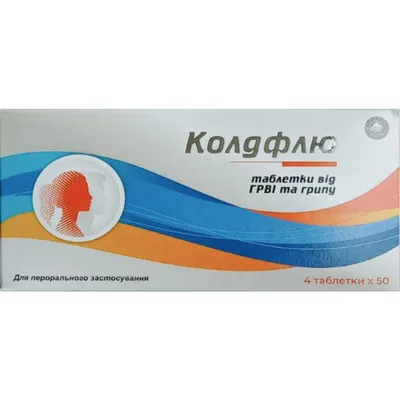
Table of Contents
INSTRUCTIONS FOR MEDICAL USE OF THE MEDICINAL PRODUCT COLDFLU (COLDFLU)
Composition:
Active substances: 1 tablet contains: paracetamol 500 mg, caffeine 30 mg, phenylpropanolamine hydrochloride 25 mg, chlorpheniramine maleate 2 mg;
Excipients: microcrystalline cellulose, maize starch, titanium dioxide (E 171), povidone, sodium methylhydroxybenzoate (E 217), sodium propylhydroxybenzoate (E 219), magnesium stearate, sodium starch glycolate (type A), Ponceau 4R lake (E 124) dye.
Pharmaceutical form. Tablets.
Main physicochemical properties: pink tablets with specks, round-shaped, flat with bevelled edges, with a score on one side and smooth on the other.
Pharmacotherapeutic group. Analgesics and antipyretics. ATC code N02B.
Pharmacological Properties
The effect of the medicinal product depends on the action of its individual components.
Pharmacodynamics
A combined medication for the treatment of flu and cold symptoms.
Exerts antipyretic, decongestant, analgesic, and antiallergic effects. Paracetamol has analgesic, antipyretic, and weak anti-inflammatory effects due to inhibition of prostaglandin synthesis in the central nervous system (CNS). It reduces excitation of the thermoregulatory center in the hypothalamus.
Chlorpheniramine maleate is a histamine receptor blocker that suppresses the biological effects of histamine. It has antiallergic properties and helps reduce manifestations of local exudative reactions in the mucous membrane of the nose and paranasal sinuses. It suppresses rhinitis symptoms, rhinorrhea, eye irritation, and discomfort in the nasopharynx and larynx.
Phenylpropanolamine hydrochloride is an adrenomimetic agent. Due to its vasoconstrictive effect and direct stimulation of α-adrenergic receptors in the blood vessels of the nasal mucosa, it reduces nasal hyperemia and edema, and improves airway patency.
The mechanism of action of caffeine is due to inhibition of the phosphodiesterase enzyme, leading to intracellular accumulation of cAMP. This enhances glycogenolysis and stimulates metabolism in organs and tissues, including the CNS and muscles. Caffeine enhances and regulates excitation processes in the cerebral cortex. The neurochemical mechanism of caffeine's stimulant effect lies in its ability to block specific P1 "purinergic" (or adenosine) receptors in the brain, whose endogenous ligand is adenosine, which reduces excitation processes in the brain. Caffeine stimulates the CNS, increases mental and physical performance, reduces fatigue, and increases the force and frequency of heart contractions.
Caffeine stimulates the respiratory and vasomotor centers, increases vascular tone in the brain, dilates blood vessels in skeletal muscles, the heart, and kidneys, and reduces platelet aggregation.
Coldflu provides therapeutic effect for 12 hours after administration.
Pharmacokinetics
After oral administration, paracetamol is rapidly and almost completely absorbed from the gastrointestinal tract. Maximum plasma concentration is reached within 10–60 minutes.
Paracetamol is distributed in most body tissues. It crosses the placental barrier and is excreted in breast milk. At usual therapeutic doses, paracetamol binds only slightly to plasma proteins, but the degree of binding increases with higher concentrations.
Paracetamol is primarily metabolized in the liver via two pathways: glucuronidation and sulfation. It is excreted in urine mainly as glucuronide and sulfate conjugates. The elimination half-life ranges from 1 to 3 hours.
Caffeine is well absorbed from the gastrointestinal tract. It is evenly distributed throughout the body and readily crosses the blood-brain barrier. Biotransformation involves demethylation and oxidation. It is excreted in urine mainly as metabolites, with about 8% excreted unchanged. The elimination half-life is 3.9–5.3 hours, and it is completely eliminated within 24 hours.
Phenylpropanolamine hydrochloride is rapidly and completely absorbed from the gastrointestinal tract (GIT). Maximum plasma concentration is achieved within 1–2 hours. It does not undergo presystemic metabolism, so its bioavailability is approximately 100%. The elimination half-life is 3–5 hours. About 90–100% is excreted unchanged in urine within 24 hours after administration.
Chlorpheniramine maleate is well absorbed from the GIT. Its effect begins within 30 minutes after administration and lasts for 3–6 hours. It undergoes metabolism during the "first pass" through the liver and possibly intrahepatic recirculation. Taking chlorpheniramine with food significantly reduces its bioavailability. A small amount is excreted unchanged in urine. Most of the drug is eliminated from the body as metabolites.
Clinical characteristics.
Indications.
Symptomatic treatment of acute respiratory viral infections (ARVI) and influenza accompanied by elevated body temperature, chills, headache, runny nose and nasal congestion, sneezing, malaise, and body aches.
Contraindications.
Hypersensitivity to any component of the medicinal product. Severe course of cardiovascular diseases, severe impairment of liver and/or kidney function, congenital hyperbilirubinemia, arterial hypertension, acute pancreatitis, hyperthyroidism, pheochromocytoma, blood disorders (including severe anemia, leukopenia), thrombosis, thrombophlebitis, closed-angle glaucoma, glucose-6-phosphate dehydrogenase deficiency, severe forms of diabetes mellitus, alcoholism, prostate hypertrophy with urinary retention, bladder neck obstruction, pyloroduodenal obstruction, bronchial asthma, epilepsy, sleep disorders.
Increased excitability. Sleep disorders. Epilepsy. Concomitant use with monoamine oxidase inhibitors (MAOIs) and within 2 weeks after discontinuation of their use.
Hypersensitivity to bromocriptine or other ergot alkaloids, severe gastrointestinal disorders, psychiatric disorders.
Concomitant use with tricyclic antidepressants, β-blockers or other antihypertensive agents, and sympathomimetics.
Advanced patient age (60 years and older). Pregnancy or breastfeeding. Pediatric age under 12 years.
Should not be used in patients with increased blood coagulability or predisposition to thrombosis.
Do not use concomitantly with medicinal products that suppress or enhance appetite, and amphetamine-like psychostimulants.
Interaction with other medicinal products and other types of interactions.
Drug interactions involving each individual component of Coldflu are well known. There is no reason to assume that the use of these ingredients in combination may affect the drug interaction profile.
Paracetamol
With regular long-term use of paracetamol, the anticoagulant effect of warfarin or other coumarin derivatives may be enhanced, increasing the risk of bleeding. This effect is not pronounced with occasional use of paracetamol.
Paracetamol should be used with caution concomitantly with flucloxacillin, as such concomitant administration is associated with metabolic acidosis with a high anion gap due to pyroglutamic acidosis, especially in patients with risk factors (see section "Special precautions").
Hepatotoxic drugs may increase the likelihood of paracetamol accumulation and overdose. The risk of developing hepatotoxic effects of paracetamol may increase in patients receiving drugs that induce hepatic microsomal enzymes, such as barbiturates and antiepileptic agents (phenytoin, phenobarbital, carbamazepine), and antituberculosis agents rifampicin and isoniazid.
Metoclopramide increases the rate of paracetamol absorption and leads to increased maximum plasma levels. Domperidone may similarly increase the rate of paracetamol absorption. Paracetamol may prolong the half-life of chloramphenicol.
Paracetamol may reduce the bioavailability of lamotrigine, potentially reducing its effect due to possible induction of its hepatic metabolism.
Paracetamol absorption may be reduced when used concomitantly with cholestyramine, but the reduction in absorption is insignificant if cholestyramine is administered 1 hour apart.
Regular concomitant use of paracetamol with zidovudine may lead to neutropenia and increased risk of liver damage. Paracetamol reduces the efficacy of diuretics.
Probenecid affects paracetamol metabolism. For patients taking probenecid concomitantly, the dose of paracetamol should be reduced.
Paracetamol hepatotoxicity may be enhanced by prolonged or excessive alcohol consumption. Paracetamol may affect test results for serum uric acid levels when measured by the phosphotungstic acid method.
Phenylpropanolamine
Interaction of phenylpropanolamine hydrochloride with MAO inhibitors causes a hypertensive effect; with tricyclic antidepressants (amitriptyline) – increases the risk of cardiovascular adverse effects; with digoxin and cardiac glycosides – may lead to arrhythmias and myocardial infarction. Phenylpropanolamine, when used with other sympathomimetics, increases the risk of adverse cardiovascular reactions, may reduce the effectiveness of β-blockers and other antihypertensive agents (reserpine, methyldopa), increasing the risk of arterial hypertension and adverse cardiovascular reactions.
Chlorpheniramine
Maprotiline (tetracyclic antidepressant) and other anticholinergic agents: the anticholinergic effect of these agents or antihistamines such as chlorpheniramine may be intensified. Concomitant use of chlorpheniramine with MAO inhibitors or furazolidone may lead to hypertensive crisis, nervous excitation, and hyperpyrexia. Antidepressants, antiparkinsonian agents, antipsychotics, and phenothiazine derivatives increase the risk of urinary retention, dry mouth, and constipation. Concomitant use with ergot alkaloids (ergotamine, methysergide) increases the risk of ergotism; with halothane – increases the risk of ventricular arrhythmia.
The sedative effect of chlorpheniramine maleate may be significantly enhanced by concomitant use with hypnotics, barbiturates, sedatives, neuroleptics, tranquilizers, anesthetics, narcotic analgesics, and alcohol. Chlorpheniramine maleate potentiates the anticholinergic effect of atropine, spasmolytics, tricyclic antidepressants, and antiparkinsonian agents.
Incompatibility of chlorpheniramine maleate with calcium chloride, kanamycin sulfate, norepinephrine, and phenobarbital has been reported.
Caffeine
Caffeine enhances the effect (improves bioavailability) of analgesic-antipyretic agents and potentiates the effects of xanthine derivatives, α- and β-adrenomimetics, and psychostimulants. Caffeine increases the likelihood of liver damage caused by hepatotoxic agents.
Cimetidine, hormonal contraceptives, and isoniazid enhance the effect of caffeine.
Caffeine reduces the effect of opioid analgesics, anxiolytics, hypnotics, and sedatives; it acts as an antagonist of anesthetic agents and other drugs that depress the central nervous system, and as a competitive antagonist of adenosine and adenosine-5'-triphosphate (ATP) preparations. Concomitant use of caffeine with ergotamine improves ergotamine absorption in the gastrointestinal tract; with thyroid-stimulating agents – increases thyroid effect. Caffeine reduces serum lithium concentration. Concomitant use of caffeine with MAO inhibitors may cause dangerous elevation of blood pressure.
Ototoxic and photosensitizing agents may enhance adverse effects when used concomitantly. Tricyclic antidepressants enhance sympathomimetic action. Glucocorticoids increase the risk of glaucoma development.
Special precautions for use.
Cases of high anion gap metabolic acidosis (HAGMA) due to 5-oxoproline (pyroglutamic acid) accumulation have been reported in patients with severe underlying conditions such as severe renal impairment or sepsis, or in patients with poor nutrition or other sources of glutathione deficiency (e.g., chronic alcoholism), who were treated with therapeutic doses of paracetamol over a prolonged period or in combination with flucloxacillin. If HAGMA due to pyroglutamic acidosis is suspected, immediate discontinuation of paracetamol is recommended, along with careful monitoring of the patient. Measurement of urinary 5-oxoproline levels may be helpful in identifying pyroglutamic acidosis as the underlying cause of HAGMA in patients with multiple risk factors.
Concomitant use of other medicinal products containing paracetamol should be avoided due to the risk of severe liver injury in case of overdose.
The medicinal product is not recommended to be used concomitantly with vasoconstrictors. Do not exceed the recommended doses.
Alcoholic beverages should be avoided during treatment, as ethanol taken concurrently with paracetamol may cause liver function impairment.
The medicinal product should be used with caution in patients with mild to moderate impairment of renal and/or hepatic function, acute hepatitis, severe hemolytic anemia, chronic malnutrition, dehydration, mild to moderate cardiovascular diseases, mild to moderate diabetes mellitus, prostatic hypertrophy without urinary retention (as such patients may be predisposed to urinary retention), peptic ulcer with stenosis, Raynaud's disease, thyroid disorders (except hyperthyroidism), chronic lung diseases, as well as in patients taking medicinal products affecting the liver, and in elderly patients.
Serious skin reactions such as acute generalized exanthematous pustulosis, Stevens–Johnson syndrome, and toxic epidermal necrolysis have been reported very rarely in patients taking paracetamol. The medicinal product should be discontinued at the first signs of skin rash or other symptoms of hypersensitivity.
Administration of doses exceeding the recommended ones may lead to liver damage.
Chlorpheniramine may mask symptoms of hypersensitivity and may interfere with the results of skin tests.
The medicinal product should be prescribed only by a physician after assessment of the benefit–risk ratio in the following conditions: arterial hypertension; moderate cardiovascular diseases; cardiac arrhythmias; liver disorders; urinary disorders. If the product is used for a prolonged period as recommended by a physician, monitoring of liver function and peripheral blood picture is necessary.
Patients should consult a physician:
- if they have breathing problems such as asthma, emphysema, or chronic bronchitis;
- if symptoms do not improve within 5 days or are accompanied by high fever lasting more than 3 days, skin rash, or persistent headache;
- regarding the possibility of using the product in case of renal or hepatic impairment.
These symptoms may indicate a more serious condition.
During treatment, excessive consumption of coffee, strong tea, other stimulant beverages, and medicinal products containing caffeine should be avoided. This may cause sleep disturbances, tremor, tension, irritability, palpitations, dizziness, or arrhythmia.
If high fever persists for 3 days or longer, or recurs, or if pain continues for 5 days, the treatment strategy should be re-evaluated.
Consultation with a physician is necessary before using the product if the patient is taking warfarin or similar anticoagulant medicinal products, as well as in patients with urinary retention or Raynaud's disease (which may manifest as pain in fingers and toes in response to cold or stress).
Consultation with a physician is required regarding the possibility of using the product in patients with renal or hepatic impairment.
It should be noted that patients with alcoholic liver disease have an increased risk of hepatotoxic effects of paracetamol. The medicinal product may affect laboratory test results for blood glucose and uric acid levels.
In patients with severe infections such as sepsis, associated with reduced glutathione levels, the use of paracetamol increases the risk of metabolic acidosis. Symptoms of metabolic acidosis include deep, rapid, or labored breathing, nausea, vomiting, and loss of appetite. Immediate medical attention should be sought if these symptoms occur.
Patients who take analgesics daily for mild forms of arthritis should consult a physician.
If symptoms of illness do not resolve within 3 days, a physician should be consulted.
Very rare cases of severe skin reactions have been reported. If skin redness, rash, blisters, or skin peeling occur, the product should be discontinued immediately and medical help should be sought without delay.
Excipients
The dye "Ponceau 4R" (E 124) contained in the tablet may cause allergic reactions.
Sodium methylparaben (E 219) and sodium propylparaben (E 216) contained in the tablet may cause allergic reactions (possibly of delayed type).
Use during pregnancy or breastfeeding.
The medicinal product is contraindicated in women during pregnancy or breastfeeding.
Effect on ability to drive or operate machinery.
The medicinal product may cause drowsiness. Caution should be exercised when driving or operating machinery requiring concentration.
Method of Administration and Dosage
Coldflu is for oral administration. The tablet should be taken with a large amount of water.
For adults and children aged 12 years and older, the recommended dose is 1 tablet every 6 hours, but not more than 4 tablets per day. The duration of treatment should be determined by a physician. The maximum duration of use without medical consultation is 3 days.
Do not exceed the recommended dose.
Patients with hepatic impairment.
For patients with impaired liver function or Gilbert's syndrome, the dose should be reduced or the interval between doses increased.
Elderly patients. Dose adjustment in elderly patients is not required.
Children. The use of this medicinal product is contraindicated in children under 12 years of age.
Overdose.
In case of overdose, symptoms caused by paracetamol overdose will be the most prominent.
Symptoms caused by paracetamol overdose: hepatotoxic effect, which in severe cases may lead to liver necrosis. Paracetamol overdose, including high total doses taken over a prolonged period, may cause analgesic-induced nephropathy with irreversible liver function impairment.
Liver damage is possible in adults who have ingested 10 g or more of paracetamol, and in children who have ingested more than 150 mg/kg body weight. In patients with risk factors—chronic excessive alcohol consumption, glutathione depletion (due to malnutrition, cystic fibrosis, HIV infection, cachexia)—ingestion of 5 g or more of paracetamol may result in liver damage.
There is a risk of poisoning, particularly in elderly patients, young children, patients with liver disease, chronically undernourished patients, and patients receiving hepatic enzyme inducers (long-term treatment with carbamazepine, phenobarbital, phenytoin, primidone, rifampicin, or St. John’s wort). In severe poisoning, liver failure may progress to encephalopathy, coma, and fatal outcome.
With prolonged use of the drug in high doses, blood-forming organs may develop aplastic anemia, pancytopenia, agranulocytosis, neutropenia, leukopenia, or thrombocytopenia. Central nervous system effects from high doses may include dizziness, psychomotor agitation, and disorientation. Urinary system effects may include nephrotoxicity (renal colic, interstitial nephritis, capillary necrosis).
Symptoms of paracetamol overdose appearing within the first 24 hours include pallor, nausea, vomiting, and loss of appetite. The first sign of liver damage may be abdominal pain, which does not always appear within the first 24–48 hours and may develop later, within 4–6 days after drug intake. Liver injury typically occurs within 72–96 hours after ingestion. Abnormalities in glucose metabolism (hypoglycemia) and metabolic acidosis, as well as bleeding, may occur. Acute renal failure with acute tubular necrosis may develop even in the absence of severe liver damage, presenting as severe back pain, hematuria, and proteinuria. Cases of cardiac arrhythmias and pancreatitis have also been reported.
Treatment. In case of paracetamol overdose, immediate medical assistance is required. The patient should be taken to a hospital immediately, even if early symptoms of overdose are absent. Symptoms may be limited to nausea and vomiting or may not reflect the severity of organ damage. Gastric lavage should be performed within the first few hours after suspected overdose. Administration of N-acetylcysteine as an antidote, either intravenously or orally, should be initiated as early as possible and no later than 10 hours after overdose. Activated charcoal may be beneficial, along with monitoring of respiration and circulation. In case of seizures, diazepam may be administered.
In case of overdose of phenylpropanolamine hydrochloride, symptoms include hyperhidrosis, psychomotor agitation or CNS depression, insomnia, behavioral changes, headache, dizziness, drowsiness, impaired consciousness, tachycardia, arrhythmias, extrasystoles, tremor, hyperreflexia, seizures, nausea, vomiting, irritability, restlessness, and arterial hypertension.
In case of overdose of chlorpheniramine maleate, the condition may range from depression to excitation (restlessness and seizures). Anticholinergic-like symptoms may occur: mydriasis, photophobia, dry skin and mucous membranes, elevated body temperature, intestinal atony, decreased level of consciousness, fever, urinary retention, tachycardia, nausea, vomiting, agitation, hallucinations, psychiatric disorders, seizures, or arrhythmias. CNS depression may be accompanied by respiratory depression and cardiovascular disturbances (reduced pulse rate, decreased arterial pressure up to circulatory failure). Rhabdomyolysis and renal failure may rarely develop in patients with prolonged agitation, seizures, or those in coma.
Symptoms of caffeine overdose. High doses of caffeine may cause epigastric pain, vomiting, diuresis, rapid breathing, extrasystoles, tachycardia or cardiac arrhythmia, hypertension followed by hypotension, supraventricular and ventricular arrhythmias, and central nervous system manifestations (dizziness, insomnia, nervous excitation, irritability, affective disturbances, anxiety, tremor, convulsions, agitation, apprehension, delirium, increased tactile or pain sensitivity), headache, chills, flushing, hallucinations, rigidity, altered consciousness, loss of appetite, weakness, warmth sensation, hallucinations, hypokalemia, hyponatremia, elevated blood glucose, metabolic acidosis, and acute skeletal muscle necrosis. Clinically significant symptoms of caffeine overdose may also be associated with liver damage caused by paracetamol.
There is no specific antidote for caffeine, but supportive measures such as administration of β-adrenergic antagonists may help alleviate cardiotoxic effects. Gastric lavage is required; oxygen therapy is recommended, and diazepam should be administered in case of seizures. Symptomatic treatment is indicated.
Gastric lavage should be performed within the first 6 hours after suspected overdose, followed by hospitalization of the patient.
Within the first 8 hours after overdose, oral administration of methionine or intravenous administration of cysteamine or N-acetylcysteine is recommended; symptomatic therapy should be provided. In case of severe hypertension, α- and β-adrenergic blockers should be used, along with monitoring of respiratory and cardiovascular functions (adrenaline must not be used).
Adverse reactions.
Skin and subcutaneous tissue disorders: skin and mucosal rashes (usually erythematous), pruritus, urticaria, purpura, allergic and angioneurotic edema, acute generalized exanthematous pustulosis, local drug dermatitis, erythroderma, erythema multiforme, exudative erythema multiforme, Stevens-Johnson syndrome, toxic epidermal necrolysis (Lyell’s syndrome), hemorrhages, photosensitization, including fatal outcomes.
Immune system disorders: anaphylaxis; hypersensitivity reactions, including skin pruritus, skin and mucosal rashes (usually generalized erythematous rash, urticaria); exudative erythema multiforme (including Stevens-Johnson syndrome), anaphylactic shock, angioneurotic edema, toxic epidermal necrolysis (Lyell’s syndrome), hypersensitive necrotizing vasculitis, facial swelling, eyelid edema, tongue swelling, hand swelling.
Metabolism and nutrition disorders: frequency unknown – metabolic acidosis with high anion gap.
Nervous system disorders: headache, dizziness, psychomotor agitation and disorientation, restlessness, nervousness, feeling of fear, irritability, sleep disturbances, insomnia, somnolence, confusion, hallucinations, night terrors, depressive states, euphoria, dyspnea, tremor, paresthesia and heaviness in limbs, discomfort, tinnitus, epileptic seizures, anxiety; in individual cases – coma, convulsions, dyskinesia, behavioral changes, general weakness.
Respiratory system disorders: bronchospasm in patients sensitive to acetylsalicylic acid (aspirin) and other nonsteroidal anti-inflammatory drugs, nasal dryness, cyanosis, dyspnea.
Eye disorders: visual disturbances and accommodation disorders, mydriasis, increased intraocular pressure, dry eyes.
Ear and labyrinth disorders: tinnitus, vertigo.
Gastrointestinal disorders: nausea, vomiting, heartburn, dry mouth, sore throat, hoarseness, discomfort and pain in the epigastric region, diarrhea, hemorrhages, constipation, flatulence, hypersalivation, decreased appetite, exacerbation of peptic ulcer.
Hepatobiliary disorders: liver function abnormalities, increased activity of liver enzymes, usually without development of jaundice; hepatotoxic effects, hepatic necrosis (with high-dose administration).
Endocrine system disorders: hypoglycemia, up to hyperglycemic coma.
Blood and lymphatic system disorders: hemolytic anemia (especially in patients with glucose-6-phosphate dehydrogenase deficiency), bruising or bleeding, sulfhemoglobinemia and methemoglobinemia (cyanosis, dyspnea, chest pain). With prolonged use in high doses – aplastic anemia, pancytopenia, agranulocytosis, neutropenia, leukopenia, thrombocytopenia.
Renal and urinary disorders: nephrotoxicity, interstitial nephritis, papillary necrosis, urinary disturbances, dysuria, increased excretion of sodium and calcium, urinary retention and difficulty in urination, aseptic pyuria, renal colic, nephrotoxic effect, oliguria.
Cardiovascular disorders: arterial hypertension, tachycardia or reflex bradycardia, arrhythmia, dyspnea, chest pain, palpitations, edema, myocardial dystrophy (dose-dependent effect with prolonged use).
Other: general weakness, increased sweating, fever, hypoglycemia, glucosuria, disturbances in zinc and copper metabolism, increased creatinine clearance, increased excretion of sodium and calcium, nasal congestion; possible false elevation of blood uric acid levels when measured by the Bittner method; slight increase in urinary excretion of 5-hydroxyindoleacetic acid, vanillylmandelic acid, and catecholamines.
With prolonged use in high doses: glomerular apparatus and kidney damage, crystalluria, formation of urate, cystine and/or oxalate stones in kidneys and urinary tract, renal failure, damage to the islet apparatus and pancreas (hyperglycemia, glucosuria), and impaired glycogen synthesis, up to development of diabetes mellitus. Concomitant use of the drug at recommended doses with caffeine-containing products may enhance caffeine-related adverse effects such as dizziness, increased excitability, insomnia, restlessness, anxiety, irritability, headache, gastrointestinal disturbances, and tachycardia.
Description of selected adverse reactions
Cases of metabolic acidosis with high anion gap as a result of pyroglutamic acidosis have been observed in patients with risk factors who used paracetamol (see section "Special precautions"). Pyroglutamic acidosis may occur due to low glutathione levels in these patients.
Shelf life.
4 years.
Storage conditions.
Store in original packaging at a temperature not exceeding 25 °C.
Keep out of reach of children.
Packaging.
4 tablets per strip; 1 strip per cardboard sachet; 50 sachets per cardboard box.
Prescription status.
Prescription only.
Manufacturer.
Genome Biotech Pvt. Ltd.
Manufacturer's address and site of operations.
Plot No. D-121, 122, 123, MIDC Malegaon, Tal. Sinnar, Nashik 422103, Maharashtra State, India.