Chlorhexidine-zdorovya
Ukraine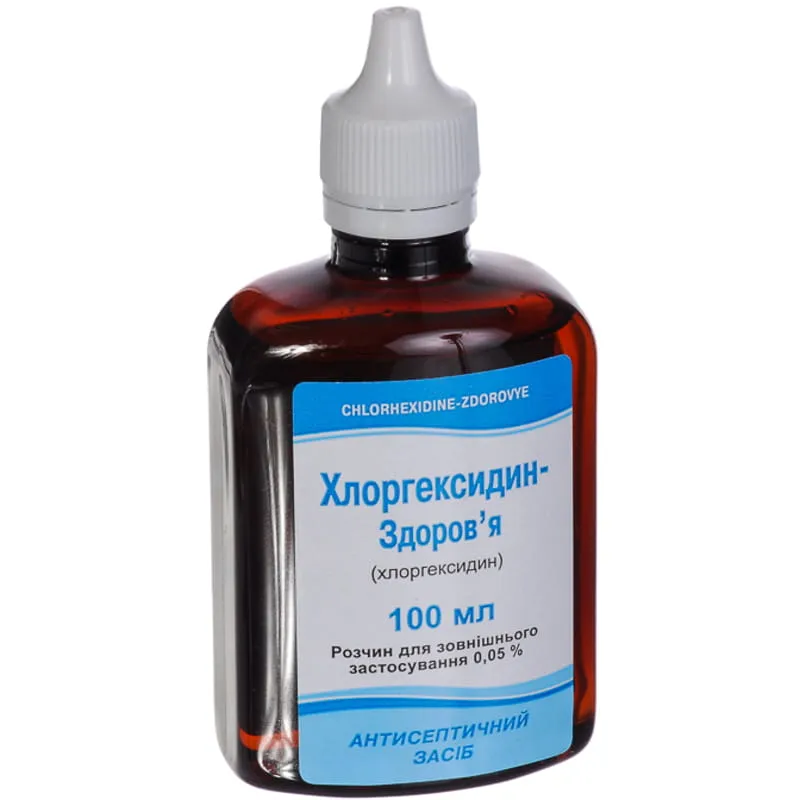
Table of Contents
INSTRUCTION FOR MEDICAL USE OF THE MEDICINAL PRODUCT CHLORHEXIDINE-ZDOROVIYA
Composition:
Active substance: 1 ml of the preparation contains chlorhexidine digluconate 0.5 mg;
Excipient: purified water.
Pharmaceutical form. Solution.
Main physicochemical characteristics: clear, colorless, odorless solution.
Pharmacotherapeutic group. Antiseptics and disinfectants. ATC code D08A C02.
Pharmacological properties.
Pharmacodynamics.
Chlorhexidine digluconate is a cationic biguanide. Chlorhexidine binds to the amino groups of cellular proteins. It penetrates into the intracellular membranes of bacterial cells, accumulates in the cytoplasm, and alters membrane function, inhibiting oxygen uptake, which leads to a decrease in angiotensin-converting enzyme levels and cell death. It disrupts DNA and interferes with DNA synthesis in microorganisms. Provides prolonged persistent antimicrobial activity, preventing microbial proliferation for at least 6 hours after administration.
Chlorhexidine digluconate exerts rapid and pronounced activity against gram-positive and gram-negative bacteria (Treponema pallidum, Chlamydia spp., Ureaplasma spp., Neisseria gonorrhoeae, Gardnerella vaginalis, Bacteroides fragilis), protozoa (Trichomonas vaginalis), and viruses (Herpes virus). Its antimicrobial activity is not reduced in the presence of blood or other organic substances.
Pharmacokinetics.
It does not penetrate through intact skin. It is practically not absorbed from the gastrointestinal tract. After accidental ingestion of 300 mg, maximum concentration is reached within 30 minutes and amounts to 0.206 μg/L. It is excreted predominantly in feces (90%), with less than 1% eliminated by the kidneys.
Clinical Characteristics.
Indications.
Prophylaxis of sexually transmitted infections (syphilis, gonorrhea, trichomoniasis, chlamydia, ureaplasmosis, genital herpes).
Disinfection of purulent wounds and infected burn surfaces; treatment of skin and mucous membrane infections in surgery, obstetrics, gynecology, urology (urethritis, urethroprostatitis), and dentistry (rinsing and irrigation – gingivitis, stomatitis, aphthae, periodontitis, alveolitis).
Disinfection of minor injuries (wounds, scratches, burns).
Contraindications.
Hypersensitivity to the components of the medicinal product. Predisposition to allergic reactions and allergic diseases, dermatitis, viral skin diseases.
It is not recommended for use on conjunctiva or for irrigation of cavities, wounds with large surface area, during surgeries on areas of the central nervous system and auditory canal, in ophthalmology, or for introduction into the auditory canal.
Interaction with other medicinal products and other types of interactions.
The medicinal product increases bacterial sensitivity to chloramphenicol, kanamycin sulfate, neomycin sulfate, and cephalosporins. It is incompatible with iodine-containing preparations due to the risk of dermatitis development, and with soap and other anionic compounds (colloids, saponins, sodium lauryl sulfate, gum arabic, carboxymethylcellulose). It is compatible with preparations containing cationic groups (benzalkonium chloride, cetrimonium bromide). Ethanol enhances the effect of the preparation.
At a concentration of 0.05%, chlorhexidine bigluconate is incompatible with borates, carbonates, chlorides, citrates, phosphates, and sulfates, as poorly soluble precipitates are formed.
Special precautions for use.
Avoid contact of the agent with the wound interior in patients with open cranial trauma, spinal cord injury, or perforation of the tympanic membrane. Contact of hypochlorite bleaching agents with tissues previously exposed to chlorhexidine-containing products may lead to the formation of brownish stains. The bactericidal activity of the agent increases with rising temperature. At temperatures above 100 °C, the agent partially decomposes.
The medicinal product must not enter the eyes. Serious cases of persistent corneal damage, potentially requiring corneal transplantation, have been reported following accidental eye exposure to chlorhexidine-containing agents, even when eye protection measures were applied, due to solution spread beyond the intended surgical site. Extreme caution must be exercised during application to ensure the medicinal product does not spread beyond the intended area of application, particularly into the eyes. Particular caution is required in anesthetized patients, who may be unable to immediately report eye exposure. If the medicinal product enters the eyes, immediately irrigate thoroughly with water. Seek immediate consultation with an ophthalmologist.
The agent is practically not absorbed in the stomach. In case of accidental ingestion, gastric lavage should be performed using raw milk, raw egg, or gelatin. Symptomatic treatment should be administered if necessary.
Do not dilute with hard water. Sterilization in an autoclave at 116 °C for 30 minutes is permissible. Do not sterilize using ionizing radiation.
Do not violate the instructions for use of the medicinal product—this may harm health.
Use during pregnancy or breastfeeding.
The agent may be used during pregnancy or breastfeeding only if the benefit to the mother outweighs the potential risk to the fetus/infant. Do not disinfect the breast surface immediately before breastfeeding.
Ability to influence reaction rate when driving or operating machinery.
Has no effect.
Method of Administration and Dosage
The product is for external use only.
Before using the product for the prevention of sexually transmitted infections, empty the urinary bladder, wash your hands and genital organs. Then remove the cap, squeeze the bottle walls and apply the solution stream to cleanse the skin of the pubic area, inner surfaces of the thighs, and genital organs. Insert the nozzle tip into the external urethral orifice, press it tightly against the urethra with your hand, and squeeze out 2–3 mL of solution (for men) or 1–2 mL of solution (for women; into the vagina – 5–10 mL). Without separating the fingers, withdraw the nozzle from the urethra and retain the solution for 2–3 minutes. Women should also spray the remaining solution into the vagina. After the procedure, it is recommended not to empty the bladder for 2 hours. This preventive measure is effective if performed no later than 2 hours after sexual intercourse.
For minor skin injuries, treat the skin around the wound with the solution, then apply a gauze pad soaked in the solution onto the wound and secure it with a bandage or adhesive plaster. Change the dressing 2–3 times daily. The duration of treatment depends on the course of the disease, the nature of combined therapy, and the patient's tolerance of the product.
For complex treatment of urethritis and urethroprostatitis, administer 2–3 mL of the solution into the urethra 1–2 times daily for 10 days. Perform procedures every other day.
The solution should be used as irrigations, rinses, and applications: apply 5–10 mL of solution to the affected skin or mucous membranes, leaving it in contact for 1–3 minutes, 2–3 times daily (using a swab or by irrigation).
During pregnancy or breastfeeding, the product may be used at the usual recommended doses.
Children
Do not use in children under 12 years of age.
Overdose
Cases of overdose with external use are unknown.
Accidental ingestion of a large amount of the substance (300 mL of chlorhexidine) may result in a fatal outcome with signs of hepatic and renal failure.
If ingested, the product is practically not absorbed; gastric lavage should be performed using milk, gelatin, or raw egg. If necessary, symptomatic therapy should be administered.
Adverse reactions.
The medicinal product is generally well tolerated; however, in individual cases, hypersensitivity reactions are possible, including dryness and itching of the skin, dermatitis, photosensitization, stickiness of the hands observed within 3–5 minutes. When treating gingivitis – tooth enamel discoloration, tartar deposition, taste disturbances.
Eye disorders: corneal erosion, epithelial defect/corneal damage, severe irreversible visual impairment. In the post-marketing period, cases of severe corneal erosion and serious irreversible visual impairment due to accidental exposure to eyes have been reported with unknown frequency, resulting in some patients requiring corneal transplantation (see section "Special precautions for use").
If any adverse events occur, medical advice should be sought.
Shelf life. 3 years.
Storage conditions. Store in original packaging at a temperature not exceeding 25 °C.
Keep out of reach and sight of children.
Packaging. 50 mL or 100 mL in bottles closed with applicators and caps; 100 mL in bottles closed with caps or with dropper caps or dropper stoppers and caps for dropper.
Availability. Over-the-counter.
Manufacturer. LIMITED LIABILITY COMPANY "CORPORATION "ZDOROVIYA".
Manufacturer's location and address of business activity.
Ukraine, 61013, Kharkiv region, city of Kharkiv, Shevchenko Street, 22.