Captopril
Ukraine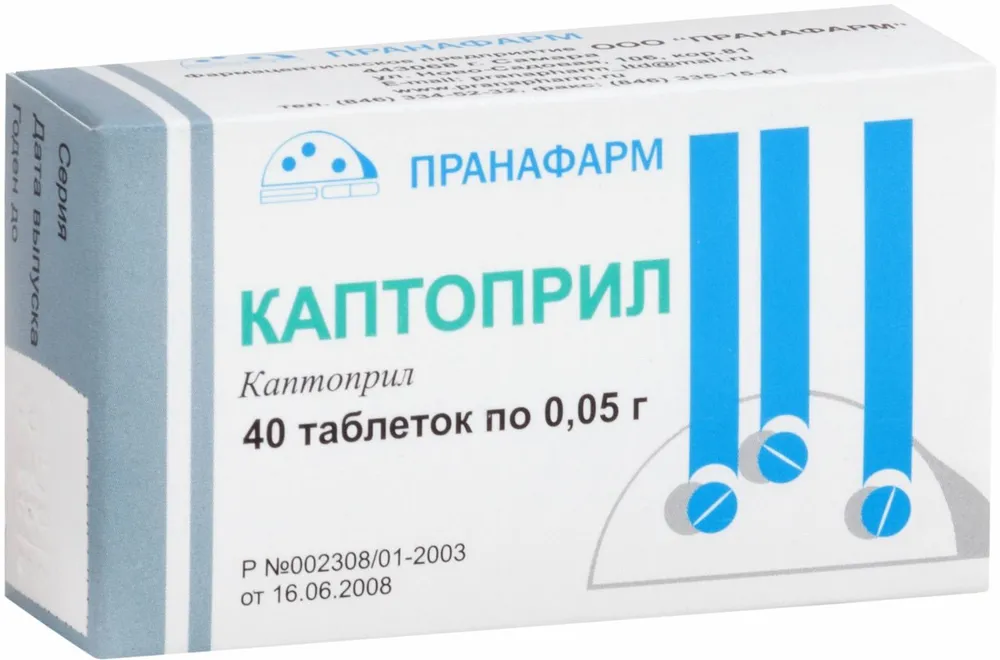
Table of Contents
INSTRUCTIONS FOR MEDICAL USE OF THE MEDICINAL PRODUCT CAPTOPRIL (CAPTOPRIL)
Composition:
Active substance: captopril;
1 tablet contains 25 mg of captopril, calculated as 100 % substance;
Excipients: potato starch; lactose monohydrate; povidone; calcium stearate; silicon dioxide, anhydrous, colloidal.
Pharmaceutical form. Tablets.
Main physicochemical properties: white or almost white tablets with a flat surface, with one or two notches, bevelled edges.
Pharmacotherapeutic group. Agents acting on the renin-angiotensin system. Angiotensin-converting enzyme (ACE) inhibitors, single-component.
ATC code C09A A01.
Pharmacological properties.
Pharmacodynamics.
The beneficial effects of ACE inhibitors are primarily due to inhibition of the plasma renin-angiotensin-aldosterone system. Renin is an endogenous enzyme produced by the kidneys and released into the systemic circulation, where it converts angiotensinogen into angiotensin-I, a relatively inactive decapeptide. Angiotensin-I is then converted by angiotensin-converting enzyme (ACE), a peptidyl-dipeptidase, into angiotensin-II. Angiotensin-II is a potent vasoconstrictor responsible for arterial vasoconstriction and increased blood pressure, as well as for stimulating the adrenal glands to produce aldosterone. Inhibition of ACE leads to reduced plasma levels of angiotensin-II, thereby decreasing vasoconstrictor activity and aldosterone production. Although the reduction in aldosterone is modest, a slight increase in serum potassium concentration may occur, along with sodium and fluid loss. Removal of the negative feedback of angiotensin-II on renin secretion results in increased plasma renin activity.
Another function of the converting enzyme is the degradation of the potent vasodilatory kinin peptide bradykinin into inactive metabolites. Therefore, ACE inhibition leads to increased activity of the kallikrein-kinin system, which contributes to peripheral vasodilation through activation of the prostaglandin system. This mechanism may be involved in the antihypertensive effect of ACE inhibitors and may also account for certain adverse reactions.
Blood pressure reduction typically occurs maximally within 60–90 minutes after an oral dose of captopril. The duration of effect is dose-dependent. Blood pressure reduction may progress gradually, and several weeks of therapy may be required to achieve maximal therapeutic effect. The antihypertensive effects of captopril and thiazide diuretics are complementary.
With long-term use, captopril reduces the degree of left ventricular myocardial hypertrophy, prevents progression of heart failure, and slows the development of left ventricular dilation. It reduces the tone of renal glomerular efferent arterioles, thereby improving intraglomerular hemodynamics, and helps prevent the development of diabetic nephropathy.
Pharmacokinetics.
Captopril is an orally active drug that does not require biotransformation to exert its effect. Mean minimal absorption is approximately 75%. Peak plasma concentrations are reached within 60–90 minutes. The presence of food in the gastrointestinal tract reduces absorption by approximately 30–40%. Protein binding, primarily to albumin, is about 25–30%. The apparent half-life of unchanged captopril in blood is approximately 2 hours. More than 95% of the absorbed dose is excreted in urine within 24 hours; 40–50% as unchanged drug and the remainder as inactive disulfide metabolites (captopril disulfide and captopril-cysteine disulfide). Impaired renal function may lead to drug accumulation. Therefore, dosage reduction and/or prolonged dosing intervals are recommended for patients with impaired renal function (see section "Dosage and administration").
Animal studies indicate that captopril does not significantly penetrate the blood-brain barrier.
Lactation. Data show that in women taking oral captopril 100 mg three times daily, the average peak concentration in breast milk was 4.7 mcg/L, measured 3.8 hours after dose administration. Based on these data, the maximum daily dose that an infant could receive is less than 0.002% of the maternal daily dose. Captopril can be removed from systemic circulation by hemodialysis and peritoneal dialysis. Clearance by hemodialysis ranges from 4.8 to 7.2 L/h, depending on the filters used. During a 4-hour hemodialysis session, 30–40% of captopril is removed from the blood, while metabolite elimination is somewhat lower.
The disulfide metabolites of captopril are excreted more slowly by the kidneys than captopril itself. Since these disulfide metabolites are reversibly converted back to captopril in the body, accumulation of captopril can be expected in patients with renal insufficiency. Accumulation of captopril metabolites in patients with renal insufficiency leads to a stronger pharmacodynamic effect and prolonged action. Therefore, captopril doses in such patients should be adjusted according to renal function.
In patients with hepatic impairment, the renin-angiotensin system functions normally. Since captopril is an active drug and not a prodrug, its effect is comparable to that observed in hypertensive patients without hepatic impairment.
In patients with heart failure, elimination of captopril is slowed. Therefore, patients with heart failure should be initiated on a lower starting dose of captopril, and doses should be adjusted based on the achieved therapeutic response.
The pharmacokinetics of captopril in healthy elderly volunteers are similar to those in younger healthy volunteers. Therefore, standard daily doses of captopril may be administered to elderly patients with hypertension and normal renal function.
Clinical characteristics.
Indications.
- Arterial hypertension.
- Heart failure. Captopril is indicated for the treatment of chronic heart failure with reduced ventricular systolic function, as well as in combination with diuretics and, if necessary, with digitalis and beta-blockers.
- Myocardial infarction:
- short-term (4 weeks) treatment with captopril may be initiated within 24 hours after myocardial infarction in patients with stable clinical condition;
- for long-term prophylaxis of symptomatic heart failure, the drug is indicated in patients with clinically stable condition and asymptomatic left ventricular dysfunction (ejection fraction ≤ 40%).
- Diabetic nephropathy in patients with type I diabetes mellitus manifested by macroproteinuria.
Contraindications.
- Hypersensitivity to captopril, to any excipient, or to other angiotensin-converting enzyme (ACE) inhibitors;
- angioedema (including history of angioedema after ACE inhibitors, hereditary or idiopathic);
- bilateral renal artery stenosis affecting hemodynamics, or stenosis of the artery of a solitary kidney affecting hemodynamics;
- porphyria;
- galactose intolerance, lactase deficiency, or glucose-galactose malabsorption syndrome;
- pregnancy; also contraindicated in women planning pregnancy (see section "Use in pregnancy or breast-feeding");
- breast-feeding period (see section "Use in pregnancy or breast-feeding");
- concomitant use of captopril with aliskiren-containing products in patients with diabetes mellitus or in patients with renal impairment (glomerular filtration rate < 60 mL/min/1.73 m²).
Interaction with other medicinal products and other forms of interaction.
Potassium-sparing diuretics or potassium-containing dietary supplements. ACE inhibitors reduce potassium loss caused by diuretics. Potassium-sparing diuretics (e.g., spironolactone, triamterene, or amiloride), potassium supplements, or potassium-containing salt substitutes may lead to hyperkalemia. When used concomitantly, especially in the presence of hypokalemia, they should be administered with great caution and with frequent monitoring of serum potassium concentration.
Diuretics (thiazide or loop diuretics). Prior treatment with high-dose diuretics may lead to reduced circulating blood volume and increase the risk of significant hypotension (see section "Special precautions for use"). The hypotensive effect can be minimized by discontinuing the diuretic, increasing salt and fluid intake, or initiating therapy with a low dose of captopril. However, no clinically significant interaction has been observed with hydrochlorothiazide or furosemide.
Other antihypertensive agents. Concomitant use of captopril with other antihypertensive agents (e.g., beta-blockers and long-acting calcium channel blockers) is safe, and their combined use may enhance the antihypertensive effect of captopril. Caution should be exercised when co-administering nitrates, including nitroglycerin, or other vasodilators.
Clinical trial data have shown that dual blockade of the renin-angiotensin-aldosterone system (RAAS) by combining ACE inhibitors, angiotensin-II receptor blockers, or aliskiren is associated with a higher incidence of adverse reactions such as hypotension, hyperkalemia, and impaired renal function (including acute renal failure), compared to monotherapy with agents acting on the RAAS.
Treatment of acute myocardial infarction. Captopril may be used concomitantly with acetylsalicylic acid (at cardiologic doses), thrombolytics, beta-blockers, and/or nitrates in patients with myocardial infarction.
Lithium. Concomitant use of ACE inhibitors and lithium may cause a transient increase in serum lithium levels and lithium toxicity. Concurrent use of ACE inhibitors and thiazide diuretics may further increase serum lithium levels and increase the risk of lithium toxicity. Therefore, concomitant use of captopril with lithium is not recommended. If such combination therapy is necessary, careful monitoring of serum lithium levels is required.
Tricyclic antidepressants/neuroleptics. Concomitant use of certain tricyclic antidepressants and neuroleptics with ACE inhibitors may result in additional reduction in blood pressure (see section "Special precautions for use"). Postural hypotension may occur.
Allopurinol, procainamide, cytostatic or immunosuppressive agents. Concomitant use with ACE inhibitors increases the risk of leukopenia, particularly when the latter are used at doses exceeding the recommended.
Nonsteroidal anti-inflammatory drugs (NSAIDs). It has been reported that ACE inhibitors and NSAIDs may have an additive effect on increasing serum potassium levels, which may impair renal function. This effect is usually reversible. Rarely, acute renal failure may occur, particularly in patients with pre-existing renal impairment, such as elderly patients or dehydrated patients. Prolonged use of NSAIDs may reduce the antihypertensive effect of ACE inhibitors.
Sympathomimetics. These may reduce the antihypertensive effect of ACE inhibitors; therefore, careful monitoring of blood pressure is required.
Antidiabetic agents. ACE inhibitors, including captopril, may potentiate the antihyperglycemic effect of insulin and other oral antidiabetic agents (sulfonylureas) in patients with diabetes mellitus. This effect is very rare, but if it occurs, a reduction in the dose of antidiabetic agents may be necessary during concomitant therapy with ACE inhibitors.
Special precautions for use.
Dual blockade of the RAAS: The combined use of ACE inhibitors, angiotensin-II receptor blockers, or aliskiren increases the risk of hypotension, hyperkalemia, and impaired kidney function (including acute renal failure). Therefore, dual blockade of the renin-angiotensin-aldosterone system (RAAS) by combining ACE inhibitors, angiotensin-II receptor blockers, or aliskiren is not recommended.
If dual blockade therapy is absolutely necessary, it should be administered under physician supervision with frequent monitoring of renal function, electrolyte levels, and blood pressure.
ACE inhibitors and angiotensin-II receptor blockers must not be used concomitantly in patients with diabetic nephropathy.
Arterial hypotension. Arterial hypotension may rarely occur in patients with arterial hypertension who have reduced blood volume and/or decreased sodium levels due to diuretic therapy, restricted dietary salt intake, diarrhea, vomiting, or hemodialysis. Before initiating ACE inhibitor therapy, blood volume should be corrected and consideration should be given to initiating treatment with the lowest effective dose.
Patients with heart failure are also at risk of symptomatic hypotension when receiving ACE inhibitors. Therefore, these patients should be started on a lower initial dose of captopril. Dose escalation of ACE inhibitors and diuretics should be performed under close medical supervision.
Excessive reduction in blood pressure in patients with cerebrovascular and ischemic heart disease increases the risk of myocardial infarction and stroke. In case of hypotension, the patient should be placed in a supine position (lying on the back), and if necessary, intravascular volume should be expanded by administration of 0.9% sodium chloride solution.
Renovascular hypertension. There is an increased risk of hypotension and renal failure in patients with bilateral renal artery stenosis or stenosis of the artery of a solitary kidney who are taking ACE inhibitors. In such cases, renal function may cease even with minor fluctuations in serum creatinine levels. Therefore, treatment of such patients should be initiated with low doses of captopril under close medical supervision, with careful dose titration and continuous monitoring of renal function during therapy.
Renal impairment. Patients with impaired renal function (creatinine clearance ≤ 40 mL/min) require dose adjustment according to creatinine clearance (see section "Dosage and administration"). During captopril therapy, serum potassium and creatinine levels should be monitored regularly in these patients.
Angioedema. Rarely, angioedema of the extremities, face, lips, mucous membranes, tongue, larynx, and/or glottis may develop during treatment with ACE inhibitors, particularly within the first weeks of therapy. However, angioedema may exceptionally develop during prolonged ACE inhibitor therapy. In such cases, treatment must be discontinued immediately. Angioedema of the tongue, glottis, and/or larynx may be life-threatening; therefore, immediate intervention is required, including hospitalization and observation for at least 12–24 hours until complete resolution of symptoms.
Cough. Cases of cough have been reported during ACE inhibitor therapy. The cough is typically persistent, dry, and non-productive, and resolves upon discontinuation of therapy.
Hepatic impairment. ACE inhibitors have rarely been associated with a syndrome beginning with cholestatic jaundice, progressing to fulminant necrotizing hepatitis, and sometimes resulting in death. The mechanism of this syndrome remains unclear. Therefore, if jaundice or elevated liver enzymes occur during ACE inhibitor therapy, treatment should be discontinued immediately and the patient should be closely monitored.
Hyperkalemia. During treatment with ACE inhibitors, including captopril, serum potassium levels may increase in some patients. The risk of hyperkalemia is increased in patients with renal impairment, diabetes mellitus, or those concurrently receiving potassium-sparing diuretics, potassium supplements, potassium-containing salt substitutes, or other drugs that may cause hyperkalemia (e.g., heparin). If concomitant use of these agents is considered necessary, regular monitoring of serum potassium levels is recommended.
Aortic or mitral valve stenosis / hypertrophic cardiomyopathy. ACE inhibitors should be used with caution in patients with aortic or mitral valve stenosis or left ventricular outflow tract obstruction. Captopril should be avoided in patients with cardiogenic shock or significant hemodynamic disturbances.
Lithium. The combination of lithium and captopril is not recommended (see section "Interaction with other medicinal products and other forms of interaction").
Neutropenia/agranulocytosis. Cases of neutropenia/agranulocytosis, thrombocytopenia, and anemia have been reported in patients receiving ACE inhibitors. Neutropenia is rare in patients with normal renal function and no other complicating factors.
Captopril should be used cautiously in patients with vascular involvement in collagenoses (e.g., systemic lupus erythematosus, scleroderma), particularly when combined with antidepressants, allopurinol, procainamide, or a combination of these factors, especially if renal impairment is already present. Serious infections, sometimes unresponsive to intensive antibiotic therapy, may develop in some of these patients.
If captopril is administered to such patients, monitoring of white blood cell count and complete blood count is recommended before treatment initiation, every 2 weeks during the first 3 months of therapy, and periodically thereafter. Patients should be instructed to promptly report any signs of infection (e.g., sore throat, fever) and undergo complete blood count testing. Captopril and any concomitant medication (see section "Interaction with other medicinal products and other forms of interaction") should be discontinued immediately if neutropenia (neutrophils < 1000/mm³) is detected or suspected.
In most patients, neutrophil count returns rapidly to normal after discontinuation of captopril.
Proteinuria. Proteinuria may occur in patients with impaired renal function or those receiving high doses of ACE inhibitors.
Total urinary protein levels exceeding 1 g per day were observed in approximately 0.7% of patients receiving captopril. Most of these patients had pre-existing kidney disease, were receiving relatively high doses of captopril (over 150 mg daily), or both factors were present. Nephrotic syndrome occurs in 1 out of 5 patients with proteinuria. In most cases, proteinuria decreases or resolves within 6 months, regardless of continued captopril use. In patients with proteinuria, parameters of renal function such as serum urea and creatinine levels rarely change.
In patients with a history of kidney disease, urine protein levels (dipstick test of first morning urine) should be assessed before initiating treatment and periodically thereafter.
Anaphylactoid reactions during allergen desensitization with insect venom from Hymenoptera may occur in patients concurrently taking ACE inhibitors, which in rare cases may be life-threatening. These reactions may be avoided by temporarily discontinuing ACE inhibitor therapy before each desensitization session, but reactions may recur following accidental re-exposure to the antigen. Therefore, ACE inhibitor therapy should be administered cautiously in patients undergoing such desensitization procedures.
Cases of anaphylactoid reactions have been reported during dialysis using high-flux membranes or during low-density lipoprotein apheresis with dextrin sulfate. Alternative dialysis methods, membranes, or drugs from another class should be considered for such patients.
Surgery/anesthesia. Arterial hypotension may occur in patients undergoing major surgery under anesthesia. If blood pressure decreases, intravascular volume should be replenished.
Diabetes mellitus. In patients with diabetes mellitus receiving oral antidiabetic agents or insulin, blood glucose levels should be closely monitored during the first month of concomitant ACE inhibitor therapy.
Ethnic characteristics. Like other ACE inhibitors, captopril is less effective as an antihypertensive agent in patients of Black race, possibly due to a higher prevalence of low-renin essential hypertension.
Use during pregnancy or breastfeeding.
Pregnancy. This medicinal product is contraindicated in pregnant women or women planning to become pregnant. If pregnancy is confirmed during treatment, the drug must be discontinued immediately and replaced with another medicinal product approved for use during pregnancy.
Epidemiological data on the teratogenic risk associated with ACE inhibitors during the first trimester of pregnancy are inconclusive. A slight increase in risk cannot be excluded. If continued therapy with ACE inhibitors is not considered essential, women planning pregnancy should be switched to alternative antihypertensive therapy with an established safety profile during pregnancy.
It is known that ACE inhibitor use during the second and third trimesters of pregnancy may cause fetotoxicity (impaired renal function, oligohydramnios, delayed skull ossification) and neonatal toxicity (renal failure, hypotension, hyperkalemia).
If ACE inhibitor use occurs during the second trimester of pregnancy, ultrasound assessment of kidney and skull development is recommended.
Newborns whose mothers received ACE inhibitors should be closely monitored for arterial hypotension (see also sections "Contraindications" and "Special precautions for use").
Lactation. Captopril is contraindicated during breastfeeding.
Ability to affect reaction speed when driving or operating machinery. Caution is required when driving vehicles or operating machinery requiring high concentration, as reaction speed may be reduced, particularly at the beginning of treatment, during dose adjustments, or when alcohol is consumed concurrently. These effects are individual and depend on patient-specific factors.
Dosage and Administration
Dosage should be adjusted according to the patient's condition (see section "Special Warnings and Precautions for Use") and the blood pressure response to treatment.
Arterial Hypertension
The recommended initial dose of captopril is 25–50 mg daily, divided into two doses. After 2–4 weeks of treatment, the dose may be titrated, depending on achieved blood pressure, up to 100–150 mg daily, divided into two doses. Captopril may be used alone or in combination with other antihypertensive agents, particularly thiazide diuretics. A once-daily regimen may be used when captopril is combined with another antihypertensive agent such as a thiazide diuretic.
For patients with increased activity of the renin-angiotensin-aldosterone system (hypovolemia, renovascular hypertension, decompensated heart failure), therapy should preferably be initiated with a single dose of 6.25 mg or 12.5 mg. When a dose lower than 12.5 mg is required, alternative captopril formulations allowing such dosing should be used. Initiation of such therapy should be under close medical supervision, followed by administration twice daily. The dose may be gradually increased to 50 mg or 100 mg daily in one or two divided doses.
Heart Failure
Treatment of heart failure with captopril should be initiated under close medical supervision. The initial dose is 6.25–12.5 mg two or three times daily. Titration to a maintenance dose (75–150 mg daily) should be based on the patient's response to treatment, clinical status, and tolerability, up to a maximum dose of 150 mg daily in two divided doses. The dose should be increased gradually, with intervals of at least 2 weeks, to assess the patient's response to therapy.
Myocardial Infarction
- Short-term treatment: captopril therapy should be initiated in hospital as early as possible after symptom onset in patients with stable hemodynamics. A test dose of 6.25 mg should be administered, followed by 12.5 mg after 2 hours, and then 25 mg after 12 hours. Starting the next day, captopril should be administered at a dose of 100 mg daily in two divided doses for 4 weeks, provided no adverse hemodynamic reactions occur. At the end of the 4-week treatment period, the patient's condition should be re-evaluated to determine further management in the post-myocardial infarction phase.
- Long-term treatment: if captopril has not been initiated within the first 24 hours of acute myocardial infarction, treatment should be started between day 3 and day 16 after the infarction, once appropriate treatment conditions are ensured (stable hemodynamics and management of any residual ischemia). Therapy should be initiated in hospital under strict monitoring (particularly of blood pressure) until the dose of 75 mg daily is reached. Initial dosing should be low (see section "Special Warnings and Precautions for Use"), especially in patients with normal or low blood pressure at the start of therapy. Treatment should begin with a dose of 6.25 mg, followed by 12.5 mg three times daily for 2 days, then 25 mg three times daily, provided no adverse hemodynamic reactions occur. The recommended dose for effective cardioprotection during long-term treatment is 75–150 mg daily in two or three divided doses. In cases of symptomatic hypotension, as in heart failure, doses of diuretics and/or other concomitant vasodilating agents may be reduced to achieve a stable captopril dose. If necessary, the captopril dose should be adjusted according to the patient's clinical response. Captopril may be used in combination with other treatments for myocardial infarction, such as thrombolytic agents, beta-blockers, and acetylsalicylic acid.
Diabetic nephropathy in patients with type I diabetes: captopril is administered at a dose of 75–100 mg daily in two divided doses. Combination with other antihypertensive agents may be necessary if needed.
Renal impairment: since captopril is primarily excreted by the kidneys, the dose should be reduced or the dosing interval increased in patients with impaired renal function. For patients with severe renal impairment requiring concomitant diuretic therapy, loop diuretics (furosemide) are preferred over thiazide diuretics.
The following daily doses are recommended for patients with impaired renal function to avoid accumulation of captopril in the body.
| Creatinine clearance (ml/min/1.73 m²) |
Initial daily dose (mg) |
Maximum daily dose (mg) |
| > 40 |
25–50 |
150 |
| 21–40 |
25 |
100 |
| 10–20 |
12.5 |
75 |
| < 10 |
6.25 |
37.5 |
Elderly patients: As with other antihypertensive agents, captopril therapy should be initiated at a dose of 6.25 mg twice daily, since elderly patients may have impaired function of both the kidneys and other organs and systems.
The dose should be titrated according to the blood pressure response to the drug, while prescribing the lowest possible dose that adequately controls blood pressure.
Children: The efficacy and safety of captopril in children have not been sufficiently studied. Captopril administration in children should be initiated under close medical supervision. The recommended initial dose is 0.3 mg/kg body weight. For patients requiring special caution (children with renal impairment, premature newborns, neonates, and infants—due to immaturity of the urinary system), the initial dose should be only 0.15 mg/kg body weight. Captopril is usually administered to children three times a day; however, the dosing interval should be individually adjusted depending on the response to the drug.
Administration
Captopril is taken orally before, during, or after meals.
The drug should be taken regularly at the same time each day. If a dose is missed, it should be taken as soon as possible; however, if only a few hours remain before the next scheduled dose, the next dose should be taken according to the regular schedule, and the missed dose should not be taken. Two doses of captopril should not be taken simultaneously.
Children. The efficacy and safety of captopril in children have not been sufficiently studied. Captopril should be administered to children under strict medical supervision.
Overdose. Manifested by severe arterial hypotension with possible development of shock, stupor, bradycardia, electrolyte imbalance, and renal failure.
Treatment. To prevent absorption of a large dose of captopril, gastric lavage should be performed and sorbents and sodium sulfate should be administered as soon as possible within 30 minutes after captopril ingestion. In case of arterial hypotension symptoms, the patient should be placed in a horizontal position and immediate correction of plasma volume and electrolyte balance should be performed.
Angiotensin-II may be used. Bradycardia or excessive systemic reactions should be treated by administration of atropine. Consideration should be given to the use of a cardiac pacemaker. Hemodialysis is effective.
Side effects.
Cardiovascular system: tachycardia, tachyarrhythmia, angina pectoris, arterial hypotension, Raynaud's syndrome, flushing, pallor of the face, cardiac arrest, cardiogenic shock.
Respiratory system, thoracic organs and mediastinum: dry, irritating (non-productive) cough and dyspnea. Dry cough usually resolves within several weeks after discontinuation of captopril therapy. Bronchospasm, rhinitis, allergic alveolitis/eosinophilic pneumonia may also occur.
Gastrointestinal tract: nausea, vomiting, gastric irritation, abdominal pain, diarrhea, constipation, dry mouth, stomatitis/aphthous ulcers, glossitis, peptic ulcer, pancreatitis.
Hepatobiliary system: liver function abnormalities, cholestasis including jaundice, hepatitis (including necrotizing hepatitis), increased levels of liver enzymes and bilirubin. Liver function disturbances usually resolve after discontinuation of captopril therapy.
Neurological disorders: taste disturbances, dizziness, somnolence, headache, paresthesia, cerebrovascular events including stroke and loss of consciousness.
Blood and lymphatic system: leukopenia, neutropenia/agranulocytosis, pancytopenia (particularly in patients with impaired renal function), anemia (including aplastic and hemolytic), thrombocytopenia, lymphadenopathy, eosinophilia.
Immune system: autoimmune disorders and/or positive antinuclear antibody test.
Metabolism and nutrition disorders: anorexia, acidosis, hypoglycemia.
Psychiatric disorders: sleep disturbances, confusion, depression.
Eye disorders: blurred vision.
Skin and subcutaneous tissue: pruritus, rash, alopecia, angioedema (see section "Special precautions"), urticaria, Stevens-Johnson syndrome, polymorphic erythema, photosensitivity, erythroderma, pemphigoid reactions, and exfoliative dermatitis.
Musculoskeletal and connective tissue: myalgia, arthralgia.
Renal and urinary system: renal function impairment including renal failure, polyuria, oliguria, and frequent urination, nephrotic syndrome.
Reproductive system and breast: impotence, gynecomastia.
General disorders: chest pain, fatigue, weakness, malaise.
Laboratory findings: proteinuria, hyperkalemia, hyponatremia (most commonly observed in patients on a salt-free diet and concomitant diuretic therapy), increased serum urea, creatinine and bilirubin levels, decreased hemoglobin and hematocrit levels, increased erythrocyte sedimentation rate, leukopenia, thrombocytopenia, eosinophilia, elevated antinuclear antibody titer. Captopril may cause false-positive urine ketone test results.
Angioedema of the face, eyelids, tongue, and peripheral edema occurred in approximately 1 in 1000 patients.
Interstitial edema has been observed in patients treated with ACE inhibitors.
Shelf life. 3 years.
Storage conditions.
Store in the original packaging at a temperature not exceeding 25 °C. Keep out of reach of children.
Packaging. 10 tablets per blister, 2 blisters per carton.
Prescription status. Prescription only.
Manufacturer. JSC "Kyivmedpreparat".
Manufacturer's address and location of business activity.
139 Saksaganskogo Street, Kyiv, 01032, Ukraine.