Hlynova
Ukraine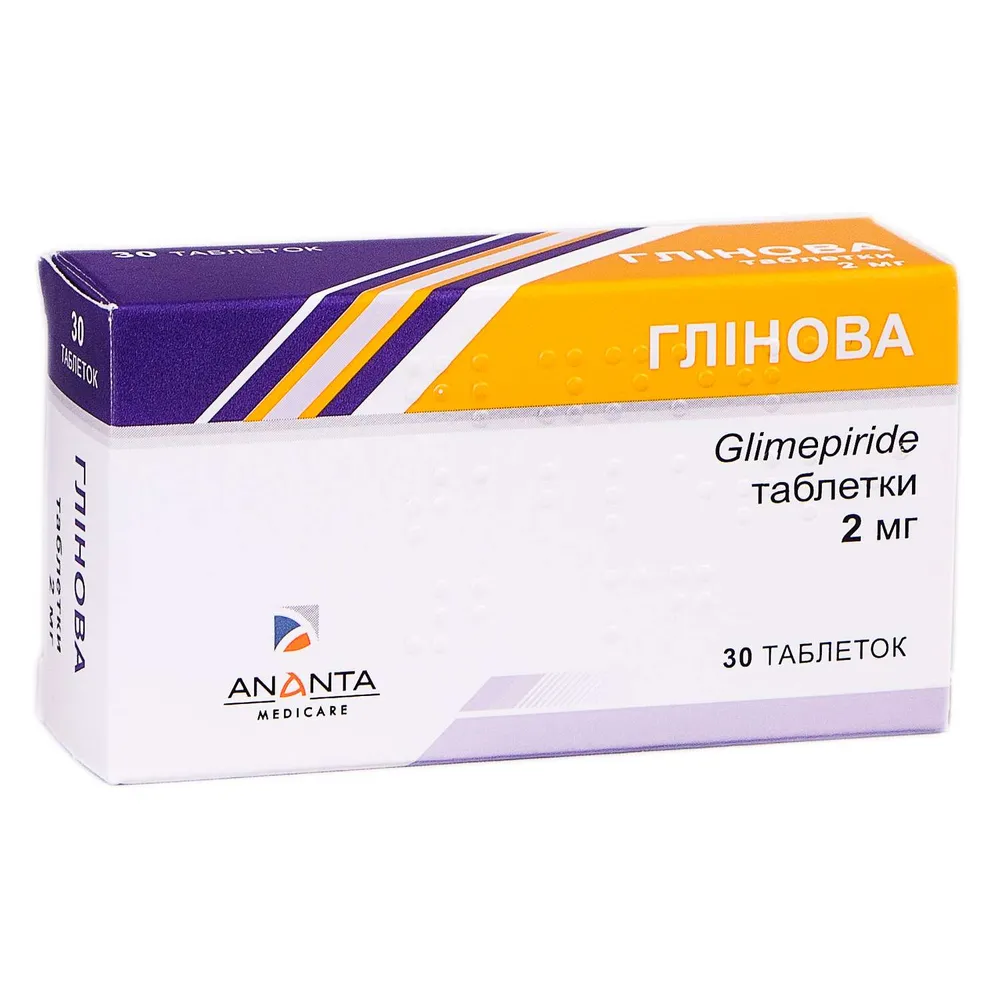
Table of Contents
INSTRUCTIONS FOR MEDICAL USE OF THE MEDICINAL PRODUCT Glinova (Glinova)
Composition:
Active substance: glimepiride;
1 tablet contains 1 mg or 2 mg or 3 mg or 4 mg of glimepiride,
Excipients:
tablets of 1 mg: lactose monohydrate, sodium starch glycolate (type A), povidone, polysorbate 80, microcrystalline cellulose, magnesium stearate, iron oxide red (E 172);
tablets of 2 mg: lactose monohydrate, sodium starch glycolate (type A), povidone, polysorbate 80, microcrystalline cellulose, magnesium stearate, iron oxide yellow (E 172), indigo carmine aluminum lake (E 132);
tablets of 3 mg: lactose monohydrate, sodium starch glycolate (type A), povidone, polysorbate 80, microcrystalline cellulose, magnesium stearate, iron oxide yellow (E 172);
tablets of 4 mg: lactose monohydrate, sodium starch glycolate (type A), povidone, polysorbate 80, microcrystalline cellulose, magnesium stearate, indigo carmine aluminum lake (E 132).
Pharmaceutical form. Tablets.
Main physicochemical properties:
tablets of 1 mg – capsule-shaped tablets with a flat surface, beveled edges, a score line on both sides, light pink in color;
tablets of 2 mg – capsule-shaped tablets with a flat surface, beveled edges, a score line on both sides, light green in color, specks may be present;
tablets of 3 mg – capsule-shaped tablets with a flat surface, beveled edges, a score line on both sides, light yellow in color;
tablets of 4 mg – capsule-shaped tablets with a flat surface, beveled edges, a score line on both sides, light blue in color.
Pharmacotherapeutic group.
Antidiabetic agents. Oral hypoglycemic agents, excluding insulin. Sulfonamides, urea derivatives. Glimepiride.
ATC code A10BB12.
Pharmacological properties.
Pharmacodynamics.
Glimepiride is an orally active hypoglycemic agent belonging to the sulfonylurea group. It can be used in insulin-independent diabetes mellitus.
Glimepiride acts primarily by stimulating insulin release from pancreatic beta cells.
As with other sulfonylurea drugs, this effect is based on increasing the sensitivity of pancreatic cells to physiological glucose stimulation. In addition, glimepiride has pronounced extrapancreatic activity, which is also characteristic of other sulfonylurea agents.
Insulin release
Sulfonylurea drugs regulate insulin secretion by closing ATP-dependent potassium channels located in the membrane of pancreatic beta cells. Closure of the potassium channel leads to depolarization of the beta cell and, consequently, opening of calcium channels, resulting in increased calcium influx into the cell, which in turn triggers insulin release via exocytosis.
Glimepiride binds rapidly and with high affinity to a membrane protein of the beta cell associated with the ATP-dependent potassium channel; however, its binding site location differs from the conventional sulfonylurea drug binding site.
Extrapancreatic activity
Extrapancreatic effects include, for example, improved insulin sensitivity of peripheral tissues and reduced hepatic insulin clearance. Utilization of blood glucose by peripheral tissues (muscle and adipose) occurs via specific transport proteins located in the cell membrane. Glucose transport into these tissues represents a rate-limiting step in glucose utilization. Glimepiride rapidly increases the number of active glucose-transporting molecules in the plasma membranes of muscle and adipose cells, thereby stimulating glucose uptake.
Glimepiride increases the activity of glycosylphosphatidylinositol-specific phospholipase C, which may correlate with drug-induced lipogenesis and glycogenesis in isolated muscle and fat cells.
Glimepiride inhibits hepatic glucose production by increasing intracellular concentrations of fructose-2,6-bisphosphate, which in turn suppresses gluconeogenesis.
General characteristics. In healthy individuals, the minimal effective oral dose is approximately 0.6 mg. The effect of glimepiride is dose-dependent and reproducible. The physiological response to acute physical stress, i.e., reduced insulin secretion, is preserved under the influence of glimepiride.
No significant difference in glimepiride's effect was observed when the drug was taken 30 minutes before or immediately before a meal. In patients with diabetes mellitus, adequate metabolic control over 24 hours was achieved with once-daily dosing.
Although the hydroxylated metabolite causes a slight but significant reduction in blood glucose levels in healthy individuals, this represents only a minor component of the overall drug effect.
Combination use with metformin
One study demonstrated improved metabolic control with combination therapy using glimepiride compared to metformin monotherapy in patients whose diabetes was not adequately controlled with maximum doses of metformin.
Combination use with insulin
Data on the use of glimepiride in combination with insulin are limited. Concomitant insulin therapy may be initiated in patients whose diabetes is not adequately controlled with maximum doses of glimepiride. In two studies, this combination achieved metabolic control comparable to insulin monotherapy; however, the average insulin dose required was lower with combination therapy.
Special patient categories
Children and adolescents. A 24-week active-controlled clinical trial (glimepiride up to 8 mg daily or metformin up to 2,000 mg daily) included 285 children (aged 8–17 years) with type 2 diabetes.
Both glimepiride and metformin led to a significant reduction in HbA1c compared to baseline (glimepiride -0.95 (SD 0.41); metformin -1.39 (SD 0.40)). However, glimepiride did not demonstrate non-inferiority compared to metformin regarding mean change in HbA1c from baseline. The difference between the two treatments was 0.44% in favor of metformin. The upper limit (1.05) of the 95% confidence interval for this difference exceeded the 0.3% non-inferiority margin. No new safety concerns with glimepiride in children were identified compared to those in adult patients with type 2 diabetes. Data on long-term efficacy and safety of the drug in children are lacking.
Pharmacokinetics.
Absorption: After oral administration, glimepiride has 100% bioavailability. Food intake does not significantly affect absorption but slightly slows the rate of absorption. Maximum plasma concentrations (Cmax) are reached approximately 2.5 hours after oral administration (mean value is about 0.3 µg/mL following multiple daily doses of 4 mg). There is a linear relationship between dose and Cmax, as well as between dose and AUC (area under the concentration-time curve).
Distribution. Glimepiride has a very low volume of distribution (approximately 8.8 L), roughly equivalent to the distribution volume of albumin, a high degree of plasma protein binding (>99%), and low clearance (approximately 48 mL/min).
In animals, glimepiride passes into breast milk. Glimepiride crosses the placenta. Penetration across the blood-brain barrier is low.
Metabolism and elimination. The mean terminal half-life at plasma concentrations corresponding to multiple dosing regimens is approximately 5 to 8 hours. A slight increase in half-life was observed after administration of large doses.
After a single radiolabeled dose of glimepiride, 58% of the radioactivity was recovered in urine and 35% in feces. The unchanged drug was not detected in urine. Two metabolites were identified in urine and feces, most likely formed via hepatic metabolism (main enzyme CYP2C9), one being a hydroxy derivative and the other a carboxy derivative. After oral administration of glimepiride, the terminal half-lives of these metabolites were 3 to 6 hours and 5 to 6 hours, respectively.
Comparison of pharmacokinetics after single-dose and multiple once-daily dosing showed no significant differences. Inter-individual variability was very low. No clinically relevant accumulation was observed.
Special patient categories
Pharmacokinetic parameters in men and women, as well as in young and elderly individuals (aged 65 years and older), were similar. In patients with reduced creatinine clearance, there was a tendency toward increased glimepiride clearance and reduced plasma concentrations, most likely due to faster elimination resulting from reduced protein binding. Renal excretion of both metabolites was impaired. Overall, additional risk of drug accumulation in these patients is not expected.
Pharmacokinetic parameters in five patients who underwent biliary tract surgery were similar to those in healthy individuals.
Children and adolescents
A pharmacokinetic, safety, and tolerability study after a single 1 mg dose of glimepiride administered under fed conditions in 30 children (4 aged 10–12 years and 26 aged 12–17 years) with type 2 diabetes showed that mean AUC(0-last), Cmax, and t1/2 values were similar to those previously observed in adults.
Preclinical safety data
Effects observed during preclinical studies occurred at exposure levels substantially exceeding the maximum exposure levels in humans, indicating their limited clinical relevance, or were due to the pharmacodynamic action of the drug (hypoglycemia). These findings were obtained within the framework of conventional safety pharmacology studies, repeated-dose toxicity studies, genotoxicity tests, carcinogenic potential, and reproductive toxicity studies. Adverse effects identified in the latter (including studies on embryotoxicity, teratogenicity, and developmental toxicity) were considered consequences of drug-induced hypoglycemic effects in pregnant females and offspring.
Clinical characteristics.
Indications.
Type 2 non-insulin-dependent diabetes mellitus, when blood glucose levels cannot be adequately controlled by diet, physical exercise, and weight reduction alone.
Contraindications.
Glianova is not indicated for the treatment of insulin-dependent diabetes mellitus type 1, diabetic ketoacidosis, diabetic precoma or coma, or severe renal or hepatic dysfunction.
Glianova must not be prescribed to patients with hypersensitivity to glimepiride or to any excipient contained in the formulation, or to sulfonylurea derivatives or other sulfonamide drugs (risk of hypersensitivity reactions).
Interaction with other medicinal products and other forms of interaction.
Concomitant use of Glianova with certain medicinal products may either reduce or enhance the hypoglycemic effect of glimepiride. Therefore, other medications should be taken only with the consent (or prescription) of a physician. Glimepiride is metabolized via cytochrome P450 2C9 (CYP2C9). It is known that co-administration of inducers (e.g., rifampicin) or inhibitors of CYP2C9 (e.g., fluconazole) may alter this metabolism. Results of in vivo interaction studies have shown that fluconazole, one of the most potent inhibitors of CYP2C9, approximately doubles the AUC of glimepiride. Clinical experience with Glianova and other sulfonylurea derivatives supports the existence of such interaction types.
Potentiation of glucose-lowering effect, and thus, in some cases, hypoglycemia, may occur when glimepiride is used concomitantly with the following drugs: phenylbutazone, azapropazone, and oxyphenbutazone; insulin and oral antidiabetic agents; certain long-acting sulfonamides; metformin; tetracyclines; salicylates and p-aminosalicylic acid; MAO inhibitors; anabolic steroids and androgenic hormones; quinolone antibiotics and clarithromycin; chloramphenicol; probenecid; sulfinpyrazone; coumarin anticoagulants; miconazole; fenfluramine; disopyramide; pentoxifylline (high parenteral doses); fibrates; troglitazone; ACE inhibitors; fluconazole; fluoxetine; allopurinol; sympatholytics; cyclo-, tro-, and ifosfamide.
Reduced glucose-lowering effect, and consequently increased blood glucose levels, may occur when the patient is taking the following drugs concomitantly: estrogens and progestogens; saluretics, thiazide diuretics; thyroid-stimulating agents; glucocorticoids; phenothiazine derivatives, chlorpromazine; adrenaline and sympathomimetics; nicotinic acid (high doses) and its derivatives; laxatives (prolonged use); phenytoin; diazoxide; glucagon; barbiturates and rifampicin; acetazolamide.
H2-receptor antagonists, beta-blockers, clonidine, and reserpine may either potentiate or reduce the glucose-lowering effect. Under the influence of sympatholytic agents such as beta-blockers, clonidine, guanethidine, and reserpine, the symptoms of adrenergic counter-regulation of hypoglycemia may be diminished or absent.
Alcohol intake may unpredictably enhance or reduce the hypoglycemic effect of glimepiride.
Glianova may either increase or decrease the effect of coumarin derivatives.
Colesevelam binds to glimepiride and reduces its absorption from the gastrointestinal tract. No interactions were observed when glimepiride was administered at least 4 hours prior to colesevelam. Therefore, glimepiride should not be administered less than 4 hours before colesevelam.
Special precautions for use
Glimipiride should be taken shortly before or during a meal.
In case of irregular eating habits or missed meals, treatment with Glinova may cause hypoglycemia. Possible symptoms of hypoglycemia include headache, intense hunger, nausea, vomiting, fatigue, drowsiness, sleep disturbances, increased motor activity, aggression, difficulty concentrating, anxiety, slowed reaction time, depressive mood, confusion, speech and visual disturbances, aphasia, tremor, paresis, sensory disturbances, dizziness, helplessness, loss of self-control, delirium, seizures, drowsiness, and loss of consciousness up to coma, shallow breathing, and bradycardia. In addition, signs of adrenergic counter-regulation may occur, such as sweating, cold and clammy skin, anxiety, tachycardia, hypertension, palpitations, angina pectoris, and cardiac arrhythmias.
The clinical picture of a severe hypoglycemic episode may resemble that of a stroke. Hypoglycemic symptoms can almost always be rapidly corrected by immediate intake of carbohydrates (sugar). Artificial sweeteners are ineffective.
Based on experience with other sulfonylurea derivatives, despite initial success in correcting hypoglycemia, it may recur. Severe or prolonged hypoglycemia, which is only temporarily corrected by the usual intake of sugar, requires immediate medical treatment and sometimes hospitalization.
Factors predisposing to the development of hypoglycemia include:
- unwillingness or (especially in elderly patients) inability of the patient to cooperate with the physician;
- inadequate food intake, irregular eating, skipped meals, or fasting periods;
- dietary imbalances;
- mismatch between physical exertion and carbohydrate intake;
- alcohol consumption, particularly in combination with skipped meals;
- impaired renal function;
- severe impairment of liver function;
- overdose of Glinova;
- certain decompensated endocrine disorders affecting carbohydrate metabolism or counter-regulation of hypoglycemia (e.g., certain thyroid disorders, hypopituitarism, or adrenal insufficiency);
- concomitant use of certain other medicinal products (see section "Interaction with other medicinal products and other forms of interaction").
Treatment with Glinova requires regular monitoring of blood and urine glucose levels. Additionally, determination of glycated hemoglobin (HbA1c) in blood is recommended.
During treatment with Glinova, regular monitoring of liver function and hematological parameters (especially leukocyte and platelet counts) is necessary.
In stressful situations (e.g., trauma, unplanned surgery, infections accompanied by fever), temporary switching of the patient to insulin may be indicated.
There is no experience with the use of Glinova in patients with severe hepatic impairment or in patients undergoing dialysis.
Patients with severe renal or hepatic impairment should be switched to insulin therapy.
Treatment of patients with glucose-6-phosphate dehydrogenase (G6PD) deficiency with sulfonylurea agents may lead to hemolytic anemia. Since glimepiride belongs to the sulfonylurea class of drugs, it should be used with caution in patients with G6PD deficiency. Alternative non-sulfonylurea agents should be considered for such patients.
Glinova contains lactose monohydrate. This medicine should not be used in patients with rare hereditary problems of galactose intolerance, Lapp lactase deficiency, or glucose-galactose malabsorption.
Use during pregnancy or breastfeeding.
Pregnancy
Risk associated with diabetes.
Abnormal blood glucose levels during pregnancy may increase the risk of congenital malformations and perinatal mortality. Therefore, careful monitoring of blood glucose levels in pregnant women is essential to avoid teratogenic risk.
Pregnant women with diabetes should be switched to insulin therapy. Women with diabetes should inform their physician about any planned pregnancy to allow timely adjustment of treatment and transition to insulin.
Risk associated with glimepiride.
There are no data on the use of glimepiride in pregnant women. Animal studies have shown reproductive toxicity, likely related to the pharmacological action of glimepiride (hypoglycemia).
Therefore, glimepiride must not be used at any time during pregnancy.
If a patient taking glimepiride plans a pregnancy or becomes pregnant, she should be switched to insulin therapy as soon as possible.
Breastfeeding period.
It is unknown whether glimepiride is excreted in human breast milk. It is known to be excreted in the milk of rats. Breastfeeding women are advised to discontinue treatment with glimepiride, as other sulfonylurea derivatives have been detected in human milk and there is a risk of hypoglycemia in the nursing infant.
Ability to affect reaction speed when driving or operating machinery.
Studies on the effect of the medicinal product on the ability to drive vehicles or operate machinery have not been conducted. The ability to concentrate and reaction speed may be reduced due to hypoglycemia or hyperglycemia, or for example, due to impaired vision. This may pose a risk in situations where such abilities are particularly important (e.g., driving a car or operating machinery).
Patients should be warned not to allow hypoglycemia to develop while driving. This is especially important for individuals who poorly or not at all recognize early warning symptoms of hypoglycemia, and for those who experience frequent hypoglycemic episodes. Careful consideration should be given to whether driving or operating machinery is appropriate under such circumstances.
Dosage and Administration
Successful diabetes management depends on the patient adhering to an appropriate diet, regular physical activity, and consistent monitoring of blood and urine glucose levels. Failure to follow the prescribed diet cannot be compensated by taking tablets or insulin.
The medication should be administered to adult patients.
Dosage is determined based on blood and urine glucose test results. The initial dose is 1 mg of glimepiride per day. If this dose achieves adequate disease control, it should be maintained for ongoing therapy.
If glycemic control is not optimal, the dose may be gradually increased to 2, 3, or 4 mg of glimepiride per day in steps (with intervals of 1–2 weeks).
Doses exceeding 4 mg per day provide better results only in individual cases. The maximum recommended dose is 6 mg of glimepiride per day.
If the maximum daily dose of metformin does not provide sufficient glycemic control, concomitant therapy with glimepiride may be initiated.
Maintaining the previous metformin dosage, glimepiride should be started at a low dose, which can then be gradually increased up to the maximum daily dose, depending on the desired level of metabolic control. Combination therapy must be conducted under close medical supervision.
If the maximum daily dose of Glinova does not provide adequate glycemic control, insulin therapy may be initiated if necessary. Maintaining the previous glimepiride dosage, insulin treatment should begin with a low dose, which can then be increased based on the desired level of metabolic control. Combination therapy must be conducted under close medical supervision.
Typically, a single daily dose of glimepiride is sufficient. It is recommended to take it shortly before or during a substantial breakfast, or—if breakfast is skipped—shortly before or during the first main meal of the day. Errors in medication use, such as missing a dose, should never be corrected by taking a higher dose at the next administration. The tablet should be swallowed whole, without chewing, with liquid.
If a patient experiences a hypoglycemic reaction to a 1 mg daily dose of glimepiride, this indicates that the disease can be controlled solely through adherence to diet.
Improved diabetes control is often accompanied by increased insulin sensitivity, so the need for glimepiride may decrease during treatment. To avoid hypoglycemia, the dose should be gradually reduced or therapy discontinued altogether. Dose adjustments may also be necessary if the patient's body weight or lifestyle changes, or if other factors affecting the risk of hypo- or hyperglycemia arise.
Switching from other oral hypoglycemic agents to Glinova.
Transition from other oral hypoglycemic agents to Glinova is generally possible. When switching, the potency and half-life of the previous agent should be considered. In some cases, especially if the antidiabetic agent has a long half-life (e.g., chlorpropamide), it is recommended to wait several days before starting Glinova to reduce the risk of hypoglycemic reactions due to additive effects of the two agents.
The recommended initial dose is 1 mg of glimepiride per day. As mentioned above, the dose may be gradually increased according to the patient's response.
Switching from insulin to Glinova.
In exceptional cases, patients with type 2 diabetes who are taking insulin may be candidates for switching to Glinova. This transition must be conducted under close medical supervision.
Children.
There are no clinical data on the use of glimepiride in children under 8 years of age. Limited data exist on the use of glimepiride as monotherapy in children and adolescents aged 8 to 17 years (see section "Pharmacological Properties"). The available data on the safety and efficacy of the drug in children are insufficient; therefore, it is not recommended for use in this patient population.
Overdose.
Overdose may lead to hypoglycemia lasting from 12 to 72 hours, which may recur after initial improvement. Symptoms may appear up to 24 hours after drug absorption. Typically, such patients require clinical monitoring. Nausea, vomiting, and abdominal pain may occur. Hypoglycemia is often accompanied by neurological symptoms such as restlessness, tremor, visual disturbances, coordination disorders, drowsiness, coma, and seizures.
Treatment of overdose.
Treatment primarily involves preventing further drug absorption. To achieve this, vomiting should be induced, followed by drinking water or soda containing activated charcoal (adsorbent) and sodium sulfate (laxative). If a large amount of glimepiride has been ingested, gastric lavage is indicated, followed by administration of activated charcoal and sodium sulfate. In cases of severe overdose, hospitalization in an intensive care unit is necessary. Glucose administration should be initiated as soon as possible: if needed, initially a single intravenous injection of 50 ml of 50% glucose solution, followed by infusion of a 10% glucose solution, with continuous monitoring of blood glucose levels. Further treatment is symptomatic.
When treating hypoglycemia caused by accidental ingestion of Glinova in infants and young children, the glucose dose must be carefully adjusted to avoid dangerous hyperglycemia, with blood glucose levels closely monitored.
Adverse Reactions
Based on the experience with glimepiride and other sulfonylurea derivatives, the following adverse reactions should be considered, listed by system organ classes in decreasing order of frequency: very common ≥ 1/10; common: ≥ 1/100 to <1/10; uncommon: ≥ 1/1000 to <1/100; rare: ≥ 1/10,000 to <1/1000; very rare: <1/10,000; unknown (cannot be estimated from available data).
Blood and lymphatic system disorders
Rare: thrombocytopenia, leukopenia, granulocytopenia, agranulocytosis, erythropenia, hemolytic anemia, and pancytopenia, which are usually reversible upon discontinuation of the drug.
Immune system disorders
Very rare: leukocytoclastic vasculitis, moderate hypersensitivity reactions which may progress to severe forms, accompanied by dyspnea, hypotension, and sometimes shock.
Unknown: cross-allergy with sulfonamides, sulfonamide-related substances, or structurally similar compounds may occur.
Metabolism and nutrition disorders
Rare: hypoglycemia.
Such hypoglycemic reactions usually occur immediately, may be severe, and are not always easily corrected. The occurrence of such reactions, as with other hypoglycemic agents, depends on individual factors such as dietary habits and dosage (see section "Dosage and Administration" for details).
Eye disorders
Unknown: transient visual disturbances may occur, particularly at the beginning of treatment, due to changes in blood glucose levels.
Gastrointestinal disorders
Very rare: nausea, vomiting, diarrhea, sensation of fullness and discomfort in the abdomen, abdominal pain, which rarely lead to the necessity of discontinuing treatment.
Hepatobiliary disorders
Unknown: increased levels of liver enzymes.
Very rare: liver function abnormalities (e.g., cholestasis or jaundice), hepatitis, and hepatic failure.
Skin and subcutaneous tissue disorders
Unknown: skin hypersensitivity reactions such as pruritus, rash, urticaria, and photosensitivity may occur.
Investigations
Very rare: decreased blood sodium levels.
Shelf life. 3 years.
Storage conditions.
Store in the original packaging at a temperature not exceeding 25 °C.
Keep out of reach of children.
Packaging.
10 tablets in a blister made of polyvinyl chloride film and aluminum foil.
1 or 3 blisters per cardboard box.
Prescription category.
Prescription only.
Manufacturer.
Indoco Remedies Limited
Indoco Remedies Limited
Manufacturer's address.
L-14, Verna Industrial Area, Verna, IN-403722, India
L-14, Verna Industrial Area, Verna, IN-403722, India
Marketing Authorization Holder.
M.Biotech Ltd
M.Biotech Ltd
Address of the Marketing Authorization Holder.
Gladstone House, 77-79 High Street, Egham TW20 9HY, Surrey, United Kingdom
Gladstone House, 77-79 High Street, Egham TW20 9HY, Surrey, United Kingdom