Gatilin
Ukraine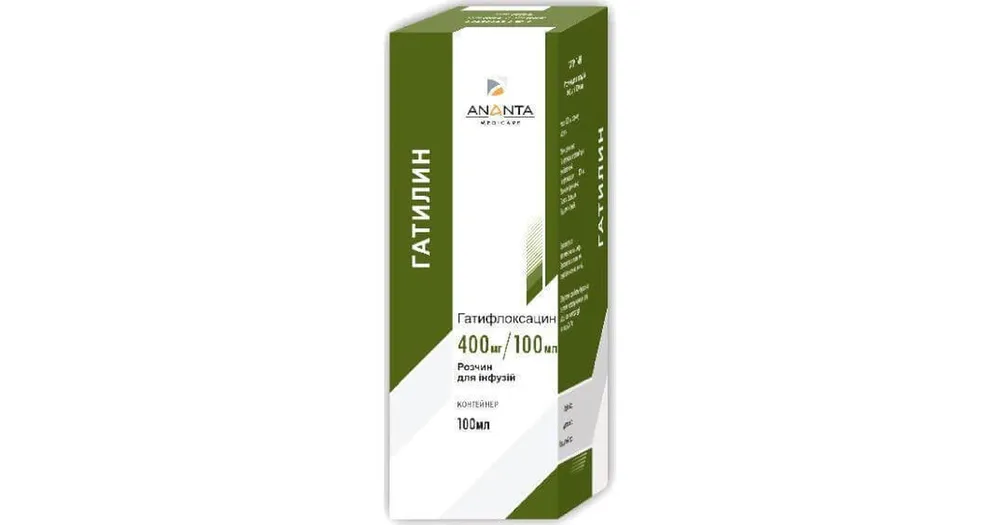
Table of Contents
INSTRUCTIONS FOR MEDICAL USE OF THE MEDICINAL PRODUCT GATILIN (GATILIN)
Composition:
Active ingredient: gatifloxacin;
100 ml of solution contain gatifloxacin sesquihydrate equivalent to gatifloxacin 200 mg or 400 mg;
Excipients:
for GATILIN (200 mg/100 ml): anhydrous glucose, hydrochloric acid concentrated, water for injections;
for GATILIN (400 mg/100 ml): anhydrous glucose, hydrochloric acid concentrated, sodium hydroxide, water for injections.
Pharmaceutical form. Infusion solution.
Main physicochemical properties: clear solution ranging from colorless to pale yellow.
Pharmacotherapeutic group. Antibacterial agents of the quinolone group. Fluoroquinolones.
ATC code J01M A16.
Pharmacological Properties
Pharmacodynamics
Gatifloxacin is an 8-methoxyfluoroquinolone with antibacterial activity against a broad range of Gram-negative and Gram-positive aerobic microorganisms, anaerobes, and intracellular pathogens. The antibacterial action of gatifloxacin is due to inhibition of DNA gyrase and topoisomerase IV. DNA gyrase is a key enzyme involved in DNA replication of pathogens. Topoisomerase IV is an enzyme that plays a major role in chromosomal DNA replication during bacterial cell division.
Microorganisms sensitive to gatifloxacin include:
Gram-positive microorganisms – Staphylococcus aureus, Streptococcus pneumoniae, Streptococcus pyogenes, Streptococcus milleri, Streptococcus mitior, Streptococcus agalactiae, Streptococcus dysgalactiae, Staphylococcus cohnii, Staphylococcus epidermidis (including methicillin-resistant strains), Staphylococcus haemolyticus, Staphylococcus hominis, Staphylococcus saprophyticus, Staphylococcus simulans, Corynebacterium diphtheriae;
Gram-negative microorganisms – Haemophilus influenzae (including β-lactamase-producing strains), Haemophilus parainfluenzae, Klebsiella pneumoniae, Moraxella catarrhalis (including β-lactamase-producing strains), Escherichia coli, Enterobacter cloacae, Neisseria gonorrhoeae (including β-lactamase-producing strains); Bordetella pertussis, Klebsiella oxytoca, Enterobacter aerogenes, Enterobacter agglomerans, Enterobacter intermedius, Enterobacter sakazakii, Proteus mirabilis, Proteus vulgaris, Morganella morganii, Providencia rettgeri, Providencia stuartii;
Anaerobes – Bacteroides distasonis, Bacteroides eggerthii, Bacteroides fragilis, Bacteroides ovatus, Bacteroides thetaiotaomicron, Bacteroides uniformis, Fusobacterium spp., Porphyromonas spp., Porphyromonas anaerobius, Porphyromonas asaccharolyticus, Porphyromonas magnus, Prevotella spp., Propionibacterium spp., Clostridium perfringens, Clostridium ramosum;
Atypical pathogens – Chlamydia pneumoniae, Chlamydia trachomatis, Mycoplasma pneumoniae, Mycoplasma hominis, Legionella pneumophila, Ureaplasma, Coxiella burnetii.
Gatifloxacin is also active against Mycobacterium tuberculosis and Helicobacter pylori.
Gatifloxacin is effective against bacteria resistant to β-lactam and macrolide antibiotics.
Pharmacokinetics
The absolute bioavailability of gatifloxacin in patients is 96%.
Oral and intravenous administration are interchangeable, as pharmacokinetic parameters after 1-hour intravenous infusion are similar to those after oral administration.
Plasma protein binding is approximately 20% and is independent of drug concentration in the blood.
Gatifloxacin penetrates well into most body tissues and rapidly distributes into biological fluids. High concentrations are achieved in lung tissue, bronchial mucosa, nasal sinuses, alveolar macrophages, middle ear tissues, skin tissues, prostate tissues and secretions, saliva, bile, seminal fluid, vagina, uterus, endometrium and myometrium, fallopian tubes, and ovaries.
Gatifloxacin is primarily excreted unchanged by the kidneys. More than 70% of the administered dose is eliminated unchanged in urine within 48 hours after intravenous administration, and 5% is excreted in feces.
There is no information regarding changes in gatifloxacin pharmacokinetics in patients with severe hepatic impairment.
Pharmacokinetics in patients under 18 years of age has not been studied.
Clinical characteristics.
Indications.
Treatment of infectious-inflammatory processes caused by microorganisms sensitive to the drug:
- Respiratory tract infections (including exacerbations of chronic bronchitis (only if use of other antibacterial agents usually prescribed for treatment of these infections has been deemed ineffective or inappropriate), acute sinusitis (only if use of other antibacterial agents usually prescribed for treatment of these infections has been deemed ineffective or inappropriate), community-acquired pneumonia);
- Infections of kidneys and urinary tract: cystitis, pyelonephritis (with and without complications);
- Sexually transmitted diseases: uncomplicated urethral gonorrhea, uncomplicated rectal gonorrhea in women.
Official recommendations regarding appropriate use of antibacterial agents should be taken into account.
Contraindications.
- Hypersensitivity to gatifloxacin and other fluoroquinolones in history or to other components of the drug.
- Diabetes mellitus.
Interaction with other medicinal products and other types of interactions.
Administration of gatifloxacin does not affect systemic clearance of intravenously administered midazolam. Single intravenous administration of midazolam at a dose of 0.0145 mg/kg does not affect the pharmacokinetics of gatifloxacin. These results are consistent with findings from in vitro studies with human isoenzyme CYP3A4, in which gatifloxacin showed no effect.
Concomitant administration of gatifloxacin and theophylline did not affect the pharmacokinetics of either of these drugs.
Concomitant administration of gatifloxacin and glyburide (at steady state – once daily) in patients with type II diabetes mellitus did not affect the pharmacokinetics and pharmacodynamics of either of these drugs; fasting glucose levels remained unchanged.
No interaction was observed with concomitant administration of the above-mentioned medicinal products with gatifloxacin. Furthermore, dosage adjustment of either drug is not required in each case.
Concomitant administration of gatifloxacin and digoxin did not produce a significant effect on the pharmacokinetics of gatifloxacin. Patients receiving digoxin should be monitored for signs and/or symptoms of toxicity. In patients exhibiting signs and/or symptoms of digoxin toxicity, serum digoxin concentration should be measured and digoxin doses adjusted accordingly.
Systemic elimination of gatifloxacin is significantly increased with concomitant administration of gatifloxacin and probenecid.
In patients receiving warfarin, no significant changes in blood coagulation time were observed with concomitant administration of gatifloxacin. However, since some quinolones may enhance the effect of warfarin or its derivatives, prothrombin time or other appropriate coagulation tests should be closely monitored when a quinolone antibacterial agent is coadministered with warfarin or its derivatives.
During preclinical and clinical studies, it was found that concomitant use of nonsteroidal anti-inflammatory drugs with quinolones may increase the risk of central nervous system disorders and seizures.
Tricyclic antidepressants, phenothiazine derivatives, erythromycin, and cisapride increase the risk of cardiac rhythm disturbances.
Special precautions.
The use of the drug should be avoided in patients who have had serious adverse reactions to quinolones or fluoroquinolones in the past. Treatment with levofloxacin should be initiated only if no alternative treatment options are available and after careful assessment of benefit/risk ratio.
Prolonged, disabling, and potentially irreversible adverse reactions.
Very rarely, in patients receiving quinolones and fluoroquinolones, regardless of age and existing risk factors, prolonged (lasting months or years), disabling, and potentially irreversible serious adverse reactions affecting various systems of the body—sometimes multiple systems simultaneously (including musculoskeletal, nervous system, mental health, or sensory organs)—have been reported. The drug should be discontinued immediately upon the first signs of any serious adverse reaction, and medical advice should be sought.
Gatifloxacin may cause QT interval prolongation on ECG in some patients.
Due to insufficient clinical experience, gatifloxacin should not be used in patients with prolonged QT interval, patients with hypercalcemia, or patients receiving Class IA (quinidine, procainamide) or Class III (amiodarone, sotalol) antiarrhythmic agents.
Pharmacokinetic studies of gatifloxacin combined with drugs that prolong the QT interval, such as cisapride, erythromycin, antipsychotic agents, and tricyclic antidepressants, have not been conducted. Gatifloxacin should be used with caution in combination with these drugs.
The drug should be used with caution in patients with cardiac conditions such as bradycardia and acute myocardial ischemia.
The likelihood of QT interval prolongation may increase with higher concentrations of gatifloxacin; therefore, the recommended dose should not be exceeded. Prolongation of the QT interval may increase the risk of ventricular arrhythmias.
Aortic aneurysm and dissection. Epidemiological studies indicate an increased risk of aortic aneurysm and aortic dissection following fluoroquinolone use, particularly in elderly patients.
Therefore, fluoroquinolones should be used only after careful benefit/risk assessment and consideration of alternative therapies in patients with a positive family history of aneurysmal disease, diagnosed aortic aneurysm and/or aortic dissection, or in the presence of risk factors or conditions predisposing to aneurysm and aortic dissection (e.g., Marfan syndrome, Ehlers-Danlos vascular type, Takayasu arteritis, giant cell arteritis, Behçet’s disease, hypertension, known atherosclerosis).
Patients should be advised to seek immediate medical attention at an emergency department if they experience sudden abdominal, chest, or back pain.
Serious and fatal cases have been observed in patients treated with quinolones following hypersensitivity reactions and anaphylactic shock.
Gatifloxacin should not be administered if early signs of hypersensitivity occur, such as skin rash or other allergic reactions.
Caution should be exercised when prescribing gatifloxacin to patients with renal impairment. Close clinical monitoring and appropriate laboratory tests should be performed before and during treatment, and the dose of gatifloxacin should be reduced if necessary. In patients with impaired renal function (creatinine clearance < 40 mL/min), dose adjustment (dose reduction) is required to avoid accumulation of gatifloxacin due to reduced clearance.
Blood glucose monitoring is required during treatment. Since disturbances in blood glucose levels—including symptoms of hyperglycemia and hypoglycemia—have been observed during treatment, especially in diabetic patients receiving concomitant hypoglycemic agents or insulin, continuous laboratory monitoring is mandatory. If blood glucose levels decrease or increase, the drug should be discontinued and medical advice should be sought.
Like other quinolones, gatifloxacin should be used with caution in patients with a history of central nervous system disorders, such as psychiatric conditions, epilepsy, or severe cerebral atherosclerosis (risk of impaired blood supply, stroke), in which seizures may occur.
Tendinitis and tendon rupture. Tendinitis and tendon rupture (not limited to the Achilles tendon), sometimes bilateral, may occur within 48 hours of starting treatment with quinolones and fluoroquinolones and have been reported even several months after discontinuation of treatment. The risk of tendinitis and tendon rupture is increased in elderly patients, patients with renal impairment, organ transplant recipients, and patients receiving concomitant corticosteroid therapy. Therefore, concomitant use of corticosteroids should be avoided.
Treatment should be discontinued immediately upon the first signs of tendinitis (e.g., painful swelling, inflammation), and alternative therapy should be considered. The affected limb(s) should be appropriately managed (e.g., immobilization). Corticosteroids should not be used if signs of tendinopathy occur.
Peripheral neuropathy. Cases of sensory or sensorimotor polyneuropathy leading to paresthesia, hyposthesia, dysesthesia, or weakness have been reported in patients receiving quinolones and fluoroquinolones. If symptoms of neuropathy such as pain, burning, tingling, numbness, or weakness occur, patients should be advised to inform their physician promptly to prevent progression to potentially irreversible conditions. Quinolones may also stimulate the nervous system, manifesting as tremor, insomnia, seizures, hallucinations, paranoia, depression, or nocturnal delirium. These reactions may occur after the first dose. In such cases, the drug should be discontinued.
Serious anaphylactic reactions may occur with quinolone use, some of which are accompanied by cardiovascular collapse, hypotension/shock, seizures, loss of consciousness, tinnitus, angioedema (including swelling of the tongue, throat, larynx, face), acute respiratory distress, dyspnea, urticaria, pruritus, and other serious skin reactions. If these symptoms occur, the drug should be discontinued immediately and appropriate measures initiated (oxygen, antihistamines, corticosteroids, pressor amines).
Administration of antibiotics may alter intestinal flora and promote overgrowth of Clostridium difficile, leading to antibiotic-associated colitis.
Cases of pseudomembranous colitis of varying severity have been reported during treatment with antibacterial agents, including gatifloxacin.
Alcohol should not be consumed during treatment with gatifloxacin.
Exposure to ultraviolet radiation should be avoided due to the high risk of photosensitization.
Gatifloxacin solution must not be used if it is cloudy or if a precipitate is present. The solution must not be used if the container is damaged (i.e., sterility is compromised). Prepared gatifloxacin solution should be used immediately after preparation.
The rate of intravenous infusion: 400 mg gatifloxacin over 40–60 minutes.
Use during pregnancy or breastfeeding.
Use is contraindicated.
If treatment with the drug is necessary, breastfeeding should be discontinued.
Ability to affect reaction speed when driving or operating machinery.
Psychomotor reaction speed may be impaired; therefore, patients should refrain from driving vehicles or operating precision machinery during treatment.
Method of Administration and Dosage
A skin sensitivity test should be performed before administration.
The drug should be administered intravenously, as an infusion, once every 24 hours. Dosage and duration of treatment depend on the type and severity of infection.
Exacerbation of chronic bronchitis – 400 mg once daily for 5–7 days.
Acute sinusitis – 400 mg once daily for 10 days.
Community-acquired pneumonia – 400 mg once daily for 7–14 days.
Uncomplicated urinary tract infections – 400 mg as a single dose or 200 mg once daily for 3 days.
Complicated urinary tract infections, pyelonephritis – 400 mg daily for 7–10 days.
Uncomplicated urethral gonorrhea in men and uncomplicated vaginal and rectal gonorrhea in women – 400 mg as a single dose.
Dose Adjustment in Patients with Renal Impairment
Since gatifloxacin is primarily eliminated via renal excretion, dosage adjustment is required in patients with creatinine clearance < 40 mL/min, including those undergoing hemodialysis or chronic ambulatory peritoneal dialysis.
Recommended dosage regimens for patients with renal impairment are as follows:
| Creatinine clearance |
Initial dose |
Next dose |
| > 40 mL/min |
400 mg |
400 mg daily |
| < 40 mL/min |
400 mg |
200 mg daily |
| Hemodialysis |
400 mg |
200 mg daily |
| Continuous ambulatory peritoneal dialysis |
400 mg |
200 mg daily |
Chronic hepatic insufficiency.
There is no need to adjust the dosing regimen of Gatifloxacin in patients with impaired liver function.
The drug should be administered only by intravenous infusion and is not intended for intramuscular, intrarectal, intraperitoneal, or subcutaneous administration. The infusion should be administered over 60 minutes.
Children.
There is insufficient experience with the use of the drug in patients under 18 years of age.
Overdose.
Clinical symptoms of overdose: CNS disturbances may occur – confusion, dizziness, seizures, psychosis. Close monitoring of patients (including ECG) is required. In case of gatifloxacin overdose, gastric lavage should be performed. The patient should remain under medical supervision and receive symptomatic and supportive treatment. Appropriate hydration therapy should be administered depending on the patient's condition.
Hemodialysis is ineffective in case of overdose: approximately 14% of the administered dose is removed from the blood within 4 hours; during continuous ambulatory peritoneal dialysis – 11% over 8 days.
Adverse Reactions
The most common adverse effects of the drug are dizziness, vomiting, diarrhea, vaginitis, abdominal pain, and headache. Other adverse effects may also occur.
Immune system disorders: fever, chills, anaphylactoid reactions, vasculitis, eczema, angioedema.
Skin and subcutaneous tissue disorders: skin rashes, pruritus, photosensitization, phototoxicity, increased sweating, dry skin, Stevens-Johnson syndrome.
Nervous system disorders: agitation, altered consciousness, nervousness, restlessness, anxiety, sleep disturbances, insomnia, somnolence, paresthesia, nightmares or paranoia, tremor, seizures, dizziness, depression, neuropathy.
Ear and labyrinth disorders: tinnitus, ototoxicity.
Eye disorders: visual disturbances.
Cardiovascular system disorders: tachycardia, peripheral edema, chest pain, QT interval prolongation on ECG, vasodilation, arterial hypertension or hypotension, syncope.
Gastrointestinal disorders: abdominal pain, anorexia, constipation, dyspepsia, bloating, diarrhea, glossitis, gastritis, oral candidiasis, stomatitis, oral ulceration, heartburn, flatulence, vomiting, thirst, pancreatitis, taste disturbances.
Musculoskeletal and connective tissue disorders: arthropathies, arthralgia, myalgia, muscle spasms, tendinitis, tenosynovitis, increased risk of tendon rupture.
Hepatobiliary disorders: elevated liver enzymes, cholestatic jaundice, hepatitis.
Endocrine disorders: changes in blood glucose levels (hypoglycemia (including hypoglycemic coma), hyperglycemia).
Renal and urinary disorders: renal dysfunction, including acute renal failure, crystalluria, transient nephritis, dysuria, and hematuria (rare).
Respiratory system disorders: dyspnea, pharyngitis.
General disorders: asthenia, back pain, headache, chest pain.
Laboratory abnormalities: neutropenia, increased levels of ALT, AST, alkaline phosphatase, bilirubin, amylase, electrolyte imbalances, prolonged prothrombin time, thrombocytopenia.
Other adverse reactions may occur during administration of gatifloxacin as monotherapy or in combination therapy: impaired thinking, alcohol intolerance, arthritis, asthma (bronchospasm), ataxia, bradycardia, colitis, cyanosis, depersonalization, ecchymoses, epistaxis, euphoria, ocular photosensitivity, gingivitis, hostility, hallucinations, uterine bleeding, hyperesthesia, lymphadenopathy, maculopapular rash, myasthenia, rectal hemorrhage, stress, substernal pain, vesiculobullous rash.
* In very rare cases, in patients receiving quinolones and fluoroquinolones, regardless of existing risk factors, there have been reports of prolonged (lasting months or years), disabling, and potentially irreversible serious adverse reactions affecting various systems of the body and sensory organs, sometimes involving several systems simultaneously (including tendonitis, tendon rupture, arthralgia, limb pain, gait disturbances, neuropathies associated with paresthesia, depression, fatigue, memory impairment, sleep disturbances, hearing, vision, taste, and smell disorders).
Shelf life: 3 years.
Storage conditions.
Store in the original packaging, in a dry place out of reach of children, at a temperature not exceeding 25 °C.
Packaging.
100 mL of the preparation in containers. 1 container per cardboard box.
Prescription status.
By prescription only.
Manufacturer.
EuroLife Healthcare Pvt. Ltd.
Manufacturer's address and location of business operations.
Plot No. 520, Bhagwanpur, Roorkee, Haridwar, Uttarakhand, India.
Marketing Authorization Holder.
Ananta Medikare Ltd.
Address of the Marketing Authorization Holder and/or its representative.
Suite 1, 2 Station Court, Imperial Wharf, Townmead Road, Fulham, London, United Kingdom.