Favipiravir-mikrokhim
Ukraine
Table of Contents
- INSTRUCTIONS FOR MEDICAL USE OF THE MEDICINAL PRODUCT FAVIPIRAVIR-MICROKHIM (FAVIPIRAVIR-MICROKHIM)
- Composition:
- Pharmacological properties.
- Clinical characteristics.
- Special precautions for use.
- Dosage and Administration
- Adverse reactions.
- Composition:
- Pharmacological properties.
- Clinical characteristics.
- Special precautions for use.
- Dosage and Administration.
- Adverse reactions
WARNING! CAUTION! The medicinal product has harmful effects when used during pregnancy and may cause embryonic death and/or teratogenic effects on the fetus. Contraindicated during pregnancy and breastfeeding. During use and for 7 days after completion of therapy, sexual partners must use the most effective methods of contraception; men should use condoms. |
INSTRUCTIONS FOR MEDICAL USE OF THE MEDICINAL PRODUCT FAVIPIRAVIR-MICROKHIM (FAVIPIRAVIR-MICROKHIM)
Composition:
Active substance: favipiravir;
One tablet contains 200 mg of favipiravir;
Excipients: low-substituted hydroxypropyl cellulose, povidone, colloidal silicon dioxide anhydrous, crospovidone, sodium stearyl fumarate, hypromellose, polyethylene glycol 6000 (macrogol 6000), talc, titanium dioxide (E 171), yellow iron oxide (E 172).
Pharmaceutical form. Film-coated tablets.
Main physicochemical properties: yellow, biconvex, round, film-coated tablets.
Pharmacotherapeutic group.
Antiviral agents for systemic use. Direct-acting antiviral agents. Other antiviral agents. Favipiravir. ATC code J05AX27.
Pharmacological properties.
Pharmacodynamics.
Antiviral activity in vitro
Favipiravir demonstrated antiviral activity against laboratory strains of influenza virus type A and type B with a half-maximal effective concentration (EC50) of 0.014–0.55 μg/mL.
The EC50 against seasonal influenza viruses type A and type B, including strains resistant to adamantanes (amantadine and rimantadine), oseltamivir, or zanamivir, was 0.03–0.94 and 0.09–0.83 μg/mL, respectively.
The EC50 against influenza viruses type A and type B resistant to adamantanes, oseltamivir, and zanamivir was 0.09–0.47 μg/mL, with no cross-resistance observed.
The EC50 against influenza viruses type A (including strains resistant to adamantanes, oseltamivir, or zanamivir), such as swine type A and avian type A, including highly pathogenic strains (including H5N1 and H7N9), ranged from 0.06 to 3.53 μg/mL.
Mechanism of action
Favipiravir is metabolized in cells to the ribosyl triphosphate (RTP) form of favipiravir and selectively inhibits viral RNA-dependent RNA polymerase involved in influenza virus replication. Favipiravir RTP (1000 μmol/L) did not show inhibitory effect on human α DNA polymerase, but showed inhibitory activity in the range of 9.1–13.5% on β and 11.7–41.2% on γ human DNA polymerases. The inhibitory concentration (IC50) of favipiravir RTP for human RNA polymerase II was 905 μmol/L.
Resistance
No changes in sensitivity of influenza virus type A to favipiravir were observed, and no resistant viruses were detected. In conducted clinical trials, including the global phase III study, emergence of favipiravir-resistant influenza viruses was not observed.
Pharmacokinetics.
Absorption
Plasma concentration
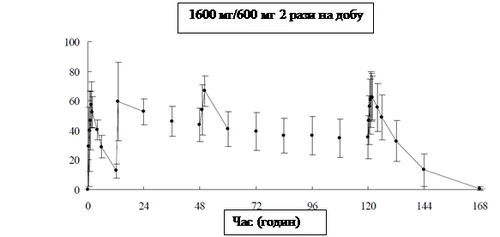
The table below presents the pharmacokinetic parameters of favipiravir administered orally to 8 healthy adults at a dose of 1600 mg twice daily on day 1, followed by 600 mg twice daily for 4 days (1600 mg/600 mg twice daily), then a single 600 mg dose once daily.
Pharmacokinetic parameters of favipiravir
| Dosing |
Day |
Cmax (μg/mL) |
AUC (μg·h/mL) |
Tmax (h) |
T1/2 (h) |
| 1600 mg/600 mg twice daily |
Days 1-5 |
64.56 (17.2) |
446.09 (28.1) |
1.5 (0.75, 4) |
4.8 ± 1.1 |
| 600 mg once daily |
Day 6 |
64.69 (24.1) |
553.98 (31.2) |
1.5 (0.75, 2) |
5.6 ± 2.3 |
Changes in the mean plasma concentration of favipiravir (mean ± standard deviation)
  |
After multiple oral doses of favipiravir administered to healthy volunteers with low aldehyde oxidase (AO) activity over 7 days, the calculated AUC value for unchanged drug was 1452.73 μg·h/mL on Day 1 and 1324.09 μg·h/mL on Day 7.
DISTRIBUTION
When 20 healthy adult males received oral favipiravir at a dose of 1200 mg twice daily on the first day, followed by 800 mg twice daily for 4 days, the geometric mean concentration of the drug in semen was 18.341 μg/mL on Day 3 of treatment and 0.053 μg/mL on Day 2 after discontinuation of the drug. Seven days after discontinuation, drug levels in semen were below the lower limit of quantification (0.02 μg/mL) in all study participants. The mean ratio of drug concentration in semen to its plasma concentration was 0.53 on Day 3 of treatment and 0.45 on Day 2 after discontinuation. The plasma protein binding coefficient was 53.4–54.4% (in vitro, centrifugal ultrafiltration method) at blood drug concentrations ranging from 0.3 to 30 μg/mL.
METABOLISM
Favipiravir is not metabolized by cytochrome P450 (CYP) enzymes. It is primarily metabolized by aldehyde oxidase (AO) and partially metabolized to its hydroxylated form by xanthine oxidase (XO). In studies using human liver microsomes, hydroxylate formation ranged from 3.98 to 47.6 μmol/mg protein/min, with up to a 12-fold variation in AO activity. In addition to the hydroxylated metabolite, a glucuronide conjugate was also detected in plasma and urine.
EXCRETION
Favipiravir is primarily excreted by the kidneys in the form of its active metabolite—the hydroxylated form—with a small amount of unchanged drug also observed. In a 7-day study involving multiple oral doses of favipiravir, the total cumulative excretion of unchanged drug and hydroxylated metabolite within 48 hours after the last dose was 0.8% and 53.1%, respectively.
Clinical characteristics.
Indications.
For the treatment of new or recurrent pandemic influenza infections caused by the influenza virus when treatment with other antiviral agents has been ineffective or insufficiently effective.
Contraindications.
- Pregnancy or suspicion of pregnancy (early embryonic death and teratogenicity were observed in animal studies (see section "Use in pregnancy or breastfeeding"));
- patients with hypersensitivity to any component of the drug.
Interaction with other medicinal products and other forms of interaction.
Favipiravir is not metabolized by cytochrome P450 (CYP). It is mainly metabolized by AO and partially by KO. The drug inhibits AO and CYP2C8, but does not induce CYP (see section "Pharmacokinetics").
Favipiravir should be used with caution when co-administered with the following medicinal products.
| Drugs |
Signs, symptoms and treatment |
Mechanism of action and risk factors |
| Pyrazinamide |
Elevated blood uric acid concentration. When administering 1.5 g pyrazinamide once daily and 1200 mg/400 mg favipiravir twice daily, serum uric acid levels reached 11.6 mg/dL with pyrazinamide alone and 13.9 mg/dL when combined with favipiravir. |
Increased reabsorption of uric acid in renal tubules due to additive effect. |
| Repaglinide |
Possible increase in repaglinide blood levels leading to adverse reactions. |
Inhibition of CYP2C8 may lead to increased repaglinide blood concentrations. |
| Theophylline |
Possible increase in favipiravir blood concentration, potentially leading to favipiravir-related adverse reactions. |
Interaction with KO may lead to increased favipiravir blood concentration. |
| Famciclovir, sulindac |
The efficacy of famciclovir and sulindac may be reduced. |
Inhibition of AO by favipiravir may lead to decreased blood concentrations of active forms of these drugs. |
In vitro. Favipiravir irreversibly inhibits AO in a dose- and time-dependent manner, and inhibits CYP2C8 in a dose-dependent manner. No inhibitory activity was observed toward CO, and weak inhibitory activity was observed toward CYP1A2, 2C9, 2C19, 2D6, 2E1, and 3A4. The hydroxylated metabolite exhibits weak inhibitory activity toward CYP1A2, 2C8, 2C9, 2C19, 2D6, 2E1, and 3A4.
Inductive effect of favipiravir on CYP is not observed.
Clinical studies of drug interactions
Effect of concomitant medicinal products on the pharmacokinetics of favipiravir
| Concomitant drug and dose |
Favipiravir dosing regimen |
n |
Dosing day |
Ratio of pharmacokinetic parameters for favipiravir (90% confidence interval (CI)) (concomitant/alone) |
|
| Cmax |
AUC |
||||
| Theophylline 200 mg twice daily from Day 1 to Day 9, 200 mg once daily on Day 10 |
600 mg twice daily on Day 6, 600 mg once daily from Day 7 to Day 10 |
10 |
Day 6 |
1.33 [1.19; 1.48] |
1.27 [1.15; 1.40] |
| Day 7 |
1.03 [0.92; 1.15] |
1.17 [1.04; 1.31] |
|||
| Oseltamivir 75 mg twice daily from Day 1 to Day 5, 75 mg once daily on Day 6 |
600 mg twice daily on Day 5, 600 mg once daily on Day 6 |
10 |
Day 6 |
0.98 [0.87; 1.10] |
1.01 [0.91; 1.11] |
| Raloxifene 60 mg once daily on days 1 to 3 |
1200 mg twice daily on day 1, 800 mg twice daily on day 2, 800 mg once daily on day 3 |
17 |
Day 1 |
1.00 [0.90; 1.10] |
1.03 [0.95; 1.12] |
| Day 3 |
0.90 [0.81; 0.99] |
0.85 [0.79; 0.93] |
|||
| Hydralazine 5 mg once daily on days 1 and 5 |
1200 mg/400 mg on day 1, 400 mg twice daily from days 2 to 4, 400 mg once daily on day 5 |
14 |
Day 1 |
0.99 [0.92; 1.06] |
0.99 [0.92; 1.07] |
| Day 5 |
0.96 [0.89; 1.04] |
1.04 [0.96; 1.12] |
Effect of favipiravir on the pharmacokinetics of concomitant medicinal products
| Concomitant drug and dose |
Favipiravir dosing |
n |
Time of sampling |
Ratio of pharmacokinetic parameters for concomitant drugs (90% CI) (concomitant/alone) |
|
| Cmax |
AUC |
||||
| Theophylline 200 mg twice daily from Day 1 to Day 9, 200 mg once daily on Day 10 |
600 mg twice daily on Day 6, 600 mg once daily from Day 7 to Day 10 |
10 |
Day 7 |
0.93 [0.85; 1.01] |
0.92 [0.87; 0.97] |
| Day 10 |
0.99 [0.94; 1.04] |
0.97 [0.91; 1.03] |
|||
| Oseltamivir 75 mg twice daily from Day 1 to Day 5, 75 mg once daily on Day 6 |
600 mg twice daily on Day 5, 600 mg once daily on Day 6 |
10 |
Day 6 |
1.10 [1.06; 1.15] |
1.14 [1.10; 1.18] |
| Acetaminophen 650 mg once daily on Day 1 and Day 5 |
1200 mg twice daily on Day 1, 800 mg twice daily from Day 2 to Day 4, 800 mg once daily on Day 5 |
28 |
Day 1 |
1.03 [0.93; 1.14] |
1.16 [1.08; 1.25] |
| Day 5 |
1.08 [0.96; 1.22] |
1.14 [1.04; 1.26] |
|||
| Norethindrone/ethinyl estradiol 1 mg/0.035 mg once daily from Day 1 to Day 4 |
1200 mg twice daily on Day 1, 800 mg twice daily from Day 2 to Day 4, 800 mg once daily on Day 5 |
25 |
Day 12 |
1.23 [1.16; 1.30] |
1.47 [1.42; 1.52] |
| Day 12 |
1.48 [1.42; 1.54] |
1.43 [1.39; 1.47] |
|||
| Repaglinide 0.5 mg once daily on Day 13 |
1200 mg twice daily on Day 1, 800 mg twice daily from Day 2 to Day 4, 800 mg once daily on Day 5 |
17 |
Day 13 |
1.28 [1.16; 1.41] |
1.52 [1.37; 1.68] |
| Hydralazine 5 mg once daily on Day 1 and Day 5 |
1200 mg/400 mg on Day 1, 400 mg twice daily from Day 2 to Day 4, 400 mg once daily on Day 5 |
14 |
Day 1 |
0.73 [0.67; 0.81] |
0.87 [0.78; 0.97] |
| Day 5 |
0.79 [0.71; 0.88] |
0.91 [0.82; 1.01] |
|||
Special precautions for use.
The use of the medicinal product FAVIPIRAVIR-MIKROKHEM for the treatment of influenza virus may be considered only when other therapies have shown no effect and when the expected benefit to the patient outweighs the risk.
Warning
Since embryonic death at early developmental stages and teratogenic effects were observed in animal studies, the medicinal product must not be administered to women with confirmed or suspected pregnancy (see sections "Contraindications" and "Use during pregnancy or breastfeeding").
When administering the medicinal product to women of reproductive age, a negative pregnancy test must be confirmed prior to initiating treatment. Women must be thoroughly informed about the risks associated with using this drug and strongly advised to use the most effective contraceptive methods both by the woman and her partner during treatment and for 7 days after discontinuation of the drug (see section "Use during pregnancy or breastfeeding"). If pregnancy is suspected during treatment, the woman should be advised to immediately discontinue the drug and consult a physician.
Favipiravir penetrates into semen. When administering the drug to male patients, they must be thoroughly informed about the risks associated with treatment and strongly advised to use the most effective contraceptive methods during sexual intercourse throughout the treatment period and for 7 days after its completion (men must use condoms). Additionally, male patients must be informed that they should not engage in sexual contact with pregnant women (see sections "Use during pregnancy or breastfeeding" and "Pharmacokinetics").
Prior to initiating treatment, detailed information regarding the drug's efficacy and risks (including the risk of fetal harm) must be provided.
The appropriateness of using the drug should be carefully evaluated before initiating treatment.
Precautions
FAVIPIRAVIR-MIKROKHEM is a medicinal product whose use should only be considered during outbreaks of new or re-emerging influenza virus infections when other antiviral drugs are ineffective or insufficiently effective. When treating with this drug, the most up-to-date information should be consulted, and the drug should be prescribed only to appropriate patients.
Favipiravir is not effective against bacterial infections.
Favipiravir should not be administered to children (see section "Children").
Regardless of the route of administration or type of anti-influenza agents used, abnormal behavior has been reported in patients infected with the influenza virus (see section "Adverse reactions"). To prevent accidents such as falls due to unusual behavior, patients or their caregivers should be instructed as a preventive measure that:
- abnormal behavior may occur,
- when patients are treated at home, caregivers or other individuals should take preventive measures against accidents such as falls for at least 2 days after the onset of fever.
Severe forms of abnormal behavior leading to accidental falls have been more frequently observed in school-aged boys and minors. It is known that such symptoms are more likely to manifest within 2 days after the onset of fever.
Patients should be closely monitored, and if any abnormalities are observed, treatment should be discontinued and appropriate measures taken.
Influenza virus infection may be complicated by bacterial infections or accompanied by symptoms easily confused with influenza-like symptoms. In case of bacterial infection or suspicion thereof, appropriate measures such as the use of antibacterial agents should be taken.
Use during pregnancy or breastfeeding
Pregnancy
FAVIPIRAVIR-MIKROKHEM is contraindicated in women with known or suspected pregnancy. In animal studies conducted at exposure levels similar to or lower than clinical exposure, embryonic death at early stages (in rats) and teratogenic effects (in monkeys, mice, rats, and rabbits) were observed.
Breastfeeding
Women receiving FAVIPIRAVIR-MIKROKHEM should discontinue breastfeeding. Studies have shown that the main metabolite of favipiravir, the hydroxylated form, is excreted into breast milk.
Since embryonic death at early developmental stages and teratogenic effects were observed in animal studies, favipiravir must not be used in women with confirmed or suspected pregnancy (see section "Contraindications").
When administering favipiravir to women of reproductive age, a negative pregnancy test result must be confirmed before initiating treatment. Women must be thoroughly informed about the risks associated with using this drug and strongly advised to use the most effective contraceptive methods both by the woman and her partner during treatment and for 7 days after discontinuation of the drug. If pregnancy is suspected during treatment, the woman should be advised to immediately discontinue the drug and consult a physician.
Favipiravir penetrates into semen. When administering the drug to male patients, they must be thoroughly informed about the risks associated with treatment and strongly advised to use the most effective contraceptive methods during sexual intercourse throughout the treatment period and for 7 days after its completion (men must use condoms). Additionally, male patients must be informed that they should not engage in sexual contact with pregnant women (see section "Pharmacokinetics").
Ability to affect reaction speed when driving or operating machinery
There is no available information regarding the effect of favipiravir on the ability to drive or operate machinery.
Dosage and Administration
The usual dose of favipiravir for adults is 1600 mg: taken orally twice daily on Day 1, followed by 600 mg orally twice daily for the next 4 days.
The total treatment duration should be 5 days.
Treatment should be initiated immediately upon onset of influenza symptoms.
Special Patient Groups
Elderly patients (> 65 years of age)
Since physiological functions are often reduced in elderly individuals, FAVIPIRAVIR-MIKROKHIM should be administered with caution, with close monitoring of the patient's overall condition.
Pediatric patients (< 18 years of age)
The medicinal product is not intended for use in children.
Hepatic impairment
In patients with mild and moderate hepatic impairment (Child–Pugh classes A and B, 6 patients in each class), administration of favipiravir orally at a dose of 1200 mg twice daily on Day 1, followed by 800 mg twice daily for the next 4 days, resulted in Cmax and AUC values on Day 5 that were approximately 1.6-fold and 1.7-fold higher, respectively, in patients with mild hepatic impairment, and 1.4-fold and 1.8-fold higher in patients with moderate hepatic impairment, compared to healthy adult volunteers.
In patients with severe hepatic impairment (Child–Pugh class C, 4 patients), administration of favipiravir orally at a dose of 800 mg twice daily on Day 1, followed by 400 mg twice daily for 2 days, resulted in Cmax and AUC values on Day 3 that were approximately 2.1-fold and 6.3-fold higher, respectively, compared to healthy adult volunteers.
Situations requiring cautious use of the drug
The medicinal product should be used with caution in patients with active gout or a history of gout, as well as in patients with hyperuricemia (as serum uric acid levels may increase, potentially exacerbating symptoms).
Children
The drug is not used in the pediatric population.
Overdose
Information regarding favipiravir overdose is not available.
Adverse reactions.
Favipiravir has not been administered at the approved dose. In Japanese clinical studies and the global Phase III study (studies conducted at dose levels lower than the approved ones), adverse reactions were observed in 100 out of 501 patients (19.96%) and were evaluated from the standpoint of safety (including abnormal laboratory test values).
The main adverse reactions included: increased blood uric acid levels (in 24 patients (4.79%)), diarrhea (in 24 patients (4.79%)), decreased neutrophil count (in 9 patients (1.80%)), increased AST (GOT) (in 9 patients (1.80%)), increased ALT (GPT) (in 8 patients (1.60%)).
Clinically significant adverse reactions
Although a causal relationship is unknown, neuropsychiatric symptoms such as abnormal behavior have been reported after administration of anti-influenza virus agents, including favipiravir (see section "Special precautions for use").
Clinically significant adverse reactions (observed with similar medicinal products)
The following clinically significant adverse reactions have been reported with other anti-influenza virus agents.
Immune system disorders: shock, anaphylaxis.
Respiratory, thoracic and mediastinal disorders: pneumonia.
Hepatobiliary disorders: fulminant hepatitis, hepatic dysfunction, jaundice.
Skin and subcutaneous tissue disorders: toxic epidermal necrolysis (TEN), Stevens–Johnson syndrome.
Renal and urinary disorders: acute renal failure.
Blood and lymphatic system disorders: decreased leukocyte, neutrophil, and platelet counts.
Psychiatric disorders: impaired consciousness, delirium, hallucinations, mania, convulsions.
Gastrointestinal disorders: hemorrhagic colitis.
Continuous monitoring of patients is required, and if adverse reactions occur, treatment should be discontinued and appropriate measures taken.
Other adverse reactions observed in Japanese clinical studies and the global Phase III clinical study (studies conducted at dose levels lower than the approved ones)
| MedDRA system organ class |
Adverse reactions |
||
| ≥ 1 % |
0.5 – < 1 % |
< 0.5 % |
|
| Hypersensitivity |
|
Rash |
Exfoliative dermatitis, pruritus |
| Hepatobiliary disorders |
Elevated AST (GOT), ALT (GPT), γ-GTP |
|
Elevated levels of alkaline phosphatase and bilirubin in blood |
| Gastrointestinal disorders |
Diarrhea (4.79%) |
Nausea, vomiting, abdominal pain |
Abdominal discomfort, duodenal ulcer, hematochezia, gastritis |
| Blood and lymphatic system disorders |
Decreased neutrophil and leukocyte count |
|
Increased leukocyte and monocyte count, decreased reticulocyte count |
| Metabolism and nutrition disorders |
Elevated serum uric acid (4.79%) and triglycerides |
Glucosuria |
Decreased serum potassium |
| Respiratory, thoracic and mediastinal disorders |
|
|
Bronchial asthma, oropharyngeal pain, rhinitis, nasopharyngitis |
| Other |
|
|
Elevated CK (CPK) levels, hematuria, tonsillar polyp, pigmentation, dysgeusia, bruising, blurred vision, eye pain, dizziness, supraventricular extrasystoles |
If the above-mentioned adverse reactions occur, appropriate measures should be taken according to the symptoms presented.
Shelf life.
1.5 years.
Storage conditions.
Store at a temperature not exceeding 25 °C in the original packaging.
Keep out of reach of children.
Packaging.
10 tablets in a blister pack, 4 blisters per cardboard box, or 10 tablets in a blister pack, 10 blisters per cardboard box.
Or 40 tablets in a bottle, 1 bottle per cardboard box, or 100 tablets in a bottle, 1 bottle per cardboard box.
Prescription status.
By prescription only.
Manufacturer.
MICROKHIM LTD.
Manufacturer's address and location of business activity.
24-V Promyslova Street, Sievierodonetsk, Luhansk Oblast, Ukraine, 93400.
Marketing Authorization Holder.
MICROKHIM LTD.
Address of the Marketing Authorization Holder.
5 Budynsturi Street, Kyiv, Ukraine, 01013.
Date of last review.
To report adverse events during the use of this medicinal product, please call +38 (050) 309-83-54 (24/7).
INSTRUCTION
for medical use of the medicinal product
FAVIPIRAVIR-MICROKHIM
(FAVIPIRAVIR-MICROKHIM)
Composition:
Active substance: favipiravir;
One tablet contains 200 mg of favipiravir;
Excipients: low-substituted hydroxypropyl cellulose, povidone, colloidal anhydrous silicon dioxide, crospovidone, sodium stearyl fumarate, hypromellose, polyethylene glycol 6000 (macrogol 6000), talc, titanium dioxide (E 171), yellow iron oxide (E 172).
Dosage form. Film-coated tablets.
Main physicochemical properties: yellow, biconvex, round-shaped film-coated tablets.
Pharmacotherapeutic group.
Antiviral agents for systemic use. Direct-acting antiviral agents. Other antiviral agents. Favipiravir. ATC code J05AX27.
Pharmacological properties.
Pharmacodynamics.
Antiviral activity in vitro
Favipiravir demonstrated antiviral activity against laboratory strains of influenza virus type A and type B, with a half-maximal effective concentration (EC50) of 0.014–0.55 μg/mL.
The EC50 against seasonal influenza viruses type A and type B, including strains resistant to adamantanes (amantadine and rimantadine), oseltamivir, or zanamivir, was 0.03–0.94 and 0.09–0.83 μg/mL, respectively.
The EC50 against influenza viruses type A and type B resistant to adamantanes, oseltamivir, and zanamivir was 0.09–0.47 μg/mL, with no cross-resistance observed.
The EC50 against influenza viruses type A (including strains resistant to adamantanes, oseltamivir, or zanamivir), such as swine type A and avian type A, including highly pathogenic strains (including H5N1 and H7N9), ranged from 0.06 to 3.53 μg/mL.
Mechanism of action
Favipiravir is metabolized in cells to favipiravir ribosyl triphosphate (RTP), which selectively inhibits viral RNA-dependent RNA polymerase involved in influenza virus replication. Favipiravir RTP (1000 μmol/L) did not show inhibitory activity against human α DNA polymerase, but showed inhibitory activity of 9.1–13.5% against β and 11.7–41.2% against γ human DNA polymerases. The inhibitory concentration (IC50) of favipiravir RTP for human RNA polymerase II was 905 μmol/L.
Resistance
No changes in sensitivity of influenza virus type A to favipiravir were observed, and no resistant viruses were detected. In conducted clinical trials, including the global phase III study, emergence of favipiravir-resistant influenza viruses was not observed.
Pharmacokinetics.
Absorption
Blood concentration
The table below presents the pharmacokinetic parameters of favipiravir administered orally to 8 healthy adults at a dose of 1600 mg twice daily on day 1, followed by 600 mg twice daily for 4 days (1600 mg/600 mg twice daily), then a single 600 mg dose once daily.
Pharmacokinetic parameters of favipiravir
| Dosing |
Day |
Cmax (μg/mL) |
AUC (μg·h/mL) |
Tmax (h) |
T1/2 (h) |
| 1600 mg/600 mg twice daily |
Days 1–5 |
64.56 (17.2) |
446.09 (28.1) |
1.5 (0.75, 4) |
4.8 ± 1.1 |
| 600 mg once daily |
Day 6 |
64.69 (24.1) |
553.98 (31.2) |
1.5 (0.75, 2) |
5.6 ± 2.3 |
Changes in the mean plasma concentration of favipiravir (mean ± standard deviation)
 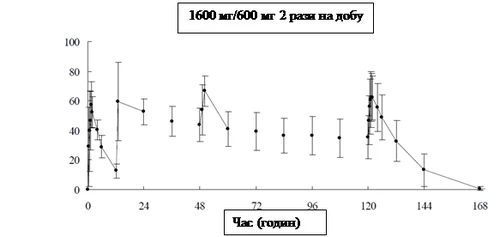 |
After multiple oral doses of favipiravir administered to healthy volunteers with low aldehyde oxidase (AO) activity over 7 days, the calculated AUC value of unchanged drug was 1452.73 μg·h/mL on Day 1 and 1324.09 μg·h/mL on Day 7.
DISTRIBUTION
When 20 healthy adult males received oral favipiravir at a dose of 1200 mg twice daily on the first day, followed by 800 mg twice daily for 4 days, the geometric mean concentration of the drug in semen was 18.341 μg/mL on Day 3 of treatment and 0.053 μg/mL on Day 2 after discontinuation of the drug. Seven days after discontinuation, drug levels in semen were below the lower limit of quantification (0.02 μg/mL) in all study participants. The mean ratio of drug concentration in semen to its plasma concentration was 0.53 on Day 3 of treatment and 0.45 on Day 2 after discontinuation. The plasma protein binding coefficient in serum ranged from 53.4% to 54.4% (in vitro, using centrifugal ultrafiltration) at blood drug concentrations of 0.3–30 μg/mL.
METABOLISM
Favipiravir is not metabolized by cytochrome P450 (CYP) enzymes. It is primarily metabolized by aldehyde oxidase (AO) and partially by xanthine oxidase (XO) to a hydroxylated metabolite. In studies using human liver microsomes, hydroxylate formation ranged from 3.98 to 47.6 μmol/mg protein/min, with a maximum 12-fold variation in AO activity. In addition to the hydroxylated metabolite, a glucuronide conjugate was also detected in plasma and urine.
EXCRETION
Favipiravir is primarily excreted by the kidneys as the active metabolite, the hydroxylated form, with a small amount of unchanged drug also observed. In a 7-day study involving multiple oral doses of favipiravir, the cumulative excretion coefficients of unchanged drug and the hydroxylated metabolite within 48 hours after the last dose were 0.8% and 53.1%, respectively.
Clinical characteristics.
Indications.
For the treatment of new or recurrent pandemic influenza infections caused by the influenza virus, in cases where treatment with other antiviral agents has been ineffective or insufficiently effective.
Contraindications.
- Pregnancy or suspicion of pregnancy (early embryonic death and teratogenicity were observed in animal studies (see section "Use during pregnancy or breastfeeding"));
- patients with hypersensitivity to any component of the drug.
Interaction with other medicinal products and other forms of interaction.
Favipiravir is not metabolized by cytochrome P450 (CYP). It is mainly metabolized by AO and partially by KO. The drug inhibits AO and CYP2C8, but does not induce CYP (see section "Pharmacokinetics").
Favipiravir should be used with caution when co-administered with the following medicinal products.
| Drugs |
Signs, symptoms and treatment |
Mechanism of action and risk factors |
| Pyrazinamide |
Elevated blood uric acid concentration. When administering 1.5 g pyrazinamide once daily and 1200 mg/400 mg favipiravir twice daily, serum uric acid levels were 11.6 mg/dL with pyrazinamide alone and 13.9 mg/dL in combination with favipiravir. |
Increased reabsorption of uric acid in renal tubules due to additive effect. |
| Repaglinide |
Possible increase in repaglinide blood levels leading to adverse reactions to this drug. |
Inhibition of CYP2C8 may lead to increased repaglinide blood concentrations. |
| Theophylline |
Possible increase in favipiravir blood concentration, potentially leading to adverse reactions to favipiravir. |
Interaction with KO may lead to increased favipiravir blood concentration. |
| Famciclovir, sulindac |
The efficacy of famciclovir and sulindac may be reduced. |
Inhibition of AO by favipiravir may lead to decreased blood concentrations of active forms of these drugs. |
In vitro. Favipiravir irreversibly inhibits AO in a dose- and time-dependent manner and inhibits CYP2C8 in a dose-dependent manner. No inhibitory activity was observed toward CO, and weak inhibitory activity was observed toward CYP1A2, 2C9, 2C19, 2D6, 2E1, and 3A4. The hydroxylated metabolite exhibits weak inhibitory activity toward CYP1A2, 2C8, 2C9, 2C19, 2D6, 2E1, and 3A4.
Inductive effect of favipiravir on CYP is not observed.
Clinical drug interaction studies
Effect of concomitant medicinal products on the pharmacokinetics of favipiravir
| Concomitant medicinal product and dose |
Favipiravir dosing |
n |
Time of sampling |
Ratio of pharmacokinetic parameters for favipiravir (90% confidence interval (CI)) (concomitant/alone) |
|
| Cmax |
AUC |
||||
| Theophylline 200 mg twice daily from Day 1 to Day 9, 200 mg once daily on Day 10 |
600 mg twice daily on Day 6, 600 mg once daily from Day 7 to Day 10 |
10 |
Day 6 |
1.33 [1.19; 1.48] |
1.27 [1.15; 1.40] |
| Day 7 |
1.03 [0.92; 1.15] |
1.17 [1.04; 1.31] |
|||
| Oseltamivir 75 mg twice daily from Day 1 to Day 5, 75 mg once daily on Day 6 |
600 mg twice daily on Day 5, 600 mg once daily on Day 6 |
10 |
Day 6 |
0.98 [0.87; 1.10] |
1.01 [0.91; 1.11] |
| Raloxifene 60 mg once daily on days 1 to 3 |
1200 mg twice daily on day 1, 800 mg twice daily on day 2, 800 mg once daily on day 3 |
17 |
Day 1 |
1.00 [0.90; 1.10] |
1.03 [0.95; 1.12] |
| Day 3 |
0.90 [0.81; 0.99] |
0.85 [0.79; 0.93] |
|||
| Hydralazine 5 mg once daily on days 1 and 5 |
1200 mg/400 mg on day 1, 400 mg twice daily from days 2 to 4, 400 mg once daily on day 5 |
14 |
Day 1 |
0.99 [0.92; 1.06] |
0.99 [0.92; 1.07] |
| Day 5 |
0.96 [0.89; 1.04] |
1.04 [0.96; 1.12] |
Effect of favipiravir on the pharmacokinetics of concomitant medicinal products
| Concomitant drug and dose |
Favipiravir dosing |
n |
Time of sampling |
Ratio of pharmacokinetic parameters for concomitant drugs (90% CI) (concomitant/alone) |
|
| Cmax |
AUC |
||||
| Theophylline 200 mg twice daily from Day 1 to Day 9, 200 mg once daily on Day 10 |
600 mg twice daily on Day 6, 600 mg once daily from Day 7 to Day 10 |
10 |
Day 7 |
0.93 [0.85; 1.01] |
0.92 [0.87; 0.97] |
| Day 10 |
0.99 [0.94; 1.04] |
0.97 [0.91; 1.03] |
|||
| Oseltamivir 75 mg twice daily from Day 1 to Day 5, 75 mg once daily on Day 6 |
600 mg twice daily on Day 5, 600 mg once daily on Day 6 |
10 |
Day 6 |
1.10 [1.06; 1.15] |
1.14 [1.10; 1.18] |
| Acetaminophen 650 mg once daily on Day 1 and Day 5 |
1200 mg twice daily on Day 1, 800 mg twice daily from Day 2 to Day 4, 800 mg once daily on Day 5 |
28 |
Day 1 |
1.03 [0.93; 1.14] |
1.16 [1.08; 1.25] |
| Day 5 |
1.08 [0.96; 1.22] |
1.14 [1.04; 1.26] |
|||
| Norethindrone/ethinyl estradiol 1 mg/0.035 mg once daily from Day 1 to Day 4 |
1200 mg twice daily on Day 1, 800 mg twice daily from Day 2 to Day 4, 800 mg once daily on Day 5 |
25 |
Day 12 |
1.23 [1.16; 1.30] |
1.47 [1.42; 1.52] |
| Day 12 |
1.48 [1.42; 1.54] |
1.43 [1.39; 1.47] |
|||
| Repaglinide 0.5 mg once daily on Day 13 |
1200 mg twice daily on Day 1, 800 mg twice daily from Day 2 to Day 4, 800 mg once daily on Day 5 |
17 |
Day 13 |
1.28 [1.16; 1.41] |
1.52 [1.37; 1.68] |
| Hydralazine 5 mg once daily on Day 1 and Day 5 |
1200 mg/400 mg on Day 1, 400 mg twice daily from Day 2 to Day 4, 400 mg once daily on Day 5 |
14 |
Day 1 |
0.73 [0.67; 0.81] |
0.87 [0.78; 0.97] |
| Day 5 |
0.79 [0.71; 0.88] |
0.91 [0.82; 1.01] |
|||
Special precautions for use.
The medicinal product FAVIPIRAVIR-MIKROKHEM for the treatment of influenza virus infection may only be used when other therapies have shown no effect and when the expected benefit to the patient outweighs the risk.
Warning
Since embryonic death at early developmental stages and teratogenic effects have been observed in animal studies, the medicinal product must not be administered to women with confirmed or suspected pregnancy (see sections "Contraindications" and "Use in pregnancy or lactation").
When administering the medicinal product to women of reproductive age, a negative pregnancy test result must be confirmed prior to initiating treatment. Women must be thoroughly informed about the risks associated with use of this drug and strongly advised to use the most effective contraceptive methods both by the woman and her partner during treatment and for 7 days after discontinuation of the drug (see section "Use in pregnancy or lactation"). If pregnancy is suspected during treatment, the woman should be advised to immediately discontinue the drug and consult a physician.
Favipiravir penetrates into semen. When administering the drug to male patients, they must be thoroughly informed about the risks associated with treatment and strongly advised to use the most effective contraceptive methods during sexual intercourse throughout the treatment period and for 7 days after its completion (men must use condoms). In addition, male patients must be informed that they should not have sexual contact with pregnant women (see sections "Use in pregnancy or lactuation" and "Pharmacokinetics").
Prior to initiating treatment, detailed information about the drug's efficacy and risks (including risk of fetal harm) must be provided.
Prior to initiating treatment with the drug, the appropriateness of its use must be carefully considered.
Precautionary measures
FAVIPIRAVIR-MIKROKHEM is a medicinal product that should only be considered during outbreaks of new or re-emerging influenza virus infections when other antiviral drugs are ineffective or insufficiently effective. When using this drug, the most up-to-date information should be consulted, and the drug should only be prescribed to appropriate patients.
Favipiravir is not effective against bacterial infections.
Favipiravir must not be administered to children (see section "Pediatric population").
Regardless of the route of administration or type of antiviral influenza agent, abnormal behavior has been reported in patients infected with influenza virus (see section "Adverse reactions"). To prevent accidents such as falls due to unusual behavior, as a preventive measure, patients or their caregivers should be instructed that:
- abnormal behavior may occur,
- when patients are treated at home, caregivers or other individuals should take preventive measures against accidents such as falls for at least 2 days following the onset of fever.
Severe forms of abnormal behavior leading to accidents and falls have been more frequently observed in school-aged boys and minors. It is known that such symptoms are more likely to occur within 2 days after the onset of fever.
Patients should be closely monitored, and if any abnormalities are observed, treatment should be discontinued and appropriate measures taken.
Influenza virus infection may be complicated by bacterial infections or accompanied by symptoms easily confused with influenza-like symptoms. In case of bacterial infection or suspicion thereof, appropriate measures such as administration of antibacterial agents should be taken.
Use in pregnancy or lactation
Pregnancy
The medicinal product FAVIPIRAVIR-MIKROKHEM is contraindicated in women with known or suspected pregnancy. In animal studies conducted at exposure levels similar to or lower than clinical exposure, embryonic death at early stages (in rats) and teratogenic effects (in monkeys, mice, rats, and rabbits) were observed.
Lactation
Women receiving FAVIPIRAVIR-MIKROKHEM should discontinue breastfeeding. Studies have shown that the main metabolite of favipiravir – the hydroxylated form – is excreted into breast milk.
Since embryonic death at early developmental stages and teratogenic effects have been observed in animal studies, favipiravir must not be administered to women with confirmed or suspected pregnancy (see section "Contraindications").
When administering favipiravir to women of reproductive age, a negative pregnancy test result must be confirmed prior to initiating treatment. Women must be thoroughly informed about the risks associated with use of this drug and strongly advised to use the most effective contraceptive methods both by the woman and her partner during treatment and for 7 days after discontinuation of the drug. If pregnancy is suspected during treatment, the woman should be advised to immediately discontinue the drug and consult a physician.
Favipiravir penetrates into semen. When administering the drug to male patients, they must be thoroughly informed about the risks associated with treatment and strongly advised to use the most effective contraceptive methods during sexual intercourse throughout the treatment period and for 7 days after its completion (men must use condoms). In addition, male patients must be informed that they should not have sexual contact with pregnant women (see section "Pharmacokinetics").
Ability to influence the speed of reaction while driving or operating machinery
There is no information available regarding the effect of favipiravir on the ability to drive a vehicle or operate machinery.
Dosage and Administration.
The usual dose of favipiravir for adults is 1600 mg: taken orally twice on the first day, followed by 600 mg orally twice daily for the next 4 days.
The total treatment duration should be 5 days.
Treatment should be initiated immediately after onset of influenza symptoms.
Special patient groups
Elderly patients (> 65 years of age)
Since physiological functions are often reduced in elderly individuals, FAVIPIRAVIR-MIKROKHEM should be administered with caution, monitoring the patient's overall condition.
Pediatric patients (< 18 years of age)
The medicinal product is not intended for use in children.
Hepatic impairment
In patients with mild to moderate hepatic impairment (Child–Pugh classes A and B, 6 patients for each class), following oral administration of favipiravir at a dose of 1200 mg twice daily on Day 1 and then 800 mg twice daily for the next 4 days, Cmax and AUC values on Day 5 were approximately 1.6-fold and 1.7-fold higher, respectively, in patients with mild hepatic impairment and 1.4-fold and 1.8-fold higher in patients with moderate hepatic impairment, compared to healthy adult volunteers.
In patients with severe hepatic impairment (Child–Pugh class C, 4 individuals), following oral administration of favipiravir at a dose of 800 mg twice daily on Day 1 and then 400 mg twice daily for 2 days, Cmax and AUC values on Day 3 were approximately 2.1-fold and 6.3-fold higher, respectively, compared to healthy adult volunteers.
Situations requiring caution
The medicinal product should be used with caution in patients with active gout or a history of gout, as well as in patients with hyperuricemia (in such patients, serum uric acid levels may increase, potentially exacerbating symptoms).
Children
The product is not to be used in the pediatric population.
Overdose
Information regarding favipiravir overdose is not available.
Adverse reactions
Favipiravir has not been used at the approved dose. In Japanese clinical studies and the global phase III study (studies conducted at dose levels lower than the approved ones), adverse reactions were observed in 100 out of 501 patients (19.96%) and were evaluated from the safety standpoint (including abnormal laboratory test values).
The main adverse reactions included: increased blood uric acid levels (in 24 patients (4.79%)), diarrhea (in 24 patients (4.79%)), decreased neutrophil count (in 9 patients (1.80%)), increased AST (GOT) (in 9 patients (1.80%)), increased ALT (GPT) (in 8 patients (1.60%)).
Clinically significant adverse reactions
Although a causal relationship is unknown, psychoneurotic symptoms such as abnormal behavior have been reported after administration of anti-influenza virus agents, including favipiravir (see section "Special precautions").
Clinically significant adverse reactions (based on similar medicinal products)
The following clinically significant adverse reactions have been reported with other anti-influenza virus agents.
Immune system disorders: shock, anaphylaxis.
Respiratory, thoracic and mediastinal disorders: pneumonia.
Hepatobiliary disorders: fulminant hepatitis, hepatic function disorders, jaundice.
Skin and subcutaneous tissue disorders: toxic epidermal necrolysis (TEN), Stevens-Johnson syndrome.
Renal and urinary disorders: acute renal failure.
Blood and lymphatic system disorders: decreased white blood cell count, decreased neutrophil count, decreased platelet count.
Psychiatric disorders: impaired consciousness, delirium, hallucinations, mania, convulsions.
Gastrointestinal disorders: hemorrhagic colitis.
Continuous monitoring of patients is required, and if adverse reactions occur, treatment should be discontinued and appropriate measures taken.
Other adverse reactions observed in Japanese clinical studies and the global phase III clinical study (studies conducted at dose levels lower than the approved ones)
| MedDRA system organ class |
Adverse reactions |
||
| ≥ 1 % |
0.5 – < 1 % |
< 0.5 % |
|
| Hypersensitivity |
|
Rash |
Exfoliative dermatitis, pruritus |
| Hepatobiliary system disorders |
Increase in AST (GOT), ALT (GPT), γ-GTP |
|
Elevated levels of alkaline phosphatase and bilirubin in blood |
| Gastrointestinal disorders |
Diarrhea (4.79%) |
Nausea, vomiting, abdominal pain |
Abdominal discomfort, duodenal ulcer, hematochezia, gastritis |
| Blood and lymphatic system disorders |
Decreased neutrophil and leukocyte count |
|
Increased leukocyte and monocyte count, decreased reticulocyte count |
| Metabolism and nutrition disorders |
Elevated blood uric acid (4.79%) and triglyceride levels |
Glucosuria |
Decreased blood potassium levels |
| Respiratory, thoracic and mediastinal disorders |
|
|
Bronchial asthma, oropharyngeal pain, rhinitis, nasopharyngitis |
| Other |
|
|
Elevated CPK (CK) levels, presence of blood in urine, tonsillar polyp, pigmentation, dysgeusia, bruising, blurred vision, eye pain, dizziness, supraventricular extrasystole |
If the above-mentioned adverse reactions occur, appropriate measures should be taken according to the symptoms presented.
Shelf life.
1.5 years.
Storage conditions.
Store at a temperature not exceeding 25 °C in the original packaging.
Keep out of reach of children.
Packaging.
10 tablets in a blister pack, 4 blisters in a cardboard box, or 10 tablets in a blister pack, 10 blisters in a cardboard box.
Alternatively, 40 tablets in a bottle, 1 bottle in a cardboard box, or 100 tablets in a bottle, 1 bottle in a cardboard box.
Prescription status.
Prescription only.
Manufacturer.
MICROCHEM LLC.
Manufacturer's address and place of business.
5 Budynstriji St., Kyiv, 01013, Ukraine.
Marketing Authorization Holder.
MICROCHEM LLC.
Address of the Marketing Authorization Holder.
5 Budynstriji St., Kyiv, 01013, Ukraine.