Duloc®
Ukraine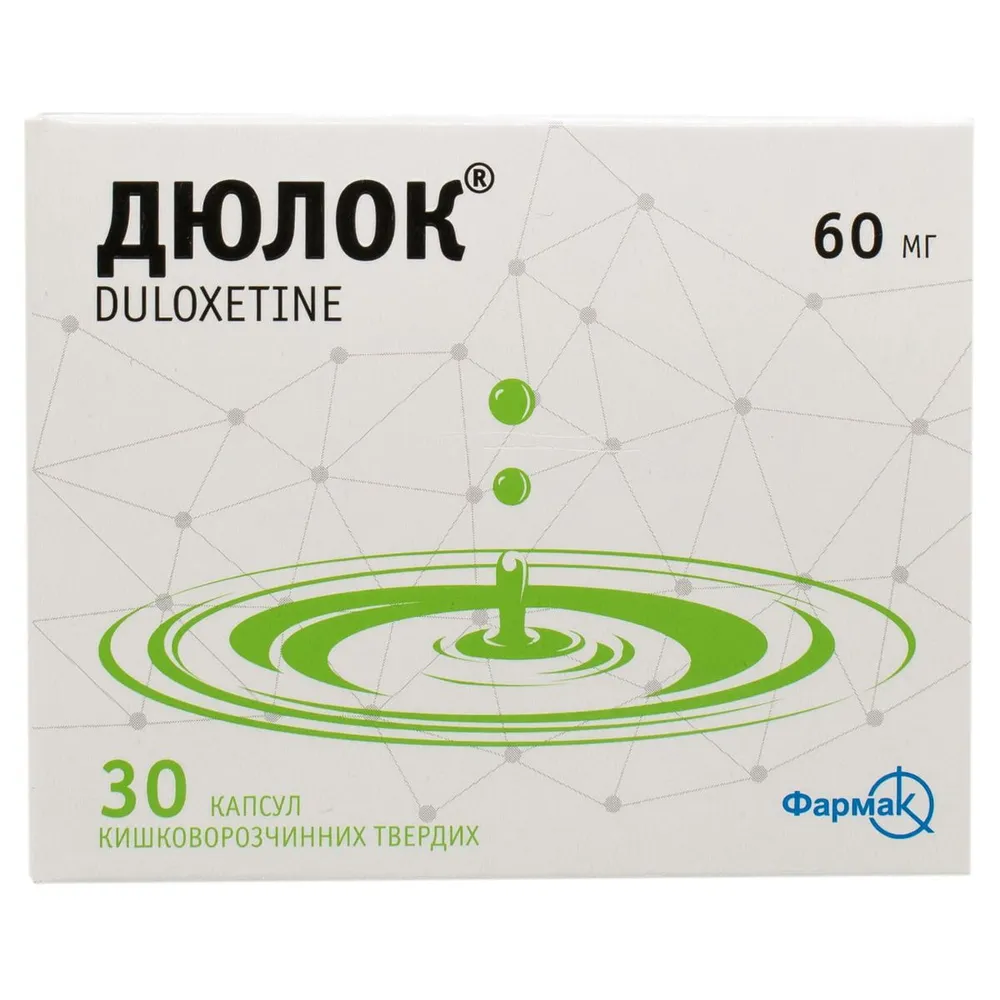
Table of Contents
INSTRUCTIONS FOR MEDICAL USE OF THE MEDICINAL PRODUCT DYULOK® (DYULOK)
Composition:
Active substance: duloxetine;
1 capsule contains duloxetine hydrochloride — 33.7 mg or 67.4 mg, equivalent to duloxetine — 30 mg or 60 mg;
Excipients: spherical sugar, hydroxypropylmethylcellulose, polyethylene glycol 6000, talc, sucrose, hydroxypropylmethylcellulose acetate succinate, triethyl citrate;
Hard gelatin capsule size № 3 (for 30 mg capsules):
capsule shell composition: titanium dioxide (E 171), indigo carmine (E 132), gelatin;
Hard gelatin capsule size № 1 (for 60 mg capsules):
capsule shell composition: titanium dioxide (E 171), indigo carmine (E 132), quinoline yellow (E 104), erythrosine (E 127), gelatin.
Pharmaceutical form. Hard enteric-coated capsules.
Main physicochemical properties:
30 mg capsules: hard gelatin capsule size № 3, blue cap, white body. The capsule contents — white or almost white pellets.
60 mg capsules: hard gelatin capsule size № 1, blue cap, ivory-colored body. The capsule contents — white or almost white pellets.
Pharmacotherapeutic group. Antidepressants. ATC code N06A X21.
Pharmacological Properties.
Pharmacodynamics.
Duloxetine is a combined inhibitor of serotonin and norepinephrine reuptake. It weakly inhibits dopamine reuptake and has negligible affinity for histaminergic and dopaminergic, cholinergic, and adrenergic receptors. The mechanism of action of duloxetine in the treatment of depression is attributed to inhibition of serotonin and norepinephrine reuptake, thereby enhancing serotonergic and noradrenergic neurotransmission in the central nervous system. Duloxetine also exerts analgesic effects, which are likely due to slowing of pain impulse transmission in the central nervous system.
Duloxetine dose-dependently increases extracellular levels of serotonin and norepinephrine in various regions of the brain in animals.
Duloxetine normalized pain thresholds in several preclinical models of neuropathic and inflammatory pain and reduced pain-related behavior in a persistent pain model. The inhibitory effect of duloxetine on pain is believed to result from potentiation of descending inhibitory pain pathways in the central nervous system.
Clinical Efficacy and Safety
Major Depressive Disorder: Duloxetine was studied in a clinical program involving 3158 patients (1285 patient-years of exposure) meeting DSM-IV criteria for major depressive disorder. The efficacy of duloxetine at the recommended dose of 60 mg once daily was demonstrated in three out of three randomized, double-blind, placebo-controlled fixed-dose trials in adult outpatients with major depressive disorder. Overall, efficacy of duloxetine was demonstrated at daily doses of 60 to 120 mg in five out of seven randomized, double-blind, placebo-controlled fixed-dose trials in adult outpatients with major depressive disorder.
Duloxetine demonstrated statistically significant superiority over placebo on the 17-item Hamilton Depression Rating Scale (HAM-D), which includes both emotional and somatic symptoms of depression. Response and remission rates were also statistically significantly higher with duloxetine compared to placebo. Only a small proportion of patients included in the pivotal clinical trials had severe depression (baseline HAM-D > 25).
In a relapse prevention study, patients who responded to 12-week treatment with duloxetine 60 mg once daily were randomized to continue on duloxetine 60 mg once daily or placebo for the next 6 months. Duloxetine 60 mg once daily demonstrated statistically significant superiority over placebo (p = 0.004) on the primary outcome measure—prevention of depressive relapse, measured by time to relapse. Relapse rates during the 6-month double-blind observation period were 17% for duloxetine and 29% for placebo, respectively.
Over 52 weeks of a placebo-controlled, double-blind study, patients with recurrent major depressive disorder receiving duloxetine had a significantly longer time to recurrence (p < 0.001) compared to patients randomized to placebo. All patients had previously responded to duloxetine during open-label treatment (28 to 34 weeks) at doses of 60 mg to 120 mg daily. During the 52-week placebo-controlled, double-blind treatment phase, 14.4% of patients receiving duloxetine and 33.1% of patients receiving placebo experienced recurrence of depressive symptoms (p < 0.001).
The effect of duloxetine 60 mg once daily in elderly patients (≥ 65 years) with depression was specifically studied in a trial that showed a statistically significant difference in reduction of HAM-D17 scores in patients receiving duloxetine compared to placebo. Tolerability of duloxetine 60 mg once daily in elderly patients was comparable to that in younger individuals. However, data on elderly patients receiving the maximum dose (120 mg daily) are limited, and caution is therefore recommended when treating this population.
Generalized Anxiety Disorder: Duloxetine demonstrated statistically significant superiority over placebo in five out of five studies, including four randomized, double-blind, placebo-controlled trials of acute episodes and a relapse prevention study in adult patients with generalized anxiety disorder.
Duloxetine demonstrated statistically significant superiority over placebo, measured by improvement in total score on the Hamilton Anxiety Rating Scale (HAM-A) and overall functional impairment on the Sheehan Disability Scale (SDS). Response and remission rates were also higher with duloxetine compared to placebo. Duloxetine demonstrated improvement in total HAM-A score comparable to that of venlafaxine.
In a relapse prevention study, patients who responded to 6 months of open-label duloxetine therapy were randomized to continue on duloxetine or placebo for another 6 months. Duloxetine at doses of 60 mg to 120 mg once daily demonstrated statistically significant superiority over placebo (p < 0.001) in preventing relapse, measured by time to relapse. Relapse rates during the 6-month double-blind observation period were 14% with duloxetine and 42% in the placebo group.
The efficacy of duloxetine 30–120 mg (flexible dosing) once daily in elderly patients (> 65 years) with generalized anxiety disorder was evaluated in a study that demonstrated statistically significant improvement in total HAM-A score in patients receiving duloxetine compared to those receiving placebo. Efficacy and safety of duloxetine 30–120 mg once daily in elderly patients with generalized anxiety disorder were similar to those observed in studies involving younger adult patients. However, data on elderly patients receiving the maximum dose (120 mg daily) are limited, and caution is recommended when using this dose in elderly individuals.
Diabetic Peripheral Neuropathic Pain: The efficacy of duloxetine for the treatment of diabetic neuropathic pain was established in two randomized, 12-week, double-blind, placebo-controlled fixed-dose trials involving adults (aged 22 to 88 years) with diabetic neuropathic pain lasting at least 6 months. Patients meeting diagnostic criteria for major depressive disorder were excluded from these trials. The primary outcome measure was the mean weekly 24-hour average pain score, self-rated by patients in a diary using an 11-point Likert scale.
In both studies, duloxetine at doses of 60 mg once daily and 60 mg twice daily significantly reduced pain compared to placebo. In some patients, the effect was noticeable within the first week of treatment. The difference in mean improvement between the two active treatment groups was minimal. At least a 30% reduction in pain was reported in approximately 65% of patients receiving duloxetine compared to 40% of patients receiving placebo. Similar rates of at least 50% pain reduction were 50% and 26%, respectively. Clinical response rates (defined as ≥50% pain reduction) were analyzed based on whether patients experienced somnolence during treatment. Among patients who did not experience somnolence, clinical response occurred in 47% of those receiving duloxetine and 27% of those receiving placebo. Among patients who experienced somnolence, clinical response rates were 60% with duloxetine and 30% with placebo. Patients who did not achieve at least a 30% reduction in pain within 60 days of treatment were unlikely to reach this level during continued therapy.
In an open-label, long-term, uncontrolled study, pain reduction in patients who responded to 8-week open-label therapy with duloxetine 60 mg once daily was maintained over the subsequent 6 months, as assessed by the Brief Pain Inventory (BPI) 24-hour average pain score.
Children
Duloxetine has not been studied in patients under 7 years of age. Two randomized, double-blind, parallel-group clinical trials were conducted in 800 pediatric patients aged 7 to 17 years with major depressive disorder. These two trials included a 10-week acute, placebo- and fluoxetine-controlled phase, followed by a 6-month active-controlled extension phase. Neither duloxetine (30–120 mg) nor the active control group (fluoxetine 20–40 mg) differed statistically from placebo in change from baseline to endpoint in total score on the Children's Depression Rating Scale-Revised (CDRS-R). Discontinuation due to adverse events was higher in patients receiving duloxetine than in those receiving fluoxetine, primarily due to nausea. Suicidal behavior was reported during the 10-week treatment period (duloxetine 0/333 [0%], fluoxetine 2/225 [0.9%], placebo 1/220 [0.5%]). Over the entire 36-week study course, 6 of 333 patients initially randomized to duloxetine and 3 of 225 patients initially randomized to fluoxetine exhibited suicidal behavior (exposure-adjusted incidence rate of 0.039 events per patient-year for duloxetine and 0.026 for fluoxetine). Additionally, one patient who switched from placebo to duloxetine exhibited suicidal behavior while on duloxetine.
A randomized, double-blind, placebo-controlled trial was conducted in 272 patients aged 7–17 years with generalized anxiety disorder. The study included a 10-week placebo-controlled acute phase followed by an 18-week continuation phase. A flexible dosing regimen was used, allowing gradual dose escalation from 30 mg once daily to higher doses (maximum 120 mg once daily). Treatment with duloxetine showed statistically significant greater improvement in symptoms of generalized anxiety disorder (GAD), measured by the Pediatric Anxiety Rating Scale (PARS-GAD), after 10 weeks of treatment (mean difference between duloxetine and placebo: 2.7 points [95% CI 1.3–4.0]). Maintenance of effect was not assessed. During the 10-week acute treatment phase, there was no statistically significant difference in discontinuation due to adverse events between the duloxetine and placebo groups. Two patients who switched from placebo to duloxetine after the acute phase exhibited suicidal behavior during the continuation phase while on duloxetine. A conclusion on overall benefit-risk in this age group was not established.
One study was conducted in pediatric patients with juvenile primary fibromyalgia syndrome (JPFS), in which the duloxetine group did not differ from placebo in the primary efficacy assessment. Thus, there is no evidence of efficacy in the pediatric population. A randomized, double-blind, placebo-controlled, parallel-group study of duloxetine was conducted in 184 adolescents aged 13 to 18 years (mean age 15.53 years) with JPFS. The study included a 13-week double-blind period during which patients were randomized to receive duloxetine 30 mg/60 mg or placebo daily. Duloxetine did not demonstrate efficacy in reducing pain, as measured by the primary outcome measure, the Brief Pain Inventory (BPI) average endpoint pain score: least squares (LS) mean change from baseline in average BPI pain score at 13 weeks was -0.97 in the placebo group compared to -1.62 in the duloxetine 30/60 mg group (p=0.052). Safety results from this study were consistent with the known safety profile of duloxetine.
Pharmacokinetics.
Duloxetine is extensively metabolized by oxidative enzymes (CYP1A2 and polymorphic CYP2D6) followed by conjugation. The pharmacokinetics of duloxetine show high inter-subject variability (typically 50–60%), partly due to sex, age, smoking status, and CYP2D6 metabolic status.
Absorption. Duloxetine is well absorbed after oral administration; Cmax is reached approximately 6 hours after dosing. Absolute bioavailability of duloxetine after oral administration ranges from 32% to 80% (mean 50%). Food delays the time to peak concentration from 6 to 10 hours and slightly reduces the extent of absorption (by approximately 11%). These changes have no clinical significance.
Distribution. Duloxetine is approximately 96% bound to human plasma proteins. It binds to both albumin and alpha1-acid glycoprotein. Renal or hepatic impairment does not affect protein binding.
Metabolism. Duloxetine is extensively metabolized, and metabolites are primarily excreted in urine. Both cytochrome P450 2D6 and 1A2 catalyze the formation of two major metabolites: the glucuronide conjugate of 4-hydroxyduloxetine and the sulfate conjugate of 5-hydroxy-6-methoxyduloxetine. Based on in vitro studies, circulating metabolites of duloxetine are considered pharmacologically inactive. Pharmacokinetics of duloxetine in poor metabolizers of CYP2D6 have not been specifically studied. Some data suggest that plasma levels of duloxetine are higher in these patients.
Elimination. The elimination half-life of duloxetine ranges from 8 to 17 hours (mean 12 hours). After intravenous administration, plasma clearance of duloxetine ranges from 22 L/h to 46 L/h (mean 36 L/h). After oral administration, apparent plasma clearance of duloxetine ranges from 33 to 261 L/h (mean 101 L/h).
Special Populations
Sex. Pharmacokinetic differences between men and women have been observed: plasma clearance is approximately 50% lower in women. However, due to the overlap in clearance ranges, sex-based pharmacokinetic differences do not justify recommending a lower dose for female patients.
Age. Pharmacokinetic differences have been observed between younger and elderly women (≥ 65 years): AUC increases by approximately 25%, and elimination half-life is approximately 25% longer in elderly women. However, the magnitude of these changes is insufficient to justify dose adjustment. According to general recommendations, caution should be exercised when treating elderly patients.
Renal Impairment. Patients with end-stage renal disease on dialysis had approximately 2-fold higher Cmax and AUC values of duloxetine compared to healthy volunteers. Pharmacokinetic data on duloxetine in patients with mild or moderate renal impairment are limited.
Hepatic Impairment. Moderate hepatic impairment (Child-Pugh class B) affects the pharmacokinetics of duloxetine. Compared to healthy volunteers, clearance of duloxetine was 79% lower, elimination half-life was 2.3 times longer, and AUC was 3.7 times higher in patients with moderate liver disease. The pharmacokinetics of duloxetine and its metabolites have not been studied in patients with mild or severe hepatic impairment.
Lactating Women. The effect of duloxetine was studied in 6 women during lactation at least 12 weeks postpartum. Duloxetine is excreted in breast milk, and steady-state concentrations in breast milk are approximately one-quarter of plasma concentrations. The amount of duloxetine in breast milk is approximately 7 mcg/day at a dosage of 40 mg twice daily. Lactation does not affect the pharmacokinetics of duloxetine.
Children. The pharmacokinetics of duloxetine in pediatric patients aged 7 to 17 years with major depressive disorder after oral administration of 20 to 120 mg once daily were characterized using population modeling analysis based on data from 3 studies. Predicted plasma concentrations of duloxetine in pediatric patients were predominantly within the range observed in adult patients.
Clinical Characteristics.
Indications.
Treatment of major depressive disorder.
Treatment of diabetic peripheral neuropathic pain.
Treatment of generalized anxiety disorder.
Contraindications.
Contraindications for use include hypersensitivity to duloxetine or to any of the excipients of the medicinal product.
Duloxetine must not be administered concomitantly with non-selective, irreversible monoamine oxidase inhibitors (MAOIs) or within at least 14 days after discontinuation of MAOI therapy. Due to the half-life of duloxetine, MAOIs must not be initiated at least 5 days after discontinuation of duloxetine treatment.
Dülok® must not be administered to patients with unstable hypertension, as it may provoke a hypertensive crisis.
Dülok® must not be administered to patients with end-stage renal disease (creatinine clearance below 30 mL/min).
Dülok® should not be administered to patients with hepatic disorders, as this may lead to liver failure.
Duloxetine is not recommended for use in children due to insufficient data on safety and efficacy in this age group.
Dülok® should not be administered in combination with fluvoxamine, ciprofloxacin, or enoxacin (strong CYP1A2 inhibitors) due to increased plasma concentrations of duloxetine.
Interaction with other medicinal products and other forms of interaction.
Drugs metabolized by CYP1A2. During clinical studies of concomitant administration of theophylline, a CYP1A2 substrate, with duloxetine (60 mg twice daily), their pharmacokinetics were not significantly altered.
Inhibitors of CYP1A2. Since CYP1A2 is involved in the metabolism of duloxetine, concomitant use of duloxetine with strong CYP1A2 inhibitors is likely to increase duloxetine concentrations. Fluvoxamine (100 mg once daily), a potent CYP1A2 inhibitor, reduces plasma clearance of duloxetine by approximately 77% and increases AUC0–t by 6-fold. Therefore, Dülok® must not be administered together with CYP1A2 inhibitors.
Drugs metabolized by CYP2D6. Duloxetine is a moderate inhibitor of CYP2D6. When duloxetine 60 mg twice daily was administered with a single dose of desipramine, a CYP2D6 substrate, the AUC of desipramine increased threefold. Concomitant administration of duloxetine (40 mg twice daily) increased the steady-state AUC of tolterodine (2 mg twice daily) by 71%, but did not affect the pharmacokinetics of its 5-hydroxy metabolite. Concomitant use of duloxetine with medicinal products primarily metabolized by CYP2D6 (risperidone, tricyclic antidepressants such as nortriptyline, amitriptyline, and imipramine) should be approached with caution, particularly if they have a narrow therapeutic index (flecainide, propafenone, and metoprolol).
Medicinal products acting on the central nervous system. The risk of using duloxetine in combination with other central nervous system-acting agents has not been systematically evaluated, except for cases mentioned in this section. When prescribing duloxetine in combination with other drugs and substances acting on the central nervous system, especially those with similar mechanisms of action, including alcohol and sedative medicinal products (e.g., benzodiazepines, morphine derivatives, phenobarbital, antipsychotics, and sedative antihistamines), certain precautions must be taken.
MAO inhibitors. Duloxetine must not be administered together with non-selective, irreversible monoamine oxidase inhibitors (MAOIs) or within 14 days after discontinuation of MAOI therapy due to the risk of serotonin syndrome. Due to the half-life of duloxetine, MAOIs must not be initiated within at least 5 days after discontinuation of duloxetine treatment. Reversible selective MAOIs, such as moclobemide, pose a lower risk of serotonin syndrome, but the use of such combinations is not recommended. The antibiotic linezolid is a reversible non-selective MAOI and must not be administered to patients receiving duloxetine.
Serotonin syndrome. Serotonin syndrome is rarely observed in patients receiving selective serotonin reuptake inhibitors / serotonin-norepinephrine reuptake inhibitors (SSRIs/SNRIs) in combination with serotonergic agents. Dülok® should be prescribed with caution in combination with serotonergic agents such as SSRIs, SNRIs, tricyclic antidepressants (e.g., clomipramine or amitriptyline), MAOIs (e.g., moclobemide or linezolid), St. John’s wort (Hypericum perforatum), triptans, tramadol, meperidine, and tryptophan.
Anticoagulants and antiplatelet agents. Duloxetine should be administered with caution together with oral anticoagulants and antiplatelet agents due to an increased risk of bleeding resulting from pharmacodynamic interaction.
Additionally, increased international normalized ratio (INR) values have been reported when patients received warfarin concomitantly with duloxetine. However, in a clinical pharmacology study, concomitant administration of duloxetine and warfarin to healthy volunteers under controlled conditions did not result in clinically significant changes in INR compared to baseline or in the pharmacokinetics of R- or S-warfarin.
Medicinal products containing duloxetine. Concomitant use with other medicinal products containing duloxetine should be avoided.
Preparations containing St. John’s wort. Adverse reactions frequently occur when St. John’s wort is used concomitantly with the medicinal product Dülok®.
Oral contraceptives and other steroid agents. In vitro studies indicate that duloxetine does not induce the catalytic activity of CYP3A. Specific in vivo interaction studies with duloxetine have not been conducted.
Antacids and histamine H2-receptor blockers. Administration of duloxetine together with antacids containing aluminum and magnesium or with famotidine does not affect the rate or extent of absorption of duloxetine following a 40 mg oral dose.
Inducer of CYP1A2. Population pharmacokinetic analysis has shown that smokers have plasma concentrations of duloxetine nearly 50% lower than non-smokers.
Special precautions for use.
Seizures and mania. As with other drugs acting on the central nervous system, duloxetine should be prescribed with caution in patients with a history of seizures, mania, or bipolar disorders.
Mydriasis. Cases of mydriasis associated with duloxetine use have been reported; therefore, duloxetine should be used cautiously in patients with elevated intraocular pressure or at risk of acute angle-closure glaucoma.
Blood pressure and heart rate. In some patients, duloxetine may cause increased blood pressure and clinically significant arterial hypertension. This may be related to the noradrenergic effect of duloxetine. Cases of hypertensive crisis have been reported during duloxetine treatment, particularly in patients with pre-existing hypertension. Patients with arterial hypertension and/or other cardiac diseases should have their blood pressure monitored, especially during the first month of treatment. Duloxetine should be used with caution in patients whose underlying medical conditions may be exacerbated by increased heart rate or blood pressure. Caution is advised when prescribing duloxetine with drugs that may impair its metabolism (see section "Interaction with other medicinal products and other forms of interaction"). Patients with persistently elevated blood pressure may require dose reduction or gradual discontinuation of the drug. Treatment of patients with unstable hypertension is not recommended.
Hemorrhage. There have been several reports of hemorrhagic events, including purpura, gastrointestinal bleeding, and hemorrhages, associated with the use of SSRIs and SNRIs, including duloxetine. Duloxetine increases the risk of postpartum hemorrhage. Patients receiving anticoagulants and/or drugs affecting platelet function (e.g., nonsteroidal anti-inflammatory drugs or acetylsalicylic acid), as well as patients with hemorrhagic diathesis, should use duloxetine with caution.
Hyponatremia. Hyponatremia has been reported in patients treated with duloxetine, including cases where serum sodium levels were below 110 mmol/L. Hyponatremia may be associated with the syndrome of inappropriate antidiuretic hormone secretion (SIADH). Most cases occurred in elderly patients, particularly those with a history of hyponatremia or conditions causing fluid imbalance. Caution is advised when prescribing duloxetine to patients at increased risk of hyponatremia: elderly individuals, patients with SIADH, patients with liver cirrhosis, dehydration, or those taking diuretics.
Discontinuation syndrome. Discontinuation symptoms are relatively common, especially following abrupt cessation of treatment. In clinical trials, adverse events upon abrupt discontinuation occurred in approximately 45% of patients taking duloxetine and in 23% of those receiving placebo.
The risk of discontinuation symptoms associated with SSRIs and SNRIs may depend on several factors, including duration of treatment, dose, and rate of dose reduction. Symptoms are usually mild to moderate in severity, but in some patients they may be severe. Discontinuation symptoms typically occur within the first few days after stopping treatment, although isolated reports describe symptoms in patients who inadvertently missed a dose. Generally, these symptoms resolve spontaneously within two weeks, although in some patients they may persist longer (2–3 months or more). Discontinuation of treatment should be carried out over at least two weeks with gradual dose reduction.
Akathisia / psychomotor agitation. Duloxetine use has been associated with the development of akathisia, characterized by a subjective feeling of unpleasant or anxious restlessness, an urge to move frequently, and inability to sit or stand still. Such symptoms typically occur during the first few weeks of treatment. Increasing the dose of the drug in patients experiencing these symptoms may be harmful.
Hepatitis / elevated liver enzymes. Marked elevations in liver enzymes (more than 10 times the upper limit of normal) or liver injury with cholestasis, or significant enzyme elevations with liver injury, have occurred rarely. Most reports occurred during the first few months of treatment. Liver injury is predominantly hepatocellular in nature. Caution is advised when prescribing duloxetine to patients taking medications that may cause liver injury.
Presence of sucrose and sugar. Enteric-coated capsules of Dюlok® should not be administered to patients with hereditary fructose intolerance, glucose-galactose malabsorption, or sucrase-isomaltase deficiency.
Renal impairment. Increased plasma concentrations of duloxetine have been observed in patients with severe renal impairment undergoing hemodialysis (creatinine clearance < 30 mL/min). For patients with severe renal impairment, see section "Contraindications." For patients with mild to moderate renal impairment, see section "Dosage and administration."
Serotonin syndrome / neuroleptic malignant syndrome. As with other serotonergic agents, serotonin syndrome or neuroleptic malignant syndrome (NMS), potentially life-threatening conditions, may occur during treatment with duloxetine, particularly when used concomitantly with other serotonergic agents (including SSRIs, SNRIs, tricyclic antidepressants, and triptans), drugs that impair serotonin metabolism such as MAO inhibitors, antipsychotics, or other dopamine antagonists that may affect serotonergic neurotransmitter systems (see sections "Contraindications" and "Interaction with other medicinal products and other forms of interaction").
Symptoms of serotonin syndrome may include changes in mental status (e.g., agitation, hallucinations, coma), autonomic instability (e.g., tachycardia, labile blood pressure, hyperthermia), neuromuscular abnormalities (e.g., hyperreflexia, lack of coordination), and/or gastrointestinal symptoms (e.g., nausea, vomiting, diarrhea). In its most severe form, serotonin syndrome may resemble NMS, which includes hyperthermia, muscle rigidity, elevated serum creatine kinase, autonomic instability with rapid fluctuations in vital signs, and altered mental status.
If concomitant treatment with duloxetine and other serotonergic drugs affecting serotonergic and/or dopaminergic neurotransmitter systems is clinically justified, careful monitoring of patients is recommended, especially at the beginning of treatment and during dose escalation.
St. John’s wort (Hypericum perforatum). Adverse reactions may occur more frequently when duloxetine is used concomitantly with herbal preparations containing St. John’s wort (Hypericum perforatum).
Medicinal products containing duloxetine. Duloxetine is marketed under various trade names with different indications (treatment of diabetic neuropathic pain, major depressive disorder, generalized anxiety disorder, and stress urinary incontinence). Concomitant use of multiple products containing duloxetine should be avoided.
Suicide. Major depressive disorder and generalized anxiety disorder. Depression is associated with an increased risk of suicidal thoughts, self-harm, and suicide (suicide-related events). This risk persists until significant remission occurs. Patients should be closely monitored until substantial improvement is achieved, as remission may not occur during the first few weeks of treatment or longer. Clinical experience indicates that the risk of suicide may increase during the initial stages of treatment.
Other psychiatric conditions for which Dюlok® is prescribed are also associated with an increased risk of suicide-related events. Moreover, these psychiatric conditions may be comorbid with major depressive disorder. Therefore, precautionary measures are necessary when treating patients with major depressive disorder as well as other psychiatric conditions. Patients with a history of suicide-related events or significant suicidal ideation are at higher risk of suicidal behavior and require closer monitoring during treatment. A meta-analysis of placebo-controlled clinical trials of antidepressants in psychiatric disorders showed an increased risk of suicidal behavior with antidepressants compared to placebo in patients under 25 years of age.
Cases of suicidal thoughts and suicidal behavior have been reported during or immediately after discontinuation of duloxetine therapy. Close monitoring of patients, particularly those at risk, is required during therapy, especially in the early stages, along with appropriate dose adjustments.
Close observation of patients, especially those in high-risk groups, should accompany pharmacological treatment, particularly in the early stages of therapy and after dose changes. Patients (and caregivers) should be informed of the need to monitor for clinical worsening, emergence of suicidal thoughts or behaviors, or unusual changes in behavior, and to seek immediate medical attention if such symptoms occur.
Sexual dysfunction. Selective serotonin reuptake inhibitors (SSRIs) and serotonin-norepinephrine reuptake inhibitors (SNRIs) may cause symptoms of sexual dysfunction (see section "Adverse reactions"). Reports of persistent sexual dysfunction, where symptoms persisted despite discontinuation of SSRIs/SNRIs, have been documented.
Diabetic peripheral neuropathic pain. Isolated cases of suicidal thoughts and suicidal behavior have been reported during or immediately after duloxetine therapy, as with other drugs having similar pharmacological effects (antidepressants). Physicians should inform patients of the need to report any feelings of distress.
Elderly patients. Data on the use of Dюlok® at a dosage of 120 mg in elderly patients with major depressive disorder and generalized anxiety disorder are limited. Therefore, caution should be exercised when prescribing the maximum dose to elderly patients (see sections "Dosage and administration" and "Pharmacological properties").
Use in children and adolescents (under 18 years of age). Dюlok® should not be used in the treatment of children and adolescents (under 18 years of age). Suicidal behavior (suicide attempts and suicidal thoughts) and hostility (predominantly aggression, oppositional behavior, and anger) occurred more frequently in clinical trials among children and adolescents receiving antidepressants compared to those receiving placebo. If treatment is clinically indicated, careful monitoring for the emergence of suicidal symptoms is required. Additionally, long-term safety data on growth, maturation, cognitive, and behavioral development in children and adolescents are lacking.
Use during pregnancy or breastfeeding.
Fertility. In animal studies, duloxetine did not affect male fertility. Effects in females were evident only at doses causing toxic effects in the mother.
Pregnancy. Animal studies showed reproductive toxicity at AUC levels of duloxetine below the maximum clinical exposure (see section "Pharmacological properties").
According to data from two large observational studies, an increased overall risk of major congenital malformations is not expected (one study conducted in the USA included 2,500 individuals exposed to duloxetine in the first trimester, and another in the EU included 1,500 individuals exposed in the first trimester). Analysis of specific malformations, such as cardiac defects, did not show conclusive results.
In the EU study, maternal exposure to duloxetine in late pregnancy (from week 20 of gestation until delivery) was associated with an increased risk of preterm birth (almost doubled, corresponding to approximately 6 additional preterm births per 100 women exposed to duloxetine in late pregnancy). Most deliveries occurred between weeks 35 and 36 of gestation. This association was not observed in the US study.
US observational data confirmed an increased risk (almost doubled) of postpartum hemorrhage after duloxetine use within one month before delivery.
Epidemiological data suggest that the use of SSRIs during pregnancy, particularly in late pregnancy, increases the risk of persistent pulmonary hypertension in newborns (PPHN). Although the association between PPHN and SNRI treatment has not been studied, this potential risk cannot be excluded with duloxetine due to its similar mechanism of action (inhibition of serotonin reuptake).
As with other serotonergic drugs, newborns exposed to duloxetine in late pregnancy may experience symptoms of discontinuation syndrome. Discontinuation symptoms may include orthostatic hypotension, tremor, increased neuromuscular reflex excitability, difficulty in swallowing and sucking, respiratory disorders, and seizures. In most cases, these symptoms occur immediately after birth or within the first few days of life.
Duloxetine should be used during pregnancy only if the expected benefit outweighs the potential risk. Women should be advised to inform their physician if they become pregnant or plan to become pregnant while taking duloxetine.
Lactation
According to a study in six lactating women, duloxetine is very weakly excreted into human breast milk. The calculated infant dose is 0.14% of the maternal dose (see section "Pharmacological properties"). The safety of duloxetine for infants is unknown; therefore, breastfeeding during duloxetine treatment is not recommended.
Ability to affect reaction speed when driving or operating machinery.
No studies on the effect of duloxetine on the ability to drive or operate machinery have been conducted. Duloxetine may cause sedation and dizziness. Therefore, patients experiencing sedation or dizziness should avoid potentially hazardous activities such as driving or operating machinery.
Dosage and Administration
Major depressive disorder. Duloxetine is administered at a dose of 60 mg once daily, regardless of food intake.
Some patients may be prescribed a daily dose higher than 60 mg—up to a maximum dose of 120 mg daily, divided into two doses. The use of doses exceeding 120 mg has not been systematically evaluated.
Therapeutic effect develops within 2–4 weeks.
After stabilization of the antidepressant effect, treatment should be continued for several months to prevent relapse. For patients who respond to duloxetine and have a history of recurrent major depressive episodes, long-term continuation therapy at a dose of 60–120 mg daily may be considered.
Generalized anxiety disorder. The recommended initial dose is 30 mg once daily, regardless of food intake. If treatment response is inadequate, the dose should be increased to 60 mg daily, which is the usual maintenance dose for most patients.
If there is insufficient response at a dose of 60 mg, increasing the dose to 90 or 120 mg daily may be considered. Dose escalation should be based on clinical response and tolerability. After stabilization of the effect, treatment should be continued for several months to prevent relapses.
Diabetic peripheral neuropathic pain. The recommended initial dose is 60 mg once daily, regardless of food intake. Some patients may be prescribed a daily dose higher than 60 mg—up to a maximum dose of 120 mg daily, divided into two doses.
Therapeutic effect should be evaluated after 2 months. In patients with inadequate initial response to treatment, additional benefit beyond this time is unlikely.
Therapeutic benefit should be reassessed periodically (at least every 3 months).
Patients with renal impairment. Dose adjustment is not required for patients with mild to moderate renal impairment. Dulox® is not recommended for patients with end-stage renal disease (creatinine clearance < 30 mL/min).
Patients with hepatic impairment. Dulox® must not be prescribed to patients with liver diseases that may lead to hepatic failure.
Elderly patients. Dose adjustment is not recommended solely on the basis of age in elderly patients. However, caution should be exercised when treating elderly patients, especially when using Dulox® at a dose of 120 mg daily for major depressive disorder, as data are limited (see sections "Special Instructions" and "Pharmacological Properties").
Discontinuation of treatment. Abrupt discontinuation should be avoided. When stopping treatment, the dose of Dulox® should be gradually reduced over at least 1–2 weeks to minimize the risk of withdrawal symptoms (see sections "Special Instructions" and "Adverse Reactions"). If intolerable symptoms occur after dose reduction or upon discontinuation, resumption of the previously prescribed dose may be considered. Subsequently, the physician may continue tapering the dose more gradually.
Children.
Duloxetine is not recommended for use in children and adolescents (under 18 years of age) for the treatment of major depressive disorder due to insufficient data on safety and efficacy (see sections "Adverse Reactions" and "Pharmacological Properties").
The safety and efficacy of duloxetine for the treatment of generalized anxiety disorder in children aged 7–17 years have not been established. Current available data are provided in sections "Adverse Reactions" and "Pharmacological Properties."
The safety and efficacy of duloxetine for the treatment of diabetic peripheral neuropathic pain have not been studied. No data are available.
Overdose.
Cases of duloxetine overdose have been reported following ingestion alone or in combination with other drugs at doses up to 5400 mg. Fatal outcomes have been reported following overdose of duloxetine, mostly in combination with other drugs, at doses around 1000 mg. Symptoms of overdose (after ingestion of duloxetine alone or with other drugs) included drowsiness, coma, serotonin syndrome, seizures, vomiting, and tachycardia.
Treatment of overdose. Specific antidotes are not known. Specific treatment (cyproheptadine and/or temperature control) is required if serotonin syndrome occurs. Airway patency must be ensured. Continuous cardiac monitoring and vital sign surveillance are recommended, along with appropriate symptomatic and supportive measures. Gastric lavage may be considered if performed immediately after ingestion or in patients presenting with symptoms of overdose. Activated charcoal reduces drug absorption. Due to the large volume of distribution of duloxetine, forced diuresis, hemoperfusion, and exchange transfusion are unlikely to be beneficial.
Adverse Reactions
The most commonly reported adverse reactions in patients receiving duloxetine were nausea, headache, dry mouth, somnolence, and dizziness. Most of the common adverse reactions were of mild to moderate severity, usually occurred at the beginning of treatment, and tended to diminish over time, even with continued therapy.
The table below lists adverse reactions associated with duloxetine administration based on data from spontaneous reports and placebo-controlled clinical trials.
Frequency assessment: very common (≥ 1/10), common (≥ 1/100 and < 1/10), uncommon (≥ 1/1,000 and < 1/100), rare (≥ 1/10,000 and < 1/1,000), very rare (< 1/10,000).
| Very common |
Common |
Uncommon |
Rare |
Very rare |
Not known |
| Infections and infestations |
|||||
| Laryngitis |
|||||
| Endocrine system disorders |
|||||
| Hypothyroidism |
|||||
| Immune system disorders |
|||||
| Anaphylactic reactions, hypersensitivity |
|||||
| Metabolism and nutrition disorders |
|||||
| Decreased appetite |
Hyperglycaemia (especially in patients with diabetes mellitus) |
Dehydration, hyponatraemia, antidiuretic hormone (ADH) deficiency6 |
|||
| Psychiatric disorders |
|||||
| Insomnia, agitation, decreased libido, anxiety, abnormal dreams and anorgasmia |
Sleep disorders, bruxism, disorientation, apathy, suicidal ideation5,7 |
Mania, hallucinations, aggression and hostility4, suicidal behaviour5,7 |
|||
| Nervous system disorders |
|||||
| Headache, somnolence |
Tremor, paraesthesia, dizziness, lethargy |
Myoclonus, akathisia7, restlessness, attention disorders, dyskinesia, taste disturbances, restless legs syndrome, poor sleep |
Serotonin syndrome6, seizures1, psychomotor agitation6, extrapyramidal disorders6 |
||
| Eye disorders |
|||||
| Blurred vision |
Mydriasis, visual disturbances |
Glaucoma |
|||
| Ear and labyrinth disorders |
|||||
| Tinnitus1 |
Dizziness, ear pain |
||||
| Cardiac disorders |
|||||
| Palpitations |
Tachycardia, supraventricular arrhythmia, fibrillation (most commonly atrial) |
Stress cardiomyopathy (Takotsubo cardiomyopathy) |
|||
| Vascular disorders |
|||||
| Flushing, increased blood pressure3 |
Arterial hypertension3,7, orthostatic hypotension2, loss of consciousness2, cold sensation in limbs |
Hypertensive crisis3,6 |
|||
| Respiratory, thoracic and mediastinal disorders |
|||||
| Yawning |
Laryngospasm, epistaxis |
Interstitial lung disease10, eosinophilic pneumonia6 |
|||
| Gastrointestinal disorders |
|||||
| Nausea, dry mouth |
Constipation, diarrhoea, vomiting, dyspepsia, flatulence, abdominal pain |
Gastrointestinal haemorrhage7, gastroenteritis, belching, gastritis, dysphagia |
Stomatitis, bad breath, blood in stool, microscopic colitis9 |
||
| Hepatobiliary disorders |
|||||
| Increased liver enzymes (alanine aminotransferase, aspartate aminotransferase, alkaline phosphatase), hepatitis3, acute liver injury |
Jaundice6, hepatic failure6 |
||||
| Skin and subcutaneous tissue disorders |
|||||
| Increased sweating, rash |
Night sweats, contact dermatitis, urticaria, cold sweat, photosensitivity, increased tendency to bruising |
Angioedema6, Stevens-Johnson syndrome6 |
Skin vasculitis |
||
| Musculoskeletal and connective tissue disorders |
|||||
| Arthralgia, muscle spasm |
Muscle twitching, feeling of muscle stiffness |
Trismus |
|||
| Renal and urinary disorders |
|||||
| Dysuria, pollakiuria |
Urinary retention, difficulty initiating micturition, nocturia, polyuria, decreased urine stream |
Abnormal urine odour |
|||
| Reproductive system and breast disorders |
|||||
| Erectile dysfunction, impaired or delayed ejaculation |
Menstrual disorders, sexual dysfunction, gynaecological bleeding, testicular pain |
Menopausal symptoms, galactorrhea, hyperprolactinaemia, postpartum haemorrhage6 |
|||
| General disorders |
|||||
| Fatigue, fall8 |
Chest pain7, malaise, cold sensation, thirst, chills, weakness, hot flushes, gait disturbance |
||||
| Investigations |
|||||
| Decreased body weight |
Increased body weight, increased blood creatine phosphokinase, increased blood potassium |
Increased blood cholesterol |
|||
- Cases of seizures and tinnitus were observed following discontinuation of treatment.
- Cases of orthostatic hypotension and loss of consciousness were observed predominantly at the beginning of treatment.
- See section "Special precautions for use".
- Cases of aggression and irritability have been reported at the beginning of treatment and after discontinuation of treatment.
- Cases of suicidal ideation and suicidal behavior have been reported during treatment and immediately after discontinuation of treatment (see section "Special precautions for use").
- Frequency of adverse reactions established from post-marketing studies; not observed in placebo-controlled clinical trials.
- Statistically not significantly different from those in the placebo group.
- Fall incidents were more frequent in elderly individuals (≥ 65 years).
- Calculated frequency based on all clinical trial data.
- Frequency estimate based on placebo-controlled clinical trials.
- Calculated frequency based on all clinical trial data.
- Fall incidents were more frequent in elderly individuals (≥ 65 years).
- Statistically not significantly different from those in the placebo group.
- Frequency of adverse reactions established from post-marketing studies; not observed in placebo-controlled clinical trials.
- Cases of suicidal ideation and suicidal behavior have been reported during treatment and immediately after discontinuation of treatment (see section "Special precautions for use").
- Cases of aggression and irritability have been reported at the beginning of treatment and after discontinuation of treatment.
- See section "Special precautions for use".
- Cases of orthostatic hypotension and loss of consciousness were observed predominantly at the beginning of treatment.
Discontinuation of therapy (especially abrupt interruption) is often associated with withdrawal syndrome. The most common adverse reactions in such cases include: dizziness, somnolence, sensory disturbances (including paresthesia or electric shock sensations, particularly in the head), sleep disturbances (including insomnia and vivid dreams), fatigue, drowsiness, anxiety or agitation, nausea and/or vomiting, tremor, headache, myalgia, irritability, diarrhea, hyperhidrosis, and vertigo.
Typically, when using SSRIs and SNRIs, these symptoms were of mild to moderate intensity and resolved spontaneously; however, in some patients they could be severe and/or prolonged. Therefore, if continued treatment with duloxetine is not required, discontinuation should be carried out gradually by tapering the dose (see sections "Dosage and administration" and "Special precautions for use").
In three 12-week acute-phase clinical trials of duloxetine in patients with diabetic neuropathic pain, a small but statistically significant increase in fasting blood glucose levels was observed. HbA1c levels remained stable in both the duloxetine and placebo groups. In the extension phase of these studies, lasting up to 52 weeks, an increase in HbA1c levels was observed in both the duloxetine and usual care groups, although the mean increase in the duloxetine treatment group was 0.3%. A slight increase in fasting blood glucose and total cholesterol levels was also observed in patients receiving duloxetine, whereas these laboratory parameters showed a slight decrease in the usual care group.
The heart rate-corrected QT interval in patients receiving duloxetine did not differ from that in patients receiving placebo. There were no clinically significant differences in QT, PR, QRS, or QTcB measurements between patients receiving duloxetine and those receiving placebo.
Children
In clinical trials, 509 pediatric patients aged 7 to 17 years with major depressive disorder and 241 pediatric patients aged 7 to 17 years with generalized anxiety disorder were treated with duloxetine. Overall, the adverse reaction profile of duloxetine in children and adolescents was similar to that observed in adults.
Overall, in 467 pediatric patients initially randomized to receive duloxetine in clinical trials, a mean weight decrease of 0.1 kg was observed after 10 weeks, compared to a mean increase of 0.9 kg in 353 patients who received placebo. Subsequently, during the extension period of four to six months, patients showed a general trend toward recovery to the expected baseline weight percentile based on population data for age- and sex-matched peers.
In studies lasting up to 9 months, children receiving duloxetine showed an overall mean decrease in height percentile of 1%: a decrease of 2% in children (7–11 years) and an increase of 0.3% in adolescents (12–17 years) (see section "Special precautions for use").
Reporting suspected adverse reactions
Reporting of suspected adverse reactions after marketing authorization of the medicinal product is important. It allows continuous monitoring of the benefit-risk balance of the medicinal product. Healthcare and pharmaceutical professionals, as well as patients or their legal representatives, should report all suspected adverse reactions and lack of efficacy through the automated pharmacovigilance information system at the following link: https://aisf.dec.gov.ua.
Shelf life. 2 years.
Do not use the medicinal product after the expiry date stated on the packaging.
Storage conditions. Store in the original packaging at a temperature not exceeding 25 °C.
Keep out of the reach and sight of children.
Packaging. Enteric-coated hard capsules of 30 mg or 60 mg. 10 capsules per blister. 3 or 6 blisters per carton (packaging from bulk manufacturer Laboratorios Normon, S.A., Spain).
Prescription status. Prescription only.
Manufacturer. JSC "Farmak".
Manufacturer's address and place of business.
74, Kyrylivska Street, Kyiv, 04080, Ukraine.