Diclofen-gel
Ukraine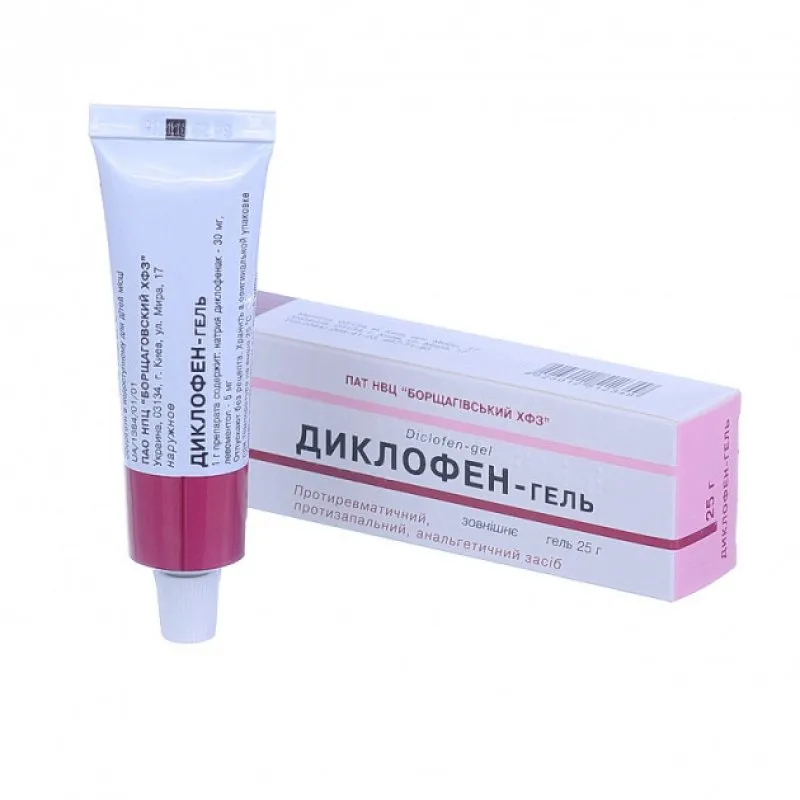
Table of Contents
INSTRUCTION FOR MEDICAL USE OF THE MEDICINAL PRODUCT DICOLOFEN-GELE (Diclofen-gel)
Composition:
Active substances: sodium diclofenac, levomenthol;
1 g of the preparation contains sodium diclofenac – 30 mg and levomenthol – 5 mg;
Excipients: ethanol 96 %, propylene glycol, glycerol, carbomer, sodium hydroxide, purified water.
Pharmaceutical form. Gel.
Main physico-chemical properties: white gel of homogeneous consistency, with a characteristic odor.
Pharmacotherapeutic group. Agents used locally for joint and muscular pain. ATC Code M02A A.
Pharmacological properties.
Pharmacodynamics.
Diclofen-gel exerts pronounced anti-inflammatory, analgesic, and anti-edematous effects when applied locally, due to inhibition of the biosynthesis of prostaglandins, kinins, and other mediators of inflammation. The drug stabilizes lysosomal membranes and reduces temperature at the site of inflammation.
Menthol, included in the formulation, provides analgesic action through its cooling effect, thereby enhancing the analgesic effect of diclofenac.
In inflammation caused by injuries or rheumatic diseases, Diclofen-gel reduces pain, tissue swelling, and accelerates restoration of functions in damaged joints, ligaments, tendons, and muscles.
Pharmacokinetics.
The amount of diclofenac penetrating through the skin is proportional to the duration of skin contact with the gel and the skin surface area to which it is applied, as well as depends on the drug dose and the degree of skin hydration. After application to the skin surface, approximately 6% of diclofenac is absorbed. An occlusive dressing may increase diclofenac absorption several times. After topical application, diclofenac is detectable in blood plasma, synovial membrane, and synovial fluid of joints. Diclofenac is 99% bound to plasma proteins. Metabolism of diclofenac occurs mainly via hydroxylation, forming several derivatives, two of which are pharmacologically active, though to a significantly lesser extent than diclofenac. Diclofenac and its metabolites are primarily excreted in urine as glucuronides.
In patients with kidney diseases, accumulation of diclofenac and its metabolites has not been observed.
In patients with chronic hepatitis or compensated liver cirrhosis, pharmacokinetic and metabolic parameters of diclofenac remain unchanged.
Clinical characteristics.
Indications.
Local treatment of pain and inflammation of joints, muscles, ligaments, and tendons of rheumatic or traumatic origin.
Contraindications.
- Hypersensitivity to diclofenac, menthol, or to any of the excipients;
- history of bronchial asthma attacks, urticaria, acute rhinitis, or other allergic reactions induced by acetylsalicylic acid or other nonsteroidal anti-inflammatory drugs (NSAIDs);
- last trimester of pregnancy.
Interaction with other medicinal products and other forms of interaction.
When using the product, the possibility of interaction with other medicinal products is minimal. However, considering the potential for prolonged use, use of doses exceeding the recommended ones, application of the product over large skin areas, and concomitant use of other medicinal products containing diclofenac or other nonsteroidal anti-inflammatory agents, the likelihood of interactions increases.
Special precautions for use.
Apply the gel externally only.
The likelihood of developing systemic adverse effects with topical application of diclofenac is low compared to oral formulations; however, this risk increases when the drug is applied over relatively large areas of skin for prolonged periods.
The product should be applied only to intact skin. Avoid contact with eyes and other mucous membranes. In case of contact, rinse thoroughly with plenty of running water. Do not apply the gel under occlusive dressings (airtight bandages), and avoid heat treatments or exposure to sunlight (including artificial UV radiation) on areas of skin where the gel has been applied. In cases of ligament sprains, the affected area may be wrapped with a bandage. If any skin rash develops, treatment with the drug should be discontinued.
Do not use simultaneously with sunscreens, cosmetics, repellents, or other topical agents on the areas where the gel is applied.
Clothing should not be worn earlier than 10 minutes after application of the product. Do not take a shower or bath earlier than 1 hour after gel application.
Use with caution when administered concomitantly with other oral nonsteroidal anti-inflammatory drugs, including diclofenac.
The product contains propylene glycol, which may cause skin irritation.
Use during pregnancy or breastfeeding.
Pregnancy
There are no clinical data on the use of Diclofen gel during pregnancy. Even though systemic exposure to diclofenac following topical application is lower than with oral administration, it is unknown whether the systemic exposure achieved with Diclofen gel after topical use could be harmful to the embryo/fetus. Diclofen gel should not be used during the first and second trimesters of pregnancy except in cases of extreme necessity. If use is required, the dose should be as low as possible and duration of treatment as short as possible. During the third trimester of pregnancy, systemic use of prostaglandin synthetase inhibitors, including diclofenac, may cause cardiovascular and renal toxicity in the fetus. Use of diclofenac near the end of pregnancy may delay labor and lead to prolonged bleeding in both mother and child. Therefore, Diclofen gel is contraindicated during the last trimester of pregnancy (see section "Contraindications").
Breastfeeding
It is unknown whether diclofenac is excreted in breast milk following topical application; therefore, use of Diclofen gel is not recommended during breastfeeding. However, if there are strong medical reasons for using the drug during breastfeeding, the gel should not be applied to the breasts or large areas of skin, and should not be used for prolonged periods.
Fertility
There are no data available on the effect of topical diclofenac on fertility.
Ability to affect reaction speed when driving or operating machinery.
No effect.
Method of Administration and Dosage
Apply the drug externally. Apply 1 g of gel (a strip of gel 2.5–3 cm long) evenly in a thin layer to the skin and gently rub in for 1–2 minutes. After application, wash hands thoroughly (except when the application is performed on the hands). Repeat the procedure 2–4 times daily. The average daily dose for adults is 4–5 g of gel, corresponding to 120–150 mg of sodium diclofenac.
If simultaneous use of the gel with diclofenac tablets is required, the daily dose of the latter should not exceed 50 mg.
Children
There is no experience with the use of the drug in children under 15 years of age.
Overdose
Cases of overdose have not been reported. Due to the route of administration, adherence to the recommended dosage regimen, and low systemic absorption of diclofenac, overdose is unlikely. However, if the gel is accidentally ingested, systemic adverse reactions may occur. Note that one 25 g tube of the drug contains the equivalent of 750 mg of sodium diclofenac, which may lead to systemic adverse reactions.
Treatment
In case of accidental ingestion, gastric lavage should be performed immediately and an adsorbent administered. Symptomatic treatment is indicated, using therapeutic measures appropriate for poisoning with nonsteroidal anti-inflammatory drugs.
Adverse reactions.
Infections and infestations: rash (including pustular).
Skin and subcutaneous tissue: rash, pruritus, erythema, eczema, exanthema, allergic dermatitis (including contact dermatitis with formation of papules, bullae); isolated cases of photosensitivity, generalized skin rashes, and sensation of skin burning are possible.
Immune system: hypersensitivity reactions (including urticaria), angioedema, dyspnea.
Respiratory system: bronchial asthma.
Gastrointestinal system: after topical application of preparations containing diclofenac, adverse reactions occur very rarely.
The possibility of systemic adverse effects after topical application of the gel is unlikely. However, with prolonged use, application to large areas of skin, use of doses exceeding the recommended, or concomitant use of other preparations containing diclofenac or other nonsteroidal anti-inflammatory drugs, adverse reactions more typical of injectable and tablet forms of diclofenac may occur.
Reporting of suspected adverse reactions
Reporting of adverse reactions after drug registration is of great importance. It enables ongoing monitoring of the benefit-risk balance of the medicinal product. Healthcare and pharmaceutical professionals, as well as patients or their legal representatives, are encouraged to report all suspected adverse reactions and lack of efficacy via the Automated Pharmacovigilance Information System at the following link: https://аіsf.dec.gov.ua.
Shelf life. 3 years.
Storage conditions. In the original packaging at a temperature not exceeding 25 °C. Keep out of reach of children.
Packaging. Gel, 25 g in tubes and cartons.
Availability category. Over-the-counter.
Manufacturer: Public joint-stock company “Scientific and Production Center “Borshchahivskiy Chemical and Pharmaceutical Plant”.
Manufacturer’s address and location of its business activity:
17 Myru Street, Kyiv, 03134, Ukraine.