Denebol gel
Ukraine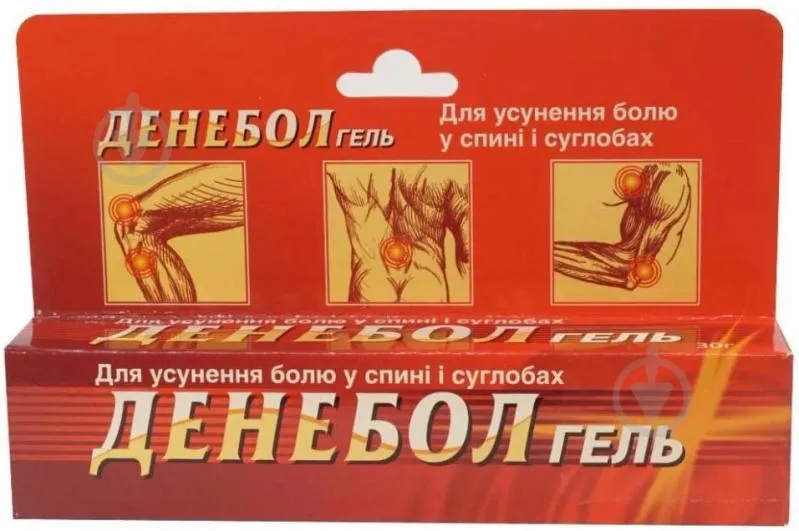
Table of Contents
INSTRUCTIONS FOR MEDICAL USE OF THE MEDICINAL PRODUCT DENEBOL GEL (DENEBOL GEL)
Composition:
Active ingredients: rofecoxib, linseed oil, methyl salicylate, menthol, phenoxyethanol;
100 g of gel contain rofecoxib 1 g, linseed oil 3 g, methyl salicylate 10 g, menthol 5 g, phenoxyethanol 1 g;
Excipients: propylene glycol, carbomer 934, butylated hydroxytoluene (E 321), polyethylene glycol 400, isopropyl alcohol, disodium edetate, triethanolamine, polyoxyl hydrogenated castor oil, purified water.
Pharmaceutical form. Gel.
Main physicochemical properties: white soft homogeneous mass with a characteristic odor, contained in a soft tube.
Pharmacotherapeutic group. Non-steroidal anti-inflammatory and antirheumatic agents. Coxibs. ATC code M01AH.
Pharmacological properties.
Pharmacodynamics.
Denebol gel contains rofecoxib—a nonsteroidal anti-inflammatory drug—highly selective inhibitor of cyclooxygenase-2. It exerts analgesic, antipyretic, and anti-inflammatory effects upon topical application. COX-2 is activated in response to inflammatory processes, leading to the synthesis and accumulation of inflammatory mediators, including prostaglandin E2, which causes inflammation, swelling, and pain. The anti-inflammatory action of rofecoxib is mediated through inhibition of prostaglandin synthesis by suppressing COX-2 activity.
At therapeutic concentrations, the drug does not inhibit cyclooxygenase-1 (COX-1). Therefore, it does not affect prostaglandins synthesized via COX-1 activation and consequently does not interfere with normal physiological processes associated with COX-1 in tissues, particularly in the stomach, gastrointestinal tract, and platelets.
Flaxseed oil is an emollient agent and softening component included in formulations intended for topical use. Flaxseed oil contains α-linolenic acid, an essential fatty acid important for human body function.
Menthol induces a cooling sensation and exerts a therapeutic effect at the site of application. Its therapeutic action results from stimulation of cold-sensitive receptors, stabilizing calcium ion flux across neuronal membranes.
Methyl salicylate, as a rubefacient, should be applied topically for the treatment of muscle pain, joint pain, and soft tissue injuries. It also exerts analgesic and anti-inflammatory effects due to its ability to stabilize the cyclooxygenase enzyme, as well as through its conversion into the active form—salicylic acid.
Pharmacokinetics.
Absorption of the drug into systemic circulation after application to the skin occurs very slowly. Even application of a large amount of rofecoxib to the skin does not lead to increased plasma concentrations of the active substance.
After absorption, menthol is metabolized in the liver and excreted in urine as glucuronides. Methyl salicylate rapidly penetrates into deep skin layers, is absorbed, hydrolyzed, converted into salicylic acid anion, and excreted in urine. Salicylate clearance is largely dependent on urine pH. Phenoxyethanol is absorbed in negligible amounts and is excreted by the kidneys as phenoxyacetic acid.
Clinical characteristics.
Indications.
Local treatment of inflammatory reactions and reduction of pain syndrome in adults with acute and chronic osteoarthritis, rheumatoid arthritis, periarthritis, bursitis, tendinitis, musculoskeletal injuries, osteochondrosis, osteoarthritis, neuralgia, lumbar pain; post-traumatic inflammation of tendons, ligaments, muscles and joints, for example, due to strains, overexertion and impacts.
Contraindications.
Hypersensitivity to the components of the medicinal product.
History of attacks of bronchial asthma, angioedema, urticaria or acute rhinitis, nasal polyps or other allergic reactions caused by intake of acetylsalicylic acid or other nonsteroidal anti-inflammatory agents.
Skin diseases; epidermal damage, open skin wounds at the site of application.
Interaction with other medicinal products and other types of interactions.
With topical application of the recommended dose, systemic absorption of components is lower than the risk of undesirable clinical interaction with drugs containing rofecoxib.
Concomitant use with acetylsalicylic acid may lead to toxic effects of salicylates.
Methylsalicylate absorbed through the skin surface may enhance the effect of oral anticoagulants (warfarin, acenocoumarol), and since this preparation contains salicylate, there is a risk of bleeding. In patients who concurrently used warfarin and a topical analgesic cream containing methylsalicylate, a significant increase in INR has been observed.
Particular caution is recommended when using topical or systemic nonsteroidal anti-inflammatory drugs concomitantly with oral antidiabetic agents of sulfonylurea derivatives, sulfonamides, methotrexate, digoxin, valproate, barbiturates, and lithium due to increased plasma concentrations of these active substances.
Concomitant use with other topical agents on the same skin area is prohibited.
Special precautions for use
For external use only.
Denebol gel should be applied only to intact skin. Contact with the eyes, mucous membranes, and damaged skin should be avoided. In case of accidental contact with mucous membranes, rinse thoroughly with plenty of water.
The use of salicylates has been associated with Reye's syndrome.
Do not apply under tight or heating bandages, or together with electric heating pads.
If skin irritation or rash occurs, discontinue use of the product.
Do not use concomitantly with anticoagulants (e.g., warfarin, acenocoumarol) due to increased risk of bleeding.
If significant skin irritation occurs, discontinue rubbing in the gel. With prolonged application over large skin areas, systemic effects of the drug cannot be excluded.
Drug absorption may be significantly increased by heating or physical activity (e.g., during sports).
The product contains propylene glycol, which may cause irritation.
Polyoxylated hydrogenated castor oil contained in the product may cause skin reactions.
Use during pregnancy or breastfeeding
Clinical experience with use in pregnant women is limited; therefore, use of this product is not recommended during pregnancy or breastfeeding. The drug is contraindicated during the third trimester of pregnancy due to the potential risk of uterine inertia and/or premature closure of the arterial duct.
It is unknown whether rofecoxib is excreted in breast milk; therefore, the physician must decide whether to discontinue breastfeeding or to stop the drug, taking into account the necessity of the drug for the mother.
Ability to affect reaction rate when driving or operating machinery
The medicinal product does not affect the ability to drive or operate machinery.
Dosage and Administration.
For external use only.
The medication is intended for use in adults. Apply to the skin 3–4 times daily and gently rub in. The required amount of the medication depends on the size of the affected area. Hands should be washed after application. The duration of treatment is determined by the physician according to the indications and therapeutic response.
Children.
There is insufficient experience with the use of this medication in children.
Overdose.
May result in an intensification of adverse reactions.
Excessive use may lead to salicylate toxicity.
In case of ingestion, seek medical advice immediately.
Methyl salicylate
Ingestion of methyl salicylate may result in severe, acute poisoning. Symptoms may develop within 2 hours and are similar to those of salicylate poisoning, although methyl salicylate is generally more toxic.
Symptoms of mild to moderate overdose may include: fever, rapid breathing (tachypnea), tinnitus, respiratory alkalosis, metabolic acidosis, depression, mild dehydration, nausea, and vomiting. In cases of severe poisoning, encephalopathy, coma, arterial hypotension, pulmonary edema, seizures, acidemia, coagulation disorders, cerebral edema, and cardiac arrhythmias may occur.
Menthol
Ingestion of large amounts of menthol-containing products may cause symptoms such as nausea, abdominal pain, vomiting, and central nervous system effects including dizziness, ataxia, flushing, somnolence, slow breathing (bradypnea), and coma.
Incorrect or excessive topical use, concomitant use with tight bandages, or other salicylate-containing medicinal products may lead to toxicity, which may also be fatal.
In case of overdose, general supportive measures and symptomatic treatment should be administered.
Adverse reactions.
Immune system disorders: hypersensitivity reactions (including urticaria), angioneurotic edema.
Skin and subcutaneous tissue disorders: rashes, itching sensation, contact dermatitis.
Respiratory, thoracic and mediastinal disorders: dyspnea.
General disorders and administration site conditions: application site reactions (including local sensation of cold followed by warmth, skin irritation, burning sensation, tingling at the site of application, blisters, redness, pain, itching and rash).
Gastrointestinal disorders – if swallowed, due to menthol action: nausea, abdominal pain, vomiting.
Nervous system disorders – if swallowed in large amounts, due to menthol action: dizziness, ataxia, facial flushing, drowsiness, respiratory depression, and coma.
Shelf life.
2 years.
Storage conditions.
Store at a temperature not exceeding 25 °C in the original packaging, in a place inaccessible to children. Do not freeze!
Packaging.
30 g of gel in a tube, 1 tube with instructions for medical use in a cardboard box.
Supply category.
Over-the-counter (without prescription).
Manufacturer.
Mepro Pharmaceuticals Private Limited.
Address.
Unit II, Q-Road, Phase IV, GIDC, Wadhwan, Surendranagar, Gujarat, 363 035, India.
Marketing Authorization Holder.
Mili Healthcare Limited.
Address.
Fairfax House 15, Fulwood Place, London, WC1V 6AY, Great Britain.