Buprenorphine hydrochloride
Ukraine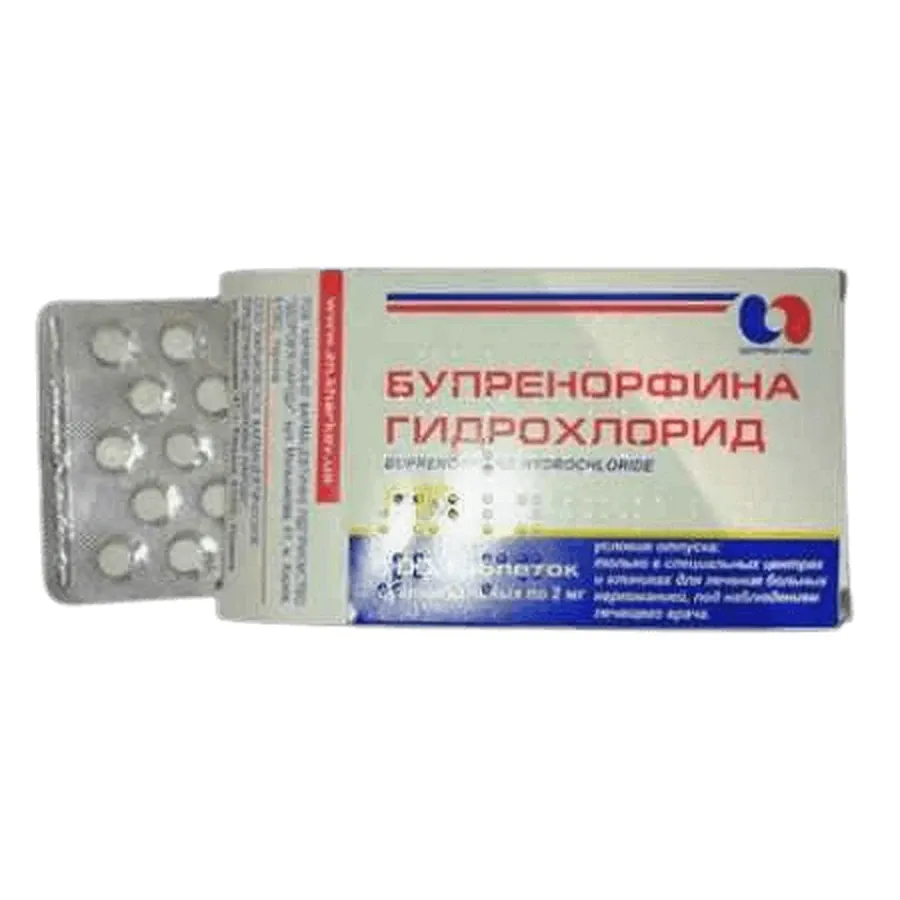
Table of Contents
INSTRUCTION FOR MEDICAL USE OF THE MEDICINAL PRODUCT BUPRENORPHINE HYDROCHLORIDE (BUPRENORPHINE HYDROCHLORIDE)
Composition:
Active substance: buprenorphine;
1 tablet contains buprenorphine hydrochloride equivalent to 2 mg, 4 mg, or 8 mg of buprenorphine;
Excipients: Cellactose 80 (a mixture of lactose monohydrate and powdered cellulose (75:25)), mannitol (E 421), corn starch, crospovidone, anhydrous citric acid, aspartame (E 951), magnesium stearate.
Pharmaceutical form. Sublingual tablets.
Main physicochemical properties: tablets of white or almost white color with a flat surface and bevel.
Pharmacotherapeutic group.
Medicinal products used in opioid dependence.
ATC code N07BC01.
Pharmacological properties.
Pharmacodynamics.
By mechanism of action, buprenorphine hydrochloride belongs to the group of agonists/antagonists of opioid receptors in the brain (μ- and κ-receptors).
Buprenorphine binds to μ-receptors, thereby minimizing the pathological drug craving in patients over a certain period of time. Due to buprenorphine's partial agonist activity at opioid receptors, the drug has a higher safety profile regarding the development of respiratory and cardiac depression compared to morphine. The latent period before the onset of action of buprenorphine hydrochloride after sublingual administration is approximately 30 minutes. The duration of analgesic effect is longer than that of morphine.
Pharmacokinetics.
After oral administration, buprenorphine undergoes first-pass metabolism in the liver, followed by N-dealkylation and glucuronidation in the intestine and liver. After sublingual administration, the absolute bioavailability of buprenorphine is estimated to range between 15% and 30%. Maximum plasma concentration is reached 90 minutes after sublingual administration, and the dose-concentration relationship remains linear within the dose range of 2 to 16 mg.
Following absorption, a rapid distribution phase occurs. The elimination half-life of buprenorphine ranges from 2 to 5 hours.
Buprenorphine is metabolized via 14-N-dealkylation or glucuronidation of the parent molecule and the dealkylated metabolite. According to clinical data, CYP3A4 is responsible for the N-dealkylation of buprenorphine. The N-dealkyl metabolite of buprenorphine acts as a μ-opioid receptor agonist.
Buprenorphine hydrochloride is primarily excreted from the body via feces as a result of biliary excretion of glucuronidated metabolites (80%); the remainder of buprenorphine is excreted in urine.
Clinical characteristics.
Indications.
Replacement therapy in opioid dependence as part of a comprehensive treatment program including medical, social, and psychological support provided by specialists.
Contraindications.
- Hypersensitivity to buprenorphine or any of the excipients.
- Severe respiratory insufficiency.
- Severe hepatic impairment.
- Acute alcohol intoxication and delirium.
- Concomitant administration of opioid antagonists (naltrexone, nalmafene) for the treatment of alcohol or opioid dependence.
Interaction with other medicinal products and other forms of interaction.
Concomitant use of the following psychotropic agents and substances is not recommended
Alcohol
Alcohol enhances the sedative effect of buprenorphine. Reduced alertness increases the risk when driving or operating machinery. Consumption of alcoholic beverages and use of medicinal products containing alcohol should be avoided.
Medicinal products requiring caution during concomitant use
Benzodiazepines
Concomitant use of buprenorphine with benzodiazepines is associated with an increased risk of fatal respiratory depression due to central nervous system (CNS) depression.
Other central nervous system depressants
Other opioid derivatives (analgesics, antitussives), certain antidepressants, antihistamines (H1-receptor blockers), barbiturates, tranquilizers, and clonidine may enhance CNS depression when used concomitantly with buprenorphine.
Gabapentinoids
Concomitant use of buprenorphine with gabapentinoids (gabapentin and pregabalin) may lead to respiratory depression, hypotension, profound sedation, coma, and death.
Anticholinergic agents
Concomitant use of buprenorphine with anticholinergic agents or drugs exhibiting anticholinergic activity (e.g., tricyclic antidepressants, antihistamines, neuroleptics, muscle relaxants, antiparkinsonian agents) may enhance anticholinergic adverse effects.
Monoamine oxidase inhibitors (MAOIs)
An enhanced opioid effect may occur when buprenorphine is used concomitantly with MAOIs.
Cytochrome P450 3A4 (CYP3A4) inhibitors
Interaction studies between buprenorphine and ketoconazole (a potent CYP3A4 inhibitor) showed increases in Cmax and AUC of buprenorphine by 70% and 50%, respectively, and to a lesser extent, its metabolite norbuprenorphine. Therefore, close monitoring is required in patients receiving buprenorphine concomitantly with CYP3A4 inhibitors such as protease inhibitors (ritonavir, nelfinavir, indinavir) or azole antifungal agents (ketoconazole, itraconazole). In such cases, dose reduction of buprenorphine may be warranted.
Other CYP3A4 inhibitors (e.g., gestodene, troleandomycin, HIV protease inhibitors such as ritonavir, indinavir, and saquinavir) may also increase buprenorphine concentrations. Therefore, a proportional dose reduction of buprenorphine should be considered at the initiation of treatment with these agents.
Cytochrome P450 3A4 (CYP3A4) inducers
The interaction between buprenorphine and CYP3A4 inducers has not been studied. Therefore, careful monitoring is recommended in patients receiving concomitant CYP3A4 inducers (e.g., phenobarbital, carbamazepine, phenytoin, or rifampicin). To date, no significant interaction between buprenorphine and cocaine—the substance most commonly used in combination with opioids—has been reported. However, these agents may increase buprenorphine metabolism. Therefore, in patients reporting reduced efficacy of buprenorphine or increased craving, the buprenorphine dose may need to be increased.
Buprenorphine should be used with caution when co-administered with serotonergic medicinal products such as MAO inhibitors, selective serotonin reuptake inhibitors (SSRIs), serotonin-norepinephrine reuptake inhibitors (SNRIs), or tricyclic antidepressants, due to an increased risk of serotonin syndrome—a potentially life-threatening condition (see section "Special precautions for use").
A suspected interaction between intravenous buprenorphine and phenprocoumon leading to purpura has been reported.
Achieving adequate analgesia may be difficult when administering an opioid agonist to patients receiving buprenorphine, thus increasing the risk of overdose—especially when attempting to overcome the agonist effects of buprenorphine or when plasma concentrations of buprenorphine are decreasing.
Naltrexone and nalmafene—opioid receptor antagonists—block the pharmacological effects of buprenorphine. Concomitant use of buprenorphine with naltrexone or nalmafene should be avoided due to the potential for a dangerous interaction that may precipitate an abrupt onset of prolonged and severe opioid withdrawal syndrome.
Special precautions for use.
This medicinal product is intended solely for the treatment of opioid dependence. Treatment must be prescribed by a physician who ensures the proper use of the medication by dependent patients.
The physician should consider the risk of misuse (including intravenous administration), particularly at the beginning of treatment.
Diversion
Diversion refers to the transfer of buprenorphine to the illegal market, either from patients or from individuals who obtain the medicinal product through theft from patients or pharmacies. Diversion may lead to the emergence of new individuals using buprenorphine as a primary drug, resulting in dependence, with risks of overdose, transmission of blood-borne viral infections, respiratory depression, and liver damage.
Due to the risk of misuse, and for dose titration, the medication should be prescribed in small quantities during the initial treatment period and, whenever possible, administered under supervision, which also promotes adherence to the treatment regimen.
At the beginning of buprenorphine treatment, the physician should warn the patient about the partial agonist profile of the drug, especially if administered to opioid-dependent patients less than 6 hours after the last dose of heroin or short-acting opioids, or less than 24 hours after the last dose of methadone. Conversely, withdrawal symptoms may also result from incorrect dosing.
The risk of overdose or relapse is higher in patients who continue self-medicating with opioids, alcohol, or other sedatives and hypnotics—particularly benzodiazepines—during buprenorphine treatment.
Opioid use disorders (OUD) (abuse, dependence, and withdrawal syndrome )
Buprenorphine is a partial agonist of opioid receptors, and its chronic use leads to opioid-type dependence. Animal studies and clinical experience have demonstrated that buprenorphine can cause dependence, although to a lesser extent than full opioid agonists such as morphine.
Tolerance and physical and/or psychological dependence may develop after repeated use of opioids such as buprenorphine; repeated use of buprenorphine may lead to OUD. Higher doses and longer duration of opioid treatment may increase the risk of developing OUD. Abuse or intentional misuse of buprenorphine may lead to overdose and/or death. The risk of developing OUD is increased in patients with a personal or family history (parents or siblings) of substance use disorders (including alcohol use disorders), in current tobacco users, or in patients with existing psychiatric disorders (e.g., severe depression, anxiety, and personality disorders).
Before initiating and during buprenorphine treatment, the physician should discuss treatment goals and a plan for discontinuation with the patient (see section "Dosage and administration"). Patients should be informed about the risks and signs of OUD before and during treatment. Patients should be advised to contact their physician if such signs appear.
The potential risk can be minimized by appropriate dose selection or dosage form of buprenorphine and by gradual discontinuation of buprenorphine. Abrupt discontinuation of the drug or prolonged intervals between doses may cause withdrawal syndrome, sometimes delayed in onset.
Patients should be monitored for signs of addictive behavior (e.g., early requests for additional doses). This includes monitoring concomitant use of opioids and psychoactive medicinal products (particularly benzodiazepines). Patients exhibiting signs and symptoms of OUD should be referred for consultation with an addiction specialist.
Respiratory depression
This medicinal product should be used with caution in patients with asthma or respiratory insufficiency (e.g., chronic obstructive pulmonary disease, reduced respiratory reserve, hypoxia, hypercapnia, kyphoscoliosis).
Buprenorphine may cause serious (including fatal) respiratory depression in children and individuals without opioid dependence if taken accidentally or intentionally. Patients must store the tablet blister pack in a safe place, never open the blister pack in advance, and keep the tablets out of reach of children and other family members.
Several fatal cases due to respiratory depression have been reported, particularly when buprenorphine was used concomitantly with benzodiazepines or when misused.
Serotonin syndrome
Concomitant use of buprenorphine with other serotonergic agents, such as MAO inhibitors, selective serotonin reuptake inhibitors (SSRIs), serotonin-norepinephrine reuptake inhibitors (SNRIs), or tricyclic antidepressants, may lead to serotonin syndrome—a potentially life-threatening condition (see section "Interaction with other medicinal products and other forms of interaction").
If concomitant treatment with other serotonergic agents is clinically justified, close monitoring of the patient is recommended, especially during initiation of treatment and dose escalation.
Symptoms of serotonin syndrome may include mental status changes, autonomic instability, neuromuscular disturbances, and/or gastrointestinal symptoms.
If serotonin syndrome is suspected, consideration should be given to reducing the dose or discontinuing therapy, depending on the severity of symptoms.
Hepatitis, hepatic reactions
Cases of acute liver injury have been reported both during clinical trials and in the post-marketing period. A spectrum of abnormalities has been observed, ranging from transient asymptomatic elevations in liver transaminases to liver failure. In many cases, underlying factors such as pre-existing liver enzyme abnormalities, hepatitis B or C virus infection, concomitant use of other potentially hepatotoxic drugs, or chronic intravenous drug use may have contributed. These underlying factors should be considered before initiating buprenorphine and throughout treatment. If a hepatic reaction of unknown origin is suspected, buprenorphine should be evaluated as a potential cause of liver necrosis or jaundice, and treatment should be discontinued as soon as the patient's clinical condition allows. All patients should undergo regular liver function tests.
This medicinal product may cause drowsiness, which may be enhanced by other centrally acting agents such as alcohol, tranquilizers, sedatives, and hypnotics.
This medicinal product may cause orthostatic hypotension.
Buprenorphine has the ability to relieve pain symptoms in certain conditions.
Athletes should be informed that buprenorphine is included in the list of doping substances (stimulants).
QT interval prolongation
Rigorous studies have demonstrated QT interval prolongation (less than or equal to 15 ms). This QT-prolonging effect does not appear to be mediated via hERG potassium channels. Based on these two findings, buprenorphine is unlikely to cause arrhythmias when used alone in patients without risk factors. The risk of combining buprenorphine with other QT-prolonging medicinal products is unknown.
These observations should be considered when making clinical decisions about prescribing buprenorphine hydrochloride-containing medicinal products to patients with risk factors such as hypokalemia, bradycardia, recent conversion of atrial fibrillation, congestive heart failure, digoxin therapy, baseline QT prolongation, subclinical long QT syndrome, or severe hypomagnesemia.
Dental adverse reactions
Cases of dental caries, sometimes severe (e.g., tooth fracture or loss), have been reported following the use of sublingual formulations containing buprenorphine. Reports include caries (including deep caries), tooth decay, dental abscesses/infections, tooth erosion, loss of fillings, and, in some cases, complete tooth loss. Treatment has included tooth extraction, root canals, dental surgery, and restorative procedures (e.g., fillings, crowns, implants, dentures). Numerous cases have been reported in individuals with no prior dental problems.
Patients should be referred to dentists and advised to undergo regular dental examinations during buprenorphine hydrochloride treatment. Patients need to be educated about seeking dental care and methods to maintain or improve oral health during treatment with sublingual buprenorphine-containing medicinal products. Patients should wait at least one hour after taking buprenorphine hydrochloride before brushing their teeth.
Use in children aged 16 to 18 years
Due to lack of data, the medicinal product should be used with particular caution in children aged 16 to 18 years.
Excipients
The product contains Celactose 80 (a mixture of monohydrate lactose and powdered cellulose (75:25)). If a patient has known intolerance to certain sugars, consultation with a physician is recommended before taking this medicinal product.
The product contains aspartame, a phenylalanine derivative, which poses a risk to patients with phenylketonuria.
Safety precautions
Use with caution in patients with:
- bronchial asthma or respiratory insufficiency (there have been several reports of respiratory depression caused by buprenorphine);
- renal impairment (20% of buprenorphine is eliminated via the kidneys, so renal elimination may be prolonged);
- hepatic impairment (buprenorphine metabolism in the liver may be altered).
Dosage regimens of buprenorphine hydrochloride should be carefully adjusted in patients taking CYP3A4 inhibitors (lower doses may be sufficient, as CYP3A4 inhibitors increase plasma concentrations of buprenorphine).
As with other opioids, buprenorphine requires particular caution in patients with concomitant conditions such as:
- increased intracranial pressure due to head trauma;
- arterial hypotension;
- prostate hypertrophy or urethral stenosis.
Use during pregnancy or breastfeeding.
Pregnancy. Due to insufficient data on the effects of buprenorphine in pregnant women, its use during pregnancy is not recommended.
Breastfeeding. Buprenorphine passes into animal milk. At high doses, the drug reduces milk production. Breastfeeding is not recommended for dependent women taking buprenorphine.
Ability to affect reaction speed when driving or operating machinery.
Drowsiness and dizziness may occur during treatment (especially if buprenorphine is taken concomitantly with alcohol, alcohol-containing products, or central nervous system depressants). Therefore, patients should refrain from driving and operating machinery requiring high attention during treatment.
Method of Administration and Dosage
The medicinal product is intended for adults and children aged 16 years and older who voluntarily undergo treatment in a specialized inpatient facility.
Buprenorphine hydrochloride is prescribed by a physician as part of general therapeutic treatment for opioid-dependent patients only after a medical examination and in accordance with recommendations from a drug dependence treatment center. The total duration of treatment should not exceed 28 days. However, the physician is advised, especially at the beginning of treatment, to prescribe shorter courses in order to limit the risk of inappropriate use of buprenorphine hydrochloride, which is unacceptable under any circumstances.
Treatment should be conducted comprehensively, both in specialized addiction treatment centers and in hospitals, allowing integration of comprehensive treatment with socio-psychological support.
If treatment is not conducted in a specialized center, the physician treating addiction must prescribe long-term substitution therapy only with the agreement of colleagues practicing in specialized addiction treatment centers.
The physician must specify the exact single dose and treatment cycle on the prescription. Treatment may be discontinued at the patient's request or with the patient's consent through gradual dose reduction as determined by the physician.
At the beginning of buprenorphine treatment, the physician must consider the individual agonistic profile of opioid receptor molecules and sensitivity to withdrawal syndrome induction in each dependent patient. The treatment outcome depends partly on the prescribed dose and partly on medical, psychological, and socio-educational measures related to the patient’s progressive adaptation.
Treatment Goals
Before initiating buprenorphine treatment, the treatment strategy—including duration and goals—should be agreed upon with the patient. During therapy, the physician should maintain frequent contact with the patient to evaluate the need for continuing treatment, consider discontinuation, and, if necessary, adjust doses (see section "Special Instructions").
Sublingual Administration
Initiation of Treatment. The initial dose for opioid dependence treatment ranges from 0.8* to 4 mg per day. An additional dose of buprenorphine from 2 mg to 4 mg may be administered once daily depending on the individual patient's needs. The effect of buprenorphine at the beginning of treatment should manifest no earlier than 6 hours after the last dose of opioids or at the onset of first withdrawal symptoms in patients previously receiving methadone. The prior methadone dose should be reduced to no more than 30 mg per day; otherwise, buprenorphine-induced withdrawal syndrome may develop.
* A medicinal product with appropriate dosage strength is used.
Dose Adjustment to Reach Maintenance Dose
The buprenorphine dose should be gradually increased according to the therapeutic effect observed in the patient. The average maintenance dose of buprenorphine is 8 mg per day. Most patients do not require doses exceeding 16 mg per day; however, clinical studies have demonstrated the efficacy and safety of sublingual buprenorphine administration at doses up to 24 mg per day.
Dose adjustments should be based on repeated assessments of the patient’s clinical condition and the effectiveness achieved with comprehensive treatment. Inadequate stabilization of the patient’s condition when receiving 16 mg of buprenorphine per day may be associated with possible comorbid psychiatric disorders or incorrect administration of the medicinal product. This should be considered when determining further treatment measures.
Dose Reduction and Discontinuation of Treatment
After a satisfactory stabilization period, the physician may propose gradually reducing the daily buprenorphine dose, ultimately leading to complete discontinuation of substitution therapy under favorable conditions.
Particular attention should be paid to relapse frequency and withdrawal symptoms during treatment discontinuation, which should be closely monitored. According to results of some uncontrolled clinical studies of similar medicinal products, gradual dose reduction is preferred during the final phase of treatment. After treatment completion, patients require ongoing monitoring due to the risk of relapse.
Special Patient Groups
Elderly Patients
The safety and efficacy of buprenorphine in elderly patients aged 65 years and older have not been established.
Patients with Hepatic Impairment
Patients who are carriers of hepatitis virus and/or have liver dysfunction are at risk of accelerated liver damage. Regular monitoring of liver function is recommended.
The effect of hepatic impairment on the pharmacokinetics of buprenorphine is unknown. Since the active substance is extensively metabolized, higher plasma levels are expected in patients with moderate to severe hepatic impairment.
Pharmacokinetics may be altered in patients with impaired liver function—lower initial doses and careful dose titration are recommended for patients with mild to moderate hepatic impairment.
Patients with Renal Impairment
Dosage should be administered with caution in patients with severe renal impairment (creatinine clearance < 30 mL/min).
Children
The medicinal product is contraindicated in children under 16 years of age.
Overdose.
Symptoms. Overdose is unlikely with sublingual administration of the drug. In case of accidental oral overdose, symptoms such as nausea, vomiting and/or speech disturbances, drowsiness, amblyopia, miosis, and arterial hypotension may occur. In case of overdose, standard symptomatic therapy should be initiated, including careful monitoring of vital functions. The main symptom requiring intensive therapy is respiratory center depression, which may lead to respiratory arrest and fatal outcome. If vomiting occurs, measures should be taken to prevent aspiration of gastric contents into the airways.
Treatment. Initial management includes immediate gastric lavage. Intensive therapy measures should be implemented, including careful monitoring of respiratory and cardiac functions and initiation of symptomatic treatment for respiratory insufficiency. The upper airways must remain patent to allow for assisted or controlled ventilation. Parenteral administration of an opioid antagonist (naloxone) is recommended to gradually reverse the respiratory effects of buprenorphine. It should be noted that naloxone is eliminated from the body faster than buprenorphine; therefore, repeated infusions of naloxone are necessary due to the risk of recurrent overdose symptoms. Initial naloxone doses may reach 2 mg (not exceeding 10 mg) and should be repeated every 2–3 minutes until a satisfactory response is achieved. Oxygen and respiratory analeptics should be administered if necessary. The patient must remain in an intensive care unit during implementation of the above measures.
When determining the duration of overdose treatment, the prolonged duration of action of buprenorphine should be taken into account.
Adverse Reactions
The onset of adverse effects depends on the individual tolerance threshold; in drug-dependent individuals, this threshold is significantly higher than in patients who do not use narcotics.
Psychiatric disorders: depression, pathological thinking, drug dependence, euphoria, hostility, hallucinations.
Nervous system disorders: insomnia, somnolence, headache, migraine, asthenia, unconsciousness, pallor, dizziness, anxiety, restlessness, confusion, paresthesia, convulsions, tremor, syncope.
Cardiovascular system disorders: orthostatic hypotension, bradycardia, tachycardia, arterial hypotension, arterial hypertension, vasodilation, palpitations.
Respiratory system disorders: respiratory center depression, cough, dyspnea, yawning, bronchospasm.
Gastrointestinal disorders: constipation, nausea, vomiting, abdominal pain, dry mouth, diarrhea, dyspepsia, flatulence, mouth ulcers, dental caries (including caries, tooth fracture, and tooth loss).
Immune system disorders: hypersensitivity reactions, including rash, urticaria, pruritus, bronchospasm, Quincke's edema (angioneurotic edema), anaphylactic shock.
Eye disorders: amblyopia, lacrimal apparatus disorders, miosis.
Infections and infestations: influenza, pharyngitis.
Blood and lymphatic system disorders: lymphadenopathy.
Skin and subcutaneous tissue disorders: hyperhidrosis.
Musculoskeletal and connective tissue disorders: arthralgia, muscle cramps, myalgia, arthritis.
Ear and labyrinth disorders: vertigo.
Hepatobiliary disorders: under proper conditions of use, in isolated cases – elevated liver transaminase levels and jaundice, usually with a favorable clinical course; liver necrosis and hepatitis, hepatorenal syndrome.
General disorders: weakness, somnolence, increased sweating, drug withdrawal syndrome, chest pain, fever, malaise, peripheral edema.
Other disorders: urinary retention, rhinitis, chills, back pain, lacrimation.
In cases of improper intravenous administration of the medicinal product, local reactions have been reported, sometimes septic (abscess, cellulitis), as well as potentially severe acute hepatitis and other infectious diseases such as pneumonia and endocarditis.
In patients with pronounced physical (somatic) opioid dependence, initial sublingual administrations of buprenorphine hydrochloride may cause a paradoxical reaction leading to a withdrawal syndrome similar to that induced by naloxone.
Neonatal withdrawal syndrome has been observed in newborns whose mothers received buprenorphine during pregnancy. The characteristics of the syndrome may vary depending on the type of opioid drugs used.
Unconsciousness was not reported.
Drug dependence
Repeated use of buprenorphine, even at therapeutic doses, may lead to drug dependence. The risk of developing drug dependence may vary depending on individual patient risk factors, dosage, and duration of opioid treatment (see section "Special precautions for use").
Shelf life
3 years.
Storage conditions
Store in the original packaging at a temperature not exceeding 25 °C.
Keep out of reach of children.
Packaging
Tablets 2 mg – 10 tablets in a blister; 1 blister per box; 25 tablets in a blister; 4 blisters per box;
tablets 4 mg – 10 tablets in a blister; 1 or 10 blisters per box;
tablets 8 mg – 10 tablets in a blister; 1 or 10 blisters per box.
Prescription status
Prescription only.
Manufacturer
Limited liability company "Kharkiv Pharmaceutical Enterprise "Zdorov'ya Narodu".
Manufacturer's address and location of business activities
41 Kulikovska Street, Kharkiv, Kharkiv region, 61002, Ukraine.