Bromocriptine-richter
Ukraine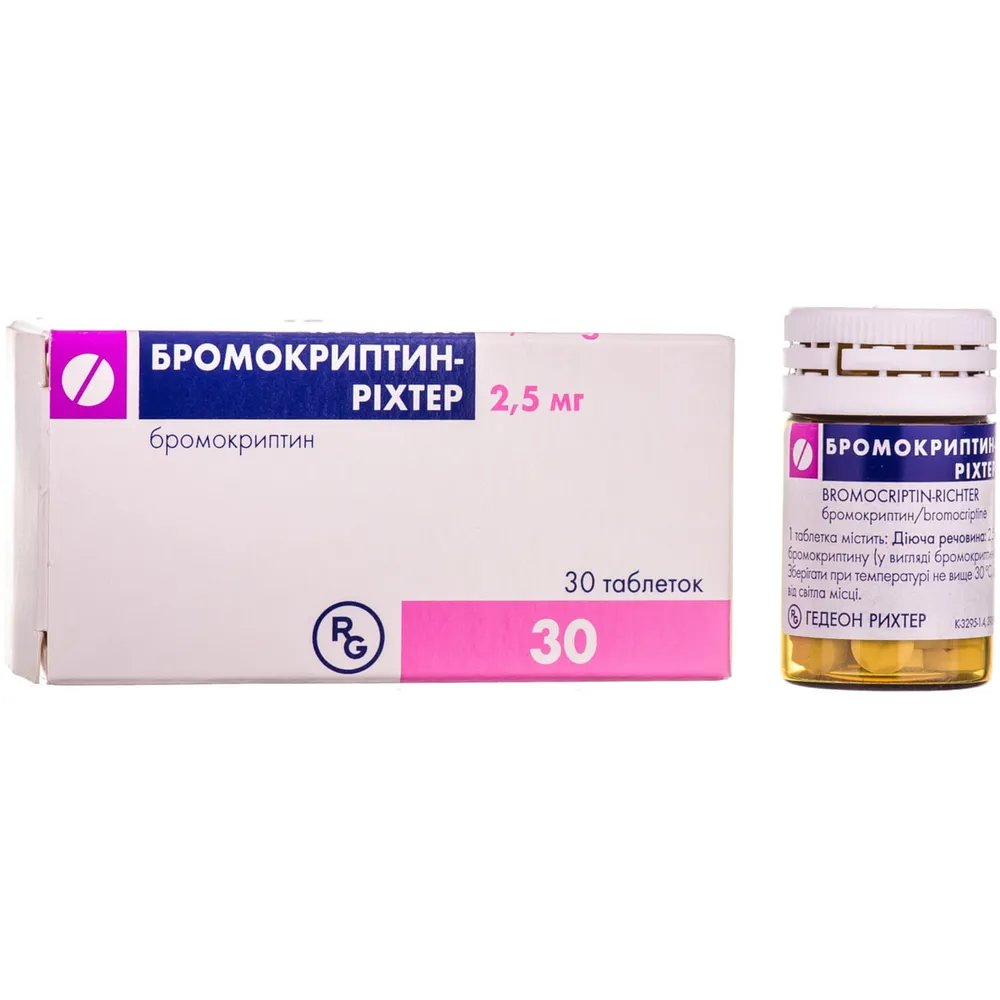
Table of Contents
INSTRUCTIONS FOR MEDICAL USE OF THE MEDICINAL PRODUCT BROMOCRIPTIN-RICHTER (BROMOCRIPTIN-RICHTER)
Composition:
Active substance: bromocriptine;
1 tablet contains 2.5 mg of bromocriptine (as 2.87 mg of bromocriptine mesylate);
Excipients: colloidal anhydrous silicon dioxide; magnesium stearate; talc; povidone; corn starch; monohydrate lactose; microcrystalline cellulose.
Pharmaceutical form. Tablets.
Main physico-chemical properties: almost white, round, flat tablets with bevel, approximately 7 mm in diameter, with a score line on one side and engraved "2.5" on the other.
Pharmacotherapeutic group. Other agents for treatment of gynecological disorders. Prolactin inhibitors. ATC code G02C B01.
Antiparkinson agents. Dopamine receptor agonists. ATC code N04B C01.
Pharmacological properties.
Pharmacodynamics.
Bromocriptine is an inhibitor of prolactin secretion and a stimulator of dopamine receptors. The scope of application of bromocriptine includes endocrine and neurological indications. The pharmacological properties of the drug will be discussed for each type of indication.
Mechanism of action
Endocrine properties
Bromocriptine inhibits the secretion of the hormone prolactin from the anterior pituitary gland without affecting the normal levels of other hormones released by the anterior pituitary.
In patients with acromegaly, bromocriptine reduces the elevated levels of growth hormone (somatotropic hormone, GH). These effects are due to stimulation of dopamine receptors.
In the postpartum period, prolactin is necessary for the initiation and maintenance of postpartum lactation. At other times, increased prolactin secretion causes pathological lactation (galactorrhea) and/or disturbances in ovulation and menstruation.
As a specific inhibitor of prolactin secretion, bromocriptine can be used to prevent or suppress physiological lactation, as well as to treat prolactin-induced pathological conditions. In amenorrhea and/or anovulation (with or without galactorrhea), bromocriptine can be used to restore the menstrual cycle and ovulation.
When bromocriptine is used, usual measures taken to suppress lactation, such as fluid restriction, are not required. In addition, bromocriptine does not delay postpartum uterine involution and does not increase the risk of thromboembolism. Bromocriptine has been shown to stop the growth or reduce the size of prolactin-secreting pituitary adenomas (prolactinomas).
In patients with acromegaly, in addition to reducing plasma levels of growth hormone and prolactin, bromocriptine favorably affects clinical symptoms and glucose tolerance.
Bromocriptine alleviates clinical symptoms of polycystic ovary syndrome by restoring the normal pattern of luteinizing hormone (LH) secretion.
Neurological properties
Due to its dopaminergic activity, bromocriptine is effective in the treatment of Parkinson's disease when administered at doses that usually exceed those recommended for endocrine indications. This disorder is characterized by a specific nigrostriatal deficiency of dopamine. Under these conditions, stimulation of dopamine receptors by bromocriptine can restore the neurochemical balance in the striatum.
From a clinical standpoint, bromocriptine alleviates tremor, muscle rigidity, bradykinesia, and other symptoms of Parkinson's disease at all stages. Typically, the therapeutic effect lasts for many years (to date, good results have been recorded in patients treated for up to 8 years). Bromocriptine can be used as monotherapy or in combination with other anti-Parkinson drugs at both early and late stages.
Combination therapy with levodopa leads to an enhanced antiparkinsonian effect and often allows a reduction in the required levodopa dose. Bromocriptine is particularly useful in patients in whom the therapeutic effect of levodopa diminishes or complications arise, such as abnormal involuntary movements (choreoathetoid dyskinesia and/or painful dystonia), end-of-dose deterioration, and the "on-off" phenomenon.
Bromocriptine reduces the severity of depressive symptoms, which are often observed in patients with Parkinson's disease. This is due to its inherent antidepressant properties, which have been confirmed in controlled studies in patients with endogenous or psychogenic depression without parkinsonism.
Pediatric population
The safety and efficacy of bromocriptine in children have been established only for prolactinomas and acromegaly in patients aged 7 years and older (see sections "Special instructions" and "Method of administration and dosage").
Children (aged 7 to 17 years)
The use of bromocriptine for the treatment of prolactinomas and acromegaly in children has been described in published case studies and retrospective cohort studies. However, there are only data on a few individual cases of bromocriptine use in children under 7 years of age.
Bromocriptine has been described as an effective non-invasive agent for the treatment of prolactinomas and acromegaly in children. In acromegaly, bromocriptine treatment leads to suppression of growth hormone release (IGF-1 concentrations).
In hyperprolactinemia, bromocriptine effectively reduces serum prolactin levels, allowing normalization of growth and sexual maturation. The bromocriptine dose used in children ranged from 1.25 to 20 mg per day. Dose titration in children should be initiated cautiously. The safety profile in adolescent patients is likely comparable to that in adults for these indications. However, in younger patients, especially those under 7 years of age, data are insufficient to assess safety and determine efficacy.
Pharmacokinetics.
Absorption
Bromocriptine is well absorbed after oral administration. In healthy volunteers, the half-absorption time of bromocriptine after tablet intake is 0.2–0.5 hours, and maximum plasma concentration is reached within 1–3 hours. After oral administration of a 5 mg dose of bromocriptine, Cmax is 0.465 ng/mL.
Distribution
Maximum drug levels in plasma are reached within 1–3 hours. The effect of reducing prolactin levels is evident within 1–2 hours after oral administration, reaches a maximum (reduction of prolactin concentration by more than 80%) within 5–10 hours, and remains close to maximum for 8–12 hours.
Biotransformation
Bromocriptine undergoes extensive presystemic biotransformation in the liver, reflected in a complex metabolite profile and the near absence of the parent substance in urine and feces. It exhibits high affinity for CYP3A, and the main metabolic pathway is hydroxylation of the proline ring of the cyclopeptide component. Thus, inhibitors and/or potent substrates of CYP3A4 are expected to inhibit bromocriptine elimination and lead to increased plasma levels. Bromocriptine is also a potent inhibitor of CYP3A4 with a calculated IC50 value of 1.6 μM. However, considering the low therapeutic concentrations of free bromocriptine in patients, significant changes in the metabolism of other drugs mediated by the CYP3A4 system are not expected.
Elimination
Elimination of the parent substance from plasma is biphasic, with a half-life of approximately 15 hours (range 8–20 hours). The parent substance and its metabolites are almost completely excreted in feces, with only 6% excreted in urine. Plasma protein binding of the drug is 96%.
Characteristics in patients
There is no evidence that advanced age can directly alter the pharmacokinetic properties and tolerability of bromocriptine. However, in patients with impaired liver function, elimination rate may be increased, and drug levels in plasma may rise, requiring dose adjustment.
Clinical characteristics.
Indications.
Prevention of lactation for medical reasons
Prevention or suppression of physiological lactation in the postpartum period only for medical reasons (intrauterine fetal death, neonatal death, HIV infection of the mother).
Bromocriptine is not recommended for routine suppression of lactation or for relief of postpartum symptoms of breast engorgement and pain when effective non-pharmacological measures (e.g., gentle breast support, cold compresses) and/or non-narcotic analgesics are available.
Hyperprolactinemia
Treatment of hyperprolactinemia. In men with hypogonadism (oligospermia, loss of libido, impotence) and/or galactorrhea. In women with hypogonadism (amenorrhea, hot flushes, vaginal dryness), menstrual cycle disorders, female infertility and/or galactorrhea.
Prolactinomas
Treatment of micro- or macroprolactin-secreting pituitary adenomas. The medicinal product Bromocriptine-Richter can be used preoperatively to reduce tumor size and facilitate its removal.
Acromegaly
Bromocriptine is used as an adjunct to surgical intervention and/or radiotherapy, or in the treatment of patients with acromegaly who have contraindications to surgery or for whom surgery is not indicated.
Parkinson's disease
In the treatment of signs and symptoms of idiopathic Parkinson's disease, bromocriptine is used as monotherapy or in combination with levodopa, or in combination with other antiparkinsonian medicinal products in patients with motor complications and in patients with the "on-off" phenomenon. Bromocriptine use may be beneficial in patients who do not respond to levodopa treatment or who do not tolerate its adverse reactions.
Additional
There is insufficient evidence of efficacy of bromocriptine in the treatment of benign breast disorders and premenstrual symptoms. Therefore, the use of bromocriptine in patients with these conditions is not recommended.
Contraindications.
Hypersensitivity to the active substance, other ergot alkaloids, or to any of the excipients of the medicinal product (see section "Composition").
Uncontrolled hypertension, hypertensive conditions associated with pregnancy (including eclampsia, pre-eclampsia or gestational arterial hypertension), arterial hypertension in the early and late postpartum period.
For suppression of lactation and for other non-life-threatening indications, in patients with a history of ischemic heart disease or other severe cardiovascular disorders, or symptoms/current history of severe psychiatric disorders.
For long-term treatment: presence of valvular heart disease detected by echocardiography performed prior to initiation of treatment.
Interaction with other medicinal products and other types of interactions.
The tolerability of bromocriptine may be reduced under the influence of alcohol.
Concomitant use of macrolide antibiotics such as erythromycin or josamycin may increase bromocriptine plasma levels.
Treatment of patients with acromegaly using a combination of bromocriptine and octreotide increases bromocriptine plasma levels.
Since bromocriptine exerts its therapeutic effect by stimulating central dopamine receptors, dopamine antagonists such as antipsychotics (e.g., butyrophenones, phenothiazines, and thioxanthenes), as well as metoclopramide and domperidone, may reduce the effect of bromocriptine.
Sympathomimetic medicinal products, e.g., phenylpropanolamine, isometheptene, increase the risk of toxicity.
Concomitant use of the drug with other ergot alkaloids should be avoided.
Bromocriptine is both a substrate and an inhibitor of CYP3A4 (see section "Pharmacokinetics").
Therefore, bromocriptine should be used with caution in combination with medicinal products that are potent inhibitors and/or substrates of CYP3A4 (e.g., azole antifungals, HIV protease inhibitors).
Special precautions for use.
General precautions
In women with conditions not related to hyperprolactinemia, bromocriptine should be prescribed at the lowest effective dose required to relieve symptoms. This is necessary to avoid a possible decrease in plasma prolactin concentration below the normal level and the development of corpus luteum dysfunction as a consequence.
There have been reports of individual cases of gastrointestinal bleeding and gastric ulcers. In such cases, bromocriptine should be discontinued. Careful monitoring is required in patients with active or a history of peptic ulcer disease during treatment with bromocriptine.
Pleural and pericardial effusions, pleural and pulmonary fibrosis, and constrictive pericarditis have occasionally been observed in patients receiving bromocriptine, particularly during prolonged treatment and at high doses. Patients with unexplained pleuropulmonary disorders require careful evaluation; in such cases, discontinuation of bromocriptine therapy should be considered.
Retroperitoneal fibrosis has been observed in several patients receiving bromocriptine, particularly during long-term treatment and at high doses. To ensure early detection of retroperitoneal fibrosis at reversible stages, monitoring for its signs (e.g., back pain, lower limb edema, renal dysfunction) is recommended in this patient group.
If retroperitoneal fibrosis is diagnosed or suspected, treatment with bromocriptine should be discontinued.
Since hypotensive reactions leading to reduced alertness may occur, especially during the first few days of treatment, patients should exercise particular caution when driving or operating machinery.
Postpartum women
Serious adverse events, including arterial hypertension, myocardial infarction, seizures, stroke, or psychiatric disorders, have been rarely reported in postpartum women receiving bromocriptine to suppress lactation. Epileptic seizures or stroke in some patients were preceded by severe headache and/or transient visual disturbances. Blood pressure should be closely monitored, especially during the first days of treatment. If arterial hypertension, suggestive chest pain, severe, progressive, and persistent headache with or without visual disturbances, or signs of CNS toxicity occur, bromocriptine treatment should be immediately discontinued and the patient urgently evaluated.
Particular caution is required in patients who are using (or have recently used) concomitant medications capable of altering blood pressure, such as vasoconstrictors, including sympathomimetics or ergot alkaloids (e.g., ergometrine or methylergometrine). Although definitive evidence of interaction between bromocriptine and these agents is lacking, their concomitant use during the postpartum period is not recommended.
Prolactin-secreting adenomas
Since patients with pituitary macroadenomas may have hypopituitarism due to compression or destruction of pituitary tissue, a complete evaluation of pituitary function should be performed before initiating bromocriptine therapy, and appropriate replacement therapy should be started. Corticosteroid replacement therapy is essential in patients with secondary adrenal insufficiency.
Careful monitoring of tumor size changes is required in patients with pituitary macroadenoma, and surgical intervention should be considered if tumor growth occurs. If pregnancy develops in a patient with a pituitary adenoma during bromocriptine treatment, close monitoring is required. Prolactin-secreting adenomas may enlarge during pregnancy. In such patients, bromocriptine treatment often leads to tumor shrinkage and rapid improvement of visual field defects. In severe cases of compression of the optic and other cranial nerves, emergency surgery may be necessary.
Visual field defects are a known complication of macroprolactinoma. Effective bromocriptine treatment leads to reduction of hyperprolactinemia and often to resolution of visual disturbances. However, in some patients, secondary visual field defects may later develop despite normalized prolactin levels and reduced tumor size, possibly due to displacement of the optic chiasm, which descends into the nearly empty sella turcica. In such cases, visual field defects may improve after reducing the bromocriptine dose, even though this may result in slightly elevated prolactin levels and minor tumor regrowth. Therefore, regular visual field monitoring is recommended in patients with macroprolactinoma to enable early detection of secondary visual field defects due to chiasmal herniation and to allow bromocriptine dose adjustment.
Cerebrospinal fluid rhinorrhea has been observed in some patients with prolactin-secreting adenomas treated with bromocriptine. Available data suggest this may occur as a result of tumor shrinkage with invasive growth.
Parkinson’s disease
If dose reduction or discontinuation of this medication is necessary, the dose should be tapered gradually. Rapid dose reduction or abrupt discontinuation may lead to neuroleptic malignant syndrome. Additionally, rapid reduction or discontinuation of dopamine receptor agonists may cause withdrawal syndrome (characterized by apathy, anxiety, depression, fatigue, excessive sweating, and pain).
Sudden sleep episodes
Bromocriptine treatment may be associated with somnolence and sudden sleep episodes, particularly in patients with Parkinson’s disease. Sudden sleep onset during daily activities, occasionally even without patient awareness and without warning signs, has been observed very rarely. Patients should be informed of this possibility and advised to avoid driving and operating machinery during bromocriptine treatment. Patients who experience somnolence and/or sudden sleep episodes should refrain from driving or operating complex machinery (see section "Ability to affect reaction speed when driving or operating machinery"). Furthermore, dose reduction or discontinuation of treatment should be considered in such cases.
Impulse control disorders (compulsive urges)
Patients should be regularly monitored for the development of impulse control disorders. Patients and caregivers should be informed about the possibility of behavioral symptoms of impulse control disorders in patients receiving dopamine agonists, including Bromocriptine-Richter, such as pathological gambling, increased libido, hypersexuality, impulsive spending or compulsive shopping, constant food craving, and compulsive binge eating. If such symptoms occur, dose reduction or gradual discontinuation of the drug should be considered.
Children (aged 7 to 17 years)
The safety and efficacy of bromocriptine in children have been studied only in prolactinoma and acromegaly in patients aged 7 years and older. Data on use in children under 7 years are limited to isolated cases. However, clinical experience, including post-marketing reports of adverse reactions, has not revealed differences in tolerability between adults and children. Although no differences in adverse reactions have been observed in children receiving bromocriptine, increased sensitivity in some young individuals cannot be completely ruled out; therefore, cautious dose titration is recommended in children.
Bromocriptine-Richter should be prescribed to children only by a pediatric endocrinologist.
Elderly patients
Clinical studies of bromocriptine have not included sufficient numbers of patients aged 65 years and older to determine whether they respond differently from younger patients. However, other clinical experience, including post-marketing reports of adverse reactions, has not revealed differences in tolerability between elderly patients and those under 65 years.
Despite the absence of observed differences in efficacy or adverse reactions in elderly patients receiving bromocriptine, increased sensitivity in some elderly individuals cannot be completely excluded. In general, cautious dose titration is recommended in elderly patients, starting at the lowest dose range, considering the higher prevalence of impaired hepatic, renal, or cardiac function, comorbid conditions, and concomitant medications in this patient group.
Excipients
Bromocriptine-Richter tablets contain lactose monohydrate. Patients with rare hereditary conditions such as galactose intolerance, total lactase deficiency, or glucose-galactose malabsorption should not take this medicinal product.
Use during pregnancy or breastfeeding.
Pregnancy
Bromocriptine, like all other medicinal products, should be discontinued after pregnancy is confirmed in patients wishing to become pregnant, except in cases where medical reasons justify continuation of therapy. Discontinuation of bromocriptine during pregnancy has not been associated with an increased rate of spontaneous abortion. Clinical experience indicates that bromocriptine use during pregnancy does not negatively affect its course or outcome.
If pregnancy occurs in a patient with a pituitary adenoma and bromocriptine treatment is discontinued, careful monitoring throughout pregnancy is required. If signs of significant prolactinoma enlargement, such as headache or visual field constriction, occur, bromocriptine treatment may be resumed or surgical intervention performed.
Breastfeeding period
Since bromocriptine suppresses lactation, it should not be administered to mothers who choose to breastfeed.
Fertility
Fertility may be restored during bromocriptine treatment. Therefore, women of reproductive age who do not wish to become pregnant should be advised to use a reliable contraceptive method.
Ability to affect reaction speed when driving or operating machinery.
Since hypotensive reactions leading to reduced alertness may occur during treatment, particularly in the first few days of therapy, patients should exercise particular caution when driving or operating machinery.
Patients receiving bromocriptine who experience somnolence and/or sudden sleep episodes should be advised to refrain from driving or engaging in activities where reduced attention may increase the risk of serious injury or fatality (e.g., operating machinery) for themselves or others, until these recurrent episodes and somnolence resolve (see section "Special precautions for use").
Method of Administration and Dosage
Dosage
The maximum daily dose should not exceed 30 mg.
Adults
Since bromocriptine is used to treat various conditions, the recommended dosage regimens differ accordingly. In most cases, regardless of the final dose, optimal response with minimal adverse reactions is best achieved by gradually increasing the dose of bromocriptine.
Recommended dosing regimen is described below
At the beginning of treatment, the dose is half a tablet (1.25 mg) taken at bedtime. After 2–3 days, the dose should be increased to 1 tablet (2.5 mg) at bedtime. The dose may then be increased by half a tablet to 1 tablet (1.25 mg – 2.5 mg) every 2–3 days until reaching a daily dose of 2×2.5 mg. Further dose increases, if necessary, should be performed similarly.
Suppression of lactation for medical reasons
Prevention or suppression of lactation: on the day of delivery, administer 1.25 mg (half a tablet) with food in the morning and evening, followed by 2.5 mg twice daily for 14 days. For these indications, gradual dose escalation of bromocriptine is not required.
To prevent lactation, treatment should be initiated within several hours after delivery or termination of pregnancy, but not earlier than when vital signs are stable. Occasionally, slight milk secretion may appear 2 or 3 days after discontinuation of treatment. This can be stopped by resuming treatment at the same dose for the following week.
Hyperprolactinemia
Women: bromocriptine should be introduced gradually according to the proposed regimen, increasing the dose to 5–10 mg daily.
In most patients with hyperprolactinemia, an adequate response is achieved with a daily dose of 7.5 mg administered in several divided doses. Treatment should continue until complete cessation of milk secretion; in cases of associated amenorrhea, until normalization of the menstrual cycle.
Men: bromocriptine should be introduced gradually according to the proposed regimen. Doses up to 15 mg daily have been studied clinically. Treatment should continue until optimal therapeutic response is achieved.
Prolactinomas
Bromocriptine should be introduced gradually according to the proposed regimen. The dose may then be increased by 2.5 mg daily every 2–3 days as follows: 2.5 mg every 8 hours, 2.5 mg every 6 hours, 5 mg every 6 hours. Patients have responded to doses up to 30 mg daily.
Acromegaly
Bromocriptine should be introduced gradually according to the proposed regimen. The dose may then be increased by 2.5 mg daily every 2–3 days as follows: 2.5 mg every 8 hours, 2.5 mg every 6 hours, 5 mg every 6 hours, increasing up to 10–20 mg daily depending on clinical response and adverse effects.
Parkinson's Disease
To ensure optimal tolerability, bromocriptine should be introduced gradually as follows:
1st week: 1.25 mg at bedtime.
2nd week: 2.5 mg at bedtime.
3rd week: 2.5 mg twice daily.
4th week: 2.5 mg three times daily.
After reaching three times daily administration, the daily dose may be increased by 2.5 mg every 3–14 days depending on patient response.
Bromocriptine should be titrated slowly to achieve the minimum effective dose for each individual patient. Adequate therapeutic response may be achieved within 6–8 weeks; if not, the daily dose may be further increased by 2.5 mg weekly.
Dose escalation may continue until the optimal dose is reached. In monotherapy or combination therapy, this dose typically ranges from 10–30 mg daily. In patients already receiving levodopa, the levodopa dose may be gradually reduced while increasing the bromocriptine dose until optimal balance is achieved. In some patients, levodopa may be completely discontinued.
Elderly Patients
There are no clinical data suggesting that bromocriptine poses a particular risk for elderly individuals.
Patients with Hepatic Impairment
In patients with impaired liver function, drug elimination may be reduced and plasma levels may increase, necessitating dose adjustment.
Method of Administration
Administer orally. This medicinal product should always be taken with food.
Children.
Children (aged 7 to 17 years)
The safety and efficacy of bromocriptine in children have been established only for prolactinoma and acromegaly in patients aged 7 years and older (see sections "Pharmacodynamics" and "Special Instructions").
Overdose.
Signs and Symptoms
In all reported cases of bromocriptine overdose (self-administered), patients have survived. The highest single ingested dose of bromocriptine known to date is 325 mg. Symptoms of overdose include vomiting, nausea, dizziness, arterial hypotension, orthostatic hypotension, tachycardia, lethargy, somnolence, lethargy, and hallucinations.
There have been isolated reports of children accidentally ingesting bromocriptine, resulting in adverse reactions such as vomiting, somnolence, and fever. Patients recovered spontaneously within several hours or after appropriate treatment.
Treatment of Overdose
In case of overdose, activated charcoal is recommended. If the drug was ingested very recently, gastric lavage may be considered.
Treatment of acute intoxication is symptomatic. Metoclopramide may be indicated for the treatment of vomiting or hallucinations.
Side effects.
Side effects are listed according to the MedDRA system organ class classification and by frequency of occurrence. Within each frequency category, the adverse reaction that occurred most frequently is listed first.
| System organ class |
Common (from ≥ 1/100 to < 1/10) |
Uncommon (from ≥1/1000 to <1/100) |
Occasional (from ≥1/10000 to <1/1000) |
Rare (<1/10000) |
Frequency not known (cannot be estimated from available data) |
| Psychiatric disorders |
Confusion, psychomotor agitation, hallucinations |
Insomnia, psychiatric disorders |
Hypersexuality, increased libido, pathological gambling, impulsive spending or compulsive shopping, overeating, compulsive binge eating |
||
| Nervous system disorders |
Headache, lethargy, dizziness |
Dyskinesia |
Somnolence, paraesthesia |
Excessive daytime sleepiness, sudden sleep attacks |
|
| Eye disorders |
Visual disturbances, blurred vision |
||||
| Ear and labyrinth disorders |
Tinnitus |
||||
| Cardiac disorders |
Pericardial effusion, constrictive pericarditis, tachycardia, bradycardia, arrhythmia |
Valvular heart disease (including regurgitation) and associated disorders (pericarditis and pericardial effusion), fibrosis of cardiac valves |
|||
| Vascular disorders |
Arterial hypotension, orthostatic hypotension (very rarely leading to syncope) |
Reversible paleness of fingers and toes induced by cold (especially in patients with a history of Raynaud's disease) |
|||
| Respiratory, thoracic and mediastinal disorders |
Nasal congestion |
Pleural effusion, pleural fibrosis, pulmonary fibrosis, pleuritis, dyspnoea |
|||
| Gastrointestinal disorders |
Nausea, constipation, vomiting |
Dry mouth |
Retroperitoneal fibrosis, gastrointestinal bleeding, gastrointestinal ulcers, abdominal pain, diarrhoea |
||
| Skin and subcutaneous tissue disorders |
Allergic skin reactions, hair loss |
||||
| Musculoskeletal and connective tissue disorders |
Leg cramps |
||||
| General disorders and administration site conditions |
Increased fatigue |
Peripheral oedema |
Syndrome resembling neuroleptic malignant syndrome upon abrupt discontinuation of bromocriptine |
Withdrawal syndrome*, including apathy, anxiety, depression, fatigue, excessive sweating, pain |
*If any abnormalities occur, appropriate measures should be taken, for example, resuming treatment or returning the dose to the level preceding the reduction.
Description of some adverse reactions
The use of bromocriptine to suppress physiological lactation after childbirth has been associated with isolated cases of arterial hypertension, myocardial infarction, seizures, stroke, or psychiatric disorders (see section "Special precautions").
Impulse control disorders
Pathological gambling, increased libido, hypersexuality, impulsive spending or compulsive shopping, as well as persistent hunger and compulsive overeating may occur in patients treated with dopamine agonists, including bromocriptine (see section "Special precautions").
Reporting of suspected adverse reactions
It is very important to report suspected adverse reactions after the product has been registered. This allows continuous monitoring of the benefit-risk balance of the medicinal product. Healthcare professionals are asked to report any suspected adverse reactions through the national reporting system.
Shelf life.
3 years.
Storage conditions.
Keep out of reach of children.
Store at a temperature not exceeding 30 °C, protected from light.
Packaging.
30 tablets in a brown glass bottle with a child-resistant cap and a crimped liner. 1 bottle in a cardboard box.
Prescription category.
Prescription only.
Manufacturer.
JSC "Gedeon Richter", Hungary.
Manufacturer's/Marketing Authorisation Holder's name and address of the location of their operations.
H-1103 Budapest, Demreii Street 19-21, Hungary.