Brintellix
Ukraine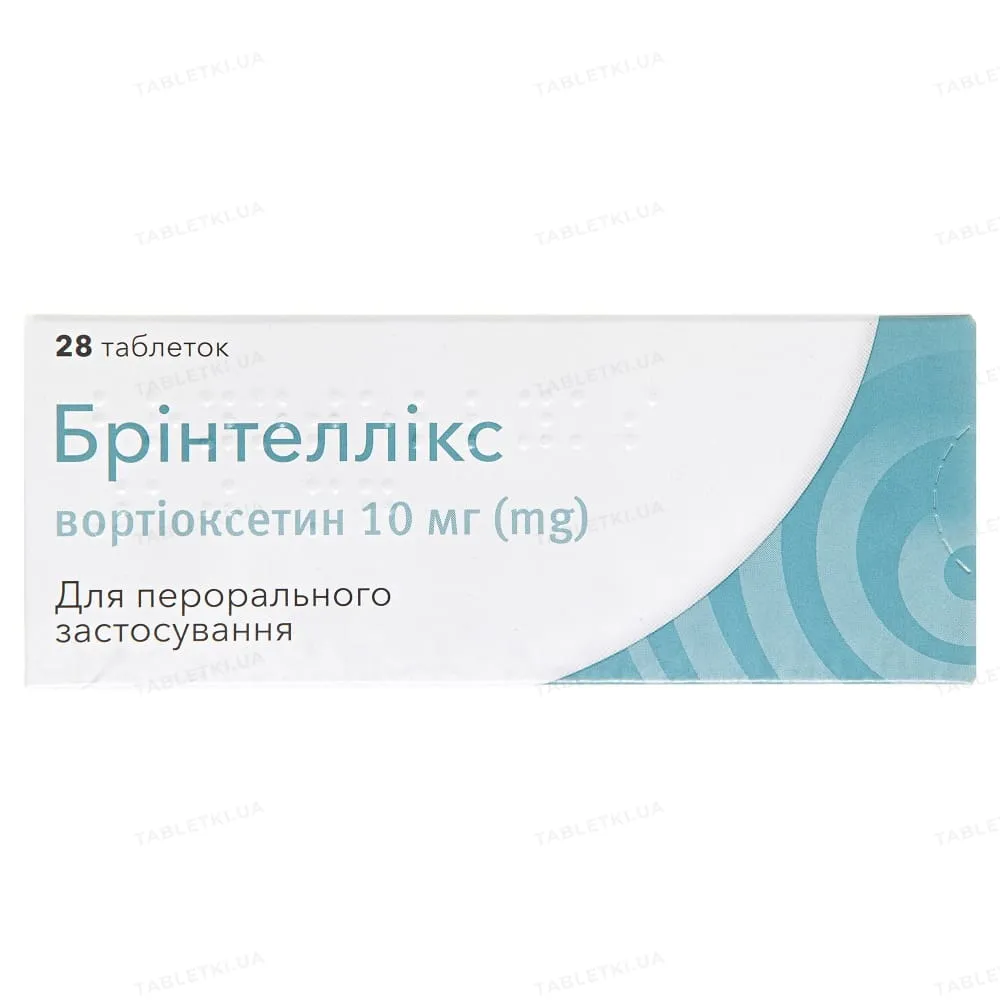
Table of Contents
INSTRUCTIONS for medical use of the medicinal product Brintellix (Brintellix®)
Composition:
Active substance: vortioxetine;
1 film-coated tablet contains 5 mg or 10 mg of vortioxetine as vortioxetine hydrobromide;
Excipients: mannitol (E 421), microcrystalline cellulose, hydroxypropylcellulose, sodium starch glycolate (type A), magnesium stearate, hypromellose, macrogol 400, titanium dioxide (E 171);
tablets 5 mg: iron oxide red (E 172);
tablets 10 mg: iron oxide yellow (E 172).
Pharmaceutical form. Film-coated tablets.
Main physicochemical properties:
tablets 5 mg: pink, capsule-shaped, film-coated tablets with the markings «TL» on one side and «5» on the other;
tablets 10 mg: yellow, capsule-shaped, film-coated tablets with the markings «TL» on one side and «10» on the other.
Pharmacotherapeutic group. Antidepressants. ATC code N06A X26.
Pharmacological Properties.
Pharmacodynamics.
Mechanism of Action
The mechanism of action of vortioxetine is believed to be related to its multimodal activity, which is a combination of two pharmacological mechanisms: direct modulation of receptor activity and inhibition of the serotonin (5-HT) transporter. Preclinical data indicate that vortioxetine is an antagonist of 5-HT3, 5-HT7, and 5-HT1D receptors, a partial agonist of 5-HT1B receptors, an agonist of 5-HT1A receptors, and an inhibitor of the 5-HT transporter, leading to modulation of neurotransmission in several systems, including serotonin, norepinephrine, dopamine, histamine, acetylcholine, GABA, and glutamate. This multimodal activity is believed to provide antidepressant and anxiolytic effects, as well as improvement in cognitive function, learning, and memory in preclinical studies of vortioxetine. Furthermore, preclinical studies suggest that vortioxetine does not cause sexual dysfunction. The exact contribution of each component of this mechanism to the observed pharmacodynamic profile remains unclear; therefore, particular caution is required when extrapolating preclinical data directly to patients.
Two clinical positron emission tomography (PET) studies using 5-HT receptor ligands (11C-MADAM or 11C-DASB) were conducted to quantitatively assess 5-HT transporter occupancy in the brain at various dose levels.
Serotonin transporter occupancy was found to be approximately 50% at a daily dose of vortioxetine 5 mg, 65% at a daily dose of 10 mg, and over 80% at a daily dose of 20 mg.
Clinical Efficacy and Safety
The efficacy and safety of vortioxetine have been studied in a series of clinical trials involving over 6700 patients, of whom more than 3700 participated in short-term (≤12 weeks) trials in major depressive disorder (MDD). Twelve double-blind, placebo-controlled 6/8-week fixed-dose trials were conducted to determine the short-term efficacy of vortioxetine in adult patients with MDD (including elderly patients). Efficacy of vortioxetine was demonstrated in at least one dose group in 9 out of 12 trials, showing a difference of at least 2 points from placebo on the Montgomery–Åsberg Depression Rating Scale (MADRS) and the Hamilton Depression Rating Scale (HAM-D24). This was clinically confirmed by the number of patients who responded to therapy and achieved remission, as well as improvement on the Clinical Global Impressions scale (CGI-I). The efficacy of vortioxetine increased with dose escalation.
Efficacy across individual trials was confirmed by a meta-analysis (MMRM) of mean changes in total MADRS score over 6/8 weeks in short-term, placebo-controlled trials in adults. According to the meta-analysis results, differences from placebo were statistically significant: -2.3 points (p = 0.007); -3.6 points (p <0.001); -4.6 points (p <0.001) at doses of 5, 10, and 20 mg/day, respectively. At a dose of 15 mg/day, statistically significant differences from placebo were achieved according to meta-analysis, but the mean difference compared to placebo was -2.6 points. Efficacy of vortioxetine is further supported by a pooled analysis, in which the proportion of responders ranged from 46% to 49% with vortioxetine compared to 34% with placebo (p <0.01; NRI analysis).
Additionally, vortioxetine in the dose range of 5–20 mg/day demonstrated efficacy across a broad spectrum of depressive symptoms (assessed by changes in scores on all individual MADRS subscales).
Efficacy of vortioxetine at doses of 10 or 20 mg/day was also demonstrated in a 12-week double-blind, flexible-dose comparative trial versus agomelatine at doses of 25 or 50 mg/day in patients with MDD. Vortioxetine showed statistically significant superiority over agomelatine in total MADRS score, which was clinically meaningful, as well as in the number of patients who responded to therapy and achieved remission and improvement on the CGI-I scale.
Maintenance Therapy
The durability of the antidepressant effect during maintenance therapy was demonstrated in a relapse prevention trial. Patients who remained in remission after initial open-label vortioxetine treatment during a 12-week study were randomized to receive vortioxetine 5 or 10 mg/day or placebo and were observed for relapse occurrence during a double-blind observation period of at least 24 weeks (ranging from 24 to 64 weeks). Vortioxetine was superior to placebo (p = 0.004) on the primary endpoint—time to relapse of MDD—with a hazard ratio of 2; this indicates that the risk of relapse was twice as high in the placebo group compared to the vortioxetine group.
Elderly Patients
In a double-blind, placebo-controlled, fixed-dose, 8-week trial in elderly patients with depression (≥65 years, n = 452, of whom 156 received vortioxetine treatment), vortioxetine at a dose of 5 mg/day was superior to placebo in terms of total MADRS and HAM-D24 scores. The difference between vortioxetine and placebo was 4.7 points on the MADRS scale at week 8 of therapy (MMRM analysis).
Patients with Severe Depression or High Levels of Anxiety Symptoms
Antidepressant efficacy was also demonstrated in patients with severe depression (≥30 points on MADRS) and in depressed patients with high levels of anxiety symptoms (≥20 points on HAM-A) in short-term trials involving adult patients (mean difference from placebo on MADRS scale at weeks 6 and 8 ranged from 2.8 to 7.3 points and from 3.6 to 7.3 points, respectively (MMRM analysis)). In a separate trial involving elderly patients, vortioxetine demonstrated efficacy in this patient group as well. The durability of the antidepressant effect in this patient category was also demonstrated in a long-term relapse prevention trial.
Effect of Vortioxetine on the Digit Symbol Substitution Test (DSST), University of California, San Diego Performance-Based Skills Assessment (UPSA) (objective measures), Perceived Deficits Questionnaire (PDQ) (subjective measure of perceived cognitive deficits), and Cognitive and Physical Functioning Questionnaire (CPFQ) (subjective measure of cognitive and physical functioning).
The efficacy of vortioxetine (at doses of 5–20 mg/day) in patients with MDD was evaluated in two short-term, placebo-controlled trials in adults and one trial in elderly patients.
Vortioxetine significantly improved DSST performance compared to placebo, with Δ = 1.75 (p = 0.019) to 4.26 (p <0.0001) in two adult trials and Δ = 2.79 (p = 0.023) in the elderly trial. In a meta-analysis (ANCOVA, LOCF) of mean change in the number of correct DSST symbols from baseline across all three trials, vortioxetine differed from placebo (p <0.05) with a standardized effect size of 0.35. When adjusted for changes in MADRS total score, the meta-analysis of the same trials showed vortioxetine differed from placebo (p <0.05) with a standardized effect size of 0.24.
In one trial, the effect of vortioxetine on functional capacity was assessed using the UPSA. Vortioxetine significantly differed from placebo, with scores of 8 points for vortioxetine versus 5.1 points for placebo (p = 0.0003).
In one trial, vortioxetine was superior to placebo regarding subjective measures assessed by the PDQ, with scores of -14.6 for vortioxetine and -10.5 for placebo (p = 0.002). Vortioxetine did not differ from placebo regarding subjective measures assessed by the CPFQ, with scores of -8.1 for vortioxetine versus -6.9 for placebo (p = 0.086).
Tolerability and Safety
The safety and tolerability of vortioxetine at doses of 5–20 mg/day were evaluated in short- and long-term trials.
Information on adverse reactions is provided in the section "Adverse Reactions."
Vortioxetine did not increase the frequency of insomnia or somnolence compared to placebo.
Possible withdrawal symptoms following abrupt discontinuation of vortioxetine were systematically assessed in short- and long-term placebo-controlled clinical trials. No clinically significant difference between vortioxetine and placebo in the frequency and nature of withdrawal symptoms was observed, either after short-term (6–12 weeks) or long-term (24–64 weeks) treatment periods.
The incidence of self-reported adverse reactions related to sexual dysfunction was low and similar to placebo in both short- and long-term vortioxetine trials. In trials using the Arizona Sexual Experience Scale (ASEX), the incidence of treatment-emergent sexual dysfunction (TESD) and total ASEX score did not differ significantly from placebo with vortioxetine doses of 5–15 mg/day. With vortioxetine at a dose of
20 mg/day, an increased incidence of sexual dysfunction was observed compared to placebo (difference in incidence 14.2%, 95% CI (1.4; 27)).
The effect of vortioxetine on sexual function was further evaluated in an 8-week, double-blind, flexible-dose comparative trial (n = 424) versus escitalopram in patients who had received SSRIs (citalopram, paroxetine, or sertraline) for at least 6 weeks and had low levels of depressive symptoms (baseline CGI-S ≤ 3) and TESD due to prior SSRI treatment. Vortioxetine at doses of 10–20 mg/day showed a statistically significantly lower TESD rate than escitalopram at doses of 10–20 mg/day, as measured by change in total CSFQ-14 score (2.2 points, p = 0.013) at week 8. The number of patients who responded to therapy did not differ significantly between the vortioxetine group (162 (74.7%)) and the escitalopram group (137 (66.2%)) at week 8 (OR 1.5, p = 0.057). Antidepressant effect was maintained in both treatment groups.
In clinical short- and long-term trials, vortioxetine, similar to placebo, did not affect body weight, heart rate, or blood pressure.
Clinically significant changes in liver and kidney function parameters were not observed during clinical trials.
Vortioxetine did not show any clinically significant effect on ECG parameters, including QT, QTc, PR, and QRS intervals, in patients with major depressive disorder. In a thorough QTc study in healthy volunteers, no potential for QTc interval prolongation was observed at doses up to 40 mg/day.
Paediatric Population
One randomized, double-blind, placebo-controlled, fixed-dose, 8-week trial with an active comparator was conducted in patients with MDD aged 12 to 17 years. This trial included a 4-week blinded placebo lead-in period with standardized psychosocial intervention (N = 777); only patients who did not respond during the lead-in period were randomized (N = 615). Vortioxetine at either 10 mg/day or 20 mg/day did not show statistically significant superiority over placebo based on the total score of the revised Children's Depression Rating Scale (CDRS-R). The active comparator (fluoxetine, 20 mg/day) showed statistically significant difference from placebo in CDRS-R total score. Generally, the adverse reaction profile of vortioxetine in adolescents was similar to that observed in adults, except for more frequent abdominal pain and suicidal ideation in adolescents. Discontinuation due to adverse events (mainly suicidal ideation, nausea, and vomiting) was more frequently observed in patients receiving vortioxetine 20 mg/day (5.6%) compared to those receiving vortioxetine 10 mg/day (2.7%), fluoxetine (3.3%), and placebo (1.3%). The most commonly reported adverse events in vortioxetine-treated groups were nausea, vomiting, and headache. Suicidal ideation and suicidal behavior as adverse events were reported both during the 4-week blinded placebo lead-in period (placebo, 13/777 [1.7%]) and during the 8-week treatment period (vortioxetine 10 mg/day, 2/147 [1.4%]; vortioxetine 20 mg/day, 6/161 [3.7%]; fluoxetine, 6/153 [3.9%]; placebo, 0/154 [0%]). Suicidal ideation and suicidal behavior assessed by the Columbia-Suicide Severity Rating Scale (C-SSRS) were similar across all treatment groups.
The European Medicines Agency has waived the obligation to submit results of vortioxetine studies for the treatment of major depressive disorder in patients under 7 years of age (see section "Dosage and Administration").
The European Medicines Agency has deferred the obligation to submit results of vortioxetine studies for the treatment of major depressive disorder in children and adolescents aged 7 to 18 years (see section "Dosage and Administration").
Pharmacokinetics.
Absorption
Vortioxetine is slowly but well absorbed after oral administration, with peak plasma concentrations reached within 7–11 hours. After repeated administration of 5, 10, or 20 mg/day, mean Cmax values ranged from 9 to 33 ng/mL. Absolute bioavailability is 75%. Food intake has no effect on pharmacokinetics.
Distribution
The mean volume of distribution (Vss) is 2600 L, indicating extensive extravascular distribution.
Vortioxetine is highly bound to plasma proteins (98–99%), and binding is likely independent of vortioxetine plasma concentration.
Biological Transformation
Vortioxetine is extensively metabolized in the liver, primarily via oxidation by the CYP2D6 isoenzyme and to a lesser extent by CYP3A4/5 and CYP2C9 isoenzymes, followed by conjugation with glucuronic acid.
Drug interaction studies showed no inhibitory or inductive effect of vortioxetine on CYP1A2, CYP2A6, CYP2B6, CYP2C8, CYP2C9, CYP2C19, CYP2D6, CYP2E1, or CYP3A4/5 isoenzymes (see "Interaction with Other Medicinal Products and Other Forms of Interaction"). Vortioxetine is a weak P-gp substrate and inhibitor. The main metabolite of vortioxetine is pharmacologically inactive.
Elimination
The mean elimination half-life and oral clearance are 66 hours and 33 L/h, respectively. Approximately two-thirds of the inactive metabolite of vortioxetine is excreted in urine and about one-third in feces. Only a negligible amount of vortioxetine is excreted in feces. Steady-state plasma concentration is reached after approximately 2 weeks.
Linearity/Non-linearity
Pharmacokinetics are linear and time-independent within the studied dose range (2.5–60 mg/day). Based on the half-life, the accumulation index is 5 to 6, based on AUC0-24 after multiple doses of 5 to 20 mg/day.
Elderly Patients
In elderly healthy volunteers (aged ≥65 years, n=20), exposure to vortioxetine increased by 27% (Cmax and AUC) compared to young healthy volunteers in the control group (aged ≤45 years) after multiple doses of 10 mg/day. The minimum effective dose of vortioxetine, 5 mg/day, should always be used as the starting dose in patients aged ≥65 years (see "Dosage and Administration"). Caution is advised when prescribing vortioxetine at doses above 10 mg/day to elderly patients (see "Special Warnings and Precautions for Use").
Renal Impairment
After a single 10 mg dose, renal impairment (mild, moderate, or severe according to the Cockcroft–Gault formula; n=8 per group) caused a slight increase in exposure (up to 30%) compared to the control group of healthy volunteers. In patients with end-stage renal disease, only a small fraction of vortioxetine was lost during dialysis (AUC and Cmax 13% and 27% lower, respectively; n=8) after a single 10 mg dose. Dose adjustment is not required in patients with impaired renal function (see sections "Dosage and Administration" and "Special Warnings and Precautions for Use").
Hepatic Impairment
Pharmacokinetics in individuals (N=6 in the group with severe hepatic impairment and N=8 in the group with mild to moderate hepatic impairment) with mild, moderate, or severe hepatic impairment (Child–Pugh classes A, B, or C, respectively) were comparable to those in healthy volunteers. Changes in AUC were less than 10% in individuals with mild or moderate hepatic impairment and 10% higher in individuals with severe hepatic impairment compared to the control group of healthy volunteers. Changes in Cmax were less than 25% in all groups compared to the control group of healthy volunteers. Dose adjustment is not required in patients with impaired liver function (see sections "Dosage and Administration" and "Special Warnings and Precautions for Use").
Poor CYP2D6 Metabolizers
In poor CYP2D6 metabolizers, plasma concentrations of vortioxetine were approximately twice as high as in extensive metabolizers. The effect may potentially be higher in the presence of strong CYP3A4/2C9 inhibitors.
In patients with ultra-rapid CYP2D6 metabolism, plasma concentrations of vortioxetine at a dose of 10 mg/day were within the range observed in extensive metabolizers receiving 5 or 10 mg/day.
Dose adjustment may be necessary, as in all patients, depending on individual response.
Paediatric Population
The pharmacokinetics of vortioxetine in paediatric patients with major depressive disorder after oral administration of 5–20 mg once daily were characterized using population modeling analyses based on data from a pharmacokinetic study (in children aged 7–17 years) and an efficacy and safety study (in children aged 12–17 years). The pharmacokinetics of vortioxetine in paediatric patients were similar to those observed in adult patients.
Clinical characteristics.
Indications.
Treatment of major depressive disorder in adults.
Contraindications.
Hypersensitivity to the active substance or to any of the excipients of the medicinal product.
Concomitant use with non-selective monoamine oxidase inhibitors (MAOIs) or selective MAO-A inhibitors.
Interaction with other medicinal products and other forms of interactions.
Vortioxetine is extensively metabolized in the liver, primarily via oxidation catalyzed by CYP2D6, and to a lesser extent by CYP3A4/5 and CYP2C9.
Effect of other medicinal products on vortioxetine
Irreversible non-selective MAOIs
Due to the risk of serotonin syndrome, vortioxetine is contraindicated in any combination with irreversible non-selective MAOIs. Treatment with vortioxetine should not be initiated earlier than at least 14 days after discontinuation of irreversible non-selective MAOIs. Vortioxetine should be discontinued at least 14 days before starting treatment with irreversible non-selective MAOIs.
Reversible selective MAO-A inhibitor (moclobemide)
Combination of vortioxetine with a reversible selective MAO-A inhibitor, such as moclobemide, is contraindicated. If combination is necessary, the medicinal product should be added starting from the lowest doses with careful clinical monitoring for serotonin syndrome.
Reversible non-selective MAO inhibitor (linezolid)
Combination of vortioxetine with a weak reversible and non-selective MAO inhibitor, such as the antibiotic linezolid, is contraindicated. If combination is necessary, the medicinal product should be added starting from the lowest doses with careful clinical monitoring for serotonin syndrome.
Irreversible selective MAO-B inhibitors (selegiline, rasagiline)
Despite a lower (compared to MAO-A inhibitors) expected risk of serotonin syndrome, combination of vortioxetine with irreversible MAO-B inhibitors such as selegiline or rasagiline should be performed with caution. Careful monitoring for serotonin syndrome during concomitant use is necessary.
Serotonergic medicinal products
Concomitant administration with serotonergic medicinal products (e.g., opioids (including tramadol) and triptans (including sumatriptan)) may lead to serotonin syndrome.
Hypericum perforatum (St. John’s wort)
Concomitant use of serotonergic antidepressants and herbal preparations containing Hypericum perforatum may increase the frequency of adverse reactions, including serotonin syndrome.
Medicinal products that lower the seizure threshold
Serotonergic antidepressants may lower the seizure threshold. Caution is recommended when co-administering other medicinal products capable of lowering the seizure threshold (such as antidepressants (TCAs, SSRIs, SNRIs), antipsychotics (phenothiazines, thioxanthenes, butyrophenones), mefloquine, bupropion, and tramadol).
ECT (electroconvulsive therapy)
There is no clinical experience with concomitant use of vortioxetine and ECT; therefore, caution is advisable.
Inhibitors of CYP2D6
When administered together with 150 mg bupropion twice daily (a strong CYP2D6 inhibitor) for 14 days in healthy volunteers, the exposure to vortioxetine increased by 2.3-fold in terms of AUC. Co-administration more frequently led to an increased incidence of adverse effects when bupropion was added to vortioxetine, compared to adding vortioxetine to bupropion. Depending on individual patient sensitivity, consideration may be given to using lower doses of vortioxetine when adding strong CYP2D6 inhibitors (e.g., bupropion, quinidine, fluoxetine, paroxetine).
Inhibitors of CYP3A4, CYP2C9, and CYP2C19
Concomitant administration of vortioxetine after 6 days of ketoconazole 400 mg daily (an inhibitor of CYP3A4/5 and P-glycoprotein) or fluconazole 200 mg daily (an inhibitor of CYP2C9, CYP2C19, and CYP3A4/5) in healthy volunteers resulted in a 1.3- and 1.5-fold increase in vortioxetine AUC, respectively. Dose adjustment is not required.
No effect was observed on the pharmacokinetics of multiple-dose vortioxetine following a single 40 mg dose of omeprazole (a CYP2C19 inhibitor) in healthy volunteers.
Interaction with poor metabolizers of CYP2D6
Concomitant use of strong CYP3A4 inhibitors (such as itraconazole, voriconazole, clarithromycin, telithromycin, nefazodone, conivaptan, and many HIV protease inhibitors) and CYP2C9 inhibitors (such as fluconazole and amiodarone) with poor metabolizers of CYP2D6 has not been specifically studied, but it is expected to result in a more pronounced increase in vortioxetine exposure in these patients compared to the moderate effect described above. Depending on individual patient response, a lower dose of vortioxetine may be considered if a strong CYP3A4 or CYP2C9 inhibitor is co-administered with poor CYP2D6 metabolizers.
Cytochrome P450 inducers
After a single 20 mg dose of vortioxetine administered 10 days after initiation of rifampicin 600 mg daily (a broad cytochrome P450 inducer) in healthy volunteers, a 72% reduction in vortioxetine AUC was observed. Depending on individual patient response, dose adjustment may be necessary when a broad cytochrome P450 inducer (e.g., rifampicin, carbamazepine, phenytoin) is added to vortioxetine treatment.
Alcohol
No effect on the pharmacokinetics of vortioxetine or ethanol, nor significant impairment of cognitive function compared to placebo, was observed after administration of vortioxetine at doses of 20 mg or 40 mg with concomitant single dose of ethanol 0.6 g/kg in healthy volunteers. However, as with other centrally acting agents, co-administration of vortioxetine with alcohol is not recommended.
Acetylsalicylic acid
No effect of repeated administration of acetylsalicylic acid at a dose of 150 mg daily on the pharmacokinetics of vortioxetine was observed in healthy volunteers.
Effect of vortioxetine on the action of other medicinal products
Anticoagulants and antiplatelet agents
No significant effect on international normalized ratio (INR), prothrombin time, or plasma R-/S-warfarin levels compared to placebo was observed when vortioxetine was co-administered with a fixed dose of warfarin in healthy volunteers. Additionally, no significant inhibitory effect compared to placebo on platelet aggregation was observed when aspirin 150 mg daily was co-administered after vortioxetine administration in healthy volunteers. However, caution should be exercised when using vortioxetine in combination with oral anticoagulants or antiplatelet agents due to the potential increased risk of bleeding via pharmacodynamic interactions.
Cytochrome P450 substrates
In vitro, vortioxetine showed no relevant potential to inhibit or induce cytochrome P450 isoenzymes.
No inhibitory effect of vortioxetine on cytochrome P450 isoenzymes CYP2C19 (omeprazole, diazepam), CYP3A4/5 (ethinylestradiol, midazolam), CYP2B6 (bupropion), CYP2C9 (tolbutamide, S-warfarin), CYP1A2 (caffeine), or CYP2D6 (dextromethorphan) was observed in healthy volunteers.
No pharmacodynamic interactions were observed. No significant impairment of cognitive function compared to placebo was observed after administration of vortioxetine concomitantly with a single 10 mg dose of diazepam.
No significant effect on sex hormone levels compared to placebo was observed after concomitant administration of vortioxetine with a combined oral contraceptive (ethinylestradiol 30 µg/levonorgestrel 150 µg).
Lithium, tryptophan
No clinically significant changes were observed after concomitant administration of stable concentrations of lithium with vortioxetine in healthy volunteers. However, there have been reports of enhanced effects when serotonergic antidepressants are used concomitantly with lithium or tryptophan; therefore, concomitant use of vortioxetine with these medicinal products should be performed with caution.
Interference with urine drug screening tests
False-positive results in immunoassay screening tests for urinary metabolites of methadone have been reported in patients taking vortioxetine. Caution should be exercised when interpreting positive results from urine drug screening tests, and confirmation by an alternative analytical method (e.g., chromatographic methods) should be considered.
Special precautions for use.
Use in pediatric population
Vortioxetine is not recommended for the treatment of depression in pediatric patients aged 7 to 11 years, as safety and efficacy have not been established in this age group. Brindellix should not be used in the treatment of major depressive disorder in adolescents aged 12 to 17 years, as efficacy has not been demonstrated (see section "Pharmacological properties"). Generally, the adverse reaction profile of vortioxetine in adolescents was similar to that observed in adults, except for more frequent abdominal pain and suicidal thoughts in adolescents (see sections "Adverse reactions", "Pharmacological properties"). In clinical trials involving children treated with antidepressants, suicidal behavior (suicide attempts and suicidal thoughts) and hostility (predominantly aggression, oppositional behavior, anger) were observed more frequently than in patients receiving placebo.
Suicide/suicidal thoughts
Depression is associated with an increased risk of suicidal thoughts, self-harm, and suicide (suicide-related events). This risk persists until significant remission occurs. Since improvement may not occur during the first few weeks of treatment or longer, patients should be closely monitored until improvement takes place. Clinical experience indicates that the risk of suicide may increase during the early stages of recovery.
Patients with a history of suicide-related events, or those presenting significant suicidal ideation prior to treatment initiation, are known to be at greater risk of suicidal thoughts or suicide attempts and require careful monitoring during treatment. A meta-analysis of placebo-controlled clinical trials of antidepressants in adult patients with psychiatric disorders showed an increased risk of suicidal behavior compared to placebo in patients under 25 years of age.
Close monitoring of patients, and particularly those at high risk, should accompany treatment, especially at the beginning of therapy and following dose changes. Patients (and their caregivers) should be warned to monitor for any clinical worsening, suicidal behavior or thoughts, or unusual changes in behavior, and to contact their physician immediately if such symptoms occur.
Seizures
Seizures are a potential risk when using antidepressants. Therefore, treatment with vortioxetine should be initiated cautiously in patients with a history of seizures or in patients with unstable epilepsy. Treatment should be discontinued in any patient if seizures develop or increase in frequency.
Serotonin syndrome or neuroleptic malignant syndrome
Serotonin syndrome (SS) or neuroleptic malignant syndrome (NMS), potentially life-threatening conditions, may occur during treatment with vortioxetine. The risk of developing SS or NMS increases when serotonergic agents (including opioids and triptans), agents affecting serotonin metabolism (e.g., MAO inhibitors), antipsychotics, and other dopamine antagonists are used concomitantly. Symptoms of SS or NMS should be carefully monitored.
Symptoms of SS include mental status changes (such as agitation, hallucinations, and coma), autonomic instability (e.g., tachycardia, labile blood pressure, hyperthermia), neuromuscular abnormalities (such as hyperreflexia, lack of coordination), and/or gastrointestinal symptoms (e.g., nausea, vomiting, diarrhea). If such signs occur, vortioxetine should be discontinued immediately and symptomatic treatment initiated.
Mania/hypomania
Vortioxetine should be prescribed with caution in patients with a history of mania/hypomania and should be discontinued if a manic episode develops.
Aggression/agitation
Patients receiving antidepressants, including vortioxetine, may also experience feelings of aggression, anger, agitation, and irritability. Close monitoring of the patient's condition is recommended. Patients (and their caregivers) should be advised to contact their physician if aggressive or agitated behavior emerges or worsens.
Bleeding
As with other serotonergic antidepressants, including vortioxetine, abnormal bleeding events such as bruising, purpura, and other hemorrhages, including gastrointestinal or gynecological bleeding, may occur. SSRIs/SSNRIs may increase the risk of postpartum hemorrhage, and this risk may potentially be associated with vortioxetine (see section "Use during pregnancy or breastfeeding"). Caution is advised in patients taking anticoagulants and/or drugs affecting platelet function (e.g., atypical antipsychotics and phenothiazines, most TCAs, nonsteroidal anti-inflammatory drugs, acetylsalicylic acid), as well as in patients with known bleeding tendencies or coagulation disorders.
Hyponatremia
Hyponatremia, likely due to inappropriate secretion of antidiuretic hormone, has been rarely reported with antidepressants of the SSRI and SNRI classes. Caution should be exercised in patients at risk of hyponatremia, such as elderly patients, patients with cirrhosis, or those receiving concomitant medications that may cause hyponatremia. Patients with symptomatic hyponatremia should discontinue vortioxetine and receive appropriate medical intervention.
Glaucoma
Mydriasis has been reported in association with antidepressants, including vortioxetine. This mydriatic effect may potentiate angle closure, leading to increased intraocular pressure and acute angle-closure glaucoma. Vortioxetine should be prescribed with caution in patients with elevated intraocular pressure or those at risk of acute angle-closure glaucoma.
Elderly patients
Data on the use of Brindellix in elderly patients with major depressive episodes are limited. Therefore, caution should be exercised when treating patients over 65 years of age with doses exceeding 10 mg vortioxetine once daily (see sections "Dosage and administration", "Adverse reactions").
Renal or hepatic impairment
Due to the vulnerability of patients with renal or hepatic impairment and limited data on the use of Brindellix in these subgroups, caution should be exercised when treating patients with impaired renal or hepatic function (see sections "Dosage and administration" and "Pharmacokinetics").
Sodium
This medicinal product contains less than 1 mmol sodium (23 mg) per film-coated tablet, i.e., essentially "sodium-free".
Use during pregnancy or breastfeeding.
Pregnancy
Experience with the use of vortioxetine in pregnant women is limited.
Animal studies have shown reproductive toxicity.
In newborns exposed to serotonergic medicinal products late in pregnancy, symptoms may include respiratory distress, cyanosis, apnea, seizures, temperature instability, feeding difficulties, vomiting, hypoglycemia, hypertension, hypotension, hyperreflexia, tremor, restlessness, irritability, lethargy, persistent crying, somnolence, and sleep disturbances. These symptoms may be related to withdrawal effects or excessive serotonergic activity. In most cases, such complications begin immediately or shortly (<24 hours) after delivery.
Epidemiological data have shown that the use of SSRIs during pregnancy, particularly in late pregnancy, may lead to an increased risk of persistent pulmonary hypertension in the newborn (PPHN). Although the association between PPHN and vortioxetine treatment has not been studied, this potential risk cannot be excluded due to the mechanism of action (increased serotonin concentrations).
Brindellix should be used only if the expected benefit to the mother outweighs the potential risk to the fetus.
Observational data indicate an increased risk (less than 2-fold) of postpartum hemorrhage after use of SSRIs or SNRIs within one month before delivery. Although no studies have specifically investigated the link between vortioxetine treatment and postpartum hemorrhage, a potential risk exists due to the similar mechanism of action (see section "Special precautions for use").
Breastfeeding
Available preclinical data show excretion of vortioxetine and its metabolites into breast milk. Vortioxetine is expected to be excreted into human breast milk. Risk to the breastfed infant cannot be excluded. The decision to discontinue/continue breastfeeding or to discontinue/withhold Brindellix therapy should be made taking into account the benefits of breastfeeding for the child and the benefits of therapy for the woman.
Fertility
Animal fertility studies in males and females did not show any effect of vortioxetine on fertility, sperm quality, or mating performance.
Reports in humans taking antidepressants of the same pharmacological class (SSRIs) have shown reversible effects on sperm quality. No effect on fertility has been observed to date.
Ability to affect reaction speed when driving or operating machinery.
Brindellix has no or negligible influence on the ability to drive or operate machinery. However, due to possible adverse reactions such as dizziness, patients should exercise caution when driving a car or operating hazardous machinery, especially at the beginning of vortioxetine treatment or when changing dosage.
Method of Administration and Dosage
Method of Administration
Brintellix is administered orally, with or without food.
The initial and maintenance dose is 10 mg once daily for adults under 65 years of age.
Depending on individual patient response, the dose may be increased up to a maximum of 20 mg of vortioxetine once daily or decreased to a minimum of 5 mg of vortioxetine once daily.
After resolution of depressive symptoms, treatment should be continued for at least 6 months to consolidate the antidepressant effect.
Discontinuation of Treatment
Treatment with vortioxetine may be discontinued abruptly; there is no need for gradual dose reduction.
Special Patient Populations
Elderly Patients
The lowest effective dose of 5 mg vortioxetine once daily should always be used as the initial dose in patients aged ≥ 65 years. Caution is recommended when treating patients aged ≥ 65 years with doses exceeding 10 mg vortioxetine once daily, as data in this population are limited (see section "Special Populations").
Cytochrome P450 Inhibitors
Depending on individual patient response, consideration should be given to using lower doses of vortioxetine when adding strong CYP2D6 inhibitors (e.g., bupropion, quinidine, fluoxetine, paroxetine) to the therapy.
Cytochrome P450 Inducers
Depending on individual patient response, dose adjustment of vortioxetine should be considered when adding a cytochrome P450 inducer (e.g., rifampicin, carbamazepine, phenytoin) to the therapy.
Paediatric Population
The safety and efficacy of vortioxetine in children aged 7 to 11 years have not been established. Data are lacking (see section "Special Populations"). Brintellix should not be used for the treatment of major depressive disorder in adolescents aged 12 to 17 years, as efficacy has not been demonstrated (see section "Pharmacological Properties"). Data on the safety of Brintellix in adolescents aged 12 to 17 years are described in sections "Special Populations", "Adverse Reactions", and "Pharmacological Properties".
Renal or Hepatic Impairment
Dose adjustment is not required in patients with renal or hepatic impairment (see sections "Special Populations" and "Pharmacokinetics").
Overdose
In clinical trials, administration of vortioxetine at doses ranging from 40 mg to 75 mg resulted in an increased incidence of adverse effects such as nausea, postural dizziness, diarrhea, abdominal discomfort, generalized pruritus, somnolence, and facial flushing.
Post-marketing experience primarily involves vortioxetine overdose up to 80 mg. In most cases, no symptoms were reported. The most commonly observed adverse events were nausea and vomiting.
Experience with vortioxetine overdose exceeding 80 mg is limited. Following ingestion of doses several times higher than the therapeutic range, cases of seizures and serotonin syndrome have been reported.
Treatment should be symptomatic and include appropriate monitoring. Medical observation in specialized settings is recommended.
Adverse reactions
The most commonly reported adverse reaction was nausea. The adverse reactions listed below are defined as follows: very common (≥ 1/10), common (≥ 1/100 to < 1/10), uncommon (≥ 1/1,000 to < 1/100), rare (≥ 1/10,000 to < 1/1,000), very rare (< 1/10,000), and frequency not known (cannot be estimated from the available data). The list is based on clinical and post-marketing data.
| System, organ, class |
Frequency |
Adverse reaction |
| Immune system disorders |
Unknown* |
Anaphylactic reactions |
| Endocrine system disorders |
Unknown* |
Hyperprolactinemia |
| Nutrition and metabolism disorders |
Unknown* |
Hyponatremia |
| Psychiatric disorders |
Common |
Pathological dreams |
| Unknown* |
Insomnia, agitation, aggression (see section "Special precautions") |
|
| Nervous system disorders |
Common |
Dizziness |
| Unknown* |
Serotonin syndrome, headache |
|
| Eye disorders |
Rare |
Mydriasis (which may potentiate acute angle-closure glaucoma – see section "Special precautions") |
| Cardiovascular disorders |
Uncommon |
Facial flushing |
| Unknown* |
Bleeding (including contusions, subcutaneous hemorrhages, epistaxis, gastrointestinal or gynecological bleeding) |
|
| Gastrointestinal disorders |
Very common |
Nausea |
| Common |
Diarrhea, constipation, vomiting |
|
| Skin and subcutaneous tissue disorders |
Common |
Pruritus, including generalized pruritus, hyperhidrosis |
| Uncommon |
Nocturnal sweating |
|
| Unknown* |
Edema, urticaria, rash |
* Known from post-marketing data.
Nausea
Nausea as an adverse reaction was usually mild or moderate and occurred during the first two weeks of treatment. The reaction was generally transient and usually did not lead to discontinuation of therapy. Gastrointestinal reactions (including nausea) were observed more frequently in women than in men.
Elderly patients
Studies have shown that the clearance rate was higher in patients aged ≥65 years when doses of ≥10 mg of vortioxetine once daily were administered.
When 20 mg of vortioxetine once daily was administered, the incidence of nausea and constipation was higher in patients aged ≥65 years (42% and 15%, respectively) compared to patients aged <65 years (27% and 4%, respectively) (see section "Dosage and Administration").
Sexual dysfunction
In clinical trials, sexual dysfunction was assessed using the Arizona Sexual Experience Scale (ASEX). Doses ranging from 5 to 15 mg did not show differences compared to placebo. However, a vortioxetine dose of 20 mg was associated with increased sexual dysfunction (treatment-emergent sexual dysfunction) (see section "Pharmacodynamic Properties").
Class effect
Epidemiological studies, primarily conducted in patients aged 50 years and older, suggest an increased risk of bone fractures in patients receiving antidepressant medications (SSRIs or TCAs). The mechanism underlying this risk is unknown, and it is not known whether this risk also applies to vortioxetine.
Paediatric population
In a double-blind, placebo-controlled study, 308 adolescents aged 12 to 17 years with Major Depressive Disorder (MDD) received vortioxetine. Generally, the adverse reaction profile of vortioxetine in adolescents was similar to that observed in adults, except for more frequent reports of abdominal pain and suicidal ideation in adolescents.
Shelf life. 48 months.
Storage conditions. No special storage conditions required. Keep out of the reach of children.
Packaging. 14 tablets in a blister, 2 blisters in a cardboard box.
Prescription status. Prescription only.
Manufacturer. H. Lundbeck A/S.
Manufacturer's address and place of business.
Ottiliavej 9, 2500 Valby, Denmark.