Betaloс zok
Ukraine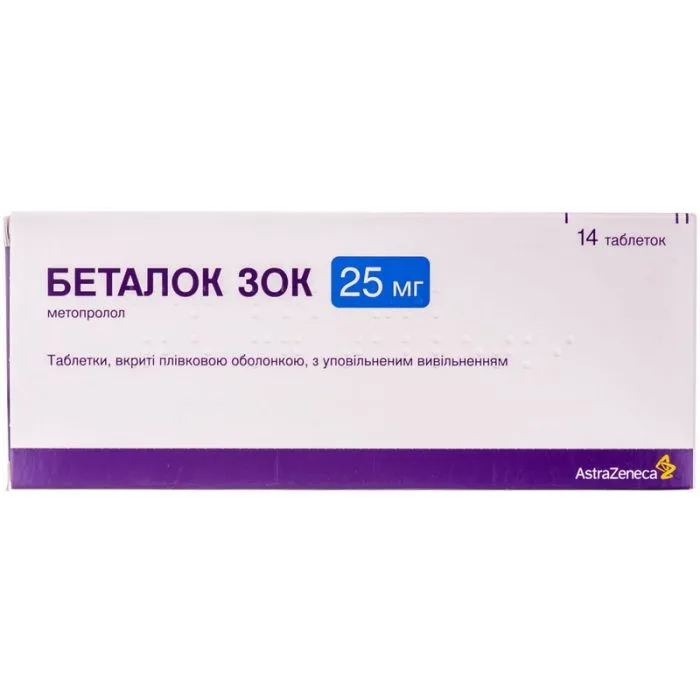
Table of Contents
INSTRUCTIONS FOR MEDICAL USE OF THE MEDICINAL PRODUCT Betaloc Zok (Betaloc® Zok)
Composition:
Active substance: metoprolol;
1 tablet contains 23.75 mg or 47.5 mg or 95 mg of metoprolol succinate, equivalent to 25 mg or 50 mg or 100 mg of metoprolol tartrate;
Excipients: ethylcellulose, hydroxypropylcellulose, hypromellose, microcrystalline cellulose, paraffin, macrogol, colloidal anhydrous silicon dioxide, sodium stearyl fumarate, titanium dioxide (E 171).
Pharmaceutical form. Film-coated tablets with prolonged release.
Main physicochemical properties:
25 mg: white or almost white, oval, biconvex, film-coated tablet, with a score line on both sides and engraving on one side;
50 mg: white or almost white, round, biconvex, film-coated tablet, with a score line on one side and engraving on the other side;
100 mg: white or almost white, round, biconvex, film-coated tablet, with a score line on one side and engraving on the other side.
Pharmacotherapeutic group. Selective beta-adrenoreceptor blockers. Metoprolol.
ATC code C07AB02.
Pharmacological Properties.
Pharmacodynamics.
Metoprolol is a selective beta1-adrenoceptor blocker. Metoprolol affects cardiac beta1-receptors at lower doses than those required to influence beta2-receptors in peripheral blood vessels and bronchi. The selectivity of the medicinal product Betaloc Zok is dose-dependent; however, the maximum plasma concentration achieved with the sustained-release formulation is significantly lower than that achieved with the same dose administered as a conventional tablet. A higher degree of beta1-selectivity is thus attained with the sustained-release dosage form.
Metoprolol lacks intrinsic sympathomimetic activity and exhibits only minimal membrane-stabilizing effects. Beta-receptor blockers demonstrate negative inotropic and chronotropic effects. Treatment with metoprolol reduces the effects of catecholamines on the heart during physical and psychoemotional stress, resulting in decreased heart rate, cardiac output, and arterial pressure. In stressful situations associated with increased adrenaline release from the adrenal glands, metoprol0l does not interfere with normal physiological vasodilation. At therapeutic doses, metoprolol has less bronchoconstrictive effect on bronchial smooth muscle than non-selective beta-blockers. This property allows treatment of patients with bronchial asthma or other pronounced obstructive lung diseases with metoprolol in combination with beta2-receptor agonists. Metoprolol affects insulin release and carbohydrate metabolism to a lesser extent than non-selective beta-blockers; therefore, it may also be prescribed to patients with diabetes mellitus. Metoprolol has less impact on cardiovascular responses during hypoglycemia (e.g., tachycardia), and blood glucose levels return to normal more rapidly compared to treatment with non-selective beta-receptor blockers.
In arterial hypertension, Betaloc Zok significantly reduces arterial pressure for over 24 hours both in supine and standing positions, as well as during physical exertion. At the beginning of metoprolol treatment, an increase in peripheral vascular resistance is observed. However, with prolonged therapy, the reduction in arterial pressure may occur due to decreased total peripheral resistance while cardiac output remains unchanged.
Children.
In a 4-week study involving 144 patients aged 6 to 16 years with essential arterial hypertension, Betaloc Zok at doses of 1 and 2 mg/kg reduced placebo-corrected systolic blood pressure by 4–6 mm Hg. Diastolic blood pressure showed a placebo-corrected reduction of 5 mm Hg with higher drug doses, as well as dose-dependent reductions in blood pressure with doses of 0.2, 1, and 2 mg/kg. No notable differences were observed related to age, Tanner stage (a scale of adolescent physical development), or race.
Metoprolol reduces the risk of cardiovascular mortality in men with moderate to severe arterial hypertension. Electrolyte imbalances were not observed.
Effect in chronic heart failure: In the MERIT-HF trial (a survival study involving 3991 patients with chronic heart failure (NYHA class II–IV) and reduced ejection fraction (≤ 0.40)), Betaloc Zok demonstrated improved survival rates and reduced hospitalization rates. With long-term treatment, patients showed overall symptom improvement (based on New York Heart Association functional classes and global assessment of treatment).
Furthermore, treatment with Betaloc Zok has been shown to increase ejection fraction and reduce end-systolic and end-diastolic volumes of the left ventricle.
In tachyarrhythmias, the effect of heightened sympathetic activity is blocked, resulting in a lower heart rate, primarily due to reduced automaticity in pacemaker cells, as well as prolonged supraventricular conduction time. Metoprolol reduces the risk of recurrent myocardial infarction and cardiac death, particularly sudden death after myocardial infarction.
Pharmacokinetics.
The Betaloc Zok sustained-release tablet consists of microcapsules containing granules of metoprolol succinate, each capsule being a separate unit of content. Each capsule is coated with a polymer membrane that controls the rate of drug release. The tablet rapidly disintegrates upon contact with fluid, after which the capsules disperse over a large surface area of the gastrointestinal tract. Drug release is independent of the pH of the surrounding fluid and occurs at an almost constant rate over 20 hours. This dosage form ensures a steady plasma concentration of metoprolol succinate and sustained pharmacological activity over 24 hours.
Betaloc Zok is completely absorbed after oral administration, with absorption occurring throughout the gastrointestinal tract, including the colon. The bioavailability of Betaloc Zok is 30–40%. Metoprolol is metabolized in the liver, primarily by CYP2D6. Three major metabolites have been identified, although none exhibit clinically significant beta-blocking activity. Approximately 5% of metoprolol is excreted unchanged in the urine, while the remainder of the dose is eliminated as metabolites.
The pharmacokinetics of metoprolol in children and adolescents (6–17 years) resemble those in adults. Oral clearance of metoprolol (CL/F) increases with a linear dependence on body weight.
Clinical characteristics.
Indications.
- Arterial hypertension.
- Angina pectoris.
- Stable symptomatic chronic heart failure with left ventricular systolic dysfunction.
- Prevention of cardiac death and recurrent myocardial infarction following the acute phase of myocardial infarction.
- Cardiac arrhythmias, including supraventricular tachycardia, ventricular rate control in atrial fibrillation, and ventricular extrasystoles.
- Functional cardiac disorders associated with palpitations.
- Prophylaxis of migraine.
Contraindications.
Cardiogenic shock. Sick sinus syndrome (in the absence of a permanent cardiac pacemaker). Second- and third-degree atrioventricular block. Decompensated heart failure (pulmonary edema, hypoperfusion, or arterial hypotension); ongoing or intermittent inotropic therapy aimed at stimulating beta-receptors. Symptomatic bradycardia or arterial hypotension.
Metoprolol should not be administered to patients with suspected acute myocardial infarction who have a heart rate < 45 beats/min, a P-Q interval > 0.24 sec, or systolic blood pressure < 100 mm Hg. In patients with signs of heart failure and repeated blood pressure readings below 100 mm Hg while lying down prior to initiation of treatment, reassessment is required. Severe peripheral vascular disease with risk of gangrene. Hypersensitivity to any component of the medicinal product or to other beta-blockers.
Interaction with other medicinal products and other types of interactions.
Metoprolol is a substrate of the CYP 2D6 enzyme. Medicinal products that inhibit CYP 2D6, such as quinidine, terbinafine, paroxetine, fluoxetine, sertraline, celecoxib, propafenone, and diphenhydramine, may affect metoprolol plasma concentrations. Dose reduction of Betaloc Zok may be necessary when initiating treatment with these agents.
Concomitant use of Betaloc Zok with the following medicinal products should be avoided
Barbiturates: barbiturates (investigated for pentobarbital) stimulate metoprolol metabolism via enzyme induction.
Propafenone: in four patients receiving metoprolol treatment, propafenone administration increased plasma concentrations of metoprolol by 2–5 times, and two patients experienced adverse effects typical of metoprolol. This interaction was confirmed in eight healthy volunteers. The interaction may be explained by the fact that propafenone, like quinidine, inhibits metoprolol metabolism via the cytochrome P450 2D6 system. The outcome of such a combination is likely unpredictable because propafenone also possesses beta-blocking properties.
Verapamil: in combination with beta-blockers (described for atenolol, propranolol, and pindolol), verapamil may cause bradycardia and reduced blood pressure. Verapamil and beta-blockers have additive inhibitory effects on atrioventricular conduction and sinus node function.
Concomitant use of Betaloc Zok with the following medicinal products may require dose adjustment
Amiodarone: case reports suggest that marked sinus bradycardia may develop in patients taking amiodarone when used concomitantly with metoprolol. Amiodarone has an extremely long elimination half-life (approximately 50 days), meaning that interactions may occur for a prolonged period after discontinuation of the drug.
Class I antiarrhythmic agents: class I antiarrhythmics and beta-blockers exert additive negative inotropic effects, which may lead to serious hemodynamic adverse effects in patients with impaired left ventricular function. This combination should also be avoided in sick sinus syndrome and atrioventricular conduction disturbances. This interaction is best documented for disopyramide.
Non-steroidal anti-inflammatory/antirheumatic drugs (NSAIDs): NSAIDs have been shown to counteract the antihypertensive effect of beta-blockers. Indomethacin has been primarily studied. This interaction is unlikely with sulindac. Negative interaction studies have been conducted with diclofenac.
Digitalis glycosides: concomitant use of digitalis glycosides and beta-blockers may increase atrioventricular conduction time and cause bradycardia.
Diphenhydramine: diphenhydramine reduces (by 2.5 times) the clearance of metoprolol to alpha-hydroxymetoprolol via the CYP 2D6 system in individuals who are rapid hydroxylators. The effects of metoprolol are potentiated.
Diltiazem: diltiazem and beta-receptor blockers exert additive inhibitory effects on atrioventricular conduction and sinus node function. Severe bradycardia has been observed (case reports) when used in combination therapy with diltiazem.
Epinephrine: after epinephrine (adrenaline) administration, marked arterial hypertension and bradycardia developed in patients taking non-selective beta-receptor blockers (including pindolol and propranolol) (approximately 10 reports). These clinical observations were confirmed in a study with healthy volunteers. It has also been suggested that epinephrine present in local anesthetic preparations may provoke these reactions if inadvertently administered intravascularly. The risk is likely lower with cardioselective beta-receptor blockers.
Phenylpropanolamine: phenylpropanolamine (norephedrine), in a single dose of 50 mg, may cause pathological increase in diastolic blood pressure in healthy volunteers. Propranolol generally counteracts the blood pressure increase induced by phenylpropanolamine. However, beta-blockers may provoke paradoxical hypertensive reactions in patients taking high doses of phenylpropanolamine. Two cases of hypertensive crisis have been described during treatment with phenylpropanolamine alone.
Quinidine: quinidine inhibits metoprolol metabolism in so-called rapid metabolizers (more than 90% in Sweden), leading to significantly increased plasma levels and, consequently, enhanced beta-receptor blockade. A similar interaction may occur with other beta-blockers metabolized by the same enzyme (cytochrome P450 2D6).
Clonidine: beta-blockers may potentiate the hypertensive response upon abrupt withdrawal of clonidine. If concomitant clonidine therapy must be discontinued, the beta-blocker should be withdrawn several days before stopping clonidine.
Rifampicin: rifampicin may stimulate metoprolol metabolism, leading to reduced plasma levels.
Patients receiving metoprolol concomitantly with other beta-blockers (e.g., ophthalmic drops) or monoamine oxidase inhibitors (MAOIs) should be closely monitored. Administration of inhaled anesthetics to patients receiving beta-receptor blockers enhances the cardiodepressive effect. Patients receiving beta-blockers may require repeated dose adjustments of oral antidiabetic agents. Metoprolol plasma concentrations may increase when cimetidine or hydralazine are administered concomitantly.
Special precautions for use.
Intravenous verapamil should not be administered to patients receiving beta-blocker therapy.
Metoprolol may exacerbate symptoms of peripheral arterial circulatory disorders, such as intermittent claudication. Special attention should be given to patients with severe renal impairment, serious acute conditions associated with metabolic acidosis, and those receiving concomitant treatment with cardiac glycosides.
In patients with Prinzmetal's angina, the frequency and severity of angina attacks may increase due to alpha-receptor-mediated coronary vasospasm. Therefore, non-selective beta-blockers should not be prescribed to these patients. Selective beta1-blockers should be used with caution.
When treating patients with bronchial asthma or other obstructive lung diseases, adequate bronchodilator therapy should be administered concomitantly. An increase in the dose of beta2-receptor agonists may be necessary.
During treatment with metoprolol, the risk of affecting carbohydrate metabolism or causing masked hypoglycemia is lower than with non-selective beta-blockers.
Very rarely, the condition of patients with moderate atrioventricular conduction disturbances may worsen (possibly progressing to complete atrioventricular block).
Beta-blocker therapy may complicate the treatment of anaphylactic reactions. Treatment with adrenaline (epinephrine) in usual doses may not always produce the expected therapeutic effect.
In patients with pheochromocytoma receiving Betaloc ZOK, concomitant administration of an alpha-blocker should be considered.
Data from controlled clinical trials on the efficacy and safety of Betaloc ZOK in patients with severe, stable, symptomatic heart failure (NYHA class IV) are limited. Treatment of such patients should be initiated only by physicians with special expertise and experience (see section "Dosage and administration").
Patients with symptomatic heart failure associated with acute myocardial infarction and unstable angina were excluded from the study evaluating the use of the drug in heart failure. Therefore, the efficacy and safety of treatment for acute myocardial infarction associated with heart failure have not been documented. Betaloc ZOK is contraindicated in unstable, decompensated heart failure (see section "Contraindications").
Abrupt withdrawal of beta-blockers is dangerous, especially in high-risk patients, and may worsen chronic heart failure, as well as increase the risk of myocardial infarction and sudden death. Therefore, discontinuation of Betaloc ZOK for any reason should be carried out gradually, whenever possible, over at least 2 weeks, with the dose halved at each step until the final dose of 12.5 mg (half of a 25 mg tablet). The final dose should be taken for at least 4 days before complete discontinuation of the drug. If symptoms recur, the dose reduction should be slowed.
If surgery is planned, the anesthesiologist must be informed that the patient is taking Betaloc ZOK. Discontinuation of beta-blocker therapy in patients undergoing surgical procedures is not recommended. Emergency initiation of high-dose metoprolol in patients after non-cardiac surgery should be avoided, as it may lead to bradycardia, arterial hypotension, and stroke, including fatal outcomes in patients with cardiovascular risk factors.
The medicinal product contains less than 1 mmol (23 mg)/dose of sodium, i.e., it is practically sodium-free.
Use during pregnancy or breastfeeding.
Pregnancy
Betaloc ZOK should not be used during pregnancy or breastfeeding unless the physician considers the benefit to outweigh the potential risk to the fetus/infant. In general, beta-blockers reduce placental blood flow, which may result in fetal growth retardation, intrauterine fetal death, miscarriage, and preterm delivery.
Therefore, appropriate monitoring of the pregnant woman and fetus is recommended if the woman is receiving metoprolol therapy. Beta-blockers may cause bradycardia in the fetus and newborn, which should be considered if these drugs are administered in the third trimester and during delivery. Betaloc ZOK therapy should be gradually discontinued 48–72 hours before planned delivery. If this is not possible, the newborn should be monitored for 48–72 hours after birth for signs of beta-blockade (such as cardiac and respiratory complications).
Breastfeeding
Breastfeeding is not recommended. The amount of metoprolol excreted in breast milk is unlikely to cause significant beta-blocking effects in newborns if the mother is taking normal therapeutic doses.
Ability to affect reaction speed when driving or operating machinery.
Dizziness and fatigue may occur during treatment with Betaloc ZOK. Patients whose activities require high concentration, such as driving a car or operating machinery, should be warned about the possible occurrence of these effects.
Method of Administration and Dosage
Metoprolol ZOK should be taken once daily, preferably in the morning. The prolonged-release tablets may be divided, but must not be chewed or crushed. The tablets should be taken with at least half a glass of liquid. Food intake does not affect the bioavailability of the drug.
The dosage should be individually adjusted to avoid the development of bradycardia. The following dosages are recommended:
Hypertension
50–100 mg once daily. If the 100 mg dose is insufficient to achieve the therapeutic effect, the drug may be combined with other antihypertensive agents, preferably diuretics and dihydropyridine-type calcium antagonists, or the dose may be increased.
Angina pectoris
100–200 mg once daily. If necessary, Metoprolol ZOK may be combined with nitrates or the dose may be increased.
Additional therapy in the treatment of stable symptomatic heart failure with ACE inhibitors, diuretics, and possibly digitalis preparations.
Patients should have stable chronic heart failure without episodes of decompensation for at least 6 weeks and without significant changes in baseline therapy during the last 2 weeks.
Treatment of heart failure with beta-blockers may lead to a temporary worsening of symptoms. In some cases, therapy may be continued or the dose reduced; in individual cases, discontinuation of the drug may be required. Initiation of therapy with Metoprolol ZOK in patients with severe heart failure (NYHA functional class IV) should be performed only by an experienced specialist (see section "Special precautions").
Stable heart failure, NYHA functional class II.
The recommended initial dose of Metoprolol ZOK for the first two weeks is 25 mg once daily. After 2 weeks, the dose may be increased to 50 mg once daily, and thereafter the dose may be doubled every 2 weeks. The target maintenance dose of Metoprolol ZOK for long-term treatment is 200 mg once daily.
Stable heart failure, NYHA functional class III–IV.
The recommended initial dose is 12.5 mg (half of a 25 mg tablet) once daily. The dose should be individually adjusted. During dose escalation, the patient must be under close medical supervision, as heart failure symptoms may worsen in some patients. After 1–2 weeks of Metoprolol ZOK therapy, the dose may be increased to 25 mg once daily. After 2 weeks, the dose may be increased to 50 mg once daily. For patients who tolerate higher doses well, the dose may be doubled every 2 weeks until the maximum dose of 200 mg daily is reached.
If arterial hypotension and/or bradycardia develop, it may be necessary to reduce the dose of concomitant medication or reduce the dose of Metoprolol ZOK. Arterial hypotension at the beginning of therapy does not necessarily indicate that the dose of Metoprolol ZOK should be reduced. However, the dose should not be increased until the patient's condition has stabilized. Close monitoring of renal function may also be required.
Cardiac arrhythmia.
100–200 mg once daily. The dose may be increased if necessary.
Secondary prevention after myocardial infarction.
The recommended maintenance dose is 200 mg once daily.
Functional cardiac disorders associated with palpitations.
100 mg once daily. The dose may be increased if necessary.
Migraine prophylaxis.
100–200 mg once daily.
Patients with impaired renal function.
Dosage adjustment is not required, as elimination rate depends only slightly on renal function.
Patients with impaired hepatic function.
Metoprolol ZOK is generally administered to patients with liver cirrhosis at the same dose as in patients with normal liver function. Dose reduction may be required only in cases of very severe hepatic impairment (e.g., in patients after shunt surgery).
Elderly patients.
Dose adjustment is not required.
Children.
The safety and efficacy of Metoprolol ZOK for the treatment of children for the indicated conditions have not yet been established. Data are lacking.
Overdose.
Toxicity.
In adults, ingestion of a 7.5 g dose has resulted in fatal intoxication. Ingestion of 100 mg by a 5-year-old child did not cause symptoms of intoxication after gastric lavage. A dose of 450 mg caused moderate intoxication in a 12-year-old child, and a dose of 1.4 g caused moderate intoxication in an adult; a dose of 2.5 g caused severe intoxication, and 7.5 g caused very severe intoxication.
Symptoms.
The most important symptoms are cardiovascular. However, in some cases, particularly in children and young individuals, symptoms from the central nervous system and respiratory depression may predominate. Bradycardia, first- to third-degree atrioventricular block, QT interval prolongation (rare cases), asystole, hypotension, inadequate peripheral perfusion, heart failure, cardiogenic shock. Respiratory depression, respiratory arrest. Other symptoms: fatigue, confusion, loss of consciousness, fine tremor, seizures, sweating, paresthesia, bronchospasm, nausea, vomiting, possible esophageal spasm, hypoglycemia (especially in children) or hyperglycemia, hyperkalemia. Renal effects. Transient myasthenic syndrome. Concomitant alcohol consumption, use of antihypertensive drugs, quinidine, or barbiturates may worsen the patient's condition. Initial signs of overdose may appear 20 minutes to 2 hours after drug intake.
Treatment.
Treatment should be carried out in a unit capable of providing supportive measures, monitoring, and supervision.
If indicated, gastric lavage and administration of activated charcoal may be used. Atropine, adrenergic stimulants, or a cardiac pacemaker may be used to treat bradycardia and conduction disturbances.
Intubation and mechanical ventilation may be required as clinically indicated. A cardiac pacemaker is the treatment of choice. If overdose leads to circulatory arrest, resuscitation measures may be required for several hours.
Hypotension, acute myocardial infarction, and shock should be treated with appropriate fluid administration, glucagon (followed by intravenous glucagon infusion if necessary), intravenous administration of an adrenergic stimulant such as dobutamine, with addition of α1-receptor agonists after vasodilation. Intravenous Ca²⁺ administration may also be considered.
Bronchospasm is usually managed with bronchodilators.
Adverse reactions.
Adverse reactions occur in approximately 10% of patients and are usually dose-dependent. The adverse reactions associated with the use of metoprolol are listed below by organ class and frequency. Frequencies are defined as follows: very common (≥ 1/10); common (≥ 1/100 to < 1/10); uncommon (≥ 1/1000 to < 1/100); rare (≥ 1/10000 to < 1/1000); very rare (< 1/10000); frequency not known (cannot be estimated from the available data).
| From blood and lymphatic system |
|
| Rare |
Thrombocytopenia |
| Psychiatric disorders |
|
| Uncommon |
Depression, nightmares, sleep disturbances |
| Rare |
Memory impairment, confusion, hallucinations, nervousness, anxiety |
| Frequency unknown |
Reduced attention span |
| From central and peripheral nervous system |
|
| Very common |
Fatigue |
| Common |
Dizziness, headache |
| Uncommon |
Paraesthesia |
| Rare |
Taste disturbances |
| Frequency unknown |
Muscle cramps |
| From eye |
|
| Rare |
Visual disturbances, dryness and/or eye irritation |
| Frequency unknown |
Symptoms resembling conjunctivitis |
| From ear and labyrinth |
|
| Rare |
Sensation of noise/ringing in the ears |
| Cardiac disorders |
|
| Common |
Cold extremities, bradycardia, palpitations |
| Uncommon |
Transient worsening of heart failure symptoms, cardiogenic shock in patients with acute myocardial infarction |
| Rare |
Lengthening of atrioventricular conduction, cardiac arrhythmia |
| Frequency unknown |
Gangrene in patients with severe peripheral vascular disorders |
| From respiratory system |
|
| Common |
Dyspnea on exertion |
| Uncommon |
Bronchospasm in patients with bronchial asthma or asthmatic conditions |
| Frequency unknown |
Rhinitis |
| From gastrointestinal tract |
|
| Common |
Abdominal pain, nausea, vomiting, diarrhea, constipation |
| Frequency unknown |
Dry mouth |
| From liver and biliary system |
|
| Rare |
Elevated transaminase levels |
| Frequency unknown |
Hepatitis |
| From skin and subcutaneous tissues |
|
| Uncommon |
Skin hypersensitivity reactions |
| Rare |
Exacerbation of psoriasis, photosensitization, hyperhidrosis, hair loss |
| From musculoskeletal and connective tissue system |
|
| Frequency unknown |
Arthralgia |
| From reproductive system and breast |
|
| Rare |
Reversible libido dysfunction |
| General disorders |
|
| Uncommon |
Chest pain, edema, weight gain |
Reporting of suspected adverse reactions
It is important to report adverse reactions following the registration of a medicinal product. This allows the continued monitoring of the benefit-risk balance of the medicinal product. Healthcare professionals are obliged to report any suspected adverse reaction.
Shelf life.
3 years.
Storage conditions.
Keep out of the reach and sight of children. Store at a temperature not exceeding 30 °C.
Packaging.
25 mg tablets: 14 tablets in a blister pack, 1 blister pack in a cardboard box.
50 mg tablets: 30 tablets in a bottle, 1 bottle in a cardboard box.
100 mg tablets: 30 tablets in a bottle, 1 bottle in a cardboard box.
Prescription status.
Prescription only.
Manufacturer.
AstraZeneca AB.
Manufacturer's address.
Götugatan, Södertälje, 152 57, Sweden