Acetylka
Ukraine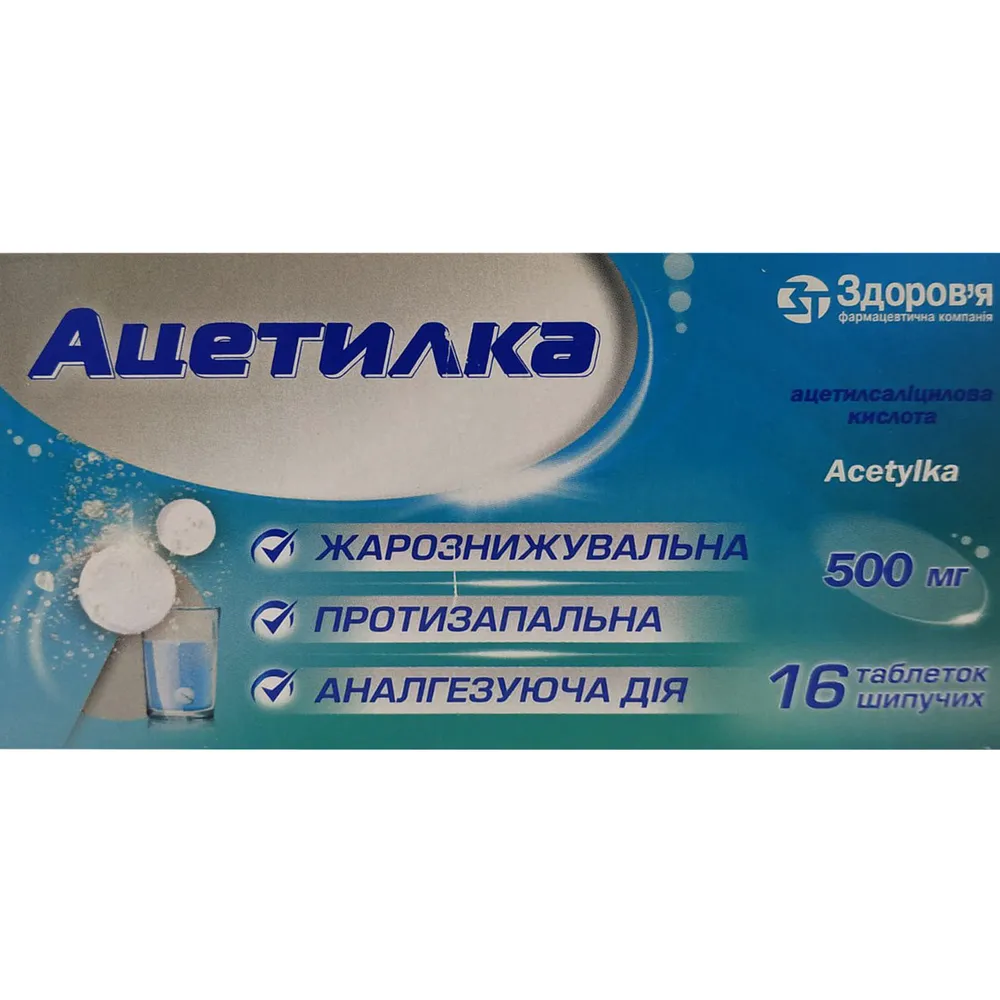
Table of Contents
INSTRUCTION FOR MEDICAL USE OF THE MEDICINAL PRODUCT ACETYLKA (ACETYLKA)
Composition:
Active substance: acetylsalicylic acid;
1 tablet contains 500 mg of acetylsalicylic acid;
Excipients: sodium hydrogen carbonate; sodium carbonate; citric acid; sodium citrate; aspartame (E 951); crospovidone; povidone; lemon flavor containing maltodextrin, gum arabic (E 414), citric acid.
Pharmaceutical form. Effervescent tablets.
Main physicochemical properties: white, round-shaped tablets with a flat surface, beveled edges, and a score line on one side. When dissolved in water, gas bubbles are released.
Pharmacotherapeutic group. Analgesics and antipyretics. ATC code N02B A01.
Pharmacological Properties
Pharmacodynamics
Exerts analgesic, anti-inflammatory, and antipyretic effects.
Acetylsalicylic acid inhibits the biosynthesis of prostaglandins by irreversible inhibition of the enzyme cyclooxygenase (COX). At the site of inflammation, it reduces capillary permeability, decreases hyaluronidase activity, and limits the energy supply to the inflammatory process by inhibiting ATP production. It also reduces excitation of thermoregulatory and pain sensitivity centers. In addition, acetylsalicylic acid inhibits platelet aggregation by blocking thromboxane A2 synthesis in platelets.
The drug is available in the form of effervescent tablets with buffering properties, which reduces the irritating effect of acetylsalicylic acid on the gastrointestinal mucosa.
Pharmacokinetics
Effervescent soluble tablets are absorbed faster than conventional tablets. Maximum plasma concentration of acetylsalicylic acid is reached within 15–40 minutes after administration. Bioavailability of acetylsalicylic acid varies depending on the dose: it is approximately 60% when doses below 500 mg are administered and 90% when doses above 1 g are administered, due to saturation of the hepatic hydrolysis process. Acetylsalicylic acid is rapidly hydrolyzed to salicylic acid, which also possesses pharmacological activity. Both acetylsalicylic acid and salicylic acid are quickly distributed throughout all body tissues. These acids cross the placental barrier and are excreted into breast milk. Salicylic acid is extensively bound to plasma proteins (90%). The elimination half-life of acetylsalicylic acid from plasma is 15–20 minutes, while that of salicylic acid is 2–4 hours.
Acetylsalicylic acid is primarily metabolized in the liver and is excreted mainly in the urine as salicylic, salicyluric, and gentisic acids, and glucuronides.
Clinical characteristics.
Indications.
For symptomatic treatment of headache, toothache; muscle and joint pain; back pain.
For symptomatic relief of pain and fever associated with colds.
Contraindications.
Individual hypersensitivity to acetylsalicylic acid, other salicylates, or any component of the drug; phenylketonuria, as the drug contains aspartame; metabolic or respiratory alkalosis, hypocalcemia, reduced gastric acidity, as the drug contains sodium bicarbonate and citric acid; bronchial asthma induced by acetylsalicylic acid or other nonsteroidal anti-inflammatory agents; acute exacerbation of gastric or duodenal ulcer; congenital (hemophilia) or acquired hemorrhagic disorders; increased risk of bleeding; severe hepatic insufficiency; severe renal insufficiency; severe heart failure resistant to treatment; concomitant use with methotrexate at doses exceeding 20 mg/week; concomitant use of high doses of the drug with indirect anticoagulants, especially during treatment of rheumatic diseases; third trimester of pregnancy.
Interaction with other medicinal products and other forms of interaction.
Acetylsalicylic acid increases digoxin plasma concentration due to reduced renal excretion; administration of high doses of acetylsalicylic acid enhances the effect of hypoglycemic agents due to its hypoglycemic action and displacement of sulfonylureas from plasma protein binding; acetylsalicylic acid also enhances the effect of certain anticonvulsants such as valproic acid and phenytoin; enhances valproic acid toxicity due to displacement from protein-bound state in blood; concomitant use with alcohol increases damage to the gastrointestinal mucosa and prolongs bleeding time due to additive effects.
Acetylsalicylic acid, like other nonsteroidal anti-inflammatory drugs, as well as ticlopidine, clopidogrel, and tirofiban, may exert antiplatelet aggregation effects.
Concomitant use of various drugs that inhibit platelet aggregation may increase the risk of hemorrhagic events.
Sodium metamizole may inhibit the effect of acetylsalicylic acid on platelet aggregation when used concomitantly with acetylsalicylic acid; therefore, this combination should be used with caution in patients taking low-dose acetylsalicylic acid for cardioprotection.
Concomitant use with heparin or other anticoagulants requires continuous monitoring of patients.
When used with selective serotonin reuptake inhibitors (SSRIs), the risk of gastrointestinal bleeding increases due to possible synergistic effects.
Medicinal products containing sodium bicarbonate promote increased renal clearance of acidic compounds such as salicylates and barbiturates, tetracyclines (especially doxycycline), lithium.
Increased urinary alkalinity promotes prolonged half-life of basic medicinal agents such as sympathomimetics and may cause toxic effects due to reduced urinary excretion of ephedrine, amphetamines, flecainide, and mecamylamine.
Citric acid interactions: citrate salts increase gastrointestinal absorption of aluminum, particularly in patients with impaired renal function.
Combinations contraindicated.
Oral anticoagulants. In combination with anti-inflammatory doses (≥ 1 g/dose and/or ≥ 3 g/day) or analgesic or antipyretic doses (≥ 500 mg/dose and/or < 3 g/day) of acetylsalicylic acid, anticoagulants are displaced from plasma protein binding. Increased risk of bleeding, especially in patients with a history of gastric or duodenal ulcer.
Methotrexate at doses exceeding 20 mg/week. In combination with anti-inflammatory or analgesic or antipyretic doses of acetylsalicylic acid, hematological toxicity of methotrexate increases (reduced renal clearance of methotrexate by anti-inflammatory agents and displacement of methotrexate from plasma protein binding by salicylates).
Unwanted combinations.
Acetazolamide. In combination with high doses of acetylsalicylic acid, the frequency of adverse effects increases, particularly metabolic acidosis due to reduced elimination of acetylsalicylic acid caused by interaction with acetazolamide.
Anagrelide. Increased risk of bleeding.
Oral anticoagulants. In combination with analgesic or antipyretic or antiplatelet doses (50–375 mg/day) of acetylsalicylic acid, the risk of bleeding increases; therefore, coagulation parameters and especially bleeding time should be monitored.
Other nonsteroidal anti-inflammatory drugs. In combination with anti-inflammatory or analgesic or antipyretic doses of acetylsalicylic acid, the risk of gastric and duodenal ulcers and gastrointestinal bleeding increases.
Clopidogrel (except for approved indications for this combination in patients with acute coronary syndrome). Increased risk of bleeding due to antiplatelet effect on platelets.
Glucocorticoids (except for replacement hormone therapy with hydrocortisone). In combination with anti-inflammatory doses of acetylsalicylic acid, the risk of bleeding increases.
Heparins. In combination with anti-inflammatory or analgesic or antipyretic doses of acetylsalicylic acid, the risk of bleeding increases (due to inhibition of platelet function and damage to gastrointestinal mucosa).
Pemetrexed. In combination with anti-inflammatory doses of acetylsalicylic acid in patients with mild to moderate renal impairment, the risk of pemetrexed toxicity increases due to reduced renal clearance.
Ticagrelor (except for approved indications for this combination in acute coronary syndromes). Increased risk of bleeding due to antiplatelet effect on platelets.
Ticlopidine. Increased risk of bleeding due to antiplatelet effect on platelets.
Uricosuric agents (benzbromarone, probenecid). Reduced uricosuric effect due to competition for renal tubular excretion of uric acid.
Combinations requiring caution.
Antidiabetic agents. Concomitant use of high doses of acetylsalicylic acid with oral antidiabetic agents of the sulfonylurea group or insulin enhances the hypoglycemic effect of the latter due to the hypoglycemic effect of acetylsalicylic acid and displacement of protein-bound sulfonylureas from plasma proteins.
Clopidogrel (except for approved indications for this combination in patients during the acute phase of coronary syndrome). Increased risk of bleeding due to antiplatelet effect on platelets.
Diuretics and angiotensin-converting enzyme inhibitors. In combination with anti-inflammatory or analgesic or antipyretic doses of acetylsalicylic acid, acute renal failure may develop in dehydrated patients (due to reduced glomerular filtration caused by inhibition of prostaglandin synthesis); also, antihypertensive effects may be reduced.
Systemic glucocorticosteroids (except hydrocortisone) used for replacement therapy in Addison’s disease: during corticosteroid therapy, salicylate blood levels decrease and the risk of overdose increases after discontinuation (corticosteroids enhance salicylate excretion).
When using methotrexate at doses ≤ 20 mg/week in combination with anti-inflammatory or analgesic or antipyretic doses of acetylsalicylic acid, hematological toxicity of methotrexate increases (reduced renal clearance of methotrexate by anti-inflammatory agents and displacement of methotrexate from plasma protein binding by salicylates).
When using methotrexate at doses exceeding 20 mg/week in combination with antiplatelet doses of acetylsalicylic acid, hematological toxicity of methotrexate increases.
Pemetrexed. In patients with normal renal function, there is a risk of increased pemetrexed toxicity due to reduced renal clearance.
Ticagrelor (for approved indications for this combination in acute coronary syndromes). Increased risk of bleeding due to antiplatelet effect on platelets.
Locally acting gastrointestinal agents, antacids, and activated charcoal. Reduced absorption of acetylsalicylic acid in the gastrointestinal tract. It is recommended to take these agents separately from acetylsalicylic acid with an interval of at least 2 hours.
Combinations to be considered.
Oral anticoagulants. In combination with antiplatelet doses of acetylsalicylic acid, the risk of bleeding increases, especially in patients with a history of gastric or duodenal ulcer.
Other nonsteroidal anti-inflammatory drugs. In combination with antiplatelet doses of acetylsalicylic acid, the risk of gastric and duodenal ulcers increases.
Deferasirox. In combination with anti-inflammatory or analgesic or antipyretic doses of acetylsalicylic acid, the risk of gastric ulcer and gastrointestinal bleeding increases.
Glucocorticoids (except for replacement hormone therapy with hydrocortisone). In combination with analgesic or antipyretic doses of acetylsalicylic acid, the risk of bleeding increases.
Heparins in therapeutic doses/elderly patients. In combination with anti-inflammatory or analgesic or antipyretic doses of acetylsalicylic acid, the risk of bleeding increases due to inhibition of platelet function and the negative effect of acetylsalicylic acid on gastrointestinal mucosa.
Heparins used in prophylactic doses. Concomitant use of drugs acting on different stages of hemostasis increases the risk of bleeding. Therefore, when using prophylactic doses of heparins with acetylsalicylic acid in patients under 65 years of age, regardless of the acetylsalicylic acid dose, clinical and possibly biological monitoring should be considered.
Selective serotonin reuptake inhibitors (citalopram, escitalopram, fluoxetine, fluvoxamine, paroxetine, sertraline). Increased risk of bleeding.
Thrombolytics. Increased risk of bleeding.
Intrauterine devices. Risk of reduced contraceptive efficacy.
Locally acting gastrointestinal agents. Magnesium and aluminum oxides and hydroxides, calcium salts. Increased renal excretion of salicylates due to urinary alkalinization.
Special precautions for use.
Acetylsalicylic acid should be used with special caution in the following cases: individual hypersensitivity to other analgesic, anti-inflammatory, or antirheumatic agents, and presence of other types of allergies; history of gastric or duodenal ulcer, as well as gastrointestinal bleeding; concomitant therapy with anticoagulants; renal function impairment or renal failure; circulatory disorders (e.g., renal vascular disease, congestive heart failure, reduced circulating blood volume, major surgical procedures, sepsis, or significant blood loss), since acetylsalicylic acid may further increase the risk of kidney damage and may cause acute renal failure; hepatic function disorders.
During surgical procedures (including dental procedures), the use of medicinal products containing acetylsalicylic acid may increase the likelihood of occurrence or exacerbation of bleeding due to inhibition of platelet aggregation for some time after administration of acetylsalicylic acid.
Acetylsalicylic acid may provoke bronchospasm and cause asthma attacks or other hypersensitivity reactions. Risk factors include a history of asthma, hay fever, nasal polyps, or chronic respiratory diseases. This also applies to patients who experience allergic reactions (such as skin reactions, pruritus, urticaria) to other substances.
To prevent overdose, it should be ensured that other medicinal products used by the patient do not contain acetylsalicylic acid.
Caution is required when prescribing the drug to patients receiving hypoglycemic agents (regular monitoring of blood glucose levels is needed), glucocorticoids, antihypertensive agents, diuretics (adequate hydration and monitoring of renal function are required), or non-absorbable antacids containing magnesium hydroxide and/or aluminum hydroxide (these should be administered no earlier than 2 hours after the drug).
Patients on a sodium-restricted diet should be aware that each tablet contains 388.5 mg of sodium.
When low doses of acetylsalicylic acid are used, excretion of uric acid may be reduced. This may trigger an attack of gout in patients with impaired uric acid excretion.
In patients with glucose-6-phosphate dehydrogenase deficiency, acetylsalicylic acid may cause hemolysis or hemolytic anemia. Factors increasing the risk of hemolysis include, for example, high-dose therapy, fasting, or acute infections.
This medicinal product should be used with caution in patients with congestive heart failure and a history of edema, as well as in those with arterial hypertension, eclampsia, and hyperaldosteronism, because the formulation contains citric acid.
Use during pregnancy or breastfeeding.
During the first and second trimesters of pregnancy, medicinal products containing acetylsalicylic acid should not be used except in cases of exceptional necessity. If women planning pregnancy, as well as those during the first and second trimesters of pregnancy, require treatment with acetylsalicylic acid-containing products, doses should be as low as possible and treatment duration as short as possible. Use of salicylates during the first trimester of pregnancy has been associated in some retrospective epidemiological studies with an increased risk of congenital malformations (cleft palate ("wolf mouth"), cardiac defects, gastroschisis). According to preliminary assessments, prolonged use of the drug is not recommended at doses exceeding 150 mg/day.
Inhibition of prostaglandin synthesis may adversely affect pregnancy and/or embryonic/fetal development. Available data from epidemiological studies indicate an increased risk of miscarriage and fetal malformations following use of prostaglandin synthesis inhibitors early in pregnancy. The risk increases with higher doses and longer duration of therapy. According to available data, an association between acetylsalicylic acid use and increased risk of miscarriage has not been confirmed. Animal studies indicate reproductive toxicity.
Acetylsalicylic acid is contraindicated during the third trimester of pregnancy.
In the third trimester of pregnancy, the use of high-dose salicylates (over 500 mg/day) may lead to prolonged gestation and weakened labor contractions, as well as cardiopulmonary toxicity (premature closure of the ductus arteriosus and development of pulmonary hypertension) or impaired renal function in the fetus, which may progress to renal failure with decreased amniotic fluid volume.
Prostaglandin synthesis inhibitors used late in pregnancy may cause prolonged bleeding time and anti-aggregatory effects in both mother and fetus, which may occur even with very low doses.
The use of high-dose acetylsalicylic acid shortly before delivery may result in intracranial hemorrhage, particularly in premature infants.
Therefore, except in highly exceptional cases justified by cardiovascular or obstetric medical indications with special monitoring, the use of acetylsalicylic acid during the third trimester of pregnancy is contraindicated.
Acetylsalicylic acid passes into breast milk; therefore, the use of this drug during breastfeeding is not recommended.
There are no data on the effect of acetylsalicylic acid on fertility.
Ability to affect reaction speed when driving or operating machinery.
No effect.
Method of Administration and Dosage
Dissolve the effervescent tablet in a glass of water immediately before use.
Adults and children aged 15 years and older (with body weight over 50 kg). The usual dose is 1 effervescent tablet of 500 mg; if necessary, repeat administration may be performed after 4 hours. In cases of more intense pain or hyperthermia, administration of 2 tablets simultaneously is possible; however, repeated dosing should not occur earlier than 4 hours apart. With this dosing regimen, no more than 6 effervescent tablets should be taken per day. Regular administration helps avoid fluctuations in temperature response.
Maximum daily dose is 3 g, i.e., 6 effervescent tablets per day.
Elderly patients. Maximum daily dose is 2 g, i.e., 4 effervescent tablets per day.
For patients with concomitant hepatic or renal impairment, the dose should be reduced or the interval between administrations prolonged.
Duration of use. The patient should be informed that acetylsalicylic acid may be used without medical consultation for no more than 3 days for treatment of hyperthermic response and no more than 5 days for treatment of pain.
Children.
The drug is indicated for children aged 15 years and older. Medicinal products containing acetylsalicylic acid should not be administered to children with acute respiratory viral infections (ARVI), whether accompanied by fever or not. In certain viral diseases, particularly influenza A, influenza B, and varicella, there is a risk of developing Reye's syndrome—a very rare but life-threatening condition requiring urgent medical intervention. The risk may be increased if acetylsalicylic acid is used concomitantly; however, a causal relationship has not been established. If these conditions are accompanied by persistent vomiting, this may be a sign of Reye's syndrome.
Overdose.
Overdose may result, for example, from accidental ingestion by children or unintentional overdose. There is a risk of intoxication in elderly individuals (both during therapeutic use and accidental ingestion). Severe intoxication may lead to fatal outcomes.
Salicylate toxicity may result from chronic intoxication due to prolonged use of therapeutic doses or from acute intoxication (after ingestion of >100 mg/kg/day for more than two days), which potentially poses a life-threatening risk.
Chronic salicylate poisoning may be asymptomatic or lack specific symptoms. Moderate salicylate intoxication or salicylism usually develops only after repeated administration of high doses.
Symptoms: impaired balance, dizziness, tinnitus, hearing loss, sweating, nausea, vomiting, headache, and impaired consciousness. These symptoms can be managed by reducing the dose. Alkalemia and alkaluria may also occur. Tinnitus may appear at plasma concentrations between 150 and 300 μg/mL. More severe adverse effects occur at concentrations exceeding 300 μg/mL. Increased respiratory rate, hyperventilation, and respiratory alkalosis may also develop. In moderate to severe intoxication, respiratory alkalosis with compensatory metabolic acidosis may occur, along with hyperpyrexia, non-cardiogenic pulmonary edema progressing to respiratory arrest and asphyxia; arrhythmias, ECG changes, arterial hypotension up to cardiogenic shock; dehydration, acidemia, aciduria, oliguria progressing to renal failure, disturbances in glucose metabolism, ketosis; gastrointestinal bleeding; hematological changes—from platelet function suppression to coagulopathies; neurological effects—such as toxic encephalopathy and CNS depression, manifesting as drowsiness, impaired consciousness, coma, and seizures.
A characteristic feature of acute poisoning is severe disturbance of acid-base balance, which may vary depending on age and severity of intoxication.
The most common sign in children is metabolic acidosis. Severity of poisoning cannot be assessed solely based on plasma concentration. Absorption of acetylsalicylic acid may be delayed due to gastric emptying inhibition, formation of concretions in the stomach, or use of enteric-coated formulations. Emergency management of acetylsalicylic acid poisoning depends on the severity, stage, and clinical symptoms, and follows standard procedures for managing intoxications. Initial measures should focus on accelerating drug elimination and restoring electrolyte and acid-base balance.
Due to complex pathophysiological effects of salicylate poisoning, the following symptoms and laboratory changes may occur.
Symptoms.
Mild to moderate intoxication: tachypnea, hyperventilation, respiratory alkalosis, sweating, nausea, vomiting. Laboratory findings: alkalosis, alkaline urine reaction.
Emergency treatment: gastric lavage, repeated administration of activated charcoal, forced alkaline diuresis.
Severe intoxication: respiratory alkalosis with compensatory metabolic acidosis, hyperpyrexia, tinnitus, hearing loss. Tinnitus may occur at plasma concentrations between 150 and 300 μg/mL. More severe adverse effects occur at concentrations exceeding 300 μg/mL.
Respiratory system: from hyperventilation and non-cardiogenic pulmonary edema to respiratory arrest and asphyxia. Laboratory findings: alkalosis, alkaline urine reaction.
Cardiovascular system: from cardiac arrhythmias and arterial hypotension to cardiac arrest. Fluid and electrolyte loss: dehydration, oliguria, renal failure. Laboratory findings: hypokalemia, hypernatremia, hyponatremia, impaired renal function.
Disturbances in glucose metabolism and ketosis manifest in laboratory tests as hyperkalemia, hypoglycemia (especially in children), and elevated ketone bodies.
Gastrointestinal tract: gastrointestinal bleeding.
Hematological changes: from platelet function suppression to coagulopathies. Laboratory findings: prolonged prothrombin time, hypoprothrombinemia.
Neurological disorders: toxic encephalopathy and CNS depression—from lethargy and impaired consciousness to coma and seizures.
Emergency treatment: gastric lavage, repeated administration of activated charcoal, forced alkaline diuresis, hemodialysis, and in severe cases—infusion of fluids and electrolytes.
Adverse Reactions
Gastrointestinal system. Dyspepsia, epigastric pain, and abdominal pain; in individual cases – gastrointestinal inflammation, erosive-ulcerative lesions of the gastrointestinal tract, which may rarely lead to gastrointestinal bleeding and perforations, with corresponding laboratory and clinical manifestations.
Rarely – transient hepatic insufficiency with increased liver transaminase levels.
Blood system. Due to the antiplatelet effect of acetylsalicylic acid, the risk of bleeding may be increased. Bleeding events observed include intraoperative hemorrhages, hematomas, genitourinary bleeding, epistaxis, and gingival bleeding; rarely or very rarely – serious bleeding such as gastrointestinal hemorrhage and cerebral hemorrhage (particularly in patients with uncontrolled arterial hypertension and/or concomitant use of anticoagulant agents), which in rare cases could potentially be life-threatening.
Bleeding may lead to acute and chronic post-hemorrhagic anemia/iron-deficiency anemia (due to so-called occult microbleeding), with corresponding laboratory findings and clinical symptoms such as asthenia, pallor, and hypoperfusion.
In patients with severe glucose-6-phosphate dehydrogenase deficiency, hemolysis and development of hemolytic anemia have been reported.
The risk of bleeding may persist for 4–8 days after discontinuation of acetylsalicylic acid. This may increase the risk of bleeding during surgical procedures.
Allergic reactions. In patients with individual hypersensitivity to salicylates, allergic reactions may occur, including symptoms such as rash, urticaria, edema, pruritus, rhinitis, and nasal congestion.
In patients with bronchial asthma, increased frequency of bronchospasm may occur; allergic reactions ranging from mild to moderate severity potentially affecting the skin, respiratory system, gastrointestinal tract, and cardiovascular system. Very rarely, severe reactions have been observed, including anaphylactic shock and non-cardiogenic pulmonary edema.
Nervous system. Headache, dizziness, tinnitus, and sensation of hearing loss have been reported, which may be signs of overdose.
Urinary system. Renal damage and development of acute renal failure have been reported.
Adverse reactions due to the presence of sodium bicarbonate and citric acid in the medicinal product.
Gastrointestinal system. Belching, flatulence.
Metabolism. Hypokalemia, hypercalcemia, metabolic alkalosis accompanied by dyspnea, and effects on muscles (such as weakness, muscle hypertonia, twitching, and tetany, especially with hypercalcemia and nervous system changes).
Reporting of adverse reactions.
Reporting of adverse reactions after marketing authorization is of great importance. It enables ongoing monitoring of the benefit-risk balance of the medicinal product. Healthcare professionals and pharmacists, as well as patients or their legal representatives, should report all suspected adverse reactions and lack of efficacy via the Automated Pharmacovigilance Information System at the following link: https://aisf.dec.gov.ua.
Shelf life. 2 years.
Storage conditions. Store in the original packaging at a temperature not exceeding 25 °C.
Keep out of reach of children.
Packaging. 2 tablets per strip; 8 strips per box.
Availability category. Over-the-counter.
Manufacturer. LIMITED LIABILITY COMPANY "CORPORATION "ZDOROV'YA".
Manufacturer's address and location of business activity.
22, Shevchenka Street, Kharkiv, Kharkiv Oblast, 61013, Ukraine.