Asacol
Ukraine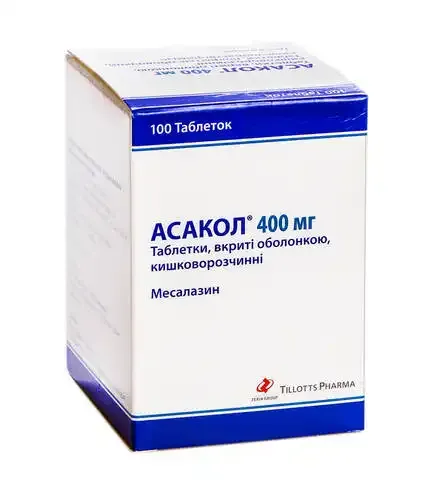
Table of Contents
INSTRUCTIONS FOR MEDICAL USE OF THE MEDICINAL PRODUCT ASACOL® (ASACOL®)
Composition:
Active substance: mesalazine;
1 tablet contains 400 mg or 800 mg of mesalazine;
Excipients: lactose monohydrate, sodium starch glycolate (type A), magnesium stearate, talc, povidone;
Coating: methacrylic acid copolymer (type B), talc, triethyl citrate, iron oxide yellow (E 172), iron oxide red (E 172), macrogol 6000.
Pharmaceutical form. Enteric-coated tablets.
Main physicochemical characteristics: elongated, coated tablets, ranging in color from reddish to brownish.
Pharmacotherapeutic group.
Anti-inflammatory agents used in intestinal disorders. ATC code A07EC02.
Pharmacological properties.
Pharmacodynamics.
Mesalazine inhibits LTB4-stimulated migration of intestinal macrophages, thereby limiting macrophage migration to inflamed areas. Thus, the production of pro-inflammatory leukotrienes (LTB4 and 5-HETE) in intestinal wall macrophages is suppressed. Recently, it has been shown that mesalazine activates the PPAR-γ receptor, which counteracts nuclear activation of intestinal inflammatory responses.
Clinical efficacy
Treatment of acute ulcerative colitis was studied in 529 patients with mild to moderate symptoms. Of the six controlled studies, two were placebo-controlled, and four were comparative or used as dose-finding studies. The duration of treatment ranged from four to six weeks. All patients had disease confirmed by sigmoidoscopy. Response to treatment was monitored through clinical evaluations, patient self-assessment, and clinical outcomes (sigmoidoscopic findings), assessed daily or at several-week intervals. Both placebo-controlled studies achieved statistically significant results in favor of mesalazine.
Maintenance of remission in ulcerative colitis was studied in 503 patients. Of the four controlled studies, one was placebo-controlled and three were comparative. The duration of treatment ranged from four to eleven months. The primary endpoint of the study was the occurrence of relapse confirmed by sigmoidoscopy. The placebo-controlled study achieved a statistically significant result in favor of mesalazine.
Pharmacokinetics.
Absorption
After oral administration, mesalazine reaches the distal part of the ileum in unchanged form. The active substance begins to be released at pH > 7. Absorption was studied under inpatient conditions in 38 healthy volunteers and in 14 patients with ulcerative colitis in remission phase. Mean absorption (cumulative urinary excretion) was 26%. Plasma protein binding is 40% for mesalazine and 80% for N-acetyl-mesalazine.
Distribution
Distribution studies have not been conducted.
Metabolism
As mesalazine passes through the intestinal mucosa, it undergoes pre-systemic metabolism to N-acetyl-mesalazine. Part of the free mesalazine is N-acetylated in the liver and by intestinal flora.
Excretion
Mesalazine and N-acetyl-mesalazine are excreted predominantly in feces. Renal excretion occurs mainly as N-acetyl-mesalazine, exclusively within the absorbed fraction, which constitutes approximately 26% of the oral dose.
Clinical characteristics.
Indications.
Ulcerative colitis, mild to moderate severity; maintenance therapy during remission. Crohn's disease.
Contraindications.
Hypersensitivity to mesalazine or to any other component of the medicinal product, or known allergy to salicylates; severe impairment of liver or kidney function (creatinine clearance < 30 mL/min/1.73 m²).
Children under 6 years of age.
Special precautions.
Prior to and during treatment, as deemed appropriate by the treating physician, blood tests should be scheduled (leukocyte count, liver function parameters such as ALT or AST; serum creatinine) and urinary excretion (test strip). As a general guideline, repeat testing is recommended 14 days after initiation of treatment and then every 4 weeks during the following 12 weeks. If results are normal, repeat testing should be performed every three months. If additional signs of hepatic or renal impairment are detected, such tests should be performed immediately.
Renal function impairment
Caution should be exercised in patients with elevated serum creatinine or proteinuria. In patients who develop renal impairment during treatment, mesalazine-induced nephrotoxicity should be considered. If signs of renal dysfunction occur, treatment with Asacol® should be discontinued immediately and patients should seek urgent medical attention.
Nephrolithiasis
Cases of urolithiasis have been reported with mesalazine use, including formation of stones composed entirely of mesalazine. Adequate fluid intake should be ensured during treatment.
Mesalazine may cause red-brown discoloration of urine upon contact with sodium hypochlorite-based bleach (e.g., in toilets cleaned with sodium hypochlorite-containing bleaches).
Hematological disorders
Very rarely, severe hematological disorders have been reported. Treatment with Asacol® should be discontinued immediately in case of hematological disorders (signs of unexplained bleeding, bruising, purpura, anemia, persistent fever, or sore throat); patients should seek immediate medical attention if hematological disorders are suspected or detected.
Hepatic function impairment
Elevated liver enzymes have been reported in patients taking mesalazine-containing products. Asacol® should be used with caution in patients with hepatic impairment.
Cardiac hypersensitivity reactions
Cardiac hypersensitivity reactions due to mesalazine (myo- or pericarditis) have been reported rarely during treatment with Asacol®. Asacol® should not be used in patients with a history of previous mesalazine-induced cardiac hypersensitivity reactions. Caution should be exercised in patients with prior history of allergic myo- or pericarditis, regardless of its cause.
Lung disorders
Patients with pulmonary disorders, especially asthma, should be closely monitored during therapy with Asacol®.
Hypersensitivity to sulfasalazine
Treatment with Asacol® in patients with known hypersensitivity to sulfasalazine should be initiated only under strict medical supervision. If acute intolerance symptoms occur, such as abdominal cramps, acute abdominal pain, elevated body temperature, severe headache, or skin rash, treatment should be discontinued immediately.
Gastric and duodenal ulcers
Due to theoretical considerations, treatment of patients with gastric or duodenal ulcers should be initiated with caution.
Carbohydrate intolerance
This medicinal product should not be administered to patients with rare hereditary forms of galactose intolerance, severe lactase deficiency, or glucose-galactose malabsorption.
Presence of tablets in feces
There have been isolated reports of intact tablets in feces. These apparently intact tablets may in some cases consist mainly of empty enteric-coated shells. If intact tablets are frequently observed in feces, patients should consult their physician.
Elderly patients
Asacol® is recommended for elderly patients only if renal and hepatic functions are normal. In general, therapy should be continued with caution (see section "Contraindications").
Severe cutaneous adverse reactions
Severe cutaneous adverse reactions have been reported with mesalazine treatment, including drug reaction with eosinophilia and systemic symptoms (DRESS syndrome), Stevens-Johnson syndrome, and toxic epidermal necrolysis. Mesalazine should be discontinued at the first signs or symptoms of severe skin reactions, such as skin rash, mucosal lesions of the intestine, or any other signs of hypersensitivity.
Interaction with other medicinal products and other forms of interaction.
There have been isolated reports of acceptable changes in coagulation parameters (INR values) following concomitant administration with coumarins (phenprocoumon, warfarin).
Mesalazine may enhance the myelosuppressive effect of azathioprine, 6-mercaptopurine, or thioguanine. Life-threatening infections may occur. Patients should be closely monitored for signs of infection and myelosuppression. Blood counts, particularly leukocyte, platelet, and lymphocyte counts, should be monitored at the beginning of such combination therapy and then at regular intervals (weekly). If the leukocyte count remains stable after one month, monthly blood tests are considered sufficient for the following 3 months, after which repeat testing should be performed quarterly.
Except for interaction studies with purine metabolism inhibitors in adults and children, no other interaction studies involving adults or children have been conducted.
Special precautions for use.
Excipients of particular interest.
This medicinal product contains less than 1 mmol of sodium (23 mg) per dose, i.e., essentially "sodium-free".
Use during pregnancy or breastfeeding.
Pregnancy
Adequate data on the use of Asacol® in pregnant women are lacking. However, in a limited number of pregnant women who received mesalazine (627), no adverse effects on the course of pregnancy or on the health of the fetus/newborn were observed. Currently, other relevant epidemiological data are not available.
In one isolated case of prolonged high-dose oral mesalazine administration (2–4 g) during pregnancy, renal failure was observed in the newborn. Animal studies with oral mesalazine did not indicate any direct or indirect harmful effects on pregnancy, embryonic/fetal development, parturition, or postnatal development.
Therefore, Asacol® should be administered during pregnancy only if the expected benefit outweighs the potential risks.
Breastfeeding
Low concentrations of mesalazine and its N-acetyl metabolite have been detected in human breast milk. The clinical significance of this observation is unknown. Currently, experience with use in breastfeeding women is limited. Hypersensitivity reactions such as diarrhea in the infant cannot be excluded. Therefore, Asacol® should be used during breastfeeding only if the expected benefit outweighs the potential risk. If diarrhea develops in the infant, breastfeeding should be discontinued.
Ability to affect the reaction rate when driving vehicles or operating machinery.
No specific studies have been conducted. A negative influence on the reaction rate when driving vehicles or operating machinery is not expected.
Method of Administration and Dosage
Adults
Ulcerative colitis
Initial treatment: One 800 mg Asacol® tablet in the morning, at midday, and in the evening.
In cases of particularly severe clinical presentation or treatment resistance, the daily dose may be increased up to six 800 mg tablets.
Maintenance therapy:
During maintenance treatment in remission phase, the recommended dose may be increased up to 2.4 g of mesalazine per day and adjusted individually. The dose should be divided into several administrations.
Crohn’s disease
For treatment during the exacerbation phase and for maintenance therapy, the dosage should be individually adjusted and may be increased up to 4 g of mesalazine per day in several divided doses.
Elderly patients
Elderly patients do not require dose adjustment unless renal or hepatic function is impaired.
Children aged six years and older
Ulcerative colitis or Crohn’s disease
- Active disease: dosage is determined individually, starting at 30–50 mg/kg body weight/day in several divided doses. Maximum dose: 75 mg/kg body weight/day in several divided doses. The total daily dose must not exceed 4 g of mesalazine.
Maintenance therapy: dosage is determined individually, starting at 15–30 mg/kg body weight/day in several divided doses. The total daily dose must not exceed 2 g of mesalazine.
Children with body weight below 40 kg are generally recommended to receive half the adult dose, while children with body weight above 40 kg may receive the full adult dose.
Method of administration
The tablets are intended for oral use and must be swallowed whole. Under no circumstances should the tablets be chewed, crushed, or divided. They should preferably be taken before meals, with a glass of liquid.
If one or more doses are missed, the next dose should be taken as usual.
The duration of treatment is determined by the physician. Remission in ulcerative colitis and Crohn’s disease typically occurs within 8–12 weeks of Asacol® treatment.
Children
Asacol® tablets are not recommended for children under 6 years of age due to insufficient experience with the use of the drug in this age group.
Overdose
There is limited data on overdose (e.g., suicide attempts involving high oral doses of mesalazine), which does not indicate renal or hepatic toxicity. There is no specific antidote. Treatment is symptomatic and supportive.
Adverse Reactions.
Summary of safety profile
Allergic reactions affecting the heart, lungs, liver, kidneys, pancreas, skin, and subcutaneous tissues have been reported.
Treatment of patients with known hypersensitivity to sulfasalazine should be discontinued immediately upon occurrence of acute intolerance symptoms such as seizures, abdominal pain, fever, severe headache, or skin rash.
Serious skin adverse reactions have been reported, including drug-induced eosinophilia with systemic symptoms (DRESS syndrome), Stevens–Johnson syndrome, and toxic epidermal necrolysis associated with mesalazine treatment (see section "Special precautions").
Summary of adverse reactions
The following frequency criteria are used to assess adverse reactions: very common (≥ 1/10), common (≥ 1/100, < 1/10), uncommon (≥ 1/1000, < 1/100), rare (≥ 1/10000, < 1/1000), very rare (< 1/10000), frequency not known (cannot be estimated from available data).
Blood and lymphatic system disorders
Uncommon: eosinophilia (as manifestation of allergic reaction).
Very rare: blood count abnormalities (aplastic anemia, agranulocytosis, pancytopenia, neutropenia, leukopenia, thrombocytopenia), bone marrow suppression, blood dyscrasia.
Immune system disorders
Very rare: hypersensitivity reactions such as allergic exanthema, drug fever, erythema syndrome, pancolitis, Quincke's edema, lupus-like syndrome.
Nervous system disorders
Very common: headache.
Common: dizziness.
Uncommon: paraesthesia.
Very rare: peripheral neuropathy, benign intracranial hypertension (in children during puberty).
Cardiac and vascular system disorders
Rare: myocarditis, pericarditis.
Respiratory, thoracic and mediastinal disorders
Very rare: allergic and fibrosing lung reactions (including dyspnea, cough, bronchospasm, alveolitis, pulmonary eosinophilia, lung infiltration, pneumonitis), interstitial pneumonia, eosinophilic pneumonia, lung disease.
Frequency not known: pleuritis.
Gastrointestinal disorders
Common: vomiting, nausea, dyspepsia, abdominal pain, diarrhea.
Rare: flatulence.
Very rare: acute pancreatitis.
Hepatobiliary disorders
Very rare: changes in liver function tests (elevated transaminases and cholestatic parameters), hepatitis, cholestatic hepatitis, liver failure.
Skin and subcutaneous tissue disorders
Common: rashes.
Uncommon: urticaria, pruritus.
Rare: photosensitivity (see below "Description of selected adverse reactions").
Very rare: alopecia.
Frequency not known: drug-induced eosinophilia with systemic symptoms (DRESS syndrome), Stevens–Johnson syndrome, toxic epidermal necrolysis.
Musculoskeletal, connective tissue and bone disorders
Common: arthralgia.
Uncommon: myalgia.
Frequency not known: lupus-like syndrome with pericarditis and pleuropericarditis as main symptoms, as well as skin rashes.
Renal and urinary disorders
Very rare: renal dysfunction, including acute and chronic interstitial nephritis and renal failure, nephrotic syndrome, kidney failure, which may be reversible and resolve upon early discontinuation of treatment.
Frequency not known: nephrolithiasis (see section "Special precautions").
Reproductive system and breast disorders
Very rare: oligospermia (reversible).
General disorders
Common: fever.
Uncommon: chest pain.
Frequency not known: intolerance to mesalazine with elevated C-reactive protein levels and/or worsening of symptoms of the underlying disease.
Investigations
Frequency not known: increased blood creatinine levels, weight loss, decreased creatinine clearance, elevated amylase levels, increased erythrocyte sedimentation rate, elevated lipase levels, increased blood urea nitrogen (BUN).
Description of selected adverse reactions
A number of the adverse reactions listed above are more likely associated with the underlying inflammatory bowel disease rather than with treatment with Asacol®. This is particularly true for gastrointestinal adverse reactions and arthralgia.
When renal dysfunction occurs during treatment, mesalazine-induced nephrotoxicity should be considered, which may be reversible and resolve after discontinuation of treatment.
To prevent blood dyscrasia due to bone marrow suppression, patients should be carefully monitored.
Concomitant use of azathioprine, 6-mercaptopurine, or thioguanine may cause leukopenia due to enhanced myelosuppressive effect.
Photosensitivity
More severe reactions have been reported in patients with previous skin disorders such as atopic dermatitis and atopic eczema.
Shelf life. 3 years.
Do not use after the expiry date stated on the packaging.
Storage conditions.
Store at temperatures not exceeding 25 °C in the original packaging.
Keep out of reach of children.
Packaging.
Tablets 400 mg: 10 tablets in a blister; 10 blisters in a cardboard box;
Tablets 800 mg: 10 tablets in a blister; 5 or 6 blisters in a cardboard box.
Prescription category.
Prescription only.
Manufacturer.
Tillotts Pharma AG.
Manufacturer's address and location of operations.
Hauptstrasse 27, 4417 Ziefen, Switzerland.