Artosan
Ukraine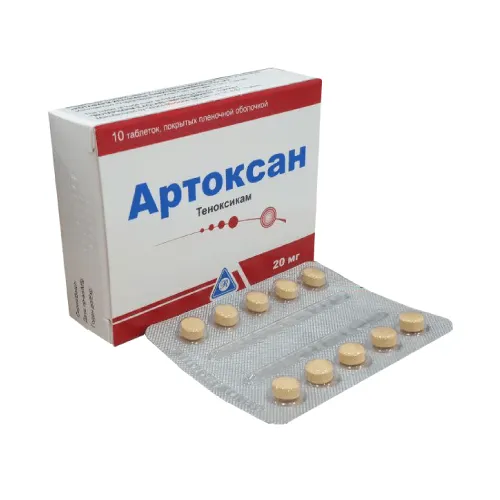
Table of Contents
INSTRUCTIONS FOR MEDICAL USE OF THE MEDICINAL PRODUCT AROXAN (ARTOXAN)
Composition:
Active substance: tenoxicam;
One film-coated tablet contains 20 mg of tenoxicam;
Excipients: lactose monohydrate; pregelatinized starch 1500; talc; magnesium stearate; film coating Opadry® II Yellow 85F220095 (polyvinyl alcohol; polyethylene glycol; titanium dioxide (E 171); talc; yellow iron oxide (E 172); aluminum lake of tartrazine (E 102); aluminum lake of Yellow West FCF (E 110)).
Pharmaceutical form.
Film-coated tablets.
Main physicochemical properties: yellow, round, biconvex, film-coated tablets.
Pharmacotherapeutic group.
Non-steroidal anti-inflammatory and anti-rheumatic drugs. Oxicams. ATC code M01AC02.
Pharmacological properties.
Pharmacodynamics.
Tenoxicam is a thienothiazine derivative belonging to the chemical class of oxicams. As a non-steroidal anti-inflammatory drug (NSAID), tenoxicam possesses anti-inflammatory, analgesic, and antipyretic properties; it also inhibits platelet aggregation. Tenoxicam strongly inhibits prostaglandin biosynthesis both in vitro (sheep vesicles) and in vivo (protection of mice against toxicity induced by arachidonic acid).
In vitro studies on cyclooxygenase (COX) isoenzymes expressed in human COS-7 cells showed that tenoxicam inhibits COX-1 and COX-2 isoenzymes to a similar extent (the COX-2/COX-1 ratio is 1.34).
In vitro studies with leukocyte peroxidase demonstrated that tenoxicam neutralizes active oxygen at the site of inflammation (radical scavenger).
More than 70,000 patients participated in clinical studies of tenoxicam (oral, rectal, and intravenous administration).
Pharmacokinetics.
Absorption
After oral administration, tenoxicam is rapidly and completely absorbed from the gastrointestinal tract. Maximum concentration (Cmax) is reached within 2 hours after intake. When tenoxicam is administered orally with food, its absorption is not reduced, but a delay in reaching Cmax is observed.
Distribution
After intravenous administration of 20 mg tenoxicam, plasma concentration rapidly declines during the first two hours, primarily due to distribution. Because of this short time interval, no significant differences in plasma concentration between intravenous and oral administration routes are observed. At steady state, the mean volume of distribution is 10 to 11 L.
After intramuscular injection, tenoxicam reaches 90% or more of Cmax within 15 minutes—earlier than after oral administration. Otherwise, differences in plasma levels between the two administration routes occur only during the first two hours after administration. Bioavailability after intramuscular injection is complete and does not differ from that observed after oral administration.
In blood, tenoxicam is more than 99% bound to albumin. Tenoxicam penetrates well into synovial fluid, although Cmax is reached later than in plasma.
With the recommended dosing regimen of 20 mg once daily (orally or parenterally), steady state is usually achieved within 10–15 days without accumulation. The mean maximum plasma concentration at steady state is 11 mg/L and remains unchanged even during treatment lasting up to four years.
Pharmacokinetic data indicate that the steady-state plasma concentration is six times higher than after a single dose.
Metabolism
Tenoxicam is extensively metabolized to an inactive 5-hydroxypyridyl metabolite. Other metabolites occur in glucuronidated forms.
Elimination
The mean elimination half-life of tenoxicam is 72 hours (range 59–74 hours). Approximately two-thirds of the dose is excreted in urine (primarily as the inactive 5-hydroxypyridyl metabolite), and the remainder via bile (a significant portion as glucuronide conjugates). Less than 1% of the administered dose is excreted unchanged in urine. Total plasma clearance is 2 mL/min.
The pharmacokinetics of tenoxicam are linear within the studied dose range of 10 mg to 100 mg (after single-dose administration).
Pharmacokinetics in special patient groups
In elderly patients, treatment with NSAIDs increases the frequency of adverse reactions, particularly gastrointestinal bleeding and perforations, which may be fatal (see section "Special precautions").
Studies have shown that elderly patients, patients with renal impairment, or those with hepatic cirrhosis do not require dose adjustment of tenoxicam to achieve the same plasma concentration as in healthy volunteers.
Patients with rheumatic diseases and elderly patients have the same pharmacokinetic profile as healthy volunteers.
Due to the high degree of tenoxicam binding to plasma proteins, caution should be exercised in cases of significantly reduced albumin concentration in plasma (e.g., in nephrotic syndrome).
Preclinical data
In preclinical (animal) studies, tenoxicam, like other inhibitors of prostaglandin synthesis, showed effects on the kidneys and gastrointestinal tract (GIT), increased frequency of dystocia, and delayed parturition.
Tenoxicam has no teratogenic potential. Studies in rats showed that tenoxicam prolongs and delays parturition. Pregnant rats are more susceptible to adverse reactions.
Tenoxicam does not affect fertility.
Mutagenic or carcinogenic potential of tenoxicam was not demonstrated in animal studies.
Clinical characteristics.
Indications.
- Relief of pain and inflammation in osteoarthritis and rheumatoid arthritis.
- Short-term treatment of acute musculoskeletal disorders, including sprains, dislocations, and other soft tissue injuries.
In cases where oral administration is not possible, tenoxicam is also available in intravenous and intramuscular formulations.
Contraindications.
- Hypersensitivity to the active substance or to any of the excipients.
- Bronchospasm, urticaria, or allergy-like symptoms (such as asthma or rhinitis) following administration of acetylsalicylic acid or other NSAIDs in the patient's history.
- Active gastric and/or duodenal ulcer or gastrointestinal bleeding.
- Inflammatory bowel diseases such as Crohn's disease or ulcerative colitis.
- Third trimester of pregnancy (see section "Use in pregnancy or lactation").
- Severe hepatic impairment (liver cirrhosis and ascites).
- Severe renal impairment (creatinine clearance < 30 mL/min).
- Severe heart failure (NYHA III-IV).
- Treatment of postoperative pain following coronary artery bypass graft (CABG) surgery (or use of cardiopulmonary bypass).
Elderly patients, patients at increased risk of developing renal impairment, and patients at increased risk of bleeding should not receive the medicinal product prior to anesthesia or surgical procedures, as, similar to all NSAIDs, there is an increased risk of acute renal impairment and possible disturbance of hemostasis.
Concomitant use with salicylates or other NSAIDs should be avoided due to increased risk of gastrointestinal adverse reactions.
Interaction with other medicinal products and other forms of interaction.
Other NSAIDs (including COX-2 inhibitors)
Possible increased risk of adverse reactions (particularly gastrointestinal bleeding and ulcers). Concomitant use of two or more NSAIDs should be avoided.
Acetylsalicylic acid and other salicylates
Possible increased clearance and altered distribution of tenoxicam due to competition for protein-binding sites. Concomitant use of these medicinal products should be avoided due to increased risk of adverse reactions (particularly gastrointestinal).
Antacids, H2-receptor antagonists
Reduced rate (but not extent) of tenoxicam absorption. The reduced absorption rate is not considered clinically significant. No interaction was observed when tenoxicam was coadministered with cimetidine.
Anticoagulants (warfarin)
Possible potentiation of anticoagulant effects. When used concomitantly, anticoagulant effects should be monitored, especially at the beginning of tenoxicam treatment. No clinically significant interactions between tenoxicam and heparin or low-molecular-weight heparin have been reported.
Cardiac glycosides
Possible exacerbation of heart failure, reduced glomerular filtration rate, and increased plasma levels of cardiac glycosides. No clinically significant interactions between tenoxicam and digoxin or other digitalis preparations have been reported.
Cyclosporine
Possible increased risk of nephrotoxicity. Caution should be exercised when these medicinal products are used concomitantly.
Quinolones
Preclinical data suggest that tenoxicam use increases the risk of quinolone-induced seizures. Concomitant use of these medicinal products may increase the risk of seizures.
Lithium
Reduced elimination of lithium has been reported. When these medicinal products are used concomitantly, plasma lithium levels should be monitored regularly, patients should be advised to maintain adequate fluid intake, and informed about symptoms of lithium toxicity.
Diuretics
Possible reduction in the natriuretic effect of diuretics and increased risk of nephrotoxicity due to the ability of NSAIDs to retain potassium, sodium, and fluid. In patients with arterial hypertension or heart failure, tenoxicam may worsen the course of these conditions. No clinically significant interactions between tenoxicam and furosemide have been reported. Reduced antihypertensive effect of hydrochlorothiazide has been reported when coadministered with tenoxicam.
Methotrexate
Possible increased toxicity of methotrexate due to reduced elimination. Caution should be exercised when these medicinal products are used concomitantly.
Tacrolimus
Possible increased risk of nephrotoxicity. Caution should be exercised when these medicinal products are used concomitantly.
Antihypertensive agents
Possible attenuation of effects of alpha-adrenergic blockers and angiotensin-converting enzyme (ACE) inhibitors. No clinically significant interactions between tenoxicam and calcium channel blockers, atenolol, or central alpha-adrenergic agonists have been reported.
Oral hypoglycemic agents
Although no effect on clinical outcomes of glibornuride, glyburide, or tolbutamide has been reported, careful monitoring of the patient is recommended when oral hypoglycemic agents are used concomitantly with tenoxicam.
Dextromethorphan
Possible potentiation of the analgesic effect of tenoxicam.
Cholestyramine
Possible increased clearance and reduced half-life of tenoxicam.
Probenecid
Possible increased plasma levels of tenoxicam. The clinical significance of this phenomenon has not been established.
Mifepristone
Possible reduced efficacy of mifepristone. Tenoxicam should be administered 8–12 days after completion of mifepristone treatment.
Corticosteroids
Possible increased risk of gastrointestinal bleeding and perforation. Caution should be exercised when these medicinal products are used concomitantly.
Antiplatelet agents, selective serotonin reuptake inhibitors (SSRIs) Increased risk of gastrointestinal bleeding.
Zidovudine
Possible increased risk of hematological toxicity. Evidence suggests increased risk of hemarthrosis and hematomas in HIV-infected patients with hemophilia when zidovudine is used concomitantly with ibuprofen.
Penicillamine, parenteral gold preparations
In a small number of patients receiving these medicinal products concomitantly, no clinically significant interaction was observed.
Special precautions for use.
Patients at increased risk of developing renal impairment include:
- elderly patients;
- patients with kidney disease;
- patients with diabetes mellitus and impaired renal function;
- patients with congestive heart failure;
- patients with hypovolemia;
- patients concurrently using diuretics;
- patients concurrently using medicinal products with known nephrotoxic potential;
- patients concurrently using corticosteroids.
For these patient groups, there is a high risk of bleeding during the peri- and postoperative periods; therefore, careful monitoring is required in the postoperative and recovery periods.
Due to the strong plasma protein binding of tenoxicam, Artosan should be used with caution in patients with reduced plasma albumin levels.
General warnings regarding use of systemic NSAIDs
Gastrointestinal (GI) ulcers, bleeding, or perforations may occur at any time during NSAID therapy, whether selective or non-selective for COX-2, even without prior warning symptoms or history of GI bleeding or perforation. To minimize this risk, the lowest effective dose of Artosan should be used for the shortest possible duration.
Placebo-controlled studies have shown an increased risk of thrombotic cardiovascular and cerebrovascular complications with certain selective COX-2 inhibitors. It is currently unknown whether this risk is directly correlated with the COX-1/COX-2 selectivity of individual NSAIDs. Since clinical data on tenoxicam are lacking for use at maximum doses and in long-term therapy, an increased risk of thrombotic cardiovascular and cerebrovascular complications cannot be excluded.
Until such data become available, tenoxicam should be administered to patients with clinically confirmed ischemic heart disease, cerebrovascular disease, peripheral arterial occlusive disease, or those with significant risk factors (e.g., hypertension, hyperlipidemia, diabetes mellitus, smoking) only after careful benefit-risk assessment. Furthermore, due to this risk, the lowest effective dose should be used for the shortest possible duration.
The effect of NSAIDs on the kidneys includes fluid retention with edema and/or arterial hypertension. Therefore, tenoxicam should be used with caution in patients with cardiac dysfunction and other conditions predisposing to fluid retention. Caution is also required when tenoxicam is used in patients concurrently receiving diuretics or ACE inhibitors, as well as in individuals at increased risk of hypovolemia.
Concomitant use of tenoxicam with other NSAIDs, including selective COX-2 inhibitors, should be avoided.
Gastrointestinal bleeding and perforations, including fatal outcomes, occur more frequently, especially in elderly patients treated with NSAIDs. Debilitated patients tolerate ulcers and bleeding worse than other patients. Most fatal GI complications have been associated with NSAID use in elderly and/or debilitated patients.
The risk of gastrointestinal bleeding, ulceration, or perforation increases with higher doses of Artosan, particularly in patients with a history of peptic ulcer, especially if complicated by bleeding or perforation (see section "Contraindications"), and in elderly patients. If use of this medicinal product is considered necessary, treatment should be initiated at the lowest effective dose and continued for the shortest possible duration. Patients should be monitored for gastrointestinal bleeding during Artosan therapy. For these patients, as well as for those concurrently using low-dose acetylsalicylic acid or other substances that may increase gastrointestinal risk, combination therapy with gastroprotective agents (e.g., misoprostol or proton pump inhibitors) should be considered.
Artosan should be used with caution in patients concurrently using medicinal products that may increase the risk of ulceration or bleeding, such as oral corticosteroids, coumarin anticoagulants, SSRIs, or antiplatelet agents such as acetylsalicylic acid (see section "Interaction with other medicinal products and other forms of interaction").
Cutaneous effects
Rarely, the use of Artosan may cause severe skin reactions, including exfoliative dermatitis, Stevens-Johnson syndrome, and toxic epidermal necrolysis, including fatal outcomes (see section "Adverse reactions"). The risk of such reactions is highest at the beginning of treatment: in most cases, initial symptoms occurred within the first month of therapy. At the first signs of skin rash, mucosal lesions, or other signs of hypersensitivity, the drug should be discontinued immediately.
Hematological effects
Tenoxicam inhibits platelet aggregation and may affect hemostasis. The drug has no significant effect on blood coagulation factors, clotting time, prothrombin time, or activated partial thromboplastin time.
Careful monitoring is required in patients with coagulation disorders and in those receiving medicinal products that interfere with blood coagulation.
As with other NSAIDs, concomitant treatment with anticoagulants and/or oral antidiabetic agents should be avoided unless close monitoring of the patient is possible.
Inhibition of prostaglandin synthetase may adversely affect renal function. Therefore, as with other NSAIDs, renal function (blood urea nitrogen, creatinine, edema, weight gain) should be monitored when Artosan is prescribed to elderly patients or those whose clinical condition increases the risk of renal impairment.
Cardiovascular and cerebrovascular effects
Artosan should be prescribed to patients with uncontrolled hypertension, congestive heart failure, established ischemic heart disease, peripheral arterial disease, and/or cerebrovascular disease only after careful benefit-risk assessment. The benefit-risk assessment should also be considered before initiating long-term treatment in patients with cardiovascular risk factors (e.g., hypertension, hyperlipidemia, diabetes mellitus, smoking).
Patients with a history of mild to moderate arterial hypertension and/or congestive heart failure require appropriate monitoring of renal function and diuresis rate, as well as consultation, due to reports of fluid retention and edema associated with NSAID therapy.
Clinical studies and epidemiological data suggest that the use of selective COX-2 inhibitors and certain NSAIDs, particularly at high doses and over prolonged periods, may be associated with an increased risk of arterial thrombotic events (e.g., myocardial infarction or stroke).
Ophthalmological effects
Ocular disorders have been reported during NSAID therapy. If such disorders occur during treatment with Artosan, ophthalmological examination should be performed.
Antipyretic effects
Like other NSAIDs, tenoxicam may mask signs of infection.
Excipients
Artosan contains lactose; therefore, it should not be used in patients with rare hereditary forms of galactose intolerance, lactase deficiency, or glucose-galactose malabsorption syndrome.
The medicinal product contains aluminium lake of tartrazine (E 102) and aluminium lake of Yellow West FCF (E 110), which may cause allergic reactions.
Use during pregnancy or breastfeeding.
Pregnancy
Inhibition of prostaglandin synthesis may have adverse effects on pregnancy and/or embryonic/fetal development. Epidemiological data indicate an increased risk of miscarriage and/or congenital heart defects and gastroschisis following exposure to prostaglandin synthesis inhibitors during early pregnancy. The risk is considered to increase with higher doses and longer duration of therapy.
In animal studies, administration of prostaglandin synthesis inhibitors has been shown to increase pre- and post-implantation loss and embryonic/fetal mortality. In addition, in animals treated with prostaglandin synthesis inhibitors during organogenesis, an increased incidence of various developmental abnormalities, including cardiovascular malformations, has been observed.
Tenoxicam should not be used during the first and second trimesters of pregnancy except in cases of extreme necessity. If tenoxicam is used by a woman attempting to conceive or during the first or second trimester of pregnancy, the dose should be as low as possible and the duration of treatment as short as possible.
Oligohydramnios/renal failure in newborns/constriction of the arterial duct
From the 20th week of gestation, the use of tenoxicam may lead to fetal renal dysfunction, resulting in oligohydramnios and, in some cases, neonatal renal failure. These adverse reactions typically occur after several days or weeks of treatment, although oligohydramnios has been reported as early as 48 hours after initiation of Artosan.
Oligohydramnios is often reversible upon discontinuation of treatment. Complications of prolonged oligohydramnios may include limb contractures and delayed lung maturation. In the post-marketing period, some cases of neonatal renal impairment required invasive procedures such as exchange transfusion or dialysis.
Additionally, constriction of the arterial duct has been reported following NSAID use in the second trimester, which in most cases resolved after discontinuation of treatment.
Prenatal monitoring for oligohydramnios and arterial duct constriction should be considered after exposure to tenoxicam for several days starting from the 20th week of gestation. The drug should be discontinued if oligohydramnios or arterial duct constriction is detected.
During the third trimester of pregnancy, all prostaglandin synthesis inhibitors may pose risks:
Risks to the fetus:
- cardiopulmonary toxicity (premature constriction/closure of the arterial duct and pulmonary hypertension);
- impaired renal function, which may progress to renal failure with oligohydramnios (see above).
Risks to the mother at the end of pregnancy and to the newborn:
- possible prolongation of bleeding time, anti-aggregatory effect, which may occur even with very low doses;
- inhibition of uterine contractions, leading to delayed or prolonged labor.
Therefore, Artosan is contraindicated during the third trimester of pregnancy (see section "Contraindications").
Period of breastfeeding
NSAIDs are excreted in breast milk. Therefore, as a precautionary measure, tenoxicam should not be used by breastfeeding women. If treatment is necessary, breastfeeding should be discontinued.
Fertility
The use of tenoxicam may impair female fertility and therefore is not recommended in women attempting to conceive.
Consideration should be given to discontinuing the drug in women experiencing difficulties with conception or undergoing infertility investigations.
Ability to influence reaction speed when driving vehicles or operating machinery.
Dizziness, somnolence, fatigue, and visual disturbances may occur during treatment with Artosan. If such reactions occur, patients should refrain from driving vehicles or operating machinery.
Method of Administration and Dosage
The medicinal product Artosan is intended for oral administration. Tablets should be taken daily at the same time, during or after meals, with water or another liquid.
Adults
The recommended dose of the medicinal product is 20 mg once daily. Recommended doses should not be exceeded, as this does not always result in a more pronounced therapeutic effect and increases the risk of adverse reactions.
The duration of treatment with tenoxicam for acute musculoskeletal disorders usually does not exceed 7 days. In exceptional cases, therapy may be extended up to 14 days.
Elderly Patients
Elderly patients have an increased risk of developing adverse reactions and more frequently receive concomitant medications or have impaired renal, hepatic, or cardiovascular function.
The medicinal product should be administered to elderly patients at the lowest effective dose of 20 mg for the shortest duration necessary to control disease symptoms. Such patients should be carefully monitored for gastrointestinal bleeding during the first 4 weeks after initiation of therapy.
Patients with Renal and/or Hepatic Impairment
For patients with creatinine clearance greater than 25 ml/min, no dosage adjustment is required. Such patients should be carefully monitored.
There is insufficient data to provide dosage recommendations for tenoxicam in patients with creatinine clearance less than 25 ml/min.
There is insufficient data to provide dosage recommendations for tenoxicam in patients with hepatic insufficiency.
The medicinal product Artosan should be used with caution in patients with low albumin concentrations (e.g., in nephrotic syndrome) or high plasma bilirubin concentrations, since tenoxicam is highly bound to plasma proteins.
Children
There are no data on the safety of tenoxicam use in children; therefore, the medicinal product Artosan should not be administered to this patient group.
Overdose
Symptoms
Common symptoms of NSAID overdose include nausea, vomiting, epigastric pain, gastrointestinal bleeding, tinnitus, headache, visual disturbances, dizziness, and rarely diarrhea. In isolated cases, more severe effects have been reported, such as seizures, agitation, somnolence, arterial hypotension, apnea, coma, electrolyte imbalance, and renal failure. Exacerbation of bronchial asthma is also possible.
Treatment
Administration of the medicinal product should be discontinued. Within 1 hour after overdose, administration of adsorbents and gastric lavage is recommended. Antacids and proton pump inhibitors may also be used. Adequate hydration should be maintained, and liver and kidney functions should be monitored. The patient should remain under medical supervision for at least 4 hours after overdose. Symptomatic therapy should be administered if necessary. Hemodialysis is ineffective. There is no specific antidote.
Adverse Reactions
Clinical trials of the oral formulation of tenoxicam lasted from two weeks to one year. Adverse reactions or laboratory test abnormalities were observed in approximately 12.5% of patients. These reactions were usually mild and transient, resolving despite continuation of treatment. Treatment discontinuation due to adverse reactions occurred in only about 1% of patients (who received 20 mg doses).
The most commonly observed adverse reactions were gastrointestinal (GI) in nature: gastric ulcers, perforations, gastrointestinal bleeding, sometimes fatal, particularly in elderly patients (see section "Special Warnings and Precautions for Use"). Also reported were nausea, vomiting, diarrhea, flatulence, constipation, dyspepsia, abdominal pain, melena, hematemesis, ulcerative stomatitis, and exacerbations of colitis and Crohn's disease associated with the use of NSAIDs (see section "Special Warnings and Precautions for Use").
Criteria for assessing frequency of adverse reactions: very common (≥ 1/10); common (≥ 1/100, < 1/10); uncommon (≥ 1/1000, < 1/100); rare (≥ 1/10000, < 1/1000); very rare (< 1/10000); frequency not known (cannot be estimated from available data).
Blood and lymphatic system disorders:
Rare – decreased hemoglobin levels, anemia, agranulocytosis, granulocytopenia, leukopenia, thrombocytopenia.
Immune system disorders:
Very rare – hypersensitivity reactions such as dyspnea, asthma, anaphylaxis, angioedema.
Metabolism and nutrition disorders:
Uncommon – decreased appetite.
Psychiatric disorders:
Uncommon – sleep disorders; frequency not known – confusion, hallucinations.
Nervous system disorders:
Common – dizziness, headache; frequency not known – paresthesia, somnolence.
Eye disorders:
Frequency not known – visual disturbances (such as blurred vision or worsening of vision).
Ear and labyrinth disorders:
Uncommon – sensation of spinning.
Cardiac disorders:
Uncommon – palpitations; frequency not known – heart failure.
Vascular disorders:
Very rare – vasculitis, arterial hypertension.
Gastrointestinal disorders:
Very common (11%) – stomach pain, nausea, diarrhea, constipation; common – epigastric and abdominal pain, dyspepsia; uncommon – gastrointestinal ulcer, gastrointestinal bleeding including hematemesis and melena, gastritis, vomiting, dry mouth; rare – oral ulceration; very rare – gastrointestinal perforation, pancreatitis; frequency not known – flatulence, exacerbation of ulcerative colitis and Crohn’s disease.
Hepatobiliary disorders:
Very rare – hepatitis.
Skin and subcutaneous tissue disorders:
Common – pruritus, rash, erythema, urticaria; uncommon – rash, mild edema; rare – photosensitivity dermatosis; very rare – phototoxicity, Stevens-Johnson syndrome, toxic epidermal necrolysis; frequency not known – drug reaction with eosinophilia and systemic symptoms (DRESS).
Reproductive system and breast disorders:
Frequency not known – female infertility.
General disorders and administration site conditions:
Uncommon – signs of fatigue, edema.
Investigations:
Common – increased blood urea nitrogen or creatinine, increased ALT, AST, gamma-glutamyl transferase, bilirubin; very rare – increased blood pressure, particularly in patients taking cardiovascular medications.
During long-term studies (12–48 months), no increase in the frequency of adverse reactions was observed.
Adverse reactions from post-marketing experience
Post-marketing safety profile is consistent with clinical trial experience.
Isolated cases of female infertility associated with COX/prostaglandin synthesis inhibitors, including tenoxicam, have been reported.
Cardiac disorders: heart failure.
Vascular disorders: Clinical trials and epidemiological data suggest that use of the medicinal product Artroxan (selective COX-1 and COX-2 inhibitors), particularly at high doses and as part of long-term treatment, is associated with a small increased risk of arterial thrombotic events (e.g., myocardial infarction or stroke).
Although there is no evidence that tenoxicam increases the frequency of thrombotic events such as myocardial infarction, there is insufficient data to completely rule out such a risk with tenoxicam treatment.
Gastrointestinal disorders: Exacerbations of ulcerative colitis and Crohn’s disease have been reported following administration of tenoxicam (see section "Special Warnings and Precautions for Use").
Reporting suspected adverse reactions
Reporting of suspected adverse reactions after medicine authorization is important. It allows continued monitoring of the benefit-risk balance of the medicine. Healthcare professionals and patients, as well as their legal representatives, are encouraged to report all suspected adverse reactions and lack of efficacy via the Automated Pharmacovigilance Information System at: https://aisf.dec.gov.ua.
Shelf life.
3 years.
Storage conditions.
Store at temperatures not exceeding 25 °C, in a dry place out of reach of children.
Packaging.
10 film-coated tablets in a blister; 1 blister per cardboard box.
Prescription status.
Prescription only.
Manufacturer.
UORLД MEDICINE ILAC SAN. VE TIC. A.S. /
WORLD MEDICINE ILAC SAN. VE TIC. A.S.
Manufacturer's address and place of business.
15 Temmuz Mahallesi Cami Yolu Caddesi No:50 Gunesli Bagcilar/Istanbul, Turkey.
Marketing Authorization Holder.
LLC "WORLD MEDICINE", Ukraine /
WORLD MEDICINE, LLC, Ukraine.