Armadin® long
Ukraine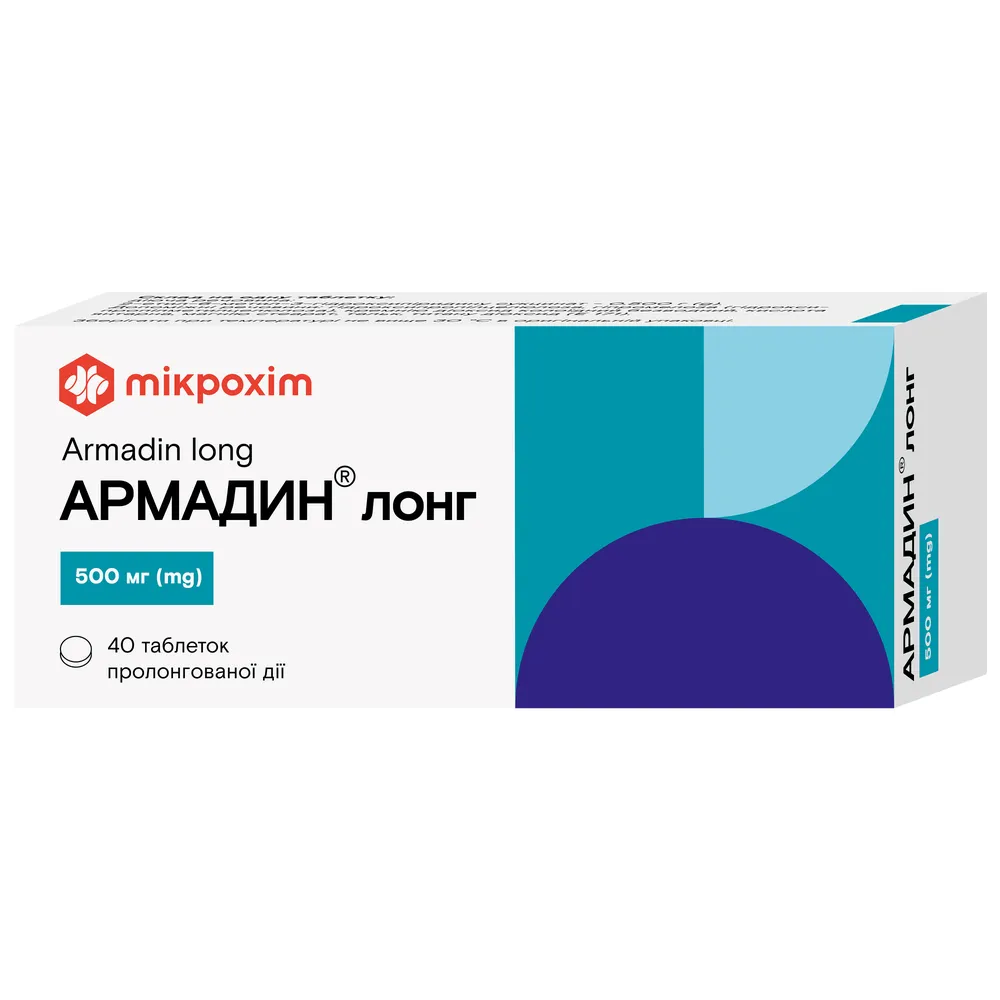
Table of Contents
- INSTRUCTIONS FOR MEDICAL USE OF THE MEDICINAL PRODUCT ARMAIDIN® LONG (ARMADIN LONG)
- Composition:
- Pharmacological Properties
- Clinical characteristics.
- Special precautions for use.
- Method of Administration and Dosage.
- Adverse reactions.
- Composition:
- Pharmacological Properties
- Clinical characteristics.
- Special precautions for use.
- Method of Administration and Dosage
- Adverse reactions.
INSTRUCTIONS FOR MEDICAL USE OF THE MEDICINAL PRODUCT ARMAIDIN® LONG (ARMADIN LONG)
Composition:
Active substance: mexidol (synonym);
One tablet contains armadin (2-ethyl-6-methyl-3-hydroxypyridine succinate) 300 mg or 500 mg;
Excipients: hydroxypropylcellulose, hypromellose (hydroxypropylmethylcellulose), colloidal silicon dioxide anhydrous, succinic acid, magnesium stearate, talc, titanium dioxide (E 171).
Pharmaceutical form. Prolonged-release tablets.
Main physico-chemical characteristics: tablets of white or white with creamy shade color, with a biconvex smooth surface, coated with a film coating, may have a specific odor.
Pharmacotherapeutic group.
Agents affecting the nervous system. ATC code N07X X.
Pharmacological Properties
Pharmacodynamics
Ethylmethylhydroxypyridine succinate belongs to heteroaromatic antioxidants. It has a broad spectrum of pharmacological activity: increases the body's resistance to stress, exerts an anxiolytic effect without causing drowsiness or muscle relaxation; possesses nootropic properties, prevents and reduces memory impairments associated with aging and various pathogenic factors; exhibits anticonvulsant activity; demonstrates antioxidant and antihypoxic properties; enhances attention and work capacity; reduces the toxic effects of alcohol. The drug improves cerebral tissue metabolism and blood supply, enhances microcirculation and rheological properties of blood, reduces platelet aggregation. It stabilizes membrane structures of blood cells (erythrocytes and platelets); reduces total cholesterol and low-density lipoprotein levels.
The mechanism of action is determined by its antioxidant and membrane-protective activity. It inhibits lipid peroxidation, increases superoxide dismutase activity, improves the "lipid/protein" ratio, and reduces membrane viscosity. It modulates the activity of membrane-bound enzymes (calcium-independent phosphodiesterase, adenylate cyclase, acetylcholinesterase) and receptor complexes (benzodiazepine, γ-aminobutyric acid (GABA), and cholinergic), thereby enhancing their ligand-binding capacity, preserving the structural and functional organization of biomembranes, facilitating neurotransmitter transport, and improving synaptic transmission. Ethylmethylhydroxypyridine succinate increases dopamine levels in the brain. Under tissue ischemia conditions, it enhances compensatory activation of aerobic glycolysis and reduces the degree of inhibition of oxidative processes in the Krebs cycle.
Pharmacokinetics
ARMADIN® LONG is a prolonged-release dosage form that ensures uniform release of the active substance over 10–12 hours, thereby reducing the likelihood of adverse effects due to a sudden increase in its plasma concentration. The drug's effect begins to manifest 3–4 hours after administration, when the concentration of the active substance in blood plasma reaches therapeutic levels. A sustained improvement in clinical condition is observed within 2–3 days, following the establishment of steady-state pharmacokinetic parameters. After discontinuation of the drug, its effects persist for an additional 3–5 days.
Drug absorption begins in the stomach and proceeds in the small and large intestine. The rate of release and absorption of the active substance from ARMADIN® LONG tablets is practically independent of the gastrointestinal tract segment, pH, and chyme composition.
Ethylmethylhydroxypyridine succinate is metabolized in the human body primarily in the liver via intensive conjugation with glucuronic acid and is excreted in urine both unchanged and as glucuronide conjugates. Renal excretion of the unchanged drug and its conjugated metabolites shows considerable individual variability.
Clinical characteristics.
Indications.
- Consequences of acute cerebral circulation disorders;
- Neurotic and neurosis-like conditions with anxiety symptoms;
- Neurocirculatory dystonia;
- Mild cognitive disorders of various etiologies (in psychorganic syndrome and asthenic disorders caused by acute and chronic cerebral circulation disorders, traumatic brain injuries, neuroinfections and intoxications, senile and atrophic processes);
- Encephalopathies of various origins (dyscirculatory, dysmetabolic, post-traumatic, mixed);
- Mild traumatic brain injury, consequences of traumatic brain injuries;
- Memory disorders and intellectual insufficiency in elderly patients;
- Asthenic conditions, effects of extreme (stressful) factors;
- Ischemic heart disease (as part of complex therapy);
- Alcohol withdrawal syndrome with predominant neurosis-like and neurocirculatory disturbances;
- Conditions following intoxication with antipsychotropic agents.
Contraindications.
Acute hepatic or renal failure, increased individual sensitivity to the components of the drug, childhood, pregnancy, breastfeeding period.
Interaction with other medicinal products and other types of interactions.
ARMADIN® LONG enhances the effects of benzodiazepine anxiolytics, anti-Parkinson agents, and carbamazepine; potentiates the action of anticonvulsants, tranquilizers, and analgesics. ARMADIN® LONG reduces the toxic effects of ethanol. It increases the hypotensive activity of angiotensin-converting enzyme (ACE) inhibitors and β-adrenoblockers. It enhances the antianginal activity of nitrate preparations. Under the influence of the drug, the effects of sedatives, neuroleptics, antidepressants, hypnotics, and anticonvulsants are intensified, allowing for reduction of their doses and mitigation of adverse effects.
Special precautions for use.
In individual cases, severe hypersensitivity reactions may occur, particularly in patients with bronchial asthma and increased sensitivity to sulfites.
Use with caution in patients with diabetic retinopathy (the treatment course should not exceed 7–10 days) due to the potential to promote proliferative processes.
Use during pregnancy or breastfeeding.
Well-controlled clinical studies on the safety of the medicinal product during pregnancy and breastfeeding have not been conducted; therefore, ARMADEX® LONG is contraindicated during these periods.
Ability to influence reaction rate while driving or operating machinery.
During treatment, caution should be exercised when driving a vehicle or operating complex machinery, considering the possible occurrence of adverse effects that may affect reaction speed and the ability to concentrate.
Method of Administration and Dosage.
Administer orally to adults, regardless of food intake. To ensure gradual and uniform release of the active ingredient from the tablet, it should be swallowed whole with a glass of water.
Due to the prolonged-release formulation technology, a soft, gel-like matrix may be excreted in the feces, resembling the shape of the tablet but containing no active ingredient.
Dosage and duration of treatment are determined based on patient sensitivity to the drug and medical indications.
During the first 2–3 days, ARMODAFINIL® LONG is administered at a dose of 1 tablet of either 300 mg or 500 mg. Subsequently, the daily dose may be increased up to 600 mg. The drug is taken 1 tablet every 12 hours.
For ischemic heart disease, ARMODAFINIL® LONG is administered for 2–3 months.
Patients with anxiety states, neurocirculatory dystonia, and cognitive impairments take ARMODAFINIL® LONG for 2–6 weeks.
For management of alcohol withdrawal syndrome, the drug is used for 5–7 days.
Course treatment with ARMODAFINIL® LONG should be discontinued gradually, reducing the dose over 2–3 days.
Children.
Controlled clinical safety studies of the drug in children have not been conducted; therefore, ARMODAFINIL® LONG is contraindicated in this patient population.
Overdose.
In case of overdose, somnolence and sedation may occur.
Treatment: detoxification therapy and symptomatic treatment.
Adverse reactions.
Cardiovascular system: increased blood pressure, decreased blood pressure.
Nervous system: drowsiness, difficulty falling asleep, anxiety, emotional lability, headache, coordination disorder.
Gastrointestinal tract: nausea, dryness of oral mucosa.
Immune system: allergic reactions, including hyperemia, skin rash, itching.
Other: distal hyperhidrosis.
Shelf life.
3 years.
Do not use after the expiry date stated on the packaging.
Storage conditions.
Store at a temperature not exceeding 30 °C in the original packaging.
Keep out of reach of children.
Packaging.
40 tablets in a polymer bottle in a cardboard box.
40 tablets (10×4) in blisters in a cardboard box.
Prescription status.
By prescription only.
Manufacturers.
LLC NVF "MIKROKHEM" (responsible for batch release, excluding batch control/testing)
JSC "Lubnipharm" (responsible for manufacturing and batch control/testing, excluding batch release)
Manufacturers' addresses and places of business.
Ukraine, 01013, Kyiv, Budindustrii St., 5.
Ukraine, 37500, Lubny, Poltava region, Barvinkova St., 16.
To report an adverse event during the use of the medicinal product, please call +38 (050) 309-83-54 (24/7).
INSTRUCTION
for medical use of the medicinal product
ARMA DIN® LONG
(ARMADIN LONG)
Composition:
Active substance: mexidol (synonym);
1 tablet contains armodin (2-ethyl-6-methyl-3-hydroxypyridine succinate) 300 mg or 500 mg;
Excipients: hydroxypropylcellulose, hypromellose (hydroxypropylmethylcellulose), colloidal silicon dioxide anhydrous, succinic acid, magnesium stearate, talc, titanium dioxide (E 171).
Pharmaceutical form. Prolonged-release tablets.
Main physico-chemical properties: white or white with a creamy shade tablets, having a convex smooth surface, coated with a film layer, may have a specific odor.
Pharmacotherapeutic group.
Agents affecting the nervous system. ATC code N07XX.
Pharmacological Properties
Pharmacodynamics
Ethylmethylhydroxypyridine succinate belongs to heteroaromatic antioxidants. It has a broad spectrum of pharmacological activity: increases the body's resistance to stress, exerts anxiolytic effects without causing drowsiness or muscle relaxation; possesses nootropic properties, prevents and reduces memory impairments associated with aging and various pathogenic factors; exerts anticonvulsant action; exhibits antioxidant and antihypoxic properties; enhances attention and work performance; reduces the toxic effects of alcohol. The drug improves brain tissue metabolism and blood supply, enhances microcirculation and rheological properties of blood, reduces platelet aggregation. It stabilizes blood cell membrane structures (erythrocytes and platelets); reduces total cholesterol and low-density lipoprotein levels.
The mechanism of action is determined by its antioxidant and membrane-protective activity. It inhibits lipid peroxidation, increases superoxide dismutase activity, improves the "lipid/protein" ratio, and reduces membrane viscosity. It modulates the activity of membrane-bound enzymes (calcium-independent phosphodiesterase, adenylate cyclase, acetylcholinesterase) and receptor complexes (benzodiazepine, γ-aminobutyric acid (GABA), acetylcholine), thereby enhancing their ligand-binding capacity, supporting the structural and functional organization of biomembranes, facilitating neurotransmitter transport, and improving synaptic transmission. Ethylmethylhydroxypyridine succinate increases dopamine levels in the brain. Under tissue ischemia conditions, it enhances compensatory activation of aerobic glycolysis and reduces the degree of inhibition of oxidative processes in the Krebs cycle.
Pharmacokinetics
ARMADIN® LONG is a prolonged-release dosage form that ensures uniform release of the active substance over 10–12 hours, reducing the likelihood of adverse effects due to a sudden increase in plasma concentration. The drug's effect begins to manifest 3–4 hours after administration, when the active substance reaches therapeutic plasma levels. Stable clinical improvement is observed within 2–3 days, upon achieving steady-state pharmacokinetic parameters. After discontinuation of the drug, its effects persist for an additional 3–5 days.
Drug absorption begins in the stomach and proceeds in the small and large intestine. The rate of release and absorption of the active substance from ARMADIN® LONG tablets is practically independent of gastrointestinal tract segment, pH, or chyme composition.
Ethylmethylhydroxypyridine succinate is metabolized in the human body primarily in the liver via intensive conjugation with glucuronic acid and is excreted in urine both unchanged and as glucuronide conjugates. Renal excretion of unchanged drug and its conjugated metabolites is characterized by considerable individual variability.
Clinical characteristics.
Indications.
- Consequences of acute cerebral circulation disorders;
- neurotic and neurosis-like conditions with anxiety symptoms;
- neurocirculatory dystonia;
- mild cognitive disorders of various etiologies (in psychorganic syndrome and asthenic disorders caused by acute and chronic cerebral circulation disorders, traumatic brain injuries, neuroinfections and intoxications, senile and atrophic processes);
- encephalopathies of various origins (dyscirculatory, dysmetabolic, post-traumatic, mixed);
- mild traumatic brain injury, consequences of traumatic brain injuries;
- memory disorders and intellectual insufficiency in elderly patients;
- asthenic conditions, impact of extreme (stress) factors;
- ischemic heart disease (as part of complex therapy);
- alcohol withdrawal syndrome with predominance of neurosis-like and neurocirculatory disorders;
- conditions following intoxication with antipsychotropic agents.
Contraindications.
Acute hepatic or renal failure, increased individual sensitivity to the components of the drug, childhood, pregnancy, breastfeeding period.
Interaction with other medicinal products and other types of interactions.
ARMADEX® LONG enhances the effects of benzodiazepine anxiolytics, antiparkinsonian agents, and carbamazepine; potentiates the action of anticonvulsants, tranquilizers, and analgesics. ARMADEX® LONG reduces the toxic effects of ethyl alcohol. It increases the antihypertensive activity of angiotensin-converting enzyme (ACE) inhibitors and β-adrenergic blockers. It enhances the antianginal activity of nitrate medications. Under the influence of the drug, the effects of sedatives, neuroleptics, antidepressants, hypnotics, and anticonvulsants are intensified, allowing for reduction of their doses and decrease in adverse effects.
Special precautions for use.
In individual cases, severe hypersensitivity reactions may occur, particularly in patients with bronchial asthma and increased sensitivity to sulfites.
Use with caution in patients with diabetic retinopathy (treatment course should not exceed 7–10 days) due to the potential to enhance proliferative processes.
Use during pregnancy or breastfeeding.
Well-controlled clinical studies on the safety of the medicinal product during pregnancy and breastfeeding have not been conducted; therefore, ARMADIN® LONG is contraindicated for use during these periods.
Ability to influence reaction rate while driving or operating machinery.
During treatment, caution is required when driving or operating complex machinery, considering the possible adverse effects that may impair reaction speed and the ability to concentrate.
Method of Administration and Dosage
The drug is administered orally to adults, regardless of food intake. To ensure gradual and uniform release of the active substance from the tablet, it should be swallowed whole with a glass of water.
Due to the manufacturing technology of the prolonged-release formulation, a soft, gel-like matrix may be excreted in the feces. This matrix resembles the original tablet in shape but does not contain the active ingredient.
Dosage and duration of treatment are determined based on patient sensitivity to the drug and medical indications.
During the first 2–3 days, ARMAIDIN® LONG is prescribed at a dose of one 300 mg or 500 mg tablet daily. Subsequently, the daily dose is increased to 600 mg. The drug is taken as one tablet every 12 hours.
In ischemic heart disease, ARMAIDIN® LONG is administered for 2–3 months.
Patients with anxiety states, neurocirculatory dystonia, and cognitive impairments take ARMAIDIN® LONG for 2–6 weeks.
For management of alcohol withdrawal syndrome, the drug is used for 5–7 days.
Course therapy with ARMAIDIN® LONG should be discontinued gradually, with dose reduction over 2–3 days.
Children.
Well-controlled clinical studies on the safety of using this drug in children have not been conducted; therefore, ARMAIDIN® LONG is contraindicated in this patient population.
Overdose.
Overdose may result in drowsiness and sedation.
Treatment: detoxification therapy and symptomatic treatment.
Adverse reactions.
Cardiovascular system: increased blood pressure, decreased blood pressure.
Nervous system: drowsiness, difficulty falling asleep, anxiety, emotional reactivity, headache, coordination disturbances.
Gastrointestinal tract: nausea, dryness of oral mucosa.
Immune system: allergic reactions, including hyperemia, skin rash, itching.
Other: distal hyperhidrosis.
Shelf life.
3 years.
Do not use after the expiry date stated on the packaging.
Storage conditions.
Store at a temperature not exceeding 30 °C in the original packaging.
Keep out of reach of children.
Packaging.
40 tablets in a polymer bottle, in a cardboard box.
Prescription status.
Prescription only.
Manufacturer.
LLC NPF "MIKROKHIM" (responsible for manufacturing and control/testing of the batch, including batch release).
Manufacturer's address and location of business activity.
33, Lenin St., Rubizhne, Luhansk region, 93000, Ukraine.
You can report an adverse event associated with the use of this medicinal product by calling +38 (050) 309-83-54 (24/7).