Aranesp
Ukraine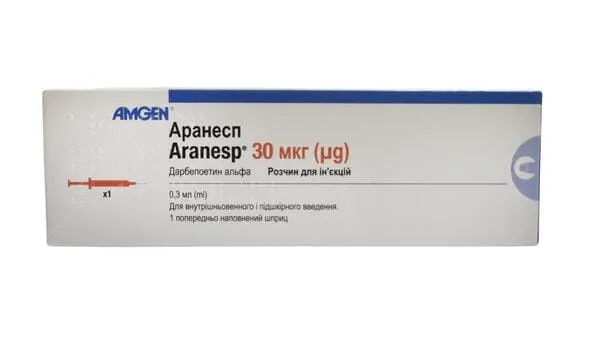
Table of Contents
INSTRUCTIONS FOR MEDICAL USE OF THE MEDICINAL PRODUCT ARANESP (ARANESP®)
Composition:
Active substance: darbepoetin alfa;
1 pre-filled syringe contains darbepoetin alfa:
10 mcg in 0.4 ml (25 mcg/ml);
30 mcg in 0.3 ml (100 mcg/ml);
500 mcg in 1 ml (500 mcg/ml);
Darbepoetin alfa is produced by genetic engineering using Chinese hamster ovary cells (CHO-K1).
Excipients: sodium chloride, sodium dihydrogen phosphate monohydrate, anhydrous sodium hydrogen phosphate, polysorbate 80, water for injections.
Pharmaceutical form. Solution for injection.
Main physicochemical characteristics: clear, colorless liquid, practically free of particles.
Pharmacotherapeutic group.
Antianemic agents, other antianemic agents.
ATC code B03XA02.
Pharmacological properties.
Pharmacodynamics.
Mechanism of action
Human erythropoietin is an endogenous glycoprotein hormone that is the primary regulator of erythropoiesis through specific interaction with the erythropoietin receptor on erythroid precursor cells in the bone marrow. Erythropoietin production occurs predominantly in the kidneys and is regulated by them in response to changes in tissue oxygenation. Endogenous erythropoietin production is impaired in patients with chronic kidney disease, and the main cause of anemia in these patients is erythropoietin deficiency. In cancer patients receiving chemotherapy, the etiology of anemia is multifactorial. In such patients, both erythropoietin deficiency and reduced responsiveness of erythroid precursor cells to endogenous erythropoietin significantly contribute to the development of anemia.
Pharmacodynamic properties
Darbepoetin alfa stimulates erythropoiesis via the same mechanism as the endogenous hormone. Darbepoetin alfa has five N-linked carbohydrate chains, whereas the endogenous hormone and recombinant human erythropoietins (r-HuEPO) have three. The additional sugar residues are molecularly identical to those present on the endogenous hormone. Due to the increased carbohydrate content, darbepoetin alfa has a longer terminal half-life than r-HuEPO, and thus greater in vivo activity. Despite these molecular modifications, darbepoetin alfa retains high specificity for the erythropoietin receptor.
Clinical efficacy and safety
Patients with chronic kidney disease
In two clinical studies in patients with chronic kidney disease (CKD), an increased risk of mortality and severe cardiovascular complications was observed when erythropoiesis-stimulating agents (ESAs) were used to achieve higher hemoglobin levels (13.5 g/dL (8.4 mmol/L) compared to 11.3 g/dL (7.1 mmol/L); 14 g/dL (8.7 mmol/L) compared to 10 g/dL (6.2 mmol/L)).
In a randomized, double-blind, correction study (n = 358) comparing once every 2 weeks to once monthly administration in patients with CKD or on dialysis, once-monthly administration of darbepoetin alfa was non-inferior to once every 2 weeks for correction of anemia. The median time (quartile 1, quartile 3) to achieve hemoglobin correction (increase ≥ 10.0 g/L and ≥ 1.0 g/dL from baseline) was 5 weeks in both groups: once every 2 weeks (3, 7 weeks) and once monthly (3, 9 weeks). During the evaluation period (29–33 weeks), the mean (95% CI) weekly equivalent dose was 0.20 (0.17, 0.24) mcg/kg in the once every 2 weeks group and 0.27 (0.23, 0.32) mcg/kg in the once monthly group.
In a randomized, double-blind, placebo-controlled trial (TREAT) involving 4,038 non-dialysis CKD patients with type 2 diabetes and hemoglobin ≤ 11 g/dL, patients received either darbepoetin alfa to achieve a hemoglobin level of 13 g/dL or placebo (with rescue darbepoetin alfa if hemoglobin fell below 9 g/dL). The study failed to meet either of its two primary endpoints: demonstrating a reduction in risk of all-cause mortality or cardiovascular morbidity (darbepoetin alfa vs. placebo; HR = 1.05; 95% CI (0.94; 1.17)), and reduction in risk of all-cause mortality or end-stage renal disease (ESRD) (darbepoetin alfa vs. placebo; HR = 1.06; 95% CI (0.95; 1.19)). Analysis of individual components of the composite endpoints revealed the following HRs (95% CI): death 1.05 (0.92; 1.21), congestive heart failure (CHF) 0.89 (0.74; 1.08), myocardial infarction (MI) 0.96 (0.75; 1.23), stroke 1.92 (1.38; 2.68), hospitalization for myocardial ischemia 0.84 (0.55; 1.27), ESRD 1.02 (0.87; 1.18).
Pooled retrospective analyses of clinical trials involving erythropoiesis-stimulating agents were conducted in patients with CKD (on and not on dialysis, with and without diabetes). These studies showed a trend toward increased risk of all-cause mortality, cardiovascular, and cerebrovascular complications associated with higher cumulative doses of erythropoiesis-stimulating agents, regardless of diabetes status or dialysis (see sections "Dosage and administration" and "Special precautions").
Pediatric patients
In a randomized clinical study, 114 pediatric patients (aged 2 to 18 years) with anemia (hemoglobin < 10.0 g/dL) due to chronic kidney disease, whether on or not on dialysis and not previously treated with erythropoiesis-stimulating agents, received darbepoetin alfa once weekly (n = 58) or once every two weeks (n = 56) for correction of anemia. Hemoglobin concentration increased to ≥ 10 g/dL in > 98% (p < 0.001) of pediatric patients receiving darbepoetin alfa once weekly and in 84% (p = 0.293) of those receiving it once every two weeks. At the time hemoglobin first reached ≥ 10.0 g/dL, the mean (SD) body weight-adjusted dose was 0.48 (0.24) mcg/kg (range 0.0–1.7 mcg/kg) once weekly for the once-weekly group and 0.76 (0.21) mcg/kg (range 0.3–1.5 mcg/kg) once every two weeks for the once-every-two-weeks group.
In a clinical study involving 124 pediatric patients aged 1 to 18 years with chronic kidney disease, whether on or not on dialysis, patients stable on epoetin alfa were randomized to receive darbepoetin alfa once weekly (subcutaneously or intravenously) using a dose conversion ratio of 238:1, or to continue epoetin alfa without changing dose, schedule, or route. The primary efficacy endpoint [change in hemoglobin from baseline to evaluation period (week 21–28)] was comparable between the two groups. Mean hemoglobin levels at baseline were 11.1 (SD 0.7) g/dL for r-HuEPO and 11.3 (SD 0.6) g/dL for darbepoetin alfa. Mean hemoglobin levels at week 28 were 11.1 (SD 1.4) g/dL for r-HuEPO and 11.1 (SD 1.1) g/dL for darbepoetin alfa.
In a European regulatory post-marketing surveillance study, 319 children with chronic kidney disease were enrolled (13 (4.1%) patients < 1 year, 83 (26.0%) aged 1 to < 6 years, 90 (28.2%) aged 6 to < 12 years, and 133 (41.7%) ≥ 12 years), all receiving darbepoetin alfa; mean hemoglobin levels ranged from 11.3 to 11.5 g/dL, and mean body weight-adjusted darbepoetin alfa doses remained relatively constant (between 2.31 mcg/kg/month and 2.67 mcg/kg/month) throughout the study period across all patient categories.
No significant differences were observed between the safety profile in pediatric patients and that previously reported in adults (see section "Adverse reactions").
Cancer patients receiving chemotherapy
EPO-ANE-3010, a randomized, multicenter, open-label study, was conducted in 2098 women with anemia and metastatic breast cancer receiving first- or second-line chemotherapy. This was a non-inferiority trial designed to exclude a 15% increase in risk of tumor progression or death with epoetin alfa plus standard therapy (ST) compared to ST alone. At the time of clinical data cutoff, median progression-free survival (PFS) based on investigator-assessed disease progression was 7.4 months in each arm (HR 1.09, 95% CI: 0.99, 1.20), indicating the study objective was not met. Fewer patients in the epoetin alfa plus ST group required red blood cell transfusions (5.8% vs. 11.4%); however, significantly more patients in the epoetin alfa plus ST group experienced thrombotic vascular complications (2.8% vs. 1.4%). At final analysis, 1653 deaths were recorded. Median overall survival was 17.8 months in the epoetin alfa plus ST group and 18.0 months in the ST alone group (HR 1.07, 95% CI: 0.97, 1.18). Median time to progression (TTP) based on investigator-assessed progressive disease (PD) was 7.5 months in both groups (HR 1.099, 95% CI: 0.998, 1.210). Median TTP based on PD assessed by an Independent Expert Committee (IEC) was 8.0 months in the epoetin alfa plus ST group and 8.3 months in the ST alone group (HR 1.033, 95% CI: 0.924, 1.156).
In a prospective, randomized, double-blind, placebo-controlled study involving 314 lung cancer patients receiving platinum-based chemotherapy, a significant reduction in transfusion requirement was observed (p < 0.001).
Clinical studies have shown that darbepoetin alfa has comparable efficacy when administered as a single injection every three weeks, every two weeks, or weekly, without increasing the total required dose.
The safety and efficacy of Aranesp administered once every three weeks to reduce the need for red blood cell transfusions in chemotherapy patients were evaluated in a randomized, double-blind, multinational study involving 705 patients with anemia and non-myeloid malignancies receiving multi-cycle chemotherapy. Patients were randomized to receive either 500 mcg once every three weeks or 2.25 mcg/kg once weekly. In both groups, the dose was reduced by 40% from the previous dose (e.g., first dose reduction: to 300 mcg in the once-every-three-weeks group and 1.35 mcg/kg in the once-weekly group) if hemoglobin increased by more than 1 g/dL over a 14-day period. Dose reduction was required in 72% of patients in the once-every-three-weeks group and 75% in the once-weekly group. This study confirmed that 500 mcg once every three weeks is comparable to once-weekly administration regarding the proportion of patients receiving at least one red blood cell transfusion from week 5 to the end of the treatment phase.
In a prospective, randomized, double-blind, placebo-controlled study involving 344 patients with anemia and lymphoproliferative malignancies receiving chemotherapy, a significant reduction in blood transfusion requirement and improvement in hemoglobin response (p < 0.001) were observed. A reduction in fatigue was also observed, measured by the Functional Assessment of Cancer Therapy (FACT-Fatigue) scale.
Erythropoietin is a growth factor that primarily stimulates red blood cell production. Erythropoietin receptors may be present on the surface of various tumor cells.
Patient survival and tumor progression were evaluated in five large controlled trials involving a total of 2,833 patients. Four of these five trials were double-blind, placebo-controlled, and one was an open-label study. Two of the trials included patients receiving chemotherapy. In two of these trials, the target hemoglobin level was > 13 g/dL; in the others, it was 12–14 g/dL. In the open-label study, no difference in overall survival was observed between patients receiving recombinant human erythropoietin and control patients. In the four placebo-controlled trials, hazard ratios for overall survival ranged from 1.25 to 2.47 in favor of the control group. These results indicated a statistically significant increase in mortality among anemic cancer patients receiving recombinant human erythropoietin compared to the control group. This outcome could not be adequately explained by differences in thrombotic event rates between treatment and control groups.
In a phase III, randomized, double-blind, placebo-controlled trial, 2549 adult patients with anemia receiving chemotherapy for advanced non-small cell lung cancer (NSCLC) were randomized 2:1 to receive darbepoetin alfa or placebo, with treatment continuing until a maximum hemoglobin level of 12 g/dL was reached. Results showed non-inferiority for the primary endpoint of overall survival, with median survival of 9.5 months in the darbepoetin alfa group and 9.3 months in the placebo group (stratified HR 0.92; 95% CI: 0.83–1.01). The secondary progression-free survival endpoint was 4.8 and 4.3 months, respectively (stratified HR 0.95; 95% CI: 0.87–1.04), excluding a pre-specified 15% increase in risk.
A systematic review including over 9,000 cancer patients from 57 clinical trials was conducted. Meta-analysis of overall survival data yielded a hazard ratio of 1.08 in favor of the control group (95% CI: 0.99; 1.18; 42 studies, 8,167 patients).
An increased relative risk of thromboembolic events (RR 1.67, 95% CI: 1.35, 2.06; 35 studies, 6,769 patients) was observed in patients receiving recombinant human erythropoietin. Thus, there is robust evidence suggesting potential harm from recombinant erythropoietin therapy in cancer patients. The extent to which these findings apply to recombinant erythropoietin use targeting hemoglobin concentrations below 13 g/dL in chemotherapy patients is unclear, as few such patients were included in the review.
An analysis was conducted on data from over 13,900 cancer patients (receiving chemotherapy, radiotherapy, chemoradiotherapy, or no therapy) participating in 53 controlled clinical trials of various epoetins. Meta-analysis of overall survival data yielded a hazard ratio of 1.06 in favor of the control group (95% CI: 1.00, 1.12; 53 studies, 13,933 patients), and for cancer patients receiving chemotherapy, the hazard ratio for overall survival was 1.04 (95% CI: 0.97, 1.11; 38 studies, 10,441 patients). Meta-analyses also indicate a significantly increased relative risk of thromboembolic events in cancer patients receiving recombinant human erythropoietin (see section "Special precautions").
Pharmacokinetics.
Due to its higher carbohydrate content, darbepoetin alfa remains in circulation at concentrations above the minimum stimulatory level required for erythropoiesis for a longer duration than an equivalent molar dose of r-HuEPO, allowing less frequent dosing to achieve the same biological response.
Patients with chronic kidney disease
The pharmacokinetics of darbepoetin alfa were studied clinically in patients with chronic kidney disease after intravenous and subcutaneous administration. Following intravenous administration, the terminal half-life of darbepoetin alfa is 21 hours (SD 7.5). Clearance of darbepoetin alfa is 1.9 mL/h/kg (SD 0.56), and the volume of distribution (Vss) is approximately equal to plasma volume (50 mL/kg). Bioavailability is 37% after subcutaneous administration. After monthly subcutaneous administration of darbepoetin alfa at doses of 0.6–2.1 mcg/kg, the terminal half-life was 73 hours (SD 24). The longer terminal half-life of subcutaneously administered darbepoetin alfa compared to intravenous administration is due to the kinetics of subcutaneous absorption. Minimal accumulation was observed in clinical studies, regardless of route. Preclinical studies demonstrated minimal renal clearance (up to 2% of total clearance), which does not affect serum half-life.
Data from 809 patients who received Aranesp in European clinical trials were analyzed to assess dose requirements for hemoglobin maintenance; no difference was observed between mean weekly doses for intravenous and subcutaneous administration.
Pharmacokinetics of darbepoetin alfa in pediatric patients (2–16 years) with CKD, whether on or not on dialysis, were evaluated by measuring serum concentrations up to 2 weeks (336 hours) after one or two doses administered subcutaneously or intravenously. Compared to pharmacokinetic data in adults with CKD using the same sampling duration, the pharmacokinetics of darbepoetin alfa were found to be similar in pediatric and adult CKD patients.
In a phase I pharmacokinetic study after intravenous administration, approximately a 25% difference in area under the concentration-time curve from zero to infinity (AUC[0–∞]) was observed between pediatric and adult patients; however, this difference was less than twice the observed inter-individual variability in AUC(0–∞) among pediatric patients. AUC(0–∞) was similar in adults and children with CKD after subcutaneous administration. Terminal half-life was also similar in adults and children with CKD after both intravenous and subcutaneous administration.
Cancer patients receiving chemotherapy
After subcutaneous administration of 2.25 mcg/kg to adult cancer patients, the mean maximum concentration of darbepoetin alfa was 10.6 ng/mL (SD 5.9), reached at a mean time of 91 hours (SD 19.7). These parameters demonstrated linear pharmacokinetics over a wide dose range (0.5–8 mcg/kg weekly and 3–9 mcg/kg every two weeks). Pharmacokinetic parameters did not change with repeated dosing over 12 weeks (weekly or every two weeks). An expected moderate (< 2-fold) increase in serum concentration approaching steady state was observed, but no unexpected accumulation occurred with repeated administration. A pharmacokinetic study was conducted in patients with chemotherapy-induced anemia receiving 6.75 mcg/kg darbepoetin alfa subcutaneously every 3 weeks in combination with chemotherapy. In this study, which allowed detailed characterization of the terminal half-life, the mean (SD) terminal half-life was 74 (SD 27) hours.
Clinical characteristics.
Indications.
Treatment of symptomatic anemia associated with chronic kidney disease (CKD) in adults and children (see section "Dosage and administration").
Treatment of symptomatic anemia in adult cancer patients with non-myeloid malignancies who are receiving chemotherapy.
Contraindications.
Hypersensitivity to the active substance or to any of the excipients listed in the "Composition" section.
Hypertension that is not adequately controlled by antihypertensive medications.
Special precautions.
For outpatient use, Aranesp may be removed from the refrigerator only once and stored at room temperature (up to 25°C) for up to 7 days. After the syringe has been removed from the refrigerator and reached room temperature (up to 25°C), it should either be used within 7 days or discarded.
Aranesp is a sterile, preservative-free product. Do not use more than one dose per syringe. Any unused medication remaining in a pre-filled syringe must be discarded.
Before administration, the Aranesp solution should be visually inspected for particulate matter and discoloration. Do not use the product if particulate matter or discoloration is present. Do not shake. Allow the pre-filled syringe to warm to room temperature before injection.
Unused medicinal product and waste materials should be disposed of in accordance with local requirements.
Instructions for administering Aranesp
This section contains instructions for self-administration of Aranesp. Remember that you should only inject yourself after your doctor, nurse, or pharmacist has shown you how to do it properly. If you have any questions about the injection technique, consult your doctor, nurse, or pharmacist.
How to properly use the pre-filled syringe with Aranesp?
Your doctor has prescribed you a subcutaneous injection of Aranesp contained in a pre-filled syringe. Your doctor, nurse, or pharmacist will inform you how much Aranesp you need and how often you should receive injections.
Equipment
To administer the injection yourself, you will need:
- a new pre-filled syringe with Aranesp;
- alcohol or similar wipes.
What should be done before a subcutaneous injection of Aranesp?
- Remove the pre-filled syringe from the refrigerator. Leave the pre-filled syringe at room temperature for approximately 30 minutes to make the injection more comfortable. Under no circumstances should Aranesp be warmed by other means (e.g., microwave or hot water). Also, do not leave the syringe exposed to direct sunlight.
- Do not shake the pre-filled syringe.
- Do not remove the cap from the syringe until you are ready to administer the injection.
- Ensure that the dose corresponds to your doctor's prescription.
- Check the expiration date on the label of the pre-filled syringe (EXP). Do not use if the date has passed.
- Inspect the appearance of Aranesp. It should be a clear, colorless or slightly pearly-opalescent liquid. Do not use if cloudiness or particulate matter is present.
- Wash your hands thoroughly.
- Find a comfortable, well-lit surface and place all necessary equipment within easy reach.
How to prepare for the Aranesp injection?
Before the injection, perform the following steps:
Injecting the solution with an air bubble is harmless.
|
Where should the injection be administered?
| The best areas for self-injection are the upper thighs and abdomen. If someone else is administering the injection, the back of the arms can also be used. If the injection site is red or irritated, you may change the injection site. |
How to give yourself an injection?
- Disinfect the skin with an alcohol swab and grasp the skin (without pressing) between your thumb and index finger.
- Insert the needle completely into the skin, as demonstrated by your doctor, nurse, or pharmacist.
- Inject the required dose subcutaneously, as demonstrated by your doctor, nurse, or pharmacist.
- Slowly and evenly press the plunger while holding the skin between your thumb and index finger until the syringe is empty.
- Remove the needle and release the skin.
- If a drop of blood appears at the injection site, gently wipe it with a cotton ball or gauze pad. Do not rub the injection site. If necessary, the injection site may be covered with a plaster.
- Use each syringe only for one injection. Do not use any remaining Aranesp left in the syringe.
Remember! If you experience any problems, do not hesitate to ask your doctor or nurse for help and advice.
Disposal of syringes
- Do not recap used syringes with needle caps, as you may accidentally prick yourself.
- Store used syringes out of children's reach and out of their sight.
- Used pre-filled syringes must be disposed of according to local requirements. Ask your pharmacist how to properly dispose of unused medicines. This will help protect the environment.
Interaction with other medicinal products and other forms of interaction
Clinical data available to date do not indicate any interaction between darbepoetin alfa and other substances. However, there is a potential for interaction with substances that are highly bound to red blood cells, such as cyclosporine and tacrolimus. If Aranesp is used concomitantly with any of these drugs, monitor blood levels of these substances and adjust their dosage if hemoglobin concentration increases.
Special precautions for use
General warnings
To improve monitoring of erythropoiesis-stimulating agents (ESAs), the brand name of the medicinal product must be clearly documented in the patient's medical record.
Arterial blood pressure should be monitored in all patients, especially at the beginning of Aranesp therapy. If blood pressure is difficult to control despite appropriate measures, hemoglobin levels may be reduced by decreasing or discontinuing the Aranesp dose (see section "Dosage and administration"). In patients with chronic kidney disease (CKD), severe hypertension including hypertensive crisis, hypertensive encephalopathy, and seizures have been observed during Aranesp treatment.
To ensure effective erythropoiesis, iron status should be assessed before and during treatment in all patients, and iron supplementation may be required in some cases.
In the absence of response to Aranesp therapy, causative factors should be investigated. Iron, folic acid, or vitamin B12 deficiency reduces the efficacy of erythropoiesis-stimulating agents and should be corrected. Concurrent infections, inflammation, trauma, occult bleeding, hemolysis, severe aluminum intoxication, pre-existing hematological disorders, or bone marrow fibrosis may also reduce erythropoietic response. Reticulocyte count assessment should be included as part of the evaluation. If reticulocytopenia persists after exclusion of common causes of non-response, bone marrow examination should be considered. If bone marrow findings are consistent with pure red cell aplasia (PRCA), testing for erythropoietin antibodies should be performed.
Serious cutaneous and subcutaneous adverse reactions associated with epoetin treatment, including Stevens–Johnson syndrome and toxic epidermal necrolysis, have been reported and may be life-threatening, including fatal outcomes. More severe cases have been observed with long-acting epoetins.
Patients should be informed about possible symptoms and monitored for skin and subcutaneous tissue reactions during treatment. If signs suggestive of such reactions occur, Aranesp therapy should be discontinued immediately and alternative treatment considered.
If a patient develops a serious cutaneous or subcutaneous adverse reaction such as Stevens–Johnson syndrome or toxic epidermal necrolysis due to Aranesp use, treatment with this medicinal product must never be resumed in the future.
Cases of true erythrocyte aplasia caused by neutralizing antibodies to erythropoietin, associated with recombinant erythropoietic proteins including Aranesp, have been reported. Most cases occurred in patients with CKD receiving subcutaneous administration. These antibodies have demonstrated cross-reactivity with all erythropoietic proteins; therefore, patients with suspected or confirmed neutralizing antibodies should not be switched to Aranesp (see section "Adverse reactions").
Paradoxical decrease in hemoglobin and development of severe anemia associated with low reticulocyte counts requires immediate discontinuation of epoetin therapy and testing for anti-erythropoietin antibodies. Cases have been reported in patients with hepatitis C receiving interferon and ribavirin in combination with epoetins. Epoetins should not be used to treat anemia associated with hepatitis C.
Active liver disease was an exclusion criterion in all Aranesp clinical studies; therefore, no data are available in patients with impaired liver function. Since the liver is considered a major route of elimination for darbepoetin alfa and r-HuEPO, Aranesp should be used with caution in patients with liver disease.
Aranesp should also be used with caution in patients with sickle cell anemia.
Inappropriate use of the medicinal product by healthy individuals may lead to excessive increase in hematocrit, which in turn may be associated with life-threatening cardiovascular complications.
The needle cap of the pre-filled syringe contains dry natural rubber (latex derivative), which may cause allergic reactions.
Aranesp should be used with caution in patients with epilepsy. Seizures have been reported in patients receiving Aranesp.
The potential risk of thrombotic vascular events (TVE) should be carefully weighed against the benefits of darbepoetin alfa treatment, especially in patients with a history of risk factors for thrombotic vascular events, including obesity and previous episodes of TVE (e.g., deep vein thrombosis, pulmonary embolism, and stroke).
This medicinal product contains less than 1 mmol sodium (23 mg) per dose, i.e., essentially "sodium-free."
Patients with chronic kidney disease
In patients with chronic kidney disease, the current hemoglobin concentration should not exceed the upper limit of the target hemoglobin concentration recommended in the section "Dosage and administration." In clinical studies, an increased risk of death, serious cardiovascular or cerebrovascular events including stroke, and vascular thrombosis has been observed when erythropoiesis-stimulating agents were used to achieve hemoglobin levels above 12 g/dL (7.5 mmol/L).
Caution should be exercised when increasing the dose of Aranesp in patients with chronic kidney disease, as high cumulative doses of epoetin may increase the risk of mortality and serious cardiovascular and cerebrovascular complications. In patients with a poor hemoglobin response to epoetin, alternative causes of poor response should be considered (see sections "Pharmacodynamics" and "Dosage and administration").
Controlled clinical trials have not demonstrated significant benefits attributable to the use of epoetins when hemoglobin concentrations are increased above the level necessary to control symptoms of anemia or to avoid blood transfusions.
All patients with serum ferritin levels below 100 µg/L or transferrin saturation below 20% are recommended to receive iron supplementation.
Serum potassium levels should be monitored regularly during Aranesp therapy. Increased potassium levels have been reported in several patients receiving Aranesp, although a causal relationship has not been established. If elevated or increasing potassium levels are observed, consideration should be given to discontinuing Aranesp until levels are corrected.
Oncology patients
Impact on tumor growth
Epoetins are growth factors that primarily stimulate red blood cell production. Erythropoietin receptors may be present on the surface of various tumor cells. As with all growth factors, there is a theoretical concern that epoetins may stimulate tumor growth. In several controlled studies, epoetins have not been shown to improve overall survival or reduce the risk of tumor progression in patients with anemia associated with cancer.
Controlled clinical trials using Aranesp and other erythropoiesis-stimulating agents have demonstrated:
- shortened time to tumor progression in patients with advanced head and neck cancer receiving radiotherapy when these agents were used to achieve target hemoglobin concentrations above 14 g/dL (8.7 mmol/L); erythropoiesis-stimulating agents are not indicated for use in this patient population.
- reduced overall survival and increased number of deaths attributable to disease progression within 4 months in patients with metastatic breast cancer receiving chemotherapy when these agents were used to achieve target hemoglobin concentrations of 12–14 g/dL (7.5–8.7 mmol/L).
- increased risk of death when these agents were used to achieve a target hemoglobin concentration of 12 g/dL (7.5 mmol/L) in patients with active malignancy not receiving chemotherapy or radiotherapy. Erythropoiesis-stimulating agents are not indicated for use in this patient population.
- observed 9% increased risk of progression-free survival (PFS) or death in the epoetin alfa plus standard therapy group compared to placebo, and a 15% increased risk that could not be statistically excluded, in patients with metastatic breast cancer receiving chemotherapy when these agents were used to achieve hemoglobin concentrations of 10–12 g/dL (6.2–7.5 mmol/L).
- non-inferiority of darbepoetin alfa compared to placebo regarding overall survival and progression-free survival in patients with progressive non-small cell lung cancer receiving chemotherapy when these agents were used to achieve a target hemoglobin concentration of 12 g/dL (7.5 mmol/L) (see section "Pharmacodynamics").
Given the above, in certain clinical situations, blood transfusion should be preferred for the treatment of anemia in oncology patients. The decision to use recombinant erythropoietins should be based on an individual benefit-risk assessment for each patient, taking into account the specific clinical context. Factors to consider in this assessment include tumor type and stage, degree of anemia, expected life span, treatment setting, and patient preferences (see section "Pharmacological properties").
In patients with solid tumors or lymphoproliferative malignancies, if hemoglobin values exceed 12 g/dL (7.5 mmol/L), dose adjustment recommendations provided in the section "Dosage and administration" should be strictly followed to minimize the potential risk of thromboembolic events. Platelet and hemoglobin levels should also be monitored regularly.
Use during pregnancy or breastfeeding
Pregnancy
There are no reliable and well-controlled data on the use of Aranesp during pregnancy.
Animal studies have not shown direct harmful effects on pregnancy, embryonic/fetal development, parturition, or postnatal development. No effects on fertility were observed.
Aranesp should be used with caution in pregnant women.
Breastfeeding
It is unknown whether Aranesp is excreted in human milk. Risk to the newborn/infant cannot be excluded. Risk to breastfed infants must be considered. The decision whether to discontinue breastfeeding or to discontinue/abstain from Aranesp therapy should be made by weighing the benefit of breastfeeding for the child against the benefit of therapy for the woman.
Ability to drive and use machines
Aranesp has no or negligible influence on the ability to drive or use machines.
Administration and Dosage
Treatment with Aranesp is conducted only under the supervision of a physician experienced in managing the above-mentioned indications.
Treatment of symptomatic anemia in adults and children with chronic kidney disease
Symptoms and consequences of anemia may vary depending on age, sex, and overall severity of the disease; it is essential that the physician assess the individual course of the disease and the patient's condition. To increase hemoglobin to a level not exceeding 12 g/dL (7.5 mmol/L), Aranesp should be administered subcutaneously or intravenously. For patients not undergoing hemodialysis, subcutaneous administration is recommended to avoid puncturing peripheral veins.
Patients should be closely monitored to ensure that the lowest approved effective dose of Aranesp is used to adequately control symptoms of anemia while maintaining hemoglobin concentration at a level not exceeding 12 g/dL (7.5 mmol/L). Caution should be exercised when increasing the dose of Aranesp in patients with chronic kidney disease. In patients with a poor hemoglobin response to Aranesp, alternative causes of poor response should be considered (see sections "Pharmacodynamics" and "Special precautions").
Due to inter-patient variability, individual hemoglobin values may occasionally fall below or exceed the desired hemoglobin level. Hemoglobin variability should be managed by dose adjustment within the target hemoglobin range of 10 g/dL (6.2 mmol/L) to 12 g/dL (7.5 mmol/L). Sustained hemoglobin levels above 12 g/dL (7.5 mmol/L) should be avoided; information on appropriate dose adjustments when hemoglobin exceeds 12 g/dL (7.5 mmol/L) is provided below. An increase in hemoglobin by more than 2 g/dL (1.25 mmol/L) within a four-week period should be avoided. If this occurs, appropriate dose adjustments should be made as indicated.
Aranesp treatment consists of two phases—correction and maintenance. Instructions are provided separately for adults and pediatric patients.
Adult patients with chronic kidney disease
Correction phase:
The initial dose administered subcutaneously or intravenously is 0.45 mcg/kg body weight as a single injection once weekly. Alternatively, for patients not on dialysis, initial subcutaneous doses may be administered as single injections: 0.75 mcg/kg once every two weeks or 1.5 mcg/kg once monthly. If the increase in hemoglobin level is inadequate (less than 1 g/dL (0.6 mmol/L) over four weeks), the dose should be increased by approximately 25%. Dose increases should not occur more frequently than once every four weeks.
If the hemoglobin increase exceeds 2 g/dL (1.25 mmol/L) over four weeks, the dose should be reduced by approximately 25%. If hemoglobin levels exceed 12 g/dL (7.5 mmol/L), consideration should be given to reducing the dose. If hemoglobin levels continue to rise, the dose should be reduced by approximately 25%. If hemoglobin continues to rise after dose reduction, the dose should be temporarily discontinued until hemoglobin begins to decline, at which point therapy should be restarted at a dose approximately 25% lower than the previous dose.
Hemoglobin levels should be measured every one to two weeks until stabilized. After stabilization, hemoglobin levels may be monitored at longer intervals.
Maintenance phase:
Patients on dialysis may continue Aranesp as a single injection once weekly or once every two weeks. Patients on dialysis transitioning from a weekly Aranesp dosing regimen to an every-other-week regimen should initially receive a dose twice the previous weekly dose.
Patients not on dialysis may continue Aranesp as a single injection once weekly, once every two weeks, or once monthly. For patients receiving Aranesp every two weeks, after achieving the desired hemoglobin level, Aranesp may be administered subcutaneously once monthly using an initial dose twice the previous dose administered every two weeks.
The dose should be titrated as needed to maintain the desired hemoglobin level.
If dose adjustment is required to maintain hemoglobin at the desired level, the dose should be adjusted by approximately 25%.
If the hemoglobin increase exceeds 2 g/dL (1.25 mmol/L) over four weeks, the dose should be reduced by approximately 25%, depending on the rate of increase. If hemoglobin levels exceed 12 g/dL (7.5 mmol/L), consideration should be given to reducing the dose. If hemoglobin levels continue to rise, the dose should be reduced by approximately 25%. If hemoglobin continues to rise after dose reduction, the dose should be temporarily discontinued until hemoglobin begins to decline, at which point therapy should be restarted at a dose approximately 25% lower than the previous dose.
Hemoglobin levels should be checked every one to two weeks after any dose or dosing regimen adjustment. Dose changes during the maintenance phase should not occur more frequently than every two weeks.
When changing the route of administration, the same dose should be used, and hemoglobin levels should be monitored every one to two weeks to appropriately adjust the dose to maintain hemoglobin at the desired level.
Clinical studies have demonstrated that adult patients receiving r-HuEPO once, twice, or three times weekly can be transitioned to Aranesp treatment with a once-weekly or once-every-other-week dosing regimen. The initial weekly dose of Aranesp (mcg/week) can be determined by dividing the total weekly dose of r-HuEPO (IU/week) by 200. The initial every-other-week dose of Aranesp (mcg/every other week) can be determined by dividing the total cumulative dose of r-HuEPO administered over a two-week period by 200. Due to individual variability, dose titration to optimal therapeutic doses may be necessary for individual patients. When transitioning from r-HuEPO to Aranesp, hemoglobin levels should be monitored every one to two weeks, and the same route of administration should be maintained.
Children with chronic kidney disease
Treatment of pediatric patients under 1 year of age has not been studied in randomized clinical trials (see section "Pharmacodynamics").
Correction phase:
For patients aged 1 year and older, the initial dose administered subcutaneously or intravenously is 0.45 mcg/kg body weight as a single injection once weekly. Alternatively, for patients not on dialysis, an initial subcutaneous dose of 0.75 mcg/kg body weight may be administered as a single injection once every two weeks. If the increase in hemoglobin level is inadequate (less than 1 g/dL (0.6 mmol/L) over four weeks), the dose should be increased by approximately 25%. Dose increases should not occur more frequently than once every four weeks.
If the hemoglobin increase exceeds 2 g/dL (1.25 mmol/L) over four weeks, the dose should be reduced by approximately 25%, depending on the rate of increase. If hemoglobin levels exceed 12 g/dL (7.5 mmol/L), consideration should be given to reducing the dose. If hemoglobin levels continue to rise, the dose should be reduced by approximately 25%. If hemoglobin continues to rise after dose reduction, the dose should be temporarily discontinued until hemoglobin begins to decline, at which point therapy should be restarted at a dose approximately 25% lower than the previous dose.
Hemoglobin levels should be measured every one to two weeks until stabilized. After stabilization, hemoglobin levels may be monitored at longer intervals.
Correction of anemia in children using Aranesp once monthly has not been studied.
Maintenance phase:
Pediatric patients aged 1 year and older may continue Aranesp in the maintenance phase as a single injection once weekly or once every two weeks. Children < 6 years of age may require higher doses to maintain hemoglobin levels compared to older patients. Patients on dialysis transitioning from a weekly Aranesp dosing regimen to an every-other-week regimen should initially receive a dose twice the previous weekly dose.
For patients aged 11 years and older not on dialysis, after achieving the desired hemoglobin level with a dosing regimen of once every two weeks, Aranesp may be administered subcutaneously once monthly using an initial dose twice the previous dose administered every two weeks.
Clinical studies have demonstrated that children receiving r-HuEPO two or three times weekly can be transitioned to Aranesp treatment with a once-weekly dosing regimen, and those receiving r-HuEPO once weekly can be transitioned to Aranesp treatment with an every-other-week dosing regimen. In children, the initial weekly dose of Aranesp (mcg/week) can be determined by dividing the total weekly dose of r-HuEPO (IU/week) by 240. The initial weekly dose of Aranesp for the following week (mcg/week) can be determined by dividing the total dose of r-HuEPO administered over two weeks by 240. Due to individual variability, dose titration to optimal therapeutic doses may be necessary for individual patients. When transitioning from r-HuEPO to Aranesp, hemoglobin levels should be monitored every one to two weeks, and the same route of administration should be maintained.
The dose should be titrated as needed to maintain the desired hemoglobin level.
If dose adjustment is required to maintain hemoglobin at the desired level, the dose should be adjusted by approximately 25%.
If the hemoglobin increase exceeds 2 g/dL (1.25 mmol/L) over four weeks, the dose should be reduced by approximately 25%, depending on the rate of increase. If hemoglobin levels exceed 12 g/dL (7.5 mmol/L), consideration should be given to reducing the dose. If hemoglobin levels continue to rise, the dose should be reduced by approximately 25%. If hemoglobin continues to rise after dose reduction, the dose should be temporarily discontinued until hemoglobin begins to decline, at which point therapy should be restarted at a dose approximately 25% lower than the previous dose.
Patients initiating dialysis during Aranesp treatment should be closely monitored to ensure adequate hemoglobin level control.
Hemoglobin levels should be checked every one to two weeks after any dose or dosing regimen adjustment. Dose changes during the maintenance phase should not occur more frequently than every two weeks.
When changing the route of administration, the same dose should be used, and hemoglobin levels should be monitored every one to two weeks to appropriately adjust the dose to maintain hemoglobin at the desired level.
Treatment of chemotherapy-induced symptomatic anemia in oncology patients
In patients with anemia (e.g., hemoglobin concentration ≤ 10 g/dL (6.2 mmol/L)), Aranesp should be administered subcutaneously to increase hemoglobin to no more than 12 g/dL (7.5 mmol/L). Symptoms and consequences of anemia may vary depending on age, sex, and overall severity of the disease; it is essential that the physician assess the individual course of the disease and the patient's condition.
Due to inter-patient variability, individual hemoglobin values may occasionally fall below or exceed the desired hemoglobin level. Hemoglobin variability should be managed by dose adjustment within the target hemoglobin range of 10 g/dL (6.2 mmol/L) to 12 g/dL (7.5 mmol/L). Sustained hemoglobin levels above 12 g/dL (7.5 mmol/L) should be avoided; information on appropriate dose adjustments when hemoglobin exceeds 12 g/dL (7.5 mmol/L) is provided below.
The recommended initial dose is 500 mcg (6.75 mcg/kg), administered once every three weeks. With a once-weekly dosing regimen, a dose of 2.25 mcg/kg body weight may be administered. If the patient's clinical response (e.g., fatigue, hemoglobin response) is inadequate after nine weeks, further therapy may not be effective.
Aranesp therapy should be discontinued approximately four weeks after completion of chemotherapy.
After achieving the therapeutic goal for an individual patient, the dose should be reduced by 25–50% to maintain hemoglobin at a level controlling symptoms of anemia using the lowest approved dose of Aranesp. Consideration should be given to appropriate dose titration between 500 mcg, 300 mcg, and 150 mcg.
Patients should be closely monitored; if hemoglobin levels exceed 12 g/dL (7.5 mmol/L), the dose should be reduced by approximately 25–50%. Aranesp treatment should be temporarily discontinued if hemoglobin levels exceed 13 g/dL (8.1 mmol/L). After hemoglobin levels decrease to 12 g/dL (7.5 mmol/L) or lower, therapy should be resumed at a dose approximately 25% lower than the previous dose.
If hemoglobin increases by more than 2 g/dL (1.25 mmol/L) over four weeks, the dose should be reduced by 25–50%.
Administration
After appropriate training from a physician, nurse, or pharmacist, the patient or caregiver may self-administer subcutaneous injections of Aranesp.
Aranesp 10, 30, and 500 mcg solution for injection in a pre-filled syringe is administered subcutaneously or intravenously as described above.
Injection sites should be rotated, and the medication should be injected slowly to minimize discomfort at the injection site.
Aranesp is supplied ready for use in pre-filled syringes.
Instructions for use, handling, and disposal are provided in the section "Special precautions."
Children
Aranesp may be prescribed to pediatric patients with chronic kidney disease aged 1 year and older. Treatment of pediatric patients under 1 year of age has not been studied in randomized clinical trials (see section "Pharmacodynamics").
Overdose
The maximum dose of Aranesp that can be safely administered as a single or repeated dose has not been established. Aranesp therapy may result in polycythemia if hemoglobin levels and dosing accuracy are not carefully monitored. Cases of severe arterial hypertension have occurred with Aranesp overdose (see section "Special precautions").
In the event of polycythemia, Aranesp should be temporarily discontinued (see section "Administration and Dosage"). Phlebotomy may be performed if clinically indicated.
Adverse Reactions
Summary of Safety Profile
Known adverse reactions associated with the use of Aranesp include hypertension, stroke, thromboembolic events, seizures, allergic reactions, rash/erythema, and pure red cell aplasia (PRCA); see section "Special Warnings and Precautions for Use".
In studies where Aranesp was administered subcutaneously, injection site reactions such as pain at the injection site were reported and considered treatment-related. Injection site discomfort was generally mild and transient, occurring predominantly after the first injection.
List of Adverse Reactions
The list of adverse reactions is presented below by system organ class and frequency. Frequency categories are defined as: Very common (≥ 1/10); Common (≥ 1/100, < 1/10); Uncommon (≥ 1/1,000, < 1/100); Rare (≥ 1/10,000, < 1/1,000); Very rare (< 1/10,000); Frequency not known (cannot be estimated from available data).
Data for patients with chronic kidney disease (CKD) and cancer patients are presented separately, reflecting the different adverse reaction profiles in these patient populations.
Patients with Chronic Kidney Disease
Data from controlled clinical trials included 1357 patients: 766 patients receiving Aranesp and 591 patients receiving r-HuEPO. In the Aranesp group, 83% of patients were on dialysis and 17% were not. Stroke was identified as an adverse reaction in an additional clinical trial (TREAT, see section "Pharmacodynamics").
Adverse reactions identified during controlled clinical trials and in the post-marketing period:
| Organ system classes according to MedDRA dictionary |
Frequency |
Adverse reaction |
| Blood and lymphatic system disorders |
Frequency unknown2 |
True red cell aplasia |
| Immune system disorders |
Very common |
Hypersensitivitya |
| Nervous system disorders |
Common |
Strokeb |
| Uncommon1 |
Seizures |
|
| Cardiac disorders |
Very common |
Arterial hypertension |
| Vascular disorders |
Uncommon |
Thromboembolic eventsв |
| Uncommon1 |
Dialysis shunt thrombosisг |
|
| Skin and subcutaneous tissue disorders |
Common |
Rash/erythemag |
| Frequency unknown2 |
Stevens-Johnson syndrome/toxic epidermal necrolysis, erythema multiforme, blistering, skin peeling |
|
| General disorders and administration site conditions |
Common |
Injection site pain |
| Uncommon1 |
Injection site bruising Injection site bleeding |
Source: 5 randomized, double-blind, active comparator-controlled studies (970200, 970235, 980117, 980202, and 980211), except for stroke, which was identified as an adverse reaction observed during the TREAT study (study 20010184).
1 Adverse reactions identified in the post-marketing period: frequency of adverse reactions was determined using the "rule of three".
2 Frequency cannot be estimated based on available data.
a Hypersensitivity reactions include all events of hypersensitivity according to MedDRA classification.
b Stroke events include hemorrhagic stroke (HLT), ischemic stroke, intracranial hemorrhage, and progressive ischemic stroke.
c Thromboembolic events include arterial embolism (HLT), thrombophlebitis, thrombosis, venous thrombosis in limbs.
d Dialysis vascular thrombosis includes all adverse reactions related to dialysis vascular thrombosis according to MedDRA classification.
e The term "rash/erythema" includes rash (HLT), pruritic rash, maculopapular rash, urticaria, erythema.
Oncology patients
Adverse reactions were defined based on data from eight randomized, double-blind, placebo-controlled clinical studies of Aranesp in a cohort of 4630 patients (2888 received Aranesp, 1742 received placebo).
Clinical trials included patients with solid tumors (e.g., lung cancer, breast cancer, colorectal cancer, ovarian cancer) and lymphoid malignancies (e.g., lymphoma, multiple myeloma).
Adverse reactions observed during controlled clinical trials and in the post-marketing period:
| System organ classification by MedDRA dictionary |
Frequency |
Adverse reaction |
| Immune system disorders |
Very common |
Hypersensitivitya |
| Nervous system disorders |
Uncommon1 |
Convulsions |
| Cardiac disorders |
Common |
Arterial hypertension |
| Vascular disorders |
Common |
Thromboembolic eventsb, including pulmonary embolism |
| Skin and subcutaneous tissue disorders |
Common |
Rash/erythemav |
| Frequency unknown2 |
Stevens-Johnson syndrome/toxic epidermal necrolysis, erythema multiforme, blistering, skin peeling |
|
| General disorders and administration site reactions |
Common |
Edemag |
| Common |
Pain at injection siteґ |
|
| Uncommon1 |
Injection site bruising Injection site bleeding |
1 Adverse reactions identified during the post-marketing period: the frequency of adverse reactions was determined according to the "triple rule".
2 Frequency cannot be estimated based on available data.
Source: 8 randomized, double-blind, placebo-controlled studies (980291 – graphs 1 and 2, 980297, 990114, 20000161, 20010145, 20030232, and 20070782)
a Hypersensitivity includes all MedDRA-coded terms for hypersensitivity.
b Thromboembolic events include embolism (PT), thrombosis, deep vein thrombosis, jugular vein thrombosis, venous thrombosis, arterial thrombosis, pelvic venous thrombosis, peripheral embolism, pulmonary embolism, as well as thrombosis in devices related to standard therapy.
c The term "rash" includes rash (PT), rash with pruritus, urticaria, papular rash, erythema, exfoliative rash, maculopapular rash, vesicular rash, and pustular rash occurring due to infections and parasitic diseases during standard therapy.
d The term "swelling" includes peripheral edema (PT), edema, generalized edema, edema associated with cardiac disorders, and facial edema.
e Injection site reaction of pain includes injection site pain (PT), pain at injection site, pain at catheter site, pain at infusion site, and pain at vessel puncture site.
Individual adverse reactions
Patients with chronic kidney disease (CKD)
In the TREAT clinical study, stroke was reported as a common adverse reaction in patients with CKD (see section "Pharmacodynamics").
In isolated cases, neutralizing anti-erythropoietin antibody-mediated pure red cell aplasia (PRCA) associated with Aranesp therapy has been reported, predominantly in CKD patients receiving subcutaneous administration. Upon diagnosis of PRCA, Aranesp therapy should be discontinued and patients should not be switched to another recombinant erythropoietin protein (see section "Special precautions for use").
The frequency of all hypersensitivity reactions was assessed in clinical studies as very common in CKD patients. Hypersensitivity reactions were also very common in placebo groups. During post-marketing surveillance, serious hypersensitivity reactions have occurred, including anaphylactic reaction, Quincke's edema, allergic bronchospasm, rash, and urticaria associated with darbepoetin alfa administration.
Serious adverse skin and subcutaneous tissue reactions have been reported, including Stevens-Johnson syndrome and toxic epidermal necrolysis, which may be life-threatening or fatal (see section "Special precautions for use").
Seizures have occurred in patients receiving darbepoetin alfa (see section "Special precautions for use"). Based on clinical trial data, the frequency of seizures in CKD patients was classified as uncommon.
During the post-marketing period, cases of vascular thrombosis (e.g., vascular access complications, arteriovenous fistula thrombosis, implant thrombosis, shunt thrombosis, arteriovenous fistula complications, etc.) have been reported in CKD patients undergoing hemodialysis. The frequency was established based on clinical study data as uncommon.
Oncology patients
Arterial hypertension has been observed in oncology patients during post-marketing use (see section "Special precautions for use"). In oncology patients, the frequency was assessed in clinical studies as common, similar to placebo groups.
Hypersensitivity reactions have been observed in oncology patients during post-marketing use. The frequency of all hypersensitivity reactions in oncology patients was assessed in clinical studies as very common. Hypersensitivity reactions were also very common in placebo groups. Serious hypersensitivity reactions have occurred, including anaphylactic reaction, Quincke's edema, allergic bronchospasm, rash, and urticaria associated with darbepoetin alfa administration.
Serious adverse skin and subcutaneous tissue reactions have been reported, including Stevens-Johnson syndrome and toxic epidermal necrolysis, which may be life-threatening or fatal (see section "Special precautions for use").
Seizures have been observed in patients receiving darbepoetin alfa during the post-marketing period (see section "Special precautions for use"). Based on clinical trial data, the frequency of seizures in cancer patients was classified as uncommon. Seizures were frequently observed in placebo groups.
Pediatric patients with chronic kidney disease
No additional adverse reactions were identified in pediatric patients with CKD compared to previously reported adverse reactions in adults (see section "Pharmacodynamics").
Reporting suspected adverse reactions
Reporting suspected adverse reactions after drug authorization is important. It allows continuous monitoring of the benefit-risk balance of the medicinal product. Healthcare professionals are requested to report any suspected adverse reactions in accordance with current legislation.
Shelf life. 3 years.
Storage conditions.
Store in a refrigerator (2 °C – 8 °C).
Do not freeze.
Store in the original packaging to protect from light.
Keep out of reach of children.
Incompatibilities.
In the absence of compatibility studies, this medicinal product should not be mixed or administered as an infusion with other medicinal products.
Packaging.
25 mcg/mL
Pre-filled syringe 0.4 mL, 1 in a blister pack in a carton.
100 mcg/mL
Pre-filled syringe 0.3 mL, 1 in a blister pack in a carton.
500 mcg/mL
Pre-filled syringe 1.0 mL, 1 in a blister pack in a carton.
Prescription category. Prescription only.
Manufacturer.
Amgen Europe B.V.
Manufacturer's address and place of business.
Minervalaan 7061, 4817 ZK, Breda, the Netherlands.