Amifena® is
Ukraine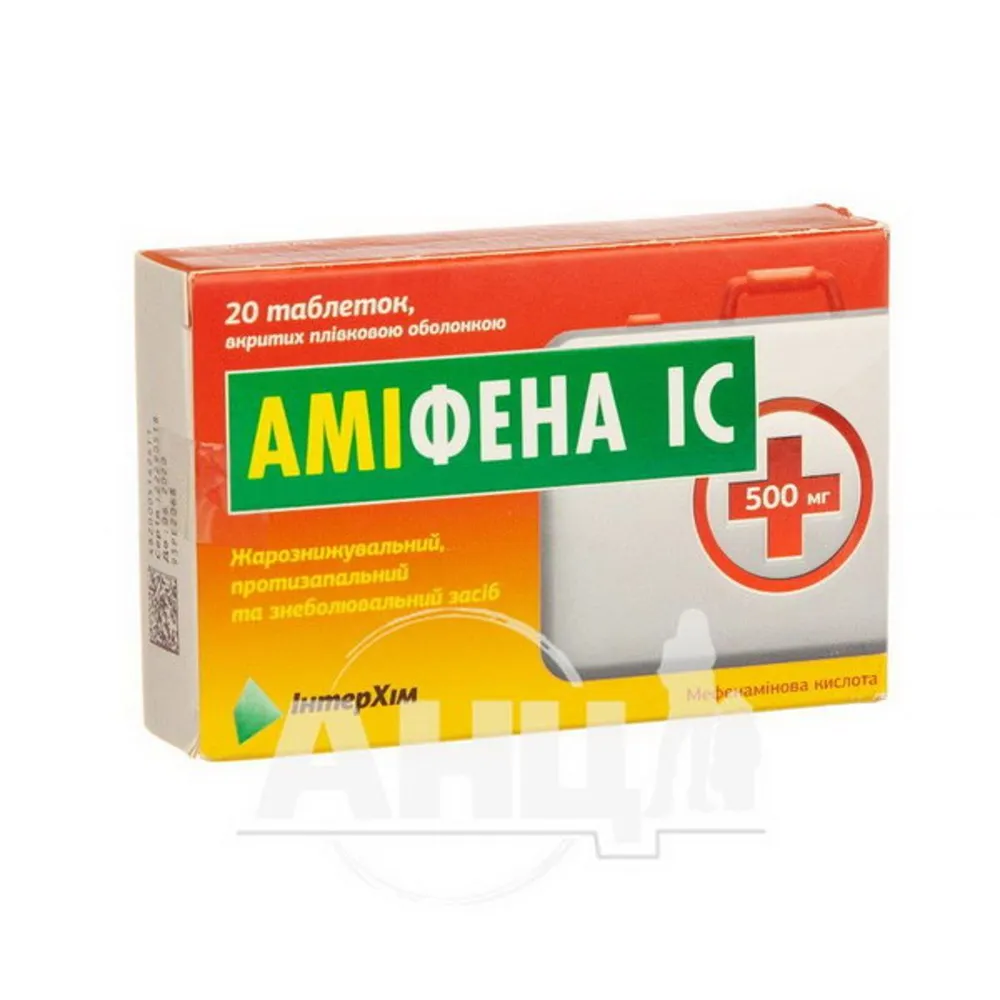
Table of Contents
INSTRUCTIONS FOR MEDICAL USE OF THE MEDICINAL PRODUCT AMIFENA® IS
Composition:
Active substance: mefenamic acid;
1 tablet contains 250 mg or 500 mg of mefenamic acid;
Excipients: lactose monohydrate, microcrystalline cellulose, sodium lauryl sulfate, crospovidone, povidone, colloidal anhydrous silicon dioxide, magnesium stearate, talc, hypromellose (hydroxypropylmethylcellulose), polyethylene glycol, titanium dioxide (E 171).
Pharmaceutical form. Film-coated tablets.
Main physicochemical properties: white, round-shaped (for the 250 mg dosage) or oblong-shaped (for the 500 mg dosage) tablets with a biconvex surface, film-coated.
Pharmacotherapeutic group.
Non-steroidal anti-inflammatory and anti-rheumatic agents. Fenamates. Mefenamic acid.
ATC code M01AG01.
Pharmacological properties.
Pharmacodynamics.
Mefenamic acid is a non-steroidal anti-inflammatory drug (NSAID) that exerts anti-inflammatory, analgesic, and antipyretic effects.
Prostaglandins are involved in a number of pathological processes, including inflammation, modulation of pain response, dysmenorrhea, menorrhagia, and fever. Like most NSAIDs, mefenamic acid inhibits prostaglandin synthetase [cyclooxygenase (COX)], leading to reduced synthesis of prostaglandins and decreased their concentration. There is also substantial evidence that fenamates suppress the action of already synthesized prostaglandins. Mefenamic acid inhibits the synthesis of other mediators of inflammation (serotonin, kinins, etc.), reduces the activity of lysosomal enzymes involved in the inflammatory response. Mefenamic acid stabilizes cellular protein ultrastructures and membranes, increases cellular resistance, suppresses mucopolysaccharide synthesis, reduces vascular permeability, inhibits cell proliferation at the site of inflammation, and stimulates wound healing.
In the mechanism of analgesic action, in addition to its effect on central pain sensitivity mechanisms, the local effect of mefenamic acid at the inflammatory site and its ability to inhibit the formation of algogens (kinins, histamine, serotonin) play a significant role.
Antipyretic properties are associated with the ability to inhibit prostaglandin synthesis and affect the thermoregulatory center.
Mefenamic acid stimulates interferon production.
Pharmacokinetics.
Absorption and distribution
After oral administration, mefenamic acid is rapidly and sufficiently completely absorbed from the gastrointestinal tract (GI tract). Maximum plasma concentration after oral administration is reached within 2–4 hours. In adults, a peak level of 10 mg/L is achieved within 2 hours after oral administration of a 1000 mg dose of mefenamic acid. Plasma concentration levels are proportional to the dose. Protein binding to plasma albumins is 90%.
Metabolism
Mefenamic acid is predominantly metabolized by the cytochrome P450 (CYP) enzyme CYP2C9 in the liver, initially to the 3-hydroxymethyl derivative (metabolite I), and then to the 3-carboxy derivative (metabolite II). Both metabolites undergo secondary conjugation to form glucuronides. Mefenamic acid should be administered with caution to patients who are poor metabolizers via CYP2C9, as well as to patients in whom poor CYP2C9-mediated metabolism is expected based on the metabolism of other substrates of this enzyme, since such patients may achieve abnormally high plasma levels of mefenamic acid due to reduced metabolic clearance.
Elimination
52% of the administered dose of mefenamic acid is excreted in urine (6% unchanged, 25% as metabolite I, 21% as metabolite II). Analysis of feces over a 3-day period showed that 10–20% of the dose is eliminated in feces, primarily as the unconjugated metabolite II. The elimination half-life (T1/2) is 2–4 hours.
Clinical characteristics.
Indications.
Acute viral respiratory infections and influenza.
Mild to moderate pain: muscular, joint, traumatic, dental, headache of various etiologies, postoperative and postpartum pain.
Primary dysmenorrhea.
Dysfunctional menorrhagia and menorrhagia caused by intrauterine contraceptive devices, in the absence of pelvic organ pathology.
Inflammatory disorders of the musculoskeletal system: rheumatoid arthritis, rheumatism, Bechterew's disease (ankylosing spondylitis).
Contraindications.
Hypersensitivity to mefenamic acid or to any other component of the medicinal product.
Due to the risk of cross-sensitivity, mefenamic acid should not be used in patients who have previously experienced hypersensitivity reactions (such as bronchial asthma, bronchospasm, rhinitis, angioneurotic edema, or urticaria) following the intake of acetylsalicylic acid (aspirin), ibuprofen, or other NSAIDs.
Inflammatory bowel diseases.
History of gastrointestinal bleeding or perforation related to previous NSAID therapy.
Active or past history of peptic ulcer/bleeding or recurrent disease (two or more separate confirmed episodes of ulcer or bleeding).
Severe heart failure (see section "Special precautions for use").
Hematopoietic organ disorders.
Severe hepatic or renal impairment (see section "Special precautions for use").
Pain management following coronary artery bypass grafting (CABG).
Concomitant use of specific cyclooxygenase-2 (COX-2) inhibitors.
Galactose intolerance, lactase deficiency, or glucose-galactose malabsorption syndrome.
Pregnancy or breastfeeding period.
Children under 5 years of age.
Interaction with other medicinal products and other forms of interaction.
Concomitant use of mefenamic acid with other medicinal products that bind to plasma proteins may require dose adjustments.
Other analgesics, including selective cyclooxygenase-2 (COX-2) inhibitors. The concomitant use of two or more NSAIDs (including acetylsalicylic acid) should be avoided, as this may increase the risk of adverse effects (see section "Special precautions for use").
Antiplatelet agents. Increased risk of gastrointestinal ulceration or gastrointestinal bleeding (see section "Special precautions for use").
Acetylsalicylic acid. Experimental data indicate that concomitant administration of mefenamic acid may inhibit the antiplatelet effect of low-dose acetylsalicylic acid, thus potentially reducing the effectiveness of cardiovascular disease prophylaxis with this drug. However, due to the limited nature of these experimental data and uncertainty regarding extrapolation of ex vivo data to clinical situations, definitive conclusions about the impact of regular mefenamic acid use cannot be drawn.
Anticoagulants. NSAIDs may enhance the effects of anticoagulants such as warfarin (see section "Special precautions for use"). Concomitant use of mefenamic acid with oral anticoagulants requires careful monitoring of prothrombin time. When NSAIDs are prescribed in combination with anticoagulants such as warfarin or heparin, close monitoring of the patient's condition is necessary.
Antihypertensive agents and diuretics. Reduced antihypertensive and diuretic effects. Diuretics may potentiate the nephrotoxicity of NSAIDs.
Angiotensin-converting enzyme (ACE) inhibitors and angiotensin II receptor antagonists. Reduced antihypertensive effect and increased risk of renal impairment, especially in elderly patients. Patients should be advised to maintain adequate fluid intake; renal function should be monitored at the beginning and during combination therapy.
Cardiac glycosides. NSAIDs may worsen heart failure, reduce glomerular filtration rate (GFR), and increase plasma levels of cardiac glycosides.
Cyclosporine. The risk of cyclosporine-induced nephrotoxicity may be increased when used concomitantly with NSAIDs.
Tacrolimus. Potential increased risk of nephrotoxic effects when NSAIDs are used concomitantly with tacrolimus.
Methotrexate. Elimination of methotrexate may be reduced, potentially leading to increased plasma levels and enhanced toxicity.
Oral hypoglycemic agents. Inhibition of metabolism of sulfonylurea drugs, prolonged elimination half-life, and increased risk of hypoglycemia.
Mifepristone. NSAIDs should not be taken within 8–12 days after mifepristone administration, as NSAIDs may reduce its therapeutic effect.
Corticosteroids. Increased risk of gastrointestinal ulceration or gastrointestinal bleeding (see section "Special precautions for use").
Aminoglycosides. Reduced renal function in patients at increased risk of renal impairment, decreased elimination of aminoglycosides, and increased plasma concentrations.
Quinolone antibiotics. Animal studies indicate that NSAIDs may increase the risk of seizures associated with quinolone antibiotics. The risk of seizures may be increased in patients receiving both NSAIDs and quinolones.
Zidovudine. Concomitant use of zidovudine and NSAIDs is associated with an increased risk of hematological toxicity. Evidence suggests an increased risk of hemarthrosis and hematoma in HIV-positive patients with hemophilia receiving concomitant treatment with zidovudine and ibuprofen.
Lithium preparations. Reduced renal clearance of lithium and increased plasma lithium concentration. Patients receiving concomitant mefenamic acid and lithium should be closely monitored for signs of lithium toxicity.
Antidepressants [selective serotonin reuptake inhibitors (SSRIs)]. Increased risk of gastrointestinal bleeding (see section "Special precautions for use").
Probenecid. Reduced metabolism and elimination of NSAIDs and their metabolites.
Thiamine, pyridoxine hydrochloride, barbiturates, phenothiazine derivatives, narcotic analgesics, caffeine, diphenhydramine enhance the analgesic effect of mefenamic acid.
Special precautions for use.
Undesirable effects can be minimized by using the lowest effective dose for the shortest duration necessary to control symptoms (see section "Dosage and administration").
Patients undergoing prolonged treatment with mefenamic acid should be under continuous medical supervision, particularly for signs of hepatic dysfunction, rash, blood dyscrasias, or diarrhea. If any of these pathological conditions or symptoms develop, treatment should be discontinued immediately (see section "Adverse reactions").
Prolonged use of any analgesic for headache treatment may lead to medication-overuse headache. Patients should be informed that in such cases they should consult a physician and discontinue mefenamic acid therapy. Medication-overuse headache should be suspected in patients with frequent (or daily) headaches despite regular use of headache medications (or due to regular use of such agents).
Concomitant use of mefenamic acid with NSAIDs, including selective COX-2 inhibitors, should be avoided (see sections "Contraindications" and "Interaction with other medicinal products and other forms of interaction").
Mefenamic acid should be used with caution in dehydrated patients and in patients with renal impairment (see section "Contraindications"), especially elderly patients.
Elderly patients
Adverse reactions associated with NSAID use occur more frequently in elderly patients, particularly gastrointestinal bleeding and gastrointestinal perforation, which may be fatal (see section "Dosage and administration").
Respiratory system disorders
Mefenamic acid should be used with caution in patients with bronchial asthma (including in medical history), as NSAIDs have been reported to provoke bronchospasm in such patients.
Cardiac, renal, and hepatic impairment
NSAID use may lead to dose-dependent reduction in prostaglandin synthesis and may provoke renal impairment. Patients at highest risk include those with impaired renal, hepatic, or cardiac function, patients taking diuretics, and elderly patients. Renal function should be monitored in these patients (see sections "Contraindications" and "Interaction with other medicinal products and other forms of interaction").
Effects on the cardiovascular and cerebrovascular systems
Clinical trial data and epidemiological evidence suggest that use of certain NSAIDs (particularly at high doses and over prolonged periods) may be associated with a small increase in the risk of arterial thrombotic events (such as myocardial infarction or stroke). There are insufficient data to exclude such risk with mefenamic acid.
Mefenamic acid should be used with caution in patients with intracranial hemorrhage or hemorrhagic diathesis, as NSAIDs may affect platelet function.
Appropriate recommendations should be provided to patients with a history of hypertension and/or mild to moderate congestive heart failure, and their condition should be monitored, as fluid retention and edema have been reported with NSAID use.
Mefenamic acid therapy may be prescribed by a physician only after careful benefit-risk assessment in patients with uncontrolled hypertension, congestive heart failure, ischemic heart disease, peripheral arterial disease, and/or cerebrovascular disease. Similarly, long-term mefenamic acid treatment should be prescribed cautiously in patients with cardiovascular risk factors (such as hypertension, hyperlipidemia, diabetes, smoking).
Gastrointestinal bleeding, ulceration, and perforation
Administration of mefenamic acid may cause gastrointestinal disorders, which may occur both early in therapy and after prolonged use. If such symptoms occur, drug therapy should be discontinued.
Cases of potentially fatal gastrointestinal bleeding, ulcers, or perforations have been reported with NSAIDs at any stage of treatment, regardless of prior warning symptoms or history of severe gastrointestinal disorders. Smoking and alcohol consumption are additional risk factors.
Mefenamic acid should be used with caution in patients concomitantly taking medications that may increase the risk of ulceration or bleeding, such as corticosteroids, anticoagulants (including warfarin), SSRIs, or antiplatelet agents (including acetylsalicylic acid) (see section "Interaction with other medicinal products and other forms of interaction").
The risk of gastrointestinal bleeding, ulceration, or perforation increases with higher NSAID doses, history of peptic ulcer (especially if complicated by bleeding or perforation) (see section "Contraindications"), and in elderly patients. These patients should receive the lowest effective NSAID doses. Additionally, for patients in these groups, as well as for those concurrently taking low-dose acetylsalicylic acid or other agents that may increase gastrointestinal adverse reaction risk (see section "Interaction with other medicinal products and other forms of interaction"), concomitant use of protective agents (such as misoprostol or proton pump inhibitors) should be considered.
Patients with a history of gastrointestinal toxicity, particularly elderly patients, should be informed about the need to report any unusual abdominal symptoms (especially those suggesting gastrointestinal bleeding), particularly at the beginning of treatment.
NSAIDs should be used with caution in patients with a history of gastrointestinal diseases (ulcerative colitis, Crohn's disease), as their condition may worsen (see section "Adverse reactions").
Systemic lupus erythematosus and mixed connective tissue disease
Patients with systemic lupus erythematosus and mixed connective tissue diseases have an increased risk of aseptic meningitis (see section "Adverse reactions").
Skin effects
Serious skin reactions associated with NSAID use, which in some cases were fatal, including exfoliative dermatitis, Stevens-Johnson syndrome, and toxic epidermal necrolysis, have been reported very rarely (see section "Adverse reactions"). The risk of such reactions is likely highest at the beginning of treatment, as most cases occurred within the first month of therapy. If early signs of skin rash, mucosal lesions, or any other signs of hypersensitivity appear, mefenamic acid should be discontinued.
Effects on female fertility
Mefenamic acid may impair female fertility and is therefore not recommended for women attempting to conceive. In patients experiencing difficulties with conception or undergoing infertility evaluation, discontinuation of mefenamic acid therapy should be considered.
If no therapeutic effect is observed with mefenamic acid use in dysmenorrhea or menorrhagia, additional diagnostic investigations should be considered.
Mefenamic acid may cause false-positive results in certain laboratory tests for bile pigments in urine.
Epilepsy
Mefenamic acid should be used with caution in patients with epilepsy.
Mefenamic acid should be used with caution in patients with slow metabolism via CYP2C9, as well as in patients expected to have slow CYP2C9-mediated metabolism based on metabolism of other substrates of this enzyme, as abnormally high plasma levels of mefenamic acid may occur due to reduced metabolic clearance (see section "Pharmacological properties").
The medicinal product contains lactose. This medicinal product should not be administered to patients with rare hereditary forms of galactose intolerance, lactase deficiency, or glucose-galactose malabsorption syndrome.
Use during pregnancy or breastfeeding.
Pregnancy
Use of the medicinal product is contraindicated during pregnancy.
Inhibition of prostaglandin synthesis may adversely affect pregnancy and/or embryonic/fetal development. Administration of prostaglandin synthesis inhibitors to animals has been shown to increase pre- and post-implantation losses and embryofetal mortality. Furthermore, in animals treated with prostaglandin synthesis inhibitors during organogenesis, increased incidence of various developmental abnormalities, including cardiovascular malformations, has been observed. Epidemiological studies have shown that use of medicinal products inhibiting prostaglandin synthesis during early pregnancy increases the risk of spontaneous abortion, cardiac malformations, and gastroschisis. The absolute risk of cardiovascular malformations increased from less than 1% to approximately 1.5%.
From the 20th week of pregnancy, use of mefenamic acid may cause oligohydramnios due to fetal renal dysfunction; fetal arterial duct constriction has also been reported.
Use of any prostaglandin synthesis inhibitor during the third trimester of pregnancy may cause:
In the fetus:
-
Development of cardiopulmonary toxicity (with premature constriction/closure of the arterial duct and pulmonary hypertension);
-
Renal dysfunction, which may progress to renal failure with development of oligohydramnios (see above);
In the mother and newborn, and at the end of pregnancy:
-
Prolonged bleeding time, antiplatelet effect, which may occur even with low-dose use of the medicinal product;
-
Inhibition of uterine contractility, leading to delayed onset of labor or prolonged labor.
Period of breastfeeding
Use of the medicinal product is contraindicated during breastfeeding.
Mefenamic acid passes into breast milk in small amounts and may reach the infant through milk.
Ability to influence reaction speed when driving or operating machinery.
After administration of NSAIDs, adverse effects such as dizziness, somnolence, increased fatigue, visual disturbances, and seizures may occur. If such adverse effects occur, patients should refrain from driving or operating machinery.
Method of Administration and Dosage
The medicinal product should be used under the supervision of a physician who determines the dose and duration of treatment.
Adverse effects can be minimized by using the lowest effective dose for the shortest duration necessary to control symptoms.
The medicinal product should be taken orally, preferably with or after food.
Adults and children aged 12 years and older
250–500 mg 3–4 times daily.
If necessary, the daily dose may be increased to a maximum of 3000 mg. After achieving the therapeutic effect, the dose should be reduced to 1000 mg daily.
Children aged 5 to 12 years
250 mg 3–4 times daily.
Elderly patients (over 65 years of age)
Dose adjustment is not required.
Specific clinical trials and pharmacokinetic studies of mefenamic acid involving elderly patients have not been conducted. In trials involving many elderly patients, mefenamic acid was administered at the usual adult doses.
There is an increased risk of serious adverse reactions in elderly patients. If NSAID use is necessary, the lowest effective dose should be prescribed for the shortest possible duration. During NSAID therapy, patients should be regularly monitored for the development of gastrointestinal bleeding.
Mefenamic acid should be used with caution in elderly patients with dehydration or renal disease. Cases of non-oliguric renal failure and proctocolitis have been reported, primarily in elderly patients who did not discontinue mefenamic acid after the onset of diarrhea.
Do not exceed the recommended dose!
For pain treatment, the treatment course may last up to 7 days.
For dysmenorrhea, the medicinal product should be started on the first day of menstrual pain. The duration of treatment is determined by the physician.
For menorrhagia, the medicinal product should be started on the first day of heavy bleeding. The duration of treatment is determined by the physician.
For joint diseases, the treatment course lasts from 20 days to 2 months or longer.
Children.
The use of this medicinal product is contraindicated in children under 5 years of age.
Overdose.
Symptoms: headache, nausea, vomiting, epigastric pain, rarely diarrhea, disorientation, excitement, drowsiness, dizziness, tinnitus, loss of consciousness (syncope), and occasionally seizures (mefenamic acid may induce tonic-clonic seizures in overdose). In severe cases – gastrointestinal bleeding, respiratory depression, arterial hypertension, muscle twitching, coma. In cases of significant poisoning, acute renal failure and liver damage may occur.
Treatment. There is no specific antidote. Symptomatic treatment should be administered as needed. Administration of activated charcoal is advisable if less than 1 hour has passed since ingestion of an excessive dose of mefenamic acid. For adult patients, gastric lavage may be an alternative within 1 hour after ingestion of a potentially life-threatening dose of mefenamic acid. Adequate diuresis and urinary alkalinization should be ensured. Renal and hepatic function should be closely monitored. The patient should be observed for at least 4 hours after ingestion of a potentially toxic dose of mefenamic acid. Frequent or prolonged seizures should be controlled by intravenous administration of diazepam. Other interventions may be instituted depending on the patient's clinical condition. Hemoperfusion and hemodialysis are poorly effective due to the strong binding of mefenamic acid and its metabolites to plasma proteins.
Adverse Reactions
Gastrointestinal (GI) adverse reactions occur most frequently with use of mefenamic acid.
Diarrhea may develop both immediately after initiation of mefenamic acid treatment and after several months of continuous use. Cases of proctocolitis have been reported in patients who continued mefenamic acid after onset of diarrhea. If diarrhea develops, treatment with Amifena® IS must be discontinued immediately, and drugs containing mefenamic acid must never be used again.
The adverse reactions listed below are classified by organ systems; their frequency cannot be assessed based on available data.
Psychiatric disorders: hallucinations, disorientation, confusion, depression, nervousness, irritability, excitement.
Central and peripheral nervous system: headache, dizziness, drowsiness, insomnia, paresthesia, convulsions, fever; aseptic meningitis (particularly in patients with autoimmune disorders such as systemic lupus erythematosus or mixed connective tissue disease), presenting with symptoms such as nuchal rigidity, headache, nausea, vomiting, fever, and disorientation (see section "Special Warnings and Precautions for Use").
Eye disorders: optic neuritis, blurred vision, reversible loss of color vision, visual disturbances, eye irritation.
Ear and labyrinth disorders: ear pain, tinnitus, vertigo.
Skin and subcutaneous tissue disorders: laryngeal edema, facial swelling, angioedema, erythema multiforme; bullous reactions including Stevens-Johnson syndrome and toxic epidermal necrolysis (Lyell’s syndrome); rash, pruritus, urticaria, hyperhidrosis, photosensitivity reactions.
Renal and urinary system disorders: oliguria or polyuria, dysuria, hematuria, albuminuria, proteinuria, cystitis, impaired renal function, allergic glomerulonephritis, acute interstitial nephritis, nephrotic syndrome, non-oliguric renal failure (especially in dehydrated patients); renal failure including renal papillary necrosis; various forms of nephrotoxicity.
Cardiac and vascular disorders: edema, hypertension, and heart failure have been reported in association with NSAID therapy.
Clinical trial data and epidemiological evidence suggest that use of certain NSAIDs (particularly at high doses and for prolonged periods) may be associated with a small increased risk of arterial thrombotic events (such as myocardial infarction or stroke) (see section "Special Warnings and Precautions for Use").
Arrhythmia, palpitations, hypotension, syncope.
Blood and lymphatic system disorders: bone marrow hypoplasia, pancytopenia, anemia; hemolytic anemia (reversible upon discontinuation of mefenamic acid); aplastic anemia, decreased hematocrit, transient leukopenia with risk of infection, sepsis, disseminated intravascular coagulation, prolonged bleeding time, thrombocytopenic purpura, thrombocytopenia, agranulocytosis, eosinophilia, neutropenia.
Immune system disorders: hypersensitivity reactions have been reported with NSAIDs, including nonspecific allergic reactions and anaphylaxis; respiratory tract reactivity including asthma, asthma exacerbation, bronchospasm, and dyspnea; various skin reactions such as rashes of different types, urticaria, pruritus, purpura, angioedema, and less commonly exfoliative and bullous dermatoses (including toxic epidermal necrolysis and erythema multiforme).
Allergic rhinitis.
Gastrointestinal disorders: development of peptic ulcer, gastrointestinal perforation, or gastrointestinal hemorrhage, sometimes fatal, particularly in elderly patients (see section "Special Warnings and Precautions for Use").
Ulcerative stomatitis, heartburn, nausea, vomiting, hematemesis, melena, diarrhea, constipation, flatulence, dyspepsia, epigastric pain, abdominal pain, exacerbation of colitis and Crohn’s disease. Gastritis has been observed less frequently.
Elderly and debilitated patients are more likely to tolerate GI ulcers or GI bleeding poorly; most spontaneous reports of fatal GI events involve patients in this group.
Loss of appetite, colitis, enterocolitis, pancreatitis, steatorrhea, hemorrhagic gastritis, gastric ulcer with or without bleeding.
Hepatobiliary disorders: borderline elevation of one or more liver function tests, jaundice, cholestatic jaundice, mild hepatotoxicity, hepatitis, hepatorenal syndrome.
Metabolism and nutrition disorders: impaired glucose tolerance in patients with diabetes mellitus, hyponatremia, hyperkalemia.
Respiratory, thoracic and mediastinal disorders: bronchial asthma, dyspnea, bronchospasm.
General disorders: increased fatigue, malaise, weakness, multiorgan failure.
Investigations: mefenamic acid may cause false-positive results in certain laboratory tests for biliary pigments in urine.
Reporting of suspected adverse reactions
Healthcare professionals and patients, or their legal representatives, are kindly requested to report all suspected adverse reactions and lack of efficacy via the Automated Pharmacovigilance Information System at https://aisf.dec.gov.ua to ensure ongoing monitoring of the benefit-risk balance of the medicinal product.
Shelf life: 3 years.
Storage conditions:
Store in the original packaging at a temperature not exceeding 25 °C.
Keep out of reach of children.
Packaging:
10 tablets in a blister; 2 blisters per carton.
Prescription status: Over-the-counter (without prescription).
Manufacturer:
Limited liability company "INTERSIM".
Manufacturer's address and location of business operations:
40-A, 21st km of Starokyivska Road, Odesa, 65025, Ukraine.