Aclasta
Ukraine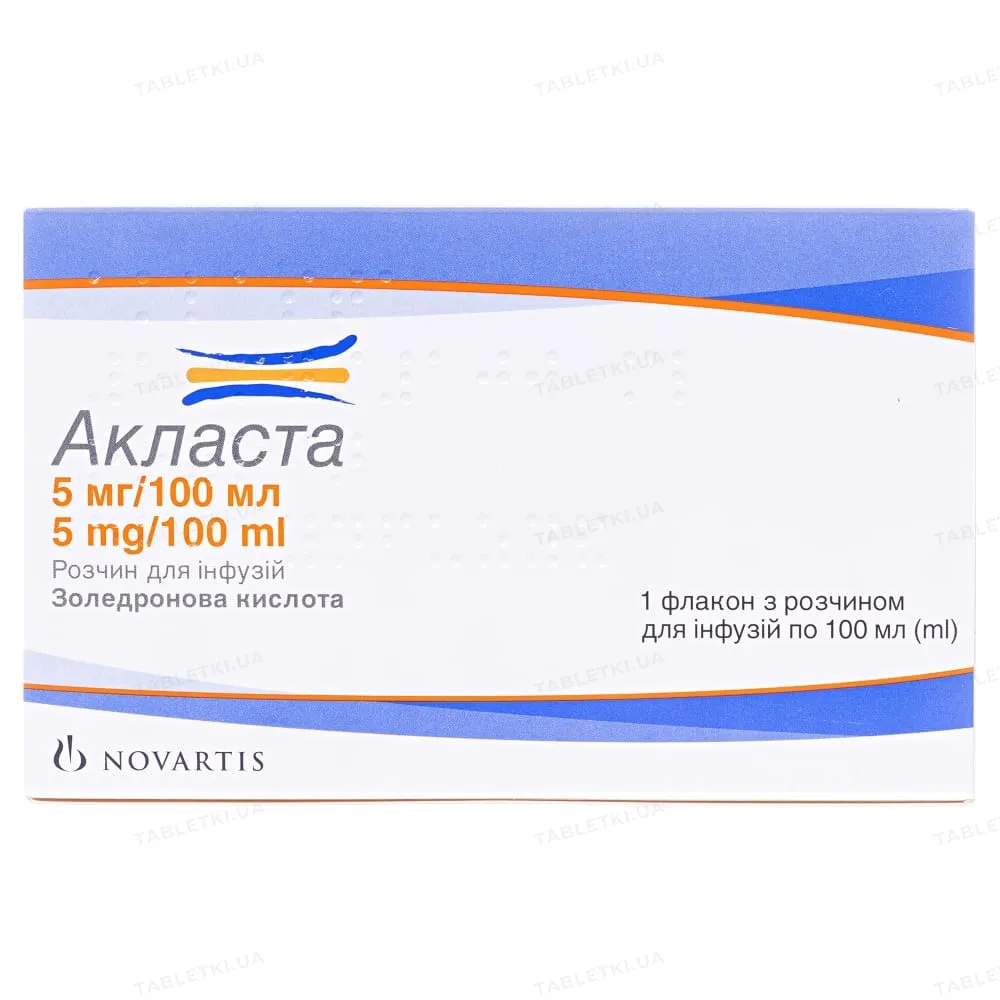
Table of Contents
INSTRUCTION FOR MEDICAL USE OF THE MEDICINAL PRODUCT ACLAста (ACLASTA®)
Composition:
Active substance: zoledronic acid;
100 ml of solution contains 5 mg of zoledronic acid (anhydrous), equivalent to 5.33 mg of zoledronic acid monohydrate;
Excipients: mannite (E 421), sodium citrate, water for injections.
Pharmaceutical form. Infusion solution.
Main physicochemical properties: clear, colorless solution.
Pharmacotherapeutic group. Drugs affecting bone structure and mineralization. Bisphosphonates. ATC code M05B A08.
Pharmacological properties.
Pharmacodynamics.
Mechanism of action. Zoledronic acid belongs to the class of nitrogen-containing bisphosphonates and acts primarily on bone. It is an inhibitor of osteoclast-mediated bone resorption.
Pharmacodynamic effects.
The selective action of bisphosphonates on bone is due to their high affinity for mineralized bone tissue. The primary molecular target of zoledronic acid in the osteoclast is the enzyme farnesyl pyrophosphate synthase. The long duration of action of zoledronic acid is attributed to its strong binding affinity to the active site of farnesyl pyrophosphate synthase and its high affinity for binding to bone minerals.
Treatment with Aclasta rapidly reduces the rate of bone metabolism: from elevated postmenopausal levels, reaching the lowest point for resorption markers by day 7 and for formation markers by week 12. After this period, bone turnover markers stabilized within the range observed before menopause. There was no progressive decline in bone metabolism markers with repeated annual doses.
Clinical efficacy in the treatment of postmenopausal osteoporosis
The efficacy and safety of Aclasta at a dose of 5 mg once yearly for 3 consecutive years were demonstrated in postmenopausal women (7736 women aged 65–89 years) with the following characteristics:
T-score of bone mineral density (BMD) at the femoral neck ≤ –1.5 and at least one moderate vertebral fracture or two mild fractures; or T-score of BMD at the femoral neck ≤ –2.5 with or without evidence of vertebral fracture. 85% of patients had never previously received bisphosphonate therapy. Women evaluated for vertebral fracture frequency did not receive concomitant osteoporosis therapy; however, such therapy was permitted in women included in the assessment of hip fractures and all clinically evident fractures. Concomitant osteoporosis therapy included calcitonin, raloxifene, tamoxifen, hormone replacement therapy, tibolone; other bisphosphonates were excluded. All women additionally received 1000 to 1500 mg of elemental calcium and 400 to 1200 IU of vitamin D daily.
Effect on morphometric vertebral fractures
Treatment with Aclasta significantly reduced the incidence of one or more new vertebral fractures over three years, with a statistically significant effect already evident at the one-year time point (see Table 1).
Table 1
Summary of efficacy data on vertebral fractures at 12, 24, and 36 months
| Result |
Aclasta (%) |
Placebo (%) |
Absolute reduction in fracture rate % (confidence interval – CI) |
Relative reduction in fracture rate % (CI) |
||
| At least one new vertebral fracture (0–1 year) |
1.5 |
3.7 |
2.2 (1.4, 3.1) |
60 (43, 72)* |
||
| At least one new vertebral fracture (0–2 years) |
2.2 |
7.7 |
5.5 (4.4, 6.6) |
71 (62, 78)* |
||
| At least one new vertebral fracture (0–3 years) |
3.3 |
10.9 |
7.6 (6.3, 9.0) |
70 (62, 76)* |
- p < 0.0001
In patients over 75 years of age receiving Aclasta treatment, the risk of vertebral fractures was reduced by 60% compared to placebo group patients (p < 0.0001).
Effect on hip fractures
A consistent effect of Aclasta over 3 years has been demonstrated, resulting in a 41% reduction in the risk of hip fractures (95% CI, 17% to 58%). The incidence of hip fractures was 1.44% in patients receiving Aclasta compared to 2.49% in patients receiving placebo. Risk reduction was 51% in patients who had never previously taken bisphosphonates and 42% in patients allowed to receive concomitant osteoporosis therapy.
Effect on clinical fractures
All clinical fractures were diagnosed based on radiographic and/or clinical findings. Results are presented in Table 2.
Table 2
Incidence of key endpoints of clinical fractures over 3 years
| Result |
Aclasta (N = 3875), event rate (%) |
Placebo (N = 3861), event rate (%) |
Absolute reduction in fracture rate % (CI) |
Relative reduction in fracture risk % (CI) |
| Any clinical fracture (1) |
8.4 |
12.8 |
4.4 (3.0, 5.8) |
33 (23, 42)** |
| Clinical vertebral fracture (2) |
0.5 |
2.6 |
2.1 (1.5, 2.7) |
77 (63, 86)** |
| Fracture at other site (1) |
8.0 |
10.7 |
2.7 (1.4, 4.0) |
25 (13, 36)* |
*p < 0.001.
**p < 0.0001.
(1) Except for the thumb, the great toe, and facial bone fractures.
(2) Including clinically evident fractures of the thoracic spine and lumbar vertebrae.
Effect on Bone Mineral Density (BMD)
Treatment with Aclasta resulted in a statistically significant increase in BMD of the lumbar spine, total hip, and distal forearm compared to placebo at all time points (6, 12, 24, and 36 months). Treatment with Aclasta led to an increase of 6.7% in lumbar spine BMD, 6.0% in total hip BMD, 5.1% in femoral neck BMD, and 3.2% in distal forearm BMD compared to placebo over 3 years.
Bone Histology
Bone biopsies were obtained from the iliac crest one year after the third annual dose in 152 postmenopausal women with osteoporosis treated with Aclasta (N = 82) or placebo (N = 70). Histomorphometric analysis showed a 63% reduction in bone turnover. No osteomalacia, bone marrow fibrosis, or accumulation of immature bone tissue was observed in patients treated with Aclasta. Tetracycline labeling was observed in 81 out of 82 biopsies from the Aclasta group. Micro-computed tomography (µCT) analysis showed increased trabecular bone volume and preserved trabecular architecture in the Aclasta group compared to the placebo group.
Bone Turnover Markers
Bone-specific alkaline phosphatase (BSAP), serum N-terminal propeptide of type I collagen (P1NP), and serum beta-C-telopeptides (b-CTx) were measured in subgroups of 517 to 1246 patients at periodic intervals throughout the study. With Aclasta treatment at the 5 mg annual dose, there was a statistically significant 30% reduction in bone-specific alkaline phosphatase from baseline at 12 months, which was maintained at 28% below baseline at 36 months. P1NP levels were statistically significantly reduced by 61% from baseline at 12 months and remained 52% below baseline at 36 months. Beta-C-telopeptide levels were statistically significantly reduced by 61% from baseline at 12 months and remained 55% below baseline at 36 months. Throughout the treatment period, bone turnover markers remained within the premenopausal reference range at the end of each year. Re-administration of the drug did not result in additional reductions in bone turnover markers.
Effect on Height
In the three-year osteoporosis study, patient height in standing position was measured annually using a stadiometer. The Aclasta group showed significantly less height loss (approximately 2.5 mm less) compared to the placebo group (95% CI: 1.6 mm, 3.5 mm) [p < 0.0001].
Days of Disability
Treatment with Aclasta significantly reduced the mean number of days with limited activity and days spent in bed due to back pain by 17.9 and 11.3 days, respectively, compared to placebo. It also significantly reduced the mean number of days with limited activity and days spent in bed due to fractures by 2.9 and 0.5 days, respectively, compared to placebo (p < 0.01 for all endpoints).
Clinical efficacy in the treatment of osteoporosis in patients at high risk of fractures following a recent hip fracture (RFT)
The incidence of clinical fractures, including vertebral fractures, non-vertebral fractures, and hip fractures, was evaluated in 2,127 men and women aged 50–95 years (mean age 74.5 years) with a recent (within 90 days) low-trauma hip fracture, followed for a mean of 2 years of study drug administration. Approximately 42% of patients had a femoral neck BMD T-score below –2.5, and approximately 45% had a T-score above –2.5. Aclasta was administered once yearly until clinically evident fractures were confirmed in at least 211 patients in the study population. Vitamin D levels were generally not assessed, but most patients received a loading dose of vitamin D (50,000 to 125,000 IU orally or intramuscularly) two weeks prior to infusion. All participants received supplemental daily calcium (1,000 to 1,500 mg elemental calcium) and vitamin D (800 to 1,200 IU). 95% of patients received their infusion two or more weeks after hip fracture healing, with infusions administered on average approximately 6 weeks after fracture healing. The primary efficacy endpoint was the incidence of clinical fractures over the entire study period.
Effect on all clinical fractures
The rates of key endpoints for clinical fractures are presented in Table 3.
Table 3
Incidence of key endpoints for clinical fractures
| Result |
Aclasta (N = 1065) Incidence rate (%) |
Placebo (N = 1062) Incidence rate (%) |
Absolute reduction in fracture incidence % (CI) |
Relative risk reduction in fracture incidence % (CI) |
| Any clinical fracture (1) |
8.6 |
13.9 |
5.3 (2.3, 8.3) |
35 (16, 50)** |
| Clinical vertebral fracture (2) |
1.7 |
3.8 |
2.1 (0.5, 3.7) |
46 (8, 68)* |
| Fracture at other site (1) |
7.6 |
10.7 |
3.1 (0.3, 5.9) |
27 (2, 45)* |
*p < 0.05.
**p < 0.01.
(1) Except for the thumb, big toe, and facial bone fractures.
(2) Including clinically evident fractures of the thoracic spine and lumbar vertebrae.
The study was not designed to determine statistically significant differences in the number of hip fractures, but a trend toward reduction in the incidence of new hip fractures was observed.
All-cause mortality was 10% (101 patients) in the Aclasta treatment group compared to 13% (141 patients) in the placebo group. This corresponds to a 28% reduction in the risk of death from any cause (p = 0.01).
The incidence of delayed healing of hip fractures was comparable between the Aclasta (34 [3.2%]) and placebo (29 [2.7%]) groups.
Effect on bone mineral density (BMD)
In the HORIZON-RFT study, statistically significant increases in BMD of the total hip and femoral neck were observed with Aclasta treatment compared to placebo at all time points. Treatment with Aclasta resulted in a 5.4% increase in total hip BMD and a 4.3% increase in femoral neck BMD over 24 months compared to placebo.
Clinical efficacy in men
In the HORIZON-RFT study, 508 men were randomized into the study, and 185 patients underwent BMD assessment at 24 months. At 24 months, a magnitude-similar statistically significant 3.6% increase in total hip BMD was observed in patients receiving Aclasta treatment compared to the effect observed in postmenopausal women in the HORIZON-PFT study. The study was underpowered to demonstrate a reduction in the number of clinical fractures in men; the incidence of clinical fractures was 7.5% in men receiving Aclasta compared to 8.7% in those receiving placebo.
In another study involving men (CZOL446M2308), annual Aclasta infusion provided non-inferior efficacy compared to weekly alendronate with respect to changes in lumbar spine BMD after 24 months of treatment compared to baseline.
Clinical efficacy in glucocorticoid-induced osteoporosis
The efficacy and safety of Aclasta in the treatment and prevention of osteoporosis associated with long-term systemic glucocorticoid therapy were evaluated in a randomized, multicenter, double-blind, stratified, active-controlled study involving 833 men and women aged 18 to 85 years (mean age 56.4 years for men and 53.5 years for women), who were receiving prednisone at a dose > 7.5 mg/day (or equivalent). Patients were stratified according to duration of glucocorticoid use prior to randomization (≤ 3 months vs. > 3 months). The study duration was one year. Patients were randomized to receive either a single 5 mg infusion of Aclasta or daily oral risedronate 5 mg for one year. All participants also received 1000 mg of elemental calcium and 400 to 1000 IU of vitamin D daily. Efficacy was considered demonstrated if non-inferiority of risedronate was shown with respect to the percentage change in lumbar spine BMD at 12 months compared to baseline in both the treatment and prevention subpopulations. Most patients continued glucocorticoid therapy throughout the one-year study period.
Effect on bone mineral density (BMD)
Increases in lumbar spine and femoral neck BMD were statistically significantly greater in the Aclasta group compared to the risedronate group (all p < 0.03). In the subpopulation of patients who had been taking glucocorticoids for more than 3 months prior to randomization, Aclasta increased lumbar spine BMD by 4.06% compared to 2.71% with risedronate (mean difference 1.36%; p < 0.001). In the subpopulation of patients who had taken glucocorticoids for 3 months or less prior to randomization, Aclasta increased lumbar spine BMD by 2.60% compared to 0.64% with risedronate (mean difference 1.96%; p < 0.001). This study was not adequately powered to demonstrate a reduction in the number of clinical fractures compared to risedronate treatment. The number of fracture events was 8 in patients receiving Aclasta compared to 7 in patients receiving risedronate (p = 0.8055).
Clinical efficacy in the treatment of Paget's disease of bone
The efficacy of Aclasta was studied in male and female patients over 30 years of age with primary mild to moderate Paget's disease of bone (median serum alkaline phosphatase levels 2.6–3.0 times above the upper limit of the age-specific normal range at study entry), confirmed radiologically.
The efficacy of a single 5 mg infusion of zoledronic acid compared to daily 30 mg risedronate for 2 months was demonstrated in two 6-month comparative studies. At 6 months, response and normalization of serum alkaline phosphatase (SAP) levels were observed in 96% (169/176) and 89% (156/176) of patients in the Aclasta group, compared to 74% (127/171) and 58% (99/171) of patients receiving risedronate (all p < 0.001).
According to pooled results, a magnitude-similar reduction in pain severity was observed over 6 months with Aclasta and risedronate treatment.
Patients classified as responders at the end of the 6-month core study were eligible for entry into an extended observation period. Of the 153 patients treated with Aclasta and 115 patients treated with risedronate who entered the extended observational study, after a mean follow-up of 3.8 years from treatment initiation, the proportion of patients who discontinued the study due to need for retreatment (clinically assessed) was higher in the risedronate group (48 patients, or 41.7%) compared to the zoledronic acid group (11 patients, or 7.2%). The mean time to study discontinuation due to need for retreatment for Paget's disease from initial treatment was longer for patients receiving zoledronic acid (7.7 years) than for those receiving risedronate (5.1 years).
Six patients who achieved a therapeutic response 6 months after Aclasta treatment and later experienced disease relapse during the extended observation period received retreatment with Aclasta, on average 6.5 years after initial treatment. Five out of six patients had serum alkaline phosphatase levels within the normal range 6 months after retreatment.
Bone histology was evaluated in 7 patients with Paget's disease 6 months after treatment with 5 mg zoledronic acid. Bone biopsy results showed normal bone quality without evidence of impaired bone remodeling and no signs of mineralization defects. These findings are consistent with the biochemical marker of normalized bone remodeling.
The European Medicines Agency has waived the requirement to submit results of Aclasta studies in all subgroups of the pediatric population for Paget's disease of bone, as well as for postmenopausal osteoporosis in women at increased risk of fracture, osteoporosis in men at increased risk of fracture, and for the prevention of clinical fractures after hip fracture in men and women.
Pharmacokinetics
Following single and multiple 5- and 15-minute infusions of 2, 4, 8, and 16 mg zoledronic acid administered to 64 patients, the following dose-independent pharmacokinetic data were obtained.
After the start of zoledronic acid infusion, plasma concentrations of the active substance rapidly increased, reaching a peak at the end of the infusion, then rapidly declined to < 10% of peak within 4 hours and to < 1% of peak within 24 hours, followed by a prolonged period of very low concentrations not exceeding 0.1% of peak levels.
Intravenously administered zoledronic acid is eliminated renally in three phases: rapid biphasic elimination from systemic circulation with half-lives t1/2 of 0.24 (alpha phase) and 1.87 (beta phase) hours, followed by a prolonged elimination phase with a terminal half-life t1/2γ of 146 hours. No accumulation of the active substance in plasma was observed after multiple doses administered every 28 days. Rapid distribution to bone and renal elimination may occur during the early disposition phases (alpha and beta). Zoledronic acid is not metabolized and is excreted unchanged by the kidneys. Within the first 24 hours, 39 ± 16% of the administered dose is excreted in urine, while the remainder is primarily bound to bone tissue. This bone uptake is characteristic of all bisphosphonates and is believed to occur due to structural similarity to pyrophosphate. As with other bisphosphonates, the retention time of zoledronic acid in bone is very long. Subsequently, zoledronic acid is slowly released from bone tissue back into systemic circulation and eliminated renally. Total drug clearance is 5.04 ± 2.5 L/h. It is independent of dose, sex, age, race, and body weight. Intra-subject and inter-subject variability in plasma clearance of zoledronic acid has been shown to be 36% and 34%, respectively. Increasing infusion duration from 5 to 15 minutes results in a 30% reduction in zoledronic acid concentration at the end of infusion but does not affect the area under the plasma concentration-time curve.
Drug interaction studies with zoledronic acid have not been conducted. Since zoledronic acid is not metabolized in humans and the detected substance has only minimal or no activity as a direct or irreversible inhibitor of cytochrome P450 enzymes, zoledronic acid is unlikely to reduce the metabolic clearance of substances metabolized via the cytochrome P450 enzyme system. Zoledronic acid has a low degree of plasma protein binding (approximately 43–55%), and this binding is concentration-independent. Therefore, the potential for interactions due to displacement by highly protein-bound drugs is low.
Special populations
Renal impairment
Renal clearance of zoledronic acid correlated with creatinine clearance, with renal clearance averaging 75 ± 33% of creatinine clearance, which showed a mean value of 84 ± 29 mL/min (range 22 to 143 mL/min) in 64 studied patients. A slight increase in AUC(0–24h) of approximately 30–40% in mild to moderate renal impairment compared to patients with normal renal function, and the absence of drug accumulation with repeated dosing regardless of renal function, indicate that dose adjustment of zoledronic acid is not required in patients with mild (CrCl = 50–80 mL/min) or moderate (CrCl down to 35 mL/min) renal impairment. Due to limited data availability in severe renal impairment (creatinine clearance < 35 mL/min), no dosing recommendations can be made for this population.
Clinical characteristics.
Indications.
Treatment of osteoporosis in postmenopausal women and in men at increased risk of fracture, including individuals with a recent low-trauma hip fracture.
Treatment of glucocorticoid-induced osteoporosis in postmenopausal women and in men at increased risk of fracture.
Treatment of Paget's bone disease in adults.
Contraindications.
Hypersensitivity to the active substance or to any of the excipients of the medicinal product, or hypersensitivity to bisphosphonates. Hypocalcemia. Severe renal impairment with creatinine clearance < 35 ml/min. Pregnancy or breastfeeding.
Interaction with other medicinal products and other forms of interaction.
Specific drug interaction studies with zoledronic acid have not been conducted. Zoledronic acid is not systematically metabolized and does not affect human cytochrome P450 enzymes in vitro. Zoledronic acid is only slightly bound to plasma proteins (binding is approximately 43–55%), therefore interactions due to displacement by highly protein-bound drugs are unlikely.
Zoledronic acid is eliminated via renal excretion. Caution should be exercised when using Aclasta in combination with medicinal products that may significantly affect renal function (e.g., aminoglycosides or diuretics that may cause dehydration).
In patients with impaired renal function, systemic exposure to concurrently administered medicinal products that are primarily eliminated by the kidneys may be increased.
Special precautions for use.
Aclasta is contraindicated in patients with severe renal impairment (creatinine clearance < 35 mL/min) due to the risk of renal failure in this patient population.
Renal function impairment has been observed after Aclasta administration, particularly in patients with pre-existing renal dysfunction or other risk factors, including advanced age, concomitant use of nephrotoxic medicinal products, concomitant diuretic therapy, or dehydration occurring after Aclasta infusion. Renal impairment has been reported in patients after a single dose of the drug. Renal failure requiring dialysis or resulting in fatal outcome has been observed rarely in patients with pre-existing renal impairment or with one or more of the aforementioned risk factors.
To minimize the risk of renal adverse reactions, the following precautions should be observed:
- Creatinine clearance adjusted for body weight should be determined prior to each Aclasta infusion using the Cockcroft-Gault formula.
- Transient increases in serum creatinine levels may be greater in patients with pre-existing renal impairment.
- Serum creatinine levels should be monitored in patients at risk.
- Aclasta should be used with caution when administered concomitantly with other medicinal products that may affect renal function.
- Patients, especially elderly patients and those receiving diuretics, should be adequately hydrated prior to Aclasta infusion.
- The single dose of Aclasta should not exceed 5 mg, and the infusion duration should be no less than 15 minutes.
Pre-existing hypocalcemia must be corrected with adequate calcium and vitamin D supplementation prior to initiating Aclasta therapy. Other disturbances in mineral metabolism, such as hypoparathyroidism or impaired intestinal calcium absorption, also require appropriate treatment. Physicians should closely monitor such patients.
Increased bone remodeling is characteristic of Paget’s disease with bone involvement. Due to the rapid onset of zoledronic acid’s effect on bone remodeling, transient hypocalcemia may occur, sometimes with clinical manifestations, typically reaching its peak within the first 10 days after Aclasta infusion.
Adequate intake of calcium and vitamin D is recommended during Aclasta therapy. Additionally, patients with Paget’s disease should receive sufficient supplemental calcium, providing at least 500 mg of elemental calcium twice daily for 10 days following Aclasta infusion. Patients should be informed about the symptoms of hypocalcemia and appropriate monitoring should be ensured during the risk period. In patients with Paget’s disease, serum calcium levels should be measured before Aclasta infusion.
Rare cases of severe and sometimes disabling bone, joint, and/or muscle pain have been reported in patients receiving bisphosphonates, including Aclasta.
Osteonecrosis of the jaw
Post-marketing reports have described osteonecrosis of the jaw in patients receiving Aclasta (zoledronic acid) for osteoporosis.
Initiation of treatment or a new treatment course should be delayed in patients with non-healing open soft tissue lesions in the oral cavity. Prior to starting Aclasta therapy, patients with concomitant risk factors should undergo a dental examination with appropriate preventive dental care and individual benefit-risk assessment.
The following factors should be considered when evaluating the risk of developing osteonecrosis of the jaw:
- Potency of the bone resorption-inhibiting medicinal product (higher risk with highly potent compounds), route of administration (higher risk with parenteral administration), and cumulative dose of bone resorption therapy.
- Cancer, concomitant medical conditions (such as anemia, coagulopathy, infection), and smoking.
- Concomitant therapies: corticosteroids, chemotherapy, angiogenesis inhibitors, head and neck radiation therapy.
- Poor oral hygiene, periodontal disease, ill-fitting dentures, history of dental disease, and invasive dental procedures such as tooth extraction.
All patients should maintain proper oral and dental hygiene, undergo regular dental check-ups, and promptly report any oral symptoms such as loose teeth, pain, swelling, non-healing ulcers, or discharge during treatment with zoledronic acid. Invasive dental procedures should be performed with caution during therapy, avoiding areas close to the site of zoledronic acid administration.
Treatment plans for patients who develop osteonecrosis of the jaw should be developed in close collaboration between the physician and a dentist or oral surgeon experienced in managing patients with osteonecrosis of the jaw. Temporary discontinuation of zoledronic acid should be considered until the condition stabilizes and risk factors are minimized.
Osteonecrosis of the external auditory canal
Osteonecrosis of the external auditory canal has been reported with bisphosphonate use, primarily during long-term therapy. Risk factors for osteonecrosis of the external auditory canal include steroid use, chemotherapy, and/or local risk factors such as infections or trauma. Osteonecrosis of the external auditory canal should be considered in patients receiving bisphosphonates who present with otologic symptoms, including chronic ear infections.
Atypical femoral fractures
Atypical subtrochanteric and diaphyseal femoral fractures have been reported in patients receiving bisphosphonate therapy, primarily those undergoing long-term treatment for osteoporosis. These transverse or oblique fractures with a short fracture line may occur anywhere along the femur, from below the lesser trochanter to above the supracondylar flare. These fractures occur with minimal or no trauma, and in some patients, pain in the groin or thigh, often with radiological signs of stress fracture, may precede a complete femoral fracture by weeks or months. Fractures are often bilateral; therefore, the contralateral femur should be evaluated in patients receiving bisphosphonate therapy who have confirmed diaphyseal femoral fracture. Delayed healing of such fractures has been observed. Discontinuation of bisphosphonate therapy in patients suspected of having an atypical femoral fracture should be considered after careful patient evaluation, taking into account the individual benefit-risk assessment.
During bisphosphonate therapy, patients should be advised to report any pain in the thigh, hip joint, or groin. All patients presenting with such symptoms should be evaluated for incomplete femoral fracture.
Other considerations
The frequency of symptoms occurring within the first three days after drug administration may be reduced by taking paracetamol or ibuprofen immediately after Aclasta infusion.
For oncology indications, other medicinal products containing zoledronic acid as the active ingredient are available. Patients receiving Aclasta should not take these products or any other bisphosphonates concomitantly, as the cumulative effect of these substances is unknown.
This medicinal product contains less than 1 mmol of sodium (23 mg) per vial (100 mL of Aclasta), i.e., essentially "sodium-free".
*** Use during pregnancy or breastfeeding ***
Pregnancy
Aclasta is contraindicated during pregnancy. Data on the use of zoledronic acid for treatment in pregnant women are lacking. Animal studies have demonstrated toxic effects of the drug on reproductive function, including developmental abnormalities. The potential risk in humans is unknown.
Breastfeeding
It is unknown whether zoledronic acid is excreted in human breast milk. Aclasta is contraindicated during breastfeeding.
Women of reproductive potential
Aclasta is not recommended for use in women of reproductive potential.
Fertility
The potential adverse effect of zoledronic acid on fertility was studied in parental and F1 generation rats. Excessive pharmacological effects were observed, considered to be related to inhibition of skeletal calcium mobilization by the drug, leading to perinatal hypocalcemia—a class effect of bisphosphonates—dystocia, and premature termination of the study. Therefore, the results do not allow definitive conclusions regarding the effect of Aclasta on human fertility.
*** Effect on ability to drive and use machines ***
Adverse reactions such as dizziness may affect the ability to drive or operate machinery.
Method of Administration and Dosage
Doses
Aclasta should be administered under conditions of adequate patient hydration. This is particularly important for elderly patients (≥65 years) and patients receiving diuretics.
Adequate intake of calcium and vitamin D is recommended during treatment with Aclasta.
Osteoporosis
Treatment of postmenopausal osteoporosis, male osteoporosis, and glucocorticoid-induced osteoporosis: the recommended dose is one 5 mg intravenous infusion of Aclasta per year.
The optimal duration of bisphosphonate treatment for osteoporosis has not been established.
The need for continued treatment should be periodically reassessed by evaluating the benefits and risks of Aclasta for each individual patient, especially after 5 or more years of treatment.
For patients with recent low-trauma femoral fracture, administration of Aclasta is recommended two or more weeks after surgery for the fracture. Prior to the first dose of Aclasta, patients with recent low-trauma femoral fracture should receive a vitamin D loading dose of 50,000 to 125,000 IU orally or intramuscularly.
Paget's Disease
The drug should be prescribed only by physicians experienced in the treatment of Paget's disease with bone involvement. The recommended dose is one 5 mg intravenous infusion of Aclasta. Additionally, patients with Paget's disease require supplemental calcium, at least 500 mg of elemental calcium twice daily for at least 10 days following Aclasta administration.
Repeat treatment for Paget's disease: after initiation of treatment with Aclasta for Paget's disease, a prolonged remission period is observed in responding patients. Repeat treatment consists of an additional 5 mg intravenous infusion of Aclasta in patients who have relapsed, administered at least 1 year or more after initial treatment. Data on repeat treatment of Paget's disease are limited.
Special Patient Groups
Patients with renal impairment. Aclasta is not recommended for patients with creatinine clearance < 35 mL/min.
Dose adjustment is not required for patients with creatinine clearance > 35 mL/min.
Patients with hepatic impairment. Dose adjustment is not required.
Elderly patients (≥ 65 years). Dose adjustment is not required, as the bioavailability, distribution, and elimination of the drug in elderly and younger patients are similar.
Administration of the medicinal product. Aclasta should be administered slowly through a separate infusion line equipped with an air vent and maintained at a constant infusion rate. The infusion time should be at least 15 minutes. Any unused portion or waste should be disposed of according to local requirements. Only a clear, particle-free solution without discoloration should be used.
If the solution has been refrigerated, it should be allowed to reach room temperature before administration. Aseptic techniques must be followed during preparation of the intravenous infusion solution.
The drug is for single use only.
From a microbiological standpoint, the solution should be used immediately. Otherwise, the responsible user should store the solution for no more than 24 hours at 2–8 °C.
Children. Aclasta is not recommended for use in children and adolescents (under 18 years of age) due to insufficient data on safety and efficacy in this age group.
Overdose.
Clinical experience with acute overdose is limited. Patients who have received doses exceeding the recommended amount require careful monitoring. In cases of overdose leading to clinically significant hypocalcemia, correction of the condition may be achieved by additional oral and/or intravenous infusion of calcium gluconate.
Adverse Reactions
The overall percentage of patients who experienced adverse reactions was 44.7%, 16.7%, and 10.2% after the first, second, and third administration of the drug, respectively. The frequency of individual adverse reactions after the first dose was: fever – 17.1%, myalgia – 7.8%, influenza-like symptoms – 6.7%, arthralgia – 4.8%, and headache – 5.1%. The frequency of these reactions decreased significantly with subsequent annual doses of the medicinal product Aclasta. Most of these reactions occurred within the first three days after administration of Aclasta, were mild or moderate in intensity, and resolved within three days. In a small study where prophylaxis against adverse reactions was implemented as described below, the percentage of patients experiencing adverse reactions was lower (19.5%, 10.4%, 10.7% after the first, second, and third administration, respectively).
The adverse reactions listed below are classified by system organ class according to MedDRA and frequency: very common (≥ 1/10), common (≥ 1/100, < 1/10), uncommon (≥ 1/1000, < 1/100), rare (≥ 1/10,000, < 1/1000), very rare (< 1/10,000), frequency not known (cannot be estimated from available data). Within each frequency group, adverse reactions are listed in order of decreasing severity.
Infections and infestations:
Uncommon – influenza, nasopharyngitis.
Blood and lymphatic system disorders:
Uncommon – anaemia.
Immune system disorders:
Frequency not known** – hypersensitivity reactions, including rare cases of bronchospasm, urticaria, and angioedema, and very rare cases of anaphylactic reactions/shock.
Metabolism and nutrition disorders:
Common – hypocalcaemia*;
Uncommon – decreased appetite;
Rare – hypophosphataemia.
Psychiatric disorders:
Uncommon – insomnia.
Nervous system disorders:
Common – headache, dizziness;
Uncommon – lethargy, paraesthesia, somnolence, tremor, syncope, taste disturbance.
Eye disorders:
Common – eye hyperaemia;
Uncommon – conjunctivitis, eye pain;
Rare – uveitis, episcleritis, iritis;
Frequency not known** – scleritis, eye inflammation.
Ear and labyrinth disorders:
Uncommon – vertigo.
Cardiac disorders:
Common – atrial fibrillation;
Uncommon – palpitations.
Vascular disorders:
Uncommon – arterial hypertension, flushing;
Frequency not known** – hypotension (in some patients with risk factors).
Respiratory, thoracic and mediastinal disorders:
Uncommon – cough, dyspnoea.
Gastrointestinal disorders:
Common – nausea, vomiting, diarrhoea;
Uncommon – dyspepsia, epigastric pain, abdominal pain, gastroesophageal reflux disease, constipation, dry mouth, oesophagitis, toothache, gastritis#.
Skin and subcutaneous tissue disorders:
Uncommon – rash, hyperhidrosis, pruritus, erythema.
Musculoskeletal and connective tissue disorders:
Common – myalgia, arthralgia, bone pain, back pain, limb pain;
Uncommon – neck pain, musculoskeletal stiffness, joint swelling, muscle spasms, musculoskeletal chest pain, musculoskeletal pain, joint stiffness, arthritis, muscle weakness;
Rare – atypical subtrochanteric and diaphyseal femoral fractures† (a class effect of bisphosphonates);
Very rare – osteonecrosis of the external auditory canal (adverse reactions typical of bisphosphonates);
Frequency not known** – osteonecrosis of the jaw.
Renal and urinary disorders:
Uncommon – increased blood creatinine, polyuria, proteinuria;
Frequency not known** – renal impairment, tubulointerstitial nephritis. Rare cases of renal failure requiring haemodialysis and rare fatal cases have been observed in patients with pre-existing renal dysfunction or other risk factors such as advanced age, concomitant use of nephrotoxic drugs, concomitant diuretic therapy, or post-infusion dehydration.
Investigations:
Common – increased C-reactive protein;
Uncommon – decreased blood calcium.
General disorders and administration site conditions:
Very common – pyrexia;
Common – influenza-like symptoms, chills, fatigue, asthenia, pain, malaise, infusion site reaction;
Uncommon – peripheral oedema, thirst, acute-phase reaction, non-cardiac chest pain;
Frequency not known** – secondary dehydration associated with symptoms such as fever, vomiting, and diarrhoea occurring after administration of the drug.
Observed in patients concurrently receiving glucocorticoids.
* Common only in Paget's disease.
** Based on post-marketing reports. Frequency cannot be estimated from available data.
† Identified during the post-marketing period.
Atrial fibrillation
During the HORIZON – Pivotal Fracture Trial (PFT), the overall incidence of atrial fibrillation was 2.5% (96 out of 3,862 patients) in the Aclasta group compared to 1.9% (75 out of 3,852 patients) in the placebo group. The incidence of atrial fibrillation as a serious adverse reaction was higher, at 1.3% (51 out of 3,862) in patients receiving Aclasta compared to 0.6% (22 out of 3,852) in those receiving placebo. The mechanism underlying the increased incidence of atrial fibrillation is unknown. In osteoporosis trials (PFT, HORIZON – Recurrent Fracture Trial [RFT]), the overall incidence of atrial fibrillation was comparable in the Aclasta group (2.6%) and the placebo group (2.1%). The incidence of atrial fibrillation as a serious adverse reaction was 1.3% in patients receiving Aclasta compared to 0.8% in patients receiving placebo.
Class effects
Renal function disorders
Adverse reactions associated with deterioration of renal function (e.g., increased serum creatinine levels) have been observed following administration of zoledronic acid, and rarely, acute renal failure. Renal function impairment has occurred particularly in patients with pre-existing renal disease or additional risk factors (such as advanced age, concomitant chemotherapy, concomitant use of nephrotoxic drugs, concomitant diuretic therapy, or severe dehydration); most of these patients received the drug at a dose of 4 mg every 3–4 weeks, but renal function impairment has also been observed after a single dose.
In clinical trials of osteoporosis, changes in creatinine clearance (measured annually prior to dosing), incidence of renal failure, and renal impairment were comparable over three years between the Aclasta and placebo groups. Transient increases in serum creatinine levels within 10 days were observed in 1.8% of patients receiving Aclasta compared to 0.8% of patients receiving placebo.
Hypocalcaemia
In clinical trials of osteoporosis, approximately 0.2% of patients experienced a notable decrease in serum calcium levels (below 1.87 mmol/L) after administration of Aclasta. No cases of symptomatic hypocalcaemia were observed.
In Paget’s disease trials, symptomatic hypocalcaemia occurred in approximately 1% of patients; all cases were transient.
Transient asymptomatic decreases in serum calcium levels below the normal range (below 2.10 mmol/L) occurred in 2.3% of patients treated with Aclasta in a large clinical trial of osteoporosis, compared to 21% in Paget’s disease trials. The incidence of hypocalcaemia was significantly lower after subsequent doses.
In postmenopausal osteoporosis trials aimed at preventing clinical fractures, including the hip fracture study and Paget’s disease trials, all patients received appropriate vitamin D and calcium supplementation. In the clinical fracture prevention trial following recent hip fracture, vitamin D levels were not routinely measured, but most patients received a loading dose of vitamin D prior to Aclasta administration.
Local reactions
In a large clinical trial, local reactions at the infusion site (0.7%) were reported: erythema, swelling, and/or pain after administration of zoledronic acid.
Osteonecrosis of the jaw
Cases of jaw necrosis have been observed primarily in cancer patients receiving bone resorption inhibitors, including zoledronic acid.
In a large clinical trial involving 7,736 patients, only one case of osteonecrosis of the jaw was observed in a patient receiving Aclasta and one case in a patient receiving placebo. Cases of osteonecrosis of the jaw have been reported during the post-marketing period of Aclasta use.
Incompatibilities
Aclasta infusion solution must not be mixed with calcium-containing solutions. Aclasta must not be mixed or administered intravenously with other medicinal products.
Shelf life: 3 years.
Storage conditions
The unopened vial does not require special storage conditions.
After opening, store for up to 24 hours at 2–8°C.
Keep out of reach of children.
Packaging
100 ml solution in a vial. 1 vial in a cardboard box.
Prescription status
Prescription only.
Manufacturer
- Novartis Pharma Stein AG
- Lek Pharmaceuticals d.d.
Manufacturer's address and place of business
- Schaffhauserstrasse 4332, 4332 Stein, Switzerland
- Verovškova 57, 1526 Ljubljana, Slovenia