Zyvoxid
Poland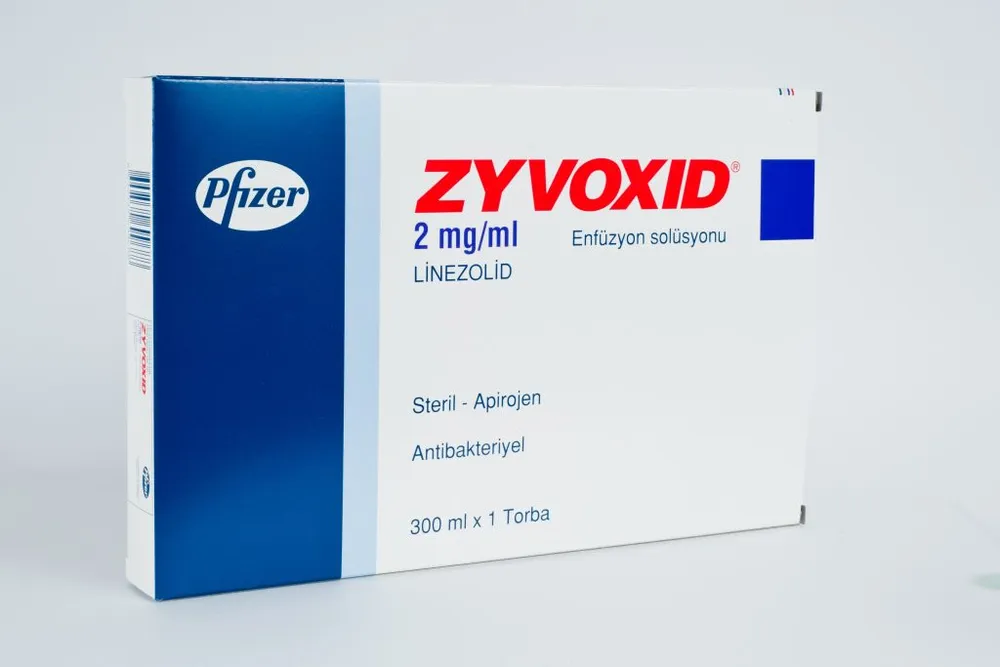
Table of Contents
- Patient Information Leaflet
- 1. What Zyvoxid is and what it is used for
- 2. Important information before using Zyvoxid
- 3. How to use Zyvoxid
- 4. Possible adverse reactions
- 5. How to store Zyvoxid
- 6. Contents of the pack and other information
- Information intended exclusively for healthcare professionals:
Patient Information Leaflet
Zyvoxid, 2 mg/ml, infusion solution
Linezolidum
Please read all of this leaflet carefully before using this medicine, as it contains
important information for you.
- Keep this leaflet as you may need to read it again.
- If you have any further questions, ask your doctor or pharmacist.
- This medicine has been prescribed for you personally. Do not pass it on to others. It may harm someone else even if their symptoms are the same as yours.
- If any side effects worsen or if you experience any side effects not listed in this leaflet, tell your doctor, pharmacist, or nurse. See section 4.
Leaflet Contents
- What Zyvoxid is and what it is used for
- Important information before using Zyvoxid
- How to use Zyvoxid
- Possible side effects
- How to store Zyvoxid
- Contents of the pack and other information
1. What Zyvoxid is and what it is used for
Zyvoxid is an antibacterial medicine belonging to the class of antibiotics known as oxazolidinones.
Zyvoxid is used to treat pneumonia and complicated skin and soft tissue infections.
Your doctor will decide whether Zyvoxid is appropriate for treating your specific infection.
2. Important information before using Zyvoxid
When not to use Zyvoxid
- If the patient is allergic (hypersensitive) to linezolid or any of the other ingredients of this medicine (listed in section 6).
- If the patient is currently taking or has taken within the last 2 weeks a medicine from a group called monoamine oxidase inhibitors (e.g. phenelzine, isocarboxazid, selegiline, moclobemide). These medicines may be used in the treatment of depression or Parkinson's disease.
- If the patient is breastfeeding. The medicine passes into human milk and may harm the child.
Warnings and precautions
If any of the cases described below occur, the patient should inform the doctor.
The doctor may decide whether to use Zyvoxid or another treatment method. However, before starting treatment, the patient should undergo a general examination and blood pressure measurement, which should be repeated throughout the entire treatment period. If there are any doubts regarding the cases described below, the patient should consult the doctor.
- If the patient has high blood pressure.
- If the patient has hyperthyroidism.
- If the patient has a tumour of the adrenal gland (pheochromocytoma), carcinoid tumour (caused by a tumour of the hormonal system with symptoms such as diarrhoea, skin flushing, wheezing).
- If the patient has bipolar depression, schizoaffective disorders (disorders in which symptoms typical of both schizophrenia and affective disorders, i.e. depression or mania, occur simultaneously), disorientation states or other psychiatric disorders.
- If the patient has previously experienced hyponatraemia (low sodium concentration in blood) or if the patient is taking medicines that reduce sodium concentration in blood, e.g. certain diuretics (also called "water tablets"), such as hydrochlorothiazide.
- If the patient is taking any opioid medicines.
- If the patient is taking any of the medicines listed in the section "Zyvoxid with other medicines".
Concomitant use of certain medicines, including antidepressants and opioids, with Zyvoxid may lead to serotonin syndrome — a potentially life-threatening condition (see section 2 "Zyvoxid with other medicines" and section 4).
Before starting treatment with Zyvoxid, this should be discussed with the doctor.
If the patient has:
- Advanced age,
- A tendency to bruising and bleeding,
- Anaemia,
- A tendency to infections,
- Seizures (in the past),
- Liver or kidney function disorders, particularly in dialysed patients,
- Diarrhoea, the patient should inform the doctor before using Zyvoxid.
The patient should immediately inform the doctor if, during treatment with Zyvoxid, the following occur:
- Worsening of vision, such as changes in visual acuity, changes in colour vision, blurred vision or visual field defects;
- Diarrhoea, especially diarrhoea with bleeding; it may be necessary to discontinue Zyvoxid; these symptoms may indicate pseudomembranous colitis associated with antibiotic use;
- Recurrent nausea or vomiting, abdominal pain or increased respiratory rate;
- Unexplained muscle pain, tenderness or weakness and (or) dark urine. These may be symptoms of a serious condition called rhabdomyolysis (muscle breakdown), which may lead to kidney damage;
- Nausea and malaise, including muscle weakness, headache, confusion and memory disturbances, which may indicate hyponatraemia (low sodium concentration in blood).
Zyvoxid with other medicines
Concomitant use of Zyvoxid with other medicines may cause adverse effects, such as changes in blood pressure, temperature or heart rate.
The patient should inform the doctor if they are taking or have taken within the last 2 weeks
the following medicines (see section 2):
- Monoamine oxidase inhibitors (e.g. phenelzine, isocarboxazid, selegiline, moclobemide). These medicines are used in the treatment of depression or Parkinson's disease.
The patient should also inform the doctor if they are taking any of the following medicines. In such cases, the doctor will decide whether to use treatment with Zyvoxid. Before starting treatment with Zyvoxid, the patient should undergo a general examination and blood pressure measurement, which will be repeated throughout the entire treatment period. In other cases, the doctor may decide to use alternative treatment.
- Decongestant medicines used for cold or flu containing pseudoephedrine or phenylpropanolamine.
- Medicines used to treat asthma, e.g. salbutamol, terbutaline, fenoterol.
- Tricyclic antidepressants or serotonin reuptake inhibitors, e.g. amitriptyline, citalopram, clomipramine, dosulepin, doxepin, fluoxetine, fluvoxamine, imipramine, lofepramine, paroxetine, sertraline.
- Medicines used to treat migraine, e.g. sumatriptan and zolmitriptan.
- Medicines used to treat acute, severe allergic reactions, e.g. adrenaline (epinephrine).
- Medicines that increase blood pressure, e.g. noradrenaline (norepinephrine), dopamine, dobutamine.
- Opioids, e.g. pethidine, used to treat moderate to severe pain.
- Anxiolytic medicines, e.g. buspirone.
- Anticoagulant medicines, e.g. warfarin.
- Antibacterial medicines, e.g. rifampicin.
The patient should inform the doctor about all medicines currently taken or recently taken, as well as any medicines the patient plans to take.
Zyvoxid with food and drink
- During treatment, consumption of foods such as mature cheeses, yeast extracts, soybean products (e.g. soy sauce) and alcoholic beverages, especially cask beer and wine, should be limited. These products contain tyramine, which may interact with Zyvoxid, potentially causing increased blood pressure.
- If the patient experiences a throbbing headache after eating or drinking, they should inform the doctor.
Pregnancy and breastfeeding
If the patient is pregnant or breastfeeding, suspects she may be pregnant, or plans to have a child, she should consult a doctor or pharmacist before using this medicine.
Zyvoxid should not be used in pregnant women unless clearly recommended by a doctor who considers that the expected benefit to the mother outweighs the risk to the foetus. If the patient is pregnant or breastfeeding, suspects she may be pregnant, or plans to have a child, she should consult a doctor before using this medicine.
Zyvoxid should not be used during breastfeeding. Breastfeeding should be discontinued before starting and during treatment with linezolid. The medicine passes into human milk and may harm the child.
Driving and operating machinery
Zyvoxid may cause dizziness and visual disturbances. In such cases, the patient should not drive or operate any machinery. It should be remembered that malaise may affect the ability to drive and operate machinery.
Zyvoxid contains glucose and sodium
Glucose
Each 1 millilitre of Zyvoxid solution for infusion contains 45.7 mg of glucose (i.e. 4.57 g of glucose in a 100 ml infusion bag and 13.7 g of glucose in a 300 ml infusion bag).
This should be taken into account in patients with diabetes or other conditions associated with glucose intolerance.
Sodium
Each 1 millilitre of Zyvoxid solution for infusion contains 0.38 mg of sodium (the main component of table salt) (i.e. 38 mg of sodium in a 100 ml infusion bag and 114 mg of sodium in a 300 ml infusion bag). This corresponds to 1.9% of the maximum recommended daily dietary sodium intake for adults in the case of a 100 ml infusion bag or 5.7% of the maximum recommended daily dietary sodium intake for adults in the case of a 300 ml infusion bag.
This should be taken into account in patients with impaired kidney function and in patients controlling dietary sodium intake.
3. How to use Zyvoxid
Zyvoxid is administered as an intravenous infusion by a doctor or qualified healthcare professional.
For detailed dosage instructions and information on administration and incompatibilities, see
"Information intended exclusively for healthcare professionals" at the end of this leaflet.
Use in adults
The usual dose of Zyvoxid in adults (aged 18 years and older) is 300 ml of solution (600 mg linezolid) given twice daily as an intravenous infusion lasting between 30 and 120 minutes.
Patients undergoing dialysis should receive Zyvoxid after completion of dialysis.
Zyvoxid is usually administered for 10 to 14 days, but not longer than 28 days. The safety and efficacy of Zyvoxid treatment lasting longer than 28 days have not been established. The decision on duration of treatment will be made by the doctor.
During treatment with Zyvoxid, your doctor will recommend regular blood tests to monitor the function of the blood-forming system.
If Zyvoxid is used for longer than 28 days, an eye examination should be performed.
Use in children and adolescents
Zyvoxid should not be used in children and adolescents under 18 years of age.
Overdose of Zyvoxid
If you feel that too high a dose has been administered, contact a doctor or healthcare professional immediately.
Missed dose of Zyvoxid
As the medicine will be administered under strict medical supervision, missing a dose seems unlikely. However, if a dose is suspected to have been missed, always inform your doctor or nurse. Do not administer a double dose to make up for a missed dose.
If you have any further questions about the use of this medicine, consult your doctor or pharmacist.
4. Possible adverse reactions
Like all medicines, this medicine can cause adverse reactions, although not everyone will experience them.
If any of the adverse reactions listed below occur, you must immediately inform your doctor,
pharmacist or healthcare professional:
-
severe skin reactions, e.g. redness, peeling of the skin (skin inflammation), rash, itching, or swelling, particularly around the face and neck (not common), wheezing and (or) difficulty breathing (rare); these may be symptoms of an allergic reaction, and in such a case it may be necessary to discontinue Zyvoxid treatment; skin reactions such as raised, purple rash caused by inflammation of blood vessels (rare);
-
vision problems (not common), manifesting as changes in visual acuity, changes in colour vision, blurred vision, or narrowing of the visual field;
-
diarrhoea, particularly diarrhoea with bleeding; this may be a sign of pseudomembranous colitis, which may occur following antibiotic treatment (not common). In such a case, treatment discontinuation may be required;
-
recurrent nausea and vomiting, abdominal pain, or increased breathing rate (rare);
-
seizures;
-
serotonin syndrome (frequency unknown): inform your doctor if you experience excessive agitation, confusion, hallucinations, stiffness, tremor, lack of coordination, seizures, rapid heartbeat, severe breathing problems, or diarrhoea (suggesting serotonin syndrome) when taking serotonin reuptake inhibitors or opioids concomitantly (see section 2);
-
changes in the number of certain blood cells, which may affect the ability to fight infections (not common);
-
rhabdomyolysis (rare): objective and subjective symptoms include unexplained muscle pain, tenderness or weakness, and (or) darkly coloured urine. These may be signs of a serious condition called rhabdomyolysis (muscle breakdown), which may lead to kidney damage.
Numbness, tingling, and changes in visual acuity have been reported by patients who have taken Zyvoxid for longer than 28 days. If a patient experiences worsening vision, they should contact their doctor immediately.
Other adverse reactions listed by frequency of occurrence
Common (may occur in up to 1 in 10 people):
- fungal infections, especially candidiasis (mainly in the mouth and vagina);
- headache;
- metallic taste in the mouth;
- diarrhoea, nausea, or vomiting;
- changes in blood morphology or blood test results, including proteins, salts or enzymes used to assess kidney, liver function or blood glucose levels;
- bleeding, unexplained bruising, which may be due to changes in the blood system, affecting blood clotting and possibly leading to anaemia;
- decreased platelet count.
Not common (may occur in up to 1 in 100 people):
- inflammation of the vagina or external genital area in women;
- sleep disorders (insomnia);
- dizziness, sensory disturbances such as loss of sensation, tingling or numbness;
- blurred vision;
- ringing in the ears (tinnitus);
- increased blood pressure, inflammation of veins with possible thrombus formation;
- indigestion, abdominal pain, constipation;
- dryness or pain in the mouth, swelling, irritation or discoloration of the tongue;
- urticaria, skin inflammation, itching, rash;
- pain at or around the site of infusion (drip);
- phlebitis (including at the infusion site);
- polyuria;
- fever or chills, localized or generalised pain;
- feeling of fatigue or thirst;
- pancreatitis;
- increased sweating;
- changes in the number of certain blood cells, which may affect the ability to fight infections;
- decreased number of all types of blood cells;
- weakness and (or) sensory changes;
- hypoglycaemia (reduced blood glucose concentration).
Rare (may occur in up to 1 in 1,000 people):
- changes in heart rate;
- transient ischaemic attacks (transient disturbances in blood supply to the brain causing temporary symptoms such as loss of vision, limb weakness, slurred speech, loss of consciousness);
- kidney failure;
- anaemia;
- hypersensitivity reactions (anaphylaxis);
- lactic acidosis (recurrent nausea and vomiting, abdominal pain, increased breathing rate);
- black discoloration of the tongue surface, giving it a "hairy" appearance.
Frequency unknown (frequency cannot be estimated from available data):
- serotonin syndrome (increased heart rate, disorientation, profuse sweating, hallucinations, involuntary movements, chills, tremors);
- seizures;
- alopecia;
- hyponatraemia (low blood sodium levels);
- colour vision disturbances, difficulty perceiving details, or narrowing of the visual field;
- bone marrow suppression.
Reporting of adverse reactions
If any adverse symptoms occur, including any possible adverse reactions not listed in this leaflet, inform your doctor or pharmacist. Adverse reactions can also be reported directly to the Department of Monitoring Adverse Drug Reactions of the Office for Registration of Medicinal Products, Medical Devices and Biocidal Products
Al. Jerozolimskie 181C
02-222 Warsaw
Phone: +48 22 49 21 301
Fax: +48 22 49 21 309
Website: https://smz.ezdrowie.gov.pl
Adverse reactions may also be reported to the marketing authorisation holder or its representative.
Reporting adverse reactions helps provide more information on the safety of the medicine.
5. How to store Zyvoxid
Keep this medicine out of sight and reach of children.
Do not use this medicine after the expiry date stated on the packaging after: EXP.
The expiry date refers to the last day of the stated month.
Store at a temperature not exceeding 25°C.
Do not use the medicine if the bag is leaking or if the protective light-resistant film is damaged.
Do not use the medicine if the solution is not clear or if solid particles are visible.
Medicines must not be disposed of via wastewater or household waste. Ask your pharmacist how to dispose of medicines no longer in use. This will help protect the environment.
6. Contents of the pack and other information
What Zyvoxid contains
- The active substance is linezolid. 1 ml of solution contains 2 mg of linezolid.
- Other ingredients are: sodium citrate dihydrate; anhydrous citric acid; glucose; 10% solution of sodium hydroxide for pH adjustment to 4.8; 10% solution of hydrochloric acid for pH adjustment to 4.8; water for injections (see section 2 “Zyvoxid contains glucose and sodium”).
What Zyvoxid looks like and contents of the pack
The solution is isotonic, clear, colourless to yellow.
Ready-to-use, single-use infusion bags made of multilayer polyolefin film (Excel or Free flex), covered with laminated foil. The bags contain 100 ml or 300 ml of solution and are packed in cardboard boxes containing 1, 10 or 14 bags.
Marketing Authorisation Holder
Pfizer Europe MA EEIG, Boulevard de la Plaine 17, 1050 Bruxelles, Belgium
Manufacturer
HP Halden Pharma AS, Svinesundsveien 80, 1788 Halden, Norway
For further information about this medicinal product, please contact the local representative of the Marketing Authorisation Holder:
Pfizer Polska Sp. z o.o., tel. 22 335 61 00
Other sources of information
Detailed information about this medicinal product is available on the website of the Office for Registration of Medicinal Products, Medical Devices and Biocidal Products http://urpl.gov.pl
Information intended exclusively for healthcare professionals:
Dosage and method of administration
Treatment may be initiated with Zyvoxid in the form of intravenous infusion solution or coated tablets.
In patients who have started treatment with the parenteral formulation, a switch to the oral form may be made if clinically indicated.
When changing the route of administration, there is no need to adjust the dosage, as the oral bioavailability of linezolid is approximately 100%.
Recommended dosage and duration of treatment in adults
The duration of treatment depends on the type of pathogenic microorganism, site and severity of infection, and the patient's clinical response to therapy.
The treatment duration recommendations presented below are consistent with those used in clinical trials. In certain types of infections, a shorter treatment duration may be sufficient; however, clinical trial data on this are lacking.
The maximum duration of treatment is 28 days. The safety and efficacy of linezolid administered for longer than 28 days have not been established.
In infections with concomitant bacteremia, there is no need to increase the dose or prolong the duration of treatment.
Dosage recommendations for the intravenous infusion solution and tablets are identical. They are as follows:
| Infection type | Dose | Duration of treatment |
| Hospital-acquired pneumonia | 600 mg twice daily | 10–14 days |
| Community-acquired pneumonia | ||
| Complicated skin and soft tissue infections |
Dosage in children
There are insufficient data on the safety and efficacy of linezolid in children and adolescents (under 18 years of age) to establish a recommended dosage. Therefore, until further data become available, administration of linezolid is not recommended in this age group.
Dosage in elderly patients
There is no need to modify the dose of the drug.
Dosage in patients with renal impairment
There is no need to modify the dose of the drug.
Patients with severe renal impairment (i.e. creatinine clearance <30 ml/min)
There is no need to modify the dose of the product. Due to the uncertain clinical significance of increased exposure (up to 10-fold) to two major metabolites of linezolid in patients with severe renal impairment, the product should be used with particular caution and only when the anticipated benefit outweighs the potential risk.
Since approximately 30% of a dose of linezolid is removed during a 3-hour hemodialysis session, the product should be administered after dialysis in patients undergoing hemodialysis. Hemodialysis also leads to partial removal of the primary metabolites of linezolid; however, their concentrations remain substantially higher after dialysis than those observed in patients with normal renal function or mild to moderate renal impairment.
Therefore, in patients with severe renal impairment undergoing dialysis, the product should be used with particular caution and only when the anticipated benefit outweighs the potential risk.
Currently, there are no data on the use of linezolid in patients undergoing continuous ambulatory peritoneal dialysis or other forms of renal replacement therapy different from hemodialydia.
Dosage in patients with hepatic impairment
There is no need to modify the dose of the drug. However, due to the limited number of clinical data, it is recommended that linezolid be used in these patients only when the anticipated benefit outweighs the potential risk.
Special warnings and precautions for use
Bone marrow suppression
Bone marrow suppression (including anemia, leukopenia, pancytopenia, and thrombocytopenia) has been observed in patients treated with linezolid. In cases where treatment outcomes are known, abnormal blood test results returned to pre-treatment values after discontinuation of linezolid. The occurrence of such effects appears to be related to the duration of therapy. Elderly patients treated with linezolid have a higher risk of blood count abnormalities than younger patients. Thrombocytopenia may occur more frequently in patients with severe renal impairment, regardless of dialysis, and in patients with moderate to severe hepatic impairment. Therefore, blood cell counts should be closely monitored in patients with pre-existing anemia, granulocytopenia, or thrombocytopenia; in patients receiving concomitant medications that may reduce hemoglobin levels, blood cell counts, or affect platelet number or function; in patients with severe renal impairment or moderate to severe hepatic impairment; and in patients receiving linezolid for longer than 10 to 14 days. Linezolid may be administered to these patients only if close monitoring of hemoglobin concentration, blood cell counts, and platelet counts is possible.
Method of administration
The recommended doses of linezolid are administered intravenously twice daily.
Route of administration: intravenous.
The infusion solution should be administered as an infusion over 30 to 120 minutes.
Pharmaceutical incompatibilities
Other substances should not be added to the solution. If linezolid is to be administered simultaneously with other drugs, each drug should be administered separately, in accordance with its specific administration recommendations. If linezolid and other drugs are to be administered alternately through the same intravenous access, the line should be flushed before and after each administration of linezolid with a solution compatible with the Zyvoxid infusion solution.
The Zyvoxid infusion solution is physically incompatible with the following drugs: amphotericin B, chlorpromazine hydrochloride, diazepam, pentamidine isethionate, erythromycin lactobionate, sodium phenytoin, and sulfamethoxazole with trimethoprim. In addition, it is chemically incompatible with sodium ceftriaxone.
Special precautions for disposal and preparation of the medicinal product for administration
The container is for single use only. Remove the outer film immediately before administration and check for small leaks by firmly squeezing the bag. If leakage is observed, do not use the product, as it may not be sterile. The solution should be inspected visually prior to administration. It should only be administered if it is clear and free of particulate matter. Do not use bags connected in series. Any unused solution should be discarded. Do not connect bags with partially used contents.
Zyvoxid infusion solution is compatible with the following solutions: 5% glucose infusion solution, 0.9% sodium chloride infusion solution, Ringer's lactate injection solution (Hartmann's solution).