Zonisamide neuraxpharm
Poland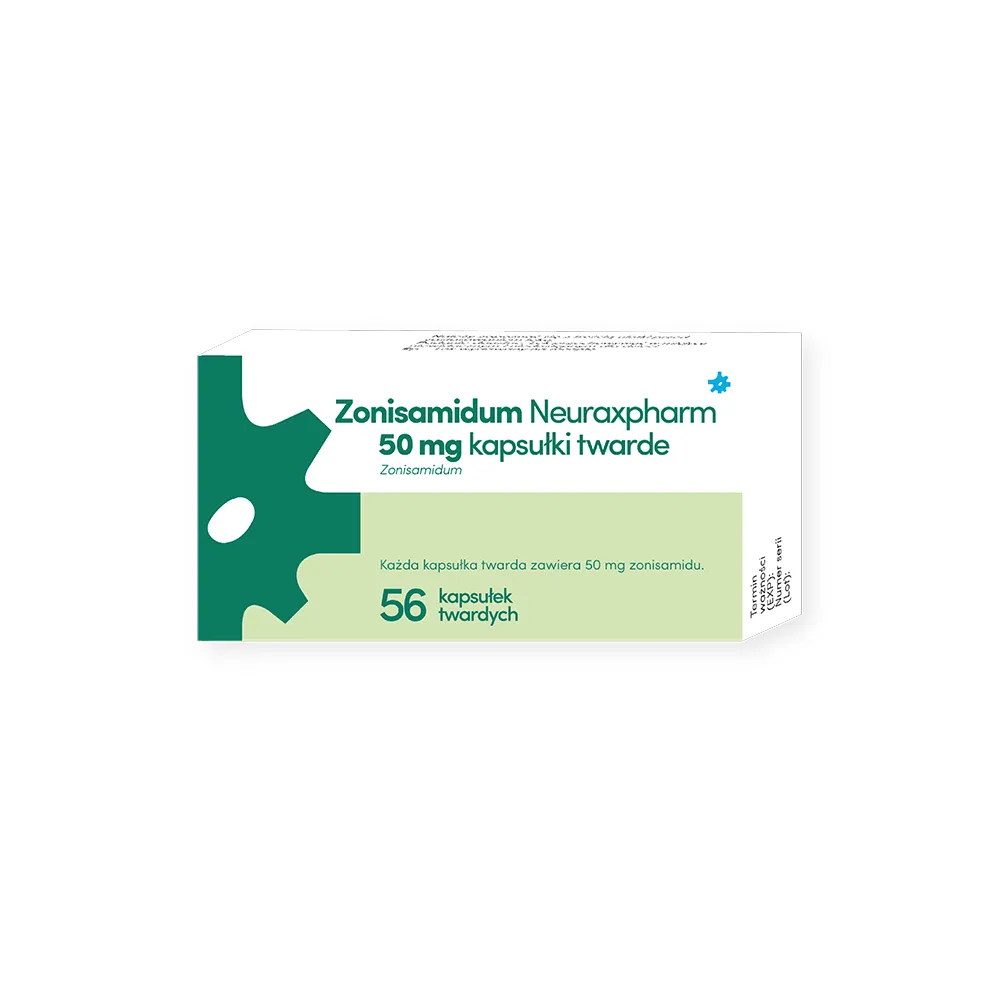
Table of Contents
- Package leaflet: Information for the user
- 1. What Zonisamidum Neuraxpharm is and what it is used for
- 2. Important information before using Zonisamidum Neuraxpharm
- 3. How to use Zonisamidum Neuraxpharm
- 4. Possible adverse effects
- 5. How to store Zonisamidum Neuraxpharm
- 6. Contents of the pack and other information
Package leaflet: Information for the user
Zonisamidum Neuraxpharm, 25 mg, hard capsules
Zonisamidum Neuraxpharm, 50 mg, hard capsules
Zonisamidum Neuraxpharm, 100 mg, hard capsules
Zonisamidum
Please read all of this leaflet carefully before taking this medicine because it contains
important information for you.
- Keep this leaflet. You may need to read it again.
- If you have any questions, ask your doctor or pharmacist.
- This medicine has been prescribed for you only. Do not pass it on to others. It may harm them, even if their symptoms are the same as yours.
- If you experience any side effects, including any not listed in this leaflet, tell your doctor or pharmacist. See section 4.
Leaflet contents
- What Zonisamidum Neuraxpharm is and what it is used for
- What you need to know before taking Zonisamidum Neuraxpharm
- How to take Zonisamidum Neuraxpharm
- Possible side effects
- How to store Zonisamidum Neuraxpharm
- Contents of the pack and other information
1. What Zonisamidum Neuraxpharm is and what it is used for
Zonisamidum Neuraxpharm contains the active substance zonisamide and is used as an antiepileptic medicine.
Zonisamidum Neuraxpharm is used to treat seizures that start in one part of the brain (partial seizures), which may (or may not) progress to seizures involving the whole brain (secondarily generalised seizures).
Zonisamidum Neuraxpharm may be used:
- as the only medicine to treat seizures in adults.
- together with other antiepileptic medicines to treat seizures in adults, children and adolescents aged 6 years and older.
2. Important information before using Zonisamidum Neuraxpharm
When not to use Zonisamidum Neuraxpharm:
- If the patient is allergic to zonisamide or any of the other ingredients of this medicine (listed in section 6);
- If the patient is allergic to sulfonamides, which include sulfonamide antibiotics, thiazide diuretics, and antidiabetic drugs containing sulfonylurea.
Warnings and precautions
Zonisamidum Neuraxpharm belongs to a group of medicines known as sulfonamides, which may
cause severe allergic reactions, serious skin rashes, and blood disorders; very
rarely, these reactions may lead to death (see section 4. Possible side effects).
Use of Zonisamidum Neuraxpharm is associated with the occurrence of severe rashes,
including Stevens-Johnson syndrome.
Use of Zonisamidum Neuraxpharm may lead to high levels of ammonia in the
blood, which may affect brain function, especially if the patient is also taking other
medicines that may increase ammonia levels (e.g., valproic acid), has a genetic
disorder causing excessive accumulation of ammonia in the body (urea cycle disorder), or has liver problems. If the patient experiences unusual drowsiness or confusion, the doctor should be informed immediately.
Before starting treatment with Zonisamidum Neuraxpharm, discuss with the doctor or
pharmacist if:
- the patient is under 12 years of age, as in children there is an increased risk of reduced sweating, heat stroke, pneumonia, and liver problems. Use of Zonisamidum Neuraxpharm is not recommended in children under 6 years of age;
- the patient is elderly; dose adjustment of Zonisamidum Neuraxpharm may be required, and in this age group, allergic reactions, severe skin rashes, swelling of the feet and legs, and itching may occur more frequently (see section 4, Possible side effects);
- the patient has liver problems, as dose adjustment of Zonisamidum Neuraxpharm may be required;
- the patient has eye conditions such as glaucoma;
- the patient has kidney problems, as dose adjustment of Zonisamidum Neuraxpharm may be required;
- the patient has previously had kidney stones, as there is an increased risk of developing new kidney stones. To reduce the risk of kidney stones, drink adequate amounts of water;
- the patient lives or is temporarily staying (on holiday) in a hot climate. Zonisamidum Neuraxpharm may reduce the amount of sweat produced, which may lead to increased body temperature. To reduce the risk of overheating, drink adequate amounts of water and stay in cool environments;
- the patient is underweight or has lost a lot of weight, as Zonisamidum Neuraxpharm may cause further weight loss. Monitoring of the patient's condition may be necessary; therefore, inform the doctor;
- the patient is pregnant or may become pregnant (more information in section "Pregnancy, breastfeeding and fertility").
If any of the above situations apply to the patient, the doctor should be informed before
starting treatment with Zonisamidum Neuraxpharm.
Children and adolescents
Discuss the following risks with the doctor:
Preventing overheating and dehydration in children
Zonisamidum Neuraxpharm may reduce sweating in children and cause overheating,
which, if untreated, may lead to brain damage and death. The risk is greatest during heatwaves.
When a child is taking Zonisamidum Neuraxpharm:
- avoid overheating the child, especially during hot weather;
- the child must avoid intense physical exercise, particularly during hot weather;
- provide the child with large amounts of cool water to drink;
- do not give the child the following medicines: carbonic anhydrase inhibitors (such as topiramate and acetazolamide) or anticholinergic drugs (such as clomipramine, hydroxyzine, diphenhydramine, haloperidol, imipramine, and oxybutynin).
If the child’s skin is very hot, and the child sweats poorly or not at all, or if the child shows signs of confusion or muscle spasms, or has a rapid heartbeat and rapid breathing:
- move the child to a cool, shaded place;
- cool the child’s skin with cool (not cold) water;
- give the child cool water to drink;
- seek immediate medical help.
- Body weight: weigh the child monthly and contact the doctor as soon as possible if the child does not gain sufficient weight. Use of Zonisamidum Neuraxpharm is not recommended in children who are underweight or have poor appetite, and the medicine should be used with caution in children weighing less than 20 kg.
- Increased blood acidity and kidney stones: the risk can be reduced if the child drinks adequate amounts of water and does not take any other medicines that may cause kidney stones (see Zonisamidum Neuraxpharm and other medicines). The treating doctor will monitor the child’s blood bicarbonate levels and kidney function (see also section 4).
Do not use this medicine in children under 6 years of age, as it is unknown whether the potential benefits outweigh the risks in this age group.
Zonisamidum Neuraxpharm and other medicines
Inform the doctor or pharmacist about all medicines currently or recently taken by the patient, including those obtained without a prescription.
- Exercise caution when using Zonisamidum Neuraxpharm in adults taking medicines that may cause kidney stones, such as topiramate or acetazolamide. Such combination is not recommended in children.
- Zonisamidum Neuraxpharm may increase blood levels of medicines such as digoxin and quinidine, so dose reduction of these medicines may be necessary.
- Other medicines, such as phenytoin, carbamazepine, phenobarbital, and rifampicin, may reduce blood levels of Zonisamidum Neuraxpharm, so dose adjustment of Zonisamidum Neuraxpharm may be required.
Taking Zonisamidum Neuraxpharm with food and drink
Zonisamidum Neuraxpharm may be taken with or without food.
Pregnancy, breastfeeding and fertility
If the patient is of childbearing age, she must use an appropriate method of contraception
during treatment with Zonisamidum Neuraxpharm and for one month after stopping
treatment.
If the patient plans pregnancy, she should discuss with her doctor the possibility of switching to another appropriate treatment before stopping contraception and becoming pregnant. If the patient is pregnant or suspects she may be pregnant, she should inform her doctor immediately. Do not stop treatment without discussing it with the doctor.
Use of Zonisamidum Neuraxpharm during pregnancy is permitted only
with the doctor’s approval. Studies have shown an increased risk of congenital malformations in children of women taking antiepileptic medicines. The risk of congenital malformations or neurodevelopmental disorders (problems with brain development) in a child whose mother took Zonisamidum Neuraxpharm during pregnancy is unknown. In one study, children of mothers who took zonisamide during pregnancy were smaller than expected for their age at birth compared to children of mothers treated only with lamotrigine (monotherapy). Full information on the risks and benefits of treating epilepsy with zonisamide during pregnancy should be obtained.
Breastfeeding is not recommended during treatment with Zonisamidum Neuraxpharm and for one month after stopping treatment.
There are no available clinical data on the effect of zonisamide on fertility in humans. Animal studies have shown changes in fertility parameters.
Driving and operating machinery
Zonisamidum Neuraxpharm may affect concentration, reaction speed, and responses to stimuli, and may also cause drowsiness, especially at the beginning of treatment or after a dose increase. If Zonisamidum Neuraxpharm causes the patient any of these symptoms, particular caution should be exercised when driving or operating machinery.
3. How to use Zonisamidum Neuraxpharm
This medicine should always be used exactly as prescribed by your doctor. If in doubt, consult your doctor or pharmacist.
Recommended dose in adults
Use of Zonisamidum Neuraxpharm as monotherapy:
- The initial dose is 100 mg taken once daily.
- The dose may be increased by up to 100 mg every 2 weeks.
- The recommended dose is 300 mg once daily.
Use of Zonisamidum Neuraxpharm in combination with other antiepileptic medicines:
- The initial dose is 50 mg per day, taken in two divided doses of 25 mg each.
- The dose may be increased by up to 100 mg every 1-2 weeks.
- The recommended daily dose ranges from 300 mg to 500 mg.
- In some patients, lower doses may be effective. If adverse effects occur, or if the patient is elderly or has kidney or liver impairment, the dose should be increased more gradually.
Use in children (aged 6 to 11 years) and adolescents (aged 12 to 17 years) with body weight of at least 20 kg:
- The initial dose is 1 mg per kilogram of body weight, taken once daily.
- The dose may be increased by 1 mg per kilogram of body weight every 1-2 weeks.
- The recommended daily dose is 6 to 8 mg per kilogram of body weight in children weighing less than 55 kg, or 300 to 500 mg in children weighing more than 55 kg (the lower dose is used), taken once daily.
Example: A child weighing 25 kg should receive a dose of 25 mg once daily during the first week; thereafter, the daily dose should be increased by 25 mg at the beginning of each subsequent week until a daily dose between 150 mg and 200 mg is reached.
If the patient feels that the effect of Zonisamidum Neuraxpharm is too strong or too weak, consult the doctor or pharmacist.
- Swallow Zonisamidum Neuraxpharm capsules whole with water.
- Do not chew the capsules.
- Take Zonisamidum Neuraxpharm once or twice daily, as directed by the doctor.
- If Zonisamidum Neuraxpharm is taken twice daily, half of the daily dose should be taken in the morning and half in the evening.
Overdose of Zonisamidum Neuraxpharm
If the patient takes more Zonisamidum Neuraxpharm than prescribed, contact a caregiver (family member or friend), the treating doctor, or pharmacist immediately, or go to the nearest hospital emergency department. Bring the medicine with you. The patient may become drowsy and lose consciousness. Other symptoms may include nausea, abdominal pain, muscle tremors, eye movements, weakness, slow heart rate, shortness of breath, and reduced kidney function. Do not attempt to drive.
Missed dose of Zonisamidum Neuraxpharm
- If the patient forgets to take a dose, do not worry; take the next dose at the usual time.
- Do not take a double dose to make up for a missed dose.
Stopping Zonisamidum Neuraxpharm
- Zonisamidum Neuraxpharm is intended for long-term use. Do not reduce the dose or stop treatment unless instructed by the doctor.
- If the doctor decides to discontinue Zonisamidum Neuraxpharm, the dose will be gradually reduced to minimize the risk of continued seizures.
If you have any further questions about the use of this medicine, consult your doctor or pharmacist.
4. Possible adverse effects
Like any medicine, this medicine can cause adverse effects, although not everyone will experience them.
Zonisamidum Neuraxpharm belongs to a group of medicines known as sulfonamides, which may
cause severe allergic reactions, serious skin rashes and blood disorders, which very
rarely may lead to death.
You should contact a doctor immediately if the patient:
- has difficulty breathing, swelling of the face, lips or tongue, or a severe skin reaction, as these symptoms may indicate a serious allergic reaction;
- has symptoms of overheating – high body temperature with little or no sweating, rapid heartbeat and rapid breathing, muscle cramps, and confusion;
- has thoughts of self-harm or suicide. In a small number of people taking antiepileptic medicines such as Zonisamidum Neuraxpharm, thoughts of self-harm or suicide have occurred;
- has muscle pain or weakness, as these symptoms may indicate muscle breakdown, which can lead to kidney problems;
- has sudden back or abdominal pain, or pain or bleeding when passing urine, as these symptoms may indicate kidney stones;
- experiences vision problems such as eye pain or blurred vision while taking Zonisamidum Neuraxpharm.
You should contact a doctor as soon as possible if the patient:
- develops an unexplained skin rash, as this symptom may precede a serious rash or skin peeling;
- has unusual tiredness, fever, sore throat, swollen lymph nodes or a tendency to bruise easily, as these symptoms may indicate blood disorders;
- experiences symptoms of elevated bicarbonate levels in the blood – headache, drowsiness, shortness of breath and loss of appetite. Monitoring or treatment of these symptoms by a doctor may be necessary.
The doctor may decide to discontinue treatment with Zonisamidum Neuraxpharm.
Most adverse effects associated with Zonisamidum Neuraxpharm are mild in severity, occur during the first month of treatment and usually resolve during continued treatment. In
children aged 6–17 years, adverse effects were the same as those described below, except for:
pneumonia, dehydration, decreased sweating (frequent), and abnormal liver enzyme activity (uncommon).
Very common adverse effects (may affect more than 1 in 10 people):
- agitation, irritability, disorientation, depression;
- impaired muscle coordination, dizziness, memory impairment, drowsiness, double vision;
- loss of appetite, decreased blood bicarbonate levels (bicarbonate prevents blood from becoming too acidic).
Common adverse effects (may affect up to 1 in 10 people):
- sleep disturbances, unusual or strange thoughts, feelings of anxiety or intense emotions;
- slowed thinking, difficulty concentrating, speech disorders, skin sensation disturbances (tingling and numbness), muscle tremors, involuntary eye movements;
- kidney stones;
- skin rashes, itching, allergic reactions, fever, fatigue, flu-like symptoms, hair loss;
- bruising (small bleeds under the skin from damaged capillaries);
- weight loss, nausea, indigestion, stomach pain, diarrhoea, constipation;
- swelling of feet and legs.
Uncommon adverse effects (may affect up to 1 in 100 people):
- anger, aggression, suicidal thoughts, suicide attempts;
- vomiting;
- cholecystitis, gallstones;
- urinary tract stones;
- lung infection/inflammation and urinary tract infections;
- low blood potassium levels, seizures/epileptic fits.
Very rare adverse effects (may affect up to 1 in 10,000 people):
- hallucinations, memory loss, coma, neuroleptic malignant syndrome (inability to move, sweating, fever, incontinence of faeces and urine), status epilepticus (repeated or prolonged epileptic seizures);
- breathing difficulties, shortness of breath, pneumonia;
- pancreatitis (severe abdominal or back pain);
- liver disease, kidney failure, increased blood creatinine levels (creatinine is a metabolic waste product normally excreted by the kidneys);
- severe skin rashes or skin peeling (which may occur together with malaise or fever);
- muscle breakdown (the patient may experience muscle pain or weakness), which may lead to kidney disease;
- swollen lymph nodes, blood disorders (reduced blood cell counts, which may increase the risk of infection, cause paleness, fatigue, fever and easy bruising);
- decreased sweating, overheating of the body;
- glaucoma, caused by fluid retention in the eye leading to increased intraocular pressure. Eye pain, blurred vision or loss of vision may occur, which are symptoms of glaucoma.
Reporting of adverse effects
If any adverse effects occur, including any not listed
in this leaflet, inform a doctor or pharmacist. Adverse effects can be reported
directly to the
Department of Monitoring Adverse Drug Reactions, Office for Registration of Medicinal Products, Medical Devices and Biocidal Products
Al. Jerozolimskie 181C, 02-222 Warsaw; tel.: + 48 22 49 21 301; fax: + 48 22 49 21 309
Website: https://smz.ezdrowie.gov.pl
Adverse effects can also be reported to the marketing authorisation holder.
Reporting adverse effects helps provide more information on the safety of this medicine.
5. How to store Zonisamidum Neuraxpharm
Keep the medicine out of the sight and reach of children.
Do not use this medicine after the expiry date stated on the cardboard box after:
"Expiry date (EXP)" and on the blister after the abbreviation "EXP". The expiry date refers to the last day of the stated month.
No special storage conditions required for this medicinal product.
Do not use this medicine if the capsule, blister pack or cardboard packaging is damaged, or if there are any signs of medicine degradation. Return the packaging to a pharmacist.
Medicines must not be disposed of via sewage systems or household waste. Ask a pharmacist how to dispose of medicines no longer in use. This will help protect the environment.
6. Contents of the pack and other information
What Zonisamidum Neuraxpharm contains
The active substance in Zonisamidum Neuraxpharm is zonisamide.
Zonisamidum Neuraxpharm hard capsules contain 25 mg, 50 mg or 100 mg of zonisamide.
- Other components of the capsules are: microcrystalline cellulose, hydrogenated vegetable oil and sodium lauryl sulfate. The printing ink on the capsule contains shellac (E 904), potassium hydroxide, and black iron oxide (E 172).
- Capsule shell composition: gelatin, titanium dioxide (E 171). Additionally, the shell of 50 mg capsules contains black iron oxide (E 172), and the shell of 100 mg capsules contains quinoline yellow (E 104) and erythrosine (E 127).
What Zonisamidum Neuraxpharm looks like and contents of the pack
Zonisamidum Neuraxpharm 25 mg hard capsules have a white cap and body, printed with the letter "G" and the number "742", and are 14.4±0.5 mm in length.
Zonisamidum Neuraxpharm 50 mg hard capsules have a grey cap and white body, printed with the letter "G" and the number "743", and are 15.8±0.5 mm in length.
Zonisamidum Neuraxpharm 100 mg hard capsules have a red cap and white body, printed with the letter "G" and the number "744", and are 19.2±0.5 mm in length.
Pack sizes available:
Zonisamidum Neuraxpharm 25 mg is packed in blisters and cardboard boxes containing 14 capsules.
Zonisamidum Neuraxpharm 50 mg is packed in blisters and cardboard boxes containing 56 capsules.
Zonisamidum Neuraxpharm 100 mg is packed in blisters and cardboard boxes containing 56 capsules.
Not all pack sizes may be marketed.
Marketing Authorisation Holder
neuraxpharm Arzneimittel GmbH
Elisabeth-Selbert Str. 23
40764 Langenfeld
Germany
Manufacturer/Importer
Glenmark Pharmaceuticals s.r.o.
Hvězdova 1716/2b
140 78 Prague 4
Czech Republic
For further information about this medicinal product and its brand names in the European Economic Area countries, please contact the representative of the Marketing Authorisation Holder:
Neuraxpharm Polska Sp. z o.o.
ul. Poleczki 35
02-822 Warsaw
Poland
[email protected]