Zinkorot
Poland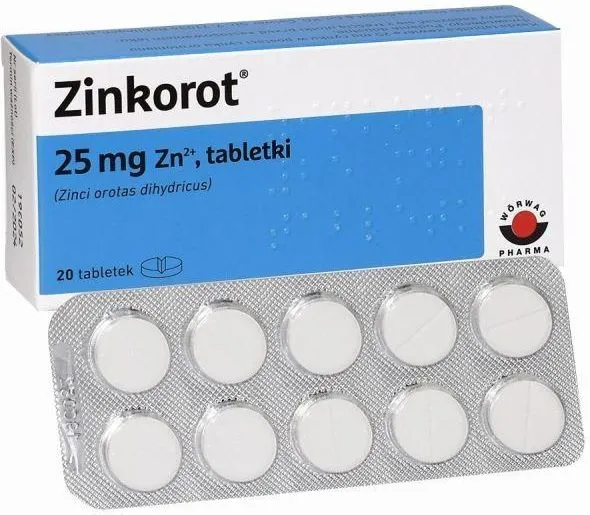
Table of Contents
PACKAGE LEAFLET: INFORMATION FOR THE PATIENT
Zinkorot
25 mg Zn, tablets
(Zinci orotas dihydricus)
Please read the entire leaflet carefully before taking this medicine, as it contains
important information for the patient.
This medicine should always be taken exactly as described in this patient leaflet or as directed by
the physician or pharmacist.
- Keep this leaflet, as you may need to read it again.
- Consult your pharmacist if you need advice or additional information.
- If any adverse reactions occur, including any possible adverse reactions not listed in this leaflet, inform your doctor or pharmacist. See section 4.
- If there is no improvement or if symptoms worsen after 14 days, consult your doctor.
Table of contents:
- What Zinkorot is and what it is used for.
- Important information before taking Zinkorot.
- How to take Zinkorot.
- Possible side effects.
- How to store Zinkorot.
- Contents of the pack and other information.
1. What Zinkorot is and what it is used for
Zinkorot is a zinc-supplementing agent used in cases of zinc deficiency when dietary intake is insufficient.
Zinc plays an important role in the following systems and physiological processes:
- immune system;
- maintenance of skin integrity;
- wound healing;
- sense of taste and smell;
- thyroid function;
- growth and development processes;
- testicular maturation;
- nervous system function;
- insulin activity (a hormone regulating glucose metabolism).
Zinc influences brain development and physiology; therefore, zinc deficiency or excess may lead to disturbances in central nervous system development, behavioral changes, and neurological disorders.
2. Important information before using Zinkorot
When not to use Zinkorot
- if the patient is allergic to zinc orotate or any of the other ingredients of this medicine (listed in section 6).
Children and adolescents
Zinkorot must not be used in children under 6 years of age.
For this patient group, other zinc-containing medicines, e.g. in liquid form, are more appropriate.
When to exercise special caution with Zinkorot
Zinc may affect copper absorption. During long-term treatment with Zinkorot, your doctor may recommend monitoring blood copper levels.
Other medicines and Zinkorot
Tell your doctor or pharmacist about all medicines you are currently taking or have recently taken, including those obtained without a prescription.
Chelating agents (used to remove heavy metals from the body), such as D-penicillamine, dimercaptopropanesulfonic acid (DMPS), dimercaptosuccinic acid (DMSA), or ethylenediaminetetraacetic acid (EDTA), may impair zinc absorption or increase its elimination from the body.
Concomitant use of iron, copper, and calcium salts may reduce zinc absorption.
High doses of zinc may reduce absorption of copper and iron.
Zinc reduces the absorption of tetracyclines, ofloxacin, and other quinolones (antibiotics, e.g. norfloxacin, ciprofloxacin). Therefore, at least a 3-hour interval should be maintained between administration of zinc and the above-mentioned medicines.
Zinkorot with food and drink
Foods high in phytates (e.g. cereal products, vegetables, nuts) reduce zinc absorption. Coffee may also inhibit zinc absorption.
Pregnancy, breastfeeding, and fertility
Before taking any medicine, consult your doctor.
During pregnancy or breastfeeding, or if you suspect you may be pregnant or are planning a pregnancy, consult your doctor or pharmacist before using this medicine.
Pregnancy:
Zinkorot should not be used during pregnancy unless otherwise advised by a doctor.
Breastfeeding:
Use of this medicine is not recommended in breastfeeding women.
Driving and operating machinery
No effect of Zinkorot on the ability to drive or operate machinery has been demonstrated. However, special caution is required if a higher than recommended dose of Zinkorot is taken. Overdose may cause nausea and vomiting, drowsiness, headache, and dizziness, which may impair the ability to drive or operate machinery.
The medicine contains less than 1 mmol (23 mg) of sodium per tablet, meaning the medicine is considered "sodium-free".
3. How to use Zinkorot
Always take this medicine exactly as your doctor or pharmacist has advised. If in doubt, consult your doctor or pharmacist.
Zinkorot should be taken orally with sufficient fluid (e.g. a glass of water). Do not take immediately before or after a meal. The tablet may be divided into halves.
Do not take Zinkorot with meals.
Recommended doses:
Adults and adolescents (12-17 years of age)
The recommended dose is 12.5 to 25 mg of zinc (= ½ - 1 tablet of Zinkorot) per day.
Use in children
In children aged 6 to 11 years, the recommended daily dose is 12.5 mg of zinc (= ½ tablet of Zinkorot).
Zinkorot may be used in children provided they are able to swallow the tablet safely.
Children under 6 years of age
Zinkorot must not be used in children under 6 years of age. For this patient group, administration in other pharmaceutical forms (e.g. liquid) may be more appropriate.
Duration of treatment
The duration of treatment depends on the response to therapy. Consult your doctor or pharmacist.
Taking more than the recommended dose of Zinkorot
If you take more than the recommended dose, contact your doctor or pharmacist immediately.
Symptoms of overdose:
gastrointestinal disturbances, metallic taste in the mouth, abdominal pain, nausea, vomiting, drowsiness, headache, anaemia (reduced number of red blood cells), and dizziness.
Missing a dose of Zinkorot
If you miss a dose of Zinkorot, take it as soon as possible, unless the next dose is due soon.
In that case, skip the missed dose and take the next dose at the scheduled time.
Do not take a double dose to make up for a missed dose.
Stopping Zinkorot
No adverse effects have been reported upon discontinuation of Zinkorot.
If you have any further questions about the use of this medicine, consult your doctor or pharmacist.
4. Possible adverse reactions
Like all medicines, this medicine can cause adverse reactions, although not everyone will experience them.
Immediately discontinue use of Zinkorot and seek medical help if
any of the following symptoms occur:
- difficulty breathing;
- throat swelling;
- swelling of the lips, tongue or face;
- rash or hives.
Very rare: At the beginning of treatment, zinc salts may cause abdominal pain, nausea,
indigestion and diarrhoea. These symptoms occur more frequently when zinc is taken on an empty
stomach. Symptoms resolve quickly after discontinuation of the medicine.
In case of long-term use of Zinkorot, the doctor may recommend monitoring copper levels in blood,
since prolonged zinc use reduces copper absorption. Long-term use of Zinkorot also reduces iron absorption.
Reporting adverse reactions
If any adverse reactions occur, including any not listed in this leaflet, inform your doctor or pharmacist. Adverse reactions can be reported directly to the Department of Monitoring Adverse Drug Reactions of the Office for Registration of Medicinal Products, Medical Devices and Biocidal Products
Al. Jerozolimskie 181 C
02-222 Warsaw
Phone: +48 22 49 21 301
Fax: +48 22 49 21 309
Website: https://smz.ezdrowie.gov.pl
Reporting adverse reactions helps to collect more information on the safety of the medicine.
5. How to store Zinkorot
Keep the medicine out of sight and reach of children.
Do not use the medicine after the expiry date stated on the packaging after EXP.
The expiry date refers to the last day of the stated month.
No special precautions for storage of the medicinal product.
Medicines must not be disposed of via wastewater or household waste. Ask your pharmacist how to dispose of medicines no longer required. This will help protect the environment.
6. Contents of the pack and other information
What Zinkorot contains
- The active substance is zinc (25 mg) in the form of zinc orotate dihydrate (157.36 mg).
- The other ingredients are: colloidal anhydrous silica, microcrystalline cellulose, povidone K-30, sodium croscarmellose, talc, magnesium stearate. The medicine is considered sodium-free (see section 2.).
What Zinkorot looks like and contents of the pack
Zinkorot is white, flat tablets with rounded edges and a score line on one side,
packed in blisters and cardboard boxes.
Pack sizes of 20, 50 and 100 tablets.
Not all pack sizes may be marketed.
Marketing Authorisation Holder
Wörwag Pharma GmbH & Co. KG
Flugfeld-Allee 24
71034 Böblingen
Germany
Manufacturer
Wörwag Pharma Production GmbH & Co. KG
Gewerbeallee 1
82343 Pöcking
Germany
Wörwag Pharma Operations Sp. z o.o.
ul. gen. Mariana Langiewicza 58,
95-050 Konstantynów Łódzki,
Poland
For further information, please contact the representative of the Marketing Authorisation Holder:
Woerwag Pharma Polska Sp. z o.o.
ul. Józefa Piusa Dziekońskiego 1
00-728 Warsaw
tel. (+48) 22 863 72 81
fax (+48) 22 877 13 70