Zenofor sr
Poland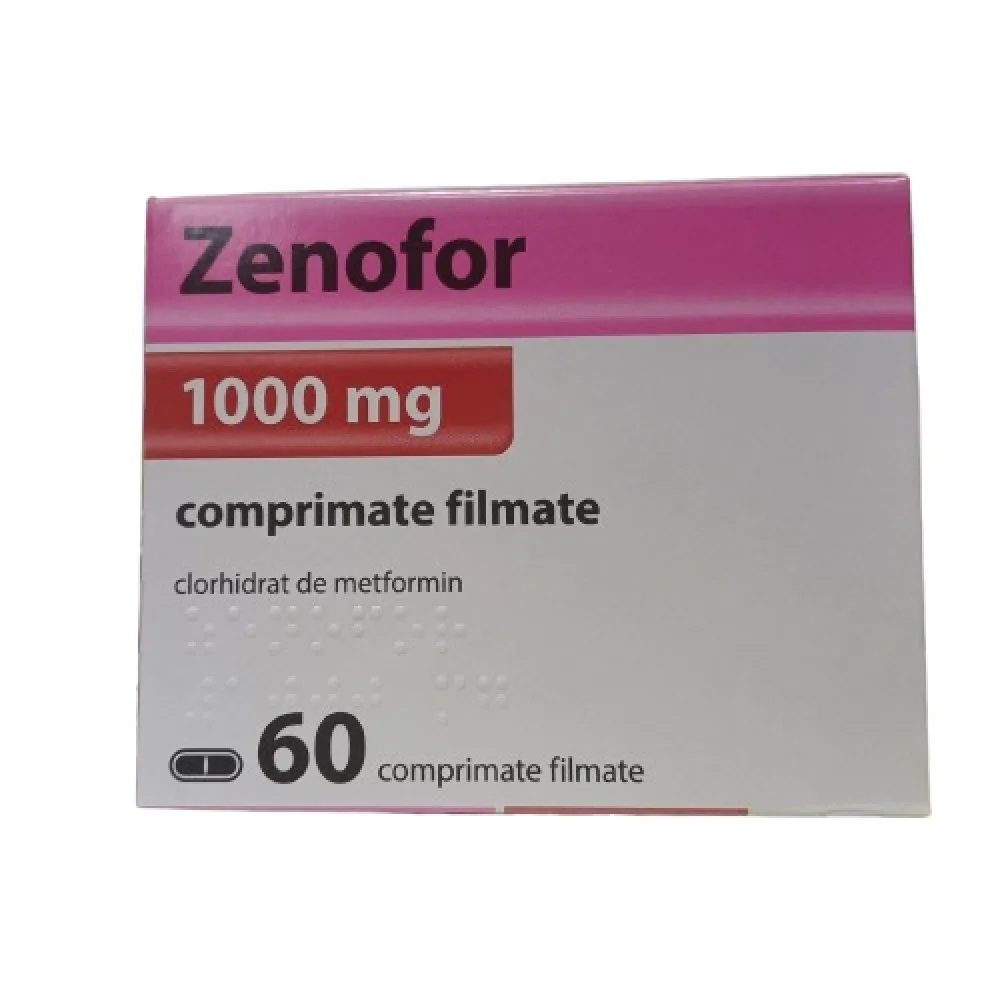
Table of Contents
Package leaflet: Information for the user
Zenofor SR, 500 mg, prolonged-release tablets
Zenofor SR, 750 mg, prolonged-release tablets
Zenofor SR, 1000 mg, prolonged-release tablets
Metformini hydrochloridum
Please read all of this leaflet carefully before taking this medicine, because it contains
important information for you
- Keep this leaflet. You may need to read it again.
- If you have any further questions, ask your doctor or pharmacist.
- This medicine has been prescribed for you only. Do not pass it on to others. It may harm other people, even if their symptoms are the same as yours.
- If you experience any side effects, including any not listed in this leaflet, tell your doctor or pharmacist. See section 4.
This medicine is called Zenofor SR 500 mg, 750 mg, 1000 mg prolonged-release tablets, but
in this leaflet it is referred to as Zenofor SR.
Leaflet contents
- What Zenofor SR is and what it is used for
- What you need to know before taking Zenofor SR
- How to take Zenofor SR
- Possible side effects
- How to store Zenofor SR
- Contents of the pack and other information
1. What Zenofor SR is and what it is used for
Zenofor SR prolonged-release tablets contain metformin hydrochloride as the active substance and belong to a group of medicines called biguanides, used in the treatment of type 2 diabetes (non-insulin-dependent diabetes).
What Zenofor SR is used for
Zenofor SR is used in the treatment of type 2 diabetes when blood glucose (sugar) levels cannot be controlled by diet and exercise alone.
This medicinal product is intended for use in adults only.
How Zenofor SR works
Insulin is a hormone that enables the body to take up glucose and use it for energy or store it for later use.
In people with type 2 diabetes, the pancreas does not produce enough insulin or the body cannot properly use the insulin it produces. This leads to abnormally high levels of glucose in the blood. Zenofor SR helps lower blood glucose levels to as near normal as possible.
Treatment with Zenofor SR is associated with weight maintenance or moderate weight reduction.
Zenofor SR is formulated as prolonged-release tablets, specially designed to slowly release the medicine in the body, and therefore differs from many other types of tablets containing metformin.
2. Important information before taking Zenofor SR
When not to use Zenofor SR:
- if the patient is allergic to metformin or to any of the other ingredients of the medicine (listed in section 6). An allergic reaction may cause rash, itching, or difficulty breathing.
- if the patient has liver function disorders.
- if the patient has severely reduced kidney function.
- if the patient abuses alcohol.
- if the patient has uncontrolled diabetes, for example severe hyperglycemia (high blood glucose levels), nausea, vomiting, diarrhea, sudden weight loss, lactic acidosis (see "Risk of lactic acidosis" below), or ketoacidosis (symptoms include: abdominal pain, rapid and deep breathing, drowsiness, or unusual fruity odor from the breath).
- if the patient has any of the following conditions, as they may increase the risk of lactic acidosis (see "Risk of lactic acidosis" below):
- in case of excessive loss of body water (dehydration). Dehydration may lead to kidney dysfunction.
- in case of severe infection, e.g. pneumonia, bronchitis, or kidney infection. Severe infections may lead to kidney dysfunction.
- in case of treatment for acute heart failure or recent myocardial infarction, severe circulatory disorders, or breathing difficulties.
Warnings and precautions
Risk of lactic acidosis (see symptoms in section 4)
Zenofor SR may cause a very rare but serious adverse effect called lactic acidosis, especially if the patient has kidney function disorders. The risk of lactic acidosis increases in cases of uncontrolled diabetes, severe infection, prolonged fasting or alcohol consumption, dehydration, liver function disorders, and any medical conditions in which part of the body is inadequately supplied with oxygen (e.g. acute severe heart diseases).
If any of the above conditions apply to the patient, consult a doctor for further instructions.
Contact a doctor immediately for further instructions if:
- The patient has a genetically inherited mitochondrial disease (energy-producing structures in cells), such as MELAS syndrome (mitochondrial encephalopathy, myopathy, lactic acidosis, and stroke-like episodes) or maternally inherited diabetes and deafness (MIDD).
- After starting metformin, the patient experiences any of the following symptoms: seizures, worsening cognitive function, difficulty moving, symptoms indicating nerve damage (e.g. pain or numbness), migraine, or deafness.
- The patient is scheduled for major surgery; the patient must stop taking Zenofor SR before and for some time after the procedure. The doctor will decide when the patient should stop and resume treatment with Zenofor SR.
- During treatment with Zenofor SR, the doctor will monitor kidney function at least once a year, or more frequently if the patient is elderly and/or has deteriorating kidney function.
- If the patient is over 75 years old, initiating treatment with Zenofor SR to reduce the risk of type 2 diabetes is not recommended.
- It is common for the tablet shell to be visible in the stool. This is normal and should not cause concern when taking this type of tablet.
- Follow the dietary recommendations provided by the doctor and consume carbohydrates regularly throughout the day.
- Do not discontinue this medicine without consulting a doctor.
Zenofor SR and other medicines
If the patient is to receive an iodinated contrast medium injected into the bloodstream for X-ray imaging, the patient must stop taking Zenofor SR before or at the latest at the time of injection. The doctor will decide when the patient should stop and resume treatment with Zenofor SR.
Inform the doctor about all medicines currently taken or recently taken, as well as any medicines the patient plans to take. The patient may require more frequent monitoring of blood glucose levels and kidney function assessments, or dose adjustments of Zenofor SR by the doctor.
It is especially important to inform the doctor about taking the following medicines:
- Medicines that increase urine production ( diuretics such as furosemide),
- Medicines used to treat pain and inflammation (non-steroidal anti-inflammatory drugs (NSAIDs) and COX-2 inhibitors, such as ibuprofen and celecoxib),
- Certain medicines used to treat high blood pressure (ACE inhibitors and angiotensin II receptor antagonists),
- Steroids, such as prednisolone, mometasone, beclomethasone,
- Sympathomimetic medicines, including epinephrine and dopamine, used in the treatment of heart attacks and low blood pressure. Epinephrine is also contained in certain dental anesthetics,
- Medicines that may alter the blood concentration of Zenofor SR, especially if the patient has reduced kidney function (such as verapamil, rifampicin, cimetidine, dolutegravir, ranolazine, trimethoprim, vandetanib, isavuconazole, crizotinib, olaparib).
Zenofor SR and alcohol
Consuming excessive amounts of alcohol while taking this medicine may increase the risk of lactic acidosis (see symptoms in section 4).
Therefore, do not take Zenofor SR if the patient is alcohol-dependent.
Pregnancy and breastfeeding
If the patient is pregnant, suspects she may be pregnant, or plans to become pregnant, she should consult her doctor regarding any necessary changes in treatment or blood glucose monitoring.
This medicine is not recommended for breastfeeding patients or those planning to breastfeed.
Driving and operating machinery
Zenofor SR, when used as the sole antidiabetic medicine, does not cause hypoglycemia (symptoms such as fainting, confusion, and excessive sweating), and therefore should not affect the ability to drive or operate machinery.
However, if Zenofor SR is used in combination with other antidiabetic medicines that may cause hypoglycemia, extra caution should be exercised when driving or operating machinery.
3. How to use Zenofor SR
Your doctor may prescribe Zenofor SR as the only antidiabetic medication or in combination with other oral antidiabetic drugs or insulin.
How and when to take the tablets
Zenofor SR should always be taken exactly as prescribed by your doctor.
If in doubt, consult your doctor or pharmacist.
Usually, treatment starts with one tablet once daily, taken with the evening meal.
In some cases, your doctor may recommend taking the tablets twice daily, but the tablets should always be taken with a meal or some food.
The tablets must be swallowed whole with a glass of water and must not be chewed.
Zenofor SR 1000 mg
The break line is not intended for splitting the tablet.
Recommended dose
Treatment usually starts with one tablet of Zenofor SR containing 500 mg of metformin, taken once daily (1 x 500 mg tablet). After approximately 2 weeks, based on blood glucose measurements, your doctor may adjust the dose. The maximum daily dose of Zenofor SR is 2000 mg (e.g., 4 x 500 mg tablets).
If the patient has impaired kidney function, the doctor may prescribe a lower dose.
Taking more than the recommended dose of Zenofor SR
If the patient accidentally takes extra tablets, there is no need to worry. However, if unusual symptoms occur, contact your doctor.
If the overdose is significant, lactic acidosis may be more likely (see symptoms in section 4). In such a case, discontinue Zenofor SR immediately and contact your doctor or go to the nearest hospital.
Missing a dose of Zenofor SR
If a dose is missed, take it as soon as the patient remembers. Do not take a double dose to make up for the missed dose.
4. Possible adverse effects
Like all medicines, this medicine can cause adverse effects, although not everyone will experience them.
The following adverse effects may occur:
Serious adverse effects
Stop taking Zenofor SR and contact a doctor immediately or go to the nearest hospital if the patient experiences any of the symptoms of lactic acidosis,
as this condition may lead to coma.
Symptoms of lactic acidosis include:
- vomiting,
- abdominal pain,
- muscle cramps,
- general feeling of being unwell combined with severe fatigue,
- difficulty breathing,
- decreased body temperature and slowed heart rate.
Lactic acidosis is a sudden, life-threatening condition requiring hospital treatment.
Temporarily discontinue use of Zenofor SR if the patient experiences symptoms of dehydration (significant loss of body fluids), such as severe vomiting, diarrhoea, fever, exposure to high temperatures, or if the patient drinks less fluid than usual. Consult a doctor for further instructions.
Zenofor SR may cause abnormal liver function test results and hepatitis, which may lead to jaundice (may occur in up to 1 patient in 10,000). If the patient develops yellowing of the eyes and/or skin, contact a doctor immediately.
Other possible adverse effects are listed below by frequency of occurrence as follows:
Very common (may affect more than 1 in 10 patients):
- Diarrhoea, nausea, vomiting, abdominal pain or loss of appetite. If such symptoms occur, do not stop taking the tablets, as these symptoms usually resolve after about 2 weeks. It may help to take the tablets with food or immediately after a meal.
Common (may affect up to 1 in 10 patients):
- Taste disturbances.
- Decreased or low blood levels of vitamin B12 (symptoms may include extreme tiredness (fatigue), pain and redness of the tongue (glossitis), tingling sensations (paraesthesiae), or pale or yellowish skin). Your doctor may order several tests to determine the cause of symptoms, as some of them may also be caused by diabetes or other health problems unrelated to diabetes.
Very rare (may affect up to 1 in 10,000 patients):
- Skin rash, including redness, itching and urticaria.
Reporting of adverse effects
If any adverse effects occur, including any not listed in this leaflet, tell your doctor, pharmacist or nurse. Adverse effects can be reported directly to the Department of Monitoring Adverse Drug Reactions, Office for Registration of Medicinal Products, Medical Devices and Biocidal Products, Al. Jerozolimskie 181C, 02-222 Warsaw, phone: +48 22 49-21-301, fax: +48 22 49-21-309,
Website: https://smz.ezdrowie.gov.pl
Adverse effects can also be reported to the marketing authorisation holder or its representative.
Reporting adverse effects helps provide more information on the safety of the medicine.
5. How to store Zenofor SR
Keep this medicine out of sight and reach of children.
Do not use this medicine after the expiry date, which is stated on the packaging after the abbreviation "EXP". The expiry date refers to the last day of the stated month.
No special storage conditions are required.
If the tablets change colour or show any other signs of deterioration, consult your pharmacist.
Medicines should not be disposed of via wastewater or household waste. Ask your pharmacist how to dispose of medicines no longer required. Such measures help protect the environment.
6. Contents of the pack and other information
What Zenofor SR contains
The active substance in Zenofor SR is metformin (in the form of metformin hydrochloride).
Zenofor SR 500 mg: Each prolonged-release tablet contains 500 mg of metformin hydrochloride, equivalent to 390 mg of metformin.
Zenofor SR 750 mg: Each prolonged-release tablet contains 750 mg of metformin hydrochloride, equivalent to 585 mg of metformin.
Zenofor SR 1000 mg: Each prolonged-release tablet contains 1000 mg of metformin hydrochloride, equivalent to 780 mg of metformin.
Other ingredients are:
Tablet core: Stearic acid, shellac, povidone (K30), colloidal anhydrous silica, magnesium stearate
Tablet coating: Hypromellose (15 cps), hydroxypropylcellulose, titanium dioxide (E 171), propylene glycol, macrogol 6000, talc
What Zenofor SR looks like and contents of the pack
Zenofor SR 500 mg: White, oval, biconvex coated tablets, smooth on both sides, approximately 15.00 × 8.5 mm in size.
Zenofor SR 750 mg: White, biconvex coated capsule-shaped tablets, smooth on both sides, approximately 19.1 × 9.3 mm in size.
Zenofor SR 1000 mg: White, oval, biconvex coated tablets with a division line on one side and smooth on the other, approximately 20.4 × 9.7 mm in size.
The division line is not intended for breaking the tablet.
Zenofor SR 500 mg is available in packs of 20, 28, 30, 50, 56, 60, 84, 90, 100, 112, 120, 180 or 600 tablets in PVC/PVDC/Aluminium blister packs.
Zenofor SR 750 mg is available in packs of 14, 20, 28, 30, 50, 56, 60, 84, 90, 100, 112, 120, 180 or 600 tablets in PVC/PVDC/Aluminium blister packs.
Zenofor SR 1000 mg is available in packs of 14, 20, 28, 30, 50, 56, 60, 84, 90, 100, 112, 120, 180 or 600 tablets in PVC/PVDC/Aluminium blister packs.
Not all pack sizes may be marketed.
Marketing Authorisation Holder
Zentiva, k.s.
U kabelovny 130
Dolní Měcholupy
102 37 Prague 10
Czech Republic
Manufacturer/Importer
S.C. ZENTIVA S.A.
B-dul Theodor Pallady no. 50, Sector 3
Bucharest, code 032266,
Romania
This medicinal product has been authorised for marketing in the European Economic Area under the following names:
Czech Republic: Mulado Prolong
Poland: Zenofor SR
Hungary: Zenofor 500, 750, 1000 mg retard tabletta
Slovakia: Mirovian XR 500 mg/750 mg/1000 mg
For further information about this medicinal product, please contact the representative of the Marketing Authorisation Holder in Poland:
Zentiva Polska Sp. z o.o.
ul. Bonifraterska 17
00-203 Warsaw
tel.: +48 22 375 92 00