Vinorelbine medac
Poland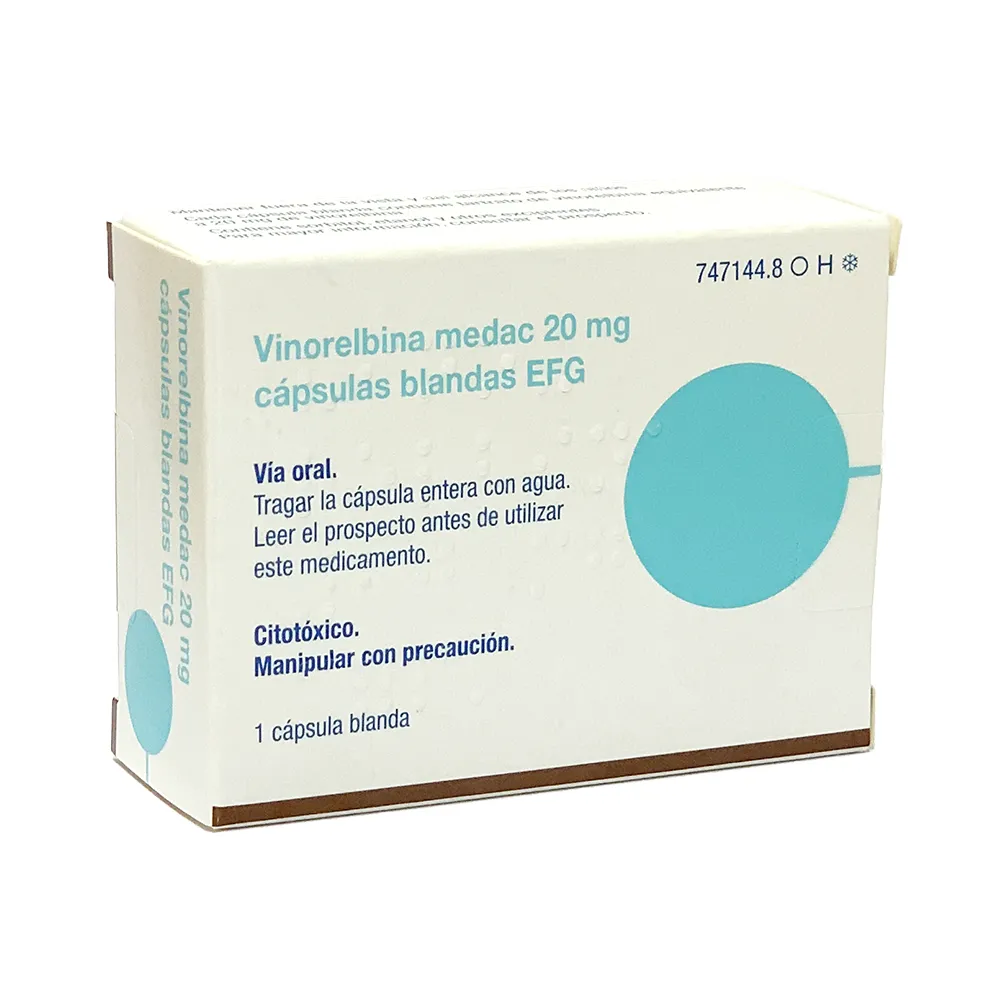
Table of Contents
Package leaflet: Information for the user
Vinorelbine medac, 20 mg, soft capsules
Vinorelbine medac, 30 mg, soft capsules
Vinorelbine medac, 80 mg, soft capsules
vinorelbine tartrate
Please read all of this leaflet carefully before taking this medicine, because it contains
important information for the patient.
- Keep this leaflet so that you can read it again if necessary.
- If you have any questions, please consult your doctor or pharmacist.
- This medicine has been prescribed for a specific individual. Do not pass it on to others. This medicine may harm other people, even if their symptoms are the same.
- If the patient experiences any adverse reactions, including any adverse reactions not listed in this leaflet, inform the doctor, pharmacist, or nurse. See section 4.
Table of contents of the leaflet
- What Vinorelbine medac is and what it is used for
- Important information before taking Vinorelbine medac
- How to take Vinorelbine medac
- Possible side effects
- How to store Vinorelbine medac
- Contents of the pack and other information
1. What Vinorelbine medac is and what it is used for
Vinorelbine medac contains the active substance vinorelbine and belongs to a group of medicines called Vinca alkaloids used in cancer treatment.
Vinorelbine medac is used in the treatment of certain types of lung cancer and certain types of breast cancer in patients aged over 18 years.
2. Important information before taking Vinorelbine medac
When not to take Vinorelbine medac:
- if the patient is allergic to vinorelbine or any other anticancer medicine belonging to the vinca alkaloid group, or to any of the other ingredients of this medicine (listed in section 6);
- if the patient is breastfeeding;
- if the patient has undergone surgery of the stomach or small intestine, or has intestinal disorders;
- if the patient has a low white blood cell count and/or platelet count, or has a severe infection currently present or recently (within the last 2 weeks);
- if the patient is due to receive or has recently received the yellow fever vaccine;
- if the patient requires long-term oxygen therapy.
Warnings and precautions
Before starting treatment with Vinorelbine medac, discuss with the doctor or
pharmacist if:
- the patient has previously had a heart attack or severe chest pain;
- the patient's ability to perform daily activities is significantly limited;
- the patient has been treated with radiotherapy, and the treated area included the liver;
- the patient is experiencing signs of infection (such as fever, chills, cough);
- the patient is due to be vaccinated. During vinorelbine treatment, live attenuated vaccines (e.g. against measles, mumps and rubella) are not recommended, as they may increase the risk of life-threatening vaccine-related illness;
- the patient has severe liver disease unrelated to their existing cancer;
- the patient is pregnant. Before starting treatment with Vinorelbine medac and during treatment, blood cell counts are monitored to ensure the treatment is safe for the patient. If test results are unsatisfactory, treatment may be delayed and further tests performed until parameters return to normal values.
Children and adolescents
This medicine is not recommended for use in children under 18 years of age.
Vinorelbine medac and other medicines
Inform the doctor or pharmacist about all medicines currently used, recently taken, or planned to be taken.
The doctor must exercise particular caution if the patient is taking any of the following medicines:
- blood-thinning medicines (anticoagulants);
- antiepileptic medicines (e.g. phenytoin);
- antifungal medicines (e.g. itraconazole);
- anticancer medicines such as mitomycin C or lapatinib;
- medicines affecting the immune system, such as cyclosporine and tacrolimus.
Concomitant use of Vinorelbine medac and other medicines known to have myelosuppressive toxicity (affecting white blood cells, red blood cells and platelets) may also increase the risk of certain adverse reactions.
Pregnancy, breastfeeding and effects on fertility
If the patient is pregnant, suspects she may be pregnant, or is planning to become pregnant, she should consult her doctor before using this medicine due to possible risks to the unborn child.
If the patient is taking Vinorelbine medac, she must not breastfeed.
Women of childbearing potential must use an effective method of contraception during treatment and for at least 7 months after completion of treatment.
Men should avoid fathering a child during treatment with Vinorelbine medac and for at least 4 months after taking the last capsule. Treatment with Vinorelbine medac may cause changes in male fertility; therefore, men should seek advice regarding sperm storage before starting treatment.
Driving and operating machinery
No studies have been conducted on the effects of the medicine on the ability to drive or operate machinery. However, based on the pharmacodynamic profile of vinorelbine, it is not expected to affect the ability to drive or operate machinery.
Nevertheless, in all cases, patients should not drive if they feel unwell or if advised otherwise by their doctor.
Vinorelbine medac contains sorbitol
Each soft capsule containing 20 mg of vinorelbine contains 10.54 mg of sorbitol.
Each soft capsule containing 30 mg of vinorelbine contains 15.96 mg of sorbitol.
Each soft capsule containing 80 mg of vinorelbine contains 29.35 mg of sorbitol.
Vinorelbine medac contains ethanol
This medicine contains 5 mg of alcohol (ethanol) in each 20 mg soft capsule, equivalent to 2.85%.
The amount of alcohol in 20 mg of this medicine is equivalent to less than 1 ml of beer or 1 ml of wine.
This medicine contains 7.5 mg of alcohol (ethanol) in each 30 mg soft capsule, equivalent to 2.85%.
The amount of alcohol in 30 mg of this medicine is equivalent to less than 1 ml of beer or 1 ml of wine.
This medicine contains 20 mg of alcohol (ethanol) in each 80 mg soft capsule, equivalent to 2.85%.
The amount of alcohol in 80 mg of this medicine is equivalent to less than 1 ml of beer or 1 ml of wine.
The small amount of alcohol in this medicine will not cause noticeable effects.
3. How to take Vinorelbine medac
Before and during treatment with Vinorelbine medac, your doctor will perform blood tests to check your blood cell counts. Your doctor will determine the number and strength of capsules, how often they should be taken, and how long treatment should continue based on your body surface area, blood test results, and your overall health condition.
The total weekly dose should never exceed 160 mg.
Vinorelbine medac must never be taken more frequently than once a week.
This medicine should always be taken exactly as prescribed by your doctor or pharmacist. If you have any doubts, consult your doctor or pharmacist.
Before opening the blisters containing Vinorelbine medac, check whether the capsules are damaged, as the liquid contents of the capsules are irritant and may cause damage to the skin, eyes, or mucous membranes upon contact. If such contact occurs, the affected area should be thoroughly rinsed immediately.
Do not swallow damaged capsules. Return them to your doctor or pharmacist instead.
Opening peel-push type blisters:
- Cut the blister along the black dotted line using scissors.
- Peel back the soft plastic foil.
- Push the capsule through the aluminum foil.
Taking Vinorelbine medac:
- Swallow the Vinorelbine medac capsule whole with water, preferably with a light meal. Do not take the capsules with hot drinks, as this may cause the capsule to dissolve too quickly.
- Do not chew or suck the capsules.
- If a patient accidentally chews or sucks a capsule, they should rinse their mouth thoroughly and inform their doctor immediately.
- If vomiting occurs within a few hours after taking Vinorelbine medac, contact your doctor immediately. Do not take another dose.
Use of antiemetic medicines
Nausea and vomiting may occur during treatment with Vinorelbine medac (see section 4 "Possible side effects"). If your doctor prescribes an antiemetic medicine, always take it as directed.
Taking Vinorelbine medac with a light meal may help reduce nausea.
Taking more than the recommended dose of Vinorelbine medac
If you take more than the prescribed dose of Vinorelbine medac, contact your doctor immediately.
Severe symptoms related to changes in blood counts and signs of infection (such as fever, chills, cough) may occur. Severe constipation may also develop.
Missing a dose of Vinorelbine medac
Do not take a double dose to make up for a missed dose. Contact your doctor, who will decide when the next dose should be taken.
Stopping Vinorelbine medac treatment
Your doctor will decide when you should stop treatment. However, if you wish to discontinue treatment earlier, discuss alternative approaches with your doctor.
If you have any further questions about the use of this medicine, consult your doctor or pharmacist.
4. Possible adverse reactions
Like all medicines, this medicine can cause adverse reactions, although not everyone will experience them.
You should contact your doctor immediately if any of the following adverse reactions occur during treatment with Vinorelbine medac:
- signs of infection such as cough, fever and chills;
- severe constipation with abdominal pain and no bowel movement for several days;
- severe dizziness, lightheadedness upon standing, symptoms of significantly lowered blood pressure;
- severe chest pain, which the patient does not usually experience, possibly indicating impaired heart function due to insufficient blood flow, known as myocardial infarction (sometimes leading to death);
- difficulty breathing, dizziness, low blood pressure, rash affecting the whole body or swelling of the eyelids, face, lips or throat, which may be symptoms of an allergic reaction;
- chest pain, shortness of breath and fainting, which may indicate a blood clot in a vessel in the lungs (pulmonary embolism);
- headache, altered mental state possibly leading to confusion and coma, seizures, blurred vision and high blood pressure, which may be clinical signs of a neurological disorder such as posterior reversible encephalopathy syndrome.
Very common (may affect more than 1 in 10 patients)
- infections in various locations;
- stomach disorders; diarrhoea; constipation, abdominal pain; nausea, vomiting;
- inflammation of the mouth;
- decreased number of red blood cells, which may cause pale skin, weakness or breathlessness;
- decreased number of platelets, which may increase the risk of bleeding or bruising;
- decreased number of white blood cells, leading to susceptibility to infections;
- reduced reflexes, sometimes sensory disturbances;
- hair loss, usually mild;
- fatigue;
- fever;
- malaise;
- weight loss, loss of appetite.
Common (may affect up to 1 in 10 patients)
- difficulty with muscle coordination;
- visual disturbances;
- shortness of breath, cough;
- difficulty urinating, other symptoms related to the urinary and genital system;
- difficulty falling asleep;
- headache; dizziness; altered taste sensation;
- oesophagitis, difficulty swallowing solid or liquid foods;
- skin reactions;
- chills;
- weight gain;
- joint pain, jaw pain, muscle pain;
- pain in various parts of the body and pain in the area of the tumour;
- high blood pressure;
- liver disorders (abnormal liver function test results).
Uncommon (may affect up to 1 in 100 patients)
- heart failure, which may cause shortness of breath and swelling around the ankles, irregular heartbeat;
- loss of muscle control may be associated with gait disturbances, speech disorders and eye movement disorders (ataxia).
Frequency unknown: frequency cannot be estimated from available data
- blood infections (septicaemia) with symptoms such as high fever and worsening general health;
- heart attack (myocardial infarction);
- gastrointestinal bleeding;
- low sodium levels in the blood, which may lead to weakness, muscle twitching, fatigue, confusion and loss of consciousness. This low sodium level may in some cases be associated with excessive production of a hormone causing fluid retention (syndrome of inappropriate antidiuretic hormone secretion, SIADH).
Reporting of adverse reactions:
If any adverse effects occur, including any adverse effects not listed in this leaflet, inform your doctor, pharmacist or nurse. Adverse reactions can be reported directly to the Department of Monitoring Adverse Drug Reactions of the Office for Registration of Medicinal Products, Medical Devices and Biocidal Products:
Al. Jerozolimskie 181C, PL-02-222 Warsaw, tel.: +48 22 49-21-301, fax: +48 22 49-21-309,
website: https://smz.ezdrowie.gov.pl
Adverse reactions can also be reported to the marketing authorisation holder.
Reporting adverse reactions helps provide more information on the safety of the medicine.
5. How to store Vinorelbine medac
Keep this medicine out of sight and reach of children.
Do not use this medicine after the expiry date stated on the blister and carton after:
Expiry date (EXP). The expiry date refers to the last day of the stated month.
Store in a refrigerator (2°C – 8°C) in the original packaging to protect from light.
Medicines must not be disposed of via wastewater or household waste. For safety reasons, any unused capsules should be returned to the doctor or pharmacist for destruction. This will help protect the environment.
6. Package contents and other information
What Vinorelbine medac contains
The active substance is vinorelbine (as vinorelbine tartrate) in an amount of 20 mg, 30 mg or
80 mg.
The other ingredients are:
Capsule contents: ethanol anhydrous, purified water, glycerol, polyethylene glycol 400
Capsule shell: gelatin, glycerol, liquid partially dehydrated sorbitol, titanium dioxide (E171),
purified water
Vinorelbine medac 20 mg and 80 mg, soft capsules – yellow iron oxide (E172).
Vinorelbine medac 30 mg, soft capsules – red iron oxide (E172).
Other ingredients: printing ink (shellac, black iron oxide (E172), propylene glycol), medium-chain triglycerides.
What Vinorelbine medac looks like and contents of the pack
Soft capsule 20 mg: oval, light brown soft capsule measuring 9.0 mm x 7.0 mm with a black ink imprint reading "20".
Soft capsule 30 mg: elongated, pink soft capsule measuring 15.0 mm x 6.0 mm with a black ink imprint reading "30".
Soft capsule 80 mg: elongated, pale yellow soft capsule measuring 20.0 mm x 8.0 mm with a black ink imprint reading "80".
Vinorelbine medac 20 mg, soft capsules: packaging containing 1 blister with 1 soft capsule.
Packaging containing 4 blisters with 1 soft capsule each.
Vinorelbine medac 30 mg, soft capsules: packaging containing 1 blister with 1 soft capsule.
Packaging containing 4 blisters with 1 soft capsule each.
Vinorelbine medac 80 mg, soft capsules: packaging containing 1 blister with 1 soft capsule.
Not all pack sizes may be marketed.
Marketing Authorisation Holder and Manufacturer
medac Gesellschaft für
klinische Spezialpräparate mbH
Theaterstr. 6
22880 Wedel
Germany
Telephone: +48 22 43000-30
Fax: +48 22 43000-31
e-mail: [email protected]
This medicinal product is authorised in the European Economic Area countries under the following names:
Czech Republic, Finland, Malta, Poland, Slovakia, Sweden: Vinorelbine medac
Denmark, Norway, Germany: Vinorelbin medac
France: VINORELBINE MEDAC
Spain, Italy: Vinorelbina medac
Portugal: Vinorrelbina medac