Vendal retard
Poland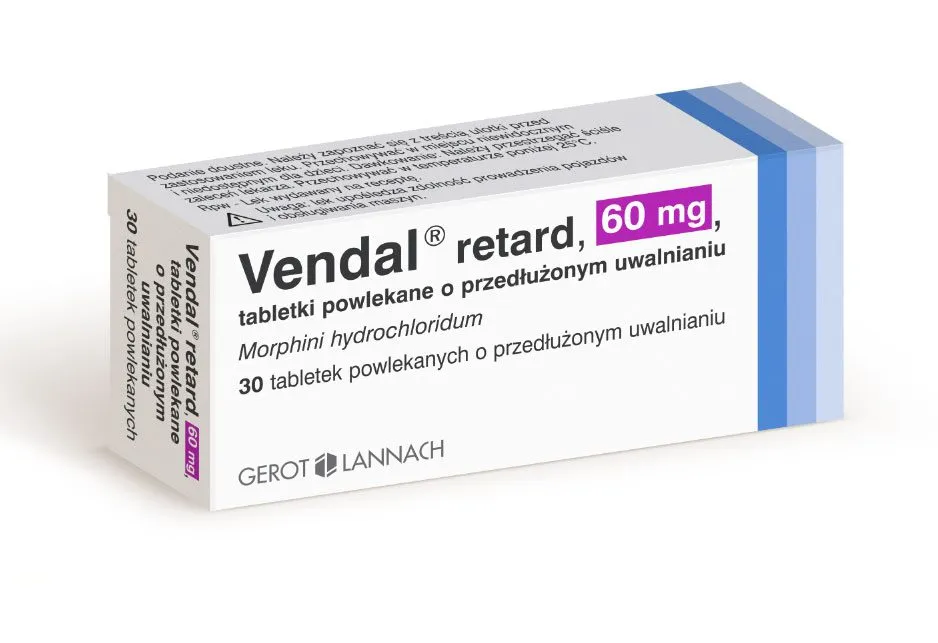
Table of Contents
Package leaflet: Information for the patient
Vendal retard, 10 mg, prolonged-release coated tablets
Vendal retard, 30 mg, prolonged-release coated tablets
Vendal retard, 60 mg, prolonged-release coated tablets
Vendal retard, 100 mg, prolonged-release coated tablets
Vendal retard, 200 mg, prolonged-release coated tablets
Morphini hydrochloridum
Please read this leaflet carefully before using the medicine, as it contains important information for you.
- Keep this leaflet for future reference.
- If you have any doubts, consult your doctor or pharmacist.
- This medicine has been prescribed for a specific individual. Do not pass it on to others. It may harm them, even if their symptoms are the same.
- If you experience any adverse reactions, including those not listed in this leaflet, inform your doctor or pharmacist. See section 4.
Table of contents:
- What Vendal retard is and what it is used for
- Important information before taking Vendal retard
- How to take Vendal retard
- Possible side effects
- How to store Vendal retard
- Contents of the pack and other information
1. What Vendal retard is and what it is used for
Vendal retard is a potent and effective analgesic.
It is used for the long-term relief of moderate to severe pain (such as pain associated with cancer), which is unresponsive to weaker analgesics.
Vendal retard tablets contain a special controlled-release system that delivers morphine in a controlled manner, allowing effective action when administered at 12-hour intervals.
2. Important information before using Vendal retard
When not to use Vendal retard
- if the patient is allergic to morphine or any of the other ingredients of this medicine (listed in section 6)
- if the patient has a respiratory disease or breathing problems from other causes
- in case of mucus secretion retention in the airways
- if seizures or head injuries are present
- if paralytic ileus (intestinal obstruction) occurs
- in case of sudden abdominal pain ("acute abdomen" syndrome) or indigestion (delayed gastric emptying)
- in case of liver disease
- if monoamine oxidase inhibitors (medicines used to treat depression) are being taken at the same time, or within two weeks of stopping their use
- after consumption of alcohol or sleeping medicines
Tolerance, dependence and addictive use
This medicine contains morphine, which is an opioid medicine. Repeated use of opioids may
lead to reduced effectiveness of the medicine (the patient becomes accustomed to it, known as
drug tolerance). Repeated use of Vendal retard may also lead to dependence, abuse and addictive use,
which may result in life-threatening overdose. The risk of these adverse effects may increase with
higher doses and longer duration of treatment.
Dependence or addictive use may cause the patient to lose control over how much medicine should
be taken or how often it should be taken.
The risk of dependence or addictive use varies between individuals. The risk of becoming dependent
on Vendal retard or of addictive use may be higher if:
- the patient or any of their relatives has ever abused or been dependent on alcohol, prescription medicines or drugs ("addiction");
- the patient smokes cigarettes;
- the patient has ever had mood disorders (depression, anxiety disorders or personality disorders) or has been treated by a psychiatrist for other mental illnesses.
If any of the following symptoms occur during treatment with Vendal retard, this may indicate
dependence or addictive use:
- the patient needs to take this medicine for longer than recommended by the doctor;
- the patient needs to take a higher dose than recommended;
- the patient uses this medicine for reasons other than those for which the doctor prescribed it, e.g. "to calm down" or "to help sleep";
- the patient has made several unsuccessful attempts to stop or control use of this medicine;
- after stopping this medicine, the patient feels unwell and experiences improved well-being when taking the medicine again ("withdrawal effect").
If any of these symptoms are observed, the best treatment strategy for the patient should be discussed
with the doctor, including when it is appropriate to stop treatment and how it can be safely
discontinued (see section 3 "Stopping treatment with Vendal retard").
Warnings and precautions
Before starting treatment with Vendal retard, consult a doctor, pharmacist or nurse.
Particular caution is required in the following cases:
- in patients dependent on opioids (see Tolerance, dependence and addictive use)
- in case of increased intracranial pressure or low blood pressure
- in case of impaired consciousness
- diseases of the biliary tract
- ureteric colic
- pancreatitis or intestinal inflammation, constipation
- benign prostatic hyperplasia
- adrenal insufficiency (e.g. Addison's disease)
If paralytic ileus is suspected or occurs, the medicine should be discontinued immediately.
Consult a doctor if the patient experiences severe upper abdominal pain, which may radiate to the
back, nausea, vomiting or fever, as these may be symptoms associated with pancreatitis or biliary
tract disease.
Cases of acute generalized pustular eruption (AGEP) have been reported during treatment with
Vendal retard. Symptoms usually appear within the first 10 days of treatment. Inform the doctor if,
after taking Vendal retard or other opioids, the patient has ever experienced severe skin rash or
peeling skin, blisters and/or oral ulcers. Discontinue use of Vendal retard and seek immediate medical
attention if the patient notices any of the following symptoms: appearance of blisters, widespread
skin peeling or pustular rash accompanied by fever.
If any of the following symptoms occur during treatment with Vendal retard, consult a doctor or
pharmacist:
- Increased sensitivity to pain despite increasing the dose of the medicine (hyperalgesia). The doctor will decide whether dosage adjustment or a stronger painkiller is needed (see section 2).
- Weakness, fatigue, loss of appetite, nausea, vomiting or low blood pressure. These may be symptoms indicating insufficient cortisol production by the adrenal glands, and hormone supplementation may be necessary.
- Loss of libido, impotence, amenorrhea. This may be caused by reduced secretion of sex hormones.
- If the patient has previously been addicted to drugs or alcohol. Also inform the doctor if the patient notices becoming dependent on Vendal retard during treatment. For example, if they start frequently thinking about the possibility of taking another dose, even when it is not needed to relieve pain.
- Symptoms of withdrawal or dependence. The most common withdrawal symptoms are listed in section 3. In such cases, the doctor may change the medicine or adjust the interval between doses.
Use of Vendal retard is not recommended during pregnancy, during childbirth, in breastfeeding women
(see section "Pregnancy, breastfeeding and fertility") and in the period before surgery and during the
first 24 hours after surgical procedures.
Sleep-related breathing disorders
Vendal retard may cause breathing disorders during sleep, such as sleep apnoea (pauses in breathing
during sleep) and hypoxemia (low oxygen levels in the blood). Symptoms may include breathing pauses
during sleep, nocturnal awakenings due to breathlessness, difficulty maintaining sleep or excessive
daytime sleepiness. If the patient or someone else observes these symptoms, medical advice should
be sought. The doctor may consider reducing the dose of the medicine.
Consumption of alcohol during treatment with Vendal retard may increase drowsiness or increase
the risk of serious adverse effects such as respiratory depression with risk of respiratory arrest and
loss of consciousness. It is recommended not to consume alcohol while taking Vendal retard.
Long-term use of Vendal retard may lead to the development of tolerance, requiring progressively
higher doses of morphine to maintain pain control. Long-term use of Vendal retard may lead to
physical dependence, and abrupt discontinuation may result in withdrawal syndrome (see section 3
of this leaflet). Appropriate dosing in patients suffering from chronic pain reduces the risk of physical
and psychological dependence and is not a major concern in treating patients with severe pain. Cross-
tolerance occurs with other opioids (medicines similar to morphine). Appropriate dosing in patients
with chronic pain reduces the risk of physical and psychological dependence (see Tolerance,
dependence and addictive use).
In patients over 65 years of age, in patients with hypothyroidism and in patients with significant
impairment of kidney or liver function, dose reduction may be indicated.
In patients of reproductive age, appropriate contraception should be used during treatment with
Vendal retard (see section "Pregnancy, breastfeeding and fertility").
Vendal retard may cause positive results in anti-doping tests.
The coated tablets are not intended to be dissolved and injected. This may cause tissue necrosis at
the site of administration and granulomatous pneumonia. Overdose may also lead to severe adverse
effects, potentially fatal.
Children
Vendal retard should not be given to children under 1 year of age.
Due to insufficient data, use of Vendal retard is not recommended in children under 12 years of age.
Vendal retard and other medicines
Inform the doctor or pharmacist about all medicines currently taken, including those available
without a prescription.
Concomitant use of Vendal retard and other medicines may increase or decrease their effectiveness.
Vendal retard enhances the central nervous system depressant effects, such as sedation and respiratory
depression (breathing problems), when used with the following medicines and substances:
- painkillers (in dental and general surgery)
- sleeping and sedative medicines
- neuroleptics – medicines used in psychiatric disorders (e.g. depression and psychosis)
- some anti-nausea and anti-emetic medicines
- some antihistamines
- other strong painkillers (opioids)
- gabapentin or pregabalin used in the treatment of epilepsy or nerve-related pain (neuropathic pain)
- alcohol
Vendal retard enhances the effects of:
- painkillers
- sedatives, anaesthetics and sleeping medicines
- alcohol
- muscle relaxants
- antihypertensive medicines
Concomitant use of Vendal retard and sedatives such as benzodiazepines or related medicines
increases the risk of drowsiness, breathing difficulties (respiratory depression) or coma, which may be
life-threatening. Therefore, combination therapy should only be considered when no other treatment
options are available. If Vendal retard is used together with sedatives, the doctor should limit the dose
and duration of concomitant use. The patient should inform the doctor about all sedative medicines
being taken and strictly follow the prescribed dosage. It may be helpful to inform a relative or close
friend about the possibility of the above-mentioned symptoms occurring. If such symptoms occur,
consult a doctor.
The following medicines may affect the action of Vendal retard:
- medicines used to neutralize stomach acid (antacids). A minimum interval of two hours should be maintained between taking both medicines
- cimetidine (a medicine that inhibits gastric acid secretion)
- monoamine oxidase inhibitors (some medicines used to treat depression) – see "When not to use Vendal retard"
- rifampicin (used to treat tuberculosis)
- clomipramine and amitriptyline (some medicines used to treat depression)
Do not use Vendal retard together with other painkillers that have morphine-like but partially
antagonistic effects, such as buprenorphine, nalbuphine, pentazocine, due to reduced analgesic
effect of morphine.
Vendal retard with food, drink and alcohol
During treatment with Vendal retard, alcohol consumption should be avoided, as it may intensify
its effects. High doses of Vendal retard combined with alcohol may lead to serious adverse effects,
including death.
Pregnancy, breastfeeding and fertility
If the patient is pregnant or breastfeeding, suspects she may be pregnant or is planning to have a
child, she should consult a doctor or pharmacist before using this medicine.
Vendal retard should not be used during pregnancy. Due to the mutagenic properties of morphine,
fetal damage may occur. Therefore, patients of reproductive age taking Vendal retard should use
appropriate methods of contraception.
If Vendal retard has been used during pregnancy for a prolonged period, there is a risk that the
newborn may experience withdrawal syndrome symptoms, which should be treated by a doctor.
Morphine is not recommended during childbirth
Due to the risk of respiratory depression in newborns. If Vendal retard was used during pregnancy,
the newborn may experience withdrawal symptoms.
Morphine is not recommended for breastfeeding women, as it passes into breast milk.
Driving and operating machinery
Vendal retard impairs the ability to drive and operate machinery.
This should be expected especially at the beginning of treatment, with any dose adjustment and when
combined with alcohol or sedative medicines.
Consult a doctor to determine whether the patient is fit to drive and operate machinery.
Vendal retard contains lactose
The medicine contains lactose; if the patient has previously been diagnosed with intolerance to
certain sugars, the patient should consult a doctor before taking the medicine.
Vendal retard 60/100 mg contains sunset yellow
The medicine contains sunset yellow (E110), a colouring agent which may cause allergic reactions.
Vendal retard 200 mg contains cochineal red and sunset yellow
The medicine contains cochineal red (E124) and sunset yellow (E110), colouring agents which may
cause allergic reactions.
3. How to use Vendal retard
Vendal retard should be used according to the doctor's instructions. In case of any doubts, you should
contact your doctor again.
Vendal retard tablets should be swallowed whole, without chewing, with sufficient fluid. Breaking or
dissolving the tablet will damage the extended-release system and cause a sudden release of a large
amount of the drug, which may lead to serious adverse effects.
Before starting treatment and regularly during therapy, your doctor will discuss with you what to
expect from using Vendal retard, when and for how long you should take it, when to contact your
doctor, and when to stop taking the medicine (see also "Stopping Vendal retard" in this section).
Dosage
The dose of Vendal retard depends on the severity of the condition, age, and should be individually
adjusted for each patient. The appropriate dose will control pain for 12 hours without causing or
causing only minor adverse effects. The doctor will decide on the duration of treatment.
To allow proper dose adjustment, the following strengths of Vendal retard are available: 10 mg,
30 mg, 60 mg, 100 mg, and 200 mg.
Adults and adolescents over 12 years of age
The usual initial dose is 1–3 tablets of 10 mg Vendal retard (corresponding to 10–30 mg of morphine
hydrochloride) twice daily (in the morning and evening). It is essential to strictly adhere to 12-hour
intervals between doses. If pain intensifies or tolerance to morphine develops, the doctor will increase
the dose.
The use of extended-release Vendal retard tablets in strengths of 60 mg, 100 mg, and 200 mg is
not recommended during the initial phase of treatment.
Children
Vendal retard should not be used in children under 1 year of age.
Due to insufficient evidence, Vendal retard is not recommended for use in children under 12 years of age.
Elderly patients and patients with impaired kidney or liver function
The doctor will recommend a lower initial dose.
Taking more than the recommended dose of Vendal retard
You should contact your doctor immediately if you have taken too many tablets.
The greatest risk in overdose with Vendal retard is respiratory depression.
If a higher than recommended dose of Vendal retard has been taken, aspiration pneumonia caused by
vomiting or foreign bodies may occur. Symptoms may include shortness of breath, cough, and fever.
Additionally, overdose symptoms may include difficulty breathing leading to loss of consciousness,
and even death, pinpoint pupils, low blood pressure. In more severe cases, circulatory failure and
deepening coma may occur. Generalized seizures have been observed in children. If you suspect
that a child has accidentally taken Vendal retard, you should contact a doctor immediately; do not
wait for adverse effects to appear.
Missing a dose of Vendal retard
If you miss a dose, take it as soon as possible. If it is almost time for the next dose, do not take the
missed dose; instead, take the next dose at the usual time. The next dose should be taken 12 hours
after the previous one.
Do not increase the dose of the medicine on your own.
Do not take a double dose to make up for a missed dose.
Stopping Vendal retard
Do not stop taking Vendal retard unless otherwise instructed by your doctor. To discontinue Vendal
retard, consult your doctor, who will decide how to gradually reduce the dose to avoid withdrawal
symptoms. Withdrawal symptoms may include body aches, tremors, diarrhea, stomach pain, nausea,
flu-like symptoms, rapid heartbeat, and dilated pupils. Psychological symptoms include intense
dissatisfaction, anxiety, and irritability.
If you have any questions or doubts, consult your doctor or pharmacist.
4. Possible adverse effects
Like any medicine, this medicinal product may cause adverse effects, although not in everyone.
If any of the following symptoms occur, discontinue use of the medicine
Vendal retard and immediately contact your doctor:
- Severe skin reaction with appearance of blisters, extensive peeling of the skin, pustular rash accompanied by fever. This may be a condition called acute generalized pustular eruption (AGEP).
You should immediately contact your doctor if any of the following adverse effects occur:
- Severe allergic reactions (frequency unknown) causing difficulty breathing or dizziness; swelling of the eyelids, face or lips; rash or itching (especially affecting the whole body);
- Breathing difficulties in the following cases: bronchospasm, respiratory depression, asthma attacks in susceptible patients (rare); overdose (may lead to respiratory disorders; occurs not frequently); pulmonary edema (fluid accumulation in the lungs) in patients under intensive medical care (very rare);
- Drowsiness (common), confusion (uncommon), general weakness up to fainting (rare);
- Physical or psychological dependence may occur (symptoms, see section 3 of this leaflet), withdrawal symptoms or dependence (information on symptoms - see section 3: If you stop taking Vendal retard) (frequency unknown).
Other adverse effects:
Common (occurs in 1 to 10 out of 100 patients):
- miosis (pupil constriction)
- nausea, vomiting, constipation. If nausea, vomiting and/or constipation occur, contact your doctor who will prescribe appropriate medication.
Uncommon (occurs in 1 to 10 out of 1,000 patients):
- palpitations
- excessive sweating, dizziness, headache, mood changes
- colicky pains, dry mouth
- difficulty urinating, urinary tract spasm
- flushing
- biliary tract spasm
- hallucinations
Rare (occurs in 1 to 10 out of 10,000 patients):
- increased or decreased heart rate
- blurred or double vision, involuntary eye movements
- urticaria, itching
- increased or decreased blood pressure
- fluid accumulation in tissues (edema), photosensitivity reactions, chills
- insomnia
Frequency unknown (cannot be estimated from available data):
- cognitive disturbances, brief single muscle or muscle group spasms
- increased sensitivity to pain
- Sleep apnea (episodes of breathing cessation during sleep)
- Symptoms associated with inflammation of the pancreas and biliary tract, e.g. severe upper abdominal pain radiating to the back, nausea, vomiting or fever.
Reporting of adverse effects
If any adverse effects occur, including any not listed in this leaflet, inform your doctor or pharmacist. Adverse effects can also be reported directly to:
Department of Monitoring Adverse Drug Reactions, Office for Registration of Medicinal Products, Medical Devices and Biocidal Products
Al. Jerozolimskie 181 C
02-222 Warsaw
Tel.: +48 22 49 21 301
Fax: +48 22 49 21 309
Website: https://smz.ezdrowie.gov.pl
Adverse effects may also be reported to the marketing authorization holder.
Reporting adverse effects helps to provide more information on the safety of the medicine.
5. How to store Vendal retard
Keep this medicine out of sight and reach of children.
Do not use Vendal retard after the expiry date (EXP) stated on the packaging. The expiry date refers to the last day of the specified month.
Store this medicine below 25°C.
Medicines must not be disposed of via wastewater or household waste. Ask your pharmacist what to do with medicines no longer required. Such practice helps protect the environment.
6. Contents of the pack and other information
What Vendal retard 10 mg contains
The active substance is morphine hydrochloride.
One prolonged-release coated tablet contains: 10 mg of morphine hydrochloride, corresponding to 7.6 mg of morphine, and
Excipients:
Core ingredients: monohydrate lactose, 30% polyacrylate dispersion, copolymer of methacrylic acid and ethyl acrylate (1:1), ammonium methacrylate copolymer (type B), hypromellose, anhydrous colloidal silicon dioxide, magnesium stearate;
Coating ingredients: macrogol 6000, talc, titanium dioxide (E 171), hypromellose, 30% polyacrylate dispersion.
What Vendal retard 30 mg contains
The active substance is morphine hydrochloride.
One prolonged-release coated tablet contains: 30 mg of morphine hydrochloride, corresponding to 22.8 mg of morphine, and
Excipients:
Core ingredients: monohydrate lactose, 30% polyacrylate dispersion, copolymer of methacrylic acid and ethyl acrylate (1:1), ammonium methacrylate copolymer (type B), hypromellose, magnesium stearate;
Coating ingredients: macrogol 6000, talc, titanium dioxide (E 171), hypromellose, 30% polyacrylate dispersion, indigo carmine (E 132), quinoline yellow (E 104)/indigo carmine (E 132).
What Vendal retard 60 mg contains
The active substance is morphine hydrochloride.
One prolonged-release coated tablet contains: 60 mg of morphine hydrochloride, corresponding to 45.6 mg of morphine, and
Excipients:
Core ingredients: monohydrate lactose, 30% polyacrylate dispersion, copolymer of methacrylic acid and ethyl acrylate (1:1), ammonium methacrylate copolymer (type B), hypromellose, magnesium stearate;
Coating ingredients: macrogol 6000, talc, titanium dioxide (E 171), hypromellose, 30% polyacrylate dispersion, quinoline yellow (E 104)/orange yellow (E 110).
What Vendal retard 100 mg contains
The active substance is morphine hydrochloride.
One prolonged-release coated tablet contains: 100 mg of morphine hydrochloride, corresponding to 76 mg of morphine, and
Excipients:
Core ingredients: monohydrate lactose, 30% polyacrylate dispersion, copolymer of methacrylic acid and ethyl acrylate (1:1), ammonium methacrylate copolymer (type B), hypromellose, magnesium stearate;
Coating ingredients: macrogol 6000, talc, titanium dioxide (E 171), hypromellose, 30% polyacrylate dispersion, quinoline yellow (E 104)/orange yellow (E 110), orange yellow (E 110).
What Vendal retard 200 mg contains
The active substance is morphine hydrochloride.
One prolonged-release coated tablet contains: 200 mg of morphine hydrochloride, corresponding to 152 mg of morphine, and
Excipients:
Core ingredients: monohydrate lactose, 30% polyacrylate dispersion, copolymer of methacrylic acid and ethyl acrylate (1:1), ammonium methacrylate copolymer (type B), hypromellose, magnesium stearate;
Coating ingredients: macrogol 6000, talc, hypromellose, 30% polyacrylate dispersion, carmine red (E 124), orange yellow (E 110).
What Vendal retard looks like and contents of the pack
Vendal retard 10: White, round, biconvex tablets.
Vendal retard 30: Blue-green, round, biconvex tablets.
Vendal retard 60: Yellow, round, biconvex tablets.
Vendal retard 100: Yellow-orange, round, biconvex tablets.
Vendal retard 200: Red, round, biconvex tablets.
Available in packs of 10 and 30 tablets.
Not all pack sizes may be marketed.
Marketing Authorisation Holder and Manufacturer
G.L. Pharma GmbH, Schlossplatz 1
A-8502 Lannach, Austria
For further information, contact the local representative of the Marketing Authorisation Holder:
G.L. PHARMA POLAND Sp. z o.o.
Al. Jana Pawła II 61/313
01-031 Warsaw, Poland
Tel: 022/ 636 52 23; 636 53 02
[email protected]