Warfarin
Poland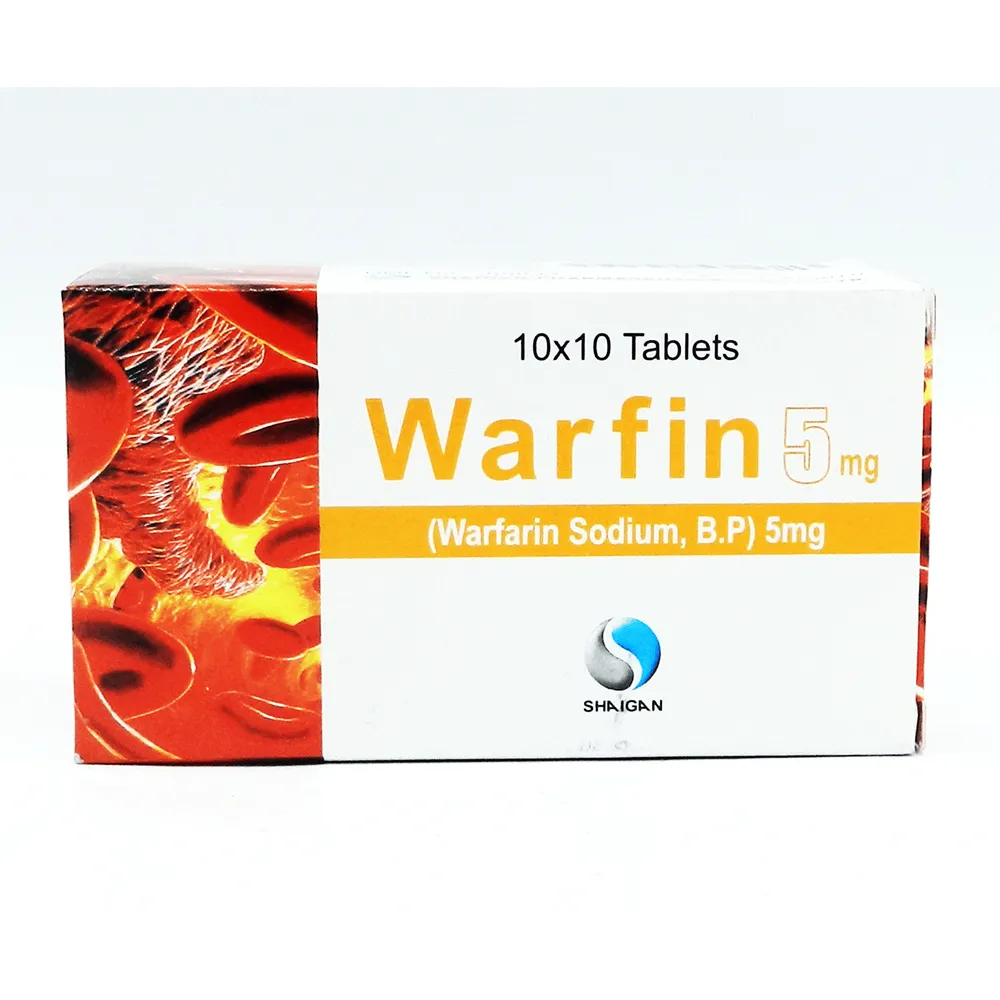
Table of Contents
Patient Information Leaflet
Warfin, 3 mg, tablets
Warfin, 5 mg, tablets
Warfarinum natricum
Please read this leaflet carefully before taking this medicine, as it contains
important information for you.
- Keep this leaflet, as you may need to read it again.
- If you have any further questions, please ask your doctor or pharmacist.
- This medicine has been prescribed for a specific individual. Do not pass it on to others. It may harm other people, even if their symptoms are the same.
- If you experience any side effects, including any not listed in this leaflet, please inform your doctor or pharmacist. See section 4.
Table of Contents
- What Warfin is and what it is used for
- Important information before taking Warfin
- How to take Warfin
- Possible side effects
- How to store Warfin
- Contents of the pack and other information
1. What Warfin is and what it is used for
Warfin tablets are a medicine used to prevent thrombosis (blood clots) or to treat thrombosis and its complications. Warfin reduces the tendency to form blood clots.
Your doctor will inform you about which conditions this medicine is being used to treat or prevent.
Most commonly, this medicine is used to:
- prevent and treat deep vein thrombosis of the lower limbs (blood clots in the veins of the lower limbs) and pulmonary embolism (blood clots in the blood vessels of the lungs)
- prevent blood clots in patients with atrial fibrillation (a heart arrhythmia)
- prevent the formation of blood clots or recurrent clots after myocardial infarction
- prevent blood clots after heart valve replacement.
2. Important information before taking Warfin
When not to use Warfin
- if you are in the first trimester or in the last four weeks of pregnancy
- if you have a tendency to bleed (e.g. haemophilia, von Willebrand's disease, thrombocytopenia or platelet function disorders)
- if you have acute liver failure or liver cirrhosis
- if you have untreated hypertension
- if you have recently experienced intracranial haemorrhage
- if you have a tendency to frequent falls due to neurological conditions or other health problems
- if you have recently undergone surgery involving the central nervous system or the eye, or if you are scheduled to undergo such procedures in the near future
- if you have endocarditis or pericarditis, or if you have pericardial effusion
- if you have predispositions to gastrointestinal or urinary tract bleeding, e.g. previous complications related to bleeding from the stomach or intestines, diverticulitis, or tumours
- if you are allergic to sodium warfarin or any of the other ingredients of this medicine (listed in section 6)
- if you are taking St John's wort (Hypericum perforatum)
- if you have dementia, psychosis, alcoholism, or any other condition in which anticoagulant therapy cannot be safely administered.
Warnings and precautions
Before starting Warfin, discuss with your doctor or pharmacist if:
- you are pregnant or planning to become pregnant
- you have hypothyroidism or hyperthyroidism
- you have heart failure associated with acute exacerbations (episodes of increased leg swelling and breathlessness)
- you have other liver disorders not listed above or hepatitis
- you have kidney failure
- you are scheduled for a dental or other surgical procedure in the near future
- you are currently taking, have recently started or stopped taking any other medicines during treatment with Warfin (see section "Warfin with other medicines").
You should avoid drastic changes in dietary habits, as vitamin K content in food may affect warfarin therapy. Factors that may influence treatment include: switching to a vegetarian diet, very restrictive diets, depression, vomiting, diarrhoea, steatorrhea, or malabsorption due to other causes.
Warfin with other medicines
Tell your doctor or pharmacist about all medicines you are currently taking, have recently taken, or plan to take, including those available without a prescription. This also includes herbal medicines or natural products.
Medicines
A very large number of medicines affect the action of Warfin tablets, either increasing or decreasing its effect. Do not start or stop taking any new medicines without first consulting your doctor. Any changes in the dosage of concomitantly used medicines may alter the balance of oral anticoagulant therapy, so more frequent monitoring of the INR (a laboratory test) may be necessary.
If pain relief is needed, consult your doctor. Most over-the-counter painkillers should not be used together with Warfin. However, paracetamol-only products may be used for temporary relief of pain or fever.
Glucosamine (used in osteoarthritis) may increase the effect of Warfin.
Herbal medicines and natural products
If you are already taking any of the herbal medicines listed below, consult your doctor before stopping them. Herbal medicines containing ginkgo (Ginkgo biloba), garlic (Allium sativum), dong quai (Angelica sinensis), papaya (Carica papaya), or salvia (Salvia miltiorrhiza) may increase the effect of Warfin. St John's wort (Hypericum perforatum) and ginseng (Panax spp.) may reduce its effect. Therefore, starting or stopping any of the above herbal medicines during Warfin treatment must not be done without consulting your doctor.
Warfin with food and drink
Taking vitamin K affects Warfin treatment. Therefore, consumption of foods containing vitamin K should be as consistent as possible during Warfin therapy. Avoid sudden dietary changes. The richest sources of vitamin K are green vegetables, leaves, and herbs.
Some of these are listed below. It is not necessary to avoid consuming them, but you should avoid changing your daily intake amounts of these foods. Rich sources of vitamin K include, among others: chard leaves, avocado, broccoli, Brussels sprouts, cabbage, canola oil, chayote leaves, chives, coriander, cucumber peel (but not peeled cucumber), endive (chicory), kale leaves, kiwi fruit, lettuce leaves, mint leaves, rocket (arugula), olive oil, parsley, peas, pistachios, purple laver (seaweed), spinach leaves, spring onion, soybeans, soybean oil, tea leaves (but not tea), turnip or watercress.
Cranberry juice and other cranberry products may increase the effect of warfarin; therefore, consumption of these products should be avoided during warfarin therapy.
Smoking may affect the effectiveness of warfarin. More frequent INR monitoring may be necessary if you have been a long-term smoker and stop smoking during Warfin therapy.
Pregnancy and breastfeeding
Your doctor will decide whether Warfin can be used during pregnancy. If you are planning pregnancy or become pregnant while taking Warfin, you must contact your doctor, as Warfin use during pregnancy may be harmful to the fetus.
Warfin should not be used during the first trimester and the last four weeks of pregnancy, and if possible, its use should be avoided throughout the entire pregnancy except in exceptional circumstances under specialist supervision.
Sodium warfarin does not pass into breast milk. Therefore, breastfeeding is possible during Warfin treatment.
Driving and operating machinery
Warfarin has no effect on the ability to drive motor vehicles or operate machinery.
Warfin contains lactose
This medicine contains 85 mg of lactose (as monohydrate lactose). If you have previously been diagnosed with intolerance to certain sugars, you should consult your doctor before taking this medicine.
Other excipients
This medicine contains less than 1 mmol (23 mg) of sodium per dose, meaning the medicine is considered "sodium-free".
3. How to take Warfin
Your doctor, hospital, or clinic will provide you with detailed instructions regarding Warfin treatment. Always take this medicine exactly as prescribed by your doctor or pharmacist. If in doubt, consult your doctor or pharmacist.
It is very important to have regular blood laboratory tests. The dose of the medicine is individually adjusted for each patient and may vary from day to day. It is absolutely essential to follow dosing instructions and undergo laboratory monitoring.
Taking more Warfin than prescribed
If you or anyone else has taken an excessive dose of Warfin, contact your doctor immediately for further instructions. If a large dose has been taken, activated charcoal may be administered as first aid, but you should still contact your doctor as soon as possible. Inducing vomiting should not be used as first aid.
Missing a dose of Warfin
If you forget to take a dose within the first 12 hours, you may take the missed dose as soon as possible. Take the next dose at the usual time. If more than 12 hours have passed since the missed dose, divide the missed dose into two or three parts and take them with the next doses, so that the weekly dose remains unchanged. If you miss more than one dose, contact your doctor for further dosing instructions. Never take a double dose or two doses one after another.
Stopping Warfin treatment
The anticoagulant effect of Warfin may persist for 2 to 5 days after stopping treatment.
If you have any further questions about the use of this medicine, please consult your doctor or pharmacist.
4. Possible adverse reactions
Like any medicine, this medicine can cause adverse reactions, although not everyone will experience them.
Important!
You should contact your doctor immediately if any of the following symptoms occur
during treatment with Warfin:
- Increased bruising or tendency to bleed, nosebleeds or bleeding gums, blood in urine, black or bloody stools, vomiting blood, increased or prolonged menstrual bleeding.
- Allergic reaction – symptoms may include swelling of the face, lips, tongue or throat, difficulty breathing or swallowing, severe itching of the skin with raised lumps.
- Red or purple swollen or painful spots on the skin, which look like bruises or blood-filled blisters that turn black.
- Pain in the fingers, which become purple or dark in colour.
- Painful skin rash. Rarely, warfarin may cause serious skin disorders, including so-called calciphylaxis, which may initially present as a painful skin rash and may lead to other severe complications. This adverse reaction occurs more frequently in patients with chronic kidney disease.
Common (may occur in up to 1 in 10 people):
Mild bleeding (from nose or gums, or bruising easily); also blood in urine, black or bloody stools, heavier or prolonged menstrual bleeding or other bleeding. Nausea, vomiting, diarrhoea.
Rare (may occur in up to 1 in 1,000 people):
Warfarin-induced skin necrosis, purple toe syndrome (painful, purpuric skin lesions on toes or soles of feet).
Very rare (may occur in up to 1 in 10,000 people):
Hypersensitivity reactions to the medicine, usually manifesting as skin rash, reversible elevation of liver enzymes, pain associated with gallstones, development of vasculitis, transient alopecia, priapism (usually in the initial phase of treatment), tracheal calcification, cholesterol embolism.
Unknown (frequency cannot be estimated from available data):
Calcium deposition in blood vessel walls, which may lead to progressive and painful skin ulcers.
Renal function disorders occurring with excessive anticoagulation and presence of blood in urine (anticoagulant-related nephropathy).
Reporting of adverse reactions
If any adverse reactions occur, including any not listed in this leaflet, inform your doctor or pharmacist. Adverse reactions can be reported directly to the Department of Monitoring Adverse Drug Reactions at the Office for Registration of Medicinal Products, Medical Devices and Biocidal Products, Al. Jerozolimskie 181 C, 02-222 Warsaw, Tel.: +48 22 49 21 301, Fax: +48 22 49 21 309, Website: https://smz.ezdrowie.gov.pl
Adverse reactions can also be reported to the marketing authorization holder.
Reporting adverse reactions helps provide more information on the safety of the medicine.
5. How to store Warfin
Store below 25°C. Keep in the original packaging.
Keep the bottle tightly closed in the outer packaging to protect from light and moisture.
The bottle contains a drying agent to protect the tablets from moisture. Do not remove the capsule containing the drying agent from the bottle. Do not swallow the capsule containing the drying agent.
Keep the medicine out of the sight and reach of children.
Do not use this medicine after the expiry date stated on the packaging after "Expiry date (EXP)". The expiry date refers to the last day of the stated month.
Medicines must not be disposed of via wastewater or household waste. Ask your pharmacist how to dispose of medicines no longer required. This will help protect the environment.
6. Contents of the pack and other information
What Warfin contains
- The active substance is 3 mg or 5 mg of warfarin sodium per tablet.
- Other ingredients are: lactose monohydrate, maize starch, magnesium stearate, and colouring agents:
- indigo carmine (E 132), gelatin in 3 mg tablets (light blue)
- erythrosine (E 127), povidone in 5 mg tablets (pink)
What Warfin looks like and contents of the pack
Warfin 3 mg: light blue tablets, may contain specks, round, flat, with bevelled edges,
marked „ORN 17”, 7 mm in diameter. A division line on one side.
Tablets can be divided into equal doses.
Warfin 5 mg: pink tablets, may contain specks, round, flat, with bevelled edges,
marked „ORN 18”, 7 mm in diameter. A division line on one side.
Tablets can be divided into equal doses.
White plastic bottle (HDPE) containing a moisture-absorbing capsule, closed with a cap (HDPE),
with tamper-evident seal.
Pack sizes: 30 or 100 tablets.
Marketing Authorisation Holder
Orion Corporation
Orionintie 1
FI-02200 Espoo
Finland
Manufacturer
Orion Corporation, Orion Pharma
Orionintie 1
FI-02200 Espoo
Finland
Orion Corporation Orion Pharma
Joensuunkatu 7
FI-24100 Salo
Finland
For further information about this medicinal product, please contact the local representative of the Marketing Authorisation Holder:
Orion Pharma Poland Sp. z o.o.
[email protected]
This medicinal product is authorised in the European Economic Area countries under the following names:
Hungary: Warfarin Orion
Poland: Warfin
Slovenia: Marevan
Croatia: Martefarin