Valtricom
Poland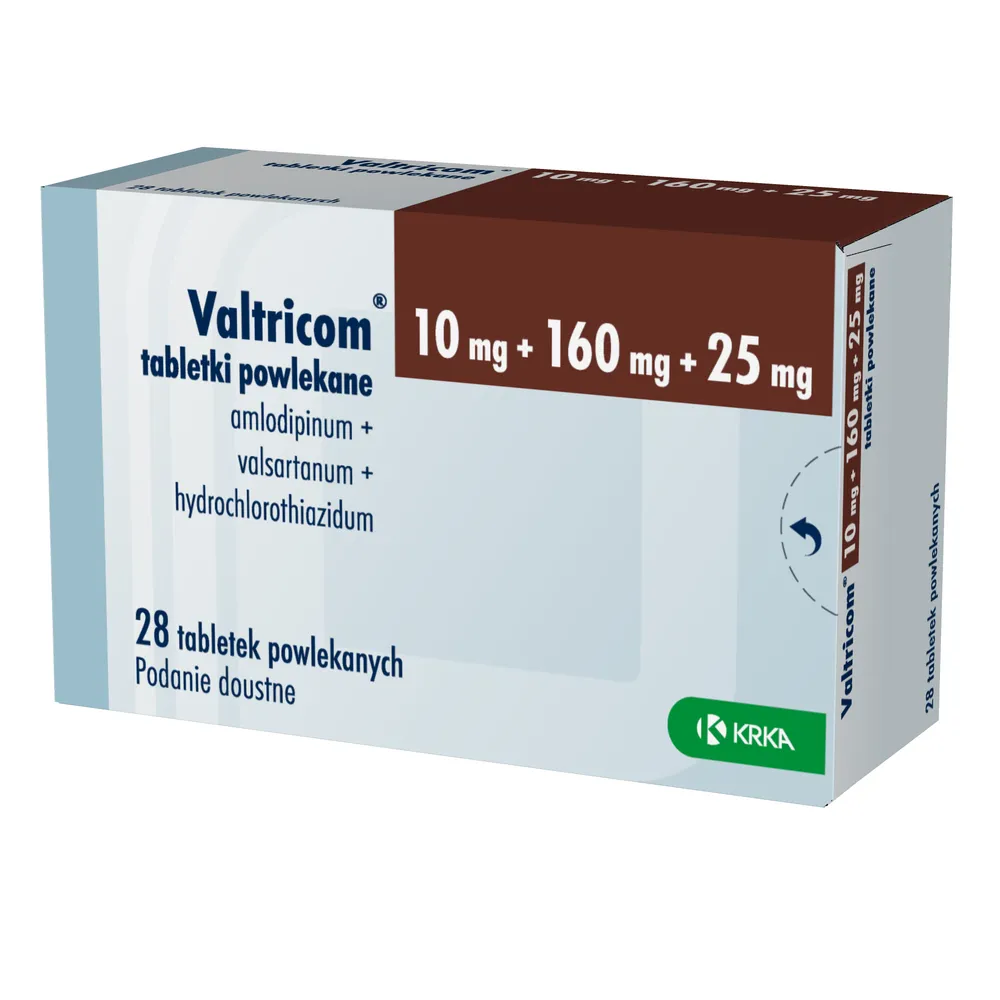
Table of Contents
Package leaflet: information for the patient
Valtricom, 5 mg + 160 mg + 12.5 mg, film-coated tablets
Valtricom, 5 mg + 160 mg + 25 mg, film-coated tablets
Valtricom, 10 mg + 160 mg + 12.5 mg, film-coated tablets
Valtricom, 10 mg + 160 mg + 25 mg, film-coated tablets
Valtricom, 10 mg + 320 mg + 25 mg, film-coated tablets
amlodipine + valsartan + hydrochlorothiazide
Please read this leaflet carefully before taking this medicine, as it contains important information for you.
- Keep this leaflet, as you may need to read it again.
- If you have any further questions, please consult your doctor or pharmacist.
- This medicine has been prescribed for a specific individual. Do not pass it on to others. It may harm other people, even if their symptoms are similar.
- If you experience any adverse reactions, including any not listed in this leaflet, tell your doctor or pharmacist. See section 4.
Table of contents
- What Valtricom is and what it is used for
- Important information before taking Valtricom
- How to take Valtricom
- Possible side effects
- How to store Valtricom
- Contents of the pack and other information
1. What Valtricom is and what it is used for
Valtricom tablets contain three active substances: amlodipine, valsartan, and hydrochlorothiazide.
All three substances help control high blood pressure.
- Amlodipine belongs to a group of substances called calcium channel blockers. Amlodipine prevents calcium from entering the walls of blood vessels, thereby preventing blood vessel constriction.
- Valsartan belongs to a group of substances called angiotensin II receptor antagonists. Angiotensin II is produced in the human body and causes blood vessel constriction, leading to increased blood pressure. Valsartan works by blocking the action of angiotensin II.
- Hydrochlorothiazide belongs to a group of substances called thiazide diuretics. Hydrochlorothiazide increases urine volume, which also helps lower blood pressure. As a result of all three mechanisms, blood vessels relax and blood pressure decreases.
Valtricom is used for the treatment of high blood pressure in adult patients whose blood pressure has been controlled with a combination of amlodipine, valsartan, and hydrochlorothiazide, and for whom it may be beneficial to take a single tablet containing all three active substances.
2. Important information before using Valtricom
When not to use Valtricom
- After the third month of pregnancy (it is also recommended to avoid using Valtricom in early pregnancy – see section "Pregnancy");
- If the patient is allergic to amlodipine or other calcium channel blockers, valsartan, hydrochlorothiazide, sulfonamide-derived drugs (medicines used to treat respiratory or urinary tract infections), or any of the other ingredients of this medicine (listed in section 6) – if the patient is unsure whether they are allergic, they should not take Valtricom and should consult their doctor;
- If the patient has liver disease, or has damage to the small bile ducts in the liver (primary biliary cirrhosis) leading to bile accumulation in the liver (cholestasis);
- If the patient has severe kidney dysfunction or is undergoing dialysis;
- If the patient is unable to pass urine (anuria);
- If the patient has low levels of potassium or sodium in the blood despite treatment aimed at increasing potassium or sodium levels;
- If the patient has high levels of calcium in the blood despite treatment aimed at reducing calcium levels;
- If the patient has gout (accumulation of uric acid crystals in the joints);
- If the patient has significantly low blood pressure (hypotension);
- If the patient has aortic valve stenosis or cardiogenic shock (a condition in which the heart is unable to deliver sufficient blood to the body's cells);
- If the patient has heart failure following a myocardial infarction;
- If the patient has diabetes or kidney dysfunction and is being treated with a blood pressure-lowering medicine containing aliskiren. If any of the above situations apply, Valtricom should not be used and the patient should consult their doctor.
Warnings and precautions
Before starting Valtricom, discuss the following with your doctor or pharmacist:
- If the patient has low levels of potassium or magnesium in the blood (with symptoms such as muscle weakness, muscle cramps, heart rhythm disturbances, or without symptoms);
- If the patient has low levels of sodium in the blood (with symptoms such as fatigue, confusion, muscle twitching, seizures, or without symptoms);
- If the patient has high levels of calcium in the blood (with symptoms such as nausea, vomiting, constipation, abdominal pain, frequent urination, thirst, weakness, and muscle tremors, or without symptoms);
- If the patient has kidney dysfunction, has recently received a kidney transplant, or has renal artery stenosis;
- If the patient has liver dysfunction;
- If the patient has or has had heart failure or coronary artery disease, especially if prescribed the highest dose of Valtricom (10 mg + 320 mg + 25 mg);
- If the patient has had a myocardial infarction – strictly follow the doctor's advice regarding the initial dose; the doctor may also monitor kidney function;
- If the patient has heart valve stenosis (aortic or mitral stenosis) or thickening of the heart muscle (hypertrophic cardiomyopathy with outflow tract obstruction);
- If the patient has been diagnosed with hyperaldosteronism (a condition in which the adrenal glands produce excessive amounts of the hormone aldosterone) – in such cases, Valtricom is not recommended;
- If the patient has systemic lupus erythematosus (also known as lupus or SLE);
- If the patient has diabetes (high blood sugar levels);
- If the patient has high cholesterol or triglyceride levels in the blood;
- If the patient develops skin reactions such as rash after sun exposure;
- If the patient has previously experienced allergic reactions to other antihypertensive medicines or diuretics (also known as water tablets), particularly in patients with asthma or allergies;
- If the patient experiences vomiting or diarrhea;
- If the patient develops swelling, particularly of the face and throat, while taking other medicines (including ACE inhibitors) – if such symptoms occur, Valtricom should be stopped immediately, medical advice sought, and the medicine should never be taken again;
- If the patient experiences dizziness and/or fainting while taking Valtricom – inform the doctor as soon as possible;
- If the patient develops worsening vision or eye pain – these symptoms may indicate fluid accumulation in the uvea (the vascular layer surrounding the eye) or increased intraocular pressure, which may occur from a few hours to weeks after starting Valtricom; if left untreated, this may lead to permanent vision loss. Patients with a history of penicillin or sulfonamide allergy may be at higher risk of developing this condition;
- If the patient is taking any of the following medicines for high blood pressure:
- ACE inhibitors (e.g., enalapril, lisinopril, ramipril), especially if the patient has kidney dysfunction related to diabetes,
- Aliskiren;
- If the patient has previously had skin cancer or develops unexpected skin changes during treatment – hydrochlorothiazide treatment, especially at high doses over a long period, may increase the risk of certain types of non-melanoma skin cancer and lip cancer. While taking Valtricom, protect the skin from sunlight and UV radiation;
- If the patient has previously had breathing or lung problems (including pneumonia or fluid accumulation in the lungs) after taking hydrochlorothiazide. If the patient develops severe shortness of breath or difficulty breathing after taking Valtricom, seek immediate medical help.
The doctor may recommend regular monitoring of kidney function, blood pressure, and electrolyte levels (e.g., potassium) in the blood.
If the patient experiences abdominal pain, nausea, vomiting, or diarrhea after taking Valtricom, discuss this with the doctor. The doctor will decide on further treatment. Do not stop taking Valtricom without medical advice.
See also the section "When not to use Valtricom".
If any of the above conditions apply, the patient should discuss this with their doctor.
Children and adolescents
Valtricom is not recommended for use in children and adolescents under 18 years of age.
Elderly patients (aged 65 years and older)
Valtricom can be used in patients aged 65 years and older at the same dose and in the same manner as in other adult patients who have previously taken the three active substances – amlodipine, valsartan, and hydrochlorothiazide. In elderly patients, blood pressure should be monitored regularly, especially when using the highest dose of Valtricom (10 mg + 320 mg + 25 mg).
Valtricom and other medicines
Inform your doctor or pharmacist about all medicines currently or recently taken, as well as any medicines planned for use.
The doctor may recommend adjusting the dose and/or taking additional precautions. In some cases, it may be necessary to discontinue one of the medicines. This particularly applies to the following medicines.
Do not take Valtricom together with:
- Lithium (used to treat certain types of depression);
- Medicines or substances that increase potassium levels in the blood, such as potassium supplements, potassium-containing salt substitutes, potassium-sparing agents, and heparin;
- ACE inhibitors or aliskiren (see also sections "When not to use Valtricom" and "Warnings and precautions").
Use caution when taking together with:
- Alcohol, sedatives, and anesthetics (used during surgical and other procedures);
- Amantadine (used to treat Parkinson's disease and to prevent or treat certain viral infections);
- Anticholinergic medicines (used to treat various conditions such as stomach and intestinal spasms, bladder spasms, asthma, motion sickness, muscle spasms, Parkinson's disease, and as adjuncts in anesthesia);
- Antiepileptic medicines and mood stabilizers used to treat epilepsy and bipolar disorder (e.g., carbamazepine, phenobarbital, phenytoin, fosphenytoin, primidone);
- Cholestyramine, colestipol, and other resins (substances mainly used to treat high blood lipid levels);
- Simvastatin (used to reduce high cholesterol levels in the blood);
- Cyclosporine (used after organ transplantation to prevent rejection or in other diseases such as rheumatoid arthritis and atopic dermatitis);
- Cytotoxic medicines (used to treat cancer), such as methotrexate or cyclophosphamide;
- Digoxin or other cardiac glycosides (used in heart conditions);
- Verapamil, diltiazem (used in heart conditions);
- Iodinated contrast agents (used in imaging procedures);
- Medicines used to treat diabetes (oral, such as metformin, or insulin);
- Medicines used to treat gout, such as allopurinol;
- Medicines that may increase blood sugar levels (beta-adrenergic blockers, diazoxide);
- Medicines that may cause "torsades de pointes" (a heart rhythm disorder), such as antiarrhythmics (used in heart conditions) and certain antipsychotics;
- Medicines that may reduce sodium levels in the blood, such as antidepressants, antipsychotics, antiepileptics;
- Medicines that may reduce potassium levels in the blood, such as diuretics (water tablets), corticosteroids, laxatives, amphotericin, or penicillin G;
- Medicines that may increase blood pressure, such as adrenaline or noradrenaline;
- Medicines used to treat HIV/AIDS (e.g., ritonavir, indinavir, nelfinavir);
- Medicines used to treat fungal infections (e.g., ketoconazole, itraconazole);
- Medicines used to treat peptic ulcers and esophagitis (carbenoxolone);
- Medicines used to relieve pain and inflammation, especially non-steroidal anti-inflammatory drugs (NSAIDs), including selective cyclooxygenase-2 (COX-2) inhibitors;
- Muscle relaxants (used during surgical procedures);
- Glycerol trinitrate and other nitrates or other vasodilating substances;
- Other medicines used to treat high blood pressure, including methyldopa;
- Rifampicin (used, for example, to treat tuberculosis), erythromycin, clarithromycin (antibiotics);
- St. John's wort (Hypericum perforatum);
- Dantrolene (administered intravenously in cases of severe temperature disorders);
- Tacrolimus (used to control the immune system response to allow acceptance of a transplanted organ);
- Vitamin D and calcium salts.
Taking Valtricom with food, drink, and alcohol
While taking Valtricom, do not eat grapefruit or drink grapefruit juice, as both grapefruit and grapefruit juice may increase blood levels of the active substance amlodipine, potentially leading to unpredictable intensification of Valtricom's blood pressure-lowering effect. Before drinking alcohol, consult your doctor. Alcohol may cause excessive lowering of blood pressure and/or increase the risk of dizziness or fainting.
Pregnancy and breastfeeding
Pregnancy
Inform your doctor if you are pregnant, suspect you may be pregnant, or are planning a pregnancy. Your doctor will usually advise stopping Valtricom before planning a pregnancy or immediately after confirming pregnancy and will recommend an alternative medicine. Valtricom is not recommended during early pregnancy and must not be used after the third month of pregnancy, as it may seriously harm the unborn child.
Breastfeeding
Inform your doctor if you are breastfeeding or planning to breastfeed. Small amounts of amlodipine have been shown to pass into human milk. Valtricom is not recommended during breastfeeding. Your doctor may recommend an alternative medicine if you wish to breastfeed, especially if the baby is a newborn or premature.
Before taking any medicine, consult your doctor or pharmacist.
Driving and using machines
This medicine may cause dizziness, drowsiness, nausea, or headache. If such symptoms occur, do not drive, operate tools, or use machinery.
Valtricom contains sodium
This medicine contains less than 1 mmol (23 mg) of sodium per coated tablet, meaning it is considered "sodium-free".
3. How to use Valtricom
This medicine should always be taken as directed by the doctor or pharmacist. If in doubt,
consult the doctor or pharmacist. Following these instructions will help achieve the best treatment
results and reduce the risk of adverse effects.
The usual dose of Valtricom is 1 tablet per day.
- It is recommended to take the medicine at the same time each day, preferably in the morning.
- The tablet should be swallowed whole with a glass of water.
- Valtricom may be taken during or independently of meals. While taking Valtricom, do not eat grapefruit or drink grapefruit juice.
Depending on the response to treatment, the doctor may recommend a higher or lower dose.
Do not take more than the recommended dose.
Taking more Valtricom than recommended
If too many tablets of Valtricom are taken by accident, consult a doctor immediately.
Medical help may be needed.
Breathing difficulties caused by excess fluid accumulating in the lungs (pulmonary edema)
may occur up to 24–48 hours after taking the medicine.
Missing a dose of Valtricom
If a dose is missed, take it as soon as remembered. Take the next dose at the usual time.
However, if it is almost time for the next dose, only take the next dose at the usual time.
Do not take a double dose (two tablets at once) to make up for a missed dose.
Stopping Valtricom treatment
Stopping treatment with Valtricom may cause worsening of the disease. Do not stop taking the
medicine unless advised by the doctor.
Always continue taking the medicine, even if the patient feels well.
Patients with high blood pressure often do not notice any symptoms. Many people feel well.
It is important to take this medicine exactly as prescribed by the doctor to achieve the best
treatment results and reduce the risk of adverse effects.
Regular medical check-ups should be attended, even if the patient feels well.
If there are any further doubts about the use of this medicine, consult the doctor or pharmacist.
4. Possible adverse reactions
Like all medicines, this medicine can cause adverse reactions, although not everyone will experience them.
As with all combination medicines containing three active substances, adverse reactions related to individual active substances cannot be ruled out.
Below are the adverse reactions reported for Valtricom or for the individual three active substances (amlodipine, valsartan and hydrochlorothiazide), which may occur during treatment with Valtricom.
Some adverse reactions may be serious and may require immediate medical attention.
If any of the following serious adverse reactions occur after taking the medicine, contact your doctor immediately:
Common (may affect up to 1 in 10 people):
- dizziness
- low blood pressure (feeling faint, sensation of "emptiness" in the head, sudden loss of consciousness)
Uncommon (may affect up to 1 in 100 people):
- significant reduction in urine output (worsening kidney function)
Rare (may affect up to 1 in 1,000 people):
- spontaneous bleeding
- heart rhythm disorders
- liver function disorders
Very rare (may affect up to 1 in 10,000 people):
- sudden onset of wheezing, chest pain, shortness of breath or difficulty breathing
- swelling of eyelids, face or lips
- swelling of the tongue and throat causing significant breathing difficulties
- severe skin reactions, including intense rash, urticaria, redness of the entire skin, severe itching, blistering, peeling and swelling of the skin, mucosal inflammation (Stevens-Johnson syndrome, toxic epidermal necrolysis) or other allergic reactions
- heart attack
- pancreatitis, which may cause severe upper abdominal pain radiating to the back, accompanied by a very poor general condition
- weakness, tendency to bruising, fever and frequent infections
- stiffness
Other possible adverse reactions:
Very common (may affect more than 1 in 10 people):
- low blood potassium levels
- increased blood lipid levels
Common (may affect up to 1 in 10 people):
- drowsiness
- palpitations (awareness of heartbeat)
- sudden flushing (especially of the face)
- swelling around the ankles (oedema)
- abdominal pain
- feeling of discomfort in the stomach after meals
- fatigue
- headache
- frequent urination
- high blood uric acid levels
- low blood magnesium levels
- low blood sodium levels
- dizziness, fainting upon standing
- decreased appetite
- nausea and vomiting
- itchy rash and other types of rash
- inability to achieve or maintain erection
Uncommon (may affect up to 1 in 100 people):
- rapid heartbeat
- sensation of spinning
- visual disturbances
- feeling of discomfort in the abdominal cavity
- chest pain
- increased blood urea nitrogen, creatinine and uric acid levels
- high blood calcium, lipid or sodium levels
- decreased blood potassium levels
- unpleasant breath odour
- diarrhoea
- dryness of the oral mucosa
- weight gain
- loss of appetite
- taste disturbances
- back pain
- joint swelling
- muscle cramps/weakness/muscle pain
- limb pain
- difficulty maintaining proper posture while standing or walking
- weakness
- movement coordination disorders
- dizziness upon standing or after exertion
- low energy
- sleep disturbances
- tingling or numbness
- neuropathy
- sudden transient loss of consciousness
- low blood pressure upon standing
- cough
- shortness of breath
- throat irritation
- excessive sweating
- itching
- swelling, redness and pain along the course of a vein
- skin redness
- tremor
- mood changes
- anxiety
- depression
- insomnia
- taste disturbances
- fainting
- lack of pain sensation
- visual disturbances
- worsening of vision
- tinnitus (ringing in the ears)
- sneezing/rhinorrhea due to inflammation of the nasal mucosa (rhinitis)
- changes in bowel habits
- indigestion
- hair loss
- skin itching
- skin colour changes
- urination disorders
- increased need to urinate at night
- increased frequency of urination
- discomfort or enlargement of the breasts in men
- pain
- malaise
- weight loss
Rare (may affect up to 1 in 1,000 people):
- low platelet count (sometimes accompanied by bleeding or skin bruising)
- presence of glucose in urine
- high blood glucose levels
- worsening of metabolic control in diabetes
- feeling of discomfort in the abdominal cavity
- constipation
- liver function disorders, which may be accompanied by yellowing of the skin and eyes or dark urine (hemolytic anaemia)
- increased skin sensitivity to sunlight
- purple skin spots
- kidney function disorders
- confusion
Very rare (may affect up to 1 in 10,000 people):
- decreased white blood cell count
- decreased platelet count, which may lead to unusual bruising and easier bleeding
- gum swelling
- abdominal bloating (gastritis)
- hepatitis
- yellowing of the skin (jaundice)
- increased liver enzyme activity, which may affect certain test results
- increased muscle tension
- vasculitis, often with skin rash
- light sensitivity
- disorders involving stiffness, tremor and/or difficulty moving
- fever, sore throat or mouth ulcers, more frequent infections (absent or low white blood cell count)
- pale skin, fatigue, shortness of breath, dark urine (hemolytic anaemia, abnormal breakdown of red blood cells in blood vessels or other body parts)
- confusion, fatigue, tremor and muscle cramps, rapid breathing (hypochloraemic alkalosis)
- severe upper abdominal pain (pancreatitis)
- breathing difficulties with fever, cough, wheezing, shortness of breath (respiratory disorder syndrome, pulmonary oedema, pneumonia)
- facial rash, joint pain, muscle disorders, fever (lupus erythematosus)
- vasculitis with symptoms such as rash, purplish-red spots, fever
- severe skin disease causing rash, redness of the skin, blistering on lips, eyes or in the mouth, skin peeling, fever (toxic epidermal necrolysis)
- acute respiratory failure (symptoms include severe shortness of breath, fever, weakness and confusion)
- angioedema of the intestine: intestinal swelling with symptoms such as abdominal pain, nausea, vomiting and diarrhoea
Unknown frequency (cannot be estimated from available data):
-
changes in blood test results related to kidney function, increased blood potassium levels, low red blood cell count
-
abnormal red blood cell parameters
-
low count of certain types of white blood cells and platelets
-
increased blood creatinine levels
-
abnormal liver function test results
-
significant reduction in urine output
-
vasculitis
-
weakness, easy bruising and frequent infections (aplastic anaemia)
-
worsening of vision or eye pain associated with high intraocular pressure (possible symptoms of fluid accumulation in the vascular membrane surrounding the eye – excessive fluid accumulation between choroid and sclera – or acute angle-closure glaucoma)
-
shortness of breath
-
markedly reduced urine output (possible symptoms of kidney function disorders or kidney failure)
-
severe skin disease causing rash, redness of the skin, blistering on lips, eyes or in the mouth, skin peeling, fever (erythema multiforme)
-
muscle cramps
-
fever
-
blistering of the skin (symptom of a disease called bullous pemphigoid)
-
malignant skin and lip tumours (non-melanoma skin cancers)
Reporting of adverse reactions
If any adverse reactions occur, including any adverse reactions not listed in this leaflet, inform your doctor or pharmacist. Adverse reactions can be reported directly to the Department of Monitoring Adverse Drug Reactions, Office for Registration of Medicinal Products, Medical Devices and Biocidal Products
Al. Jerozolimskie 181C, 02-222 Warsaw
Tel.: +48 22 49 21 301
Fax: +48 22 49 21 309
Website: https://smz.ezdrowie.gov.pl
Adverse reactions can also be reported to the marketing authorisation holder.
Reporting adverse reactions helps provide more information on the safety of the medicine.
5. How to store the medicine Valtricom
Keep the medicine out of sight and reach of children.
Do not use this medicine after the expiry date stated on the carton and blister pack following
the abbreviation EXP. The expiry date refers to the last day of the stated month.
No special storage conditions required.
Medicines must not be disposed of via wastewater or household waste. Ask your pharmacist how to dispose of medicines no longer in use. This helps protect the environment.
6. Contents of the pack and other information
What Valtricom contains
- The active substances are amlodipine, valsartan and hydrochlorothiazide.
5 mg + 160 mg + 12.5 mg: Each film-coated tablet contains 5 mg amlodipine (as amlodipine besilate), 160 mg valsartan and 12.5 mg hydrochlorothiazide.
5 mg + 160 mg + 25 mg: Each film-coated tablet contains 5 mg amlodipine (as amlodipine besilate), 160 mg valsartan and 25 mg hydrochlorothiazide.
10 mg + 160 mg + 12.5 mg:
Each film-coated tablet contains 10 mg amlodipine (as amlodipine besilate),
160 mg valsartan and 12.5 mg hydrochlorothiazide.
10 mg + 160 mg + 25 mg:
Each film-coated tablet contains 10 mg amlodipine (as amlodipine besilate),
160 mg valsartan and 25 mg hydrochlorothiazide.
10 mg + 320 mg + 25 mg:
Each film-coated tablet contains 10 mg amlodipine (as amlodipine besilate),
320 mg valsartan and 25 mg hydrochlorothiazide.
- Other ingredients are: microcrystalline cellulose, povidone K25, sodium croscarmellose, sodium lauryl sulfate, mannitol, colloidal anhydrous silica and magnesium stearate in the tablet core; and polyvinyl alcohol, macrogol 3350, titanium dioxide (E 171), talc, iron oxide red (E 172) – only in film-coated tablets of strength 10 mg + 160 mg + 12.5 mg and 10 mg + 320 mg + 25 mg, and iron oxide yellow (E 172) – only in film-coated tablets of strength 5 mg + 160 mg + 25 mg and 10 mg + 160 mg + 25 mg in the tablet coating. See section 2 "Valtricom contains sodium".
What Valtricom looks like and contents of the pack
5 mg + 160 mg + 12.5 mg:
White or almost white, oval, biconvex film-coated tablets (tablets) with an engraved mark “K1” on one side of the tablet. Dimensions: approximately 13 x 8 mm.
5 mg + 160 mg + 25 mg:
Light yellow, oval, biconvex film-coated tablets (tablets) with an engraved mark “K3” on one side of the tablet. Dimensions: approximately 13 x 8 mm.
10 mg + 160 mg + 12.5 mg:
Pink, oval, biconvex film-coated tablets (tablets) with an engraved mark “K2” on one side of the tablet. Dimensions: approximately 13 x 8 mm.
10 mg + 160 mg + 25 mg:
Brownish-yellow, oval, biconvex film-coated tablets (tablets) with an engraved mark “K4” on one side of the tablet. Dimensions: approximately 13 x 8 mm.
10 mg + 320 mg + 25 mg:
Reddish-brown, oval, biconvex film-coated tablets. Dimensions: approximately 18 x 9 mm.
Valtricom is available in cardboard boxes containing:
- 28 film-coated tablets in blister packs.
Marketing Authorisation Holder
KRKA, d.d., Novo mesto, Šmarješka cesta 6, 8501 Novo mesto, Slovenia
Manufacturer
KRKA, d.d., Novo mesto, Šmarješka cesta 6, 8501 Novo mesto, Slovenia
TAD Pharma GmbH, Heinz-Lohmann-Straße 5, 27472 Cuxhaven, Germany
For further information about this medicinal product, contact the local representative of the Marketing Authorisation Holder:
Krka - Polska Sp. z o.o.
ul. Równoległa 5
02-235 Warszawa
telephone: +48 22 573 75 00