Trazodone neuraxpharm
Poland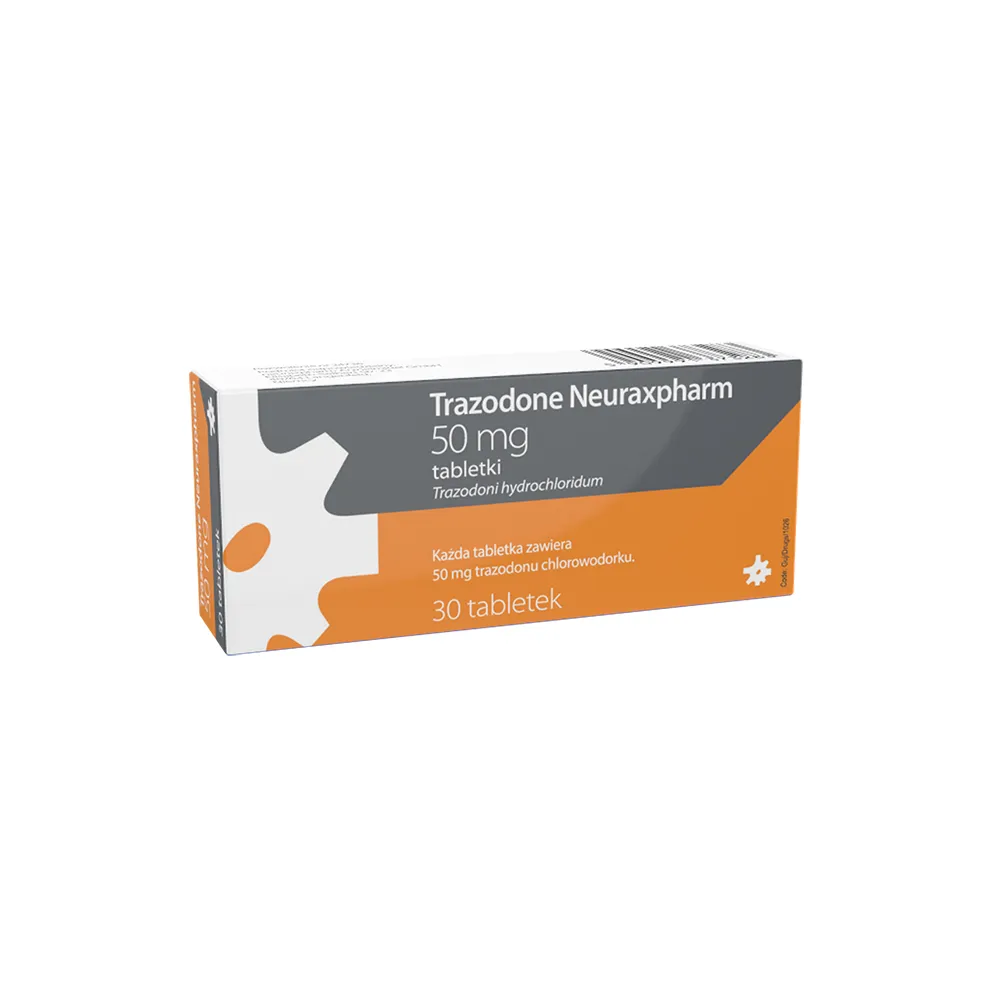
Table of Contents
- Package leaflet: Information for the patient
- 1. What Trazodone Neuraxpharm is and what it is used for
- 2. Important information before using Trazodone Neuraxpharm
- 3. How to take Trazodone Neuraxpharm
- 4. Possible adverse reactions
- 5. How to store Trazodone Neuraxpharm
- 6. Contents of the pack and other information
Package leaflet: Information for the patient
Trazodone Neuraxpharm, 50 mg, tablets
Trazodone Neuraxpharm, 100 mg, tablets
Trazodone Neuraxpharm, 150 mg, tablets
Trazodoni hydrochloridum
Please read the entire leaflet carefully before using this medicine, as it contains
important information for the patient.
- Keep this leaflet for future reference.
- If you have any questions, please consult your doctor or pharmacist.
- This medicine has been prescribed for a specific individual. Do not give it to others. The medicine may harm another person, even if their symptoms are the same.
- If you experience any adverse reactions, including any not listed in this leaflet, inform your doctor or pharmacist. See section 4.
Table of contents
- What Trazodone Neuraxpharm is and what it is used for
- What you need to know before taking Trazodone Neuraxpharm
- How to take Trazodone Neuraxpharm
- Possible side effects
- How to store Trazodone Neuraxpharm
- Contents of the pack and other information
1. What Trazodone Neuraxpharm is and what it is used for
Trazodone Neuraxpharm contains trazodone hydrochloride as the active substance. It belongs to a group of medicines called antidepressants. Trazodone Neuraxpharm is used to treat symptoms of depression (a major depressive episode) in adults.
2. Important information before using Trazodone Neuraxpharm
When not to use Trazodone Neuraxpharm:
- if the patient is allergic to trazodone hydrochloride or any of the other ingredients of this medicine (listed in section 6). Symptoms of allergy include: rash, difficulty swallowing or breathing, swelling of the lips, face, throat or tongue;
- if the patient has recently had a heart attack (acute myocardial infarction);
- if the patient is under the influence of alcohol or has taken sleeping medications (alcohol poisoning or poisoning with sedatives).
Warnings and precautions
Suicidal thoughts and worsening of depression
If the patient suffers from depression, suicidal thoughts or thoughts of self-harm may sometimes occur. These may worsen after starting antidepressant treatment, as such medicines only begin to take effect after some time, usually about 2 weeks, and sometimes later. Increased tendency for such thoughts may occur:
- if the patient previously experienced suicidal thoughts or self-harm;
- if the patient is a young adult. Clinical trial data have shown an increased risk of suicidal behaviour in adults under 25 years of age with psychiatric disorders who were treated with antidepressants.
If the patient ever experiences thoughts of self-harm or suicidal ideation, seek immediate medical advice
or go to hospital.
It may be helpful to inform a relative or friend that the patient has depression and ask them to read this leaflet. The patient may ask them to inform him/her if they notice worsening of depression or anxiety, or concerning changes in behaviour.
There have been reports of severe liver function disorders during treatment with Trazodone Neuraxpharm. If any of the following symptoms occur, contact a doctor immediately:
- weakness (asthenia)
- loss of appetite (anorexia)
- nausea, vomiting
- abdominal pain
- yellowing of the skin and/or eyes (jaundice)
Elderly patients
Elderly patients taking Trazodone Neuraxpharm may experience dizziness and lightheadedness when standing up or stretching. They may also feel sleepier than usual.
Increased caution is necessary, especially if the patient suffers from other medical conditions and is simultaneously taking other medications along with Trazodone Neuraxpharm.
Before starting treatment with this medicine, discuss with a doctor or pharmacist if:
- the patient has or has ever had seizures or epileptic fits;
- the patient has liver or kidney disease, particularly severe forms;
- the patient has heart disease [such as: heart or circulatory failure, angina pectoris, conduction disorders or varying degrees of atrioventricular block, irregular heart rhythm (arrhythmia), recent heart attack, prolonged QT interval syndrome, or slow heart rate (bradycardia)];
- the patient has low blood potassium levels (hypokalaemia), which may lead to muscle weakness and cramps, or abnormal heart rhythm;
- the patient has low blood magnesium levels (hypomagnesaemia);
- the patient has overactive thyroid gland (hyperthyroidism);
- the patient has difficulty urinating or feels a frequent need to urinate;
- the patient has benign prostatic hyperplasia (enlarged prostate);
- the patient has narrow-angle glaucoma (an eye condition);
- the patient has low blood pressure (hypotension);
- the patient has schizophrenia or another mental illness;
- the patient is elderly, as they may be more susceptible to adverse effects such as: drop in blood pressure upon rapidly standing up from sitting or lying down (orthostatic hypotension), sometimes accompanied by dizziness and difficulty maintaining balance, mental agitation, hallucinations (seeing things that are not there), or hyponatraemia (low sodium levels in blood, which may cause fatigue, weakness, confusion, headache, muscle stiffness, lack of coordination).
If the patient has liver, kidney, or heart disease, epilepsy, increased intraocular pressure (glaucoma), difficulty urinating, or prostate disorders, the doctor will periodically monitor the patient's health during treatment with Trazodone Neuraxpharm.
Severe liver disorders, some fatal, have been reported during trazodone treatment.
Treatment with Trazodone Neuraxpharm must be discontinued and medical advice sought immediately if the patient develops yellowing of the skin or whites of the eyes (jaundice), or experiences symptoms such as weakness (asthenia), loss of appetite, nausea, vomiting, or abdominal pain. See section 4. Possible side effects.
If the patient has schizophrenia or another mental disorder, treatment with antidepressants may worsen psychiatric symptoms, including increased paranoid thoughts. During treatment with Trazodone Neuraxpharm, a depressive episode of bipolar disorder may switch into a manic episode. In such a case, treatment with Trazodone Neuraxpharm must be discontinued immediately.
If the patient develops sore throat, fever, or flu-like symptoms during treatment with Trazodone Neuraxpharm, contact a doctor immediately. In such cases, a blood test is recommended, as these may be clinical signs of agranulocytosis, a blood disorder.
Caution is advised when trazodone is used concomitantly with other medicines known to prolong the QT interval, or with medicines known to increase the risk of serotonin syndrome or neuroleptic malignant syndrome (see section "Trazodone Neuraxpharm and other medicines" and section 4. Possible side effects).
Children and adolescents
Trazodone Neuraxpharm must not be used in children and adolescents under 18 years of age.
If the patient is unsure whether any of the above situations apply, consult a doctor or pharmacist before taking Trazodone Neuraxpharm.
Trazodone Neuraxpharm and other medicines
Tell your doctor or pharmacist about all medicines the patient is currently taking, has recently taken, or plans to take.
This includes medicines purchased without a prescription, including herbal medicines. Trazodone Neuraxpharm may affect the action of other medicines. Some medicines may also affect the action of Trazodone Neuraxpharm.
Tell the doctor if the patient is taking any of the following medicines:
- monoamine oxidase inhibitors (MAOIs) such as: tranylcypromine, phenelzine, isocarboxazid (used in depression) or selegiline (used in the treatment of Parkinson's disease), including if the patient has taken them within the past two weeks;
- other antidepressants (such as amitriptyline, nefazodone or fluoxetine);
- tryptophan (an amino acid needed for protein synthesis);
- triptans (medicines used to treat migraine);
- medicines with sedative effects (such as: tranquilizers or sleeping pills);
- medicines used to treat epilepsy, such as: carbamazepine and phenytoin;
- medicines known to prolong the QT interval on ECG, such as antiarrhythmics of class IA and III (a group of medicines used to treat heart rhythm disorders);
- medicines used to treat allergies (hypersensitivity), such as antihistamines;
- medicines used for contraception (oral contraceptives);
- muscle relaxants (a group of medicines that cause relaxation and reduce skeletal muscle tension);
- certain antipsychotics (such as phenothiazine derivatives, e.g. chlorpromazine, fluphenazine, levomepromazine and perphenazine);
- medicines used to treat high blood pressure, e.g. clonidine;
- digoxin (used in the treatment of heart conditions);
- medicines used to treat fungal infections, such as ketoconazole and itraconazole;
- certain medicines used to treat HIV, such as ritonavir and indinavir;
- erythromycin, an antibiotic used to treat infections;
- levodopa (used in the treatment of Parkinson's disease);
- St John's wort (Hypericum perforatum) (a herbal preparation);
- warfarin (used to prevent blood clots);
- buprenorphine. This medicine may interact with Trazodone Neuraxpharm and may cause symptoms such as: involuntary rhythmic muscle contractions, including eye movement muscles, agitation, hallucinations, coma, excessive sweating, tremor, increased reflexes, increased muscle tone, body temperature above 38°C. If such symptoms occur, contact a doctor.
Anaesthetics (anaesthetic medicines)
If the patient is scheduled to receive an anaesthetic (e.g. during surgery), inform the doctor or dentist that the patient is taking Trazodone Neuraxpharm.
Trazodone Neuraxpharm, food, drink and alcohol
Do not consume alcohol while taking Trazodone Neuraxpharm.
Pregnancy and breastfeeding
If the patient is pregnant or breastfeeding, suspects she may be pregnant, or is planning to become pregnant, she should consult a doctor or pharmacist before taking this medicine. If Trazodone Neuraxpharm was used during the last months of pregnancy, the newborn may experience withdrawal symptoms.
Driving and using machines
The patient may experience drowsiness or dizziness. Blurred vision and disorientation may also occur. If these symptoms occur, the patient should not drive or operate tools or machinery.
3. How to take Trazodone Neuraxpharm
This medicine should always be taken as directed by your doctor. If you have any doubts, consult your doctor or pharmacist.
What dose of Trazodone Neuraxpharm should be taken?
Adults:
- In adults, the usual starting dose is 150 mg per day, taken as a single dose or in divided doses.
- Depending on the patient's condition, the doctor may gradually increase the dose, for example by 50 mg every 3–4 days, up to a maximum dose of 300 mg per day.
- In hospitalized adults, the dose may reach 600 mg per day.
Elderly patients
- In elderly patients or debilitated patients, the usual starting dose is 100 mg per day.
Children and adolescents
Trazodone Neuraxpharm must not be used in children and adolescents under 18 years of age.
How to take this medicine
- Trazodone Neuraxpharm is taken orally. Swallow the tablet with water.
- This medicine should be taken after food. This may reduce the risk of adverse effects.
Tablets 50 mg: The division line on the tablet is not intended for breaking the tablet.
Tablets 100 mg: The tablet can be divided into equal doses. Each half contains 50 mg of trazodone hydrochloride.
Tablets 150 mg: The tablet can be divided into equal doses. Each half contains 75 mg of trazodone hydrochloride.
Duration of treatment
Improvement usually occurs within two to four weeks.
After an effective dose has been established, the patient should continue taking it for at least four weeks.
The doctor will periodically assess the effectiveness of the dose taken and, depending on the patient's condition, will decide whether continued treatment is necessary.
Usually, antidepressant treatment should be continued until the patient has felt well for a period of four to six months.
Taking more than the recommended dose of Trazodone Neuraxpharm
If a patient has taken more than the recommended dose of Trazodone Neuraxpharm, seek medical advice immediately or go to the nearest hospital emergency department. Take the medicine packaging with you so the doctor knows which medicine has been taken.
The following symptoms may occur: nausea or vomiting, drowsiness, dizziness or fainting, seizures (epileptic fits), disorientation, breathing difficulties or heart disturbances.
If you miss a dose of Trazodone Neuraxpharm
If you miss a dose, take it as soon as possible. However, if it is almost time for the next dose, skip the missed dose.
Do not take a double dose to make up for a missed dose.
Stopping Trazodone Neuraxpharm
You should continue taking Trazodone Neuraxpharm for as long as your doctor advises. Do not stop taking Trazodone Neuraxpharm just because you feel better. If your doctor decides to discontinue treatment, they will advise you to gradually reduce the dose to minimize the risk of withdrawal symptoms such as agitation, sleep disturbances, nausea, headache, and malaise.
If you have any further questions about the use of this medicine, consult your doctor or pharmacist.
4. Possible adverse reactions
Like all medicines, this medicine can cause adverse reactions, although not everyone will experience them.
You should stop taking the medicine and immediately go to a doctor or hospital if:
- the patient develops swelling of the hands, feet, ankles, face, lips or throat (which may cause difficulty swallowing or breathing), skin itching and hives. This may indicate that the patient is experiencing symptoms of an allergic reaction.
- the patient develops a painful erection not related to sexual activity, which does not go away (priapism).
- the patient develops loss of appetite, nausea or vomiting, disorientation, abdominal pain, fever, yellowing of the whites of the eyes and skin (jaundice). These may be symptoms of severe liver disease (hepatitis).
- the patient is more susceptible to infections than usual. This may be due to a blood disorder (agranulocytosis).
- the patient bruises more easily than usual. This may be due to a blood disorder (thrombocytopenia).
- the patient develops sudden abdominal pain and bloating, vomiting and constipation. These may be symptoms of intestinal dysfunction (paralytic ileus).
You should contact your doctor immediately if the patient notices the following adverse reactions:
- feeling of fatigue, fainting, dizziness, pale skin. These may be symptoms of anaemia.
- Seizures and (or) epileptic fits
- unusual skin sensations such as numbness, tingling, pricking, burning, chills (paraesthesia)
- feeling disoriented, motor restlessness, sweating, tremor, shaking, hallucinations (strange visions or sounds), sudden involuntary muscle movements (jerks) or rapid heartbeat – the patient may have developed a condition known as serotonin syndrome
- severe malaise with shallow breathing (shortness of breath), difficulty moving or walking with shuffling gait, tremor, sudden muscle contractions and high body temperature (above 38°C). This may be a condition known as neuroleptic malignant syndrome.
The list below includes other reported adverse reactions:
- feeling of drowsiness and somnolence,
- feeling less alert than usual
- nausea or vomiting,
- constipation, diarrhoea
- dryness of the oral mucosa, altered taste sensation, increased salivation, nasal congestion
- excessive sweating
- dizziness, headache, disorientation (confusion), weakness, tremor
- blurred vision
- weight loss
- fast or slow heartbeat,
- sensation of spinning or dizziness when standing up or sitting down quickly (orthostatic hypotension),
- feeling of muscle restlessness, difficulty falling asleep
- fluid retention, which may lead to swelling of the hands and feet
- skin rash, itching
- chest pain
- limb pain, back pain, muscle pain, joint pain
- involuntary movements (jerks) that cannot be controlled, particularly of the hands and feet, uncontrolled muscle movements or contractions
- frequent infections with high fever, severe chills, sore throat or mouth ulcers. These may be symptoms of a blood disorder known as leukopenia.
- feeling of anxiety or nervousness greater than usual, feeling of agitation
- excessive activity or racing thoughts (mania), imagining things that are not real (hallucinations), memory disturbances
- nightmares
- reduced sexual desire
- dizziness, sensation of spinning (vertigo)
- high blood pressure
- high body temperature
- flu-like symptoms
- difficulty speaking
- higher than normal white blood cell count (visible in blood tests)
- increased liver enzyme activity in blood (visible in blood tests)
- severe liver disorders, such as hepatitis
- liver failure resulting in death
- feeling of fatigue, weakness and disorientation, feeling of muscle pain, muscle stiffness or abnormal muscle function. Headache, loss of appetite, nausea or vomiting, and seizures may also occur. This may be caused by low sodium concentration in the blood.
Reporting of adverse reactions
If any adverse reactions occur, including any adverse reactions not listed in this leaflet, inform your doctor or pharmacist. Adverse reactions can be reported directly to the Department of Monitoring Adverse Drug Reactions of the Office for Registration of Medicinal Products, Medical Devices and Biocidal Products, Al. Jerozolimskie 181C, 02-222 Warsaw; tel.: +48 22 4921 301; fax: +48 22 4921 309
Website: https://smz.ezdrowie.gov.pl
Adverse reactions can also be reported to the marketing authorization holder.
By reporting adverse reactions, additional information on the safety of the medicine can be collected.
5. How to store Trazodone Neuraxpharm
Keep this medicine out of sight and reach of children.
Do not use this medicine after the expiry date stated on the outer carton following:
"Expiry date (EXP)" or on the blister following the abbreviation: "EXP". The expiry date refers to the last day of the stated month.
There are no special requirements regarding the storage temperature of this medicine. Store in the original packaging to protect from light.
Medicines must not be disposed of via wastewater or household waste. Ask your pharmacist how to dispose of medicines no longer required. Proper disposal helps protect the environment.
6. Contents of the pack and other information
What Trazodone Neuraxpharm contains
- The active substance is trazodone hydrochloride.
- Trazodone Neuraxpharm 50 mg tablets: each tablet contains 50 mg of trazodone hydrochloride.
- Trazodone Neuraxpharm 100 mg tablets: each tablet contains 100 mg of trazodone hydrochloride.
- Trazodone Neuraxpharm 150 mg tablets: each tablet contains 150 mg of trazodone hydrochloride.
The other ingredients are: microcrystalline cellulose, sodium carboxymethyl starch (type A),
pregelatinized corn starch, colloidal anhydrous silica, and magnesium stearate.
What Trazodone Neuraxpharm looks like and contents of the pack
Trazodone Neuraxpharm 50 mg are white or almost white, round, biconvex, uncoated tablets with a division line, 7.14 mm in diameter, marked with an embossed imprint "IT" and "I" on one side and smooth on the other side.
The division line on the tablet is not intended for breaking the tablet.
Trazodone Neuraxpharm 100 mg are white or almost white, round, biconvex tablets with a division line, 9.52 mm in diameter, marked with an embossed imprint "IT" and "II" on one side and smooth on the other side.
The tablet can be divided into equal doses.
Trazodone Neuraxpharm 150 mg are white or almost white, oval, flat uncoated tablets with bevelled edges, 16.90 mm in length and 8.40 mm in width, with a division line, marked with an embossed imprint "IT" and "III" on one side and smooth on the other side.
The tablet can be divided into equal doses.
Tablets are available in aluminium/aluminium, PVC/PVDC/aluminium, and PVC/aluminium blisters.
Pack sizes available:
Trazodone Neuraxpharm 50 mg: 30 tablets in a cardboard box.
Trazodone Neuraxpharm 100 mg: 30 tablets in a cardboard box.
Trazodone Neuraxpharm 150 mg: 30 or 100 tablets in a cardboard box.
Not all pack sizes may be marketed.
Marketing Authorisation Holder
neuraxpharm Arzneimittel GmbH
Elisabeth-Selbert Str. 23
40764 Langenfeld
Germany
Manufacturer/Importer
Glenmark Pharmaceuticals s.r.o.
Fibichova 143
566 17 Vysoké Mýto
Czech Republic
Laboratori Fundació Dau
C/ C, 12-14 Pol. Ind. Zona Franca
08040 Barcelona
Spain
neuraxpharm Arzneimittel GmbH
Elisabeth-Selbert Str. 23
40764 Langenfeld
Germany
For more detailed information about this medicinal product and its names in the countries of the European Economic Area, please contact the representative of the Marketing Authorisation Holder:
Neuraxpharm Polska Sp. z o.o.
ul. Poleczki 35
02-822 Warsaw
[email protected]