Tizagelan
Poland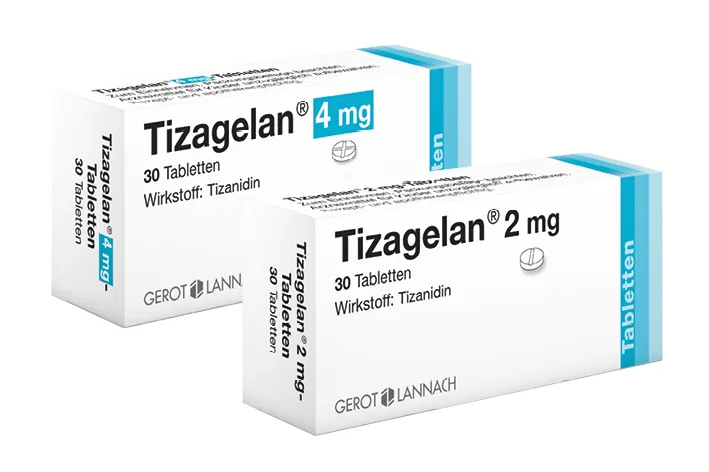
Table of Contents
Patient Information Leaflet
Tizagelan, 2 mg, tablets
Tizagelan, 4 mg, tablets
Tizanidinum
Please read carefully the entire leaflet before using this medicine, as it contains important information for the patient.
- Keep this leaflet for future reference.
- If you have any questions, please consult your doctor, pharmacist, or nurse.
- This medicine has been prescribed for a specific individual. Do not share it with others. The medicine may harm another person, even if their symptoms are the same.
- If you experience any adverse reactions, including any not listed in this leaflet, inform your doctor, pharmacist, or nurse. See section 4.
Table of Contents
- What is Tizagelan and for what purpose is it used
- Important information before taking Tizagelan
- How to take Tizagelan
- Possible side effects
- How to store Tizagelan
- Package contents and other information
1. What is Tizagelan and for what purpose is it used
Tizagelan belongs to a group of medicines known as skeletal muscle relaxants.
Tizagelan may be prescribed by a doctor to treat muscle spasms caused by certain spinal conditions or following surgery involving the musculoskeletal system (e.g. spine or hip joint).
Tizagelan may also be prescribed to treat muscle spasms resulting from neurological disorders, such as multiple sclerosis or after stroke.
2. Information before using Tizagelan
When not to use Tizagelan:
- if the patient is allergic to the active substance or to any of the other ingredients of this medicine (listed in section 6).
- in case of severe liver dysfunction.
- when taking certain medicines such as fluvoxamine (used for depression) or ciprofloxacin (an antibiotic) (see also section below "Tizagelan and other medicines").
Warnings and precautions
Before starting treatment with Tizagelan, discuss this with your doctor or pharmacist:
- if the patient has severe kidney disease. The patient may require a lower dose.
- if the patient has heart conditions, such as coronary artery disease.
- if the patient has liver disease. The doctor may regularly monitor liver enzymes, especially after high doses. Treatment with Tizagelan should be discontinued if the skin or whites of the eyes turn yellow (jaundice), or if unexplained nausea, loss of appetite, or fatigue occur, and the doctor should be contacted immediately.
- if the patient has kidney disease.
Children and adolescents
Tizagelan is not recommended for use in children and adolescents under 18 years of age, because experience with tizanidine in this patient group is limited.
Tizagelan and other medicines
Tell your doctor or pharmacist about all medicines the patient is currently taking or has recently taken, as well as any medicines the patient plans to take.
Do not take Tizagelan together with fluvoxamine (a medicine used to treat depression) or ciprofloxacin (an antibiotic) (see "When not to use Tizagelan").
Inform your doctor or pharmacist, especially if the patient is taking:
- any medicine used to treat irregular heartbeat, such as amiodarone, mexiletine, propafenone, or verapamil.
- cimetidine or famotidine (for indigestion and gastrointestinal ulcers).
- certain antibiotics, such as rifampicin or so-called "fluoroquinolones" (such as enoxacin, pefloxacin, norfloxacin).
- rofecoxib, a pain-relieving medicine.
- acyclovir, an antiviral medicine.
- oral contraceptives. The patient may react more strongly to a lower dose of tizanidine if taking oral contraceptives.
- ticlopidine (a medicine preventing blood clots).
- any medicines used to treat high blood pressure, including diuretics.
- beta-blockers, such as atenolol, propranolol.
- digoxin (a medicine used to treat congestive heart failure and heart rhythm disorders).
- any sedative medicines (sleeping pills or antipsychotics).
- any other medicines that, when taken with tizanidine, may affect heart rhythm. Contact your doctor or pharmacist.
Tizagelan with food, drink and alcohol
Tizagelan may be taken with or without food.
Do not take Tizagelan with alcohol, as it may increase the sedative effect of tizanidine.
Smoking and Tizagelan
Smoking may reduce the effect of tizanidine.
Pregnancy and breastfeeding
If the patient is pregnant or breastfeeding, suspects she may be pregnant, or is planning to have a child, she should consult her doctor or pharmacist before using this medicine.
It is not recommended to take Tizagelan during pregnancy or breastfeeding, as the effect of Tizagelan on pregnancy, the unborn child, or infants is unknown. The doctor will decide whether Tizagelan should be taken.
Driving and using machines
Tizagelan may cause drowsiness and dizziness. This may affect the ability to drive or operate tools or machinery. Do not drive or operate machinery until you know how this medicine affects you.
Tizagelan contains sucrose and lactose
If the patient has previously been diagnosed by a doctor with an intolerance to certain sugars, the patient should consult the doctor before taking this medicine.
3. How to take Tizagelan
This medicine should always be taken as directed by a doctor or pharmacist. If in
doubt, consult a doctor or pharmacist.
Muscle spasms caused by certain spinal disorders or as a result of musculoskeletal surgery
The recommended dose for adults is 2–4 mg three times daily.
In severe cases, an additional dose of 2–4 mg may be required. The last dose should be taken late at night.
Muscle spasms occurring as a result of nervous system disorders
The usual initial dose for adults is typically 2 mg three times daily.
The dose may then be gradually increased to 12–24 mg, divided into 3–4 equal doses per day.
The maximum daily dose is 36 mg.
Use in children and adolescents under 18 years of age
Tizagelan should not be given to children, as its use in this population has not been sufficiently studied.
Elderly patients (65 years of age and older)
Experience with the use of Tizagelan in elderly patients is limited. Additionally, elderly patients may experience impaired kidney function. Therefore, Tizagelan should be used with particular caution in this patient group.
How to take Tizagelan
Tizagelan is intended for oral use.
Tablets should be swallowed with a glass of water.
Tizagelan may be taken with food or independently of meals.
If the patient feels that Tizagelan is too strong or not strong enough, consult a doctor or pharmacist.
Tablets may be divided into equal doses.
Taking more Tizagelan than recommended
If a patient (or another person) takes too many tablets, or if a child is suspected to have swallowed any of the tablets, contact the emergency department of the nearest hospital or a doctor immediately.
Overdose may cause nausea, vomiting, low blood pressure, slowed or irregular heartbeat, dizziness, constricted pupils, breathing difficulties, drowsiness, restlessness, or somnolence.
Missed dose of Tizagelan
If a patient forgets to take one or more tablets, they should remember to take only the prescribed number of tablets at the time of the next scheduled dose. Do not take a double dose to make up for a missed dose.
Stopping Tizagelan treatment
Do not stop taking Tizagelan unless advised by a doctor. Discontinuation of Tizagelan treatment should be gradual, especially if the patient has been taking a high dose, unless otherwise directed by a doctor. Abruptly stopping treatment may cause effects such as increased heart rate and high blood pressure.
If there are any further doubts regarding the use of this medicine, consult a doctor or pharmacist.
4. Possible adverse reactions
Like all medicines, this medicine can cause adverse reactions, although they do not occur in everyone.
After low doses, such as those recommended to relieve painful muscle spasms, adverse reactions are usually mild and transient.
After higher doses recommended for the treatment of spasticity, adverse reactions occur more frequently and are more pronounced, but rarely severe enough to require discontinuation of treatment.
The following adverse reactions have been reported:
Very common (may affect more than 1 in 10 people)
- Difficulty sleeping or falling asleep
- Dry mouth, gastrointestinal disturbances
- Muscle weakness
Common (may affect up to 1 in 10 people)
- Drowsiness, lethargy, dizziness, fatigue
- Slow or fast heartbeat
- Low or reduced blood pressure
- Nausea
Uncommon (may affect up to 1 in 100 people)
- Increased liver enzyme activity in blood
Frequency not known (cannot be estimated from available data)
- Infections, nasal congestion or cold, throat infection
- Allergic reactions:
- Urticaria
- Severe, life-threatening allergic reaction requiring immediate treatment. The reaction may include very low blood pressure, swelling of the throat, breathing difficulties, and loss of consciousness.
- Confusion, nervousness, hallucinations (seeing and/or hearing things that are not real)
- Headache
- Difficulty controlling movements, involuntary muscle movements, difficulty speaking
- Fainting
- Sensation of "spinning" (dizziness)
- Visual disturbances, blurred vision
- Irregular heartbeat
- Vomiting, abdominal pain, constipation
- Liver infection or liver failure
- Itching, rash, skin infection
- Urinary tract infection
- Unusually frequent passage of relatively small amounts of urine
- Loss of appetite
- Feeling of weakness, withdrawal syndrome, influenza-like illness
Reporting of adverse reactions
If any adverse reactions occur, including any adverse reactions not listed in this leaflet, inform your doctor, pharmacist, or nurse. Adverse reactions can be reported directly to the Department of Monitoring Adverse Reactions of Medicinal Products at the Office for Registration of Medicinal Products, Medical Devices and Biocidal Products:
Al. Jerozolimskie 181C,
02-222 Warsaw
Tel: +48 22 4921301
Fax: +48 22 4921309
Website: https://smz.ezdrowie.gov.pl
Adverse reactions can also be reported to the marketing authorization holder.
Reporting adverse reactions helps to gather more information on the safety of the medicine.
5. How to store Tizagelan
Keep this medicine out of the sight and reach of children.
Do not use this medicine after the expiry date stated on the carton and blister pack following EXP.
The expiry date refers to the last day of the indicated month.
No special storage conditions required.
Medicines must not be disposed of via wastewater or household waste. Ask your pharmacist how to dispose of medicines no longer in use. This will help protect the environment.
6. Contents of the pack and other information
What Tizagelan contains
- The active substance is tizanidine. Each tablet contains 2 mg of tizanidine (as 2.29 mg tizanidine hydrochloride) or 4 mg of tizanidine (as 4.57 mg tizanidine hydrochloride).
- The other ingredients are:
- monohydrate lactose, pregelatinized corn starch, Macrogol 4000, stearic acid, sucrose, magnesium stearate.
What Tizagelan looks like and contents of the pack
Tizagelan 2 mg tablets
White to yellowish tablets, 8 mm in diameter, round, biconvex, with a division line on one side.
Tizagelan 4 mg tablets
White to yellowish tablets, 8 mm in diameter, round, biconvex, with a cross-shaped division line on one side.
Opaque PVC/PVDC/PVC/Aluminium blisters containing 10, 30, 60, 90, 100 or 120 tablets in a cardboard box.
Not all pack sizes may be marketed.
Marketing Authorisation Holder and Manufacturer
G.L. Pharma GmbH
Schlossplatz 1
8502 Lannach
Austria
For further information and information on the medicinal product names in other EEA countries, please contact the representative of the Marketing Authorisation Holder:
G.L. PHARMA POLAND Sp. z o.o.
Al. Jana Pawła II 61/313
01-031 Warsaw, Poland
Tel: 022/ 636 52 23; 636 53 02
[email protected]