Teldipin
Poland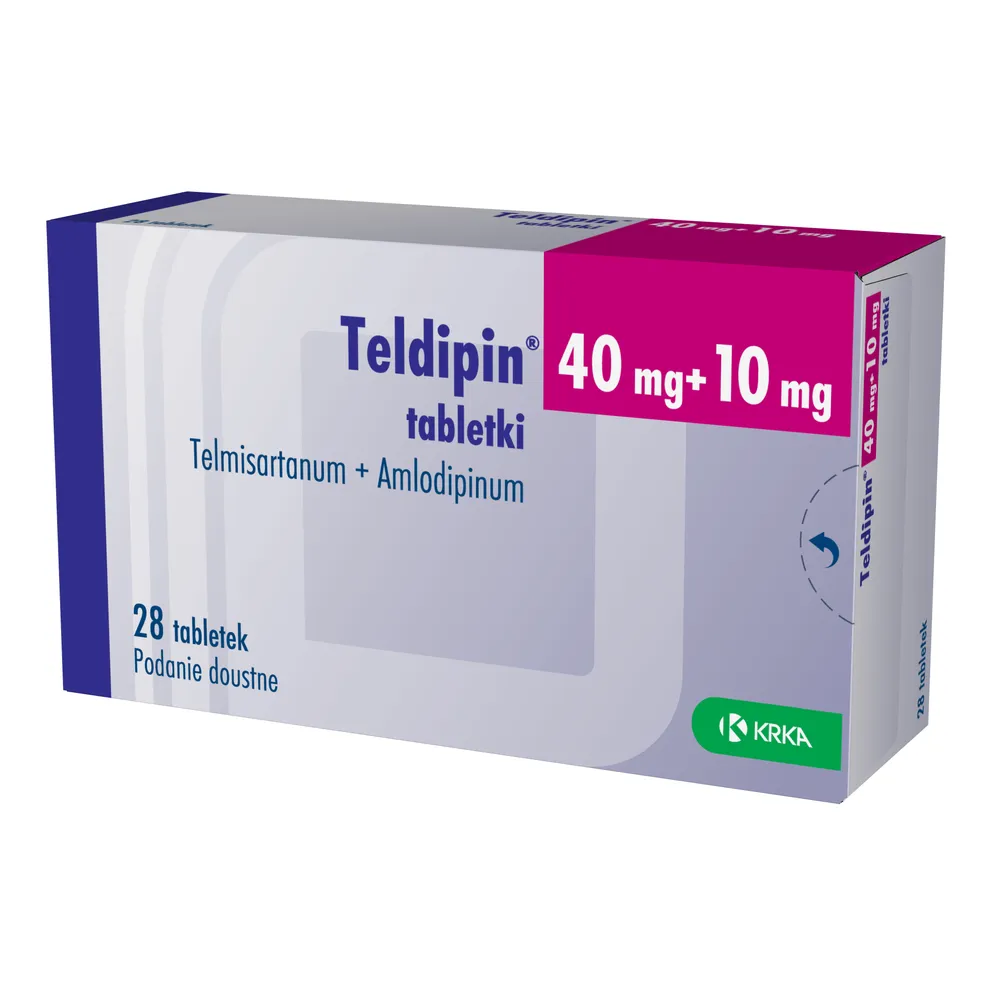
Table of Contents
Patient Information Leaflet
Teldipin, 40 mg + 5 mg, tablets
Teldipin, 40 mg + 10 mg, tablets
Teldipin, 80 mg + 5 mg, tablets
Teldipin, 80 mg + 10 mg, tablets
Telmisartan + Amlodipine
Please read this leaflet carefully before taking this medicine, as it contains important information for you.
- Keep this leaflet. You may need to read it again.
- If you have any further questions, please ask your doctor or pharmacist.
- This medicine has been prescribed for you personally. Do not pass it on to others. It may harm them, even if their symptoms are the same as yours.
- If you experience any side effects, including any not listed in this leaflet, please inform your doctor or pharmacist. See section 4.
Leaflet Contents
- What Teldipin is and what it is used for
- What you need to know before taking Teldipin
- How to take Teldipin
- Possible side effects
- How to store Teldipin
- Contents of the pack and other information
1. What Teldipin is and what it is used for
Teldipin contains two active substances: telmisartan and amlodipine. Both substances help control high blood pressure.
- Telmisartan belongs to a group of medicines called angiotensin II receptor antagonists. Angiotensin II is a substance produced in the body that causes blood vessels to narrow, thereby increasing blood pressure. Telmisartan blocks the action of angiotensin II, allowing blood vessels to widen and blood pressure to decrease.
- Amlodipine belongs to a group of medicines called calcium channel blockers. It inhibits the entry of calcium ions into the cells of the blood vessel walls, preventing blood vessel constriction and thereby lowering blood pressure. The combined action of both substances prevents blood vessel narrowing, resulting in relaxation of blood vessels and reduced blood pressure.
Teldipin is used instead of taking separate medicines, for the treatment of high blood pressure (hypertension) in patients already taking telmisartan and amlodipine at the same doses as those contained in Teldipin.
2. Important information before using Teldipin
When not to use Teldipin
- if the patient is allergic to telmisartan, amlodipine, or any of the other ingredients of this medicine (listed in section 6);
- during the third month of pregnancy and thereafter (Teldipin should also be avoided in early pregnancy – see section "Pregnancy");
- if the patient has severe liver disease such as cholestasis or biliary obstruction (impaired bile flow from the liver and gallbladder) or any other severe liver disease;
- if the patient has diabetes or kidney dysfunction and is being treated with a blood pressure-lowering medicine containing aliskiren;
- if the patient has very low blood pressure (hypotension);
- if the patient has aortic valve stenosis (narrowing of the heart's aortic valve) or cardiogenic shock (a condition in which the heart cannot supply sufficient blood to meet the body's needs);
- if the patient has heart failure following a heart attack.
If any of the above conditions apply to the patient, inform the doctor or pharmacist before taking Teldipin.
Warnings and precautions
Inform the doctor if the patient has or has had any of the following conditions or diseases:
- kidney disease or kidney transplant;
- renal artery stenosis (narrowing of the blood vessels supplying one or both kidneys);
- liver disease;
- heart disease;
- elevated aldosterone levels (fluid and salt retention, together with electrolyte imbalance);
- low blood pressure (hypotension), which is more likely if the patient is dehydrated (excessive loss of body water) or has sodium deficiency due to diuretic (water tablet) use, low-salt diet, diarrhoea, or vomiting;
- increased potassium levels in the blood;
- diabetes;
- recent heart attack;
- heart failure;
- marked increase in blood pressure (hypertensive crisis);
- need for dose adjustment in elderly patients.
Inform the doctor before taking Teldipin:
- if the patient is taking digoxin;
- if the patient is taking any of the following medicines used to treat high blood pressure:
- angiotensin-converting enzyme (ACE) inhibitors, such as enalapril, lisinopril, ramipril, particularly if the patient has kidney problems related to diabetes,
- aliskiren.
The doctor may recommend regular monitoring of kidney function, blood pressure, and blood electrolyte levels (e.g. potassium). See also the section "When not to use Teldipin".
If the patient develops abdominal pain, nausea, vomiting, or diarrhoea after taking Teldipin, discuss this with the doctor. The doctor will decide whether treatment should continue. Do not stop taking Teldipin on your own.
Inform the doctor if the patient is pregnant, suspects she may be pregnant, or is planning a pregnancy. Teldipin is not recommended during early pregnancy and must not be used after the third month of pregnancy, as it may seriously harm the unborn child (see section "Pregnancy").
If a surgical procedure or anaesthesia is planned, inform the doctor that the patient is taking Teldipin.
Teldipin may be less effective in lowering blood pressure in black patients.
Children and adolescents
Teldipin is not recommended for use in children and adolescents under 18 years of age.
Teldipin and other medicines
Tell the doctor or pharmacist about all medicines the patient is currently taking or has recently taken, including medicines obtained without a prescription and those planned for future use. The doctor may need to adjust the dose of these medicines or take other precautions. In some cases, discontinuation of one of the medicines may be necessary.
This is particularly important when taking any of the following medicines together with Teldipin:
- lithium, used to treat certain types of depression;
- medicines that may increase potassium levels in the blood, such as potassium-containing salt substitutes, potassium-sparing diuretics, angiotensin II receptor antagonists, heparin, and trimethoprim (an antibiotic);
- diuretics – especially when taken in high doses together with Teldipin, they may cause excessive loss of body water and low blood pressure (hypotension);
- ACE inhibitors or aliskiren (see also sections "When not to use Teldipin" and "Warnings and precautions");
- digoxin;
- ketoconazole, itraconazole (antifungal medicines);
- ritonavir, indinavir, nelfinavir (protease inhibitors used in the treatment of HIV infection);
- rifampicin, erythromycin, clarithromycin (medicines used to treat bacterial infections);
- Hypericum perforatum (St. John's wort);
- verapamil, diltiazem (medicines used to treat heart conditions);
- dantrolene (a medicine used intravenously in severe disturbances of body temperature);
- tacrolimus, sirolimus, temsirolimus, and everolimus (immunosuppressive medicines);
- simvastatin (a medicine that lowers cholesterol levels);
- cyclosporine (an immunosuppressive medicine).
The effect of Teldipin may be reduced when taken together with NSAIDs (non-steroidal anti-inflammatory drugs, e.g. acetylsalicylic acid or ibuprofen) or corticosteroids.
Teldipin may lower blood pressure more if the patient is taking other antihypertensive medicines, or may enhance the blood pressure-lowering effect of medicines that have hypotension as an additional side effect (e.g. baclofen, amifostine). Additionally, blood pressure may be further lowered by alcohol, barbiturates, opioids/narcotics, or antidepressants. Symptoms include dizziness upon standing. If dose adjustment of any other medicine taken during Teldipin treatment is needed, consult the doctor.
Food, drink, and alcohol
Do not drink grapefruit juice or eat grapefruits while taking Teldipin, as grapefruit and grapefruit juice may increase blood levels of the active substance amlodipine, which could lead to unpredictable intensification of Teldipin's blood pressure-lowering effect. In addition, blood pressure may be further lowered by alcohol consumption.
Pregnancy and breastfeeding
If the patient is pregnant or breastfeeding, suspects she may be pregnant, or is planning to have a baby, she should consult her doctor or pharmacist before using this medicine.
Pregnancy
Inform the doctor if the patient is pregnant, suspects she may be pregnant, or is planning pregnancy. The doctor will usually advise stopping Teldipin before planning pregnancy or immediately after pregnancy is confirmed, and will recommend an alternative medicine. Teldipin is not recommended during early pregnancy and must not be used after the third month of pregnancy, as it may seriously harm the unborn child if used after 3 months of pregnancy.
Breastfeeding
Inform the doctor if the patient is breastfeeding or intends to breastfeed. Teldipin is not recommended during breastfeeding. The doctor may recommend an alternative medicine if the patient wishes to breastfeed, especially if the baby is a newborn or premature infant.
It has been shown that amlodipine passes into breast milk in small amounts.
Driving and operating machinery
Teldipin may impair the ability to drive and operate machinery. If nausea, dizziness, fatigue, or headache occur, do not drive or operate machinery and contact the doctor immediately.
Teldipin contains sodium
This medicine contains less than 1 mmol of sodium (23 mg) per tablet, meaning the medicine is considered "sodium-free".
3. How to use Teldipin
This medicine should always be taken as instructed by the doctor or pharmacist. If in doubt,
consult the doctor or pharmacist.
The recommended dose of Teldipin is one tablet per day.
The tablet should be swallowed with water, with or without food. The medicine should be taken
daily at the same time. Do not take Teldipin with grapefruit juice.
It is important to continue using Teldipin for as long as the doctor has advised.
Taking more Teldipin than recommended
If too many tablets are taken by mistake, contact a doctor or pharmacist immediately or go to the
emergency department of the nearest hospital.
Taking an excessive dose of the medicine may cause a drop in blood pressure, including a significant one.
Dizziness, a feeling of "emptiness" in the head, fainting, or weakness may occur. In case of a severe
drop in blood pressure, shock may develop. The patient's skin then becomes cold and clammy, and
the patient may lose consciousness.
Breathing difficulties due to excess fluid accumulating in the lungs (pulmonary edema) may occur
even within 24 to 48 hours after taking the medicine.
Missing a dose of Teldipin
If a patient forgets to take a dose, there is no need to worry. The missed dose should be taken as soon
as remembered, and subsequent doses should be taken at the usual time. If a tablet is not taken one day,
the next dose should be taken the following day. Do not take a double dose to make up for a missed dose.
Stopping Teldipin treatment
The doctor will determine how long this medicine should be taken. If the patient stops taking the medicine
earlier than advised by the doctor, the condition may return.
If there are any further doubts regarding the use of this medicine, consult the doctor or pharmacist.
4. Possible adverse reactions
Like any medicine, this medicine can cause adverse reactions, although not everyone will experience them.
Some adverse reactions may be serious and require immediate medical attention:
- sepsis* (often called blood poisoning, a severe infection causing systemic inflammation);
- sudden wheezing, chest pain, shortness of breath or difficulty breathing;
- swelling of the eyelids, face or lips;
- swelling of the tongue or throat causing significant breathing difficulties;
- severe skin reactions, including severe rash, hives, redness of the entire skin surface, intense itching, blistering, peeling and swelling of the skin, mucosal inflammation (Stevens-Johnson syndrome, toxic epidermal necrolysis) or other allergic reactions;
- heart attack, abnormal heart function;
- pancreatitis, which may cause severe upper abdominal pain radiating to the back, accompanied by a very poor general condition.
Possible adverse reactions associated with TELMISARTAN:
Uncommon adverse reactions (may occur in less than 1 in 100 patients):
- urinary tract infections, upper respiratory tract infections (e.g. sore throat, sinusitis, common cold),
- reduced number of red blood cells (anaemia),
- high potassium levels,
- feeling of sadness (depression),
- difficulty falling asleep,
- fainting,
- sensation of spinning (vertigo of labyrinthine origin),
- slow heart rate (bradycardia),
- low blood pressure (hypotension),
- dizziness upon standing (orthostatic hypotension),
- shortness of breath, cough,
- abdominal pain, diarrhoea, abdominal discomfort, bloating, vomiting,
- itching, excessive sweating, rash,
- back pain, muscle cramps, muscle pain,
- kidney function disorders, including acute kidney failure,
- chest pain, feeling of weakness,
- increased blood creatinine levels.
Rare adverse reactions (may occur in less than 1 in 1,000 patients):
- sepsis* (often called blood poisoning, a severe infection causing systemic inflammation, which may lead to death),
- increased number of a certain type of white blood cells (eosinophilia), low platelet count (thrombocytopenia),
- severe allergic reaction (anaphylactic reaction), allergic reaction (e.g. rash, itching, breathing difficulties, wheezing, facial swelling or low blood pressure),
- low blood sugar levels (in diabetic patients),
- feeling of anxiety, drowsiness,
- visual disturbances,
- rapid heart rate (tachycardia),
- dryness of the oral mucosa, dyspepsia, taste disturbances,
- liver function abnormalities (this reaction is more likely in patients of Japanese origin),
- sudden swelling of the skin and mucous membranes, which may be fatal (angioedema, including fatal cases), rash (skin disorder), redness of the skin, urticaria, severe drug-induced rash,
- joint pain, limb pain, tendon pain,
- influenza-like symptoms,
- decreased haemoglobin concentration (protein present in blood), increased uric acid levels, increased liver enzyme activity or creatine phosphokinase in blood.
Very rare adverse reactions (may occur in less than 1 in 10,000 patients):
- progressive lung tissue scarring (interstitial lung disease).**
Frequency not known (frequency cannot be estimated from available data)
- angioedema of the intestine – with similar medicinal products, intestinal angioedema has been reported, presenting with symptoms such as abdominal pain, nausea, vomiting and diarrhoea.
* This phenomenon may be coincidental or related to a mechanism not yet known.
** Cases of progressive lung tissue scarring have been reported during telmisartan treatment.
However, it has not been established whether telmisartan use is the cause.
Possible adverse reactions associated with AMLODIPINE:
The following very common adverse reactions have been reported. If any of these become bothersome to the patient or persist for more than one week, the patient should contact a doctor.
Very common adverse reactions (may occur in at least 1 in 10 patients):
- swelling (fluid retention).
The following common adverse reactions have been reported. If any of these become bothersome to the patient or persist for more than one week, the patient should contact a doctor.
Common adverse reactions (may occur in less than 1 in 10 patients):
- headache, dizziness, drowsiness (especially at the beginning of treatment),
- palpitations (awareness of heartbeat), sudden redness of the skin, especially the face,
- abdominal pain, nausea,
- changes in bowel rhythm, diarrhoea, constipation, dyspepsia,
- fatigue, weakness,
- visual disturbances, double vision,
- muscle cramps,
- swelling around the ankles.
The following are other reported adverse reactions. If any of these adverse reactions worsen, or if any adverse reactions not listed in this leaflet occur, the patient should inform their doctor or pharmacist.
Uncommon adverse reactions (may occur in less than 1 in 100 patients):
- mood changes, anxiety, depression, insomnia,
- tremor, taste disturbances, fainting,
- tingling or numbness in the limbs, loss of pain sensation,
- tinnitus,
- low blood pressure,
- sneezing/runny nose due to inflammation of the nasal mucosa (rhinitis),
- cough,
- dryness of the oral mucosa, vomiting,
- hair loss, excessive sweating, skin itching, red spots on the skin, skin discoloration,
- urinary disorders, increased need to urinate at night, increased frequency of urination,
- inability to achieve erection, discomfort or enlargement of the breasts in men,
- pain, malaise,
- joint or muscle pain, back pain,
- increased or decreased body weight.
Rare adverse reactions (may occur in less than 1 in 1,000 patients):
- disorientation.
Very rare adverse reactions (may occur in less than 1 in 10,000 patients):
- decreased number of white blood cells, decreased platelet count, which may lead to easy bruising and bleeding (damage to red blood cells),
- increased blood sugar levels (hyperglycaemia),
- nerve disorders leading to weakness, tingling or numbness,
- gum swelling,
- abdominal bloating (gastritis),
- liver function disorders, hepatitis, yellowing of the skin (jaundice), increased liver enzyme activity, detected in laboratory tests,
- increased muscle tone,
- vasculitis, often accompanied by skin rash,
- photosensitivity.
Not known (frequency cannot be estimated from available data):
- tremor, rigidity, facial masking, slowed movements and shuffling gait, unsteady gait.
Reporting of adverse reactions
If any adverse reactions occur, including any not listed in this leaflet, inform your doctor or pharmacist. Adverse reactions can be reported directly to the Department of Monitoring Adverse Drug Reactions of the Office for Registration of Medicinal Products, Medical Devices and Biocidal Products:
Al. Jerozolimskie 181C, 02-222 Warsaw
Tel.: +48 22 49 21 301
Fax: +48 22 49 21 309
Website: https://smz.ezdrowie.gov.pl
Adverse reactions can also be reported to the marketing authorisation holder.
Reporting adverse reactions helps provide more information on the safety of the medicine.
5. How to store the medicine Teldipin
Keep this medicine out of the sight and reach of children.
Do not use this medicine after the expiry date stated on the packaging. The expiry date refers to the last day of the stated month.
There are no special requirements regarding the storage temperature of this medicine.
Store in the original packaging to protect from moisture.
Medicines must not be disposed of via wastewater or household waste. Ask your pharmacist how to dispose of medicines no longer required. This will help protect the environment.
6. Contents of the pack and other information
What Teldipin contains
- The active substances are telmisartan and amlodipine (as amlodipine besilate).
Teldipin 40 mg + 5 mg, tablets: Each tablet contains 40 mg telmisartan and 5 mg amlodipine (as amlodipine besilate).
Teldipin 40 mg + 10 mg, tablets: Each tablet contains 40 mg telmisartan and 10 mg amlodipine (as amlodipine besilate).
Teldipin 80 mg + 5 mg, tablets: Each tablet contains 80 mg telmisartan and 5 mg amlodipine (as amlodipine besilate).
Teldipin 80 mg + 10 mg, tablets: Each tablet contains 80 mg telmisartan and 10 mg amlodipine (as amlodipine besilate).
Other ingredients: povidone K30, sodium hydroxide, mannitol, microcrystalline cellulose, meglumine, sodium croscarmellose, yellow iron oxide (E 172), magnesium stearate (E 470b), red iron oxide (E 172) [only for 40 mg + 10 mg and 80 mg + 5 mg]. See section 2 "Teldipin contains sodium".
What Teldipin looks like and contents of the pack
Teldipin 40 mg + 5 mg, tablets: Light brownish-yellow, round, biconvex tablets, possibly with lighter and darker specks, marked with "N1" on one side. Tablet dimensions: approximately 9 mm in diameter.
Teldipin 40 mg + 10 mg, tablets: Light orange, round, biconvex tablets, possibly with lighter and darker specks, marked with "N2" on one side. Tablet dimensions: approximately 9 mm in diameter.
Teldipin 80 mg + 5 mg, tablets: Light orange, oval, biconvex tablets, possibly with lighter and darker specks, marked with "N3" on one side. Tablet dimensions: approximately 17 mm in length.
Teldipin 80 mg + 10 mg, tablets: Light brownish-yellow, oval, biconvex tablets, possibly with lighter and darker specks, marked with "N4" on one side. Tablet dimensions: approximately 17 mm in length.
Packaging: 14, 28, 30, 56, 60, 84, 90 and 98 tablets in blister packs contained in a cardboard box.
Not all pack sizes may be marketed.
Marketing Authorisation Holder
KRKA, d.d., Novo mesto, Šmarješka cesta 6, 8501 Novo mesto, Slovenia
Manufacturer
KRKA, d.d., Novo mesto, Šmarješka cesta 6, 8501 Novo mesto, Slovenia
TAD Pharma GmbH, Heinz-Lohmann-Straße 5, 27472 Cuxhaven, Germany
This medicinal product is authorised in the European Economic Area countries under the following names:
| Czech Republic | Telmisartan/amlodipine Krka |
| Poland | Teldipin |
For more detailed information about this medicinal product, please contact the local representative of the marketing authorization holder:
KRKA-POLSKA Sp. z o.o.
Równoległa 5 Street
02-235 Warsaw
Tel. 22 57 37 500