Tazocin
Poland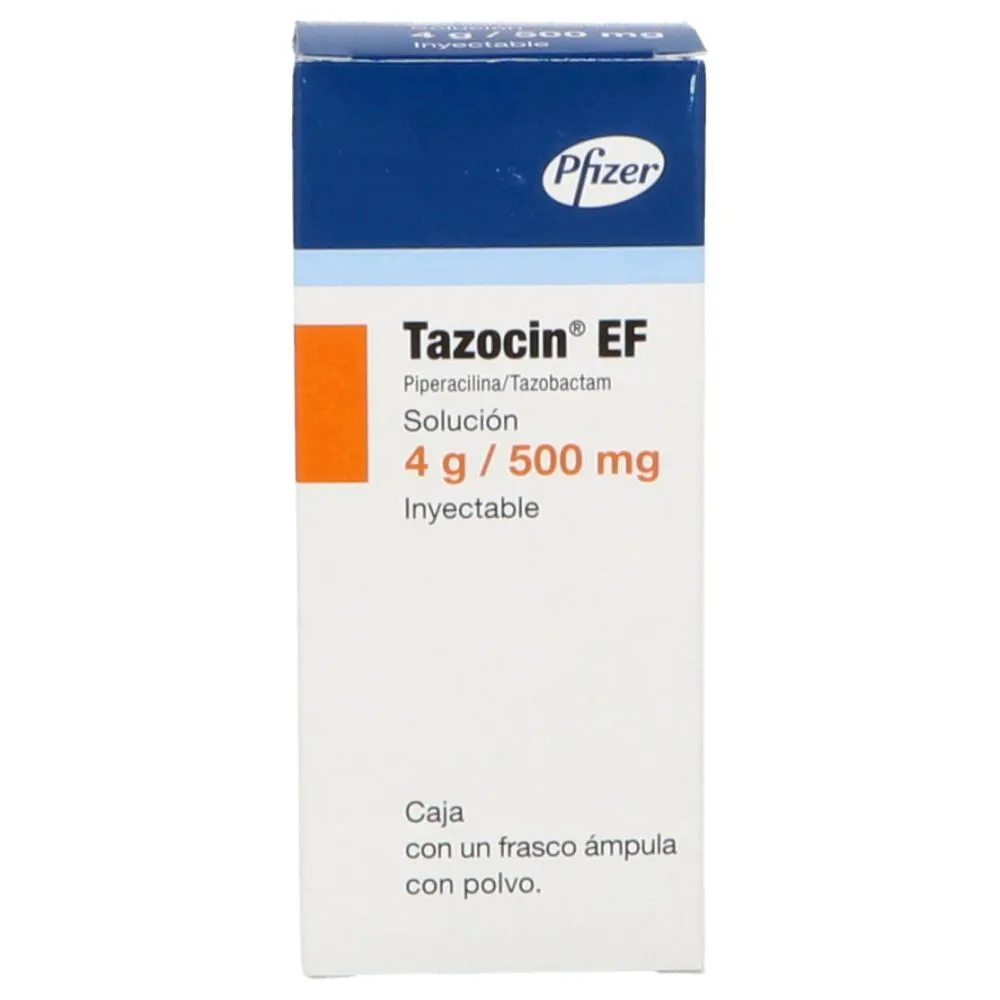
Table of Contents
- Package leaflet: Information for the user
- 1. What Tazocin is and what it is used for
- 2. Important information before using Tazocin
- 3. How to use Tazocin
- 4. Possible adverse reactions
- 5. How to store Tazocin
- 6. Contents of the pack and other information
- Information intended exclusively for medical professionals:
Package leaflet: Information for the user
Tazocin
2 g + 0,25 g, powder for solution for infusion
Tazocin
4 g + 0,5 g, powder for solution for infusion
Piperacillinum + Tazobactamum
Please read this leaflet carefully before using this medicine because it contains
important information for you.
- Keep this leaflet. You may need to read it again.
- If you have any further questions, please ask your doctor, pharmacist, or nurse.
- This medicine has been prescribed for you only. Do not pass it on to others. It may harm them even if their symptoms are the same as yours.
- If you experience any side effects, including any not listed in this leaflet, tell your doctor, pharmacist, or nurse. See section 4.
Contents of the leaflet
- What Tazocin is and what it is used for
- What you need to know before you use Tazocin
- How to use Tazocin
- Possible side effects
- How to store Tazocin
- Contents of the pack and other information
1. What Tazocin is and what it is used for
Piperacillin belongs to a group of medicines called "broad-spectrum penicillins". It is an antibiotic that kills many types of bacteria. Tazobactam may prevent some bacteria from surviving despite piperacillin. This means that combining piperacillin with tazobactam kills more strains of bacteria.
Tazocin is used in adults and adolescents to treat bacterial infections of the lower respiratory tract (lungs), urinary tract (kidneys and bladder), abdominal cavity, skin, and blood. Tazocin may also be used to treat bacterial infections in patients with low white blood cell counts (reduced resistance to infection).
Tazocin is used in children aged 2 to 12 years to treat infections of the abdominal cavity, including appendicitis, peritonitis (infection of the fluid and membrane lining the abdominal organs), and cholecystitis (infection of the gallbladder). Tazocin may also be used to treat bacterial infections in patients with low white blood cell counts (reduced resistance to infection).
In certain severe infections, your doctor may consider administering Tazocin together with other antibiotics.
2. Important information before using Tazocin
When not to use Tazocin
- If the patient is allergic to piperacillin, tazobactam, or any of the other ingredients of this medicine (listed in section 6).
- If the patient is allergic to antibiotics known as penicillins, cephalosporins, or other beta-lactamase inhibitors, as they may also be allergic to Tazocin.
Warnings and precautions
Before starting treatment with Tazocin, discuss the following with your doctor, pharmacist, or nurse:
- If the patient has allergies. If the patient has multiple allergies, they must ensure they inform the doctor or healthcare professional before taking the medicine.
- If the patient has diarrhoea before treatment, or if diarrhoea occurs during or after treatment ends. Inform the doctor or healthcare professional immediately. Do not take any anti-diarrhoeal medicines without first consulting a doctor.
- If the patient has low blood potassium levels. The doctor may check kidney function before administering the medicine and may perform regular blood tests during treatment.
- If the patient has kidney or liver problems, or is undergoing haemodialysis. The doctor may check kidney function before administering the medicine and may perform regular blood tests during treatment.
- If the patient is taking the antibiotic vancomycin at the same time as Tazocin, the risk of kidney damage may be increased (see also Tazocin and other medicines in this leaflet).
- If the patient is taking medicines to prevent excessive blood clotting, known as anticoagulants (see also Tazocin and other medicines in this leaflet), or if unexpected bleeding occurs during treatment. In such cases, inform the doctor or healthcare professional immediately.
- If the patient experiences seizures during treatment. Inform the doctor or healthcare professional immediately.
- If the patient suspects they have developed a new infection or an existing infection has worsened. In such cases, inform the doctor or healthcare professional.
Haemophagocytic lymphohistiocytosis
Cases of a disease have been reported in which the immune system produces excessive numbers of normally functioning white blood cells called histiocytes and lymphocytes, leading to inflammation (haemophagocytic lymphohistiocytosis). This condition may be life-threatening if not diagnosed and treated early. If multiple symptoms such as fever, swollen lymph nodes, feeling of weakness, dizziness, shortness of breath, cyanosis, or skin rash occur, contact a doctor immediately.
Children
Piperacillin with tazobactam is not recommended for children under 2 years of age due to insufficient data on safety and efficacy.
Tazocin and other medicines
Inform your doctor or healthcare professional about all medicines currently taken or recently taken, including those obtained without a prescription. Some medicines may interact with piperacillin and tazobactam. These include:
- A medicine used for gout (probenecid); it may prolong the elimination of piperacillin and tazobactam from the body;
- Medicines that reduce blood clotting or are used to treat blood clots (e.g. heparin, warfarin, acetylsalicylic acid);
- Medicines used to relax muscles during surgery; if the patient is to undergo general anaesthesia, they should inform the doctor about taking Tazocin;
- Methotrexate (a medicine used in the treatment of cancer, arthritis, or psoriasis). Piperacillin and tazobactam may prolong the elimination of methotrexate from the body;
- Medicines that reduce potassium levels in the blood (e.g. diuretics or certain cancer treatments);
- Medicines containing other antibiotics: tobramycin, gentamicin, or vancomycin; if the patient has kidney problems, they should inform the doctor.
Concurrent use of Tazocin and vancomycin may increase the risk of kidney damage, even if there are no pre-existing kidney problems.
Effect on laboratory test results
If the patient is to provide a blood or urine sample, they should inform the doctor or laboratory staff that they are taking Tazocin.
Pregnancy and breastfeeding
If the patient is pregnant, breastfeeding, suspects she may be pregnant, or is planning to have a child, she should consult her doctor or pharmacist before using this medicine.
The treating doctor will decide whether Tazocin is appropriate for her.
Piperacillin and tazobactam may pass into the body of the unborn child or into breast milk. If the patient is breastfeeding, the treating doctor will decide whether Tazocin is appropriate.
Driving and operating machinery
The use of Tazocin is unlikely to affect the ability to drive or operate machinery.
Tazocin contains sodium
Tazocin 2 g + 0.25 g
This medicine contains 130 mg of sodium (the main component of table salt) per vial. This corresponds to 6.5% of the maximum recommended daily sodium intake in the adult diet.
Tazocin 4 g + 0.5 g
This medicine contains 261 mg of sodium (the main component of table salt) per vial. This corresponds to 13% of the maximum recommended daily sodium intake in the adult diet.
This should be taken into account in patients who are controlling sodium intake in their diet.
3. How to use Tazocin
The medicine is administered by a doctor or nurse as an intravenous infusion (lasting over 30 minutes).
Dosage
The dose of medicine given to the patient depends on the disease being treated, the patient's age, and any kidney problems the patient may have.
Adults and adolescents over 12 years of age
Typically, 4 g of piperacillin and 0.5 g of tazobactam are administered intravenously (directly into the blood) every 6 to 8 hours.
Children aged 2 to 12 years
For children with intra-abdominal infections, the usual dose is 100 mg of piperacillin and 12.5 mg of tazobactam per kg of body weight administered intravenously (directly into the blood) every 8 hours. The usual dose for children with low white blood cell counts is 80 mg of piperacillin and 10 mg of tazobactam per kg of body weight administered intravenously (directly into the blood) every 6 hours.
The doctor will calculate the dose of medicine based on the child's body weight, but each individual dose of Tazocin will not exceed 4 g + 0.5 g.
The doctor will continue administering Tazocin until all signs of infection have completely resolved (for 5 to 14 days).
Patients with kidney disease
The doctor may recommend reducing the dose of Tazocin or the frequency of administration. The doctor may perform blood tests to ensure the correct dose is being administered, especially if the patient is receiving the medicine for a prolonged period.
Administration of a higher than recommended dose of Tazocin
Tazocin will be administered by a doctor or nurse, so incorrect dosing is unlikely. However, if the patient experiences adverse effects (e.g., seizures) or if the patient believes they have received too high a dose, they should immediately inform the doctor.
Missed dose of Tazocin
If the patient believes a dose of Tazocin has been missed, they should immediately inform the doctor or healthcare professional.
If there are any further doubts regarding the use of this medicine, consult the doctor or nurse.
4. Possible adverse reactions
Like all medicines, this medicine can cause adverse reactions, although not everybody will experience them.
If any of the serious adverse reactions listed below occur, you must immediately contact a doctor.
Serious adverse reactions (with frequencies indicated in parentheses) of Tazocin include:
- severe skin reactions [Stevens-Johnson syndrome, bullous dermatitis (frequency not known), exfoliative dermatitis (frequency not known), toxic epidermal necrolysis (Lyell's syndrome) (rare)], initially appearing as red, target-shaped or circular spots, often with centrally located blisters; additionally, ulceration of the mouth, throat, nose, limbs, genital organs, and conjunctivitis (redness and swelling of the eyes) may occur; the rash may progress to extensive blistering or skin peeling and may be life-threatening
- severe, potentially life-threatening allergic reaction (drug reaction with eosinophilia and systemic symptoms), which may affect the skin and, more importantly, other organs beneath the skin, such as the kidneys and liver
- skin disease (acute generalized exanthematous pustulosis) accompanied by fever. This condition is characterized by numerous small fluid-filled blisters located on a swollen and red large skin surface
- swelling of the face, lips, tongue, or other body parts (frequency not known)
- shortness of breath, wheezing, or difficulty breathing (frequency not known)
- severe rash or urticaria (not very common), itching or skin rash (common)
- yellowing of the whites of the eyes or skin (frequency not known)
- blood cell damage [symptoms include: unexpected shortness of breath, red or brown discoloration of urine (frequency not known), nosebleeds (rare), small bruises (frequency not known), significant decrease in white blood cell count (rare)]
- severe or persistent diarrhoea with fever or weakness (rare)
If any of the adverse reactions worsen or if any adverse reactions not listed in this leaflet occur, inform your doctor or healthcare professional.
Very common adverse reactions (may occur in more than 1 in 10 people):
- diarrhoea
Common adverse reactions (may occur in up to 1 in 10 people):
- fungal infections (e.g. candidiasis)
- decreased platelet count, decreased red blood cell count or haemoglobin levels, abnormal laboratory test results (positive direct Coombs test), prolonged blood clotting time (prolonged activated partial thromboplastin time)
- decreased blood protein levels
- headache, insomnia
- abdominal pain, vomiting, nausea, constipation, gastrointestinal discomfort
- increased liver enzyme activity in blood
- skin rash, itching
- abnormal blood test results indicating kidney function abnormalities
- fever, injection site reaction
Uncommon adverse reactions (may occur in up to 1 in 100 people):
- decreased white blood cell count (leukopenia), prolonged blood clotting time (prolonged prothrombin time)
- decreased potassium levels in blood, decreased blood glucose levels
- seizures observed in patients receiving high doses of the medicine or in patients with kidney problems
- low blood pressure, phlebitis (increased sensitivity to touch or redness in the inflamed area), skin redness
- increased bilirubin levels (a breakdown product of blood pigment)
- skin reactions including redness, skin changes, urticaria
- joint and muscle pain
- chills
Rare adverse reactions (may occur in up to 1 in 1,000 people):
- significant decrease in white blood cell count (agranulocytosis), nosebleeds
- severe inflammation of the large intestine, inflammation of the mucous membrane of the mouth
- detachment of the outer layer of skin over the entire body [toxic epidermal necrolysis (Lyell's syndrome)]
Frequency not known (cannot be estimated from available data):
- significant decrease in red blood cells, white blood cells, and platelets (pancytopenia), decreased white blood cell count (neutropenia), decreased red blood cell count due to premature damage or degradation, minor bruising, prolonged bleeding time, increased platelet count, increased number of a specific type of white blood cells (eosinophilia)
- allergic reaction and severe allergic reaction
- hepatitis, yellowing of the skin or whites of the eyes
- severe systemic allergic reaction with skin rash and mucous membrane lesions, blisters and other skin eruptions (Stevens-Johnson syndrome), severe allergic reaction affecting the skin and other organs such as kidneys and liver (drug reaction with eosinophilia and systemic symptoms), numerous small fluid-filled blisters on a swollen and red large skin surface accompanied by fever (acute generalized exanthematous pustulosis), blistering skin reactions (bullous dermatitis)
- impaired kidney function and kidney problems
- lung disease with increased number of eosinophils in the lungs (a type of white blood cells)
- acute disorientation and confusion (delirium)
Administration of piperacillin to patients with cystic fibrosis has been associated with a higher incidence of fever and rash.
Beta-lactam antibiotics, including piperacillin with tazobactam, may lead to symptoms of brain dysfunction (encephalopathy) and seizures.
Reporting of adverse reactions
If any adverse reactions occur, including any not listed in this leaflet, inform your doctor, pharmacist, or nurse. Adverse reactions can be reported directly to the Department of Monitoring Adverse Drug Reactions, Office for Registration of Medicinal Products, Medical Devices and Biocidal Products
Al. Jerozolimskie 181C
02-222 Warsaw
Tel: +48 22 49 21 301
Fax: +48 22 49 21 309
Website: https://smz.ezdrowie.gov.pl
Adverse reactions can also be reported to the Marketing Authorisation Holder or its representative.
Reporting adverse reactions helps provide more information on the safety of the medicine.
5. How to store Tazocin
Keep this medicine out of sight and reach of children.
Do not use this medicine after the expiry date stated on the carton and vial after "EXP".
The expiry date refers to the last day of the stated month.
Unopened vials: do not store above 25°C.
For single use only. Any unused solution must be discarded.
Medicines should not be disposed of via wastewater or household waste. Ask your pharmacist how to dispose of medicines no longer required. These measures will help protect the environment.
6. Contents of the pack and other information
What Tazocin contains
- The active substances are piperacillin and tazobactam. Tazocin 2 g + 0.25 g: each vial contains 2 g of piperacillin (as sodium salt) and 0.25 g of tazobactam (as sodium salt). Tazocin 4 g + 0.5 g: each vial contains 4 g of piperacillin (as sodium salt) and 0.5 g of tazobactam (as sodium salt).
- Other ingredients: monohydrate citric acid and disodium edetate (EDTA).
What Tazocin looks like and contents of the pack
Tazocin 2 g + 0.25 g is a white or almost white powder in a vial. The pack contains 1, 5, 10, 12, 25 or 50 vials.
Tazocin 4 g + 0.5 g is a white or almost white powder in a vial.
The pack contains 1, 5, 10, 12, 25 or 50 vials.
Not all pack sizes may be marketed.
Marketing Authorisation Holder
Pfizer Europe MA EEIG
Boulevard de la Plaine 17
1050 Bruxelles
Belgium
Manufacturer
Wyeth-Lederle S.r.l
Via Franco Gorgone – Zona Industriale
95100 Catania CT
Italy
Pfizer Service Company BV,
Hoge Wei 10,
Zaventem, 1930
Belgium
This medicinal product is authorised in the European Economic Area countries and in the United Kingdom (Northern Ireland) under the following names:
Cyprus - TAZOCIN EF
Denmark - Tazocin
France - TAZOCILLINE 2 g/0.25 g, poudre pour solution pour perfusion
TAZOCILLINE 4 g/0.5 g, poudre pour solution pour perfusion
Greece - Tazocin EF
Italy - Tazocin 2 g / 0.25 g polvere per Soluzione Per Infusione
Tazocin 4 g / 0.5 g polvere per Soluzione Per Infusione
Malta - Tazocin
Poland - Tazocin
United Kingdom (Northern Ireland) - TAZOCIN 2 g/0.25 g powder for solution for infusion
TAZOCIN 4 g/0.5 g powder for solution for infusion
For further information about this medicinal product, please contact the local representative of the Marketing Authorisation Holder:
Pfizer Polska Sp. z o.o.
tel.: 22 335 61 00
Detailed information on this medicinal product is available on the website: www.urpl.gov.pl
Information intended exclusively for medical professionals:
Warning: Use in adult patients for the treatment of bacteremia caused by
E. coli and K. pneumoniae strains (resistant to ceftriaxone) producing extended-spectrum
beta-lactamases (ESBL) is not recommended.
How to store Tazocin
Unopened vial: Do not store above 25°C.
Reconstituted solution in vial
Chemical and physical stability studies have shown that the reconstituted solution may be stored for up to 12 hours in a refrigerator at 2–8°C, after reconstitution with one of the compatible diluents (see Administration Instructions below).
Diluted prepared infusion solution
If the diluted reconstituted solution has been prepared using one of the compatible diluents, in appropriate volumes (see Administration Instructions below), chemical and physical stability is maintained for up to 12 hours when stored refrigerated at 2–8°C.
From a microbiological standpoint, the reconstituted or diluted product should be used immediately. If not used immediately, the person responsible for preparing the solution is also responsible for ensuring storage conditions and duration. This time must not exceed 12 hours at 2–8°C.
Administration Instructions
Tazocin should be administered as an intravenous infusion (lasting more than 30 minutes).
The product must be reconstituted and diluted under aseptic conditions. Before administration, inspect the solution for visible particles and discoloration. The solution should only be administered if it is clear and free of visible particles.
Intravenous administration
Prepare the solution by adding the appropriate volume of one of the compatible reconstitution diluents listed below to the vial. Rotate the vial until the powder is completely dissolved. Dissolution usually occurs within 5 to 10 minutes of continuous rotation. (Detailed handling instructions are provided below.)
| Contents of the vial | Volume of solvent to be added to the vial* |
| 2 g + 0.25 g (2 g piperacillin and 0.25 g tazobactam) | 10 ml |
| 4 g + 0.5 g (4 g piperacillin and 0.5 g tazobactam) | 20 ml |
* Compatible solvents used for reconstitution:
- 0.9% (9 mg/ml) sodium chloride solution for injection
- sterile water for injection
- 5% glucose solution
The maximum recommended volume of sterile water for injection is 50 ml per dose.
The prepared solution should be withdrawn from the vial using a syringe. After reconstituting the powder
as recommended, the contents withdrawn from the vial using a syringe will contain the amount of piperacillin and tazobactam stated on the label.
This reconstituted solution may be further diluted to the required volume (e.g. 50 ml or 150 ml) using one of the following diluents:
- 0.9% (9 mg/ml) sodium chloride solution for injection
- 5% glucose solution
- 6% dextran in 0.9% (9 mg/ml) sodium chloride solution
- sodium lactate (Ringer's) solution
- Hartmann's solution
- acetated Ringer's solution
- acetated and malated Ringer's solution
Incompatibilities
If Tazocin is administered simultaneously with another antibiotic (e.g. an aminoglycoside), these products should be given separately. Mixing beta-lactam antibiotics with aminoglycosides in vitro may result in significant inactivation of the aminoglycoside. However, it has been demonstrated that amikacin and gentamicin are compatible with Tazocin in vitro in certain diluents at specified concentrations (see below Administration of Tazocin with aminoglycosides).
Tazocin must not be mixed with other substances in a syringe or infusion container, as compatibility has not been established.
Due to chemical instability, Tazocin must not be used with solutions containing only sodium bicarbonate.
Tazocin is compatible with sodium lactate (Ringer's) solution and may be administered simultaneously through a common Y-site infusion line.
Tazocin must not be added to blood products or albumin hydrolysates.
Administration of Tazocin with aminoglycosides
Mixing beta-lactam antibiotics with aminoglycosides in vitro may lead to significant inactivation of aminoglycosides; therefore, it is recommended that Tazocin and aminoglycosides be administered separately. If simultaneous administration of an aminoglycoside and Tazocin is necessary, they should be reconstituted and diluted separately.
If simultaneous administration is required, Tazocin is compatible and may be administered simultaneously through a common Y-site infusion line only with the aminoglycosides listed below and under the conditions described below.
| Aminoglycoside | Tazocin product strength [g] | Tazocin diluent volume [ml] | Aminoglycoside concentration range* [mg/ml] | Permitted diluents |
| Amikacin | 2 g + 0.25 g 4 g + 0.5 g | 50, 100, 150 | 1.75–7.5 | 0.9% sodium chloride solution or 5% glucose solution |
| Gentamicin | 2 g + 0.25 g 4 g + 0.5 g | 50, 100, 150 | 0.7–3.32 | 0.9% sodium chloride solution or 5% glucose solution |
* The dose of aminoglycoside should be adjusted according to the patient's body weight, severity of infection (severe or life-threatening), and renal function (creatinine clearance).
Compatibility of Tazocin with other aminoglycosides has not been established. Only the concentrations and solvents of amikacin and gentamicin mentioned above, together with the specified doses of Tazocin, have been determined as compatible for simultaneous administration via a common Y-site infusion line. Simultaneous administration via a common Y-site infusion line in any other manner than specified above may result in inactivation of the aminoglycoside by Tazocin.