Simcovas
Poland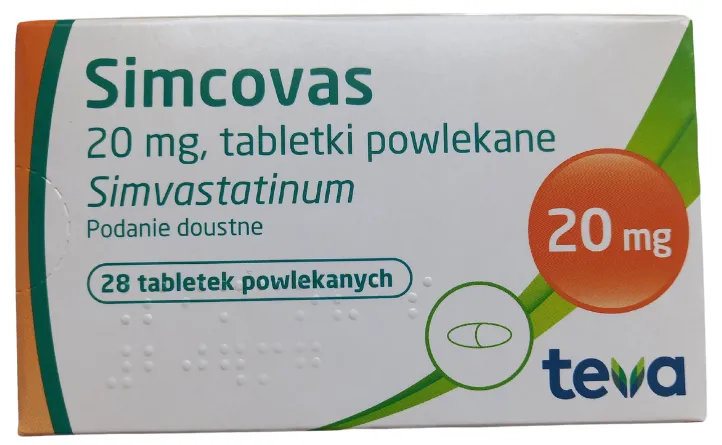
Table of Contents
Package leaflet: Information for the patient
Simcovas, 20 mg, film-coated tablets
Simcovas, 40 mg, film-coated tablets
simvastatinum
Please read this leaflet carefully before taking this medicine, as it contains important information for you.
- Keep this leaflet. You may need to read it again.
- If you have any further questions, ask your doctor or pharmacist.
- This medicine has been prescribed for a specific individual. Do not share it with others. This medicine may harm others, even if their symptoms are the same.
- If you experience any adverse reactions, including any not listed in this leaflet, inform your doctor or pharmacist. See section 4.
Leaflet contents
- What Simcovas is and what it is used for
- Important information before taking Simcovas
- How to take Simcovas
- Possible side effects
- How to store Simcovas
- Contents of the pack and other information
1. What Simcovas is and what it is used for
The active substance in Simcovas is simvastatin. Simcovas is a medicine used to lower blood levels of total cholesterol, "bad" cholesterol (LDL cholesterol), and fatty substances called triglycerides. Additionally, Simcovas increases levels of "good" cholesterol (HDL cholesterol). Simcovas belongs to a group of medicines called statins. Cholesterol is one of several fatty substances circulating in the blood. Total cholesterol consists mainly of LDL and HDL cholesterol.
LDL cholesterol is often called "bad" cholesterol because it can deposit in the walls of arteries, forming plaque. If plaque builds up, it may narrow the arteries. This narrowing can slow down or block blood flow to vital organs such as the heart and brain. Blocked blood flow may lead to heart attack or stroke.
HDL cholesterol is often called "good" cholesterol because it helps prevent "bad" cholesterol from depositing in artery walls and protects against heart disease.
Triglycerides are another type of fat in the blood that may increase the risk of heart disease.
While taking this medicine, you should continue on a low-cholesterol diet.
Simcovas is used as an adjunct to cholesterol-lowering diet in the following cases:
- Elevated blood cholesterol levels (primary hypercholesterolemia) or elevated blood lipid levels (mixed hyperlipidemia);
- Inherited disorder (homozygous familial hypercholesterolemia) causing high blood cholesterol levels. Other treatment methods may also be used;
- Ischemic heart disease (coronary heart disease) or high risk of developing ischemic heart disease (due to diabetes, previous stroke, or other blood vessel diseases). Simcovas may prolong life by reducing the risk of heart disease, regardless of blood cholesterol levels.
In most patients, high cholesterol levels do not cause direct symptoms. Your doctor can assess cholesterol levels by ordering a simple blood test. You should attend regular check-ups, monitor your blood cholesterol levels, and discuss treatment goals with your doctor.
2. Important information before using Simcovas
When not to use Simcovas
- if the patient is allergic to simvastatin or any of the other ingredients of this medicine (listed in section 6)
- if the patient currently has active liver disease
- during pregnancy and breastfeeding
- if the patient is concurrently taking any medicine containing one or more of the following active substances:
- itraconazole, ketoconazole, posaconazole or voriconazole (medicines used to treat fungal infections)
- erythromycin, clarithromycin or telithromycin (used to treat infections)
- protease inhibitors of HIV virus, such as indinavir, nelfinavir, ritonavir and saquinavir (HIV protease inhibitors used in the treatment of HIV infection)
- boceprevir or telaprevir (medicines used to treat hepatitis C virus infection)
- nefazodone (an antidepressant)
- cobicistat
- gemfibrozil (a medicine that lowers blood cholesterol levels)
- cyclosporine (a medicine usually used in patients after organ transplantation)
- danazol (a human hormone used in the treatment of endometriosis – a condition in which the lining of the uterus grows outside the uterus). Simcovas must not be used at a dose higher than 40 mg if the patient is taking lomitapide (used in the treatment of a severe and rare genetic cholesterol disorder).
If in doubt whether a medicine currently taken by the patient is listed above, please
consult a doctor.
Warnings and precautions
Before starting treatment with Simcovas, discuss this with your doctor or pharmacist.
Inform your doctor:
- about all medical conditions, including allergies,
- if you consume large amounts of alcohol,
- if you have had liver disease in the past. Treatment with Simcovas may not be appropriate.
- about any planned surgical procedures. In such cases, temporary discontinuation of Simcovas may be necessary.
- if you are of Asian descent, as a different dose may be suitable for you.
- if you are taking or have taken within the last 7 days fusidic acid (used to treat bacterial infections) orally or by injection. The combination of fusidic acid and Simcovas may lead to serious muscle problems (rhabdomyolysis).
- if you have or have had myasthenia (a disease causing general muscle weakness, including in some cases muscles involved in breathing) or ocular myasthenia (a disease causing weakness of eye muscles), because statins may sometimes worsen symptoms of the disease or lead to the development of myasthenia (see section 4).
Your doctor should perform a blood test before starting Simcovas and during treatment if you have any liver disorders.
The test monitors liver function.
After starting treatment with Simcovas, your doctor may also consider it necessary to perform blood tests to check liver function.
While taking this medicine, your doctor will closely monitor you for signs of diabetes or risk of developing diabetes. Patients at risk of developing diabetes are those with elevated blood sugar and fat levels, overweight, and high blood pressure.
Inform your doctor about serious lung diseases.
Immediately contact your doctor if you experience unexplained muscle pain,
tenderness or muscle weakness. In rare cases, serious muscle problems may occur,
including breakdown of muscle tissue leading to kidney damage; very rarely,
fatal outcomes have been reported.
The risk of muscle tissue breakdown is higher in patients taking Simcovas at higher doses, especially at the 80 mg dose. The risk of muscle tissue breakdown is also greater in certain patient groups. Consult your doctor if:
- the patient consumes large amounts of alcohol,
- the patient has kidney disease,
- the patient has thyroid function disorders,
- the patient is over 65 years old,
- the patient is female,
- the patient has ever had muscle problems during treatment with lipid-lowering agents belonging to the statin or fibrate groups,
- the patient or a close relative has been diagnosed with inherited muscle disorders.
Inform your doctor or pharmacist also if muscle weakness persists. Additional tests and additional medications may be necessary for diagnosis and treatment of this condition.
Children and adolescents
The safety and efficacy of Simcovas have been studied in boys aged 10–17 years and in girls who have had menstruation for at least one year (see section 3: "How to use Simcovas").
Studies on the use of Simcovas in children under 10 years of age have not been conducted. For more detailed information, consult your doctor.
Simcovas and other medicines
Tell your doctor or pharmacist about all medicines currently or recently taken or planned to be taken by the patient, including those containing any of the following active substances. Concurrent use of Simcovas with any of the following medicines may increase the risk of muscle-related side effects (some of them are listed in the section above "When not to use Simcovas").
-
If oral fusidic acid is required for the treatment of a bacterial infection, temporary discontinuation of Simcovas will be necessary. Your doctor will inform you when it is safe to restart Simcovas. Concomitant use of Simcovas with fusidic acid may rarely lead to muscle weakness, tenderness or pain (rhabdomyolysis). Additional information about rhabdomyolysis is provided in section 4.
-
cyclosporine (commonly used in patients after organ transplantation),
-
danazol (a synthetic hormone used in the treatment of endometriosis, a condition in which the uterine lining grows outside the uterus),
-
medicines containing active substances such as itraconazole, ketoconazole, fluconazole, posaconazole or voriconazole (used to treat fungal infections),
-
fibrates containing active substances such as gemfibrozil and bezafibrate (used to reduce cholesterol levels),
-
erythromycin, clarithromycin or telithromycin (used to treat bacterial infections),
-
HIV protease inhibitors such as indinavir, nelfinavir, ritonavir and saquinavir (used in the treatment of HIV),
-
antiviral medicines used in the treatment of hepatitis C virus infection, such as boceprevir, telaprevir, elbasvir or grazoprevir (used in the treatment of hepatitis C virus infection),
-
nefazodone (used in the treatment of depression),
-
medicines containing the active substance cobicistat,
-
amiodarone (used to treat heart rhythm disorders),
-
verapamil, diltiazem or amlodipine (used to treat hypertension, chest pain associated with heart disease or other heart conditions),
-
lomitapide (used in the treatment of a severe and rare genetic cholesterol disorder),
-
daptomycin (a medicine used to treat complicated skin and soft tissue infections and bacteremia). The risk of muscle-related adverse effects may be increased when this medicine is used during simvastatin treatment (e.g. Simcovas). Your doctor may decide to temporarily discontinue Simcovas,
-
colchicine (used to treat gout),
-
ticagrelor (an antiplatelet medicine)
Similarly, as with the medicines listed above, inform your doctor or pharmacist about all medicines currently or recently used, including those available without a prescription. In particular, inform your doctor if the patient is taking medicines containing any of the following active substances:
- medicines containing active substances that prevent blood clotting, such as warfarin, phenprocoumon or acenocoumarol (anticoagulants),
- fenofibrate (also used to lower cholesterol),
- niacin (also used to lower cholesterol),
- rifampicin (used to treat tuberculosis).
Inform any doctor who prescribes a new medicine that you are taking Simcovas.
Simcovas with food and drink
Grapefruit juice contains one or more components that affect the action of certain medicines in the body, including Simcovas. Grapefruit juice should be avoided.
Pregnancy and breastfeeding
Do not take Simcovas if you are pregnant, trying to become pregnant, or suspect you may be pregnant. If you become pregnant while taking Simcovas, stop taking the medicine immediately and contact your doctor.
Do not use Simcovas during breastfeeding, as it is unknown whether the medicine is excreted in breast milk.
Before starting any medicine, consult your doctor or pharmacist.
Driving and using machines
It is unlikely that Simcovas affects the ability to drive and operate machinery. However, it should be noted that dizziness may occur in some people after taking Simcovas.
Simcovas contains monohydrate lactose
If the patient has previously been diagnosed with intolerance to certain sugars, the patient should contact the doctor before taking the medicine.
3. How to take Simcovas
Your doctor will determine the appropriate dose of the medicine for you, depending on your condition, treatment being used and individual risk assessment.
This medicine should always be taken according to your doctor's or pharmacist's instructions. If in doubt, consult your doctor or pharmacist.
While taking Simcovas, you should follow a diet low in cholesterol.
Dosage:
The recommended dose is 5 mg, 10 mg, 20 mg, 40 mg or 80 mg of simvastatin, taken orally once daily.
Adults:
The usual starting dose is 10 mg, 20 mg or, in some cases, 40 mg once daily.
Your doctor may adjust the dose, after at least 4 weeks, up to a maximum dose of 80 mg once daily. Do not take more than 80 mg per day.
Your doctor may prescribe lower doses, especially if you are taking any of the medicines listed above or have certain kidney diseases.
The 80 mg dose is recommended only for adult patients with very high blood cholesterol levels and a high risk of heart disease, in whom the target cholesterol level has not been achieved with lower doses.
Use in children and adolescents
The usual recommended starting dose in children (aged 10 to 17 years) is 10 mg once daily in the evening.
The maximum recommended dose is 40 mg once daily.
Method of administration:
Simcovas should be taken in the evening. It can be taken with or without food. Simcovas should be taken continuously until your doctor advises you to stop.
If your doctor has prescribed Simcovas together with another cholesterol-lowering medicine containing any bile acid sequestrant, Simcovas should be taken at least 2 hours before or 4 hours after taking the bile acid sequestrant.
Taking more Simcovas than prescribed
- Contact your doctor or pharmacist.
Missed dose of Simcovas
- Do not take a double dose to make up for a missed dose. Take the next dose of Simcovas at the usual time the next day.
Stopping Simcovas
- Consult your doctor or pharmacist, as cholesterol levels may rise again.
If you have any questions about how to use this medicine, consult your doctor or pharmacist.
4. Possible adverse reactions
Like all medicines, this medicine can cause adverse reactions, although not everyone will experience them.
The following terms are used to describe how frequently adverse reactions have been reported:
- Rare (may affect 1 in 1,000 people).
- Very rare (may affect 1 in 10,000 people).
- Frequency not known (frequency cannot be estimated from the available data).
Listed below are rare but serious adverse reactions.
If any of these serious adverse reactions occur, the medicine must be discontinued immediately
and the prescribing physician should be contacted without delay or the patient should go to the
emergency department of the nearest hospital
- Muscle pain, tenderness, weakness, or cramps, muscle rupture (very rare). In rare cases, these symptoms may be severe and associated with muscle tissue breakdown (rhabdomyolysis), which may lead to kidney damage; very rare cases of death have been reported.
- Hypersensitivity reactions (allergic reactions), including:
- Swelling of the face, tongue, and throat, which may cause breathing difficulties (angioedema)
- Severe muscle pain, usually in shoulders and hips (polymyalgia rheumatica)
- Rash with muscle weakness in limbs and neck
- Rash occurring on the skin or oral mucosal ulcerations (lichenoid mucosal lesions) (very rare)
- Joint pain or inflammation
- Vasculitis (inflammation of blood vessels)
- Unusual bruising, skin rashes, and swelling (dermatomyositis), urticaria, photosensitivity, fever, hot flushes
- Shortness of breath and malaise
- Symptoms of lupus-like illness (including rash, joint problems, and blood cell abnormalities)
- Hepatitis with the following symptoms: yellowing of the skin and whites of the eyes, itching, dark urine, pale stools, fatigue or weakness, loss of appetite; liver failure (very rare)
- Pancreatitis, often with severe abdominal pain
The following serious adverse reaction has been observed very rarely:
- Severe allergic reaction causing difficulty in breathing or dizziness (anaphylaxis)
- Gynaecomastia (enlargement of breasts in males)
The following adverse reactions have also been reported rarely:
- Decreased number of red blood cells (anaemia)
- Numbness or weakness in arms and legs
- Headache, tingling sensation, dizziness
- Blurred vision, visual disturbances
- Gastrointestinal disorders (abdominal pain, constipation, flatulence, indigestion, diarrhoea, nausea, vomiting)
- Rash, itching, hair loss
- Weakness
- Sleep disorders (very rare)
- Poor memory (very rare), memory loss, confusion
The following adverse reactions have also been reported, but their frequency cannot be estimated
from the available data (frequency not known):
- Erectile dysfunction
- Depression
- Lung inflammation causing breathing difficulties, including persistent cough and/or shortness of breath or fever
- Tendon disorders, sometimes complicated by tendon rupture
- Persistent muscle weakness
- Myasthenia (a disease causing generalised muscle weakness, including in some cases muscles involved in breathing)
- Ocular myasthenia (a disease causing weakness of eye muscles). Patients should consult a doctor if they experience weakness in arms or legs worsening after periods of activity, double vision or drooping eyelids, difficulty swallowing, or shortness of breath.
Additionally, the following possible adverse reactions have been observed with some statins:
- Sleep disorders, including nightmares
- Sexual dysfunction
- Diabetes: the risk of developing diabetes is higher if the patient has elevated levels of glucose and lipids (blood fats), is overweight, and has high blood pressure. The doctor will monitor the patient's condition during treatment with this medicine.
Laboratory test results
Increased activity of muscle enzymes (creatine kinase) in blood and abnormal liver function tests have been observed.
Reporting of adverse reactions
If any adverse reactions occur, including those not listed in this leaflet, inform a doctor, pharmacist, or nurse. Adverse reactions can be reported directly to the Department of Monitoring Adverse Drug Reactions, Office for Registration of Medicinal Products, Medical Devices and Biocidal Products, Al. Jerozolimskie 181C, 02-222 Warsaw, Tel: +48 22 49 21 301, Fax: +48 22 49 21 309, website: https://smz.ezdrowie.gov.pl
Adverse reactions can also be reported to the marketing authorisation holder. Reporting adverse reactions helps provide more information on the safety of the medicine.
5. How to store Simcovas
Keep this medicine out of the sight and reach of children.
Do not use this medicine after the expiry date stated on the pack after: EXP. The expiry date refers to the last day of the stated month.
Do not store above 30°C.
Store in the original packaging to protect from light and moisture.
HDPE containers: after first opening, store at a temperature below 25°C and use the medicine within 6 months.
Medicines should not be disposed of via wastewater or household waste. Ask your pharmacist how to dispose of medicines no longer required. This will help protect the environment.
6. Contents of the pack and other information
What Simcovas contains:
The active substance is simvastatin. Each coated tablet contains 20 mg or 40 mg of simvastatin.
The other ingredients are:
Tablet core: monohydrate lactose, microcrystalline cellulose, pregelatinized corn starch, butylated hydroxyanisole (E 320), ascorbic acid, anhydrous citric acid, colloidal anhydrous silica, talc, magnesium stearate.
Coating: hypromellose (Pharmacoat 606), hypromellose (Methocel E15 LV Premium), iron oxide red (E 172), iron oxide yellow (E 172), triethyl citrate, titanium dioxide (E 171), talc, povidone K-30.
What Simcovas looks like and contents of the pack
Simcovas 20 mg are oval, biconvex, film-coated beige tablets with a score line on one side.
The film-coated tablets can be divided into equal doses along the score line.
Simcovas 40 mg are oval, biconvex, film-coated brick-red tablets with a score line on one side.
The film-coated tablets can be divided into equal doses along the score line.
The film-coated tablets are packed in blisters contained in cardboard boxes or in HDPE bottles.
Pack sizes:
Blisters:
Simcovas 20 mg and 40 mg: 28 and 30 film-coated tablets.
HDPE bottles:
Simcovas 20 mg: 250 and 500 film-coated tablets.
Simcovas 40 mg: 250 film-coated tablets.
Not all pack types may be marketed.
Marketing Authorisation Holder and Manufacturer
Marketing Authorisation Holder
Actavis Group PTC ehf.
Dalshraun 1, 220 Hafnarfjörður
Iceland
Manufacturer
Balkanpharma-Dupnitsa AD
3, Samokovsko Shosse Str.
2600 Dupnitsa, Bulgaria
For further information about the medicine and its names in the countries of the European Economic Area, please contact the representative of the Marketing Authorisation Holder:
Teva Pharmaceuticals Polska Sp. z o.o., ul. Emilii Plater 53, 00-113 Warsaw, tel. (22) 345 93 00.