Serdolect
Poland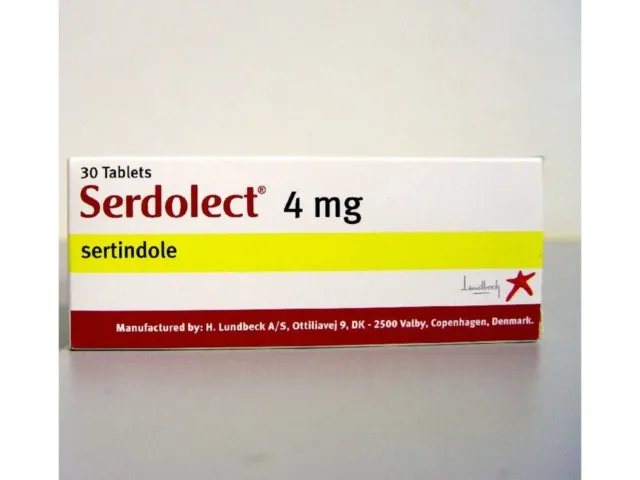
Table of Contents
Patient Information Leaflet
Serdolect, 4 mg, film-coated tablets
Serdolect, 12 mg, film-coated tablets
Serdolect, 16 mg, film-coated tablets
Sertindole
Please read the entire leaflet before taking this medicine, as it contains important information for the patient.
- Keep this leaflet for future reference.
- If you have any questions, please consult your doctor or pharmacist.
- This medicine has been prescribed for a specific individual. Do not share it with others. This medicine may harm others, even if their symptoms are similar.
- If you experience any adverse effects, including any not listed in this leaflet, inform your doctor or pharmacist. See section 4.
Table of Contents:
- What Serdolect is and what it is used for
- Important information before taking Serdolect
- How to take Serdolect
- Possible side effects
- How to store Serdolect
- Contents of the pack and other information
1. What Serdolect is and what it is used for
Serdolect contains the active substance sertindole and belongs to a group of medicines called antipsychotics. It acts on nerve pathways in specific areas of the brain and helps correct chemical imbalances responsible for the symptoms of the illness. Serdolect is used in the treatment of schizophrenia in patients who have not responded to other medications.
2. Important information before using Serdolect
Do not use Serdolect
If the patient:
- is allergic to sertindole or any of the other ingredients of this medicine (listed in section 6)
- has untreated low blood potassium or magnesium levels
- has significant cardiovascular disease
- has severe heart disease, such as:
- heart failure with tissue swelling caused by fluid overload
- enlarged heart
- irregular or slow heart rhythm
- has congenital or acquired long QT syndrome, which can be detected on an ECG, or if rhythm disturbances have been diagnosed in a family member
- has significant liver function impairment
- is taking medicines that prolong the ventricular activity time or affect certain cytochrome P450 enzymes (see section 2 "Serdolect with other medicines").
Warnings and precautions
Before taking Serdolect, inform your doctor if the patient has previously or currently experienced:
- being 65 years of age or older
- vomiting or diarrhoea during treatment with Serdolect
- impaired liver function
- Parkinson's disease
- diabetes or risk factors for developing diabetes
- risk factors for stroke, such as high blood pressure, previous stroke or heart attack, diabetes, high cholesterol, dementia, smoking
- history of venous thrombosis in the patient or a family member, because taking antipsychotic medicines may be associated with blood clot formation
- seizures
- unusual movements of the mouth and tongue, which may be early signs of a nervous system disorder called tardive dyskinesia
- high fever, unusual muscle stiffness, and changes in consciousness, especially if accompanied by sweating and rapid heartbeat. These may be symptoms of a rare but serious condition called neuroleptic malignant syndrome.
Dizziness upon standing up from bed or rising to a standing position may occur at the beginning of Serdolect treatment. Your doctor can reduce this risk by starting treatment with a low dose, gradually increasing it over several weeks. These symptoms usually disappear after taking Serdolect for some time.
Monitoring before and during treatment
Before starting Serdolect and during treatment, your doctor will perform tests such as:
- ECG to check for QT interval prolongation. This test will be repeated 3 weeks after starting treatment or after reaching a daily sertindole dose of 16 mg. During maintenance treatment, this test should be performed every 3 months. Additionally, ECG will be performed before and after any dose increase. This also applies to changes in concomitant medications that may affect sertindole blood levels.
- blood tests to measure potassium and magnesium levels
- if potassium or magnesium levels are low, your doctor will initiate treatment to correct this abnormality. Do not take Serdolect if the patient has untreated low potassium or magnesium levels. Contact your doctor in case of vomiting, diarrhoea, electrolyte disturbances, or taking medicines that increase water excretion. Your doctor may order a blood potassium test.
- monitoring of blood pressure
Children and adolescents (under 18 years)
Serdolect should not be used in this age group due to lack of available data.
Serdolect with other medicines
Tell your doctor or pharmacist about all medicines the patient is currently taking or has recently taken, as well as any medicines planned for future use.
Serdolect must not be used together with the following medicines, which may affect heart function or liver function, such as:
- certain medicines used to treat heart rhythm disorders, such as quinidine, amiodarone, sotalol, dofetilide
- certain medicines used to treat psychiatric disorders, e.g. thioridazine
- certain antibiotics from the macrolide group whose active substance name ends in "-mycin", e.g. erythromycin, clarithromycin
- certain antibiotics from the quinolone group used to treat bacterial infections, whose active substance name ends in "-floxacin", e.g. gatifloxacin, moxifloxacin
- oral antifungal medicines, e.g. ketoconazole, itraconazole
- certain medicines used in HIV infection containing active substances ending in "-navir", e.g. indinavir
- certain medicines used to treat allergies, e.g. terfenadine, astemizole
- cisapride: a medicine used to treat gastrointestinal (and/or) intestinal disorders
- lithium: a medicine used to treat depression and psychiatric disorders
- certain medicines used to treat high blood pressure and heart disease called calcium channel blockers, e.g. diltiazem, verapamil
- cimetidine: a medicine used to reduce gastric acid secretion
Other medicines that may affect the action of Serdolect (and vice versa) include:
medicines used to treat Parkinson's disease called dopamine agonists
certain medicines used to treat depression and anxiety disorders, such as fluoxetine, paroxetine
rifampicin: a medicine used to treat tuberculosis or certain other infections
carbamazepine, phenytoin, phenobarbital: medicines used to treat epilepsy
diuretics that reduce blood potassium levels
Taking Serdolect with food, drink and alcohol
Avoid alcohol during treatment with Serdolect, even if no interaction with the medicine is expected.
Pregnancy, breastfeeding and fertility
Pregnancy
Serdolect is not recommended during pregnancy.
The following symptoms may occur in newborns of mothers who took Serdolect during the third trimester (last three months of pregnancy):
- tremors
- muscle stiffness and/or weakness
- drowsiness
- agitation
- breathing difficulties
- feeding difficulties
Contact your doctor if the baby shows any of the above symptoms.
Breastfeeding
Serdolect must not be used during breastfeeding unless your doctor considers it absolutely necessary. Breastfeeding should be discontinued if treatment is required, as Serdolect is excreted in breast milk.
Fertility
Serdolect may cause side effects that can affect sexual function and fertility (see section 4 "Possible side effects"). These effects are reversible. Consult your doctor if you have problems related to sexual function.
Driving and operating machinery
Do not drive or operate machinery until you know how Serdolect affects you, even if the medicine does not cause drowsiness.
Serdolect contains lactose and sodium
If the patient has previously been diagnosed with intolerance to certain sugars, the patient should consult a doctor before taking this medicine.
The medicine contains less than 1 mmol (23 mg) of sodium per coated tablet, meaning the medicine is considered "sodium-free".
3. How to take Serdolect
Serdolect must always be taken exactly as directed by your doctor or pharmacist.
If in doubt, consult your doctor or pharmacist.
The recommended dosage is:
- Initial dose: 1 tablet of Serdolect 4 mg once daily. Every 4 to 5 days, the dose will be increased by 1 tablet of Serdolect 4 mg until the maintenance dose is reached.
- Maintenance dose: 1 tablet of Serdolect 12 mg up to a dose of 20 mg once daily.
- Maximum dose: 2 tablets of Serdolect 12 mg once daily, which may be considered only in exceptional cases.
Patients over 65 years of age
Usually, doctors increase the dose more gradually than in younger patients. Your doctor may also prescribe a lower maintenance dose than normally recommended.
Patients with hepatic impairment
If a patient has been diagnosed with mild or moderate liver impairment, the doctor may monitor the patient more closely and increase the dose more gradually. The doctor may also prescribe a lower maintenance dose than normally recommended.
Serdolect must not be used in patients with severe liver impairment.
Patients with renal impairment
Patients with impaired kidney function may take Serdolect at the usual recommended doses.
Dosing after previous treatment with other antipsychotics
Treatment with sertindole may be initiated according to the recommended dose-titration schedule, while simultaneously discontinuing other oral antipsychotic medications. In patients treated with long-acting depot antipsychotics, the first dose of sertindole should be administered instead of the next depot injection.
Method of administration
Tablets should be swallowed whole with a glass of water, at the same time each day. The tablet may be taken with or without food.
Duration of treatment
Tablets should be taken for as long as your doctor recommends.
Never change the dose of this medicine without first consulting your doctor.
If you wish to discontinue treatment, please consider the information provided in section 3 under "Stopping Serdolect".
Taking more Serdolect than prescribed
In such a case, you must immediately contact your doctor or go to the nearest hospital emergency department. This should be done even if no symptoms are present. Symptoms of overdose may include:
- marked fatigue
- slurred speech
- increased heart rate
- low blood pressure
Missing a dose of Serdolect
Do not take a double dose to make up for a missed dose.
If you have missed a daily dose of Serdolect, contact your doctor. Your doctor will advise you on how to correctly resume treatment.
Stopping Serdolect
Do not stop taking Serdolect without your doctor's approval, even if you feel better. The illness may persist for a prolonged period. If treatment is stopped too early, symptoms of the disease may return. Additionally, so-called involuntary movements may occur.
Your doctor will advise you when and how to discontinue treatment in order to avoid unwanted effects. Abrupt discontinuation of Serdolect may lead to withdrawal symptoms such as:
nausea, vomiting
sweating
sleep disturbances
If you have any further questions about the use of this medicine, consult your doctor or pharmacist.
4. Possible adverse reactions
Like all medicines, this medicine can cause adverse reactions, although not everyone will experience them.
You should immediately consult a doctor or go to the nearest hospital emergency department if the patient
experiences any of the adverse reactions listed in the following four bullet points:
Not common (may occur in less than 1 in 100 people)
- very fast, irregular or strong heartbeat, dizziness, fainting, shortness of breath, or chest pain. These symptoms may indicate potentially life-threatening heart rhythm disorders called Torsade de pointes.
- uncontrolled movements, especially of the mouth, tongue or limbs. This may indicate the occurrence of nervous system disorders known as tardive dyskinesia.
Rare (may occur in less than 1 in 1,000 people):
- a combination of high fever, rapid breathing, sweating, muscle stiffness, and drowsiness or sleepiness. These symptoms may indicate a life-threatening nervous system disorder known as Neuroleptic Malignant Syndrome.
Frequency unknown (cannot be estimated from available data):
- formation of blood clots in the veins, particularly in the legs (symptoms include swelling, pain and redness in the limb), which may travel through blood vessels to the lungs, causing chest pain and difficulty breathing.
Other adverse reactions which may occur with the following frequencies:
Very common (may occur in more than 1 in 10 people)
- inflammation inside the nose causing sneezing, itching, runny nose and nasal congestion
- inability to ejaculate
Common (may occur in less than 1 in 10 people)
- dizziness or sudden dizziness due to a drop in blood pressure when standing up;
- dry mouth;
- weight gain;
- shortness of breath;
- swelling of hands or feet;
- unusual skin sensations such as pins and needles;
- reduced volume of ejaculate;
- impotence;
- changes in the electrical activity of the heart (known as "prolonged QT interval"). A prolonged QT interval may cause symptoms such as palpitations or fainting;
- presence of red and white blood cells in the urine.
Not common (may occur in less than 1 in 100 people)
- increased blood glucose levels;
- increased blood levels of a hormone called prolactin;
- spontaneous milk secretion from the nipple;
- seizures, fainting.
Pregnancy, childbirth and the perinatal period
Information regarding possible adverse reactions related to pregnancy, breastfeeding and effects on fertility – see section 2.
In elderly patients with dementia treated with antipsychotic medicines, a slightly increased number of cases ending in death has been reported compared to patients not treated with antipsychotic medicines.
If any adverse reactions occur, including any adverse reactions not listed in this leaflet, inform your doctor or pharmacist. Adverse reactions can be reported directly to the Department of Monitoring Adverse Drug Reactions of the Office for Registration of Medicinal Products, Medical Devices and Biocidal Products
Al. Jerozolimskie 181 C
PL-02 222 Warsaw
Tel.: + 48 22 49 21 301
Fax: + 48 22 49 21 309
Website: https://smz.ezdrowie.gov.pl
Adverse reactions can also be reported to the marketing authorization holder.
Reporting adverse reactions helps provide more information on the safety of this medicine.
5. How to store Serdolect
Keep out of the sight and reach of children.
Do not use Serdolect after the expiry date stated on the cardboard box. The expiry date refers to the last day of the stated month.
Store in the original outer packaging to protect from light.
Medicines should not be disposed of via wastewater or household waste. Ask your pharmacist how to dispose of medicines no longer required. This helps protect the environment.
6. Contents of the packaging and other information
What Serdolect contains
- The active substance is sertindole (Sertyndolum).
Each coated tablet contains: 4 mg, 12 mg or 16 mg of sertindole.
Other ingredients are:
- maize starch
- lactose monohydrate
- hydroxypropylcellulose
- microcrystalline cellulose
- sodium croscarmellose
- magnesium stearate
- macrogol 400
- titanium dioxide
Serdolect 4 mg: yellow iron oxide
Serdolect 12 mg: yellow iron oxide, red iron oxide
Serdolect 16 mg: red iron oxide
Appearance and contents of Serdolect packaging
Serdolect is available as coated tablets containing 4 mg, 12 mg or 16 mg of sertindole, respectively.
Description:
4 mg coated tablets are oval, yellow, biconvex, marked with "S4" on one side.
12 mg coated tablets are oval, beige, biconvex, marked with "S12" on one side.
16 mg coated tablets are oval, dark pink, biconvex, marked with "S16" on one side.
Available pack sizes:
Coated tablets 4 mg: available in packs containing 30 tablets, in three blisters of 10 tablets each.
Coated tablets 12 mg, 16 mg: available in packs containing 28 tablets, in two blisters of 14 tablets each.
Not all pack sizes may be marketed.
Marketing Authorisation Holder and Manufacturer
H. Lundbeck A/S
Ottiliavej 9
DK-2500 Valby
Denmark
For further information, please contact the representative of the Marketing Authorisation Holder.
Swixx Biopharma Sp. z o.o.
Prosta 51
00-838 Warsaw, Poland
Tel. +48 22 4600 720