Sandostatin
Poland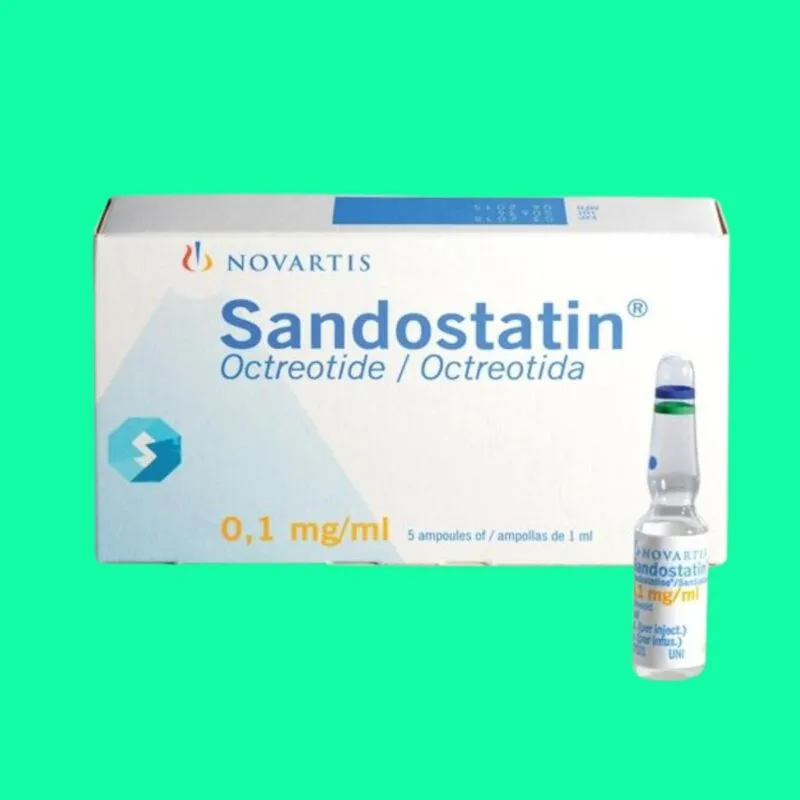
Table of Contents
- Package leaflet: Information for the patient
- 1. What Sandostatin is and what it is used for
- 2. Important information before using Sandostatin
- 3. How to use Sandostatin
- 4. Possible side effects
- 5. How to store Sandostatin
- 6. Contents of the pack and other information
- • Intravenous infusion (information for healthcare professionals)
Package leaflet: Information for the patient
SANDOSTATIN 50 micrograms/1 ml solution for injection / for infusion
SANDOSTATIN 100 micrograms/1 ml solution for injection / for infusion
octreotide
Please read this leaflet carefully before using this medicine, because it contains
important information for the patient.
- Keep this leaflet, as you may need to read it again.
- If you have any further questions, please ask your doctor, pharmacist or nurse.
- This medicine has been prescribed for a specific individual. Do not pass it on to others. It may harm other people, even if their symptoms are the same.
- If you experience any adverse reactions, including any not listed in this leaflet, inform your doctor, pharmacist or nurse. See section 4.
Contents of the leaflet
- What Sandostatin is and what it is used for
- Important information before using Sandostatin
- How to use Sandostatin
- Possible side effects
- How to store Sandostatin
- Contents of the pack and other information
1. What Sandostatin is and what it is used for
Sandostatin is a synthetic analogue of somatostatin, a substance naturally present in the human body that inhibits the action of certain hormones, such as growth hormone. Sandostatin acts more potently than somatostatin and has a longer duration of action.
Sandostatin is used
- in acromegaly, a disease in which the body produces excessive amounts of growth hormone. In healthy individuals, growth hormone regulates the growth of tissues, organs and bones. Excess growth hormone causes enlargement of bones and tissues, especially in the hands and feet. Sandostatin significantly alleviates the symptoms of acromegaly, such as headache, excessive sweating, numbness in the hands and feet, fatigue and joint pain.
- to relieve symptoms caused by certain gastrointestinal tumours (e.g. carcinoid tumours, VIPoma, glucagonoma, gastrinoma, insulinoma). In these conditions, the stomach, intestines or pancreas produce excessive amounts of specific hormones and other substances, disrupting the body's natural hormonal balance and causing various symptoms such as facial flushing, diarrhoea, low blood pressure, rash and weight loss. Treatment with Sandostatin helps control these symptoms.
- in the prevention of postoperative complications following pancreatic surgery. Treatment with Sandostatin helps reduce the risk of postoperative complications (e.g. intra-abdominal abscess, pancreatitis).
- to control and prevent recurrent bleeding from ruptured gastro-oesophageal varices in patients with liver cirrhosis (a chronic liver disease). Treatment with Sandostatin helps control bleeding and reduces the need for blood transfusions.
- in the treatment of pituitary tumours secreting excessive amounts of thyroid-stimulating hormone (TSH). Excess thyroid-stimulating hormone (TSH) leads to hyperthyroidism. Sandostatin is used in patients with pituitary tumours secreting excessive amounts of thyroid-stimulating hormone (TSH):
- when other treatment options (surgical treatment or radiotherapy) are inappropriate or ineffective;
- as interim treatment after radiotherapy, until radiotherapy achieves full effectiveness.
2. Important information before using Sandostatin
When not to use Sandostatin:
- if the patient is allergic to octreotide or to any of the other ingredients of this medicine (listed in section 6).
Warnings and precautions
Before starting treatment with Sandostatin, discuss the following with your doctor:
- if the patient has gallstones or has had them in the past, or if the patient experiences any symptoms such as fever, chills, abdominal pain, or yellowing of the skin or eyes; inform the doctor, as long-term use of Sandostatin may lead to the formation of gallstones. The doctor may recommend periodic monitoring of the gallbladder.
- if the patient has problems with blood sugar levels, either too high (diabetes) or too low (hypoglycaemia). If Sandostatin is used to treat bleeding from gastro-oesophageal varices, monitoring of blood glucose levels is necessary.
- if the patient has previously had low levels of vitamin B, the doctor may recommend periodic monitoring of vitamin B levels.
- Octreotide may slow the heart rate and, at very high doses, may cause an irregular heartbeat. During treatment, the doctor may monitor the patient's pulse.
Tests and follow-up visits
If the patient is receiving long-term treatment with Sandostatin, the doctor may recommend periodic monitoring of thyroid function.
The doctor will monitor the patient's liver function.
The doctor may recommend checking pancreatic enzyme activity.
Children
Experience with the use of Sandostatin in children is limited.
Sandostatin and other medicines
Inform your doctor or pharmacist about all medicines the patient is currently taking or has recently taken, as well as any medicines the patient plans to take.
Other medicines can generally be continued during treatment with Sandostatin. However, it has been reported that Sandostatin may affect the action of certain medicines, such as cimetidine, cyclosporine, bromocriptine, quinidine, and terfenadine.
If the patient is taking a medicine to control blood pressure (e.g. a beta-blocker or calcium channel blocker), or a medicine to maintain fluid and electrolyte balance, the doctor may adjust the dosage.
In patients with diabetes, the doctor may need to adjust the insulin dose.
If the patient is to receive lutetium oxodotreotide (Lu) therapy, a radiopharmaceutical treatment, the doctor may interrupt and/or adjust treatment with Sandostatin.
Pregnancy and breastfeeding
If the patient is pregnant or breastfeeding, suspects she may be pregnant, or is planning to have a child, she should consult her doctor before using this medicine.
Sandostatin may be used during pregnancy only if clearly necessary.
Women of childbearing potential should use effective contraceptive methods during treatment.
Breastfeeding should not be undertaken during treatment with Sandostatin. It is not known whether Sandostatin passes into human breast milk.
Driving and operating machinery
Sandostatin has no effect or a negligible effect on the ability to drive and operate machinery. However, certain adverse effects that may occur during treatment with Sandostatin, such as headache and fatigue, may reduce the patient's ability to safely drive or operate machinery.
Sandostatin contains sodium
This medicine contains less than 1 mmol (23 mg) of sodium per vial, meaning the medicine is considered "sodium-free".
3. How to use Sandostatin
This medicine should always be used exactly as prescribed by your doctor or pharmacist. If you are unsure,
you should consult your doctor or pharmacist.
Depending on the condition being treated, Sandostatin may be administered:
- by subcutaneous injection or
- by intravenous infusion.
In the case of liver cirrhosis (chronic liver disease), your doctor may adjust the maintenance dose.
Your doctor or nurse will explain to you how to inject Sandostatin under the skin. However, intravenous
infusion must always be performed by qualified medical personnel.
- Subcutaneous injection
The recommended sites for subcutaneous injections are the upper arms, thighs, or abdomen.
Each subcutaneous injection should be given at a new site to avoid tissue irritation. Your doctor or nurse
will provide detailed instructions on how to administer the medicine to patients who will perform
subcutaneous injections themselves.
If the medicine has been stored in the refrigerator, it is recommended to allow the vials to reach room
temperature before administration. This will reduce the risk of injection-site pain. The vial may be warmed
in the hands, but must not be heated.
Some patients may experience pain at the injection site. This pain is usually short-lived. If pain occurs, it
can be relieved by gently massaging the injection site for several seconds after administering the medicine.
Before administering the solution from the Sandostatin vial, check whether the solution contains any
particles or has changed colour. Do not use the medicine if any changes in appearance are observed.
Use of more Sandostatin than prescribed
Symptoms of overdose include: irregular heartbeat, low blood pressure, cardiac arrest, brain hypoxia,
severe upper abdominal pain, yellowing of the skin and eyes, nausea, loss of appetite, diarrhoea, weakness,
fatigue, lack of energy, weight loss, abdominal swelling, discomfort, high blood lactate levels, and
abnormal heart rhythm.
If you suspect an overdose of Sandostatin and experience any of the above symptoms, inform your doctor
immediately.
Missed dose of Sandostatin
Take the missed dose as soon as you remember, then continue treatment as before. Missing a dose is not
harmful, but may cause a temporary return of disease symptoms until the regular dosing schedule is
resumed.
Do not inject a double dose to make up for a missed dose.
Stopping Sandostatin treatment
After stopping treatment with Sandostatin, disease symptoms may return. Therefore, do not discontinue
Sandostatin without consulting your doctor.
If you have any further questions about the use of this medicine, consult your doctor, nurse, or pharmacist.
4. Possible side effects
Like all medicines, this medicine can cause side effects, although not everybody gets them.
Some side effects may be serious. You should immediately inform your doctor if
any of the following symptoms occur in the patient:
Very common (may affect more than 1 in 10 people):
- Gallstones causing sudden back pain.
- High blood sugar levels.
Common (may affect up to 1 in 10 people):
- Underactive thyroid (hypothyroidism) affecting heart rhythm, appetite, or body weight; fatigue, feeling cold, or swelling in the front of the neck.
- Changes in thyroid function test results.
- Inflammation of the gallbladder; symptoms may include pain in the upper right part of the abdomen, fever, nausea, yellowing of the skin and eyes (jaundice).
- Low blood sugar levels.
- Impaired glucose tolerance.
- Slow heart rate.
Uncommon (may affect up to 1 in 100 people):
- Thirst, low volume of urine passed, dark-coloured urine, dry and red skin.
- Fast heart rate.
Other serious side effects
- Allergic reactions (hypersensitivity), including skin rash.
- A type of allergic reaction (anaphylaxis) which may cause difficulty swallowing or breathing, swelling and tingling, possibly with low blood pressure, dizziness or loss of consciousness.
- Inflammation of the pancreas; symptoms may include sudden pain in the upper abdomen, nausea, vomiting, diarrhoea.
- Inflammation of the liver; symptoms may include yellowing of the skin and eyes (jaundice), nausea, vomiting, loss of appetite, general malaise, itching, pale-coloured urine.
- Irregular heart rate.
- Low platelet count; this may cause increased bleeding or bruising.
If any of the above-mentioned symptoms occur in the patient, you should immediately
inform the doctor.
Other side effects:
If the patient experiences any of the side effects listed below, you should inform the
doctor, pharmacist, or nurse. These side effects are usually mild and tend to
disappear as treatment continues.
Very common (may affect more than 1 in 10 people):
- Diarrhoea.
- Abdominal pain.
- Nausea.
- Constipation.
- Bloating with gas.
- Headache.
- Pain at the injection site.
Common (may affect up to 1 in 10 people):
- Stomach discomfort after meals (dyspepsia).
- Vomiting.
- Feeling of fullness in the stomach.
- Fatty stools.
- Loose stools.
- Pale-coloured stools.
- Dizziness.
- Loss of appetite.
- Changes in liver function test results.
- Hair loss.
- Shortness of breath.
- Weakness.
If any side effects occur, inform the doctor, nurse, or pharmacist.
Some patients may experience pain at the site of subcutaneous injection. This pain is usually
short-lived. If pain occurs, it can be relieved by gently massaging the injection site
for a few seconds after administering the medicine.
Gastrointestinal side effects may be reduced by avoiding meals immediately before or after
subcutaneous administration of Sandostatin, i.e. by giving the injection between meals or before going to rest.
Reporting of side effects
If any side effects occur, including any not listed in this leaflet, inform your doctor, pharmacist, or nurse. Side effects can be reported directly to the Department of Monitoring Adverse Reactions of Medicinal Products at the Office for Registration of Medicinal Products, Medical Devices and Biocidal Products:
Al. Jerozolimskie 181C
02-222 Warsaw
Phone: 22 49-21-301
Fax: 22 49-21-309
Website: https://smz.ezdrowie.gov.pl
Side effects can also be reported to the marketing authorization holder.
By reporting side effects, additional information on the safety of the medicine can be collected.
5. How to store Sandostatin
Keep this medicine out of sight and reach of children.
Store in the original packaging to protect from light.
Store in a refrigerator (2 °C – 8 °C). Do not freeze.
Vials may be stored at temperatures below 30 °C for no longer than 2 weeks.
Vials should be used immediately after opening.
The diluted solution should be used immediately after preparation.
Do not use this medicine after the expiry date stated on the label and packaging following “EXP”
and “Expiry date (EXP)”. The expiry date refers to the last day of the specified month.
Do not use this medicine if you notice any solid particles or change in colour.
Medicines should not be disposed of via wastewater or household waste. Ask your pharmacist
how to dispose of medicines no longer required. This will help protect the environment.
6. Contents of the pack and other information
What Sandostatin contains
- The active substance is octreotide. Sandostatin 50 micrograms: 1 ml contains 50 micrograms of octreotide. Sandostatin 100 micrograms: 1 ml contains 100 micrograms of octreotide.
- The other components are: lactic acid, mannitol (E 421), sodium hydrogen carbonate, water for injections.
What Sandostatin looks like and contents of the pack
Vials made of colourless glass with two coloured coding rings, containing a clear, colourless solution.
Sandostatin 50 micrograms/1 ml: one blue and one yellow ring
Sandostatin 100 micrograms/1 ml: one blue and one green ring
The medicine is available in packs containing 5 vials of 1 ml.
Marketing Authorisation Holder
Novartis Poland Sp. z o.o.
ul. Marynarska 15
02-674 Warszawa
Tel. + 48 22 375 48 88
Manufacturer/Importer
Novartis Pharma GmbH
Jakov-Lind-Straße 5, Top 3.05
1020 Wien
Austria
Novartis Pharma SAS
8-10 rue Henri Sainte-Claire Deville
92500 Rueil Malmaison
France
Novartis Pharma GmbH
Sophie-Germain-Strasse 10
90443 Nürnberg
Germany
Novartis (HELLAS) SA
12th km National Road Athinon-Lamias
Metamorfosi Attiki, 14451
Greece
Novartis Hungária Kft.
Vasút u.13
Budaörs, 2040
Hungary
Novartis Farma S.p.A.
Via Provinciale Schito 131
80058 Torre Annunziata (NA)
Italy
Novartis Farma - Produtos Farmacêuticos, S.A.
Avenida Professor Doutor Cavaco Silva, n.10E, Taguspark
Porto Salvo, 2740-255
Portugal
Novartis Farmacéutica S.A.
Gran Via de les Corts Catalanes, 764
08013 Barcelona
Spain
Novartis Sverige AB
Torshamnsgatan 48
164 40 Kista
Sweden
Novartis Pharma B.V.
Haaksbergweg 16
1101 BX Amsterdam
Netherlands
This medicinal product is authorised for marketing in the Member States of the European Economic Area under the following names:
Sandostatin Austria, Bulgaria, Croatia, Cyprus, Czech Republic, Denmark, Estonia, Finland, Germany, Greece, Hungary, Iceland, Ireland, Latvia, Lithuania, Malta, Norway, Poland, Romania, Slovakia, Slovenia, Spain, Sweden
Sandostatine Belgium, France, Luxembourg, Netherlands
Sandostatina Italy, Portugal
Information intended exclusively for medical professionals:
• Intravenous infusion (information for healthcare professionals)
Before use, visually inspect the Sandostatin vial to ensure the solution does not contain particulate matter or show any discoloration. Do not administer if changes in the solution's appearance are observed.
Dilute the solution before administering Sandostatin as an intravenous infusion.
Sandostatin (octreotide acetate) is physically and chemically stable for 24 hours in sterile 0.9% sodium chloride solution or 5% dextrose in water. Since Sandostatin may affect glucose homeostasis, it is recommended to use 0.9% sodium chloride solution rather than dextrose solution. Diluted solutions are physically and chemically stable for at least 24 hours when stored below 25°C. From a microbiological standpoint, diluted solutions should be used immediately after preparation. If not used immediately, the user is responsible for the storage duration and conditions prior to use.
The contents of one vial (500 micrograms) are typically diluted in 60 mL of 0.9% sodium chloride solution, and the resulting solution should be administered using an infusion pump. This procedure should be repeated as frequently as necessary to achieve the prescribed treatment duration.
What dose of Sandostatin should be used
The dosage of Sandostatin depends on the condition being treated.
- Acromegaly Treatment is usually initiated at a dose of 0.05 to 0.1 mg administered subcutaneously every 8 or every 12 hours. The dose is then adjusted according to therapeutic response and symptom relief (such as fatigue, sweating, and headache). For most patients, the optimal daily dose is 0.1 mg three times daily. The maximum daily dose of 1.5 mg should not be exceeded.
- Gastrointestinal tumors Treatment is usually initiated at a dose of 0.05 mg administered as a subcutaneous injection once or twice daily. Depending on response and tolerability, the dose may be gradually increased from 0.1 mg to 0.2 mg three times daily. In carcinoid tumors, if there is no satisfactory symptom relief within one week of starting the maximum tolerated dose, treatment should be discontinued.
- Postoperative complications of pancreatic surgery Typically, a dose of 0.1 mg is administered subcutaneously three times daily for one week, starting at least one hour before surgery.
- Bleeding from gastroesophageal varices The recommended dose is 25 micrograms/hour for 5 days via continuous intravenous infusion. Blood glucose levels must be monitored during treatment.
- TSH-secreting pituitary adenomas Effective dosing is generally 100 micrograms three times daily administered as a subcutaneous injection. The dose may be adjusted based on response in TSH and thyroid hormone secretion. Evaluation of treatment efficacy requires that therapy be continued for at least 5 days.